












































































Article Contents:
- Which adhesive to choose and how it differs
- Why choosing the right adhesive is critical for polystyrene
- Polymer construction adhesives (liquid nails)
- Acrylic spackle as adhesive
- Specialized adhesives for polystyrene
- Silicone sealants
- Comparison table of adhesives
- What CANNOT be used
- Features of joint adhesive and facade spackle
- Joint adhesive: what it is and why it's needed
- Facade spackle: can it be used indoors?
- Water-resistant compounds for bathrooms and kitchens
- Tools for cutting, sawing, and slicing
- Miter saw: the main tool for corners
- Saws: selection and features
- Construction knife
- Power tools for large volumes
- Hand tools for sanding and grinding
- Measuring tools
- Auxiliary tool
- How to fill joints and smooth seams
- Why joints must be sealed
- Materials for filling seams
- Technique for sealing seams with sealant
- Technique for sealing seams with spackle
- Filling wide gaps (over 5 mm)
- Filling gaps between baseboard and wall/floor
- What to use to securely attach to walls and ceilings
- Surface preparation: key to secure mounting
- Adhesive for different surface types
- Additional mechanical fixation
- Errors when working with adhesive and how to avoid them
- Error 1: Using the wrong adhesive
- Error 2: Insufficient surface preparation
- Error 3: Insufficient pressing time
- Error 4: Too much or too little adhesive
- Error 5: Working under unsuitable conditions
- Error 6: Attempting to fix already set adhesive
- Error 7: Incorrect removal of excess adhesive
- Error 8: Attaching baseboard to the floor
- Professional tips for flawless installation
- Tip 1: Start with the most visible corner
- Tip 2: Make test corner joints
- Tip 3: Use the 'first plank rule'
- Tip 4: Work with an assistant on long sections
- Tip 5: Mark before installation
- Tip 6: Material acclimatization is mandatory
- Tip 7: Use professional tools for large volumes
- Tip 8: Paint the baseboard after installation but before final sealing
- Tip 9: For perfect joints, use end sanding
- Tip 10: Document the process
- Tip 11: Store leftover materials
- Tip 12: Work from general to specific
- Tip 13: Monitor quality at every stage
- Conclusion

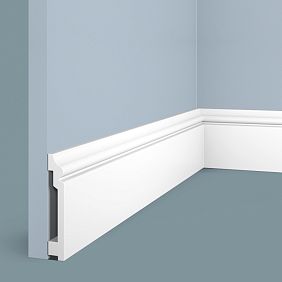
A quality baseboard, correctly chosen profile, perfect color — all of this can be ruined by one mistake: choosing the wrong adhesive or tool. You can buy the most expensive baseboard from the best manufacturer, but if you glue it with the wrong adhesive, it will be on the floor in a week. Or spend hours trying to cut a corner neatly with a dull hacksaw, ending up with a ragged edge and ruined mood.
Professionals know: the right materials and tools are half the success. A good craftsman never starts work without ensuring he has everything necessary. It’s not about the number of tools — often, a simple set is enough, but it must be the right one. The adhesive must be compatible with the material. The saw must be sharp. The putty must be compatible with the paint.
Let’s explore the nuances of choosingadhesive for polystyrene baseboard, tools for work and finishing materials. This knowledge will save you time, money, and nerves, and the result will delight you for decades.


Which adhesive to choose and how it differs




Why choosing the right adhesive is critical for polystyrene
The first and most important rule: adhesive for polystyrene MUST NOT contain solvents.
The second important consideration is adhesion. Polystyrene has a smooth surface with low adhesion. Ordinary glue may simply not stick or hold weakly. Special formulations, developed with the material's properties in mind, are required.
Polymer mounting adhesives (liquid nails)
Our factory also produces:






Polymer mounting adhesives (liquid nails)
Chemical composition:
Base - synthetic rubbers or acrylic polymers in water emulsion. Fillers - calcium carbonate, talc. Additives - thickeners, preservatives, adhesion modifiers. Key difference from regular glue - high initial tack strength (initial stickiness).
Types of liquid nails:
Water-based (acrylic):
-
Safe for polystyrene
-
Odorless
-
Setting time: 10-30 minutes
-
Full drying: 12-24 hours
-
Strength: medium (sufficient for polystyrene)
-
Freeze resistance: withstands up to -40°C after drying
-
Tools can be washed with water
Based on synthetic rubber (neoprene):
-
Check the composition! Many contain solvents
-
Very strong adhesion
-
Fast setting: 3-10 minutes
-
Strong odor
-
Use only formulations labeled 'for polystyrene'
Popular brands for polystyrene:
Moment Montage Super Strong White:
-
Water-based
-
Specifically for lightweight materials
-
Setting time: 15 minutes
-
White color (not visible at joints)
-
Price: 200-250 rubles per 400 g tube
-
Consumption: one tube for 8-12 meters of baseboard
Titan Wild:
-
Universal for polystyrene and polyurethane foam
-
Fast setting (10 minutes)
-
Solvent-free
-
Price: 180-220 rubles for 310 ml
-
Good adhesion to various surfaces
Quelyd Mastifix Ultra:
-
French quality
-
Very strong bonding
-
Setting time: 20 minutes
-
Withstands vibrations
-
Price: 250-300 rubles for 310 ml
Application technology:
-
Clean surfaces from dust and dirt
-
Cut the tube tip at a 45° angle, hole diameter 5-7 mm
-
Insert the tube into the caulking gun
-
Apply adhesive to the baseboard in a zigzag or dot pattern every 10-15 cm
-
Attach to the installation site
-
Press firmly for 15-30 seconds
-
Secure with painter's tape (optional)
-
Wipe away excess adhesive with a damp cloth
Advantages:
-
Easy to apply
-
No dilution required
-
Fast setting
-
Strong bond
-
Versatility (sticks to various surfaces)
Disadvantages:
-
Higher price compared to putty
-
Excess must be removed immediately
-
After drying, forms a raised seam (needs to be cut)
Get Consultation
Acrylic putty as adhesive
Why putty works as adhesive:
Final acrylic putty contains acrylic polymers that form a strong bond with the surface upon drying. Simultaneously, the putty fills irregularities, levels, and creates a smooth transition from baseboard to wall.
Chemical composition:
Base - acrylic copolymers in water dispersion. Fillers - calcium carbonate, marble powder. Modifiers - to improve adhesion, elasticity, water resistance. Plasticizers - for ease of application.
Types of putty:
Ready-to-use acrylic putty:
-
Sold in buckets, ready for use
-
Consistency - thick sour cream
-
No dilution required
-
Shelf life after opening: 6-12 months
-
Brands: Knauf, Ceresit, Weber Vetonit
Powder putty:
-
Mix with water before use
-
More economical
-
Consistency can be adjusted
-
Shelf life of prepared mixture: 30-60 minutes
-
Brands: Knauf, Stаратели, Volma
Popular mounting compounds:
Knauf Rotband Finish:
-
Gypsum with polymer additives
-
Excellent adhesion
-
Setting time: 40 minutes
-
Complete drying: 4-6 hours
-
Price: 500-600 rubles per 25 kg
-
Consumption per 100 m of skirting board: 15-20 kg
Ceresit CT 225:
-
Finish acrylic
-
High elasticity
-
Does not crack during drying
-
Excellent adhesion to polystyrene
-
Price: 800-900 rubles per 25 kg
Weber Vetonit LR+:
-
Polymer putty
-
Suitable for humid rooms
-
High Strength
-
Price: 700-800 rubles per 20 kg
Application technology:
-
Prepare the surface (cleaning, priming)
-
Mix the putty (if powder) to a thick sour cream consistency
-
Apply the putty with a trowel to the skirting board in a 2-4 mm layer
-
Capture both adjacent planes (to the wall and to the floor/ceiling)
-
Position the skirting board at the installation site
-
Press and align position
-
Spackle will squeeze out at the edges — this is normal
-
Smooth excess with a trowel, forming a gradual transition
-
Wipe away excess with a damp sponge
-
After drying (4-6 hours), sand if necessary
Advantages:
-
Glues and levels simultaneously
-
Fills wall irregularities
-
Excess forms a transition — no additional sealing is needed
-
Economical consumption
-
Low price
-
After painting, results in a monolithic structure
Disadvantages:
-
Longer setting time (4-6 hours)
-
Requires skill in application
-
Must work in batches (mixture sets in 30-40 minutes)
-
Harder to remove in case of error
Professional tip:
Many finishers use spackle specifically for installing ceiling moldings. This method provides the best visual result — smooth transition without visible seams, monolithic appearance after painting. For floor moldings, spackle is also good, but requires care — excess must not get onto the floor.
Specialized polystyrene adhesives
Polystyrene foam adhesive (penoplastic):
Developed specifically for attaching insulation, but also excellent for moldings.
Ceresit CT 83 (CT 84):
-
Dry mix based on cement and polymers
-
Mixes with water
-
Very strong adhesion
-
Working time: 2 hours
-
Drying time: 24 hours
-
Consumption: 5-6 kg per m² (less for molding)
-
Price: 400-500 rubles per 25 kg
Knauf Perlfix:
-
Gypsum adhesive with polymer additives
-
Mixes with water
-
Fast setting (15-20 minutes)
-
Convenient for ceiling moldings
-
Price: 300-350 rubles per 30 kg
Technology:
-
Mix the mixture with water according to instructions
-
Mix until homogeneous (using a mixer)
-
Let it rest for 5 minutes
-
Re-mix
-
Apply with notched trowel (for uneven walls) or trowel (for flat walls)
-
Press and hold
-
Level with a spirit level
-
Remove excess with a trowel
Advantages:
-
Guaranteed compatibility with polystyrene
-
Very strong bonding
-
Fills irregularities
-
Economical price
Disadvantages:
-
Requires dilution and preparation
-
Must work quickly (mixture sets quickly)
-
Tools must be cleaned immediately
Silicone sealants
When used:
Silicone sealants are not the primary adhesive for baseboards, but are used as an auxiliary or in special cases.
Types of sealants:
Neutral (oxime-based):
-
Safe for polystyrene
-
Do not emit acetic acid
-
Elastic after drying
-
Good adhesion
-
More expensive than acidic
Acidic (acetate-based):
-
Release acetic acid upon drying
-
Acetic acid odor
-
May cause metal corrosion
-
Cheaper than neutral
-
Safe for polystyrene
Application:
Sealing joints:
Main application - filling joints and gaps after installation. Applied into the gap and smoothed with a wet finger.
Installation in small rooms:
White silicone can be used as adhesive for baseboards in small rooms (bathrooms, storage rooms). Applied in a zigzag pattern, baseboard pressed and secured with tape until dry (12-24 hours).
Advantages:
-
Elasticity (compensates for movement)
-
Water resistance (ideal for bathrooms)
-
No tool required
-
Transparent sealant is invisible
Disadvantages:
-
Long setting time (12-24 hours)
-
Requires fixation for the entire drying period
-
Cannot be painted (except special paintable types)
-
Holds less strongly than polymer adhesives
Adhesive Comparison Table
| Parameter | Liquid nails | Acrylic spackle | Special foam adhesive | Silicone sealant |
|---|---|---|---|---|
| Setting time | 10-30 min | 30-60 min | 15-30 min | 12-24 hours |
| Complete drying | 12-24 hours | 4-6 hours | 24 hours | 24-48 hours |
| Strength | High | Medium | Very High | Medium |
| Filling unevenness | Average | Excellent | Good | Poor |
| Price per 100 m baseboard | 1500-2000 rub | 300-500 rub | 400-600 rub | 800-1200 rub |
| Ease of application | Very simple | Requires skill | Medium | Simple |
| Fixation required | Desirable | No | Desirable | Required |
| Can be painted | Yes | Yes | Yes | No (except special) |
What CANNOT be used
Strictly prohibited:
Nitro glues (Moment, Super glue):
-
Contain solvents
-
Dissolve polystyrene
-
Leave dents and marks
-
The skirting board will be irreversibly damaged
Thermogel (glue gun):
-
Melting temperature 150-180°C
-
Polystyrene melts at 160°C
-
Skirting board deforms from hot glue
-
Can be used only low-temperature (80-100°C)
Epoxy glue:
-
Too strong and rigid
-
Such strength is not needed for a lightweight skirting board
-
Difficult to remove in case of error
-
Expensive
Regular PVA:
-
Weak adhesion to polystyrene
-
Skirting board will peel off within a few days
-
Only reinforced construction PVA can be used
Construction foam as adhesive:
-
Expands significantly (20-30 times)
-
Deforms lightweight baseboard
-
Oozes out, spoils appearance
-
Difficult to control
-
Can be used only as additional fixation on very uneven walls
Features of joint adhesive and facade putty
Joint adhesive: what it is and why it's needed
Joint adhesive is a specialized composition for gluing baseboard joints, especially in corners. It differs from construction adhesive by its more liquid consistency and higher penetration ability.
Contents:
Base - cyanoacrylate or polyurethane polymers in solvents or water-based. Important: for polystyrene, use only water-based compositions or those specifically designed for foam.
Application:
When joining two baseboard pieces (in corners or on straight sections), joint adhesive is applied to the ends of both pieces. It penetrates into the material's micropores, creating a strong bond. After drying, the joint becomes monolithic.
Advantages:
-
Very strong end-to-end bond
-
Thin seam (material does not displace)
-
Fast setting (5-10 minutes)
-
Fills micro-gaps
Disadvantages:
-
More expensive than regular adhesive
-
Requires precise alignment (no time for adjustment)
-
May be toxic (solvent vapors)
For small deviations (88-92°), you can correct the standard cut with sandpaper, slightly adjusting the angle.
Professionals often use regular construction adhesive or putty for gluing joints. Result is slightly worse, but safer and cheaper. Apply adhesive to both ends, join, press tightly. Immediately remove any squeezed-out adhesive.
Facade putty: can it be used indoors?
Differences between facade putty:
Facade putty is designed for outdoor use. Main differences from interior putty:
Contents:
-
Cement base (instead of gypsum)
-
Polymer additives for water resistance
-
Freeze-resistant components
-
Fungicides and algaecides (against mold and algae)
Properties:
-
High water resistance
-
Freeze resistance (withstands freeze-thaw cycles)
-
High Strength
-
UV Resistance
-
Breathability
Can it be used indoors:
Yes, it can. Exterior putty is safe for indoor use after it has fully dried. Moreover, for humid areas, it is even preferable due to its enhanced moisture resistance.
When to use exterior putty indoors:
Wet areas:
Bathrooms, showers, pools — everywhere where interior putty might get wet, exterior putty will work excellently.
Unheated spaces:
Verandas, cottages, basements, garages — temperature and humidity fluctuations do not bother exterior putty.
Problematic walls:
Walls at risk of mold, damp corners — fungicides in exterior putty prevent microbial growth.
Drawbacks of using indoors:
Gray color:
Most exterior putties have a gray color due to their cement base. After painting, this is not noticeable, but requires more dense coating.
More rough texture:
Exterior putty is not as smooth as interior finishing putty. Requires more careful sanding.
Odor during use:
Some exterior compounds have a specific odor. Ensure proper ventilation.
Popular exterior putties for indoor use:
Ceresit CT 225:
-
Acrylic exterior
-
White color
-
Excellent for indoor work
-
High water resistance
-
Price: 850-950 rubles per 25 kg
Weber.Vetonit VH:
-
Cement-based exterior
-
Gray color
-
Very strong
-
Ideal for humid areas
-
Price: 600-700 rubles per 20 kg
Moisture-resistant compounds for bathrooms and kitchens
For rooms with high humidity, use specialized moisture-resistant adhesives and putties:
Adhesive-sealant for humid areas:
-
Polymer compound with fungicides
-
Does not fear direct contact with water
-
Elastic (compensates for thermal expansion)
-
Brands: Makroflex, Soudal
Water-resistant acrylic putty:
-
With anti-mold additives
-
Breathable (walls "breathe")
-
Can be used in wet areas
-
Brands: Ceresit, Knauf
Sanitary silicone sealant:
-
Specifically for bathrooms and kitchens
-
Contains fungicides
-
Does not darken from mold
-
Elastic and water-resistant
-
Used for sealing joints
Recommendation:
For baseboards in wet areas, use the combination: mounting on water-resistant adhesive (liquid nails or facade putty), sealing joints with sanitary silicone. This ensures maximum durability.
Cutting, sawing, and slicing tools
Miter gauge: main tool for angles
What is a miter gauge:
A miter gauge is a device for cutting materials at precise angles. It consists of a tray with slots for 45°, 90°, sometimes 22.5° and 67.5°. The material is placed in the tray, and the saw blade is inserted into the slot — resulting in an accurate cut.
Types of miter gauges:
Simple plastic:
-
Price: 200-400 rubles
-
Fixed angles: 45° and 90°
-
Suitable for standard rooms
-
Disadvantage: slots wear out, reducing accuracy
Precision plastic:
-
Price: 600-1200 rubles
-
Reinforced Construction
-
Metal inserts in slots (do not wear out)
-
Material clamps
-
More accurate angles
Professional rotary:
-
Price: 1500-3000 rub
-
Angle adjustment from 0° to 180° in steps of 1-5°
-
Material clamping fixation
-
Perfect for non-standard angles
-
Built-in ruler
Combined (miter gauge + hacksaw):
-
Price: 800-1500 rub
-
Miter gauge + hacksaw included
-
Hacksaw with fine teeth, optimal for polystyrene
-
Convenient - everything in one set
How to choose a miter gauge:
For one-time jobs, a simple plastic miter gauge is sufficient. For regular use or non-standard angles in rooms, choose a rotary miter gauge. Pay attention to the rigidity of the construction — cheap miter gauges bend, resulting in inaccurate angles.
Tip: If the angles in the room are not 90°, measure the actual angle with a protractor or smartphone (there are apps). Divide it in half — you’ll get the cutting angle for each part. For example, an 88° angle — cut both parts at 44°.
Hacksaws: selection and features
Hacksaw for metal:
Best choice for cutting polystyrene. Fine, frequent teeth (18-24 teeth per inch) provide a clean cut without frayed edges.
Features:
-
Blade length: 300 mm standard
-
Teeth: 18-24 TPI (teeth per inch)
-
Blade material: hardened steel
-
Price: 150-400 rub per frame + blade
Advantages:
-
Clean cut
-
Does not crush material
-
Affordable price
-
Versatility (suitable for different materials)
Disadvantages:
-
Requires effort to cut
-
Slower than power tools
-
Requires skill for a clean cut
Tip: The blade must be sharp. A dull blade crushes and tears polystyrene. Replace the blade at the first signs of dullness (requires more effort, cut becomes uneven).
Hacksaw with fine teeth (for wood):
Special hacksaws with fine teeth are better suited for polystyrene than standard wood hacksaws.
Features:
-
Tooth: 12-16 teeth per inch
-
Thin blade (0.8-1.2 mm)
-
Hardened tooth
-
Price: 300-600 rub
Better for:
-
Cutting thick baseboards
-
Long cuts
-
More comfortable handle
Worse for:
-
Angles (metal saw is more accurate)
Construction knife
When to use:
Construction knife is suitable for thin baseboards (up to 50 mm width) and small volumes of work. Requires skill - the cut must be confident and done in one pass.
Features:
-
Blade: trapezoidal or segmented
-
Blade width: 18 mm
-
Sharpness: must be a new blade
-
Price: 100-300 rub per knife + blades
Cutting technique with a knife:
-
Place a ruler or straight board along the cut line
-
Press the baseboard against a flat surface
-
Guide the knife along the ruler with a steady motion
-
For thick baseboards, make several passes, deepening the cut
-
Do not saw back and forth - only in one direction
Advantages:
-
Silent operation
-
No electricity required
-
Clean cut (with skill)
-
Cheap
Disadvantages:
-
Requires skill and strong hands
-
Only for thin baseboards
-
Risk of slipping (dangerous)
-
Difficult to cut at an angle
Power tools for large volumes
Miter saw (electric):
Professional tool for cutting at precise angles. Ideal for large volumes.
Features:
-
Power: 1200-1800 W
-
Blade: 210-255 mm
-
Angle adjustment: 0-45° left/right
-
Tilt: 0-45° for complex cuts
-
Laser pointer (optional)
-
Price: 5000-25000 rub
Advantages:
-
Ideal cutting accuracy
-
High speed (100 cuts per hour)
-
Minimal effort
-
Result repeatability
-
Clean cut
Disadvantages:
-
High price
-
Requires space
-
Noise
-
Dust (vacuum required)
Tip: For cutting polystyrene, use an aluminum or universal fine-tooth blade. A coarse-tooth wood blade will crush the material.
Electric jigsaw:
Universal tool, suitable for straight cuts and small volumes.
Features:
-
Power: 400-700 W
-
Stroke frequency: 2000-3000 strokes/min
-
Blade: T101B or T101BR (fine tooth)
-
Price: 2000-8000 rub
Advantages:
-
Versatility
-
Fast cutting of straight sections
-
Affordable price
Disadvantages:
-
Difficult to cut precisely at an angle
-
Vibration may crush polystyrene
-
Experience required for clean cuts
Technique: Cut at minimum speed with the pendulum stroke disabled. Press the baseboard firmly against the table.
Hand tool for sanding and finishing
Sandpaper:
After cutting, the ends must be sanded. Use 120-180 grit sandpaper for rough sanding, 220-320 for finishing.
Tip:How to cut polystyrene trimIt's decided, but don't forget about sanding. Wrap sandpaper around a wooden block — it's easier to work with and results in a smoother finish.
Sanding sponge:
Alternative to sandpaper. An elastic sponge with abrasive coating. Convenient for sanding textured surfaces and curved areas.
Scraping tool or metal putty knife:
For removing burrs and protrusions. Use after cutting for quick end cleaning.
Measuring tools
Leveling:
Minimum 5 meters. Metal tape with clear markings. A fixator is mandatory. Price: 200-500 rubles.
Square:
For checking right angles and marking. Metal, size 300-500 mm. Price: 200-400 rubles.
Level:
For checking horizontal/vertical alignment during installation. Bubble level, length 60-100 cm. Or laser (more expensive, but more convenient). Price: 300-1500 rubles.
Protractor (angle gauge):
For measuring actual angles of rooms. Digital protractor is more accurate. Or use a smartphone app. Price: 500-2000 rubles.
Auxiliary tool
Adhesive gun for tubes:
Required when using liquid nails. Frame or skeleton type. Price: 150-500 rubles. Professional rechargeable: 3000-8000 rubles (for large volumes).
Putty knives:
Set of different widths: 40, 80, 150 mm. For applying putty, removing excess, smoothing. Metal and rubber. Price: 50-150 rubles each.
Painter's tape:
For protecting surfaces and temporary fixation. Width 30-50 mm. High quality, easy to remove. Price: 80-150 rubles per roll.
Containers:
For mixing putty, glue, water. Plastic buckets of various volumes: 5, 10, 20 liters.
Construction mixer:
Drill attachment for mixing putty and glue. Diameter 100-120 mm. Price: 200-400 rubles.
How to fill joints and smooth seams
Why joints must be sealed
Even with perfect corner trimming, micro-gaps are inevitable. Reasons:
Non-ideal room geometry:
Actual angles rarely are exactly 90°. A deviation of 2-3° creates a gap at the joint.
Material Settlement:
Polystyrene and glue slightly shrink as they dry. Micro-gaps may appear after a few days.
Thermal expansion:
Materials expand/contract at different rates when temperature changes. This creates movement at joints.
Consequences of unsealed joints:
-
Gaps are clearly visible, especially against a white skirting board.
-
Dust and dirt accumulate in the gaps.
-
When painting, paint seeps into the gaps, creating dark lines.
-
Over time, gaps widen.
-
Structural rigidity decreases.
Joint sealing materials
Acrylic sealant:
Best choice for sealing joints in skirting boards.
Why acrylic:
-
Can be painted with any paint.
-
Elastic (compensates for micro-movements)
-
Does not yellow over time
-
Easy to apply and smooth
-
Excess is easily removed with water.
Why NOT silicone:
-
Cannot be painted (will remain visible after painting).
-
May yellow over time.
-
Excess is harder to remove.
-
Adheres less well to polystyrene.
Choosing acrylic sealant:
White color: Mandatory. Transparent will appear as a dark line after painting.
For interior work: Do not use facade-grade sealant for living spaces.
Paintable: Check that the packaging indicates 'paintable' or 'for painting'.
Popular brands:
-
Moment Gherment - 150-200 rubles for 280 ml
-
Tytan Professional - 180-220 rubles for 310 ml
-
Ceresit CS 25 - 200-250 rubles for 280 ml
-
Makroflex FA140 - 180-230 rubles for 300 ml
Acrylic putty:
Putty for polystyrene skirting boardsAlternative to sealant for filling joints.
Advantages:
-
Same as used for installation
-
Cheaper than sealant
-
Can be sanded after drying.
-
Paints perfectly
Disadvantages:
-
Less elastic (may crack under movement)
-
Provides slight shrinkage (apply with excess).
-
Requires sanding.
When to use putty:
-
For wide gaps (more than 3-5 mm).
-
When painting is planned (putty + paint).
-
For static joints without movement.
When to use sealant:
-
For narrow gaps (up to 3-5 mm).
-
In areas with possible movement.
-
For quick filling without sanding.
Technique for filling joints with sealant.
Preparation:
-
Clean the joint from dust and debris with a vacuum cleaner or brush.
-
Ensure the surface is dry.
-
Apply painter's tape on both sides of the joint, 1-2 mm away (optional, for perfect result).
Application:
-
Cut the nozzle of the tube at a 45° angle
-
The hole diameter should be slightly less than the gap width (2-3 mm).
-
Insert the tube into the caulking gun
-
Position the nozzle at a 45° angle to the gap.
-
Slowly move along the gap, evenly pressing the trigger.
-
The sealant should fill the gap with slight excess.
Smoothing:
This is a critical stage determining the final appearance.
Method 1: Wet finger
-
Wet your finger in soapy water.
-
Run your finger along the joint with light pressure
-
The sealant will smooth out, excess will collect on the finger
-
Wipe your finger with a damp cloth.
-
Repeat if necessary.
Method 2: Rubber spatula
-
Wet the spatula in soapy water
-
Run at a 45° angle along the joint.
-
More even result than with a finger
-
Suitable for long joints.
Method 3: Special tool (joint filler).
-
Set of profiles with different radii.
-
Select the appropriate profile.
-
Wet and run along the joint.
-
Perfectly smooth professional result.
-
Set price: 300-500 rub
Excess removal:
-
Immediately remove painter's tape (if used)
-
Pull tape at an angle, not perpendicular
-
Wipe excess sealant with a damp cloth
-
Change the sponge often — dirty one will smear the sealant
-
Let dry 2-4 hours before painting
Errors when working with sealant:
Error 1: Too large nozzle opening - excess sealant, hard to smooth.
Error 2: Smoothing with a dry finger - sealant sticks and smears.
Error 3: Attempting to fix sealant that has already started drying - lumps and unevenness form. Better to let it dry, cut with a knife, and reapply.
Error 4: Removing tape after drying - sealant peels off with the tape.
Technique for filling joints with putty
Spackle preparation:
Ready putty - simply mix. Powdered - dilute with water to the consistency of thick sour cream. Do not make it too liquid - it will run out of the joint.
Application:
-
Apply spackle into the seam using a narrow putty knife (40 mm)
-
Press in, filling the gap completely
-
Apply with slight excess - after drying, it will shrink
-
Smooth flush with the baseboard surface
Profile formation:
Use a wet finger or putty knife to form the desired joint profile - flat or concave. Wipe off excess with a damp cloth.
Drying:
Allow to dry completely (4-6 hours for thin layer, 12-24 for thick). Do not force drying with heaters - may crack.
Sanding:
After drying, sand with fine sandpaper (220-320 grit). Sand gently, without pressing hard. Wipe away dust with a damp cloth.
Reapplication:
If indentations from shrinkage appear after drying, apply a second thin layer. Allow to dry, then sand.
Primer:
Before painting, prime the spackled areas. This equalizes absorption, ensuring paint lays evenly.
Filling wide gaps (over 5 mm)
Wide gaps cannot be filled with sealant or putty alone - the material will sink inward and shrink.
Method 1: Backer + sealant
-
Insert a polystyrene strip of appropriate thickness into the gap
-
Or use expanded polyethylene (laminate underlayment)
-
Push in to a depth of 5-7 mm
-
Fill the top with sealant or putty
-
Smooth out
Method 2: Layered filling
-
Fill the gap halfway with putty
-
Allow to dry (4-6 hours)
-
Apply the second layer flush with the first
-
Allow to dry
-
Sand
Method 3: Decorative Element
If the gap is very large (more than 10 mm), the filling will be noticeable. It is better to use a decorative element — a corner cover, which will conceal the gap.
Filling gaps between baseboard and wall/floor
Small gaps (up to 5 mm):
Fill with acrylic sealant. The technique is the same — squeeze into the gap, smooth with a damp finger, forming a smooth transition from the baseboard to the wall/floor.
Medium gaps (5–10 mm):
Use acrylic putty. Apply with a putty knife, forming a smooth bevel. This not only conceals the gap but also reinforces the baseboard.
Large gaps (more than 10 mm):
Sign of a very uneven wall. Options:
Variant 1:&am
Variant 1: Level the wall before installing the baseboard (correct, but labor-intensive).
Variant 2: Use a flexible baseboard that follows the wall’s contour.
Variant 3: Fill the gap with construction foam (carefully, sparingly), trim excess, sand, and paint. Labor-intensive and not always aesthetically pleasing.
What to use to adhere to walls and ceilings for secure fixation
Surface preparation: key to secure adhesion
No matter how good the adhesive is, it cannot compensate for poor surface preparation. 80% of baseboard detachment cases are due to inadequate surface preparation.
Dusting:
Dust is the number one enemy of adhesion. Even a thin layer of dust creates a barrier between the adhesive and the surface. The adhesive holds the dust, which peels off the wall — the baseboard falls.
How to clean:
-
Vacuum the wall/ceiling at the installation site
-
Wipe with a damp cloth
-
Allow to dry
-
Wipe again with a dry cloth to collect remaining dust
Removing peeling coatings:
If the wall has old paint, wallpaper, or plaster that doesn’t adhere well — remove it! The baseboard will adhere exactly as well as whatever it is glued to.
Check: Stick a piece of painter’s tape and quickly pull it off. If paint/wallpaper peels — remove the strip under the baseboard.
Degreasing:
Oil, grease, and dirt reduce adhesion. Especially relevant for kitchens, where grease stains accumulate on walls.
How to degrease:
-
Wipe with alcohol or degreaser
-
Or with a detergent solution
-
Rinse with clean water
-
Allow to dry
Priming:
Primer is not mandatory but highly recommended.
Why prime?
-
Strengthens loose surfaces
-
Reduces absorbency
-
Improves adhesive bond of glue
-
Binds dust residues
Which primer to use:
For loose, crumbling walls:
Deep-penetration primer (Ceresit CT 17, Knauf Tiefengrund). Penetrates 5-10 mm, strengthening structure.
For smooth, dense walls:
Primer for smooth surfaces with quartz filler (Ceresit CT 16, Betokontakt). Creates a rough surface, improving adhesion.
For normal walls:
Universal acrylic primer (Optimist, Stаратели).
Priming technique:
-
Apply primer with a brush or roller in a strip wider than the skirting board
-
Allow to absorb and dry (2-4 hours)
-
On highly absorbent surfaces, apply a second coat
-
After full drying (4-6 hours), you can install the skirting board
Adhesive for different surface types
Gypsum board:
Ideal surface - flat, with good adhesion.
Best choice: Water-based liquid nails or acrylic putty.
Technique: Apply adhesive in dots or in a snake pattern. Press down for 15-20 seconds. Taping is desirable but not mandatory.
Important: Do not press too hard - gypsum board may indent.
Concrete walls:
Dense, but often uneven and dusty.
Preparation: Deep-penetration primer in 2 coats is mandatory.
Best choice: Foam board adhesive (Ceresit CT 83) or acrylic putty. They will fill in imperfections.
Technique: Apply putty with a trowel or thick snake pattern of liquid nails. Longer pressing time (30-60 seconds). Taping is mandatory.
Brick Walls:
Porous, uneven, often with high water absorption.
Preparation: Deep penetration primer in 2-3 layers is mandatory. Allow each layer to dry.
Best choice: Acrylic spackling compound or foam adhesive. They will fill pores and unevenness.
Technique: Apply in a continuous layer, thick (3-5 mm). Press, level, and secure with tape until fully dry (24 hours).
Painted walls:
Depends on the type and strength of paint.
Check: Apply tape, then peel it off. If paint peels off — remove a strip as wide as the baseboard down to the wall.
If paint adheres firmly:
-
Lightly sand with fine-grit sandpaper (improves adhesion)
-
Clean with degreaser
-
Prime with smooth-surface primer
-
Adhere using liquid nails or spackling compound
Glossy paint: Must be sanded, otherwise adhesive won't bond.
Wallpaper:
NOT recommended to adhere to wallpaper! Baseboards stick to wallpaper, not to walls. If wallpaper peels off — baseboard will fall.
Correct order:
-
Level walls
-
Install the skirting board
-
Stick wallpaper flush against baseboard
If wallpaper is already applied:
Remove wallpaper strip slightly wider than baseboard. Prime wall. Install baseboard. Wallpaper will meet baseboard from above.
Tile (ceramic):
Smooth surface with low adhesion.
Preparation:
-
Clean thoroughly with degreaser
-
Prime with smooth-surface primer (Betokontakt)
-
Allow to dry
Best choice: High-strength polymer adhesive or two-component epoxy adhesive (for small areas).
Technique: Apply adhesive, press, hold for 60 seconds. Secure with tape for 24 hours.
Additional mechanical fastening
In some cases, adhesive alone is insufficient. Additional mechanical fastening is required.
When necessary:
-
Very uneven walls (height differences over 10 mm)
-
Heavy, wide baseboards
-
Loose, crumbling surfaces
-
Rooms with vibration
Mechanical fastening methods:
Screws with anchors:
-
Mark holes on baseboard at 40-60 cm intervals
-
Drill holes with 3 mm drill bit
-
Make a recess under the cap (2-3 mm deep)
-
Attach the skirting board to the wall, mark through the holes
-
Remove the skirting board, drill the wall (6 mm for concrete, 8 mm for gypsum board for butterfly anchors)
-
Insert the anchors
-
Apply adhesive to the skirting board (optional but recommended)
-
Install the skirting board, screw in the screws
-
Do not over-tighten — polystyrene is soft and will dent
-
Fill holes, sand, paint
Temporary fixation until the adhesive dries:
For ceiling skirting boards and heavy structures.
Painter's tape:
-
The simplest method
-
Apply strips every 30-40 cm
-
Press the tape against the wall/ceiling through the baseboard
-
Remove after 12-24 hours
Tacks:
-
Thin nails without heads
-
Drive them at an angle into the joint between the skirting board and the wall/ceiling
-
Remove after the adhesive dries
-
Fill the holes
Supports:
-
For ceiling skirting boards
-
Make T-shaped supports from boards
-
Support the skirting board from below
-
Remove after the adhesive dries
Errors when working with adhesive and how to avoid them
Error 1: Using unsuitable adhesive
Manifestation: The skirting board melted, became dented and deformed. Or it didn't stick and peels off.
Causes:
-
Used adhesive with solvents (Moment, Super Glue)
-
Used hot-melt adhesive with too high a temperature
-
Used adhesive not intended for polystyrene
How to avoid:
-
Read the adhesive composition
-
Look for the marking 'for polystyrene' or 'for extruded polystyrene'
-
Use only water-based adhesives
-
If in doubt, test on a piece of baseboard
How to fix:
-
Damaged areas cannot be restored
-
The damaged strips will need to be replaced
Error 2: Insufficient surface preparation
Manifestation: The baseboard peels off after several days or weeks.
Causes:
-
Did not remove dust
-
Applied adhesive to peeling paint or wallpaper
-
Did not degrease the greasy surface
-
Did not prime loose walls
How to avoid:
-
Thorough cleaning is mandatory
-
Check the strength of existing finishes
-
Remove peeling materials
-
Prime problematic surfaces
How to fix:
-
Remove baseboard
-
Properly prepare the surface
-
Reinstall on fresh adhesive
Error 3: Insufficient pressing time
Manifestation: The baseboard was applied, released, and within a minute it peeled off the wall.
Causes:
-
Pressed for 3-5 seconds and released
-
The adhesive did not set properly
-
Did not use temporary fixation
How to avoid:
-
Press for at least 15-30 seconds for light baseboards
-
30-60 seconds for heavy baseboards
-
Use painter's tape for fixation
-
Read the adhesive instructions — the required time is specified there
How to fix:
-
If the adhesive has not yet set, press again and secure it
-
If it set incorrectly, remove it, clean off the adhesive, and apply fresh adhesive
Error 4: Too much or too little adhesive
Too much:
-
Extrudes outward, stains walls/ceiling/floor
-
Material waste
-
Increases drying time
-
May push baseboard outward, deform
Too little:
-
Weak adhesion
-
Baseboard holds at several points, detaches between them
-
Detaches quickly
How to avoid:
-
Apply optimal amount: in zigzag or dots every 10-15 cm
-
For uneven walls - more adhesive
-
For flat walls - less
-
Practice will help find the optimum
How to fix:
-
Immediately wipe off excess with a damp sponge
-
If insufficient - remove, add adhesive, reinstall
Error 5: Working under unsuitable conditions
Manifestation: Adhesive does not set, dries too slowly, or baseboard deforms.
Causes:
-
Temperature below +5°C or above +30°C
-
Very high humidity (over 80%)
-
Draft (adhesive dries unevenly)
-
Direct sunlight (uneven heating)
How to avoid:
-
Work at temperature +15...+25°C
-
Humidity 40-70%
-
Close windows (no draft)
-
Protect from direct sunlight
How to fix:
-
Wait for suitable conditions
-
Ensure normal temperature (heating/cooling)
Error 6: Attempting to fix already-set glue
Symptom: You noticed the skirting board is installed crooked, you try to fix it — the glue has already set, the skirting board breaks or remains crooked.
Causes:
-
Did not check position immediately after installation
-
Attempting to reposition after partial glue setting
-
Did not use a level during installation
How to avoid:
-
Check position immediately after installation
-
Use a level for control
-
First 5-10 minutes can be adjusted
-
Do not touch after the glue has started to set
How to fix:
-
If the glue has set — leave as is or remove completely
-
Partial correction will result in skirting board damage
-
When removing, act carefully — use a putty knife to gently pry it off
Error 7: Incorrect removal of excess glue
Symptom: Spread glue on the wall, left visible stains after painting.
Causes:
-
Wiped off excess with a dry cloth (spread it)
-
Did not remove immediately, glue dried
-
Used a dirty cloth
How to avoid:
-
Wipe off excess IMMEDIATELY with a wet, clean sponge
-
Change the sponge frequently — dirty ones spread glue
-
For liquid nails, keep a bucket of water nearby
-
For spackling — smooth excess, forming a transition
How to fix:
-
Fresh glue — wet sponge
-
Dried glue — trim with a sharp knife, wash off residue
-
Crusted glue — trim, sand, spackle
Error 8: Gluing skirting board to the floor
Symptom: Laminate or parquet has swollen, warped, and gaps have appeared.
Causes:
-
Applied glue to both wall and floor
-
Skirting board blocked the floor's thermal expansion
-
The covering cannot move or deform
How to avoid:
-
Baseboard must be glued ONLY to the wall!
-
Bottom edge freely rests on the floor
-
Apply adhesive only to the surface adjacent to the wall
How to fix:
-
Remove baseboard immediately
-
Clear the floor
-
Allow the covering to "settle" for several days
-
Install baseboard correctly
Professional tips for flawless installation
Tip 1: Start with the most visible corner
Professionals always start installation with the corner visible upon entering the room. It's the corner opposite the door. Why?
-
The first corner turns out best—you are fresh and attentive
-
Any imperfections on the last corners will be in less noticeable areas
-
It's psychologically more pleasing to see a perfect result in the key zone
Tip 2: Do a trial corner fit
Before final installation:
-
Cut both corner pieces
-
Place against the corner without adhesive
-
Check the fit tightness
-
If there is a gap—trim it
-
Only after perfect fit, apply adhesive
This takes 2-3 minutes but guarantees a perfect corner. Fixing a poorly fitting corner that has already been glued is much more difficult.
Tip 3: Use the "first plank rule"
When installing the first plank in the corner:
-
Cut the corner at 45°
-
But leave the plank longer by 10-20 cm
-
Glue it
-
After drying, place the second corner plank and mark the exact length of the first
-
Trim the excess
This guarantees the first plank’s length will be accurate. Often, preliminary cutting results in incorrect lengths—the plank ends up too short, requiring redoing.
Tip 4: Work with the assistant on long stretches
It's inconvenient to hold a 2-meter skirting board alone, especially ceiling-mounted. Helper:
-
Holds the other end during installation
-
Presses the strip while you apply adhesive
-
Controls horizontal/vertical alignment
-
Brings tools and materials
Working in teams of three speeds up work 3-4 times and improves quality.
Tip 5: Make markings before installation
Especially for ceiling skirting boards:
-
Draw a line with a pencil at a distance equal to the skirting board's width
-
Or make marks every 50 cm
-
When installing, align with the line
This guarantees even installation around the entire perimeter. Without markings, it's easy to "deviate" — one end higher, the other lower.
Tip 6: Material acclimatization is mandatory
Bring the skirting board into the room 24 hours before installation:
-
Material will adjust to room temperature
-
Compensates for thermal expansion/contraction
-
No deformation after installation
Especially important in winter, when the warehouse is -20°C and the apartment is +22°C.
Tip 7: Use professional tools for large volumes
If installing skirting boards in multiple rooms or throughout the apartment:
Use a miter saw instead of a miter box:
-
Daily rental: 500-800 rubles
-
Speeds up work 5 times
-
All angles are identically precise
-
Pays for itself through time savings
Cordless adhesive gun:
-
More convenient than manual
-
Accurate dosage
-
Hands don't tire
-
Costs 3000-5000 rubles (pays for itself on 2-3 projects)
Tip 8: Paint the skirting board after installation but before final sealing
Optimal sequence:
-
Install skirting board with adhesive
-
Let it dry (24 hours)
-
Prime
-
Paint (2-3 coats)
-
After paint dries, fill joints with sealant
-
No need to paint sealant - it's already white
Why exactly? Sealant lays perfectly on painted surfaces, creating an invisible seam. If you paint after sealant, the boundary between it and the skirting board will be visible.
Tip 9: For perfect joints, use end sanding
Professional secret:
-
Cut the corner
-
Sand the end with fine grit (220-320)
-
Press against the sandpaper lying on the table
-
A few strokes - the end is perfectly even
-
Joints are seamless
All experienced installers use this technique.
Tip 10: Document the process
Take photos:
-
Before starting work
-
During installation process
-
Final result
-
Difficult junctions
Why? When repairing again or working in other rooms, you’ll remember details. Photos will help avoid repeating mistakes and replicate successful solutions.
Tip 11: Store leftover materials
After installation, keep:
-
1-2 skirting board strips (for repairs years later)
-
Leftover adhesive (purchased adhesive may differ)
-
Leftover paint in tightly sealed can (for touch-ups)
Local repairs may be needed in 5-10 years. Finding an exact match for skirting board and paint will be difficult.
Tip 12: Work from general to specific
Installation sequence:
-
Install all skirting boards (rough installation)
-
Let the glue dry
-
Fill all joints and gaps (final refinement)
-
Sand
-
Prime
-
Paint
Don't try to make each strip perfect at once - install everything first, then refine to perfection. This is faster and yields better results.
Tip 13: Control quality at every stage
Checkpoints:
After cutting:
-
Is the end straight and free of chips?
-
Is the angle accurate?
After installation:
-
Is the skirting board horizontal/vertical?
-
Does it fit tightly against the wall/ceiling?
-
Do joints meet without gaps?
After filling joints:
-
Are all joints filled?
-
Is the surface smooth?
After painting:
-
Is the coating even?
-
Are there no missed spots?
-
Is the color uniform?
Each error found and corrected in time saves hours of work later.
Conclusion
Successful skirting board installation depends 50% on proper material and tool selection, 30% on surface preparation, and 20% on installation technique. Saving money on quality glue or a sharp saw will cost you many times more time and stress dealing with peeling skirting boards or crooked cuts.
Choosing the right glue is critical for polystyrene. Solvent-based compositions will turn the skirting board into a shapeless mass within seconds. Only water-based glues — liquid nails, acrylic putty, and specialized polystyrene adhesives — are suitable. Each has its advantages: liquid nails are easy to apply, putty provides the best visual result, and specialized adhesives offer maximum strength.
Tools don't have to be expensive or professional. A simple plastic miter saw for 300 rubles and a metal hacksaw for 200 rubles will deliver excellent results with careful attention. The key is the sharpness of cutting tools and precision of marking. A dull hacksaw will damage more skirting board than it saves you money.
Surface preparation is a stage you cannot skip or rush. Cleaning from dust, removing peeling coatings, degreasing, and priming — each step increases adhesion reliability by dozens of percent. A skirting board glued to a dusty wall will inevitably come loose — it's only a matter of time.
Filling joints and seams turns individual strips into a single structure. Acrylic sealant is the best choice for this task. White, paintable, and elastic — it fills all micro-gaps, compensates for movement, and creates invisible seams after painting. Technique matters: use a wet finger, soapy water, and immediately remove excess.
Mistakes are inevitable, especially during the first installation attempt. It's important to learn from others' mistakes described in this article, not your own. Using the wrong glue, insufficient preparation, or rushing during installation — all of this leads to redoing work. Patience and attention to detail pay off with a perfect result.
Professional tips are concentrated experience from thousands of installations. Start with a noticeable corner, do a test fit, work with an assistant, use marking — these simple rules will save you hours of work and guarantee quality.
STAVROS company, working in partnership with the skirting board manufacturer Hi Wood (HiWood, Hi Wood, Hiwood), offers not only high-quality materials but also professional support. The assortment includes all necessary glues, putties, sealants, primers, paints, and installation tools. Consultants will help you select optimal materials for your project, advise on nuances of working with specific surfaces, and share professional secrets.
High-quality skirting boards from Hi Wood, combined with proper glues, tools, and installation techniques, create a structure that will last 20-30 years without problems. Once you invest time in learning the technology and selecting the right materials, you get a professional-level result, saving on master services and gaining invaluable experience.
Installing skirting boards is the finishing touch of renovation — either it highlights the quality of the entire work or destroys the impression of expensive finishing. Choose the right materials and tools, follow the technology, and don't rush — your interior will delight you with flawless appearance for many years.
-


