Article Contents:
- Neoclassicism 2026: What It Is and Why It’s Relevant
- Philosophy of New Classicism
- Psychology of Classicism in the Modern World
- Carved Wooden Handles: Small Form, Great Art
- From Function to Art
- Forms and Ornaments of Classic Handles
- Echo with Architectural Decoration
- Balusters: Vertical Elegance of Classicism
- What Are Balusters and Where Are They Applied?
- Forms and Profiles of Classic Balusters
- Balusters in Furniture Construction
- Connection with Architectural Moldings
- Moldings: The Classical Language of Architecture
- Role of Moldings in Neoclassical Interiors
- Materials: Polyurethane vs. Wood
- Ornaments and Motifs
- Moldings on Furniture
- Decorative Elements: Details That Create Style
- Carved Appliqués for Furniture
- Corner Elements and Decor for Moldings
- Furniture Legs and Supports
- Pilasters and Columns in Interiors
- Creating a Neoclassical Interior: Practical Algorithm
- Step 1: Defining the Stylistic Direction
- Step 2: Planning Architectural Decoration
- Step 3: Choosing Furniture and Its Decoration
- Step 4: Harmonizing Color Palette
- Step 5: Installation and Final Setup
- Common Mistakes and How to Avoid Them
- Overly Ornate Decoration
- Violation of Proportions
- Mixing Incompatible Styles
- Incorrect Material Selection
- Popular Questions About Neoclassical Interiors
- Conclusion: Classicism Alive in the Present

Classicism does not die — it transforms, adapts, absorbs the spirit of the times. In 2026,Classic Furnitureit experiences a true renaissance, but not in the form of literal copying of palace interiors from past centuries, but through delicate reinterpretation. A modern neoclassical interior is a balance between luxury and restraint, between traditional forms and current aesthetics, between carvedwooden elementsand minimalist color palette.
The main characters in this story arewooden furniture handles, balusters, Moldingsanddecorative elements for furniturewhich create visual connection between eras, linking past and present into a single harmonious space.


Neoclassicism 2026: What It Is and Why It’s Relevant




Philosophy of New Classicism
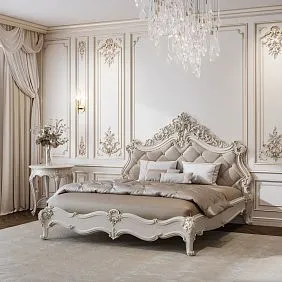
Neoclassicism is not a style in its pure form, but rather a philosophy of design built on respect for traditions while maintaining a modern perspective. If baroque shouts about luxury, and minimalism whispers about emptiness, then neoclassicism speaks with a confident, calm voice about nobility, taste, status, not requiring excessive demonstration.
In a neoclassical interior of 2026, there are no heavy gilded frames, lavish draperies, or numerous trinkets. Instead — clean lines, symmetry, restrained color palette of beige, gray, dusty blue tones with accents of natural wood.Moldings on Walls and Ceilingsare present, but delicately — thinMoldingselegantceiling rosettesa fewcarved appliquéson key furniture pieces.
Our factory also produces:


Psychology of Classicism in the Modern World
Why is classicism returning now? In a world of total uncertainty, rapid changes, and information chaos, people seek stability, rootedness, connection with tradition.Classic FurnitureIt symbolizes reliability, longevity, continuity. It does not submit to fleeting trends, exists outside time, creates a sense of eternity.
Neoclassical interior — is quiet luxury that does not shout about itself, but is instantly perceived. Quality of materials, precision of proportions, nobility of forms,Carved Wooden Elementscarefully selectedFurniture Handles— all of this speaks of taste, education, financial stability of the owner, without resorting to vulgar display of wealth.
Get Consultation
Carved Wooden Handles: Small Form, Great Art
From Function to Art
Wooden Furniture Handlesin neoclassical interiors — it is not simply a way to open a cabinet door. It is a small sculptural form, an element of decorative-applied art, a point of attention. In 2026, there is a return to traditional forms with a modern interpretation: classic turned knobs, elegant hinges with slight curves, handles with carved botanical motifs.
Wood species are chosen noble — oak, walnut, ash, beech. For premium interiors — exotic mahogany, rosewood, zebrawood. Color may vary from natural light to deep dark with tinting, but always preserving visible wood texture — one of the main signs of quality and authenticity.
Forms and Ornaments of Classic Handles
Classicwooden furniture handlesThey are divided into several types. Polished buttons in round or oval shapes with relief bands — the most conservative option, suitable for chests, bedside tables, small cabinets. Bracket handles 96–192 mm long with a classic curve — for kitchen sets, buffets, cabinets. Carved handles with plant motifs — leaves, flowers, scrolls — for especially formal furniture items.
It is important to maintain proportions. A miniature button on a massive buffet two meters high will disappear, while a large bracket on an elegant bedside table will look crude.Furniture HandlesThey must match the scale of the furniture, support its character, rather than compete with it for attention.
Harmony with architectural decoration
When plant motifs — acanthus leaves, grape clusters, roses — are present in the interior,Ceiling moldingit is logical to chooseWooden handleshandles with similar motifs. This creates a visual rhyme between the architecture of the space and its furnishings, between ceiling and furniture, enhancing the sense of a thoughtfully conceived concept.
If the room uses strict geometricMoldingswithout ornament, handles should also be restrained — polished forms without excessive carving. If there aredecorative rose outletswith lavish decoration, furniture handles can be more expressive, supporting the overall level of decorative detail.
Balusters: vertical elegance of classicism
What are balusters and where are they applied
balusters— are polished or carved vertical posts, traditionally used in the construction of stair railings, balcony railings, balustrades. In classical architecture, balusters served not only a structural but also an aesthetic function, creating a rhythmic structure, visual lightness of massive railings, decorative richness.
In the neo-classical interior of 2026,wooden balustersthey are actively used not only in staircases but also in furniture. They become supporting elements of tables, decorative posts in bed frame construction, dividers in buffets and display cases, legs of chairs and sofas. This creates a direct reference to classical architecture, imbuing furniture with historical resonance.
Forms and profiles of classical balusters
ClassicWooden balustershave a characteristic shape: base, central polished section with relief bands, capital at the top. The profile may be strict and geometric for neoclassicism, more lavish and complex for baroque, elongated and elegant for empire.
The wood species are the same as for handles — oak, beech, ash, walnut. Precision of turning is crucial: even the slightest asymmetry or irregularity in profile immediately reveals low quality.balustersmust be absolutely identical, creating a strict rhythm of repeating forms.
Balusters in furniture construction
Usebalusters in furniture— a sign of high style and attention to detail. A dining table with polished balusters instead of ordinary legs acquires a formal, almost palace-like character. A bed with balusters at the headboard or footboard resembles furniture from aristocratic bedrooms of past centuries. A buffet with balusters on the sides acquires architectural monumentality.
It is important to maintain moderation. Excessive use of balusters will turn the interior into a museum exhibit. One or two key pieces of furniture with balusters are sufficient to set a classical tone in the space; the remaining furniture may be more restrained, supporting the established theme throughWooden handlesandcarved appliqués.
Connection with architectural moldings
If there is a staircase with woodenbalusters, it is logical to repeat a similar profile in furniture. This creates stylistic unity, extending a visual thread throughout the entire house. The profile of balusters may correspond to the profile ofceiling cornicesorwall moldings— the same bands, the same proportions, the same rhythm.
When present in the interior,columns or pilastersThe blinds become their miniature reflection, repeating the principle of vertical division, creating a scaled correspondence between architecture and furniture.
Cornice: the classical language of architecture
The role of cornice in neoclassical interiors
Moldingsis a classical architectural decoration, creating volume, relief, and structure on flat surfaces of walls and ceilings. In the neoclassical interior of 2026, cornice is used sparingly, delicately, without overwhelming the space. One elegantCeiling cornice, socket for chandeliersymmetricalmoldings on wallsframing panels or paintings.
Ceiling moldingvisually raises the ceiling, creates a play of light and shadow, adds nobility and architectural completeness to the room.wall moldingsdivide walls into zones, create rhythm and structure, transforming a flat wall into a multi-layered composition.
Materials: polyurethane vs wood
ModernPolyurethane moldingsis a practical solution combining the beauty of classical forms with the durability of modern materials. Polyurethane is lightweight, moisture-resistant, does not crack, is easy to install, and can be painted any color.Polyurethane cornices, Outlets, Moldingsare ideal for ceilings and upper parts of walls.
wooden molding — Moldings, Crown Molding, Casingsfrom solid wood — a more expensive but incredibly noble solution. Wood has tactile warmth, living texture, and the ability to age beautifully. Wooden elements are more commonly used in lower wall sections, indoor frameson furniture.
Combining both materials in one interior is a common practice:Polyurethane Ceiling Moldings, Wooden moldingsin lower wall sections,wooden elements on furniture.
Ornaments and Motifs
Classical cornice ornaments — vegetal (acanthus leaves, oak branches, laurel wreaths, grape clusters), geometric (meanders, rosettes, beads), architectural (module units, denticles, Ionic elements). In 2026 neoclassicism, restrained ornaments are preferred — shallow relief, clear graphics, without excessive opulence.
ceiling rosettescan be more expressive — they are the focal point of the composition, framing the chandelier, a point of visual attraction.Crown MoldingandMoldingsare more restrained, creating structure rather than distracting attention.
Cornice on furniture
Useof cornice elements directly on furnitureis a trend gaining momentum.Polyurethane decorative appliquesorwoodare applied to cabinet facades, commodes, buffets, headboards, transforming ordinary furniture into works of art.
When the ornament of furniture appliqués repeats the ornamentceiling moldingsa powerful visual connection is created, unifying architecture and furnishings into a single whole. This is the pinnacle of design, requiring a refined sense of proportion and scale.
Decorative elements: details that create style
Carved appliqués for furniture
carved appliqués— this is concentrated ornamentation capable of transforming the simplest furniture. Made from oak, beech, ash, walnut using high-precision milling or hand-carving. Ornaments vary: from strict geometric rosettes to lavish baroque cartouches with scrolls and flowers.
In neoclassical interiorsdecorative inlays for furniture— used selectively — on central buffet facades, upper parts of bed backs, at the corners of chests. They create accents, draw attention to key pieces, but do not overload the space with excessive ornamentation.
Corner elements and molding decoration
Corner decorative elements— important details that complete the compositionmoldingThey decorate joints, create elegant transitions, add completeness.Corner moldings— used not only on walls, but also on furniture — at the corners of facades, along the perimeter of countertops.
Decor for MoldingIncludes central rosettes, corner elements, intermediate inserts with ornamentation. They transform a simple linear molding into an elegant decorative frame surrounding wall panels or furniture facades.
Furniture legs and supports
ClassicFurniture legs— a separate art form. Precision-turned baluster legs, carved legs with lion or eagle claws, curved cabriole legs in rococo style, straight conical legs in empire style. The choice depends on the overall style of the furniture and interior.
Wooden furniture legs— create visual lightness, lift furniture off the floor, add elegance. A massive chest on low, inconspicuous supports looks heavy, while the same chest on tall, precision-turned legs gains airiness and nobility.
Pilasters and columns in interiors
Decorative pilasters— vertical protrusions on walls, imitating columns — a classic architectural technique creating vertical division, grandeur, monumentality. In neoclassical interiors, pilasters may frame doorways, divide long walls into sections, flank fireplaces or built-in cabinets.
Columns— used less frequently — in spacious rooms with high ceilings, where they serve not only decorative, but sometimes structural functions. The profile of columns and pilasters may correspond to the profilebalusterscreating a scaled hierarchy of vertical elements.
Creating a neoclassical interior: practical algorithm
Step 1: defining the stylistic vector
Neoclassicism — a broad concept encompassing many variations. Strict English neoclassicism with dark wood and restrained decoration? French neoclassicism with lighter forms and pastel tones? American neoclassicism with colonial style elements? Define the direction, collect references, formulate key characteristics of the desired result.
Step 2: planning architectural decoration
Start with the room’s architecture. Where willCeiling Molding? Issocket for chandelier— vertically, horizontally, create framed panels?moldingsHow to finishdoor openings — plinth, with sash moldings?
Draw a wall unfolding plan with moldings, maintaining symmetry — one of the main principles of neoclassicism. Plan the height, width, and profile of the elements.Buy ceiling moldingafter precise measurements and calculations.
Step 3: Choosing furniture and its decoration
Selectclassic furnitureor order its manufacture. Determine key pieces that will receive the most decoration — buffet in the living room, bed in the bedroom, wardrobe in the hallway. The remaining furniture may be more restrained, supporting the overall style throughWooden handlesand proportions.
ChooseCarved decorative inserts for furniture, Furniture legs, balustersif needed for constructing tables or beds. Ensure that the decorative motifs of furniture match the motifs of architectural moldings.
Step 4: Agreeing on the color palette
Neoclassicism prefers restrained, noble colors. Base colors — white, beige, gray, dusty blue, soft green. Accents — natural wood (from light to dark depending on the chosen direction), with possible small inclusions of gold or brass.
Polyurethane moldingsis usually painted white or in the tone of the ceiling/walls.Wooden moldingscan remain in their natural color or be painted according to the concept.Furniture HandlesandappliqueWooden elements are better left in their natural state, covered with oil or wax.
Step 5: Installation and final adjustments
Installation begins with architectural decoration —ceiling cornices, rosettes, moldings on the walls. Then install the furniture and mountFurniture HandlesandDecorative Inserts.
After completing the installation, evaluate the result. Do all elements harmonize? Is symmetry maintained? Are proportions correct? Is the decoration not overcrowding the space? If anything stands out, adjust it — this is a normal part of fine-tuning.
Common mistakes and how to avoid them
Excessive ornamentation
The most common mistake — the desire to use all possibledecorative elementsat once. OrnateCeiling molding, manymoldings on the walls, carved furniture with excessiveoverlay panels— all together turns the interior into an overloaded, heavy space.
Neoclassicism 2026 requires restraint. Choose one or two zones for concentrating decoration, leaving the rest more subdued. LetMoldingsbe on the ceiling, while walls remain relatively simple. Or vice versa — walls withmoldings, while the ceiling is minimalist.
Violation of proportions
balusterstoo thick for an elegant table.Furniture Handlestoo large for a small chest of drawers.Ceiling cornicetoo bulky for a room with a low ceiling. Proportions — the foundation of classical aesthetics — their violation destroys the entire composition.
Use the scale rule: for large furniture — large details, for delicate — subtle. Heightof the ceiling corniceshould correspond to the room's height (usually 1/20–1/15 of the height).
Mixing incompatible styles
Baroquecarved appliquéswith ornate scrolls poorly combine with strict geometricmoldingsminimalism. Empirebalustersconflict with rococo curves. Choose one classic direction and stick to it, allowing only subtle variations.
Incorrect material choice
cheap plastic instead of qualitymoldings from polyurethaneMDF with film instead ofsolid woodfor furniture handles — such economy kills the entire concept. Neoclassicism requires quality materials, otherwise it becomes a cheap imitation.
Popular questions about neoclassical interior
Can a neoclassical interior be created in a small apartment?
Usemoldingminimalist — one slendercornice under the ceilinga fewmoldingon the walls. Choose elegant furniture on talllegs, withdelicate handlesThe color palette is light. This will create a sense of neoclassicism without overwhelming a small space.
How much does creating a neoclassical interior cost?
It depends on scale and material choice.Polyurethane moldingsis cheaper than wooden.Classic Furniturefactory-made is cheaper than custom-made. But even with a limited budget, you can create a neoclassical atmosphere by prioritizing wisely and investing in key elements.
How to care for wooden decorative elements?
Wooden handles, applique, balustersWipe with a soft slightly damp cloth. Avoid aggressive chemicals. Once a year, treat with oil or wax for protection and to enhance texture. Hardwoods are forgiving; softwoods require more careful handling.
Can neoclassicism be combined with modern elements?
Yes, this is the essence of neoclassicism 2026 — the balance of tradition and modernity. ClassicMoldingscomplement modern furniture with simple forms.Carved handlesdecorate minimalist facades. The key is to maintain moderation and pay attention to proportions.
Where to buy quality elements for neoclassical interior?
Company STAVROS offers a full range of elements:wooden balusters, wooden handles from solid wood, Carved decorative inserts for furniture, polyurethane molding, Moldings and cornices, pilasters and columns, Furniture legs. Wide assortment, high quality, possibility to select elements in a unified style.
Conclusion: classic living in the present
The neoclassical interior of 2026 is not a museum reconstruction of palace halls from the past, but a living, breathing interpretation of classical principles adapted to modern life, modern materials, and modern aesthetics. It is a balance between luxury and restraint, between tradition and innovation, between ornamentation and functionality.
carved wooden handles, turned balusters, elegantCeiling molding, decorative appliqués for furniture— these elements create a visual language of classicism, understandable and readable, yet sounding contemporary thanks to restrained color palettes, correct proportions, and absence of excess.
This is an interior for people who value quality, traditions, continuity. For those who see their home not as temporary shelter, but as a space that will serve for decades, be passed down to children, and preserve family history.Classic FurnitureIt does not submit to fleeting trends; it exists outside of time, remaining relevant and beautiful for years and decades.
Trust the professionals at STAVROS, who will help you realize your dream of a perfect neoclassical interior. Fromwooden balusterstoceiling moldings—furniture handlestocarved appliqués— everything necessary to create your ideal classic home with a modern accent is presented in the STAVROS catalog. Begin creating a space that will delight you and your loved ones for many years.