Article Contents:
- 1. Brief Historical Overview: From Temple Columns to Luxurious Mansions
- 1.1. Classical Foundation
- 1.2. Renaissance Era: Reinterpreting Antiquity
- 1.3. Baroque, Rococo, and Empire: Three Pillars of Luxurious Classicism
- 1.4. 19th Century: From Eclecticism to Neorenaissance
- 1.5. 20th–21st Centuries: Birth of Modern Classicism
- 3.1. Neoclassicism
- 3.2. Eclecticism and Fusion
- 3.3. Technology and Functionality
- 3.4. Ecological and Natural Materials
- 5.1. Art Deco
- 5.2. Modern (Art Nouveau)
- 5.3. Minimalism
- 5.4. Neoclassicism
- 6.1. Living Room: Grand Area for Receptions and Relaxation
- 6.2. Bedroom: Privacy and Aristocracy
- 6.3. Study: Solid Working Corner
- 6.4. Bathroom: Elegant Boudoir
- Texture Contrast
- Bold Combination of Eras
- Mirrors, Facets, and Glass
- Hand-painted and hand-finished
- Layered lighting
- Daily care
- Polishing
- Be careful with liquids
- Avoid direct sunlight
- Professional Restoration
- Choose proven manufacturers or large stores
- Check documents
- Compare prices
- Evaluate samples in person
- Pay attention to delivery and assembly
- Overloading with 'royal' decor
- Chaotic mixing
- Too dark furniture in small rooms
- Incorrect color combinations
- Lack of symmetry
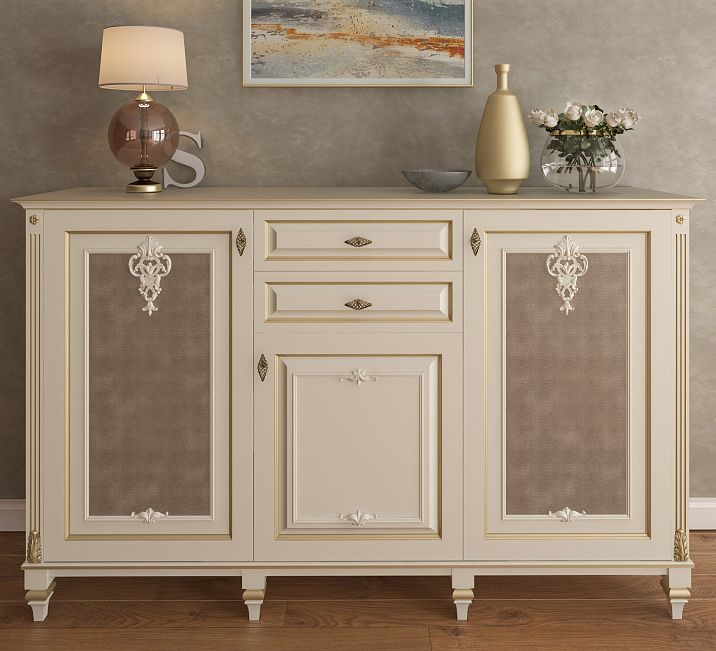
Classic Furniture – these are not just individual interior items, but embodiments of centuries-old aesthetics that have remained relevant through any era. From antiquity to the present day, the classic style has undergone adaptation to people’s tastes and needs, while preserving its unchanging principles of harmony, noble forms, and luxurious materials. In this article, we will consider:
-
The historical evolution of classic style: from Ancient Greece and Rome to the present day
-
Key features and distinctive characteristicsof classic furniture
-
Selection practices and room decoration tips (living room, bedroom, office, bathroom)
-
Tips and tricks to help integrateclassic furniture into a modern interior and give it uniqueness
-
Popular questions related to style combinations, colors, care, and purchasing
If you are drawn to aristocratic forms, the soft glow of gold leaf, and the coziness of natural wood – welcome to the worldof classic furniture, where time seems to stand still.


1. Brief historical overview: from temple columns to luxurious mansions




1.1. Ancient foundations
Principles of symmetry, proportion, and harmony, which became the basis forclassical furniture styleoriginated in Ancient Greece and Rome. It was precisely then that concepts of the 'golden section' and ideal architectural forms — columns, pediments, capitals — emerged. Ancient artisans began applying ornamentation in the form of acanthus leaves and geometric patterns (meander), which can still be found in the decor ofclassical case furniture.
Our factory also produces:


1.2. Renaissance: rethinking antiquity
During the Renaissance (14th–16th centuries), European artists and craftsmen turned once again to ancient ideals. In furniture-making, this manifested in the creation of massive cabinets, commodes, and chests adorned with relief carvings and inlays. Here, the first true 'palatial' featuresof classic furniture — grandeur, monumentality, and complex ornamentation.
Get Consultation
1.3. Baroque, Rococo, and Empire: the three pillars of luxurious classicism
-
Baroque (17th–early 18th century). Characterized by pomp and 'theatrical' forms. Carvings are lavish and voluminous, with much gilding and heavy drapery. SuchLuxury furniture required spacious rooms.
-
Rococo (mid-18th century). A more airy, feminine direction with flowing, playful lines and pastel upholstery. Carved details became finer, and emphasis shifted from scale to elegance.
-
Empire (early 19th century). The Napoleonic era introduced military symbolism (eagles, wreaths) and ancient decor. Empire furniture is massive, yet appears solemn and formal.
1.4. 19th century: from eclecticism to neorenaissance
In the 19th century, there was some 'confusion' of styles, as each craftsman tried to incorporate their own motifs (neo-Gothic, neoclassical, neorenaissance), but canonsof classic furniture remained in demand: quality wood, meticulous carving, and attention to detail.
1.5. 20th–21st centuries: birth of modern classicism
The century of industrialization and design revolutions (Art Deco, Modernism, Minimalism) did not displaceclassic furniture — on the contrary, waves of neoclassicism emerged at different periods, reinterpreting traditions under new conditions. Todayclassic furniture is especially popular in the 'premium' and 'luxury' segments, where natural materials, exclusive finishes, and historical charm are valued, harmoniously integrated into modern life.
2. Key features and characteristics of classical furniture
What distinguishesbeautiful furniture in the spirit of classicism?
-
Symmetry and proportions. Items appear balanced, without distortion in form.
-
Natural materials.Classic Furniture Usually made from oak, beech, walnut, or redwood; upholstery in velvet, leather, jacquard, or silk.
-
Carved decoration. Ornaments, volutes, columns, pilasters, and moldings may be present depending on the era (Baroque or Empire). The more intricate and delicate the carving, the higher the quality of the piece.
-
Gilding, patina, inlay. Metal appliqués, bronze handles, bronze ornamentation, often gilded — signs of status and style.
-
Imposing forms. Even compactclassic furniture has monumental characteristics — high backs, sturdy legs, convex fronts of chests of drawers.
Remember that classicism values handcrafted work. Mass-produced stamped items, cheap materials, and plastic details — these are no longer 'luxury classicism,' but its banal imitation.
3. Modern interpretations: how classicism befriended the 21st century
3.1. Neoclassicism
This is a lighter and more universal versionof classic furniture. Instead of lavish gilding — elegant patina, and bulky vitrines are replaced by moderately sized cabinets or shelves. Lighter shades are more commonly used: beige, ivory, pearl. Such an approach allows you to fitclassic furniture even in small apartments, preserving the atmosphere of palace elegance, but without overloading.
3.2. Eclecticism and fusion
Designers often mixclassic soft furniture with elements of industrial loft or minimalism. For example, placing a heavy carved chest next to a concrete wall and postmodern paintings. Paradoxically, such combinations look stylish provided the overall color palette and textures are balanced.
3.3. Technology and functionality
Today, the consumer wants not only luxurious appearance, but also modern convenience. Inclassic kitchen furniture can include built-in closers, pull-out baskets, and display lighting. Or, for example, inclassic wall cabinetry a thoughtfully designed space for TV and audio equipment. Visually, such a set looks like it belongs to the Empire era, yet functionally meets the demands of the 21st century.
3.4. Ecological and natural qualities
Many preferclassic wooden furniture also due to its 'green' qualities. Natural materials, the possibility of restoration, and long service life make such a choice more ecological than disposable items made of particleboard and plastic.
4. How to distinguish genuine elite classic furniture from cheap imitation 'classicism'
-
Materials.
-
Premium: oak, ash, walnut, mahogany, solid beech with veneer of premium species.
-
Imitation: MDF/Particle Board with laminated film, 'wood effect'.
Carving and Decoration.
-
Premium: clear, lively carving, sometimes with minor differences due to handwork.
-
Imitation: stamped ornaments, absolutely identical swirls, sticky gold leaf covering all details.
Hardware.
-
Premium: brass, bronze, complex castings, unique shapes.
-
Imitation: cheap-looking plastic/metal handles, possible poor paint job.
Assembly Level.
-
Premium: classic joinery methods (dovetail, "tail feather"), monolithic construction, furniture doesn't creak or wobble.
-
Imitation: visible metal brackets, staples, poorly fitted elements, gaps at joints.
Proportions.
-
Premium: everything is proportionate and well-designed, Baroque or Rococo canons are observed.
-
Imitation: either excessive ornamentation, or "too straight" lines, not belonging to the chosen historical style.
5. Classical Furniture and Its Influence on Other Design Styles
5.1. Art Deco
Luxurious and glamorous Art Deco of the first half of the 20th century adopted from classicism's love for expensive wood species, geometric patterns, and grandeur. Only now, instead of intricate carved details, there are more crisp lines and expensive lacquers.
5.2. Modern (Art Nouveau)
Although Modernism aimed to move away from historicism, in practice it preserved the principles of "expensive" materials and ornamentation. Many Art Nouveau elements (vegetal motifs, twisted legs) are reinterpretations of the same ancient and Baroque forms, only smoother and more asymmetrical.
5.3. Minimalism
Seems likeClassic Furniture – this is the antithesis of minimalism. But even in minimalist interiors, we use principles of proportions and the "golden ratio" inherited from antiquity. Moreover, sometimes one or two classical details can enliven an austere space.
5.4. Neoclassicism
This is direct proof that canons never disappear, only update. "New Classicism" adapts to modern apartments and cottages, takes the best from historical styles (proportions, luxury of materials) and makes them more functional and compact.
6. Practical Tips: How to Choose and Integrate Classical Furniture into Different Rooms
6.1. Living Room: Grand Area for Receptions and Relaxation
-
Center of composition: fireplace or TV zone. Arrange the sofa and chairs symmetrically around the central point.
-
Soft group: chooseclassical soft furniture for the living room with wooden armrests and luxurious upholstery (e.g., jacquard).
-
Storage: place carved vitrines, buffets, or commodes near the fireplace or on side walls. This adds grandeur to the room.
-
Decor: preferably hang a large chandelier, add wall sconces and table lamps in a classical style, hang paintings in gold-trimmed frames.
-
Idea: for the effect of a palace hall, usedark classical furniture combined with light walls and tall drapes.
6.2. Bedroom: privacy and aristocracy
-
Bed: preferably a model with a high headboard upholstered in velvet or leather, carved frame.
-
Nightstands: paired placement to maintain symmetry. It is important that the hardware matches the other elements.
-
Cabinet or wardrobe: classical bedroom furniture may have carved facades, framed mirrors, even columns.
-
Makeup table: an elegant piece that will emphasize the refinement of the setting.
-
Idea: if you fear overloading the space, takelight classical furniture and paint the walls with a soft beige or ash-pink color. Drapes can be chosen as velvet, matching the bed upholstery.
6.3. Office: a solid working nook
-
Desk: massive, with drawers, stylish hardware.Classical office furniture emphasizes the owner's status.
-
Display cabinets: for books and important documents. You can choose a variant with glass doors to arrange collectibles.
-
Chair: ergonomics is no less important than appearance. It is better to choose a model with leather upholstery and a high backrest.
-
Lighting: a desk lamp (style 'banker’s lamp') and several wall sconces or floor lamps softly illuminating the carved furniture details are required.
-
Tip: if you have a lot of equipment (computer, printer, audio equipment), plan for 'hidden' wiring or special cutouts in furniture facades to avoid spoiling the classical ambiance.
6.4. Bathroom: an elegant boudoir
-
Freestanding bathtub on 'paw' legs — a hallmark of classic style.
-
Sink cabinet:classical bathroom furniture often has shaped facades, carved legs, and stone countertops (marble, granite).
-
Mirrors: frame with gilded scrolls or strict neoclassical, with bronze decoration.
-
Materials: use moisture-resistant lacquers, quality hardware made of brass or bronze.
-
Idea: to create the effect of a palace bath, use candelabras, wall sconces with crystal pendants, as well as a floor with a herringbone pattern or marble-effect tiles.
7. What colors and shades does classical furniture prefer?
-
Dark palette: walnut, mahogany, chocolate. Creates the atmosphere of palace halls, but requires spacious rooms.
-
Light classical: white, cream, 'ivory', beige, light gray. Suitable for small rooms, adds 'air'.
-
Accents: burgundy, dark green, blue, gold. They are introduced through textiles (drapes, upholstery, cushions) or in separate decorative elements (gilding, patina).
Tip: when choosing upholstery, pay attention to its compatibility with wall and floor finishes.Classic upholstered furniture for the living room should harmonize with major interior elements to form a cohesive ensemble.
8. Ideas and tips for unique styling
Texture contrast
is one of the simplest yet effective ways to enlivenclassic furniture is playing with material contrasts. For example, if you have a polished wooden countertop or carved legs on chairs, complement them with velvet or silk upholstery, tapestry cushions.
-
Metal for harmony. Brass, bronze, or even silvered details pair beautifully with deep wood tones, adding a touch of 'shine' and elegance.
-
Wood + stone. If the concept allows, place a marble vase, mosaic table, or decorative stone panels nearby. Combined with the warm texture of wood, this looks remarkably noble.
Bold combination of eras
AnyClassic Furniture carries echoes of a specific historical era — Baroque, Empire, Rococo, or strict Classicism. But it’s not always necessary to style the room within only one style:
-
Baroque chair + Empire table. If you stick to a unified color palette (say, muted gold and dark brown tones), such 'era-mismatched' pieces will complement each other, creating a distinctive accent.
-
Rocaille mirror + modern upholstery. A mirror with elegant asymmetrical carving can be hung opposite more minimalist furniture — resulting in a stylish eclectic look.
Mirrors, facets, and glass
InClassic interior mirrors are often used to visually expand space and enhance light play. Moreover, they add an aristocratic sheen to the room:
-
Mirror inserts on cabinet doors. When cabinetry features faceted glass, the fronts appear lighter, and reflections make the room 'deeper'.
-
Mirror panels. A small mirror panel framed with molding or wooden frames — especially striking above a chest of drawers or fireplace.
-
Glass display cases. If you wish to showcase porcelain, books in beautiful bindings, or collectibles, glass doors on cabinets will highlight their value and create a sense of grandeur.
Painting and handcrafted finishes
If you need trulyexclusive living room furniture or bedroom, pay attention to original painting, inlay, or mosaic:
-
Artistic painting. Scenes in the style of Shinoiserie, floral garlands, panoramas — all of this can appear on cabinet or chest fronts, transforming them into true works of art.
-
Inlays. Mother-of-pearl, brass, thin strips of precious wood — when executed properly, such finishes give furniture a museum-quality rarity.
-
Hand-carved details. Even a small hand-carved fragment elevates the artistic value of an item.
Layered lighting
Classic style loves warm, soft light — it highlights carvings, patina, and rich material textures:
-
Central chandelier. It’s better if it’s crystal or styled like a candelabra, with hanging elements and metallic accents.
-
Local sources. Place a floor lamp next to the armchair or hang a wall sconce above the console — this will create additional play of shadows and highlights.
-
Table lamps. Lamps with fabric shades look great, especially if they have a bronze or ceramic base with hand-painted decoration.
Thus, the play of light and shadow makesbeautiful furniture even more expressive, highlighting key decorative elements.
9. Care Tips and How to Extend the 'Life' of Classic Furniture
Even the mostLuxury furniture requires regular care to maintain its original luster and durability for decades.
Daily Care
Try to remove dust with a soft cloth or special brush. It is important not to allow dust to accumulate in carved patterns and recesses — this may cause the finish to dull and the decorative elements to lose their expressiveness.
Polishing
It is useful to refresh wood approximately every few months using special wax or oil-based products:
-
Wax. Creates a protective film and gives a noble matte sheen.
-
Oil-based impregnations. Deeply nourish the wood, protecting it from drying out and microcracks.
Choose products compatible with the specific type of lacquer or finish of the furniture to avoid damaging the surface.
Caution with Liquids
Spills of water, coffee, wine, or juice can be absorbed instantly into the wood or upholstery fabric. Therefore:
-
Act quickly. Immediately blot the stain with a cloth or soft fabric.
-
Do not rub. Excessive rubbing may spread the stain further and damage the top layer of lacquer.
Avoid Direct Sunlight
Intense ultraviolet radiation can cause the lacquer, fabric, and even the wood structure to fade. On hot days, use curtains, blinds, or position items so that direct sunlight does not fall on them. This will preserve the color saturation and surface gloss.
Professional Restoration
If chips, cracks, or noticeable scratches appear during use, do not attempt to fix them yourself with 'folk remedies'.Classic Furniture It is expensive, so a professional restorer will be able to select appropriate materials, carefully restore the finish and decor. DIY attempts often result in even greater damage.
10. Where and How to Buy Classic Furniture Wisely
You are planning tobuy classic furniture, to transform your interior, but do not want to make a wrong choice? It is important to approach the issue thoughtfully.
Choose reputable manufacturers or large stores
Classic Furniture — this is a segment where the brand name and store reputation truly matter. Honest companies provide detailed descriptions of materials and manufacturing technologies, as well as warranties and after-sales service.
Check the documents
Forluxury furniture Always have certificates confirming the quality of the wood, hardware, and upholstery fabrics. If the seller cannot show such documents or avoids direct answers, be cautious.
Compare prices
do not be tempted by suspiciously low prices, becauseClassic Furniture made of solid oak or walnut, with carved decoration and quality hardware, cannot cost a few pennies. On the other hand, excessively high prices without justification should also raise suspicion.
Evaluate samples in person
If possible, visit trade shows. Touch the surface, sit on the chair or sofa, check the smoothness of the sliding mechanisms and the conformity to the declared style. This way, you will get a real impression of the furniture's quality and aesthetics.
Pay attention to delivery and assembly
Classic Furniture solid, it is easy to damage during improper transportation. Clarify with the seller who is responsible for delivery and subsequent assembly, and what guarantees are provided in case of scratches or chips.
11. Mistakes to avoid
Even well-madeClassic Furniture may look unattractive if you allow stylistic mistakes or fail to consider the details of the surrounding environment.
Overloading with 'imperial' decor
Undoubtedly,Luxury furniture is associated with gilding, scrolls, and moldings. But in small rooms, excess pompousness creates not an aristocratic interior, but a bulky 'museum' where it is difficult to move around. Use decorative elements in moderation.
Chaotic mixing
Eclecticism is exciting, but requires a clear concept. If you want to combine baroque, empire, and modern styles, think about how to link them with one or two common features: color, texture, ornament. Random mixing looks careless.
Too dark furniture in cramped rooms
When space is limited and natural light is scarce,Classic Furniture made of dark solid wood visually 'compresses' space. In such cases, it is better to chooselight classical furnitureand complement it with mirrors and calm pastel walls.
Incorrect color combinations
Aggressive contrasts (e.g., burgundy curtains, dark purple walls and upholstery with bright gold patterns) can overload the interior and cause visual overstimulation. It is better to stick to a harmonious palette of 2–3 main tones and a small number of accents.
Lack of symmetry
Classic style loves neat arrangement: paired wall sconces on either side of a mirror, two identical chairs facing each other, two nightstands by the bed. If you place items randomly, you will violate the main principle of 'classic' — the feeling of order and balance.
Thus, knowing these key points when selecting, maintaining, and arrangingclassic furnitureyou will be able to create an interior that will delight both guests and family members for many years. Remember that classicism is not just a set of luxurious details, but a whole philosophy striving for harmony and elegance, timeless and unchanging.
12. Conclusion: classic furniture as an investment in beauty and heritage
Classic Furniture is a choice in favor of eternal values and time-tested solutions. Its noble forms and luxurious materials are not subject to fleeting trends. Yes, it is not the cheapest option, but it:
-
Lasts for decades, and with careful care — for centuries.
-
Adds status and refined elegance to the ambiance.
-
Remains in trend, as classicism is the foundation of aesthetics.
-
Allows you to feel like you’re in a palace or historic estate, without compromising modern functionality (hidden mechanisms, lighting, ergonomics).
If you dream of a home where every detail is imbued with history and simultaneously reflects your individual style,classic furniture — the optimal path. The key is to responsibly choose the manufacturer, shades, decor, and layout. Following the tips and life hacks from this article, you will be able to create an interior that captivates your family and guests with its respectability and coziness. And perhaps, your pieces will become a new 'antique' heirloom, passed down through generations in your family.