Article Contents:
- What is Classic Furniture: Features, Essence, Philosophy
- Five Features That Unmistakably Identify Classic Style
- Wood as the Carrier of Classic Style
- Historical Styles of Classic Furniture: From Baroque to Neoclassicism
- Baroque: Maximalism as a Principle
- Rococo: Elegance Without Heaviness
- Classicism and Empire: Strictness and Formality
- Neoclassic: classic for modern space
- Classic Furniture in the Living Room, Hall, Apartment: How to Choose Correctly
- Scale Principle: Furniture Must Match the Room
- Classic Furniture in the Living Room: An Ensemble, Not a Set of Items
- Classic Style in an Apartment with Small Rooms
- Classic Furniture in the Bedroom: Personal Space with History
- Dark and Light Classic Furniture: What's the Fundamental Difference
- Dark Classic Furniture: Substantiality and Status
- Light Classic Furniture: Airiness and Elegance
- When to Choose Neutral Golden-Beige Toning
- Classic Furniture in the Living Room Interior: Arrangement Principles
- Focal point
- Grouping of Upholstered Furniture
- The Role of the Mirror
- The Role of the Console
- Where to Buy Classic Furniture Inexpensively in Moscow: What You Need to Know
- Advantages of Buying from the Manufacturer
- What the Price of STAVROS Classic Furniture Includes
- How to Assess Quality When Buying Online
- Photo Selection: What Classic Furniture Looks Like in Real Interiors
- White Living Room in 'French Neoclassicism' Style
- Dark Library-Study in English Classic Style
- Bedroom 'Versailles' in Golden-Cream Tones
- Provence-style hallway
- Classical furniture and wooden decor: a system, not a coincidence
- Care for classical solid wood furniture
- FAQ: answers to popular questions about classical furniture
- STAVROS: classical furniture from our own production
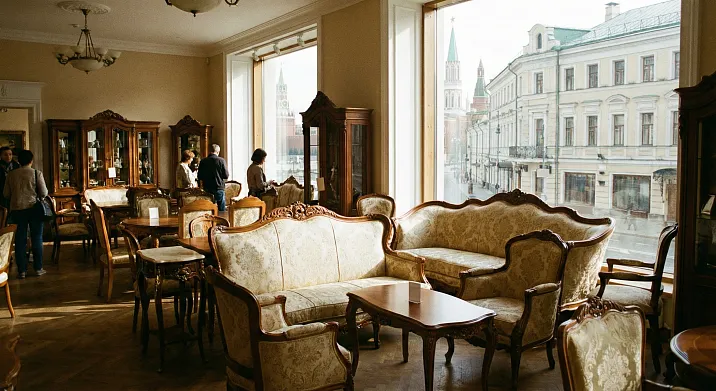
There are things that never age. Wood turned into the shape of a baluster. Velvet on the back of a high-armchair. Gilding on a carved cornice.Classic Furniture— this is not a tribute to the past or an attempt to stop time. It is a conscious choice of people who understand: what is done right does not become outdated. Styles change, fashion trends come in waves and go away. Classics remain.
Today, the query 'furniture in classical style' is entered into search engines by hundreds of thousands of people every month. Some want to understand where to start; others are looking for specific collections; still others are faced with a choice — dark oak or light ash, straight lines of neoclassicism or lush baroque. This article answers all these questions: comprehensively, honestly, and with respect for the reader who wants not just to buy furniture, but to create an interior with character.


What is classical furniture: signs, essence, philosophy
Before talking about details, we need to agree on the concept. What lies behind the words 'classical furniture'? Not a historical-archival reference — a living definition applicable to what can be bought today.
Classic Furniture— this is case goods and upholstered furniture, executed in the tradition of European palace and aristocratic furnishings of the 17th–19th centuries: from Baroque and Rococo to Classicism, Empire and Neoclassicism. Despite the diversity of specific historical styles, they share a common language. It is precisely this language that distinguishes classical furniture from any other.




Five signs by which classics are unmistakably recognized
Natural materials. Solid wood — oak, beech, walnut, cherry — is the basis of every element of the load-bearing structure. Plywood and chipboard are unacceptable in classics as structural materials. MDF is allowed only for decorative overlays provided they are hand-finished. Upholstery — natural fabrics: velvet, tapestry, silk, genuine leather.
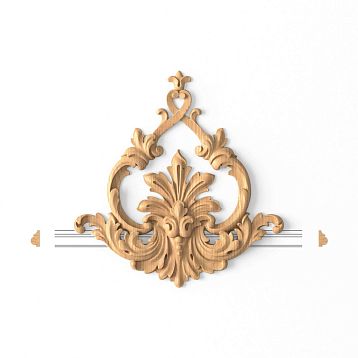
Handmade decor. Carving on facades, legs, cornices. Gilding or patina. Inlay — marquetry and intarsia (wooden mosaic on tabletops and facades). Molded plaster or wooden overlays. All this is created by hand or with minimal machine involvement — and this is precisely what makes classical furniture expensive.
Expressive legs and supports. Turned 'balusters', cabriole, 'lion's paw', 'bird's claw', scrolls — the legs of classical furniture are works of art in themselves. Preciselyfurniture supports made of solid woodset the first tone of the style: by the shape of the legs, an experienced eye unmistakably determines the era and style.
Complex profile. Moldings, cornices, friezes, pilasters — horizontal and vertical elements that divide the facade surface into architectural zones. In classics, there is no 'just a flat facade' — every plane is articulated by relief.
Symmetry and proportion. Classics is the mathematics of beauty. The golden ratio, modular system, mirror symmetry in the arrangement of decorative elements. Violation of symmetry in classics is almost always a mistake.
Our factory also produces:


Wood as the bearer of classical style
Why wood? Because solid wood is the only material that simultaneously possesses the necessary strength, workability, and natural beauty. Oak withstands carving of any complexity and holds its shape for centuries. Beech provides a perfectly uniform surface for painting and tinting. Walnut — dark, noble, with beautiful straight grain — is the material for the most expensive pieces.
It is important to understand: classical solid wood furniture is not nostalgia. It is a technology that has passed the test of several centuries of practice and has proven to be the only one that gives the desired result.
Get Consultation
Historical styles of classical furniture: from Baroque to Neoclassicism
'Classics' is a broad concept. Under one term, several historically independent styles are hidden, each with its own face.
Baroque: maximalism as a principle
Baroque (17th — early 18th century) — excess as an artistic method. Curved forms, asymmetrical decor, massive curved cabriole legs with a claw or hoof at the end, gilding of surfaces, rich fabrics with large patterns. Baroque furniture overwhelms and delights simultaneously. It is appropriate in large halls with high ceilings, 'Versailles board' parquet, and heavy velvet curtains.
The Versailles collection by STAVROS is a direct dialogue with this tradition: a table, armchair, bed, console, and coffee table with characteristic curved legs, gilded moldings, and carved decorative elements. This is Baroque adapted to modern space without losing the spirit of the era.
Rococo: elegance without heaviness
Rococo (mid-18th century) — a response to Baroque. The same curved lines, but thinner, lighter, more playful. Pastel colors — lilac, pistachio, powder pink — instead of the dark gold of Baroque. Asymmetrical ornaments in the form of shells, flowers, leaves. Rococo created 'boudoir' interiors: intimate, private, almost toy-like.
A modern interpretation of Rococo — lightClassic FurnitureIn a milky-white or patinated finish with gilded overlays. This style is for bedrooms and boudoirs, for small cozy living rooms with soft lighting.
Classicism and Empire: Strictness and Formality
At the turn of the 18th–19th centuries, the opulence of Baroque gave way to the strictness of Classicism—furniture became straighter, more symmetrical, more solemn. Rectangular forms, clear horizontal lines, restrained decor with antique motifs: meanders, laurel wreaths, fasces, griffins. Empire style added military symbols of the Napoleonic era: eagles, palmettes, torches, Egyptian motifs.
Classicism furniture is monumental, weighty, formal. These are dining tables on columnar legs, bureaus with bronze handles, beds with rectangular headboards.
Neoclassicism: classicism for modern spaces
Neoclassicism today is the most sought-after interpretation of the classical style. It is not a copy of historical models, but their reinterpretation through the lens of modern interior design. Restrained decor, straight lines with delicate profile details, a neutral color palette—white, light beige, gray-pearl. Neoclassicism works in apartments with ceilings from 2.7 m, without excessive stucco and heavy cornices.
Classical furniture in the living room, hall, apartment: how to choose correctly
Selectioncollection of furniture in classic style— a task that requires an understanding of scale. The main mistake is to buy 'beautiful' items individually and hope they will come together as an ensemble. They won't. Classicism requires systematic thinking.
The principle of scale: furniture must match the room
Classical furniture in a hall with a 2.5 m ceiling and an area of 18 m² is a tragedy. A massive carved sideboard 220 cm high in a low room feels oppressive, suffocating, and makes the space claustrophobic. Classicism was born in halls with 4–5 m ceilings. For modern apartments, neoclassicism works—more restrained, with smaller dimensions and delicate decor.
The golden rule: the height of case furniture should not exceed 60–65% of the ceiling height. With 2.7 m ceilings—the maximum height for a wardrobe or sideboard is 175–180 cm. This is not a limitation—it is a proportion that makes the space comfortable.
Classical furniture in the living room: an ensemble, not a set of items
A living room in a classical style is a sofa with a high back and carved legs, two armchairs with armrests, a coffee table, a console against the wall, a mirror in a carved wooden frame above the console, and possibly a secretary or display cabinet. All items are from one collection or one visual 'family': a unified wood tone, a unified decorative motif.
The Versailles console or the Marseilles console by STAVROS is precisely such a connecting element. It is both functional (a stand for decor) and architectural: its profile 'echoes' the wall moldings,decorative inlaysandsolid wood cornicescreating a unified decorative language for the space.
Classicism in an apartment with small rooms
Neoclassicism and Provençal classicism—Marseilles—come to the rescue. White or light gray finish, restrained decor, lighter proportions. The Marseilles bench, Marseilles console, Marseilles dining table—a line designed with modern apartment dimensions in mind: no overload, no loss of character.
Classical furniture in the bedroom: a personal space with history
The bedroom is the room where the classical style works, perhaps, most convincingly. A bed with a carved headboard (Versailles 001-001 by STAVROS, from 580,180 rubles) is the centerpiece around which everything is built. Nightstands with curved legs, a dressing table with a mirror (Adele 010-001), a mirror in a carved wooden frame on the wall—and the bedroom ceases to be just a place for sleep. It becomes a declaration of taste.
Dark and light classical furniture: what is the fundamental difference
This question is not just about color. It is a question of character, mood, and what message you want to convey to the space.
Dark classical furniture: weightiness and status
Dark woods and finishes—oak in 'wenge' tone, walnut, dark 'chocolate', 'mocha'—are historically 'masculine' classicism. A study, library, formal living room. Furniture of this color has authority: it visually 'grounds' the space, making it solid and weighty.
Advantages of dark classicism:
-
Hides minor scratches and signs of wear
-
Creates depth and volume in large spaces
-
Associated with expensive wood species (walnut, wenge, teak)
-
Pairs effectively with metal elements (bronze, brass)
Disadvantages:
-
In small spaces, makes the area feel heavier and darker
-
Requires ample artificial lighting in the absence of large windows
-
Dust is more visible on dark surfaces than on light ones
Light classic furniture: airiness and elegance
White enamel with patina, milk white, light beige, "ivory", light ash with clear varnish — this is "feminine" classic: Provencal, Louis-style, Scandinavian neoclassical. Lightness, airiness, tenderness. Light classic works well in small spaces, in rooms with north-facing windows (where there's little sun), in children's and women's bedrooms.
Advantages of light classic:
-
Visually expands the space
-
Works well in any lighting
-
Creates a feeling of freshness and cleanliness
-
Easier to update: white surfaces can be repainted
Disadvantages:
-
Scratches and stains are more visible than on dark surfaces
-
Requires regular cleaning
When to choose neutral golden-beige toning
Golden-brown, warm beige, "natural oak", "light walnut" — a compromise between two extremes. This is the most universal option for Moscow apartments with standard layouts: it doesn't feel oppressive, doesn't seem too "fragile", forgives minor defects, and yet provides that warm, organic wood character.
Classic furniture in the living room interior: arrangement principles
The living room is the face of the house. It is here thatclassic furniture in the living room interiorunfolds to its full potential. Let's examine several arrangement principles.
Focal Point
In a classic living room, there is always one main focal point. This could be: a fireplace with a mirror in a carved frame above it, a large sofa with a high back against an accent wall, or a dining table in the center of the hall — if the living room is combined with a dining area. All other furniture is arranged relative to this center, not randomly along the perimeter.
Grouping of upholstered furniture
The sofa and armchairs in a classic living room are not placed along the walls (a common mistake), but in the center of the room, forming a "conversation island." The coffee table is placed strictly in the middle of this group. This layout creates coziness and invites conversation — unlike a "home theater" setup where everything is oriented toward the screen.
The role of the mirror
In a classic interior, a mirror is not a functional item, but an architectural one. A large mirror in a carved wooden frame above a console or fireplace doubles the space, adds depth, "brings" light closer. A mirror in a carved Versailles, Estelle, Louis, or Luxe frame from STAVROS is an interior focal point, not an auxiliary element.
The role of the console
A console is an item that works against a wall: entryway, space between windows, a niche. It holds: a mirror, a vase with flowers, candlesticks, decorative objects. The Versailles console and the Marseilles console from the STAVROS catalog are created precisely for this role — they are expressive enough to work as an independent decorative element, and neutral enough to become a background for personal items.
Where to buy classic furniture inexpensively in Moscow: what you need to know
Let's state our position right away: "inexpensive" in the context of classic solid wood furniture is a relative concept. Good classic-style furniture made from natural wood with handcrafted decor cannot cost the same as furniture made from particleboard. This is honest, and it's worth accepting this from the start.
But "inexpensive" can mean "justifiably priced" — that is, when you understand what you're paying for, and you pay exactly what a real product made from real wood is worth. This is precisely where the advantage of working directly with the manufacturer lies.
Advantages of buying from the manufacturer
When youbuy classic furniturefrom the manufacturer, and not through retail chains and intermediaries:
-
The price does not include several dealer markups (which together can amount to 40–80% of the cost)
-
You receive complete information about materials, wood species, applied varnishes and finishes
-
Customization is possible: different tint color, different upholstery fabric, non-standard size
-
Direct communication with production in case of quality-related questions
What the price for STAVROS classic furniture includes
The STAVROS catalog features items priced from 10,360 rubles (the Versailles CHPU-001 watch) to 580,180 rubles (the Versailles 001-001 bed) and beyond. This is not a simple 'cheap to expensive' range—it reflects different product categories with varying scopes of work, materials, and levels of decoration. For example, the Marseilles 002-003 table starting at 83,740 rubles and the Versailles 002-001 table starting at 277,420 rubles represent items of different complexity and labor intensity, not an attempt to inflate prices.
How to assess quality when buying online
Four things worth checking:
-
Wood species — it should be specified in the characteristics. 'Solid wood' without specifying the species is a reason to clarify.
-
Photos of corners and joints — in good furniture, joints on the facade are invisible, corners are perfectly fitted.
-
Coating description — varnish, oil, or paint? Number of layers? For classic furniture — minimum 3–4 layers with intermediate sanding.
-
Presence of reviews and photos of actual products (not just studio renders) — this gives a real idea of color and texture.
Photo selection: what classic furniture looks like in real interiors
Words describe — photos convince. Several real application scenarios for classic furniture.
White living room in 'French neoclassical' style
Milky-white walls, herringbone parquet made of light oak, sofa and two armchairs with ecru upholstery. White-painted Marseilles console with silver handles against the wall. Estelle mirror in a carved frame above the console. On the floor — a Persian rug with a floral pattern. Lighting — sconces with crystal pendants. Result: lightness and elegance without overload.
Dark library-study in English classic style
Walls finished with wooden panels, floor — dark parquet. Furniture in 'dark walnut' tint: writing desk with bronze overlays, two armchairs with 'cognac' leather upholstery. Bookshelves, glass display case. On the wall —Versailles mirror in a carved frame. Result: intimacy, solidity, a feeling of 'a home with a history'.
'Versailles' bedroom in golden-cream tones
Versailles bed with a high carved headboard and champagne-colored upholstery. Versailles nightstands on the sides. Adele dressing table with mirror. Walls covered with wallpaper featuring a delicate floral pattern matching the furniture. Textiles — multi-layered: heavy silk curtains, embroidered bedspread. Result: a bedroom that doesn't need decorations — it is itself a decoration.
Hallway in Provencal style
Small area, but with character. Marseilles console with framed mirror, Marseilles bench with linen upholstery, tiled floor in a 'checkerboard' pattern. Light walls, fresh flowers in a jug. Result: coziness from the first step into the house.
Classic furniture and wooden decor: a system, not randomness
A classic interior is a system. Furniture, decor, architectural elements must speak the same language.Wooden moldingson walls,cornices, frames for mirrors and paintings— all of this must have a unified decorative structure with the furniture.
This is why STAVROS offers not only furniture collections but also a full range of wooden decor:solid wood trim pieces, decorative overlays, columns, pilasters, capitals, and cornices. This allows building an interior as a unified architectural ensemble — from the baseboard to the ceiling cornice — in one style, from one material, from one manufacturer.
Care for classic solid wood furniture
Investing in classic furniture is a long-term solution. With proper care, solid wood furniture not only maintains its appearance but also acquires a special 'patinated' character over time—that very feeling of an item with history.
Daily care: use a soft dry cloth or microfiber to remove dust. Damp wiping—with a lightly wrung soft cloth without chemical solvents or abrasives.
Every 3–6 months: polish with special wax for natural wood furniture. Wax nourishes the surface, seals minor scratches, and imparts a noble matte sheen.
What is strictly prohibited: steam cleaning, acetone and alcohol on surfaces with wax or oil finishes, prolonged direct sunlight (fading of the tint), sharp humidity fluctuations (from 20% to 80% in a short time—guaranteed cracks).
Restoration: scratches on a lacquered surface are sealed with a wax pencil in a matching tone, then polished. Serious damage—sanding and reapplication of lacquer. Good classic furniture can be fully restored, returning it to its factory appearance.
FAQ: answers to popular questions about classic furniture
Is classic furniture suitable for an apartment in a panel building?
Yes, with the correct choice of scale. Provençal classic (Marseilles line) and neoclassical models are specifically adapted to modern apartment proportions. It's important to follow the rule: furniture height should not exceed 65% of the ceiling height.
How to combine classic furniture with a modern interior?
This is called 'transitional style' or 'modern classic.' The principle: take a classic form with moderate decor and integrate it into a neutral modern background—white walls, light floors, minimal textiles. A sofa with carved legs and strict upholstery in a neutral color + clean walls + a modern chandelier = convincing modern classic.
Can classic furniture be ordered in custom sizes?
Yes. STAVROS offers customization for specific projects: non-standard width, different tint color, alternative upholstery fabric. Terms and conditions are clarified with the manager when placing an order.
Which classic style is suitable for a living room of 20–25 m²?
Provençal classic or neoclassic. Furniture height not exceeding 180 cm, light tint, moderate decor without overloading. One accent piece with pronounced decor (a mirror in a carved frame, a console)—and restrained furniture around it.
How does furniture in a classic style differ from pseudo-classic?
Authentic classic furniture—solid wood, hand carving, high-quality lacquer or oil, metal hardware (bronze, brass). Pseudo-classic—chipboard with a 'wood-like' film, plastic overlays 'imitating carving,' cheap hardware. The difference is noticeable immediately: by weight, tactilely, by the uniformity of the finish, by the precision of the decorative relief.
How much does a set of classic furniture for a living room cost?
Depending on the composition and level of decor: Marseilles table from 75,810 rubles, Versailles chair from 160,930 rubles (each), Versailles armchair from 196,780 rubles, console from 61,270 rubles. A full living room set (table, 4 chairs, 2 armchairs, console, mirror) in a mid-level line—approximately from 900,000 to 2,500,000 rubles depending on configuration and decor.
Is classic furniture only for large houses?
No. This is a common myth. Provençal classic and neoclassic are specifically created for urban apartments. Correct scale, light tint, moderate decor—and classic furniture fits organically even into a studio apartment. The principle of 'one expressive piece' works everywhere.
STAVROS: classic furniture from our own production
To talk about classic furniture and not mention the manufacturer is to leave the conversation unfinished. STAVROS is a Russian manufacturer of furniture and interior decorative elements with its own production and full control over every stage of product manufacturing.
In the STAVROS catalog—collections of classic furniture Versailles (Baroque and high classic) and Marseilles (Provençal classic and neoclassic): beds, tables, chairs, armchairs, consoles, coffee tables, poufs, benches, cabinets, mirrors in carved frames, clocks. All—made from selected wood species (oak, beech, walnut) with hand carving, professional tinting, and multi-layer lacquer coating.
In addition to furniture, STAVROS offers a full range of wooden decor to create a classic 'turnkey' interior:Moldings, cornices, pilasters, capitals,Mirror Frames, Furniture legsandFurniture Handles. This allows creating a cohesive interior with a unified decorative language—from baseboard to chandelier—without the need to search for different suppliers for each element.
STAVROS works with private clients, design studios, developers, and furniture manufacturers. Showrooms in Moscow and St. Petersburg, shipment from a single item, delivery across Russia and CIS. Custom production—subject to technical specification approval.
Classic furniture is not a seasonal purchase. It is a choice that will remain relevant in twenty, thirty, fifty years. And this choice deserves a manufacturer who thinks as long-term as the material itself. STAVROS is precisely such a manufacturer.