












































































Article Contents:
- History and evolution of furniture valances
- From antiquity to modernity
- Industrial Revolution and mass production
- Types and classification of furniture valances
- By material of manufacture
- By purpose and application
- By stylistic execution
- Technical specifications and requirements
- Dimensional parameters
- Humidity and geometric stability
- Surface treatment quality
- Production process of furniture valances
- Raw Material Preparation
- Kiln Drying and Stabilization
- Mechanical processing
- Quality Control
- Methods of mounting and installation
- Traditional fastening methods
- Modern Fastening Systems
- Features of installation under various conditions
- Finishing and decorating valances
- Natural finishes
- Lacquered finishes
- Decorative Effects
- Style directions in valance application
- Classic style
- Modern minimalism
- Provence and Country Style
- Scandinavian Style
- Application in various types of furniture
- Kitchen furniture
- Living room furniture
- Bedroom furniture
- Economic aspects of selection
- Price-to-Quality Ratio
- Impact on Furniture Cost
- Regional pricing characteristics
- Maintenance and operation
- Daily care
- Protection against damage
- Restoration and repair
- Industry development trends
- Ecological requirements
- Technological Innovations
- Personalization and customization
- Supplier selection and quality criteria
- What to Pay Attention to When Buying
- Warranties and Service
- Popular questions and answers (FAQ)
- Which wood species to choose for a furniture valance?
- Can furniture valances be used in humid rooms?
- How to properly calculate valance dimensions?
- How long does a wooden furniture valance last?
- Can you install a furniture valance yourself?
- How to care for a valance with oil finish?
- What is the difference between a valance and a molding?
- Can the color of a wooden valance be changed?
- What tools are needed to install a valance?
- Does a valance affect the cost of furniture?
- Conclusion
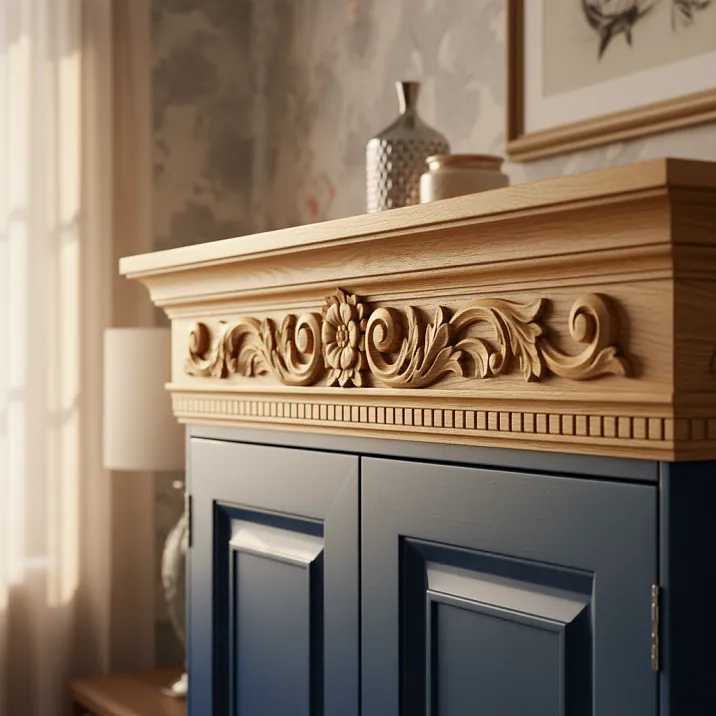
What turns ordinary furniture into a work of art? Details. And among all elements of furniture decoration, the furniture valance holds a special placeFurniture cornice— an elegant solution that gives any interior item a finished look. In the world of modern design, where every millimeter matters, furniture valances become the very element that distinguishes mass production from an individual approach to creating a cozy space.
Furniture decoration has always been a sign of the owner's taste and status. Even in the Baroque era, masters understood: beauty lies in the details. Modernwooden cornices for furniturecontinue this tradition, combining age-old technologies with innovative solutions. They do not merely decorate — they create an atmosphere, highlight the interior's individuality, and demonstrate attention to quality.


History and Evolution of Furniture Valances




From Antiquity to the Present Day
The roots of furniture decoration trace back deep into human history. Already in ancient Egypt, artisans used decorative elements to adorn the furniture of pharaohs. Greek and Roman craftsmen perfected the art of carving, creating valances that continue to inspire modern designers.
In medieval EuropeFurniture cornicegained special significance. Gothic masters created complex multi-tiered compositions where each element carried symbolic meaning. Carved cornices adorned not only secular furniture but also church utensils, becoming part of the spiritual culture of the era.
The Renaissance brought a new understanding of proportions and harmony. Italian Renaissance masters developed classical cornice proportions, which are still considered the standard of beauty. Their work became the foundation for the development of furniture art throughout Europe.
Our factory also produces:


Industrial Revolution and mass production
The 19th century radically changed the approach to furniture production. The Industrial Revolution allowed many processes to be mechanized, but simultaneously threatened traditional craftsmanship skills. It was precisely during this period that the 'Arts and Crafts' movement emerged, fighting to preserve handcraft in the creation of interior items.
Furniture cornicesbecame one of the ways to preserve traditions in the era of mass production. Masters learned to combine machine processing with hand finishing, creating items that retained individuality at an affordable price.
Get Consultation
Types and classification of furniture cornices
By Material of Manufacture
The modern market offers a wide range of materials for manufacturing furniture cornices. However, natural wood remains the undisputed favorite among those who value quality and beauty.
Oak cornices are distinguished by exceptional strength and noble appearance. The density of oak reaches 700 kg/m³, making products from it practically immune to mechanical damage. The natural wood grain creates a unique texture that cannot be artificially reproduced.
Beech cornices attract attention with their uniform structure and pleasant pinkish hue. Beech is highly workable, allowing for the creation ofFurniture made of oak complements the interior picture, especially if the furniture is also made of solid oak. Unity of material and finish creates a sense of completeness and stylistic coherence.complex profiles with fine details.
Ash cornices combine the strength of oak with elasticity. The light color of ash makes it an ideal choice for modern Scandinavian-style interiors.
By purpose and application
kitchen furniture cornicerequires special characteristics. High humidity, temperature fluctuations, steam exposure — all of this imposes special requirements on the material and processing. Kitchen cornices must have a moisture-resistant coating and be easy to clean.
Living room cornices can be more decorative. Here, complex profiles, carving, and patination are appropriate. The living room is the face of the home, and every detail should highlight the status and taste of the owners.
Bedroom cornices tend toward calmer, soothing forms. Soft lines, natural tones, minimal decorative elements — such an approach creates an atmosphere of peace and comfort.
By stylistic execution
Classic cornices are characterized by strict proportions and traditional profiles. They are based on architectural orders and create a sense of monumentality and solemnity.
Modern cornices are distinguished by minimalist forms and functionality. Clean lines, minimal decoration, emphasis on material quality and precision of execution.
Cornices in the Provence style have a light wear, as if aged over decades. Light tones, aged effect, simple forms create an atmosphere of French countryside.
Technical characteristics and requirements
Dimensional Parameters
of floor wooden skirtingmolding for furnitureThey vary widely depending on purpose. Profile height may range from 20 to 150 mm, width from 15 to 100 mm. The length of standard blanks is usually 2000–3000 mm, which allows minimizing the number of joints during installation.
For kitchen furniture, cornices of height 40–80 mm are most commonly used. These dimensions provide an optimal balance of decorative and functional qualities. Higher cornices may visually 'press' in small kitchens, while too low ones do not create the desired effect.
Moisture and geometric stability
Qualitywooden cornice for furnitureshould have a moisture content not exceeding 8–12%. This ensures geometric stability and prevents deformation during use. Wood drying is performed in special chambers with controlled temperature and humidity parameters.
Modern technologies allow achieving uniform moisture content throughout the entire cross-section of the blank. This is especially important for items with complex profiles, where uneven drying may lead to cracking and deformation.
Surface Processing Quality
The surface of a quality cornice should have a roughness class not exceeding Ra 2.5 μm. Achieving such surface smoothness requires multi-stage sanding with gradually decreasing abrasive grain size.
Final finishing includes removing dust with special cloths and applying a primer. This ensures even absorption of the final coating and long-term durability of the appearance.
Production process of furniture cornices
Raw material preparation
Production of qualitymolding for furniturebegins with careful selection of wood. Only healthy sections of the trunk, free of knots, cracks, and other defects, are used. The wood must be prepared at optimal times, when sap movement is minimal.
After seasoning, the wood undergoes natural drying outdoors for 6-12 months. This stage cannot be accelerated—only natural drying ensures even moisture removal without internal stresses.
Kiln Drying and Stabilization
The next stage is kiln drying in special drying chambers. The process takes from several days to several weeks depending on the wood species and initial moisture content. Temperature and air humidity in the chamber are adjusted according to specially developed regimes.
After drying, the wood undergoes a stabilization period—storage in a room with controlled microclimate. This allows the material to reach equilibrium and prevents deformation later on.
Mechanical processing
Modern productioncabinet moldingsuses high-precision CNC machines. This ensures perfect profile repeatability and high surface quality.
Profile milling is performed in several passes, gradually approaching final dimensions. Using special tools with hardmetal cutting edges ensures clean processing and tool longevity.
Quality control
Each batch of finished products undergoes multi-stage quality control. Geometric dimensions, surface quality, and wood moisture content are checked. Special attention is given to profile compliance with technical requirements.
Visual inspection allows identifying the slightest processing defects that may affect the appearance of the finished product. Only products that have passed all control stages are released for sale.
Methods of mounting and installation
Traditional fastening methods
Classic mounting methodmolding for furniture— involves using woodworking glue and mechanical fasteners. Modern polyurethane glues provide joint strength exceeding the strength of the wood itself.
Before applying glue, surfaces must be thoroughly prepared—cleaned of dust and degreased. Glue is applied in an even layer, after which parts are joined and held until the glue joint fully cures.
Modern fastening systems
Innovative solutions include using special profiles and clamps that provide hidden mounting without visible fasteners. Such systems are especially popular in manufacturing premium furniture.
buy wooden cornice for furnitureWith a modern mounting system—this is an investment in durability and aesthetics. Hidden fasteners do not disrupt the visual integrity and allow for disassembly without damaging the surface if needed.
Features of installation under various conditions
When installingcabinet moldings for kitchen furniture— moisture and temperature fluctuations must be considered. It is recommended to use moisture-resistant glues and additional sealing of joints.
In rooms with high humidity, all wooden elements must have protective coatings. Modern varnishes and impregnations create a reliable moisture barrier while preserving the natural beauty of the wood.
Finishing and decorating moldings
Natural coatings
Oil-based wax finishes highlight the natural beauty of wood, creating a noble silk-like sheen. Such finishes are eco-friendly, pleasant to the touch, and easy to restore.wooden cornices for furnitureMoldings with oil finish are especially popular in eco-oriented interiors.
Wax finishes create a matte surface with a slight gloss. Wax penetrates the wood pores, emphasizing its texture and forming a protective layer. Such finishing requires periodic renewal but allows maintaining the original appearance of the items.
Lacquer Coatings
Polyurethane varnishes provide high resistance to mechanical impacts and moisture. They form a strong film on the wood surface, reliably protecting against external influences. Modern varnishes can have various gloss levels—from deep matte to mirror gloss.
Water-based acrylic varnishes are more eco-friendly and have a mild odor. They dry quickly and form an elastic film that does not crack under wood temperature deformations.
Decorative Effects
Patination allows creating an effect of noble antiquity.Furniture corniceMoldings with patina acquire a special charm and expressiveness. Patination technique requires high skill and artistic taste.
Brushing highlights the natural wood texture, creating a relief surface. Soft fibers are removed with special brushes, after which the surface is stained and coated with a protective compound.
Artificial aging includes various techniques to imitate natural wear. Scratches, wormholes, tool marks—all of these create the feeling of authentic antique furniture.
Style directions in applying moldings
Classic style
In classic interiorsFurniture cornices— play a key role in creating the overall composition. Strict proportions, traditional profiles, noble materials—all of these create an atmosphere of an aristocratic home.
Classic moldings are often complemented by carved elements—rosettes, flutes, acanthus leaves. These details are handcrafted by skilled carvers and are true works of art.
Modern minimalism
In minimalist interiors, the cornice should be as minimalistic as possible. Simple geometric shapes, absence of decorative elements, emphasis on material quality and precision of execution — these are the principles of modern design.
Furniture corniceIn the minimalist style, it can be practically unnoticed, creating only a subtle shadow that emphasizes the transition between planes.
Provence and country
Rustic styles require a special approach to decoration. Light carelessness, effect of natural wear, simple forms — all this creates an atmosphere of a cozy country house.
Cornices in the Provence style often have light, whitewashed tones. Artificial aging creates the impression that this furniture has served several generations of the family.
Scandinavian style
Northern aesthetics prefer light wood species and minimal processing.wooden cornices for furnitureIn Scandinavian style, they emphasize the natural beauty of the material.
Functionality and eco-friendliness are the main principles of Scandinavian design. Each element should not only be beautiful but also practical.
Application in various types of furniture
Kitchen Furniture
Kitchen furniture corniceIt performs not only a decorative but also a practical function. It hides ceiling imperfections, conceals lighting, and creates a smooth transition from cabinets to the ceiling.
Kitchen cornices must be resistant to moisture, grease, and high temperatures. Special stains and lacquered finishes ensure durability and ease of maintenance.
When choosing a cornice for the kitchen, it is important to consider the overall style of the cabinet set. A classic kitchen requires more decorative solutions, while a modern one — minimalist forms.
Living room furniture
In the living room, cornices often become the main decorative accent. Here, more expressive profiles, carved elements, and contrasting material combinations are appropriate.
Bookcases with cornices create a sense of solidity and respectability. A properly chosen cornice can visually increase the height of the room or, conversely, make it more cozy.
Bedroom furniture
In the bedroom, cornices should create an atmosphere of calm and tranquility. Soft lines, natural tones, minimal contrasts — this is the approach to decorating a bedroom.
buy wooden cornice for furnitureIn the bedroom, it means investing in quality rest and healthy sleep. Natural materials create a favorable microclimate in the room.
Economic aspects of selection
Price-to-quality ratio
The cost of qualitymolding for furnitureIt may seem high compared to mass-produced items. However, if considering the purchase as a long-term investment, the picture changes dramatically.
A quality wooden cornice can serve for decades, retaining its original appearance. If necessary, it can be restored, the finish renewed, or the tone changed. Cheap alternatives made of MDF or plastic require replacement every 5-7 years.
Impact on furniture cost
Using high-quality decorative elements significantly increases the cost of furniture on the secondary market. Buyers are willing to pay extra for items made of natural materials and quality hardware.
Regional pricing features
Pricewooden cornices for furnitureThe price depends on many factors: proximity to timber regions, development of the woodworking industry, level of competition in the market.
In large cities, prices are usually higher due to high rental costs and logistics expenses. In regions with a developed woodworking industry, more favorable offers can be found.
Care and Maintenance
Daily Care
Furniture cornicesThey do not require complex care. Regular dust removal with a soft cloth or special brush keeps them in perfect condition. When cleaning with water, avoid excessive moisture of the wood.
For care of items with oil finish, it is recommended to periodically use special compositions that nourish the wood and restore the protective properties of the coating.
Protection against damage
The main enemies of wooden cornices are moisture, direct sunlight, and mechanical damage. Proper placement of furniture in the room will help avoid many problems.
In rooms with low air humidity, it is recommended to use humidifiers. Too dry air may lead to the appearance of cracks in the wood.
Restoration and Rehabilitation
One of the main advantages of wooden cornices is the possibility of restoration. Minor scratches and scuffs are easily removed with light sanding and application of a new coating layer.
In case of serious damage, professional restoration may be required. Experienced craftsmen are able to restore even severely damaged items, returning them to their original appearance.
Industry development trends
Ecological Requirements
Modern consumers are increasingly paying attention to the ecological properties of materials.Furniture corniceMade of natural wood fully meets these requirements.
FSC certification guarantees that the wood is harvested from forests managed according to sustainable forestry principles. This is important for preserving forest ecosystems for future generations.
Technological Innovations
The development of wood processing technologies opens up new opportunities for creating unique items. Laser engraving, 3D milling, thermal modification — all of this expands the creative possibilities of designers.
New types of coatings provide better protection for wood while preserving its natural beauty. Nanotechnology allows creating self-cleaning surfaces that require almost no maintenance.
Personalization and Customization
The modern market is moving toward individualization. Consumers want unique items that reflect their personality and lifestyle.wooden cornices for furnitureare made according to individual sketches and dimensions.
Supplier selection and quality criteria
What to pay attention to when purchasing
Consider ceiling height, room size, interior style, and functionality.molding for furnitureIt is important to pay attention to several key points. The quality of the wood must be flawless — without knots, cracks, or discoloration. The material's moisture content must not exceed 12%.
The profile geometry must strictly match the drawing. Any deviations will cause problems during installation and worsen the appearance of the finished item.
Warranties and Service
A reliable supplier always provides a warranty on their products and is ready to take responsibility for quality. The presence of quality certificates and compliance with standards is a mandatory condition.
The possibility of technical support and consultations on installation is an additional advantage that can significantly simplify working with the items.
Popular questions and answers (FAQ)
Which type of wood should be chosen for a furniture valance?
The choice of wood depends on the interior style and usage conditions. For classic interiors, oak is ideal — it is strong, durable, and has an elegant appearance. Beech is good for modern interiors due to its uniform texture. For humid areas, it is better to choose teak or other moisture-resistant species.
Can furniture valances be used in humid areas?
Wooden valances can be used in humid areas provided they are properly protected. Modern moisture-resistant coatings reliably protect wood from moisture. Good ventilation of the room is important.
How to properly calculate the size of a valance?
The size of the valance should correspond to the proportions of the furniture and room. The general rule is that the height of the valance should be 1/15–1/20 of the furniture height. For kitchen cabinets, the optimal valance height is 60–80 mm, while for living room furniture it may be larger.
How long does a wooden furniture valance last?
With proper care, a quality wooden valance can last for decades. The service life depends on the wood species, processing quality, and usage conditions. On average, wooden valances last 20–30 years without losing their appearance.
Can a furniture valance be installed by oneself?
Installation of simple valances is accessible to home craftsmen. For complex profiles and critical work, it is better to hire professionals. Incorrect installation may damage the furniture's appearance and lead to premature failure of the valance.
How to care for a valance with oil finish?
Valances with oil finish require periodic renewal of the coating. It is recommended to apply a thin layer of special wood oil once a year. This maintains the protective properties of the coating and preserves the beautiful appearance.
What is the difference between a valance and a molding?
A valance is a horizontal decorative element installed at the top of furniture. Molding is a broader concept, including various decorative profiles for furniture and interior finishing.
Can the color of a wooden valance be changed?
Yes, wooden valances can be repainted and stained. To do this, you need to remove the old coating, sand the surface, and apply a new coating. It is better to entrust this work to professionals.
What tools are needed to install a valance?
For installation, you will need: a circular saw or miter saw for precise cutting, a drill with bits, screwdrivers, glue, measuring tools, sandpaper for fitting joints.
Does the valance affect the cost of furniture?
Quality wooden valances significantly increase the cost of furniture. This applies both to the initial manufacturing price and resale value. Furniture with natural decorative elements is always valued higher.
Conclusion
the modern interior world cannot be imagined without attention to details, andFurniture crown moldingoccupies a special place in this world. It embodies centuries-old craftsmanship traditions combined with innovative production technologies. Each valance is not just a decorative element, but a piece of history telling about the skill of those who created it.
Choosingwooden cornices for furnitureWe choose quality, durability, and beauty. In an era of mass production and synthetic materials, natural wood remains a symbol of authenticity and ecological responsibility.
Modern requirements for interior design include not only aesthetic but also functional aspects.kitchen furniture corniceIt should combine beauty with practicality: a living room cornice should highlight the owner's status, while a bedroom cornice should create an atmosphere of peace and comfort.
Investing in quality decorative elements is investing in long-term enjoyment of furniture use.buy wooden cornice for furnitureHigh quality means obtaining a product that will delight not only the current but also future generations.
Production technologies are constantly improving, new materials and processing methods are emerging, but the core principles remain unchanged — quality of raw materials, precision of processing, attention to detail. These principles form the foundation of STAVROS's work, which for many years has created products that have become benchmarks of quality in the woodworking industry. By combining traditional techniques with modern equipment, STAVROS continues the traditions of craftsmanship, producing items that exceed even the most demanding clients' expectations.


