Article Contents:
- History of Evolution: From Palace Traditions to Modernity
- Philosophy of Modern Furniture Design
- MDF Technological Revolution: The Material of the 21st Century
- Microstructure of Perfection: View from the Inside
- Furniture Geometry: The Art of Proportions
- Profile Diversity: From Classic to Modern
- Installation Technologies: The Art of Connection
- Professional installation secrets
- Furniture Coloristics: Color as a Design Tool
- Technologies of Professional Painting
- Stylistic directions: from classic to high-tech
- Regional Design Features
- Economic Analysis: Investment in Quality
- Comparative Characteristics of Materials
- Innovative Solutions: Furniture of the Future
- Ecological trends
- Specialized Applications
- Commercial Application
- Industry development trends
- Globalization and Localization
- Practical recommendations
- Maintenance and care
- Frequently Asked Questions
- Conclusion

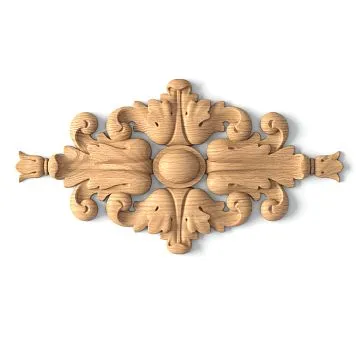
Furniture without a crown is like a painting without a frame. Exactly MDF furniture cornice for painting It becomes that final detail which transforms an ordinary interior item into a work of art. In the era of mass production, when individuality is valued above all else, the ability to create unique furniture with an authorial character becomes a true treasure for those who understand the value of beauty and functionality.
Imagine a kitchen where every element harmoniously complements the other, creating a symphony of forms and lines. Or a living room where the furniture looks as if it were created by a single master according to a unified concept. The secret to this magic lies in the details — and MDF furniture crowns for painting are one of the most important such details.


History of Evolution: From Palace Traditions to Modernity
Crown elements in furniture have an ancient and noble history. Even in ancient times, masters understood: the transition between vertical and horizontal planes must be treated in a special way. Egyptian sarcophagi, Greek columns, Roman arches — everywhere we see crowns as elements that complete the structure and give it finality.
In the Baroque and Rococo eras, furniture crowns reached the peak of their decorative potential. Carved elements from solid wood were created over months, each swirl meticulously handcrafted. Such furniture was accessible only to the aristocracy — the cost of a single crown could equal a craftsman's annual income.
Today, MDF production technologies have democratized beauty. What was once a privilege of the chosen few is now accessible to anyone who values quality and style. MDF Cornices for Painting allow recreating the atmosphere of palace interiors in the most ordinary apartment.




Philosophy of Modern Furniture Design
What has changed in the approach to furniture design over the past decade? The main thing is the drive toward personalization. People no longer want to live among faceless mass-produced items. Every interior element should tell a story, reflect the character of the owner.
MDF furniture crowns for painting perfectly meet this need. They offer boundless creative possibilities: from classic white shades to vibrant accent colors, from monochromatic solutions to complex decorative effects.
Our factory also produces:


MDF Technological Revolution: The Material of the 21st Century
Let's delve into the world of high-tech MDF production. This material is the result of complex engineering developments, where each component is precisely calibrated with mathematical accuracy. Wood fibers measuring 0.3–5 mm are processed at temperatures of 180–230°C and pressures up to 45 MPa. Such conditions are comparable to those created by nature deep within the Earth to form rock formations!
The result is astonishing: MDF density reaches 880 kg/m³, exceeding the indicators of most natural wood species. At the same time, the material retains all the positive properties of wood: it feels warm to the touch, is suitable for any type of mechanical processing, and is ecologically compatible with humans.
The key advantage is dimensional stability. The linear expansion coefficient of MDF is only 0.02%, which is 6–8 times less than that of natural wood. Practically, this means that your furniture crowns will retain their perfect geometry forever, regardless of temperature and humidity fluctuations.
Get Consultation
Microstructure of perfection: view from the inside
If we could look inside the MDF crown through an electron microscope, we would see an amazing picture. Millions of wood fibers, perfectly oriented and bonded by polymer bridges, create a structure that matches the strength of aerospace composite materials.
This microstructure provides unique mechanical properties: bending strength up to 35 MPa, elastic modulus 3500 MPa. A furniture crown made from such material will withstand any operational loads, preserving its original shape for decades.
The surface of MDF has a micro-roughness Ra = 1.0–1.6 μm — an optimal indicator for adhesion of coatings. Paint literally "penetrates" into the surface, creating an exceptionally strong monolithic coating.
Furniture geometry: the art of proportions
Designing furniture crowns is a science of proportions and harmony. Every dimension, every profile curve affects the perception of the entire piece. The crown height should be 8–12% of the total furniture height — such a ratio creates visual balance and a sense of completion.
requires special attention to functionality. The kitchen is a working space, where the crown must not only decorate but also protect against contamination and ensure easy cleaning.
Kitchen MDF crown molding for painting Requires special attention to functionality. The kitchen is a working space where the valance must not only decorate but also protect against contamination and ensure easy cleaning.
Profile diversity: from classic to modern
Modern milling technologies allow creating crowns of any complexity. A simple rectangular profile suits minimalist interiors, emphasizing line purity and geometric strictness.
Classic profiles with decorative grooves and protrusions recreate the atmosphere of traditional styles. Rounded elements soften angles, creating a sense of smoothness and naturalness.
Avant-garde profiles with asymmetric forms and unexpected curves allow creating furniture of the future. Moldings for painting in combination with crowns open up boundless possibilities for design creativity.
Installation technologies: the art of joining
Installing MDF furniture crowns requires special precision and understanding of material properties. Unlike solid wood, MDF does not have a directional fiber structure, allowing it to be mounted in any direction without risk of cracking.
Main mounting methods: mechanical (self-tapping screws, dowels), adhesive (PVA, polyurethane glue), and combined. The choice of method depends on the crown size, furniture type, and operating conditions.
For kitchen crowns exposed to moisture and temperature fluctuations, a combined mounting method is recommended: mechanical connection ensures reliability, while adhesive ensures joint sealing.
Secrets of professional installation
Experienced furniture makers know many subtleties inaccessible to amateurs. The first secret is material acclimatization. MDF crowns must spend at least 48 hours in the furniture workshop to equalize humidity.
The second secret is correct operation sequence. First, the crown is fitted to size, then painted, and only after the paint is fully dry is the final installation performed.
The third secret — compensatory gaps. Even stable MDF experiences minor deformations, so 0.5–1 mm gaps must be left at corners, later masked with sealant.
Furniture color: color as a design tool
Painting MDF furniture crowns is an art requiring deep understanding of color theory and perception psychology. A white crown creates a sense of lightness and airiness, visually increasing furniture size. Dark shades add solidity and respectability.
Contrasting solutions turn the crown into an accent element. A gold crown on a white body creates a luxurious atmosphere, while black on a light background — modern graphic style.
MDF Hangers for Furniture for Painting open up possibilities for creating unique color solutions. Gradient transitions, metallic effects, patination — all of this is accessible thanks to MDF’s excellent adhesion properties.
Professional painting technologies
Surface preparation begins with light sanding using P240 grit sandpaper. The goal is to create micro-roughness for better primer adhesion. The direction of movement should match the fiber direction in the top layer of MDF.
Priming is a critically important stage. Quality MDF primer not only improves paint adhesion but also prevents fuzz lifting when applying water-based coatings. Primer drying time — 6–8 hours under normal conditions.
Final painting is done in two to three layers with intermediate drying. Each layer is applied perpendicular to the previous one to ensure even coverage. Final polishing creates a perfectly smooth surface.
Stylistic directions: from classic to high-tech
Classic style requires use of traditional crown proportions and forms. Height 8–10% of total furniture height, soft rounded transitions, noble shades — white, cream, gold. MDF Furniture Details in classic execution create an atmosphere of aristocratic mansions.
Modern styles prefer minimalist forms and neutral colors. Minimalism uses simple geometric profiles painted in the tone of the main furniture. Scandinavian style chooses light wood tones or pure white.
High-tech and futurism experiment with unusual forms and materials. Asymmetric profiles, metallic finishes, integration with LED lighting — all of this is possible thanks to the versatility of MDF as a base for creativity.
Regional design characteristics
Different cultural traditions shape their preferences in furniture design. The European school values functionality and minimalism, American preferences lean toward scale and comfort, while Asian styles strive for harmony and minimalism.
In Russian interiors, a synthesis of various styles is observed. Classic forms combine with modern materials, traditional colors pair with innovative finishing technologies. Paintable MDF furniture moldings are ideally suited to embody such an eclectic approach.
Economic analysis: investment in quality
Initial costs for high-quality paintable MDF furniture moldings may seem significant, but economic analysis shows their profitability in the long term. Service life exceeds 25 years with proper use.
The ability to repaint allows updating furniture without full replacement. Changing the color of the molding dramatically alters the perception of the entire set, which is especially relevant when changing interior design.
The cost of manufacturing furniture with MDF moldings is 40-60% lower than similar wooden counterparts with comparable aesthetic characteristics. At the same time, their operational properties often surpass natural materials.
Comparative characteristics of materials
Solid wood surpasses MDF in prestige but significantly lags behind in dimensional stability and ease of processing. The need for special drying, protective treatment, and regular maintenance makes wooden moldings more expensive to operate.
Plastic moldings are cheaper to produce but cannot create a sense of naturalness and warmth. Limited decorative possibilities and short service life make them suitable only for the economy segment.
Polyurethane moldings have high moisture resistance but are more expensive than MDF and have limited repair options. MDF for Painting to Buy means choosing the optimal price-to-quality ratio.
Innovative solutions: furniture of the future
Modern technologies open new horizons for furniture design. Integrating LED lighting into moldings creates an eye-catching backlighting effect, transforming furniture into architectural lighting sources.
Smart home systems are also applied in furniture. Sensors embedded in moldings can automatically turn on lighting when a person approaches. Touch-sensitive control elements, seamlessly integrated into decorative elements, enable control of various functions.
Color-changing technologies allow moldings to adapt to lighting or the owner's mood. Thermochromic and photochromic coatings are already being used in premium projects.
Ecological trends
Sustainable development is becoming a key trend in the furniture industry. MDF manufacturers implement waste recycling technologies, use binders based on natural polymers, and develop reforestation programs.
FSC certification guarantees that the wood comes from sustainably managed forests. E0 emission class confirms the material's complete safety for human health.
Bio-degradable coatings based on vegetable oils and waxes ensure the ecological safety of the entire product lifecycle. became a revolutionary solution for those striving for a flawless result that combines aesthetic appeal with practicality and affordability. of the future will be fully compatible with the principles of circular economy.
Specialized Applications
Kitchen moldings operate under special conditions: high humidity, temperature fluctuations, exposure to steam and grease. Paintable MDF moldings handle these challenges excellently when appropriate lacquer materials are selected.
Bathrooms require special moisture resistance. Special moisture-resistant primers and enamels transform MDF moldings into elements that match ceramic in durability.
Children's furniture demands strict requirements for ecological safety and non-toxicity. MDF class E0 with water-based coatings fully complies with the strictest standards.
Commercial application
Office furniture values the combination of prestige and functionality. MDF moldings allow creating solid interiors at reasonable costs. The ability to quickly change color is relevant during rebranding or office relocation.
Hotel furniture requires increased durability and ease of maintenance. MDF moldings withstand intensive use, are easy to clean, and can be quickly restored if needed.
Medical furniture requires hygienic, easily disinfectable surfaces. Special antibacterial coatings transform MDF moldings into elements meeting sanitary requirements.
Industry development trends
Digitalization of production revolutionizes the furniture industry. CAD/CAM systems allow creating unique molding profiles based on individual sketches. 3D modeling enables viewing the result before production begins.
Additive technologies are beginning to be used for creating prototypes and small batches of unique items. 3D printing of complex decorative elements opens new possibilities for customizing furniture.
Artificial intelligence is used to optimize production processes and predict trends. Machine learning helps create algorithms for automatic furniture set design.
Globalization and Localization
Global trends in furniture design spread quickly due to the internet and social networks. However, there is also growing demand for localization — adapting global trends to local conditions and traditions.
The Russian furniture industry actively adopts advanced technologies while preserving traditional values of quality and reliability. Cornice Russian-made products do not fall short of imported analogs in quality and surpass them in adaptation to local conditions.
Practical Recommendations
When choosing MDF paintable furniture valances, consider the interior style, furniture dimensions, and usage conditions. Moisture-resistant treatment is mandatory for humid areas, and eco-friendly materials are required for children's rooms.
Color planning should take into account the overall color scheme of the interior. Contrasting solutions require careful consideration, while monochromatic options are safer and more universal.
Installation is best entrusted to professionals, especially when working with expensive furniture. Proper installation is the key to longevity and aesthetic perfection.
Care and Maintenance
Regular dry cleaning with soft cloth prevents dust accumulation in decorative elements. Wet cleaning is performed using neutral cleaning agents without abrasives.
In case of damage, local repair is possible. Minor scratches are removed by touch-up, while serious defects require sanding and repainting the affected area.
Coating renewal is recommended every 8-12 years depending on usage intensity. Modern paints provide excellent adhesion to old coating after light matting.
Frequently asked questions
Can MDF valances be used in the kitchen?
Yes, provided they are properly painted with moisture-resistant paints. End joints and seams must be sealed with sealant to prevent moisture penetration.
What is the maximum length of a valance without joints?
Standard MDF panel length is 2.8 m, but valances up to 6 m can be manufactured with barely noticeable joints using special equipment.
How long does custom manufacturing take?
Standard profiles take 3-5 working days; unique items take 2-3 weeks including technology development and tool manufacturing.
Can a valance be painted after installation?
Theoretically yes, but the quality will be lower than factory-made. It is recommended to paint under controlled conditions with subsequent finishing of mounting areas.
How to choose the color of the valance?
Base your choice on the overall interior color scheme. A safe option is matching the furniture frame color; a bold choice is a contrasting accent color.
Is special care required?
MDF valances require minimal care. Regular dry cleaning and periodic wet cleaning with neutral agents are sufficient.
Conclusion
MDF paintable furniture valances are more than just decorative elements. They are tools for creating harmonious spaces, a means of expressing individuality, and the opportunity to transform ordinary furniture into works of art. The technological sophistication of modern MDF ensures durability and functionality, while the ability to paint opens boundless creative horizons.
The economic justification for choosing MDF valances becomes clear when analyzing the total cost of ownership. Initial investments are recouped many times over due to the material's durability and the possibility of updating without full replacement.
The ecological safety of modern MDF is confirmed by appropriate certifications, making it suitable for use in any type of room. The development of "green" production technologies ensures compatibility with sustainable development principles.
Innovative solutions in technology integration transform furniture valances from static elements into functional components of a "smart" home. LED lighting, sensor control, adaptive coatings — all of this is already a reality today.
The prospects for industry development are linked to further product personalization and the adoption of digital technologies. Individual design, additive manufacturing, and artificial intelligence open new opportunities for creativity and self-expression.
Craftsmanship in details is what distinguishes true professionals from amateurs. And MDF paintable furniture valances are that detail capable of turning a good project into an outstanding one, ordinary furniture into exclusive pieces, and a home into a work of art.
STAVROS company holds a leading position in the Russian market for interior decorative elements, offering the widest range of high-quality MDF furniture valances. Years of industry experience, use of advanced production technologies, and strict adherence to quality standards at every stage of production make STAVROS products a benchmark in their field.
STAVROS professional team provides a full spectrum of services, from consultation on optimal solutions to after-sales service. In-house production enables rapid fulfillment of orders of any complexity, while an extensive logistics network ensures fast delivery throughout Russia.
Individual approach to each client, willingness to fulfill non-standard orders, and continuous development of the product range make STAVROS a reliable partner for designers, furniture makers, and anyone who values quality and beauty in details.
Choosing STAVROS MDF furniture valances for painting means investing in quality, durability, and limitless creative possibilities. Create the furniture of your dreams with products that will bring your boldest design ideas to life.