Article Contents:
- Significance of Crowns in Interior Design
- Visual Completion of Wall Composition
- Masking Technical Imperfections
- Correcting Visual Proportions of the Room
- Creating Architectural Character
- Functionality of Hidden Lighting
- Types of MDF Crowns
- Classification by Profile
- Classification by Size
- Classification by Purpose
- Finishing Options for MDF Crowns
- Installation Features
- Preparation stage
- Installation Technology
- Final finishing
- Practical Tips
- Choosing a Crown
- Installation
- Maintenance and operation
- Typical mistakes and their prevention
- Conclusion
- Frequently Asked Questions

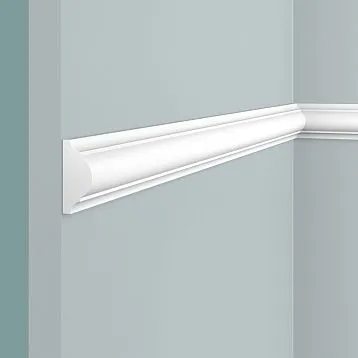
In interior architecture, there are elements that perform a dual role - practical and aesthetic.MDF Crownbelongs precisely to such universal details capable of radically changing the perception of a room, completing the composition of walls and ceiling, concealing technical gaps, and simultaneously becoming an expressive decorative accent. This is not just a strip at the junction of wall and ceiling - it is an instrument of architectural language that, when properly applied, transforms an ordinary space into a thoughtfully designed, harmonious interior.
The history of ceiling crowns traces back to ancient architecture, where they were an integral part of classical orders. The crown crowned the entablature, completing the colonnade, protecting walls from rainwater, and creating expressive play of light and shadow. These functions and aesthetic principles have been preserved to this day, although materials and manufacturing technologies have significantly evolved.
ModernMDF Cornicescombine ancient architectural traditions with the advantages of modern materials and manufacturing technologies. MDF - medium-density fiberboard - ensures dimensional stability, uniform structure, and the ability to create complex profiles at an affordable cost. This makes quality crowns accessible not only for elite projects but also for ordinary apartments and homes.
The popularity of MDF crowns in modern design is linked to their versatility. They are equally suitable for classical and contemporary interiors, residential and commercial spaces, new construction and renovation. The ability to paint in any color allows adapting the same profile to different stylistic solutions, which designers and developers particularly appreciate.


Significance of Crowns in Interior Design
The ceiling crown plays a critically important role in creating a finished, professionally appearing interior. Its influence on the perception of space is multifaceted and extends far beyond that of a simple decorative element.




Visual Completion of Wall Composition
A wall without a crown is perceived as an unfinished surface, abruptly ending at the junction with the ceiling without a logical conclusion. Perception psychology requires a visual boundary, a clear transition between the vertical plane of the wall and the horizontal plane of the ceiling. The crown creates this boundary, making the transition smooth, architecturally meaningful, and aesthetically pleasing.
Even the simplest crown, 5-7 centimeters wide, radically changes the perception of the room. The room becomes more structured, organized, professionally finished. The view finds visual anchor points, and the space becomes more understandable and comfortable to perceive. This is especially important in rooms with high ceilings, where the absence of a crown creates a sense of emptiness and incompleteness.
The crown creates a visual frame for the room, similar to how a picture frame frames a painting. This frame unifies the wall composition, making it complete and cohesive. In rooms with crowns, walls are perceived as thoughtfully designed architectural planes, not as random surfaces.
Our factory also produces:


Masking Technical Imperfections
The junction between wall and ceiling is rarely perfectly level. Even in new constructions with quality finishing, minor irregularities, level differences, and gaps are inevitable. In older homes, these problems are significantly exacerbated - walls may be crooked, ceilings uneven, angles not straight. Attempts to create an ideal junction using putty and paint are labor-intensive and often ineffective.
The crown elegantly solves this problem, concealing all imperfections of the junction beneath its volume. Small gaps, irregularities, height differences - all become invisible. Meanwhile, the crown, having a certain width and volume, can compensate for significant irregularities. A wide crown can even conceal serious defects that would require major leveling.
Communication concealment - another practical function of the cornice. Behind the cornice, you can hide wiring going to ceiling lights, alarm system cables, ventilation grilles. Special cornices with increased internal space allow even small-diameter pipes to be installed, which is especially relevant when laying out communications without grooving.
Get Consultation
Correction of visual proportions of the room
The cornice has an amazing ability to influence the perception of room height. In a room with very high ceilings, a wide cornice painted in the ceiling color visually lowers the ceiling, making the space more cozy and intimate. A cornice width of 15-25 centimeters creates the impression that the ceiling begins at the lower edge of the cornice, visually reducing the height by this amount.
In rooms with standard 2.5-2.7 meter ceilings, the cornice is also important, but it should be more delicate. A narrow cornice of 5-10 centimeters creates a clear boundary without overwhelming the space. Painted white or in the ceiling color, it visually lifts the ceiling, making the room appear more spacious.
The cornice profile also affects perception. A simple smooth profile creates a modern, light appearance. A complex multi-level profile with classical elements — coves, moldings, scrolls — creates a sense of solidity, tradition, and richness of detail. The choice of profile should match the overall interior style and room scale.
Creation of architectural character
The cornice transforms a simple room box into an architectural space with character and individuality. Classical cornices with rich profiles create an atmosphere of palace luxury and traditional elegance. Minimalist cornices with simple forms emphasize modernity, technology, and restrained design.
Uniform cornice style throughout all rooms of an apartment or house creates visual continuity of space. Moving from room to room, the eye encounters a familiar element, creating a sense of unity. This is especially important in open floor plans, where cornices help visually unite different functional zones.
Coordinating cornices with other architectural elements — baseboards, window casings, wall moldings — creates stylistic unity in the interior. Cornices should replicate the profiles of other elements, be in the same scale, and be painted in matching colors. Such systematic coordination is a hallmark of professionally designed interiors.
Functional hidden lighting
A modern cornice function — creating a niche for hidden LED lighting. A special cornice with a setback from the ceiling creates a gap where an LED strip is installed. The light is directed toward the ceiling, creating soft diffused illumination and a visually striking effect of a floating ceiling.
Hidden lighting behind the cornice visually increases room height, making the ceiling light and weightless. This is especially effective at night, when soft light creates an atmosphere of coziness and comfort. The lighting color can be white, warm, cool, or colored depending on the desired effect.
Functional lighting from hidden lighting can partially or fully replace central lighting, creating a soft shadow-free environment. This is ideal for bedrooms, where bright overhead lighting is unnecessary, for living rooms as additional lighting, for hallways and corridors, where atmosphere matters more than maximum illumination.
Controlling brightness and color of hidden lighting with dimmers and RGB controllers allows changing the room’s atmosphere with one button press. Bright white light for active activities, dimmed warm light for relaxation, colored light for parties — all this is possible with modern hidden lighting systems behind the cornice.
Types of MDF cornices
VarietyBuy MDF corniceswhich can be found today, allows finding a solution for any interior style, any room size, and any budget. Cornice classification is carried out according to several parameters — profile, size, purpose, type of finish.
Classification by profile
Smooth cornices have a simple rectangular or trapezoidal cross-section without complex curves or ornamentation. This is a minimalist solution characteristic of modern styles — minimalism, Scandinavian design, contemporary. A smooth cornice creates a clear line at the junction of wall and ceiling, without drawing excessive attention. The width of smooth cornices is usually small — 5-10 centimeters, profile height 3-7 centimeters.
Simple profiled cornices have one or two bends in the cross-section — usually a scroll and a cove or a cove. This is a universal solution suitable for most interiors. A profiled cornice creates a subtle play of light and shadow, adds volume, but remains restrained and does not dominate the interior. The width of such cornices is 7-12 centimeters, height 5-10 centimeters.
Complex classical cornices consist of several tiers with alternating convex and concave elements. Coves, moldings, scrolls, coves, and drops create a rich, detailed profile characteristic of classical styles. Such cornices require a certain ceiling height and spacious rooms where their complexity will be appropriate. The width of classical cornices is 12-25 centimeters, height 8-15 centimeters and more.
Carved cornices are decorated with ornaments — plant motifs, geometric patterns, repeating elements. Carving can be done using CNC machines, ensuring precision and repeatability of the pattern. Carved cornices are characteristic of luxurious classical interiors, creating an atmosphere of palace opulence, requiring appropriate surroundings.
Kassette cornices — special profiles for creating kassette ceilings. They have a special shape allowing the creation of intersecting beams forming square or rectangular recesses on the ceiling. A kassette ceiling is the pinnacle of ceiling decoration, transforming an ordinary room into a grand hall.
Classification by size
Narrow cornices 3-7 centimeters wide create a delicate frame suitable for small rooms, low ceilings, minimalist interiors. They perform their function of concealing joints and visual completion without overwhelming the space. Narrow cornices are economical, easy to install, and universal.
Medium cornices 8-15 centimeters wide — the most common option for standard living rooms. They are sufficiently expressive to create an architectural effect, but do not overwhelm space in rooms with standard 2.5-2.7 meter ceilings. Medium cornices allow using profiles of moderate complexity, creating a balance between functionality and decorativeness.
Wide cornices 16 centimeters and more create a powerful architectural effect, suitable for spacious rooms with high ceilings. They visually lower the ceiling, making high spaces more cozy and intimate. Wide cornices can have very complex multi-tiered profiles, conceal significant communications, and create deep niches for lighting.
Classification by purpose
Ceiling cornices — the main type, installed at the junction of wall and ceiling around the perimeter of the room. This is a classic application performing all the functions described above — visual completion, concealing defects, creating architectural character. Ceiling cornices can be of any profile and size.
Cornices for hidden lighting — a specialized type with a special cross-section shape creating a niche between the cornice and the ceiling. Light from the LED strip installed in the niche is directed toward the ceiling, creating soft diffused illumination. Such cornices usually have a width of 10-20 centimeters and are mounted with a 5-10 centimeter gap from the ceiling.
Cabinet moldings are used to decorate the upper part of cabinets, kitchen sets, buffets. They create a classic finish for furniture, transforming simple boxes into architectural forms. Cabinet moldings are usually smaller than ceiling moldings - width 5-12 centimeters, profiles ranging from simple to complex classical designs.
Wall moldings create horizontal divisions, similar to borders but with a three-dimensional relief. They can be installed at two-thirds of the wall height, creating an upper frieze, or at any other height for zoning space. Wall moldings are usually narrow - 5-10 centimeters, profiles simple or moderately complex.
MDF Molding Finishes Options
Paintable moldings are supplied primed or sanded, ready for final painting. This is the most versatile option, allowing any color to match the design project exactly. Painting is done with water-based acrylics in two to three coats, creating a smooth matte or satin finish.
Laminated moldings are covered with decorative film imitating various wood species or solid colors. PVC film creates a durable protective layer resistant to moisture and mechanical impacts. Laminated moldings are ready for installation, requiring no additional finishing, which saves time but limits color choices.
Veneered moldings are covered with a thin layer of natural wood - oak, ash, walnut. Veneer creates a natural wood texture, adds elegance, making the MDF molding visually indistinguishable from solid wood. Veneered moldings are coated with varnish for protection and to highlight the texture.
Patina moldings have an effect of noble antiquity. Dark or light patina in the profile recesses creates contrast, emphasizes relief, imitates natural aging over time. Patination is characteristic for interiors in Provence, country, vintage, shabby chic styles.
Installation Features
Quality installation of a molding requires careful preparation, precision, and adherence to technology. Even the most beautiful molding will look poorly installed with careless mounting, uneven lines, visible joints, or peeling sections.
Preparation Stage
Assessing the condition of walls and ceilings is the first step. The molding is glued to surfaces that must be relatively strong and clean. Flaking paint, loose plaster, wallpaper - all of this must be removed in the area where the molding is installed. The width of the cleaned strip should exceed the molding width by 2-3 centimeters on each side.
Checking ceiling level is critically important. In older homes, ceilings often have height variations of several centimeters. The molding must be installed strictly horizontally according to level, not parallel to the ceiling. This may create a variable gap between the molding and ceiling, which will need to be filled with spackle or sealant.
Surface priming improves adhesive bond, strengthens the base. Use deep-penetration acrylic primer, applied with a roller or brush to the molding installation area. The primer must be fully dry before mounting - usually 2-4 hours depending on temperature and humidity.
Marking the horizontal line is a key preparation step. Use a laser level projecting a horizontal line around the room, or a water level with a painter's string to mark the line. The line should be at a distance from the ceiling equal to the molding height minus 0.5-1 centimeter. This gap compensates for possible ceiling irregularities.
Moldings must acclimate in the room for at least 48 hours before installation. This allows the material to adapt to room temperature and humidity, preventing subsequent deformation or peeling. Moldings are stored horizontally on a flat surface.
Installation technology
Cutting moldings begins with measuring wall lengths. For a standard rectangular room, you need four pieces - one for each wall length. Corners are usually joined at 45 degrees, requiring precise trimming with a miter saw or mitre box. For rooms with complex shapes, more pieces and different angle joints may be required.
Trimming corners at 45 degrees is the most complex operation requiring precision. The molding is placed in the miter saw with the front side up, in the position it will be on the wall. The cut angle is set to 45 degrees, direction determined by whether it's a left or right corner. Precision is critical - even a 1-degree deviation will create a noticeable gap at the joint.
For complex profiles, there are ready-made corner pieces - inside and outside corners, eliminating the need for precise trimming. Straight sections of molding simply join with corner pieces at a right angle. This simplifies installation, but corner pieces must match the molding profile exactly.
Choosing adhesive is critical for reliable bonding. For MDF moldings, use polymer construction adhesives like "liquid nails", specialized MDF adhesives, or polyurethane construction adhesives. The adhesive must provide fast setting, strong holding, and be safe for indoor use. Heavy, wide moldings may require additional mechanical fastening.
Applying adhesive - adhesive is applied to the back of the molding in a zigzag or dot pattern with 10-15 cm intervals. The amount of adhesive must be sufficient - when pressing the molding, adhesive should slightly squeeze out at the edges. Too much adhesive creates mess, too little does not ensure secure bonding.
Installing molding - the molding is placed against the marked line and pressed against the wall and ceiling. It is important to ensure even pressure along the entire length. A helper or temporary supports can be used. The molding is held in place for 5-10 minutes until the adhesive begins to set. Excess adhesive is immediately wiped away with a damp cloth.
Mechanical fastening is used for heavy or long moldings as an addition to adhesive. Screws are screwed into the wall through the molding at 40-60 cm intervals. Screw heads are countersunk 1-2 mm, holes are filled with spackle. After painting, fastening points become invisible. Screws are screwed in after initial adhesive setting, when the molding is already holding, but the adhesive has not fully hardened.
Jointing at corners - the most critical part of installation. Corners must fit tightly without gaps. If small gaps are detected, they can be filled with acrylic sealant or spackle. Wide gaps indicate inaccurate cutting and require redoing. A square can be used to check joint quality - place it against the wall and molding, checking line alignment.
Final finishing
Filling joints and gaps is done after the adhesive is fully dry - usually after 24 hours. All joints between molding pieces, gaps between molding and ceiling, between molding and wall are filled with acrylic sealant or spackle. Sealant is applied from a tube with a narrow nozzle, excess is smoothed with a wet finger or putty knife.
Sanding spackled areas is done after full drying - usually 4-6 hours. Use fine sandpaper grit 180-240. Sanding should make the fill invisible, smooth, and blend with the molding surface. Dust after sanding is carefully removed with a vacuum cleaner and a damp cloth.
Priming before painting is mandatory for uncolored moldings. Primer creates an even surface, improves paint adhesion, reduces paint consumption. Use acrylic primers applied with a brush. Special attention is given to spackled areas - they must be thoroughly primed.
Moldings are painted in two to three coats of acrylic paint. The first coat may be uneven, revealing defects - this is normal. After the first coat dries, the surface is lightly sanded with fine abrasive, and the second coat is applied. The third coat ensures perfect coverage and color saturation. Paint is applied with a brush for profiled moldings or a roller for smooth ones.
Installing lighting - if the molding is intended for concealed lighting, LED strip is installed after painting. The strip is glued to the inner surface of the molding, wires are run concealed, connected to a power supply and switch. It is important to calculate the strip and power supply power based on the room's perimeter length.
Practical Tips
Successful work with MDF moldings requires knowledge of practical nuances that come with experience. Following these tips will help avoid typical mistakes and achieve a professional result.
Molding Selection
Matching ceiling height - the first rule of selection. For standard ceilings 2.5-2.7 meters, optimal molding width is 7-12 centimeters. For low ceilings up to 2.5 meters, choose a narrow molding 5-8 centimeters. For high ceilings over 3 meters, wide moldings 15-25 centimeters are suitable.
Matching the interior style is critical. Classic interiors require complex profiled cornices with traditional elements. Modern minimalist styles call for simple smooth or slightly profiled cornices. Eclectic interiors allow mixing, but it must be intentional.
Coordination with other elements — the cornice must harmonize with baseboards, door casings, moldings. Ideally, all these elements have similar or repeating profiles, are painted the same color, and form a unified finishing system. A cornice that breaks from this system will appear out of place.
Material quantity calculation — for a rectangular room, the required length equals the perimeter plus allowance for cutting angles. For a 4x5 meter room, the perimeter is 18 meters; with a 10% allowance, 20 meters of cornice are needed. Cornices are sold in 2-2.5 meter segments, so 8-10 pieces are required. Always take extra — it’s better to have an extra piece than to discover a shortage during installation.
Installation
Working in pairs significantly simplifies installing long cornices. One person holds one end, the other holds the other, ensuring even pressing along the entire length. Attempts to install a 3-meter cornice alone often result in uneven gluing and the need for redoing the work.
Temperature regime is important for adhesive quality. The optimal installation temperature is 18-25 degrees. At lower temperatures, the adhesive doesn’t set properly; at higher temperatures, it may drip. During adhesive drying, avoid drafts or sudden temperature changes — this may cause peeling.
Check before final mounting — after applying adhesive but before final pressing, verify the cornice’s correct position. Check for levelness with a level, even gaps with the ceiling, and quality of joints at corners. If an error is detected, the cornice can be removed and reinstalled within the first few minutes. After the adhesive has set, this becomes impossible.
Surface protection — during installation and painting, protect the floor, furniture, and walls with painter’s plastic and tape. Adhesive, paint, and putty can stain surfaces. Especially important is protecting the ceiling — paint may drip onto it during cornice painting, and removal will be difficult.
Care and Maintenance
Regular cleaning — cornices collect dust, especially in profile grooves. Monthly dry cleaning with a soft cloth or brush prevents dirt buildup. For hard-to-reach grooves, use a vacuum cleaner with a soft attachment.
Wet cleaning is performed as needed with a slightly damp cloth. Painted cornices tolerate wet cleaning well, but excess water is undesirable. For removing stains, use a mild soap solution or products for painted surfaces.
Repairing minor damage — scratches and chips are filled with matching cornice putty, sanded after drying, and repainted. Detached sections can be re-glued by applying fresh adhesive and pressing until set. Large damages may require replacing the cornice section.
Repainting for refreshment — after 5-7 years, painted cornices can be repainted to refresh the interior or change the color scheme. Old paint is lightly sanded to improve adhesion, the surface is cleaned of dust, and fresh paint is applied in two coats. This is cheaper than full cornice replacement.
Typical Errors and Their Prevention
Uneven installation line — result of working without a level, relying on visual estimation or ceiling parallelism. A strict horizontal line must be marked using a laser or water level. Even a small deviation from horizontal is noticeable and spoils the appearance.
Gaps at corner joints occur due to inaccurate cutting. The miter saw must be precisely set to 45 degrees, and the cornice must be securely fixed during cutting. Check the joint quality before gluing — it’s much easier to redo the cut than to fix a gap after installation.
Cornice detachment occurs due to insufficient adhesive, poor pressing, or dirty surfaces. Don’t skimp on adhesive, press the cornice evenly along its entire length, and thoroughly prepare surfaces. For heavy cornices, additional mechanical fastening is mandatory.
Visible screw heads — result of poor finishing. Screw heads should be recessed 1-2 mm, holes carefully filled, sanded, and painted. With quality work, mounting points are completely invisible.
Uneven paint with drips — occurs when applying too thick a layer at once. Paint is applied in thin layers with full drying between each. Two or three thin layers are better than one thick layer. Drips are immediately wiped with a brush before drying.
Conclusion
MDF CrownA universal element combining functionality and decor, accessibility and quality, tradition and modern technology. From simple wall-ceiling joint finishing to creating complex architectural compositions with hidden lighting — cornices demonstrate remarkable versatility in application.
The significance of cornices in interior design is multifaceted. They create visual closure of wall compositions, mask technical imperfections at joints, correct visual proportions of rooms, establish architectural character, and ensure functionality of hidden lighting. Even the simplest cornice dramatically improves interior perception.
Variety of typesMDF cornicesallow finding a solution for any style and budget. Smooth, profiled, classic, carved — each type has its own application area. Narrow, medium, wide — size is chosen based on ceiling height and room scale. Various finishing options — paintable, laminated, veneered — satisfy any aesthetic requirements.
Cornice installation requires careful preparation, precise marking, quality adhesive, and careful execution. Proper installation technology ensures secure mounting and aesthetic appearance. Final finishing with joint filling and painting completes the work, creating a professional result.
Practical tips help avoid typical mistakes. Correct cornice selection matching ceiling height and interior style, coordination with other elements, accurate material quantity calculation — all this lays the foundation for success. Proper installation technology, regular maintenance, and knowledge of repair methods ensure longevity.
Company Stavros offers a wide range ofBuy MDF cornicessuitable for any interior projects. Variety of profiles from simple smooth to complex classic, different sizes, high material quality and finish ensure the possibility of implementing any design ideas.
STAVROS products are made from high-quality E1 class MDF, safe for use in residential spaces. Precision profiles, ideal geometry, smooth surface without defects guarantee a professional result. Each item undergoes quality control before shipment to the customer.
STAVROS specialists' consultation support helps correctly calculate material quantity, choose the optimal profile and size, and get installation and finishing recommendations. This saves time and money, prevents errors during project implementation.
Choosing MDF cornices from STAVROS, you get quality materials, reasonable prices, professional support, and confidence in the result. Your interior will gain completeness, architectural expressiveness, and a professional look that create real comfort and aesthetic pleasure for many years.
Frequently asked questions
What width of cornice to choose for a standard apartment?
For apartments with 2.5-2.7 meter ceilings, the optimal cornice width is 7-12 centimeters. Such a cornice is sufficiently expressive to create an architectural effect, yet does not overwhelm space in rooms of standard height. For smaller rooms — bedrooms, children’s rooms — a narrower cornice of 6-8 centimeters is suitable. For spacious living rooms with 2.7 meter ceilings, cornices 10-12 centimeters wide are appropriate. It’s important to coordinate cornice width with baseboard width — usually they are similar or the cornice is slightly wider. For rooms with low ceilings up to 2.5 meters, use narrow cornices of 5-7 centimeters to avoid weighing down the space.
Can I install a cornice myself?
Installing MDF cornices is quite accessible for DIY, provided you have basic skills and tools. Required: a miter saw or miter block for 45-degree corner cuts, a laser or water level for horizontal marking, MDF adhesive or liquid nails, a putty knife for joint filling. The main difficulty — precise corner cutting, requiring care. Straight sections are easy — apply adhesive, press the cornice to the marked line, hold until set. For long cornices, it’s better to work in pairs. For inexperienced users, start with simple rooms — hallway, small room. For complex projects with hidden lighting, it’s better to hire professionals.
Why is MDF cornice better than polyurethane?
MDF and polyurethane cornices have different advantages. MDF is more eco-friendly — it’s a wood-based material without harmful additives. MDF has a pleasant matte surface and noble appearance. MDF cornices can be repainted or restored multiple times and better withstand mechanical impacts. Polyurethane is lighter, moisture-resistant, and cheaper for complex profiles. Polyurethane cornices are easier to install due to their low weight. For dry residential spaces, MDF is preferable due to its eco-friendliness and noble appearance. For humid spaces — bathrooms, kitchens — polyurethane is better. In terms of price, quality, and eco-friendliness, MDF is optimal for most residential projects.
How to install a ceiling crown for hidden lighting?
How to install a ceiling crown for hidden lighting?
What adhesive to use for installing crowns?
How to choose the color of the crown?
How to choose the color of the crown?
How much does crown installation cost?
How much does crown installation cost?
How to care for MDF crowns?
How to care for MDF crowns?
Maintenance of painted MDF cornices is simple and does not require special tools. Regular dry cleaning with a soft cloth, microfiber cloth, or soft brush removes dust - once a month. Pay special attention to profile recesses, where dust accumulates more actively. You can use a vacuum cleaner with a soft attachment on the lowest power. Wet cleaning is performed as needed with a slightly damp, well-wrung sponge without excess water. For removing stains, use a mild soap solution or products for painted surfaces. Avoid abrasive sponges and stiff brushes that may scratch the paint. Every 5-7 years, you can refresh the coating with a full repaint, restoring the original freshness. In case of scratches or chips, local touch-up is possible after filling with putty.