












































































Article Contents:
- What is a table frame and why is it needed
- Advantages of buying a separate frame
- Types of frames by construction
- Choosing a frame: style, size, wood species
- Frame style
- Frame size for tabletop
- Wood species: strength and aesthetics
- Tabletop: material, thickness, finish
- Solid wood: warmth and living texture
- Veneer: economy with solid wood aesthetics
- Glass: visual lightness
- Stone and porcelain tile: eternal tabletop
- Carved legs: replacing standard with exclusive
- Types of carved legs
- How to choose carved legs for a frame
- Furniture decor: overlays, cornices, corner blocks
- Carved Overlays on Rails
- Corner blocks: structural reinforcement and decoration
- Frieze moldings under the tabletop
- Frame finishing: color, patina, effects
- Natural Wood with Oil
- Toning: Changing Color While Preserving Texture
- Enameling: colored frame
- Patina: effect of antiquity
- Varnishing: Protection and Shine
- Table assembly: from elements to product
- Attaching tabletop to frame
- Leveling and stability
- Implementation examples: from concept to table
- Project 1: Classic dining table for living room
- Project 2: Baroque console table for hallway
- Project 3: Work desk for study
- Frequently Asked Questions
- Conclusion: your table, your rules

Imagine you're not buying a finished product, but a set of elements from which you assemble a table tailored to your task, your interior, and your ideas of beauty.Solid wood table frames— this is exactly that approach: a ready-made structural base to which you add a tabletop of your choice, swap the legs for more decorative ones, add carved overlays, choose the finish, apply patina, or stain. The result is a unique piece that no one else has — your custom-designed table, tailored to the specific room dimensions, interior style, and functional requirements. This is not an assembly of ready-made factory modules, but a creative process where every detail is consciously chosen and integrated into the overall concept.


What is a table frame and why is it needed
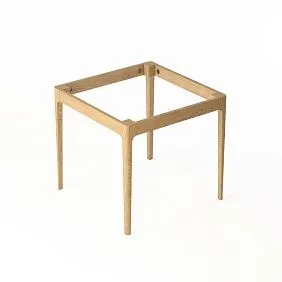
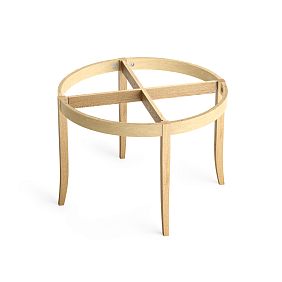
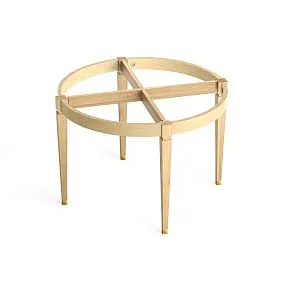
A table frame (understructure) is the load-bearing structure consisting of legs and aprons (horizontal crosspieces connecting the legs). The frame bears the load from the tabletop, transfers it to the floor, and provides rigidity, stability, and geometric stability. The tabletop is attached to the frame but does not perform a load-bearing function on its own — it rests, supports, and distributes the load, but it is the frame that holds the entire structure together.




Advantages of buying a separate frame
Freedom of choice for the tabletop. Ready-made tables are sold with a specific tabletop — the size, material, and shape are fixed. By buying a frame separately, you can choose any tabletop: solid wood of the desired species and thickness, veneered board, glass, stone, porcelain stoneware, metal. You determine the tabletop size — to fit the room dimensions, seating capacity, and function.
Customization possibilities. The frame is a base that can be modified. Replace standard legs with carved ones, add decorative overlays to the aprons, change the height (by cutting or extending the legs), adjust the distance between legs (if the structure is dismountable). The result is not a mass-produced item, but an individual project.
Savings when updating. The tabletop wears out — gets scratched, fades, absorbs stains. A solid wood frame lasts for decades without change. If the tabletop loses its appearance, you simply order a new one and attach it to the same frame — the table is renewed for a third of the price of a new one. The frame becomes a long-term investment.
Alignment with interior style. Ready-made tables are limited by the manufacturer's range. A frame allows you to create a table that precisely matches the style of your home. A Baroque carved frame + marble tabletop for a palatial interior. A simple frame with straight legs + a massive oak tabletop for a rustic style. A minimalist frame + glass tabletop for a contemporary space.
Our factory also produces:


Types of frames by construction
Four-legged frame — four legs at the corners, connected by aprons around the perimeter. The most common scheme, universal for dining, writing, and work tables. Legs can be straight, tapered, carved, or curved (cabriole). Aprons are straight or shaped and can bear decoration.
Central pedestal — one massive central leg (often cross-shaped or column-like) with a broad base. Suitable for round or square medium-sized tables (diameter up to 120 cm). Advantage — legroom, no corner legs. Disadvantage — less stability with a large tabletop area.
Three-legged frame — three legs positioned 120° apart from each other. A rare but stable option (three points always lie in the same plane, the table doesn't wobble even on an uneven floor). Suitable for round or triangular tabletops. Visually light, unusual.
Trestle frame — two A-shaped supports at the ends of the table, connected by a longitudinal crosspiece at floor level or slightly above. Characteristic of long dining or work tables where maximum rigidity and the absence of aprons that hinder seating are needed. Rustic, industrial, or contemporary style.
Get Consultation
Choosing a frame: style, size, wood species
Frame style
The frame style determines the style of the entire table. Even if the tabletop is neutral (solid wood without carving, glass), the shape of the legs and the character of the frame's decoration define the aesthetic affiliation.
Classical frame: Straight or tapered legs, square or round in cross-section, with fluting (vertical grooves) or smooth. Aprons are straight, profiled. Decoration is restrained — possible carved corner blocks at the joints of legs and aprons, small overlays. Species — oak, beech, ash. Finish — natural wood with oil, staining in noble shades (walnut, wenge, cognac), white or gray enamel. Suitable for neoclassical, English, French interiors.
Baroque frame: Curved cabriole legs (S-shaped curve in profile), ending in scrolls or animal paws. Aprons are shaped, convex, adorned with carved overlays (acanthus leaves, cartouches, shells, grapevines). Decoration is lush, relief, often with gilding or patina. Species — beech (carves well, holds details), oak (if the carving is large-scale). Finish — white enamel with gold patina, walnut stain with gold, natural wood with varnish. For palatial, luxurious, theatrical interiors.
Rustic frame: Massive straight legs with large cross-sections (80x80 mm or 100x100 mm), rough-hewn, minimally processed. Aprons are thick, without profiling. Joints are visible, emphasized (wooden dowels, metal plates). No or minimal decoration (chamfers, rounding). Species — oak, pine, larch. Finish — natural wood with oil, brushing (revealing the grain with a wire brush), light staining. For country houses, lofts, Scandinavian interiors.
Contemporary frame: Simple geometric forms — straight legs, square or rectangular in cross-section, without decoration. Aprons are hidden or minimal. Emphasis on proportions, material, quality of execution, not on ornament. Species — any, often light (ash, beech, whitewashed oak) or dark (ebonized oak, wenge). Finish — matte oil emphasizing the grain, or enamel in contemporary colors (gray, graphite, black). For minimalist, Scandinavian, Japanese interiors.
Frame size relative to the tabletop
The frame must correspond to the tabletop size. The tabletop overhangs the frame perimeter — this is normal and necessary for visual balance and comfort. But the overhang must be correct.
For rectangular tables: The tabletop overhangs the frame by 15-25 cm on each side. If the frame (distance between the outer edges of the legs) is 100x180 cm, the tabletop is 130x230 cm (15 cm overhang on the width and 25 cm on the length). This provides legroom, visual lightness (the tabletop appears to float above the frame), and functionality (seating at the ends is possible).
For round tables: The tabletop diameter is 20-30 cm larger than the frame diameter (if it's a four-legged frame — the diameter of the circle circumscribed around the legs). For a central pedestal, the tabletop diameter is limited by stability — usually no more than 120 cm without additional base weighting.
Frame height: Standard dining table height is 75 cm from floor to tabletop surface. If the tabletop thickness is 4 cm, the frame should be 71 cm. For a bar table — 105-110 cm (frame 101-106 cm for a 4 cm tabletop). For a writing or work desk — 74-76 cm (frame 70-72 cm).
Wood species: strength and aesthetics
Oak — the classic of solid wood furniture. High hardness (density 650-750 kg/m³), excellent load-bearing stability, expressive grain (large pores, contrasting annual rings), color from light straw to brown. Oak stains easily, holds carving (though harder to work than beech), and is not afraid of moisture (oak barrels, ships). Price medium-high. Optimal for classical, rustic, English frames.
Beech — the number two furniture wood. Hardness slightly lower than oak (density 650-700 kg/m³), but more stable in processing. Grain is fine, uniform (small pores, faint rings), color pinkish-beige. Beech carves excellently, holds fine details, ideal for carved Baroque elements. Disadvantage — hygroscopic (absorbs moisture, can warp with humidity fluctuations), requires a stable climate. Price lower than oak. Optimal for carved, classical frames intended for painting or staining.
Ash is a light, durable wood species. Its hardness is comparable to oak, but the texture is lighter and cooler (grayish-white color, distinct contrasting rings). Ash is elastic and withstands impact loads (it was used for oars and sports equipment). It takes stains well and holds its shape. The price is moderate. It is optimal for modern, Scandinavian, and minimalist frames where light-colored wood is important.
Pine is a soft, affordable wood species. It has low hardness (density 450-500 kg/m³), is easy to work with, but scratches and dents easily. The texture is bright (contrasting resinous stripes, large knots), with a yellow-pink color. Pine is 2-3 times cheaper than hardwoods. It is suitable for rustic, cottage, and budget projects where minor damage is not critical and even adds character.
Tabletop: material, thickness, finish
The tabletop is the visible, functional, tactile part of a table. Its choice determines not only aesthetics but also durability, ease of use, and maintenance complexity.
Solid wood: warmth and living texture
A solid wood tabletop is a classic that never goes out of style. A solid lamella panel (lamellas of the same species glued lengthwise) with a thickness of 30-50 mm is strong, stable, and beautiful. A thin tabletop (20-25 mm) looks cheap and may sag under load. A thick one (60-80 mm) is monumental, luxurious, but heavy and expensive.
Wood species for tabletops: oak (versatile, wear-resistant, beautiful), ash (light, modern), walnut (dark, noble, expensive), birch (light, affordable, but less hard), larch (moisture-resistant, with a bright texture, suitable for kitchens, verandas).
The edge treatment of a tabletop affects the style. A straight edge (90°) is modern and strict. A rounded edge (3-5 mm radius) is classic and safe. A shaped edge (milled profile — ogee, bead, cove) is decorative, traditional, and suits carved frames.
Solid wood finish: oil (enhances the texture, gives a matte surface, easy to renew, but requires reapplication about once a year), oil-wax (more durable, with a slight sheen), varnish (creates a hard film, protects from moisture and scratches, but hides the tactile feel of wood), enamel (paints any color, completely covers the texture, for colored tabletops).
Veneer: economy with the aesthetics of solid wood
A tabletop made of MDF or plywood, faced with natural veneer (a thin slice of wood 0.6-1.5 mm) is a compromise between price and appearance. From a distance, it is indistinguishable from solid wood, with a natural texture. But upon close inspection and to the touch, it's not the same. Advantages: stability (MDF doesn't warp or crack), possibility of larger sizes without seams, lighter weight, price 1.5-2 times lower than solid wood.
Veneer is coated with varnish (usually polyurethane, wear-resistant) or oil. Tabletop thickness is 30-40 mm (thinner looks cheap).
Glass: visual lightness
A glass tabletop makes a table visually weightless, doesn't overload the space, and reflects light. The glass must be tempered (5-7 times stronger than regular glass, shatters into small, non-sharp cubes when broken) with a thickness of 10-15 mm. 8 mm glass is insufficient for a tabletop (may crack under load).
Glass can be clear (the frame is visible through it — beautiful if the frame is decorative), frosted (sandblasted — hides fingerprints, scratches are less visible), tinted (gray, bronze, black — adds color but darkens the space), or with photo printing or a pattern (decorative but specific).
Glass is attached to the frame via suction cups, metal holders, or rests freely on rubber pads. Disadvantages of glass: cold to the touch (uncomfortable to rest elbows on in winter), noisy (dishes clatter louder than on wood), not suitable for work desks where writing is done (paper slides).
Stone and porcelain stoneware: the eternal tabletop
A tabletop made of natural stone (marble, granite, onyx) or porcelain stoneware (an artificial material imitating stone) offers maximum durability, status, and resistance to scratches, moisture, and temperature. Thickness 20-30 mm (for porcelain stoneware 12-20 mm — it is lighter than stone).
Marble is beautiful (veins, color transitions) but porous — absorbs wine, coffee, acids (lemon etches the surface). Requires sealing and careful maintenance. Granite is harder, denser, non-absorbent, but less varied in pattern. Onyx is semi-transparent, luxurious, but fragile and expensive.
Porcelain stoneware is more practical than stone — doesn't absorb, doesn't scratch (hardness 7-8 on the Mohs scale), lighter, cheaper. It imitates marble, granite, wood, concrete with photographic accuracy. Disadvantage — artificiality (feels less noble to the touch than natural stone).
A stone tabletop is heavy — the frame must support 50-80 kg. Attachment is via silicone pads or adhesive.
Carved legs: replacing standard ones with exclusive ones
A frame may come with basic legs (straight, tapered, without carving), which can be replaced with carved ones, turning a standard frame into a unique one.
Types of carved legs
Cabriole — a leg with a double curve (the upper part convex outward, the lower part concave inward, ending in a scroll or paw). A classic of Baroque and Rococo. Carving is usually on the upper convex part (acanthus leaves) and on the termination (rosette, scroll, animal paw). Height 60-75 cm for a dining table. Cabriole is visually lighter than a straight leg of the same thickness, creating dynamism and elegance.
Baluster — a leg resembling a column with turned swellings and recesses, sometimes with carving. The shape is symmetrical, vertical, without curves. Renaissance, Classicism, English style. Carving is usually flat (fluting, acanthus leaves vertically) or relief in the swellings. Height 70-75 cm.
Straight carved — a straight leg (without curves or turned swellings), square or rectangular in cross-section, decorated with carving along its entire length or in fragments. Carving can be floral (vines, leaves vertically), geometric (diamonds, squares, meander), or fluting. Classical, Neoclassical style. Visually strict, monumental.
Animal paw — a leg terminating in a carved imitation of a lion's paw, griffin's paw, or eagle's claw. The upper part can be straight or carved. Empire, Baroque, Eclectic style. Dramatic, status-oriented, suitable for formal interiors.
How to choose carved legs for a frame
The height of the legs must match the height of the frame's standard legs (or be ordered to the required height). The cross-section of the leg's upper part (where it attaches to the aprons) must match the frame's attachment points. Most frames are designed for legs with an upper cross-section of 60x60 mm, 70x70 mm, or 80x80 mm.
The style of carved legs should match the style of the aprons. If the aprons are straight and simple, ornate Baroque cabriole legs will clash. Either replace only the legs and add carved overlays to the aprons (see below), or choose moderately carved legs compatible with simple aprons.
The wood species of the legs must match the frame species (if the frame is oak, the legs should be oak) so that the grain and color are unified after staining. Alternatively, if all elements are painted with enamel, the wood species is not important.
Furniture decor: overlays, cornices, corner blocks
Even a simple frame can be enriched by adding decorative elements—carved overlays, corner blocks, frieze inserts. This does not alter the structure but dramatically changes the visual impression.
Carved overlays on aprons
The apron—a horizontal crosspiece between the legs—is typically a flat board. A carved overlay can be glued to its front-facing side (facing outward)—either a central one or symmetrically distributed ones.
A central overlay (cartouche, rosette, floral motif) measuring 15x10 cm or 20x12 cm is placed precisely in the center of the apron. It becomes a decorative accent visible to those seated at the table. Two smaller overlays (10x8 cm each) are placed symmetrically on either side of the center.
The overlay style should match the leg style (if the legs are carved) or the overall interior style. A Baroque overlay (acanthus leaves, scrolls) suits Baroque legs. A Neoclassical one (rosette, meander) suits straight fluted legs.
Overlays are glued with PVA wood glue or polyurethane glue, clamped during drying (2-4 hours). After drying, they are sanded flush with the apron surface, primed, and painted along with the entire frame—the overlay's edge becomes invisible, creating the impression of a solid carved element.
Corner blocks: structural reinforcement and decoration
A corner block is a carved element placed at the junction of a leg and an apron. It is not only decorative but also structural—it reinforces the corner, bears part of the load, and prevents wobbling.
Corner blocks can be internal (installed on the inside of the corner, not visible from outside, purely functional) and external (visible, carved, decorative). An external corner block is a carved rosette, acanthus fan, or geometric ornament measuring 8x8 cm or 10x10 cm, which frames the corner, creating a smooth transition from the vertical leg to the horizontal apron.
The block style should again match the overall style. Four identical corner blocks at the table corners create a symmetrical, complete composition.
Frieze moldings under the tabletop
A frieze is a decorative strip running along the top edge of the apron, just under the tabletop. This can be a simple molding (profiled strip), a carved border (continuous ornament), or a row of carved beads, dentils.
The frieze visually separates the tabletop from the frame, creates an intermediate decorative layer, and enhances the impression of luxury and detail. The frieze height is 2-5 cm. It is glued to the apron or attached with screws from the inside.
A frieze is especially appropriate under massive tabletops 50-60 mm thick, where the greater thickness of the tabletop requires a corresponding decorative base.
Frame finishing: color, patina, effects
After assembling the frame (with all overlays and decor), the stage of final finishing begins—sanding, priming, staining or painting, patination, varnishing. It is the finishing that determines the final appearance, making the table part of a specific interior.
Natural wood with oil
The simplest and most noble finish is preserving the natural color and wood grain. The frame is sanded smooth (grit 180-240), coated with oil (linseed, tung, special furniture oil). The oil penetrates the wood, emphasizes the grain, enriches the color (light oak becomes golden, beech becomes pinkish), and creates a matte surface.
Oil does not create a film—the wood breathes, remains tactile, pleasant to the touch. But it requires renewal once a year (tabletop more often, frame less often). Suitable for rustic, Scandinavian, eco-interiors where naturalness is valued.
Toning: changing color while preserving texture
Staining (stain, dye) is a coloring composition that penetrates the wood, changing its color while leaving the grain visible. Light oak can be stained to resemble walnut (brown), wenge (dark chocolate), gray, black. Beech can be stained to resemble mahogany, cherry, rosewood.
Stain is applied with a brush, sponge, or spray, absorbs in 10-15 minutes, and excess is wiped off. After drying (2-4 hours), the frame is coated with oil or varnish. Staining allows an inexpensive wood species (beech, ash) to be visually transformed into an expensive one (walnut, wenge), preserving the wood's grain and tactile feel.
Important: staining is uneven—soft parts of the wood (spring growth) absorb more, hard parts (summer growth) absorb less. This creates grain contrast, which is beautiful on oak and ash (contrasting grain) but can be blotchy on pine.
Enameling: colored frame
Enamel (opaque paint) completely covers the wood grain, painting the frame any color—white, black, gray, blue, green, any RAL or NCS. This is a radical transformation—the wood becomes a colored object where form matters, not material.
Process: sanding, priming (acrylic or alkyd, fills pores, creates adhesion), sanding the primer (removes raised fibers), applying enamel in 2-3 coats (each coat dries 4-6 hours, sanded with fine sandpaper), final coating with varnish (matte, semi-matte, or glossy).
Enamel can be acrylic (water-based, odorless, dries quickly, eco-friendly, but less durable) and alkyd (solvent-based, smells, dries slower, but harder, more durable). For furniture, alkyd or polyurethane enamel is preferred.
White enamel—a classic for French, Provence, shabby chic interiors. Black—for modern, industrial, contrasting ones. Gray—for Scandinavian, minimalist ones. Colored (blue, green, burgundy)—for eclectic, custom interiors.
Patina: effect of aging
Patina—a technique that creates an effect of age, repeated use, noble antiquity. There are several methods.
Dark patina in recesses: The frame is painted with light enamel (white, cream, gray). After drying, dark paint (brown, black, gray) or dark wax is applied into the carving recesses, joints, and edges. Excess is immediately wiped off with a cloth, leaving dark tone only in the recesses. This emphasizes the relief, creates depth, imitates years of dirt and darkening in hard-to-reach places.
Gold or silver patina: Metallic paint (gold, silver, bronze, copper) is applied with a dry brush over the base color (white, cream, gray, black) — the paint only catches on the raised parts of the carving, edges, and ribs. This creates the effect of gilding that has worn off, remaining only on the high points. A luxurious, baroque, palatial effect.
Distressing: The frame is painted with two layers of different colors (e.g., dark brown base + light cream top coat). After drying, the top layer is partially sanded off with sandpaper in areas of natural wear — corners, edges, centers of rails. The bottom layer is revealed, creating the impression of multiple repaints and a century of use.
Patination requires an artistic sense — overdoing it looks theatrical, underdoing it is unnoticeable. It's better to trust professionals or practice on test samples.
Varnishing: Protection and gloss
The finish coat is varnish, which protects the finish from moisture, dirt, scratches, and creates the desired level of gloss. Varnish can be matte (5-10% gloss, natural look, emphasizes texture), semi-matte (30-40% gloss, a compromise), or glossy (80-90% gloss, mirror-like, luxurious, but shows every speck of dust).
For tables, matte or semi-matte varnish is preferable — fingerprints and scratches are less visible. Glossy is suitable for formal tables that are rarely used.
Varnishes: acrylic (water-based, odorless, dries quickly, but less durable), alkyd (solvent-based, has an odor, dries slowly, but harder), polyurethane (two-component, maximum durability, for professional use).
Varnish is applied with a brush, roller, or spray in 2-3 coats, each coat is sanded with fine sandpaper (grit 320-400) to remove raised fibers and achieve a perfectly smooth surface.
Table assembly: from components to finished product
Once the frame is ready (with carved legs, overlays, finish) and the tabletop is ready (solid wood or other material, processed, painted), final assembly begins.
Attaching the tabletop to the frame
Method 1: Screws through the rails. The simplest method. From the inside of the rails (invisible from below), 15-20 mm from the top edge, drill holes 3-4 mm in diameter. The tabletop is placed on the frame, aligned (overhangs are even on all sides), and 4x40 mm or 4x50 mm screws are driven through the holes into the tabletop. The screws hold but do not allow the tabletop to move with changes in humidity (wood expands and contracts). For solid wood, this can be a problem — the tabletop may crack.
Method 2: Z-shaped brackets. Special metal or plastic brackets shaped like the letter Z. One flange is screwed to the rail, the other to the tabletop. The bracket allows the tabletop to move along the length of the slot, compensating for expansion. Ideal for solid wood. Brackets are installed at 30-40 cm intervals around the perimeter of the rails.
Method 3: Glue. The tabletop is glued to the frame with polyurethane or epoxy glue. Reliable, but irreversible — removing the tabletop for replacement is impossible without damage. Suitable for stationary tables where the tabletop will not be changed.
Method 4: Metal corner brackets. Steel corner brackets 40x40 mm or 50x50 mm are screwed to the inner corners of the rails and to the tabletop. Strong, simple, but the brackets are visible from below (not critical for dining tables where the underside is usually not seen).
Leveling and stability
After attaching the tabletop, the table is placed on a level surface, and stability is checked (whether it wobbles). If it wobbles, one leg is shorter. Solution: add adjustable furniture glides (plastic or metal supports with threads that screw into the bottom of the legs, allowing height adjustment by 10-15 mm) or trim the other legs to match the shortest one (radical, irreversible).
Glides also protect the legs from floor moisture, scratches, and make moving the table easier.
Implementation examples: from concept to table
Project 1: Classic dining table for the living room
Task: A table for 8 people for a living room in a neoclassical style. The interior is light, with white wall moldings, gray fabrics, and a crystal chandelier.
Solution:
-
Four-post frame made of beech, basic (straight legs 70x70 mm, straight rails).
-
Legs replaced with carved balusters 71 cm high with fluting, painted with white enamel.
-
Central carved rosette overlays 12 cm in diameter added to the rails, painted white.
-
At the corners — carved corner blocks 8x8 cm, white.
-
Finish: white enamel, semi-matte varnish.
-
Tabletop: solid ash, solid laminated panel 40 mm, 100x220 cm. Edge rounded. Finish: natural color, Osmo oil with a matte finish.
-
Attachment: Z-shaped brackets, 10 pieces around the perimeter.
Result: A light, airy table with a clear classical structure (carved legs, rosettes) but restrained (white color without gilding). The ash tabletop adds warmth and texture. Cost is 30% lower than a ready-made factory table of similar quality.
Project 2: Baroque console table for the hallway
Task: A wall-mounted table (console) for a hallway in a palatial interior. Above the table — a mirror in a gilded frame, walls are cream with gold moldings.
Solution:
-
Frame: Two-leg (two legs against the wall, console table) made of beech, carved Baroque frame with cabriole curved legs, lavish carving on the apron.
-
Frame finish: Base layer white, gold patina on all raised carving details, dark brown patina in recesses. Semi-matte sheen.
-
Tabletop: White marble with gray veins (Calacatta), thickness 20 mm, 50x120 cm. Shaped edge, polished.
-
Attachment: Tabletop rests on the frame via silicone pads (stone is heavy, won't shift anywhere).
Result: A luxurious, theatrical console with a palatial character. White and gold + marble create an Italian palazzo impression. Carved legs and apron are accent pieces that draw the eye. Cost is 40% lower than a ready-made equivalent because the frame is basic, and the luxury is created by the finish and marble tabletop.
Project 3: Desk for a study
Task: A writing desk for a home study in English style. The interior is dark (burgundy walls, dark oak furniture), a functional tabletop with a large surface area is needed.
Solution:
-
Frame: Four-leg oak frame, simple (straight legs 80x80 mm, massive aprons).
-
Legs are not replaced, remain straight, but frieze moldings (profiled strips 3 cm high) are added to the aprons under the tabletop.
-
Finish: Oak stained in wenge color (dark chocolate), oil, matte finish.
-
Tabletop: Solid oak, solid laminated panel 50 mm (thick, monumental), 90x180 cm. Straight edge with bevel. Finish: Wenge stain, oil.
-
Attachment: Screws through the aprons (massive tabletop won't warp significantly).
Result: The desk is dark, substantial, masculine. The thick tabletop and massive legs create a sense of reliability and durability. Frieze moldings add traditionalism. The wenge color integrates the desk into the dark English interior. Cost is 25% lower than a ready-made imported English desk.
Frequently asked questions
Can different tabletops be attached sequentially to one frame?
Yes, if the attachment is detachable (Z-shaped brackets, corner brackets on screws). This allows changing tabletops seasonally, by function (solid wood for dining, glass for lightness in summer), or if the old one is damaged.
How to calculate the required tabletop thickness?
For solid wood: 30 mm — minimum for small tables (up to 80x120 cm), 40 mm — standard for dining tables (up to 100x200 cm), 50-60 mm — for large or status tables. For veneer on MDF: 30-40 mm. For glass: 10 mm — minimum, 12-15 mm — standard. For stone: 20-30 mm.
Can the frame be painted yourself or is it better to order a ready-made one?
You can, if you have experience, tools (spray gun or quality brushes), and space (garage, workshop — painting in an apartment is not allowed due to odor and dust). Quality painting requires several days (priming, drying, painting, drying, varnishing, drying). If you lack experience, it's better to order a ready-painted frame or take it to a workshop.
What overlays to choose if the frame is modern minimalist?
For a modern frame, carved Baroque overlays won't work — a style conflict. Either leave the frame without overlays (minimalism), or use geometric overlays (squares, rectangles, lines), or thin metal inlays (brass, steel strips).
Howcreate furniture with your own handswithout having a carpentry workshop?
Buy a ready-made frame and tabletop (or order a tabletop to size), assemble them at home using a screwdriver or drill. Add overlays (they glue on with PVA). Order painting from a workshop or buy an already painted frame. This requires minimal tools and skills but yields a result close to professional.
How much does a table with a solid wood tabletop weigh?
A solid oak tabletop 40 mm, 100x200 cm weighs about 50 kg. An oak frame — another 15-20 kg. Total 65-70 kg. This is heavy for one person — assembly and moving are best done by two. A table with a 15 mm glass tabletop of the same size weighs about 40 kg (glass 25 kg + frame 15 kg).
Is it necessary to treat the underside of the tabletop (the invisible side)?
Yes, absolutely. The underside of the tabletop is also wood, which breathes and absorbs moisture. If only the top side is treated, the underside will absorb moisture faster, and the tabletop will warp. The underside is coated with the same product as the top (oil, varnish), but one coat instead of three is acceptable.
Can a frame from one style be used with a tabletop from another?
Carefully. A Baroque carved frame + a rough rustic tabletop made of untreated planks — conflict. But a Baroque frame + polished marble — harmony. A minimalist frame + a massive oak tabletop with natural edges (live edge) — stylish. The main thing is to avoid stylistic contradictions, look for points of connection (color, texture, proportions).
Where to buy quality frames and elements?
From specialized manufacturersof solid woodwhich offer a wide range of frames, legs, overlays, and table tops. It's important to check the wood species (must be specified precisely—oak, beech, not just 'solid wood'), the quality of processing (smoothness, absence of chips), and customization options (manufacturing to required dimensions and finish).
Conclusion: your table, your rules
Solid wood table frames—is not a semi-finished product requiring refinement, but a complete foundation that offers creative freedom. You are not limited to ready-made models, nor dependent on what the manufacturer offers this season. You choose a frame for your specific task, complement it with elements that create uniqueness, select a table top for function and aesthetics, and determine a finish for your specific interior. The result—classic table, that no one else has, a table that fits perfectly into your space, reflects your taste, and serves your purposes.
This is the approach of professional designers who create furniture for specific projects, but now accessible to everyone. You don't need to be a carpenter to assemble your table—you need an understanding of principles, access to quality components, and a willingness to invest time in thinking through the details.
Company STAVROS has been creatingSolid Wood Itemsfor those who value natural wood, quality processing, and customization options. The STAVROS catalog includes dozens of ready-made table frames—from simple four-legged frames for work desks to lavish Baroque frames for consoles and dining tables. All frames are made from solid oak or beech, dried to 8-10% moisture content, which guarantees geometric stability, absence of warping, and cracking.
Every STAVROS frame can be manufactured to the required height (standard 71-72 cm for a 40 mm table top, but any custom options are possible), to the required width/length (if the design is collapsible), and in the required finish (natural wood with oil, tinting in any color, enamel with or without patina, matte or glossy varnish). STAVROS offers a full-cycle service: frame selection—selection of carved legs from the catalog (over 100 models in different styles and heights)—selection ofof furniture decor(overlays, corner blocks, friezes)—manufacturing of the table top (solid oak, ash, beech in any dimensions, thickness, with required edge and finish)—painting and patination—assembly—delivery.
STAVROS consultants help design a table for your specific task. You come with room dimensions, interior photos, and a description of the table's function (dining table for 6, work desk for two, console for the hallway). The specialist suggests suitable frames, shows leg and decor options, calculates the table top size, and suggests materials and finishes. You see a 3D visualization of the future table, understand how it will look in your interior, and make adjustments. After approval, STAVROS manufactures all components, assembles the table, delivers, and installs it.
With STAVROS, creating a unique table stops being a dream and becomes a reality, accessible without months of waiting and astronomical budgets. Frame, legs, overlays, table top, finish—every element is under control, every decision is conscious. The result is a table that lasts for decades, which can be updated (by changing the table top


