Article Contents:
- What 'best skirting boards for an apartment' means in practice
- First criterion: material determines everything
- Second criterion: coordination with floor covering
- Third criterion: proportion and height
- Fourth criterion: compatibility with doors and architraves
- Fifth criterion: interior style
- Sixth criterion: practicality and durability
- Which skirting boards are best for an apartment by material
- MDF Skirting Board: The Best Choice for Modern Interior
- Wooden Skirting Board: The Best Choice for Natural and Prestigious Interior
- Solid Wood Skirting Board: The Highest Level of Natural
- Polystyrene Skirting Board: When a Technical Solution is Enough
- What is Better for an Apartment: MDF or Wooden Skirting Board
- Appearance
- The Feeling of a 'Luxurious' Interior
- Universality
- For painting
- Geometry and Installation
- Price
- Final Comparison Table
- Polystyrene, Duropolymer or MDF: Is It Worth Considering Alternatives
- Duropolymer
- What is Better to Choose
- Which baseboards are best for an apartment under different floor coverings
- For laminate flooring
- For parquet flooring
- For engineered board
- For quartz vinyl
- For tile
- Under combined coverings
- Which baseboards are best for different rooms in an apartment
- Best baseboard for living room
- Best baseboard for bedroom
- Best baseboard for hallway
- Best baseboard for corridor
- Best baseboard for kitchen
- Best baseboard for a child's room
- Best baseboard for studio apartment
- Which baseboards are best for an apartment by color and shape
- White baseboard: a universal solution
- Tall baseboard: when scale matters
- Wide decorative profile
- Narrow profile: when lightness is needed
- For painting
- Under the floor level
- To match the doors
- When it's better to choose MDF baseboard
- Modern neat appearance
- White color as a fundamental requirement
- Precise painting in a custom shade
- Balance of price and appearance
- When to choose a wooden skirting board
- Natural material as a value
- Wooden floor or similar texture
- Classic or status interior
- Long-term perspective
- What to combine with the best skirting boards for an apartment
- Skirting board and wooden slats on the wall
- Decorative wooden slat and wall panels
- Slatted skirting board as a transitional solution
- Skirting boards and moldings
- Baseboard and trim: the junction point
- Where to buy the best skirting boards for an apartment
- Look at the profile, not just the photo
- Material affects the final result
- Choose where there is complementary decor
- Take with a 10–15% reserve
- Mistakes when choosing skirting boards for an apartment
- Mistake 1: Looking for 'one best' without considering the task
- Mistake 2: Ignoring doors and trim
- Mistake 3: Too low a profile for high ceilings
- Mistake 4: choosing only by price
- Mistake 5: Not considering wall color
- Mistake 6: Not using adjacent decorative solutions
- Conclusion: which skirting boards are best for your apartment specifically
- About the Company STAVROS
- Frequently asked questions about baseboards for apartments
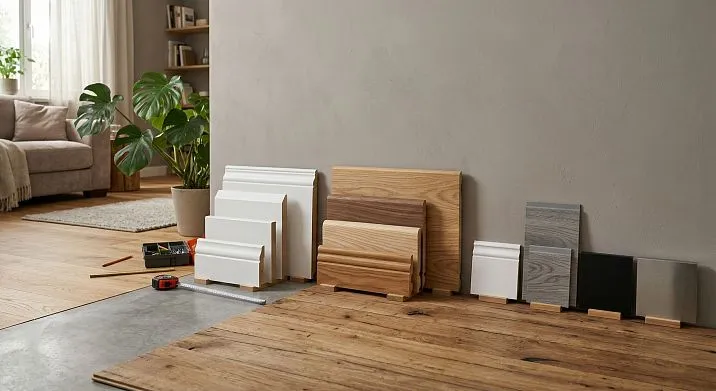
The question sounds simple, but the answer is not. 'Which skirting boards are best for an apartment' is not about ratings or top brands. It's about a specific floor, specific doors, a specific style, and the atmosphere you want to create in your space. For one apartment, the best solution might be a neat white MDF skirting board with perfect geometry. For another — a wide wooden oak skirting board with a live texture. For a third — practical polystyrene in a technical area. There is no universal answer. But there is a precise methodology — and that's exactly what we'll now examine.
➡️ View skirting boards for apartments in the STAVROS catalog




What 'best skirting boards for an apartment' means in practice
The word 'best' when applied to a building material always requires clarification. Best in what way? In durability, aesthetics, ease of installation, price, compatibility with the interior — these are four different answers. Let's agree on the criteria right away.




First criterion: the material determines everything
The material is not just a physical characteristic. It's how the skirting board will look in one, five, and twenty years. It's whether you can repaint it when changing the interior. It's how well it withstands impacts and moisture.buy MDF skirting boardor choosing a solid wood board — these are fundamentally different solutions, and confusing them is not advisable.
Our factory also produces:


Second criterion: consistency with the floor covering
MDF skirting for floorunder natural parquet — this is a material dissonance. A wooden skirting board under light-colored quartz vinyl — can be organic or not, depending on the execution. The rule: the material of the skirting board should either match the floor covering or intentionally contrast — but not conflict accidentally.
Get Consultation
Third criterion: proportion and height
The height of the profile is not a matter of taste, but a matter of architectural proportion. A low skirting board in a high living room looks helpless. A tall, wide profile in a small hallway is excessive and oppressive. For each ceiling height, there is its own correct skirting board height.
Fourth criterion: compatibility with doors and architraves
Skirting board and architrave are the closest neighbors in every doorway. If they are from different systems, different materials, different proportions — their 'meeting' in the lower corner will turn into a visual conflict. No design trick will fix an uncoordinated skirting board–architrave joint.
Fifth criterion: interior style
The same white skirting board in a classic living room and a minimalist studio behaves completely differently. Classic requires a profiled, relief skirting board. Minimalism — a smooth, clean horizontal line. Scandinavian style — a narrow, light-colored profile. Both material and form matter.
Sixth criterion: practicality and durability
In the hallway, baseboards receive mechanical impacts. In the kitchen — droplets of grease and water. In the nursery — regular 'encounters' with toys. In the living room — visual load. Each room has its own requirements for coating strength and resistance to impacts.
Which baseboards are better for an apartment based on material
The main fork is right here. Let's examine each material honestly and substantively.
MDF baseboard: the best choice for a modern interior
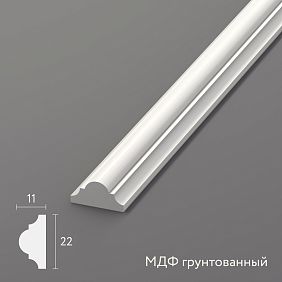
Baseboard MDF— a pressed wood fiberboard with a perfectly processed surface. High geometric precision, smoothness, readiness for painting in any RAL shade, good stability under proper operating conditions.
Why MDF is better for most modern apartments:
-
Perfectly smooth surface without knots and defects — paint applies without preliminary puttying
-
Easy trimming with standard tools
-
Wide range of heights — from narrow 40 mm to tall 120 mm profiles
-
Stable white surface that does not yellow with proper coating
-
Good compatibility with white doors and MDF architraves
White MDF Skirting Board— the most common choice for modern Russian apartments not because it's a 'cheap compromise,' but because it's truly the optimal solution for most typical scenarios: white doors, light laminate, neutral walls.
When MDF is the best choice:
-
Modern, Scandinavian, minimalist interior
-
White or light gray walls with white doors
-
Requires precise painting in a non-standard shade
-
Quartz vinyl or laminate as floor covering
-
Need a balance of price and neat visual result
Wooden skirting board: the best choice for a natural and status interior
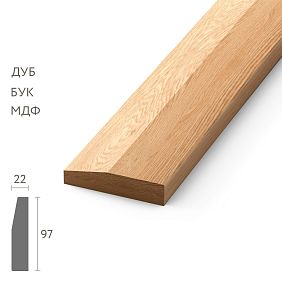
Wooden baseboard— this is solid wood: oak, ash, beech, pine, walnut, cherry. A living texture that reads differently in various light. Warmth that cannot be imitated. Durability that allows the profile to be restored after 10–15 years, not replaced.
with a classic profile creates a sense of solidity, reliability.— it's not just a functional detail. It's an architectural element that belongs to the same material system as parquet, wooden doors, and wooden trims. When all of these are made from the same wood species, the interior achieves an organic integrity that synthetics cannot replicate.
Characteristicswooden baseboardthat make it the best in its class:
-
Service life of 25–30 years with proper care
-
Ability to be sanded and repainted if damaged
-
Living texture that creates a 'warm' perception of space
-
Perfect match with parquet of the same species
-
High density and hardness in valuable species (oak, ash)
-
Variety of finishes: oil, varnish, enamel, paintable
buy wooden baseboard for floor— means making an investment in the interior that won't require replacement in five or ten years.
Solid wood skirting: the highest level of natural
Solid wood skirting is a wooden profile without gluing or pressing. Maximum material density. Zero voids inside the profile. Excellent response to mechanical load.
wooden baseboardOak skirting — for example, a wide 100–120 mm profile with a figured relief — in a classic living room with parquet of the same species is not just a 'good detail', but a full-fledged architectural solution that defines the level of the space.
Wide Wooden Skirting BoardSolid oak skirting is also an element that works best in a system withwith wooden cornicesand moldings of the same species. This is how a solid decorative contour of the room is created.
Polystyrene skirting: when a technical solution is sufficient
Polystyrene baseboard— pressed polystyrene foam or impact-resistant polystyrene. The lightest, cheapest, and easiest to install option.
When polystyrene is justified:
-
Technical premises — storerooms, utility rooms, service areas
-
Apartment rental — a temporary solution with a minimal budget
-
Replacement of damaged section when it's impossible to find the same material
-
High-humidity rooms where wood is undesirable
Howeverpolystyrene skirting board for floorhas serious limitations: low mechanical strength, yellowing over time, inability to restore, weak geometric stability during temperature fluctuations. For living rooms in a modern apartment, this solution comes with caveats.
What's better for an apartment: MDF or wooden baseboard
This is the main comparative question asked most often. Let's break it down honestly — by each parameter.
Appearance
MDF provides a perfectly uniform surface. White— is a horizontal element that frames the room at the bottom of the walls where the wall meets the floor. Skirting boards perform several functions: they hide the technological gap between the wall and floor covering (necessary for thermal expansion), protect the lower part of the wall from mechanical damage, create visual completion, and may conceal wiring.— a clean, calm horizontal line without visual noise. Wooden baseboard — a living texture that gives the space a sense of naturalness and 'warm' character. In a modern interior, MDF is better. In a classic or organic one — definitely wood.
Feeling of a 'luxurious' interior
A wooden oak baseboard in a massive profile is immediately perceived as an element of an expensive, status space. MDF gives a 'neat' effect — but not a 'rich' one. If your task is to create an impression — wood wins.
Versatility
Which MDF baseboardFor a modern apartment, white is often the best choice because it goes with anything. Wooden skirting requires more precise selection: you need to match the wood species and shade with the floor, doors, and furniture. One wrong step and the wooden skirting starts to 'clash' instead of 'conversing'.
For painting
MDF is the ideal surface for any paint. Smoothness, no pores, a stable white background — all this makes it— is a horizontal element that frames the room at the bottom of the walls where the wall meets the floor. Skirting boards perform several functions: they hide the technological gap between the wall and floor covering (necessary for thermal expansion), protect the lower part of the wall from mechanical damage, create visual completion, and may conceal wiring.the best choice when you need to hit a designer shade exactly. Wooden skirting for painting is also possible but requires more thorough surface preparation.
Geometry and Installation
MDF provides more stable geometry in unstable conditions — it deforms less than solid wood with humidity fluctuations. Wooden skirting takes shape well with proper installation but requires careful miter cutting and precise fitting.
Price
Wooden baseboard priceis higher than that of MDF of a similar profile. But when recalculated over the service life, the difference evens out: wood lasts 25–30 years, MDF lasts 10–15.
Final Comparison Table
| Parameter | MDF | Solid Wood |
|---|---|---|
| Surface for painting | Ideally | Good with preparation |
| Natural material | No | Maximum |
| Durability | 10–15 years | 25–30 years |
| Restorability | No | Yes |
| Expensive-looking visual effect | High | Maximum |
| Compatibility with parquet | Acceptable | Ideally |
| Entry price | Below | Higher |
| Suitability in modern interiors | Ideally | Good |
| Appropriateness in classic | Acceptable | Ideally |
Polystyrene, duropolymer or MDF: should you consider alternatives
This question regularly arises when making a choice.MDF or duropolymer skirting board— a comparison that is relevant with a limited budget or in rooms with non-standard conditions.
Duropolymer
Duropolymer is a synthetic analogue of gypsum molding. Good shape stability, moisture resistance, rich relief at a relatively affordable price. More often used for ceiling profiles and decorative cornices, less often for floor skirting boards.
What is better to choose
MDF or polystyrene skirting board— for residential apartments the answer is clear: MDF wins in all parameters except initial price. Polystyrene is a technical material, not an interior one. For main living spaces in modern apartments, the choice should be between MDF and wooden skirting boards.
Which skirting boards are best for an apartment under different floor coverings
For laminate
Laminate is the most common flooring in modern Russian apartments. The best skirting board under laminate is eitherBaseboard MDFwhite (if the interior is light and modern), or a wooden skirting board in the tone of the laminate (if a 'warm' atmosphere is important).
Technical nuance: laminate 'moves' with temperature fluctuations. A gap of 8–10 mm is needed between it and the wall. The skirting board covers this gap. Therefore, the width of the profile base is important: at least 12–15 mm for reliable coverage even at the maximum gap.
For parquet
Parquet is natural wood. Synthetic materials next to it are immediately noticeable. The best skirting boards for an apartment under parquet are wooden, in the same wood species and with a similar finish. Oak parquet — oakwooden baseboardskirting board. Ash parquet — ash skirting board. This is not a designer whim, it's material logic.
For engineered board
Engineered board — natural veneer on a sturdy base. Visually, it looks like real wood, and the skirting board should match this character.buy wooden baseboard for floorin a coordinated wood species — the right solution for apartments with engineered board.
For quartz vinyl
Quartz vinyl is an elastic synthetic flooring with a wood or stone pattern. Under light quartz vinyl — white MDF. Under dark quartz vinyl 'wood-look' — a wooden skirting board in a close shade or MDF matching the flooring tone.
For tile
In tiled rooms — hallway, bathroom, kitchen — the skirting board is primarily oriented to the color of the walls and doors. WhiteMDF Skirting Boardto white tiles and white door casings — a neat, professional solution. A wooden skirting board with tiles — acceptable with a warm texture and a 'warm' interior.
For combined floorings
In apartments with different floorings in different zones — a uniform skirting board profile along the entire perimeter creates visual unity. The shade may vary from room to room, but the base material and profile are uniform.
Which skirting boards are best for different rooms in an apartment
Best skirting board for the living room
The living room is a 'showcase' space. It is here that the skirting board works with maximum decorative load.Best skirting boards for the living room in an apartment— a wide wooden profile 80–120 mm in a classic setting or a tall white MDF in a modern space.
In the living room, consistency is especially important: the baseboard, wall moldings, and door trims should belong to the same decorative language. The best baseboards for an apartment living room are not a separate purchase; they are the first component of the system.
If an accent wall or TV zone is planned in the living room — consider combining a wooden baseboard withwooden wall planks. The horizontal line of the baseboard and the vertical rhythm of the slats are an architectural pair that works in any space.
The best baseboard for the bedroom
In the bedroom, the baseboard should work quietly. Expressive relief is not needed here — consistency with the overall character of the space is required.Best baseboards for a bedroom in an apartment— a wooden profile 55–80 mm in a light wood species or white MDF of medium height.
If in the bedroom, aWooden boards in interioron the headboard wall is planned — the baseboard is selected from the same wood species and with the same finish. Unity of material here creates a sense of a well-thought-out, not randomly assembled space.
The best baseboard for the hallway
The hallway is the zone of first impression and maximum load. Shoe impacts, moisture from wet clothes, regular wet cleaning.Best baseboards for the hallway in an apartment— profile with durable lacquer or enamel coating. Wooden baseboard with lacquer or MDF with water-resistant primer — both options work with proper installation.
Height for the hallway — 60–80 mm: sufficient for visual completeness and adequately impact-resistant.
Best baseboard for the corridor
In the corridor, the baseboard works 'along the entire line' — and this is the only case where its entire perimeter is visible at once. Uniformity and precision of corner cuts are critical. Material: wooden baseboard or MDF depending on the overall style of the apartment.
The best baseboard for the kitchen
The kitchen requires practicality: splashes, grease, regular cleaning. Wooden baseboard with lacquer coating works under normal kitchen conditions.MDF Skirting Boardwith water-resistant primer — also acceptable. In a kitchen combined with a living room, the baseboard should be uniform throughout the open area.
The best baseboard for a children's room
Children's room — a space with high stress on everything. Toys, baby walkers, accidental impacts. The best choice is a wooden skirting board with a hard lacquer coating or MDF with durable enamel. Height: 60–80 mm. Color: white or matching the walls.
Best baseboard for studio apartment
In a studio, the skirting board works for the entire space at once — without boundaries between rooms. A single profile along the entire perimeter is a must. The best choice for a studio: whiteMDF Skirting Board60–80 mm. It visually 'does not divide' the space and looks equally good next to any zone.
Which skirting boards are better for an apartment in terms of color and shape
White skirting board: a universal solution
White MDF Skirting Board— the most popular choice in modern apartments not because it's 'trendy,' but because white color automatically solves most compatibility issues. It matches any floor, any walls, any doors provided that the architraves are also white.
White wooden skirting board under white enamel — a more status-oriented solution: the same universality, but with natural material and the possibility to repaint if necessary.
High skirting board: when scale matters
Wide wooden floor skirting board— a profile from 100 mm — is appropriate in apartments with ceilings from 2.8 m. It 'gathers' the space, giving it scale and representativeness. In a classic living room with a 3 m ceiling, a high wooden skirting board is an architectural statement.
Important condition: a high skirting board works only in combination with a proportional architrave. A thin architrave next to a wide skirting board is a proportional mistake that is difficult to correct without replacing one of the elements.
Wide decorative profile
Wide Wooden Skirting Board90–130 mm with a figured relief is the best choice for classic living rooms, studies, and formal rooms. In a system with wall moldings, it creates a full-fledged decorative architecture for the lower zone.
Narrow profile: when lightness is needed
For small apartments, studios, and rooms with ceilings up to 2.6 m, a narrow skirting board of 40–55 mm is the best solution. It marks the joint without overloading the space. The main requirement for a narrow skirting board is precision in execution and a perfect finish: there is nowhere to 'hide' defects here.
For painting
Skirting board for painting means a profile with a primed surface ready for the application of the finishing layer.— is a horizontal element that frames the room at the bottom of the walls where the wall meets the floor. Skirting boards perform several functions: they hide the technological gap between the wall and floor covering (necessary for thermal expansion), protect the lower part of the wall from mechanical damage, create visual completion, and may conceal wiring.— perfect smoothness, any RAL. Wooden skirting board for painting — a living texture that shows through thin layers of paint and creates a sense of naturalness even when painted.
To match the floor
Skirting board matching the floor covering 'extends' the floor vertically — the joint dissolves, and the walls visually rise. A good technique for modern spaces with dark or expressive flooring.
Matching the door color
Skirting board matching the doors and architraves is a professional scenario. It creates a unified outline of the room: the doors and skirting board 'speak' with one voice, setting the tone for the entire space.
When it is better to choose an MDF skirting board
Modern neat appearance
If your goal is to achieve a clean, neat, modern interior without unnecessary details,Baseboard MDF— is the optimal choice. Smooth surface, precise geometry, white color that doesn't draw attention to itself. This is exactly what modern minimalism needs.
White color as a fundamental requirement
If white color is not just a preference but a design requirement, MDF provides the most stable result. WhiteWhite MDF Skirting Boarddoesn't yellow, doesn't change shade with proper coating, and maintains its color throughout its entire service life.
Precise painting in non-standard shades
Need a baseboard exactly in RAL 9010 or RAL 9001 shade — specifically matching doors ordered from another manufacturer? MDF ensures color accuracy that wood cannot achieve without special preparation.
Balance of price and appearance
MDF is not a 'cheap compromise' but the right solution for most modern apartments where the goal is beauty, neatness, and staying within budget. You don't need a premium budget to buy MDF baseboards. You need the right profile choice and quality coating.
When to choose a wooden skirting board
Natural material as a value
Wooden skirting board is the only option that offers genuine naturalness. Not an imitation, not 'wood-like', but the real texture of a living material. This is important in interiors where naturalness is a principle, not an accident.
Wooden floor or similar in texture
Next to parquet, engineered wood, or cork flooring, a wooden skirting board made from the same wood species is the only absolutely organic solution.wooden skirting board purchaseIn the same wood species as the parquet means creating a material unity that automatically forms an 'expensive' feeling of the interior.
Classic or status interior
In classic, neoclassical, or traditional interiors, wooden skirting board is indispensable. MDF can give a 'similar' visual result but loses material authenticity, which matters in a status space.
Long-term perspective
If you are renovating once and for a long time —and paint it to the desired shade — standard practice in modern design. It is important to use special wood finishes that allow the material to breathe.More reasonable than MDF. Wood lasts twice as long and can be restored. With proper care, an oak wooden skirting board will survive several cosmetic renovation cycles without replacement.
What to pair the best skirting boards for an apartment with
A skirting board does not exist in isolation. It is part of an interior system — and the final result depends on how this system is organized.
Skirting board and wooden wall battens
wooden planks on the wall— one of the main trends in modern interiors. The vertical rhythm of wooden battens combined with the horizontal line of the skirting board creates a structured, professionally looking space. This is a technique that works in bedrooms, living rooms, hallways — anywhere you need an accent wall with character.
Wooden plank for wallfrom the same wood species as the skirting board — the perfect combination. A single material, a single finish, a single tone. This is exactly how an interior where 'everything fits together' is created.
Decorative wooden batten and wall panels
Decorative wooden stripopens up wide possibilities for creating accent surfaces.Wooden batten wall panels— this is a more systematic solution: ready-made panels with uniform batten spacing, which are mounted as a single block and give a smooth, neat result.
Wooden boards in interior— this is not just decoration. It is a way to structure space, create rhythm, and add depth to a surface. Paired with a wooden skirting board from the same wood species, the battens form a complete interior system for the lower and middle zones of the wall.
Batten skirting as a transitional solution
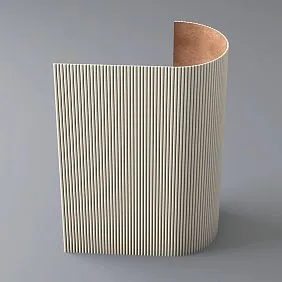
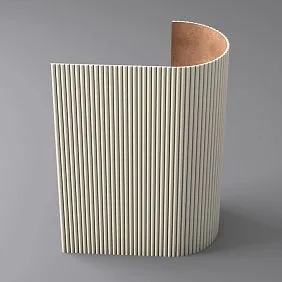
Lath baseboard— a special profile that ensures a neat joint between slatted panels and the floor. If wall panels with slats are installed in the apartment, this profile precisely solves the task of bottom finishing with professional accuracy.
Baseboard and Molding
When skirting works in the lower zone, moldings set the rhythm of the middle. Together they create a decorative system of 'belts' that structures the vertical of the wall. In a classic interior, this is a standard technique. In a modern one — a more laconic version of the same principle.
Skirting and architraves: the nodal point
The best skirting boards for an apartment — in a system with architraves from the same line. The architrave and skirting meet in every doorway, and the quality of this meeting determines how 'put-together' the interior looks.
Wooden battens in the interior wooden space— a separate topic: how to select the height of panels and skirting so that all joints are precise and the space looks cohesive.
Where to buy the best skirting boards for an apartment
Look at the profile, not just the photo
Online photography of skirting conveys color approximately and shape — in a perspective view. Always check the exact dimensions: height, base depth, rounding radius, presence of a cable channel. Only precise dimensions allow for correct calculation of compatibility with the floor and doorway.
The material affects the final result
Baseboard from the manufacturer means control over wood species, drying, coating, and geometry. An intermediary cannot guarantee this. When buying directly from the manufacturer, you get a product with predictable characteristics, not 'roughly the same'.
Choose where there is complementary decor
The best baseboard for an apartment is part of a system with architraves, moldings, and decorative strips. When all of this is available in one catalog, the task is solved with one order without additional matching.Buy wooden skirting boardBuying from the same place as the baseboard means guaranteed to get a coordinated result.
Order with a 10–15% surplus
Cutting at corners, doorways, and with complex wall configurations inevitably creates waste. Buying the same batch a month later may be impossible — production cycles are updated. A 10–15% surplus is the mandatory minimum.
Mistakes when choosing skirting boards for an apartment
Mistake 1: Looking for 'the one best' without considering the task
There is no universally best baseboard. There is the best for a specific floor, a specific room, a specific style. Start with the task — and only then move on to choosing the material and profile.
Mistake 2: Ignoring doors and architraves
A baseboard without considering architraves is a detailed purchase taken out of context. They will meet at every doorway, and if they are from different systems, that meeting will be awkward.
Mistake 3: Too low a profile for high ceilings
In apartments with ceilings 2.7 m and higher, a 40 mm baseboard gets lost. It doesn't create visual support and looks like a random detail. Proportion is mandatory to maintain.
Mistake 4: choosing based solely on price
The cheapest baseboard is usually made of unstable material with low-quality coating. After 2–3 years, it will yellow, deform, or lose its shape in the corners. Saving on baseboard during a good renovation is false economy.
Mistake 5: Not considering wall color
A baseboard in a random shade, not coordinated with the floor, walls, or doors, is a detail that drags the entire interior down. Color coordination is not an option, but an obligation.
Mistake 6: Not using adjacent decorative solutions
A baseboard purchased without considering wooden boards on the wall and moldings is a detail without context. When a baseboard is part of a system, it works for the entire interior. When it stands alone, it simply covers a gap near the floor.
Conclusion: which baseboards are best for your apartment
Time for direct answers. Not 'it depends on the task,' but specifically—for six main scenarios.
Need a universal modern option:
buy MDF skirting board white. Height 60–80 mm. Clean surface, precise geometry, white color. Perfect for apartments with light laminate, white doors, and neutral walls.
Need a natural and prestigious material:
wooden skirting board purchase made of oak or ash. Matching the parquet or engineered wood. With lacquered or oiled finish. For classic, neoclassical, and organic interiors.
Need a budget technical option:
Polystyrene floor baseboard — for utility rooms, rentals, and technical areas. Not recommended for living rooms.
Need a striking interior accent:
Wide Wooden Skirting Board 100–130 mm with a shaped profile. In a system with moldings and wooden casings.
A more cohesive interior is needed:
Wooden skirting board +Buy wooden skirting board for an accent wall +Wooden batten wall panels. Same wood species, same finish. An interior that looks designed.
Precise painting in a designer shade is needed:
— is a horizontal element that frames the room at the bottom of the walls where the wall meets the floor. Skirting boards perform several functions: they hide the technological gap between the wall and floor covering (necessary for thermal expansion), protect the lower part of the wall from mechanical damage, create visual completion, and may conceal wiring. with a primed surface. Apply the topcoat in the required RAL — and get an exact color match.
➡️ MDF skirting board — STAVROS catalog
➡️ Buy wooden skirting board — solid wood catalog
➡️ Buy wooden batten — STAVROS catalog
➡️ Wooden batten wall panels — STAVROS catalog
➡️ Buy wooden ceiling skirting board — STAVROS
About the company STAVROS
STAVROS is a Russian manufacturer of decorative products made from solid wood and MDF. Skirting boards, architraves, moldings, cornices,Decorative wooden strip, Wooden corner bracket, slatted panels — all are produced in coordinated lines with unified material and stylistic logic.
The STAVROS principle is a systematic approach to decorative finishing. The best skirting boards for an apartment are not a separate purchase, but the first element of an interior system that includes architraves, moldings, slats, and wall panels made from the same wood species, with the same finish, and in the same style.
STAVROS works with private customers, designers, and architects across Russia. A stable assortment, the possibility of selecting a systematic solution for a specific project — this is precisely what makes STAVROS the right choice for a serious approach to interior design.
Frequently asked questions about skirting boards for apartments
Which skirting boards are better for an apartment — MDF or wooden?
It depends on the task. MDF is the best choice for modern interiors, white doors, and laminate flooring. Wooden is for parquet, classic interiors, and where naturalness and durability are important. For apartments with oak parquet, a wooden skirting board made from the same species is the only absolutely organic solution.
What height of baseboard is best for an apartment?
For ceilings up to 2.5 m — 40–60 mm. For 2.5–2.7 m — 60–80 mm. For 2.7–3 m — 80–100 mm. Above 3 m — from 100 mm. The proportion between ceiling height and skirting board height is a basic architectural rule.
Which skirting board is better for uneven walls in an apartment?
MDF with a wide base — it better covers minor irregularities at the wall joint. For significant unevenness, preliminary puttying or fitting is needed. Wooden skirting boards on very crooked walls require more thorough fitting.
Can a wooden skirting board be painted after installation?
Yes. Wooden skirting boards for painting come with a primed surface. After installation, a finishing coat of water-based or alkyd paint is applied. If repainting is needed in the future — sanding and a new coat of enamel.
What is better for a studio apartment — wooden skirting board or MDF?
White MDF is optimal for a studio: it visually does not 'cut' the open space and looks equally good next to any zone. Wooden skirting boards in a studio are appropriate provided the overall 'warm' wooden character of the interior.
How to match skirting boards with wooden wall slats?
Choose slats and skirting boards from the same wood species with the same finish. Oak wooden skirting board + oak wooden wall slats with the same oil or varnish — a unified system that looks like part of one architectural solution.
How much extra skirting board to buy as a reserve?
10–15% beyond the calculated footage. For complex layouts with many corners and doorways — up to 20%. Saving on reserve often results in the inability to purchase the same batch later.
What is better for an apartment: polystyrene or MDF?
For living spaces — MDF. Polystyrene is significantly inferior in mechanical strength, geometric stability, and service life. Polystyrene is justified only in technical or auxiliary rooms.