Article Contents:
- The essence of volumetric decor: what lies behind the term
- Technological foundations of volumetric decor production
- Materials for creating interior decor: comparative analysis
- Solid wood: the nobility of nature
- Polyurethane: the practicality of modern technologies
- Stylistic directions for applying volumetric stickers
- Classical interiors: tradition and luxury
- Modern spaces: geometry and minimalism
- Installation technology: from preparation to finishing
- Preparation Stage: Planning and Marking
- Installation process: adhesive compounds and mechanical fasteners
- Integration with architectural interior elements
- Wall panels and boiserie: classic elegance
- Door and window framing: accenting openings
- Furniture decor: transforming standard products
- Cabinet fronts: from simple to exquisite
- Chests of drawers and sideboards: accent decor
- Color solutions: from natural wood to creative effects
- Natural finishing: emphasizing texture
- Painting and decorative techniques
- Specifics of application in various rooms
- Living room: grandeur and representativeness
- Bedroom: Intimacy and Coziness
- Office: solidity and status
- Stairs and balustrades: functional decor
- Balusters: variety of forms and styles
- Railings and handrails: ergonomics and aesthetics
- Ceiling decor: the fifth wall of the interior
- Ceiling cornices: classic solution
- Coffers and rosettes: accents on the ceiling
- Modern trends in volumetric decor
- Minimalist volume: restrained expressiveness
- Mixing styles: eclecticism and fusion
- Maintenance and Care for Decor
- Care for Wooden Elements
- Care for Polyurethane Elements
- Economic aspects: investment in quality
- Pricing: cost factors
- Long-Term Perspective: The Value of Quality
- Frequently Asked Questions About 3D Decor
- Can Wooden Overlays Be Used in Wet Areas?
- How to Match the Size of Decorative Elements to the Room Size?
- How Long Does Room Decoration Take?
- Does 3D Decor Require Special Care?
- Can Wooden Decor Be Painted a Different Color?
- How Does 3D Decor Affect Room Acoustics?
- Is Wooden Decor Finishing Eco-Friendly?
- How to combine different wood species in one interior?
- STAVROS: Embodiment of Quality in Every Detail
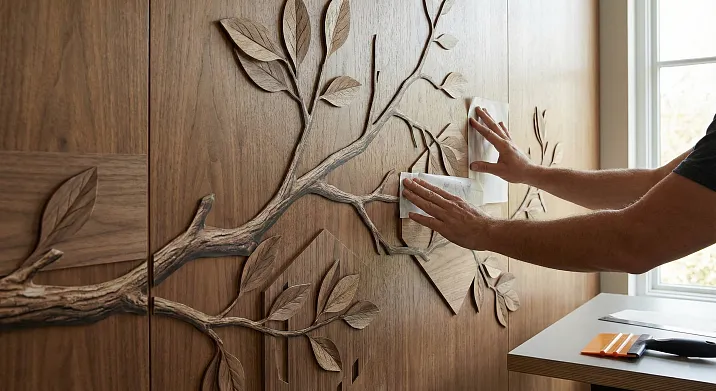
Have you ever felt the magic of the moment when an ordinary wall transforms into a work of art? When a flat, featureless surface gains volume, depth, character? Interior 3D stickers for decor are not just a fashionable trend; it's a revolutionary approach to space design where technology meets artistic mastery. The question of how to translate interior 3D stickers for decor into the language of a specific project concerns not only designers but everyone who strives to create a truly unique living space.


The Essence of 3D Decor: What Lies Behind the Term
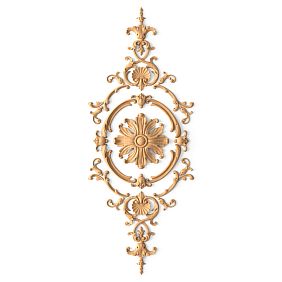
When we talk aboutinterior stickers for decor, it's important to understand the fundamental difference between flat vinyl stickers and genuine three-dimensional elements made of natural wood or polyurethane. 3D overlays create a tactile relief that can not only be seen but also felt with your fingers. These products form a play of light and shadow that changes throughout the day, giving the interior liveliness and dynamism.
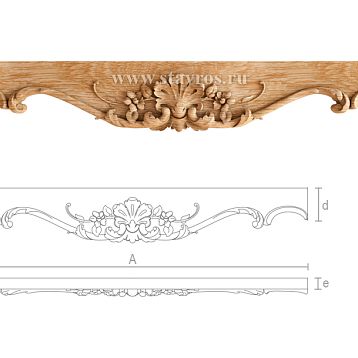
Wooden decor stickers are made from solid noble woods — beech, oak, ash — and undergo precise milling on high-precision CNC equipment. The result is impressive: every line of the ornament is calibrated to the millimeter, every carving curl is honed to perfection. The natural wood grain shows through even under a layer of paint or varnish, creating a premium quality effect.




Technological Foundations of 3D Decor Production
The process of creating three-dimensional decorative elements begins with digital modeling. Designers develop detailed 3D models of future overlays, considering not only aesthetics but also the technological capabilities of production. These models are loaded into the control programs of milling machines, where the magic of transforming solid wood into an intricate work of art takes place.
Computer Numerical Control (CNC) machines allow creating patterns of any complexity — from classic floral ornaments to modern geometric patterns. Processing accuracy reaches tenths of a millimeter, ensuring perfect joining of elements during installation and flawless appearance of the finished composition. After mechanical processing, each part undergoes manual finishing, where experienced craftsmen eliminate the smallest imperfections and emphasize the expressiveness of the relief.
Our factory also produces:


Materials for Creating Interior Decor: Comparative Analysis
The choice of material determines not only the aesthetic characteristics of the future decor but also its durability, application possibilities, and project cost. Each material possesses unique properties that make it preferable for certain operating conditions and stylistic solutions.
Get Consultation
Solid Wood: The Nobility of Nature
Carved wooden stickers represent the standard of naturalness and eco-friendliness. Oak is famous for its strength and expressive texture with large pores that create a characteristic pattern on the surface. This wood is ideal for creating massive elements in classic interiors, where solidity and status are valued. Oak overlays last for decades, acquiring a noble patina over time that only emphasizes their value.
Beech is distinguished by its fine-pored structure and pinkish hue, which gives products a special warmth. This wood is excellent for carving, allowing the creation of the finest ornamental details. Beech elements fit particularly harmoniously into bedroom and children's room interiors, where an atmosphere of coziness and security is required. The dense structure of the material ensures shape stability and resistance to mechanical impacts.
Ash attracts with its contrasting texture with clearly defined annual rings. This feature makes it indispensable for modern interiors, where the expressiveness of natural forms is valued. The light shade of ash visually expands the space, which is especially valuable in compact rooms. The high strength and elasticity of the wood allow creating elements of complex curvilinear shape without the risk of cracking.
Polyurethane: The Practicality of Modern Technologies
Decorative elements made of polyurethane offer completely different possibilities. This material is absolutely not afraid of moisture, making it an ideal choice for bathrooms, kitchens, and rooms with swimming pools. Polyurethane overlays do not deform with temperature and humidity fluctuations, maintaining their geometry for decades. The light weight of the products simplifies installation and reduces the load on load-bearing structures.
The casting technology allows reproducing the smallest details of the original with photographic accuracy. One mold can be used to produce thousands of identical elements, ensuring consistent quality in large projects. Polyurethane is easily painted in any colors, accepts patination, gilding, and imitation of various materials — from wood to metal.
Stylistic Directions for Applying 3D Stickers
The versatility of three-dimensional decor is manifested in its ability to organically fit into interiors of the most diverse stylistic directions. It is important to understand that the same element can look completely different depending on the painting method, composition, and surrounding context.
Classical Interiors: Tradition and Luxury
In a classical interior, three-dimensional overlays serve as a connecting link between various architectural elements. Symmetrical compositions with floral ornaments, acanthus leaves, and rosettes create an atmosphere of palatial solemnity.Wooden decorative profileframes door and window openings, divides walls into panels, and emphasizes the vertical and horizontal axes of the composition.
Gilding of carved elements adds an aristocratic shine to the interior. The technique of gilding with gold leaf or gold leaf requires high skill and turns each overlay into a piece of jewelry. Patination — artificial aging of the surface — creates the effect of an antique item that has passed through centuries. The contrasting combination of gold in the recesses of the relief and patina on the protruding parts creates a dramatic play of light.
Modern Spaces: Geometry and Minimalism
Modern interiors require a different approach to decor. Here, concise geometric shapes, clear lines, and a restrained color palette are in demand.Wooden moldings with a 3D effectwith a simple profile create a barely noticeable relief that only appears under certain lighting. This restraint emphasizes the architectural expressiveness of the space without overloading it with details.
Painting to match the wall color makes the three-dimensional decor almost invisible from a frontal view but reveals it under side lighting. This technique creates a dynamic perception of the interior, which changes depending on the time of day and the direction of light. Monochrome solutions — white on white, gray on gray — emphasize form through shadow, not through color contrast.
Installation technology: from preparation to final finishing
Proper installation of three-dimensional decorative elements determines not only the appearance of the finished interior but also the durability of the structure. The installation process requires careful preparation, precise measurements, and professional execution of each stage.
Preparation Stage: Planning and Marking
Before starting installation, it is necessary to create a detailed plan for the placement of elements. Marking is done using a laser level, which ensures perfect horizontal and vertical lines. Symmetrical compositions require determining the central axis from which the remaining elements are laid out. Asymmetric solutions need preliminary visualization — often creating a full-size paper or cardboard mock-up helps.
The base surface must be clean, dry, and strong. Loose plaster must be reinforced with deep-penetration primer. Irregularities of more than 3-5 mm require leveling, as decorative elements follow the profile of the base and reveal all its defects. Special attention is paid to room corners — this is where problems most often arise when joining elements.
Fastening Process: Adhesive Compounds and Mechanical Fasteners
The choice of fastening method depends on the overlay material, base type, size, and weight of the element. Light polyurethane parts are securely fixed with a special adhesive based on synthetic polymers. This adhesive has high adhesion to various materials, sets quickly, and does not shrink. The adhesive is applied in dots or strips to the back of the element, the part is pressed against the base and fixed for several minutes until initial setting.
Heavy wooden overlays require combined fastening. The adhesive connection is supplemented with mechanical fastening — using finishing nails or screws. Fasteners are installed in the least noticeable places — in the recesses of the relief, on the back surfaces, in areas that will be hidden by other elements. After installation, the fastener heads are filled with wood putty to match the product and become completely invisible.
Integration with Architectural Elements of the Interior
Three-dimensional decor achieves maximum expressiveness when it becomes part of a holistic architectural composition. Isolated overlays, arbitrarily placed on walls, look like random accents. A well-thought-out decor system turns a room into a unified work of art.
Wall Panels and Boiserie: Classic Elegance
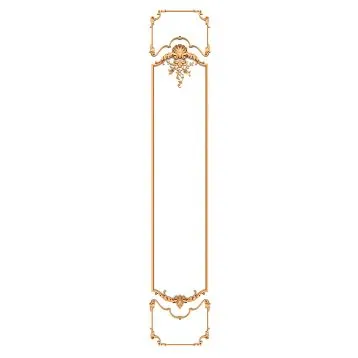
Boiserie — a traditional French system of wall panels — is a combination of flat panels framed bywooden decorative profile. Vertical and horizontal moldings create rectangular or square frames, inside which veneer, painted MDF, or textile panels are placed. Carved overlays are installed in the corners of the frames and in the center of the panels, becoming compositional accents of the system.
The height of the panels can vary from half the wall height to three-quarters. The lower part — the plinth zone — is usually made of darker material or with more saturated decor. The middle part — the main field — remains relatively calm. The upper zone — the frieze — is again saturated with decorative elements and completed with a cornice. This three-part system creates harmonious proportions and visually corrects the height of the room.
Door and Window Framing: Accenting Openings
Door portals in classical interiors are decorated with complex architraves with carved corner elements. The upper part of the opening is crowned with a pediment — a horizontal cornice on brackets, which creates the effect of an architectural portal. Carved overlays on the brackets can depict volutes, acanthus leaves, mascaron — stylized masks.
Window reveals are decorated in a similar way, creating a visual rhyme with door openings. The windowsill board can be complemented with a carved apron — a decorative panel with an ornament that hides the heating radiator and turns it into a decorative element. Symmetry in the design of openings creates a rhythm that organizes the perception of space.
Furniture Decor: Transforming Standard Items
The most accessible way to introduce three-dimensional decor into an interior is by decorating existing furniture. A standard wardrobe, chest of drawers, or cabinet can be transformed with carved overlays beyond recognition, turning from faceless furnishings into unique artistic objects.
Cabinet Fronts: From Simple to Exquisite
Flat fronts of sliding or hinged wardrobes serve as an ideal base for decoration. Carved overlays are placed symmetrically—centered on each door or in the corners—creating a framed composition. Corner rosettes are complemented by vertical and horizontal moldings, which form rectangular panels on the front surface.
It is important to maintain proportions: overly small elements get lost on a large front surface, while overly large ones overwhelm the furniture's form. The optimal ratio of decorative area to front area is approximately 1:4 or 1:5. The color of the overlays can match the front color, creating a monochrome composition, or contrast, highlighting the decorative elements.
Chests of Drawers and Cabinets: Accent Decor
Small furniture pieces—chests of drawers, cabinets, consoles—allow for the use of more saturated decor. Large carved overlays that cover a significant portion of the drawer fronts are appropriate here. The central overlay on each drawer can depict a floral basket, a musical instrument, attributes of the arts—motifs characteristic of Rococo and Classicism styles.
The side walls of chests can also be decorated with overlays in the form of vertical garlands or pilasters. The top lid is framed with a small cornice, which creates a sense of completeness. Legs are replaced with carved elements—turned balusters or cabriole legs with carvings—which give the furniture lightness and elegance.
Color Solutions: From Natural Wood to Creative Effects
The finish of volumetric decor determines its perception no less than its form and ornament. The same carved element looks completely different depending on the method of painting or tinting.
Natural Finish: Emphasizing Texture
Transparent coatings—oils, waxes, varnishes—preserve the visibility of the wood grain and emphasize the natural beauty of the material. Oil penetrates the wood structure, enriches it, making the color deeper and more expressive. An oil coating creates a matte surface with a slight silky sheen, pleasant to the touch.
Wax forms a thin protective film on the wood surface, giving it a soft glow. Wax coating is traditionally used for antique furniture and decor, creating a sense of care and nobility. Regular renewal of the wax layer maintains the protective properties of the coating and preserves the beauty of the item.
Varnish creates a durable, shiny film that reliably protects wood from moisture and dirt. A glossy varnish finish emphasizes the relief of the carving, creating a contrasting play of highlights and shadows. Matte varnish retains protective properties but looks more natural, avoiding a plastic-like appearance.
Painting and Decorative Techniques
Opaque painting with enamels completely hides the wood texture, creating a uniform color surface. White enamel is a classic choice for French and Scandinavian interiors; it visually lightens the decor, making it airy and elegant. Black enamel creates a dramatic contrast, emphasizes the graphic quality of forms, and contributes to an elegant severity.
Patination adds depth to a painted surface. The technique involves applying a contrasting pigment into the recesses of the relief, then removing excess from the raised parts. Gold patina on a white background creates the effect of luxurious antique. Dark patina on a light base emphasizes carving details, making the ornament more legible.
Brushing—the mechanical removal of soft wood fibers—creates an emphasized relief texture. This technique is especially effective on oak and ash with pronounced annual rings. The brushed surface is tinted in contrasting colors, creating the effect of aged, repeatedly painted wood with underlying paint layers showing through.
Specifics of Application in Various Rooms
Each room imposes its own requirements on decor in terms of functionality, style, and emotional impact. A universal approach does not work—the living room and bedroom, study and children's room require different solutions.
Living room: grandeur and hospitality
The living room—the center of the home, a place for receiving guests and family gatherings—requires the most expressive decor. Here, large-scale compositions of3D wall panelsare appropriate, creating an accent wall behind the sofa or TV. A symmetrical layout of panels with carved overlays in the centers and corners creates a solemn classical composition.
The fireplace—a traditional focal point of the living room—is framed by a portal with carved decor. The mantel shelf is supported by brackets with floral ornamentation. The mirror above the fireplace is framed with a frame featuringwooden moldingscorner rosettes. This classic triad—fireplace, mirror, decorative framing—creates the compositional center of the entire room.
Bedroom: Intimacy and Coziness
The bedroom requires more restrained, intimate decor. The bed headboard becomes the main object of decoration—here, a panel of boiserie with carved elements or a soft panel framed bywooden decorative profileis placed. Symmetrical bedside tables with identical decor create a balanced composition on either side of the bed.
A floor-to-ceiling sliding wardrobe is decorated with moldings that break up the monotonous plane of the sliding fronts into panels. The vertical rhythm of narrow, tall panels visually increases the ceiling height. A dressing table with carved legs and decorated drawer fronts becomes an elegant accent in the bedroom.
Office: solidity and status
The home study—a place for work and contemplation—is decorated in a more austere style. Library shelves with carved cornices and pilasters create an atmosphere of respectability. A solid wood desk is complemented by carved overlays on the drawer fronts and carved legs.
Wall panels up to two-thirds of the wall height create a business-like atmosphere. The upper part of the wall can be painted in a contrasting color or covered with wallpaper featuring a classic pattern. The transition between the panels and the upper part is finished witha wooden moldingwhich visually adjusts the proportions of the room.
Stairs and Balustrades: Functional Decor
A staircase in a two-level apartment or country house is not only a functional element but also an important decorative object. A properly designed and decorated staircase becomes a sculptural accent in the interior, attracting attention.
Balusters: variety of forms and styles
wooden balustersThey perform a dual function—ensuring safety and creating a decorative rhythm. Turned balusters with a classic profile are suitable for traditional interiors. Variations in diameter, quantity, and shape of the turnings create diversity while maintaining a unified style.
Carved balusters with floral or geometric ornamentation turn the staircase into a work of art. Each baluster becomes a miniature sculpture, and their rhythmic alternation creates a dynamic composition. It is important to maintain stylistic unity—balusters should harmonize with handrails, posts, and the overall decor of the room.
Handrails and railings: ergonomics and aesthetics
The staircase handrail—an element of constant tactile contact—should be not only beautiful but also comfortable. The optimal cross-section of the handrail allows for a comfortable grip. The surface should be perfectly smooth, without burrs or irregularities that could injure the skin.
Wooden railingsare made from hardwoods resistant to wear—oak, beech, ash. The handrail can be straight or curved, following the shape of the staircase flight. The beginning and end of the handrail are decorated with decorative finials—volutes or balls—which complete the form.
Ceiling Decoration: The Fifth Wall of the Interior
The ceiling often remains undeservedly forgotten in interior decoration, although it determines the perception of a room's height and volume. Three-dimensional decor on the ceiling creates an additional dimension of space, draws the eye upward, and visually increases the room's height.
Ceiling cornices: a classic solution
A ceiling cornice—a horizontal profiled element at the junction of the wall and ceiling—softens the rigidity of a right angle and creates an elegant transition. A classic cornice consists of several profiles—fillet, ogee, cavetto—which form a complex play of light and shadow. The size of the cornice should correspond to the room's height: the higher the ceiling, the more massive the cornice is appropriate.
Wooden moldingsfor ceiling cornices are manufactured up to 2.5 meters in length, minimizing the number of joints. Room corners are finished with special corner elements cut at a 45-degree angle, ensuring a perfect fit. The cornice can be painted to match the ceiling color, creating a monochromatic solution, or in a contrasting color, emphasizing the room's architecture.
Coffers and rosettes: accents on the ceiling
A ceiling rosette—a round or polygonal decorative element—is traditionally placed in the center of the ceiling at the chandelier mounting point. A carved rosette with floral ornamentation becomes a frame for the light fixture, linking it with the room's architecture. The size of the rosette is determined by the chandelier size and ceiling area—the optimal ratio of rosette diameter to room size is approximately 1:6.
Coffers—recessed panels on the ceiling framed by beams or moldings—create a complex geometric composition. The classic scheme involves square or rectangular coffers arranged in a regular order. Inside each coffer, a carved rosette or painted decor is placed. A coffered ceiling visually lowers the room's height, creating a sense of intimacy and protection.
Modern trends in three-dimensional decor
The development of technology and changing aesthetic preferences are transforming approaches to creating and applying three-dimensional decor. Modern designers reinterpret classical heritage, creating hybrid solutions that combine traditional forms with innovative materials and production methods.
Minimalist volume: restrained expressiveness
Modern minimalism does not abandon three-dimensional decor but uses it more restrainedly. Simple geometric profiles—quarter round, rectangular trim—create a barely noticeable relief that only appears under certain lighting. Monochromatic painting in the wall color makes the decor almost invisible from a frontal view.
Asymmetrical compositions replace classical symmetry. Moldings are placed not along the room's axes but freely, creating a dynamic composition. Overlays of various sizes and shapes are combined on a single plane, forming an abstract relief. This approach requires a developed sense of composition and an understanding of the principles of visual balance.
Mixing styles: eclecticism and fusion
Eclectic interiors combine elements from various stylistic directions, creating unique authorial solutions. Classical carved overlays can coexist with industrial metal elements. Baroque volutes are complemented by geometric modern forms. It is important to maintain a sense of proportion and find unifying elements—color, scale, rhythm—that create compositional integrity.
Painting in unexpected colors refreshes classical forms. Carved overlays painted in bright, saturated tones—emerald, sapphire, purple—look modern and bold. Metallic finishes—copper, bronze, aged silver—add industrial chic to classical forms.
Technical maintenance and care for decor
The durability of three-dimensional decor depends not only on the quality of manufacturing and installation but also on proper care during operation. Different materials and types of finishes require specific approaches to cleaning and maintenance.
Care for wooden elements
Wood is a living material that reacts to changes in temperature and humidity. The optimal microclimate for wooden decor is a temperature of 18-22°C and relative humidity of 40-60%. Excessive dryness leads to wood cracking, while excessive humidity causes swelling and deformation.
Regular dusting is done with a soft, dry cloth or a brush with natural bristles. Wet cleaning is allowed for varnished surfaces but requires caution—excess moisture can penetrate joints and cause coating delamination. The use of aggressive cleaning agents, abrasives, and solvents is strictly prohibited.
Protective coating renewal is done as needed. Oil and wax coatings require periodic renewal—once a year or more often with intensive use. The old wax layer is removed with special compounds, the surface is degreased, and a fresh layer is applied. Varnish coatings are more durable but require complete sanding and re-varnishing if damaged.
Care for polyurethane elements
Polyurethane is low-maintenance and resistant to most household impacts. Cleaning is done with a damp cloth and mild detergent. Polyurethane is not afraid of water, so elements in bathrooms and kitchens can be washed as intensively as ceramic tiles.
Painted polyurethane elements retain their color for decades without fading. If the appearance needs refreshing, elements can be repainted with acrylic or alkyd enamels without prior priming—paint adheres well to polyurethane surfaces. Mechanical damage—chips, scratches—is easily repaired with putty and touch-up painting.
Economic Aspects: Investment in Quality
The cost of an interior decoration project with three-dimensional elements consists of several components. It is important to understand that saving on material quality and workmanship ultimately leads to greater expenses for redoing and repairs.
Pricing: Cost Factors
The price of decorative elements is determined by the material, complexity of manufacturing, and size. Solid wood products are more expensive than polyurethane counterparts but offer unparalleled naturalness and durability. Hand carving is many times more expensive than CNC milling but creates unique works of art that cannot be replicated.
Installation cost depends on the qualifications of the performers and the complexity of the project. Simple installation of moldings around the perimeter of a room is significantly cheaper than creating a complex boiserie system with numerous carved elements. The work of professional craftsmen costs more but guarantees a quality result without rework.
Long-term perspective: the value of quality
Quality three-dimensional decor lasts for decades without losing its aesthetic properties. Solid wood elements acquire a noble patina over the years, which only emphasizes their value. When changing the interior style, the decor can be repainted, altering its perception without replacing the elements themselves.
Investing in quality materials and professional work pays off by creating a unique interior that reflects the owner's individuality. A home with well-thought-out decor has higher market value and appeal to potential buyers. But the main value of quality decor is the daily aesthetic pleasure it provides.
Frequently Asked Questions about Three-Dimensional Decor
Can wooden overlays be used in damp areas?
Natural wood requires special preparation for use in high-humidity conditions. Treatment with water-repellent compounds and multi-layer varnish coating create a barrier that protects the wood from moisture. However, the optimal choice for bathrooms and kitchens remains polyurethane elements, which are completely impervious to water and steam.
How to match the size of decorative elements to the size of the room?
The main rule is proportionality. In small rooms, large decor looks overwhelming and creates a feeling of cramped space. Small elements in spacious rooms get lost, failing to create the desired effect. An approximate ratio is that the height of the molding should be about 1/30 to 1/40 of the wall height. Carved overlays should not exceed 1/6 to 1/8 of the area of the decorated surface.
How long does it take to decorate a room?
Timelines depend on the scale of the project and the complexity of the work. Installing a ceiling cornice around the perimeter of a 20 sq.m room takes 1-2 working days. Creating a boiserie system on the walls of the same room requires 5-7 days of work by two craftsmen. Decorating furniture with carved overlays takes 2-3 days per item, including time for glue drying and finishing.
Does three-dimensional decor require special care?
Minimal care involves regular dusting. Deep reliefs with many small details require periodic cleaning with a soft brush or a vacuum cleaner with a brush attachment. Painted and varnished surfaces do not require special maintenance. Oil and wax finishes require periodic renewal—once a year or less, depending on operating conditions.
Can wooden decor be painted a different color?
Wooden elements are excellent for repainting. The old coating is removed mechanically or with chemical strippers, the surface is sanded and coated with a new composition—stain, paint, or varnish. This process allows for updating the interior without replacing decorative elements, which is significantly more economical than a complete renovation.
How does three-dimensional decor affect room acoustics?
A textured surface scatters sound waves better than a smooth one. Three-dimensional decor on walls reduces room reverberation, making acoustics more comfortable. This effect is especially noticeable in rooms with high ceilings, where echo creates discomfort. Coffered ceilings significantly improve acoustics, making them a popular solution for home theaters and music rooms.
Is wooden decor finishing eco-friendly?
Modern wood finishing compounds meet strict environmental standards. Oils and waxes based on natural ingredients are absolutely safe for health. Water-based acrylic varnishes do not contain toxic solvents and have no strong odor during application. Alkyd compounds are inert and do not emit harmful substances after complete drying.
How to combine different wood species in one interior?
Combining different wood species creates interesting visual effects. It is important to maintain unity in warmth of tones—warm species (walnut, mahogany) do not combine with cool ones (ash, bleached oak). Contrast in textures—smooth beech and expressive oak—creates dynamism within a single color scheme. A unifying factor can be a single type of finish—all elements matte or all glossy.
STAVROS: embodying quality in every detail
When it comes to creating truly outstanding interiors using three-dimensional decor, the name STAVROS sounds like a guarantee of unparalleled quality and professionalism. For over two decades, STAVROS has specialized in producing decorative elements from natural wood and polyurethane, offering clients solutions of any complexity—from standard catalog items to exclusive products based on custom sketches.
STAVROS works with the finest wood species—oak, beech, ash—sourcing materials from trusted European suppliers. Modern CNC production equipment ensures machining accuracy to tenths of a millimeter, guaranteeing perfect element alignment during installation. But technology does not replace manual craftsmanship—each product undergoes final hand finishing, where experienced carvers eliminate the smallest imperfections and enhance the expressiveness of the relief.
STAVROS assortment includes thousands of items—Wooden carved appliqués, Wooden moldings, cornices, baseboards,balusters for staircases, rosettes, brackets, capitals, and much more. The full range of products allows for creating a cohesive interior where all elements harmoniously combine in style, scale, and quality of execution.
An individual approach to each project is the philosophy of STAVROS. The company's designers and technologists are ready to develop unique elements based on client sketches, bringing the boldest ideas to life in wood or polyurethane. The in-house design bureau creates 3D models of future products, coordinates them with the customer, and sends them to production only after full approval.
Choosing STAVROS means choosing a partner for whom quality is not just a word, but a daily practice proven by thousands of completed projects. It is an investment in the beauty, durability, and emotional comfort of your home, which will delight you for many years and become a source of pride for your guests.