Article Contents:
- Psychology of Perception: Why Details Define the Impression
- Kitchen: The Command Center of the Home Requires Special Attention
- Why Kitchen Handles Wear Out Faster
- Stylistic Update Through Hardware
- Practical Advantages of New Hardware
- Living Room: The Representative Space Needs Details
- Cabinets, Dressers, Wall Units: Hidden Potential
- Style Coordination
- Accents and Contrasts
- Replacement Technology: Easier Than It Seems
- Preparation and planning
- Tools and Materials
- Installation process
- Choosing Hardware: What to Pay Attention To
- Material: Wood or Metal
- Shape and Ergonomics
- Color and Finish
- Budget: How Much Does the Transformation Cost
- Economic Benefit of Replacing Hardware
- Where to Buy Quality Hardware
- Additional Upgrade Techniques Without Renovation
- Decorative Overlays and Panels
- Painting Facades
- Replacing Countertop and Backsplash
- Mistakes to avoid
- Style mismatch
- Incorrect Size
- Saving on quality
- Ignoring Ergonomics
- Case Studies: Real Transformation Stories
- Soviet Kitchen Transformed into Scandinavian Chic
- Living Room in Contemporary Style
- Rental Apartment: Temporary Improvements
- 2025 Trends: What People Are Choosing Today
- Natural materials
- Minimalism and Simplicity
- Contrasting combinations
- Asymmetry and uniqueness
- Frequently Asked Questions
- Can You Replace Handles Yourself Without Experience?
- How to choose handles if I don't know the center-to-center distance?
- How many handles are needed for a kitchen?
- Which material is more practical for a kitchen?
- How to care for wooden handles?
- Is it possible to install the same handles throughout the apartment?
- Where to buy quality wooden handles?
- How long do quality furniture handles last?
- Psychological effect: home as a reflection of personality
- Eco-friendliness: conscious consumption
- STAVROS: professional solutions for your interior

Tired of a boring interior, but the thought of a lengthy renovation makes you gloomy? There is a brilliantly simple solution that professional designers know about but ordinary apartment owners rarely use. Replacingdesigner furniture handlescan radically transform a space in one day without dirt, dust, construction crews, and astronomical budgets. This technique works flawlessly: the kitchen gains freshness, the living room gets character, and you save months of time and tens of thousands of rubles. Let's figure out why such a seemingly insignificant detail has the magical ability to transform the appearance of an entire room.




Psychology of perception: why details define the impression
The human brain is surprisingly structured: we perceive space as a whole but focus on details. It's the little things that shape our emotional attitude toward an interior. Worn-out, outdated, style-mismatched handles create a sense of neglect, even if the furniture itself is of good quality. Conversely, stylish, well-thought-out hardware instantly elevates the status of the entire set.
Furniture handles are points of physical contact with space. We touch them dozens of times daily: opening cabinets, taking out dishes, putting away items. Tactile sensations, shape, weight, material—all of this subconsciously influences the perception of housing quality. Replace cheap plastic knobs with solid wooden or metal ones—and the room will sparkle differently, becoming more solid, expensive, and well-considered.
Designers call this technique a furniture upgrade through hardware.Buy designer furnitureReplacing furniture entirely is expensive. Updating existing furniture with the right details is accessible to everyone. The result exceeds expectations: your own furniture seems to gain a second life, transforming from standard to unique.




Kitchen: the command center of the home requires special attention
Our factory also produces:

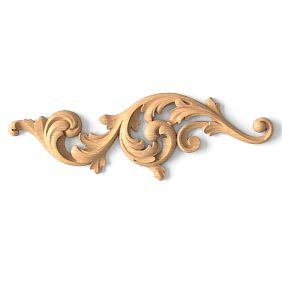
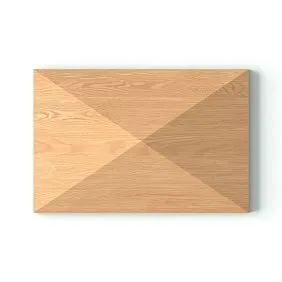


Why kitchen handles wear out faster
The kitchen is the most used room in any apartment. Life boils here from morning till night: cooking, cleaning, family breakfasts, evening tea parties. Handles are subjected to extreme loads: they are opened with dirty hands, splashed with grease, water, and cleaning agents. It's no wonder that kitchen hardware is the first to lose its presentable appearance.
Scratches, paint chips, loose fastenings, ingrained stains—all these are signals: it's time to change. But don't rush to write off the entire set. If the cabinets, fronts, and countertop are in good condition, replacing the handles will restore a fresh, updated look to the kitchen for minimal money and a few hours of work.
Get Consultation
Stylistic update through hardware
Imagine a standard kitchen with neutral-colored fronts and standard metal brackets. Boring? Faceless? Replace the brackets withDesigner furniture handlessolid oak or beech handles—and you have a completely different space: warm, cozy, stylish. Scandinavian minimalism, eco-style, Japandi—any of these directions is achievable simply by changing the hardware.
Want industrial aesthetics? Black matte brackets with a rough texture. Dreaming of classic style? Wooden knobs with subtle carving or brass models with patina. Drawn to modernity? Long horizontal profiles, asymmetrical geometric shapes. Just one detail, yet the range of possibilities is endless.
Practical advantages of new hardware
Besides aesthetics, replacing handles solves functional problems. Old hardware often has an inconvenient shape: too small, slippery, or hazardous.Modern designer furniture solutionstake ergonomics into account: handles are designed so that the grip is comfortable, natural, and safe.
Pay attention to size. Handles should match the scale of the front: a long bracket for a wide drawer, a compact knob for a small door. Correct proportions create harmony; incorrect ones create visual dissonance.
The material also matters. Wooden handles are pleasant to the touch, don't chill the hand, and don't slip. Metal ones are hygienic, easy to clean, and don't absorb odors.Furniture hardwaremade from quality materials lasts for decades without losing functionality or appearance.
Living room: a representative space needs details
Cabinets, dressers, wall units: hidden potential
The living room is the face of the home, a place for receiving guests, family gatherings, and leisure. Furniture here is often massive, solid, expensive, but even premium sets can look outdated over time. The reason isn't the materials or construction, but the morally outdated hardware.
Recall furniture from the nineties to the two-thousands: gilded handles, ornate carvings, shiny overlays. Today this looks hopelessly old-fashioned. Replace outdated hardware with concise modern hardware—and the same furniture will fit into a contemporary interior. Minimalism, Scandinavian style, contemporary—all achievable without buying a new set.
Style coordination
The living room often combines heterogeneous furniture: a cabinet from one collection, a dresser from another, a wall unit from a third. Uniform hardware creates a visual connection between disparate elements, forming interior integrity. When handles are identical in style, color, and material, the space looks thoughtful and professionally designed.
This technique is actively used by interior designers: they select uniform hardware for all furniture in a room, creating harmony through a repeating element. You can do the same yourself: choose a model you likedesigner furniture handlesand install it on all living room pieces. The result is an interior that looks like a professional's work.
Accents and contrasts
Want a bolder solution? Use contrasting hardware. Light furniture—dark handles. Dark furniture—light handles. Playing with contrasts adds dynamism, expressiveness, and character. This works especially effectively in modern interiors, where clear lines, graphic quality, and conciseness are valued.
Wooden handles on painted fronts create a cozy, warm atmosphere. Metal on wooden furniture—industrial chic. Asymmetric shapes on symmetric fronts—artistic nonchalance. The combinations are endless; the main thing is to feel the measure and follow the overall stylistic logic.
Replacement technology: easier than it seems
Preparation and Planning
The first step is inventory. Count how many handles need replacing. Measure the center-to-center distance of the existing hardware (distance between the centers of the mounting holes). This is the most important parameter: new handles must match the old ones in mounting, otherwise you'll have to drill new holes or mask the old ones.
Most furniture handles have standard center-to-center distances: 32, 64, 96, 128, 160 millimeters for pulls; 16, 24, 32 millimeters for knobs. If your furniture is standard, there will be no problems. If non-standard—look for hardware with adjustable mounting or select individually.
Tools and materials
Replacing hardware requires a minimal set of tools:
-
Screwdriver (Phillips or flathead, depending on screw type)
-
Power drill/driver (optional, but speeds up the process)
-
Ruler or tape measure (if you need to mark new holes)
-
Pencil (for marking)
-
Drill with bit (only if you have to drill new holes)
You'll also need the handles themselves and mounting screws. Quality hardware usually comes with fasteners, but check before buying. Screws must match the front thickness: too long will go through, too short won't provide reliability.
Installation process
Removing old handles is extremely simple: unscrew the screws from the inside of the front, remove the hardware. Wipe the mounting areas clean of dust and dirt.
Installing new ones is even simpler: insert the handle from the outside, place washers (if any) on the screws from the inside, tighten. The main thing is not to overtighten: excessive force can split a wooden front or strip the threads.
If the center-to-center distance doesn't match, you'll have to drill new holes. Mark the position carefully: symmetrically, evenly, at the same height for all fronts. Use a template or level. Drill carefully, without pressure, to avoid chipping the finish.
Old holes can be masked with furniture plugs matching the front color or furniture wax. If the holes are small and close to the new ones, they are often simply left—they are unnoticeable from the inside.
Choosing hardware: what to pay attention to
Material: wood or metal
Designer furniture handlesare made from various materials, each with advantages and features.
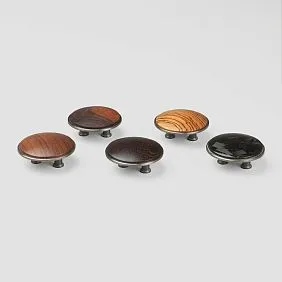
Wood is a classic, noble, and eco-friendly material. Handles made from solid oak, beech, or ash feature unique textures, warmth, and tactile pleasantness. They perfectly complement Scandinavian, eco, country, and Provence interiors. Wooden handles can be painted, varnished, or have a natural oil finish that highlights the wood grain.
Metal is practical, durable, and hygienic. Stainless steel, brass, aluminum, bronze—each alloy creates its own aesthetic. Matte black metal suits industrial interiors. Polished brass is for classic styles. Chrome-plated steel fits high-tech designs. Metal handles are easy to clean, resistant to moisture, and last for decades.
Combined options—wood with metal inserts, metal with wooden overlays—combine the advantages of both materials and create interesting visual effects.
Shape and Ergonomics
The shape of a handle determines its ease of use and style. Main types:
Knobs—compact, round, or square elements. Suitable for small doors and lightweight drawers. They take up minimal space, look neat and concise. Ideal for minimalist interiors.
Pull handles—curved, arc-shaped elements with two-point mounting. The most popular type of hardware. Convenient, reliable, and ergonomic. Suitable for any fronts. The length of the pull should match the width of the front: too short will get lost, too long will look bulky.
Profiles—long horizontal or vertical elements, often integrated into the front. Create a modern, minimalist look. Suitable for wide fronts, giving furniture a monolithic, graphic appearance.
Asymmetric and designer shapes—custom models that go beyond standards. Can be any configuration: wavy, angular, organic. Used as accent elements, adding individuality to the interior.
Color and Coating
The color of the hardware should harmonize with the overall interior palette. Universal options—black, white, natural wood. They complement most styles and color schemes.
Black handles—graphic, expressive, create contrast on light fronts. White—delicate, airy, suitable for interiors in pastel tones. Natural wood—warm, cozy, organic in eco-style.
The finish affects appearance and performance. Matte surfaces—practical, don't show fingerprints, look modern. Glossy—elegant but require frequent cleaning. Patinated—create an antique, noble effect, suitable for classic interiors.
Budget: How Much Does Transformation Cost
Economic Benefits of Replacing Hardware
Let's compare the costs of kitchen renovation and handle replacement.
Full kitchen renovation: dismantling the old set, buying a new one, delivery, assembly, installation. Average cost—from 150,000 to 500,000 rubles depending on size and materials. Duration—from two weeks to a month. Dirt, dust, workers in the house.
Hardware replacement: purchasing a set of handles, self-installation in one evening. Average cost of quality wooden handles—500-1,500 rubles per piece. For a standard kitchen (15-20 fronts)—10,000-30,000 rubles. Zero dirt, minimal time, maximum effect.
The savings are obvious: you spend 10-20 times less, achieving a result visually comparable to buying new furniture.
Where to Buy Quality Hardware
Buying designer furnitureentirely is not necessary if you can limit yourself to replacing parts. Quality hardware is best purchased from trusted manufacturers who guarantee dimensional accuracy, material strength, and mounting reliability.
Pay attention to reviews, certificates, and warranties. Cheap hardware from dubious platforms often disappoints: mismatched sizes, fragile plastic disguised as wood, quick finish deterioration. Savings turn into double costs.
Buy from companies with their own production, full manufacturing cycle, and transparent terms. This way, you'll get products matching the stated characteristics, with the possibility of return or exchange in case of mismatch.
Additional Upgrade Techniques Without Renovation
Decorative Overlays and Panels
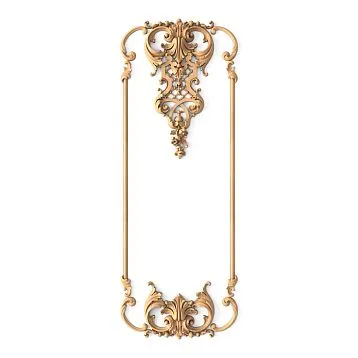
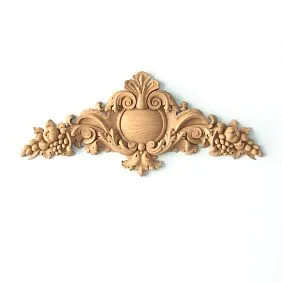
Besides handles, furniture can be transformed with decorative overlays. Carved panels, moldings, rosettes applied to fronts create volume, relief, and additional detailing. This works especially effectively on smooth, monochrome surfaces, turning simple fronts into elegant ones.
Overlays are glued or screwed on, the process takes a few hours. The result—furniture gains individuality, a classic or neoclassical feel.
Painting Fronts
If you're ready to make the task slightly more complex, consider painting the fronts. Modern furniture paints create a durable, beautiful, even coating without professional equipment. Remove the fronts, sand, prime, paint in two to three coats, apply varnish. Drying between coats, carefulness—and you have practically new furniture.
Combining new handles and freshly painted fronts is a full-fledged update, indistinguishable from buying a new set. Meanwhile, costs and efforts remain incomparably lower than with a full renovation.
Replacing the countertop and backsplash
Another quick kitchen upgrade technique is replacing the countertop and backsplash. A new countertop made of engineered stone, quartz composite, or high-quality laminate radically changes the kitchen's appearance. A backsplash made of ceramic tile, glass, or metal adds an accent, color, and texture.
The combination of a new countertop, backsplash, and handles is essentially a new kitchen while keeping the old frame. It saves budget and time with maximum visual impact.
First mistake - unstructured mixing. A classic chair, loft table, Scandinavian chest, and minimalist cabinet in one room is not eclecticism, but visual chaos. Each item draws attention to itself, not creating cohesion. A system, logic, unifying idea is needed. Choose one dominant style, add a second as an addition, and possibly a third as an accent. But no more than three, and all should have something in common - color, material, era, or functionality.
Style mismatch
The most common mistake is choosing handles that do not match the furniture and interior style. Classic carved handles on ultra-modern fronts look ridiculous. Industrial metal knobs on furniture in a Provence style create dissonance. Pay attention to stylistic logic, study examples, and consult with designers.
Incorrect size
Oversized handles on small fronts or tiny knobs on huge drawers look disproportionate. Maintain scale: the handle should occupy 1/3 to 1/2 of the front's width for harmonious perception.
Economy on quality
Cheap hardware quickly fails: the coating peels, the fastening loosens, and parts break. Saving money turns into repeated expenses. It's better to buy quality handles once that will last for decades than to replace cheap ones every year.
Ignoring ergonomics
A beautiful handle that is inconvenient to use is a bad handle. Check the grip: is the thickness sufficient, is the shape comfortable, do sharp edges cause injury? Furniture should be not only beautiful but also functional.
Case studies: real transformation stories
Soviet kitchen into Scandinavian chic
The owner of a Moscow apartment inherited a kitchen set from the eighties. The solid oak carcasses were sturdy and well-made, but the fronts were covered in dark lacquer, and the handles were yellowed plastic. Instead of replacing the set, she decided to experiment.
The fronts were sanded and painted with white matte paint. Natural-colored wooden round handles were installed. The countertop was replaced with light quartz. The result exceeded expectations: the kitchen gained lightness, modernity, and Scandinavian chic. Budget: 40,000 rubles. Timeframe: one week. Satisfaction: one hundred percent.
Living room in contemporary style
A St. Petersburg family owned a wall unit from the nineties—massive, high-quality, but hopelessly outdated. Gilded handles, carved cornices, and mirror inserts screamed of a bygone era.
They removed the carved decor, replaced the mirrors with frosted glass, and installed minimalist black profile handles. Added LED lighting. The same wall unit turned into a modern modular cabinet, fitting organically into the updated interior. Cost: 25,000 rubles. Time: a weekend. Effect: new furniture.
Rental apartment: temporary improvements
A young couple rents an apartment with dull, standard furniture. They can't replace it, but they want to live beautifully. The solution: removable hardware. They bought stylish wooden handles and installed them instead of the standard ones. When moving out, they will return the old ones and take theirs with them.
Minimal investment (15,000 rubles), removability, and the ability to take them along—an ideal solution for renters. The apartment gained individuality without violating the lease agreement.
Trends for 2025: what people are choosing today
Natural materials
The leading trend is eco-friendliness. Wooden handles made of solid beech, oak, or ash with natural oil finishes are in huge demand. People are tired of plastic and synthetics, striving for natural, warm, living materials.
Minimalism and Conciseness
Simple forms, absence of unnecessary details, clean lines—the aesthetics of modernity. Knob handles, modest pulls, and integrated profiles dominate new projects.Modern designer furniture solutionsThey are abandoning decorative elements in favor of functionality.
Contrasting Combinations
Dark on light, light on dark—playing with contrasts creates graphic quality and expressiveness. Black handles on white fronts are a classic of modern design. Wooden handles on gray fronts offer cozy elegance.
Asymmetry and uniqueness
Interest in non-standard, custom forms is growing. Asymmetric handles, organic lines, artistic models—anything that makes the interior stand out and unique.
Frequently asked questions
Can I replace handles myself without experience?
Yes, replacing handles is one of the simplest furniture update operations. All you need is a screwdriver and 5-10 minutes per front. If the center-to-center distance matches, the process is elementary. If you need to drill new holes, you'll need care and basic drilling skills.
How to choose handles if I don't know the center-to-center distance?
Measure the distance between the centers of the two mounting holes of the existing handle with a tape measure. This is the center-to-center distance. Look for new handles with the same parameter. For knobs, measure the diameter of the hole for the mounting screw.
How many handles are needed for a kitchen?
Count the number of fronts: doors, drawers. One handle per element (or two if using a symmetrical scheme on wide fronts). A typical kitchen requires 15-25 handles.
What material is more practical for a kitchen?
For kitchens, wooden handles with protective coating (oil, varnish) or metal ones (stainless steel, aluminum) are optimal. They are moisture-resistant, easy to clean, and durable. Avoid unprotected wood—it absorbs moisture and dirt.
How to care for wooden handles?
Wipe with a dry or slightly damp cloth. Avoid aggressive detergents and abrasives. Treat with wood oil every few months—this preserves the texture, protects from moisture, and extends service life.
Can the same handles be installed throughout the apartment?
Yes, but not always advisable. The kitchen and living room can have matching hardware if they are in the same style. The bedroom, children's room, and bathroom usually require a different approach. Focus on the style of specific rooms.
Where to buy quality wooden handles?
From specialized manufacturers with their own production cycle. Check reviews, warranty availability, and return policy. Avoid dubious platforms with suspiciously low prices.
How long do quality furniture handles last?
Solid wooden handles with protective coating last 15-20 years or more. Metal ones with anti-corrosion coating last for decades. Quality hardware outlives the furniture itself.
Psychological effect: home as a reflection of personality
Interior is not just a functional space. It reflects the taste, character, and life philosophy of the inhabitants. By updating details, you renew the home's energy, creating an atmosphere that matches the current state.
Replacing handles is a symbolic act of renewal. You physically change the points of contact with the space, and this affects the feeling of home. Old, worn handles are associated with the past, routine, stagnation. New, stylish ones—with the future, freshness, moving forward.
Psychologists note: changes in interior improve mood, increase productivity, and create a sense of control over life. This is especially relevant during periods of change, crises, when large-scale changes are impossible, but the need for renewal is acute.
Eco-friendliness: conscious consumption
Replacing hardware is an eco-friendly choice. Instead of disposing of an entire set (wood, hardware, packaging, transportation), you extend the life of existing furniture. Less waste, less resource consumption, smaller carbon footprint.
Wooden handles from managed forests, where logging is accompanied by restoration, are the most eco-friendly choice. Natural oils instead of toxic varnishes. Local production instead of long transport chains. All this contributes to preserving the planet.
Conscious consumption is not a trendy fad, but a necessity. Every choice in favor of durable, quality, eco-friendly materials is a step towards a sustainable future.
STAVROS: professional solutions for your interior
When it comes to quality furniture hardware, the company STAVROS is a name trusted by designers, furniture manufacturers, and discerning homeowners across Russia. For over twenty years, STAVROS has been creating products that combine functionality, aesthetics, and durability.
The STAVROS collectiondesigner furniture handlesSTAVROS collection features over thirty models of various shapes and styles. Round knobs, long pulls, asymmetrical designer shapes, classic carved elements—each model is meticulously designed, created with ergonomics, aesthetics, and modern requirements in mind.
STAVROS production is a full cycle from wood harvesting to final packaging. Solid oak and beech from Russia's northwestern forests undergo multi-stage drying, stabilization, and processing on high-precision CNC equipment. This guarantees perfect dimensions, symmetry, and absence of defects.
Each product undergoes additional manual finishing: sanding, quality control, application of protective coating. Professional painting or oil impregnation creates a coating resistant to moisture, dirt, and mechanical impacts, preserving the original appearance for years.
STAVROS offers handles in two finishes:
-
Unpainted—for custom finishing in any color, ideal for individual projects
-
With coating—black, white, brown, transparent oil that highlights the natural wood grain
Advantages of working with STAVROS:
-
Own production—guarantee of quality at all stages
-
Large warehouse stock — shipping from one piece, delivery from one day
-
Wide assortment — over thirty models for every taste and style
-
Professional consultations — assistance in selection, quantity calculation, installation recommendations
-
Delivery across Russia and CIS — fast, reliable, convenient
Buying designer furnitureReplacing entirely is not necessary when you can update existing furniture with quality STAVROS hardware. This saves budget, time, and resources while achieving maximum visual effect.
STAVROS actively collaborates with interior designers and furniture manufacturers, offering special conditions for professionals.Furniture hardwareSTAVROS is used in projects of various scales — from private apartments to commercial properties, hotels, restaurants, and office centers.
The company participates in leading industry exhibitions, presents new collections, and implements innovative technologies. STAVROS doesn't just follow trends — it creates them, shaping the aesthetics of modern Russian interiors.
Update your home with STAVROS — and see how quality, style, and affordability can go hand in hand.Modern designer furniture solutionsGreat interiors begin with details, and STAVROS offers the best details for your perfect interior.
Consultations, ordering, delivery — all available on the official STAVROS website or by phone. Join thousands of satisfied customers who have chosen quality, reliability, and beauty. STAVROS — your partner in creating your dream home!