Article Contents:
- Architectural integrity of the house
- Principle of continuity
- Color continuity
- Material consistency
- Proportional system
- Stylistic unity
- Functional logic
- Paintable MDF skirting boards
- Functions of skirting boards
- Advantages of MDF
- Profiles and sizes
- Installation and painting
- Connection with the exterior
- Door transoms as an architectural accent
- Functional significance
- Types of transoms
- Materials and Technologies
- Connection with the interior
- Facade corner elements
- Rusticated corners
- Corner pilasters
- Quoins
- Modern Interpretations
- Connection with the interior
- Conclusion: unity of concept
- FAQ: popular questions
- Is it necessary to use the same materials on the facade and in the interior?
- What height should the skirting board be?
- Is a transom needed above every door?
- How to coordinate the style of the exterior and interior?
- How much does facade decoration cost?
- Can you install decorative elements yourself?
- How to care for facade decoration?
- Does decoration affect the cost of a house?

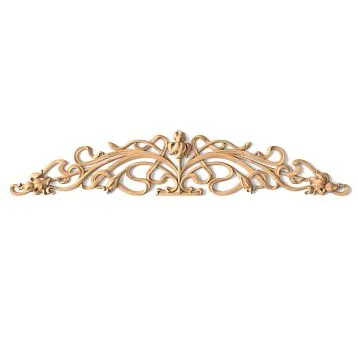
True architectural harmony arises where the building's exterior and interior space exist as a single whole, where every detail—from the modestMDF skirting boards for paintingin the entryway to the majesticsash above the dooron the facade—contributes to creating a unified image. Great architects of the past understood: a house must be designed as a single organism, where the exterior and interior are two sides of the same coin.Facade Corner ElementsExterior and interior moldings correspond, facade cornices find continuation in ceiling moldings, the color palette flows smoothly from one space to another. Creating such unity requires understanding architectural principles, a sense of style, attention to detail—but the result surpasses all expectations.






Architectural Integrity of the House
Architectural integrity is not merely visual uniformity, but a deep interconnection of all building elements, creating a sense of completeness, logic, harmony. A house designed as a single whole is perceived entirely differently than a building where the exterior and interior exist independently of each other.
Our factory also produces:




Principle of Continuity
Architectural composition must be continuous—visual themes declared on the facade must find continuation in the interior. If the facade is executed in a classical style with pilasters, cornices,sashes above the doorthen the interior should logically be furnished with corresponding classical elements. A modern minimalist facade requires a restrained interior with simple forms.
The entrance zone is a critically important space, where the transition from exterior to interior occurs. Here, especially, detail consistency is crucial. The framing of the exterior entrance door should correspond to the framing of doorways inside.Facade Corner ElementsIn the hallway, these may repeat the forms of facade pilasters or rusticated corners. Materials used outside are reflected inside—the stone cladding of the foundation continues to the fireplace cladding, wooden facade elements correspond to wooden beams in the interior.
Moldings used both outside and inside must be coordinated. This does not mean absolute repetition—facade elements are usually larger than interior ones due to greater scale. However, the general profile character, proportional relationships, and ornamentation style must be recognizable. The facade cornice and ceiling cornice inside may have the same profile type, adapted to different scales.
Get Consultation
Color Continuity
The color palette creates an emotional backdrop for perceiving space. Coordinating facade and interior colors is a powerful tool for creating unity. There are several approaches to color integration.
Direct repetition—using identical or very similar shades outside and inside. A beige facade continues into beige walls in the hallway and living room. Terracotta tones of brickwork repeat in the color of interior walls or textiles.— is a horizontal element that frames the room at the bottom of the walls where the wall meets the floor. Skirting boards perform several functions: they hide the technological gap between the wall and floor covering (necessary for thermal expansion), protect the lower part of the wall from mechanical damage, create visual completion, and may conceal wiring.They can be painted in a tone close to the color of facade elements, creating a subtle color connection.
Contrasting complement—using contrasting but harmonious shades. A dark facade combines with light interiors, creating contrast between the exterior monumentality and interior lightness. Or vice versa—a light facade and more saturated, deeper colors inside. It is important that the shades belong to the same color range—warm or cool.
Tonal variation—using various shades of one color. A gray facade may vary from light gray on main planes to dark gray on the foundation andsashes above the door. In the interior, this range continues—walls in various shades of gray,MDF skirting boards for paintingin the same color range. Such tonal variation creates a complex, refined color environment.
Material Consistency
The selection of materials for the exterior and interior must be coordinated not only visually but conceptually. If the facade is made of natural stone and wood, it is logical to use these materials inside as well—stone fireplace cladding, wooden beams, solid wood parquet. If the facade is modern with metal and glass, the interior may include metal details, glass partitions, concrete surfaces.
Visual consistency is achieved through imitation. Facade elements may be made of one material, interior elements of another, but visually comparable.Facade Corner Elementsmade from composite materials imitating stone, correspond to interior elements made of gypsum or polyurethane, painted to resemble stone. The important thing is the visual impression of unity, not literal material coincidence.
Textural consistency is also important. Smooth facade surfaces require smooth interior surfaces. Recessed, textured facades—plaster with pronounced texture, rusticated masonry—correspond to textured interior surfaces.— is a horizontal element that frames the room at the bottom of the walls where the wall meets the floor. Skirting boards perform several functions: they hide the technological gap between the wall and floor covering (necessary for thermal expansion), protect the lower part of the wall from mechanical damage, create visual completion, and may conceal wiring.Smooth surfaces suit smooth facades, profiled with relief—suit textured facades.
Proportional system
Great architecture is built on proportions. There are mathematical relationships that are perceived as harmonious — the golden ratio, modular systems, order canons. Applying a single proportional system both on the facade and in the interior creates a subconscious sense of correctness and harmony.
Width is 80-90 centimeters — proportionally to its height.MDF skirting boards for paintingOn the facade, proportions are scaled. A door opening height of 2.2 meters and width of 90 centimeters create vertical elongation, corresponding to the grand character of the main entrance.
The facade proportions are scaled. The height of the opening is 2.2 meters, and the width of 90 centimeters for the entrance door creates a vertical elongation corresponding to the grand character of the main entrance.Sundial above the doorArchitectural style is the language in which a building communicates with the world. Classical styles — baroque, classicism, empire — have strict canons that must be followed both on the facade and in the interior. Modern styles offer more freedom, but basic principles — consistency of forms, materials, colors — remain mandatory.
Stylistic unity
Architectural style is the language through which a building communicates with the world. Classical styles — baroque, classicism, empire — have strict canons that must be followed both on the facade and in the interior. Modern styles offer more freedom, but core principles — consistency of forms, materials, and colors — remain mandatory.
Classic facade with columns, pilasters,sashes above the doorrequires a classic interior with corresponding moldings, cornices, rosettes. The degree of ornamentation can be varied — formal rooms are more elaborately decorated, private ones — more restrained. But the overall stylistic approach should be recognizable.
Modern minimalist facade with clear geometric forms, absence of decoration requires a restrained interior.MDF skirting boards for paintingFunctional logic
Functional logic
Architectural integrity is manifested not only in visual aspects, but also in functional logic. The layout should be understandable — the main entrance leads to the hall, from which access to the main rooms is provided. Windows are placed logically — larger in living rooms, providing lighting, smaller in technical rooms.
Facade honestly reflects internal structure. The arrangement of windows reveals the layout. Projecting volumes — bay windows, balconies — correspond to functional zones inside. Accentuated main entrance withsundial above the doorand rich framing indicates a grand entrance leading to a representative zone.
Baseboard — it is a modest detail, often unnoticed, but plays a critical role in creating the completeness of the interior.
Baseboard is a modest detail often overlooked but plays a critical role in creating the completeness of the interior.— is a horizontal element that frames the room at the bottom of the walls where the wall meets the floor. Skirting boards perform several functions: they hide the technological gap between the wall and floor covering (necessary for thermal expansion), protect the lower part of the wall from mechanical damage, create visual completion, and may conceal wiring.Baseboard — it provides a universal solution, combining practicality, aesthetics, and accessibility.
Functions of baseboard
The primary practical function of baseboard is to cover the technological gap between the wall and the floor. When laying flooring — parquet, laminate, tiles — a compensatory gap of 10-15 millimeters is left to compensate for temperature and humidity deformations. This gap is necessary technologically, but looks unattractive. Baseboard hides it, creating a neat transition.
The second function — protection of the lower part of the wall from mechanical damage and dirt. The wall in the contact zone with the floor is subject to impacts from vacuum cleaners, shoes, furniture. Splashes from wet cleaning reach the lower part of the wall.— is a horizontal element that frames the room at the bottom of the walls where the wall meets the floor. Skirting boards perform several functions: they hide the technological gap between the wall and floor covering (necessary for thermal expansion), protect the lower part of the wall from mechanical damage, create visual completion, and may conceal wiring.It takes on these impacts, protecting wall finishes.
The third function — placement of utilities. Modern baseboards often have a cable channel — a cavity for placing electrical wires, TV cables, internet cables. This is especially relevant in the era of numerous electronic devices requiring connection. Cable channel hides wires, creating a neat appearance without numerous dangling cables.
Fourth function — aesthetic. Baseboard creates architectural completion of the wall, visual transition to the floor. Without baseboard, the interior looks unfinished, like an incomplete sketch. A properly selected baseboard adds elegance, emphasizes the interior style, and connects various finishing elements.
Advantages of MDF
MDF — medium-density fiberboard — is the optimal material for baseboards due to its unique combination of properties. The density of quality MDF is 700-850 kilograms per cubic meter — higher than that of most wood species. This ensures strength, surface hardness, and resistance to impacts.
Stability of dimensions — the main advantage of MDF over solid wood. The material does not have a directional fiber structure and responds uniformly to changes in humidity.— is a horizontal element that frames the room at the bottom of the walls where the wall meets the floor. Skirting boards perform several functions: they hide the technological gap between the wall and floor covering (necessary for thermal expansion), protect the lower part of the wall from mechanical damage, create visual completion, and may conceal wiring.It does not warp, does not crack, maintains geometry for decades. A wooden baseboard may deform due to humidity fluctuations, forming gaps at joints.
The uniform structure allows creating complex profiles without chips or scratches. Milling MDF provides clean edges and smooth surfaces without fuzz. The profile can be any shape - from simple rectangular to complex multi-level profiles with grooves and rounded corners. Each element is identical to others - no variations characteristic of wood.
MDF's paintability is excellent. After priming, the smooth, uniform surface accepts paint evenly, without streaks or spots.— is a horizontal element that frames the room at the bottom of the walls where the wall meets the floor. Skirting boards perform several functions: they hide the technological gap between the wall and floor covering (necessary for thermal expansion), protect the lower part of the wall from mechanical damage, create visual completion, and may conceal wiring.Can be painted in any color, creating patina, metallic, or pearl effects. The ability to repaint allows updating the interior without replacing the baseboards.
Affordable pricing makes MDF baseboards a universal solution for most projects. The cost per linear meter is 2-3 times lower than that of solid wood baseboards of similar profile. At the same time, performance characteristics are often better due to dimensional stability.
The ecological safety of quality MDF is confirmed by E1 or E0 certification, guaranteeing low formaldehyde emissions. Modern production technologies use lignin - a natural wood-based binder - minimizing synthetic resins.— is a horizontal element that frames the room at the bottom of the walls where the wall meets the floor. Skirting boards perform several functions: they hide the technological gap between the wall and floor covering (necessary for thermal expansion), protect the lower part of the wall from mechanical damage, create visual completion, and may conceal wiring.Safe for residential spaces, including children's rooms, from reliable manufacturers.
Profiles and Sizes
Baseboard height is determined by ceiling height and room scale. For standard 2.7-meter ceilings, an optimal height is 8-12 centimeters. For ceilings 3 meters and higher, baseboards 12-18 centimeters are suitable. In rooms with very high ceilings (3.5-4 meters), baseboards 18-25 centimeters are appropriate.
A narrow baseboard in a spacious room with high ceilings disappears visually, failing to provide the desired visual finish. A wide baseboard in a small room overwhelms, visually lowers the ceiling, and creates a sense of bulk. The correct proportion is that baseboard height equals 3-5 percent of wall height.
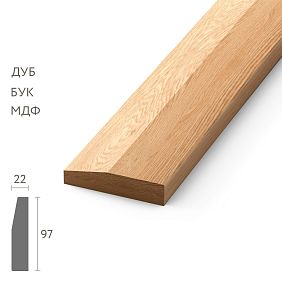
The baseboard profile can be simple or complex. A simple rectangular baseboard with a slight bevel suits modern minimalist interiors. Profiled baseboards with rounded corners, ridges, and grooves are characteristic of classic interiors.— is a horizontal element that frames the room at the bottom of the walls where the wall meets the floor. Skirting boards perform several functions: they hide the technological gap between the wall and floor covering (necessary for thermal expansion), protect the lower part of the wall from mechanical damage, create visual completion, and may conceal wiring.Available in a wide range of profiles - from simplest to complex multi-level designs.
Baseboard width - distance from the wall - is typically 15-25 millimeters. This is sufficient for secure mounting and creating a small decorative shadow. Wider baseboards (30-40 mm) are used when a large cable channel is needed to accommodate multiple wires.
Installation and Painting
InstallationMDF skirting boards for paintingInstallation can be done in several ways. Adhesive mounting - the baseboard is glued to the wall using special adhesive (liquid nails). This method suits perfectly flat walls, requires no drilling, and does not damage the finish.
Mechanical fastening - the baseboard is secured with finish nails or self-tapping screws. Nails are driven at an angle, countersunk, and the mounting points are spackled. This method is more reliable than adhesive, suits uneven walls, and allows for disassembly without damaging the baseboard.
Clip system - a modern solution where plastic clips are mounted on the wall, and the baseboard clicks into them. The system ensures quick installation, easy disassembly for access to the cable channel, and does not damage the baseboard with fasteners. Used for special baseboards with clip profiles.
Corner joints are made by cutting at 45 degrees using a miter box or a circular saw. Precise trimming creates invisible joints. Internal corners fit tightly without gaps. External corners require special precision - even the slightest gap is noticeable. An alternative is using pre-made plastic corner pieces, painted together with the baseboard.
Painting is done after installation and spackling of joints. The surface is primed with acrylic primer, then painted in 2-3 coats after drying.— is a horizontal element that frames the room at the bottom of the walls where the wall meets the floor. Skirting boards perform several functions: they hide the technological gap between the wall and floor covering (necessary for thermal expansion), protect the lower part of the wall from mechanical damage, create visual completion, and may conceal wiring.Can be painted to match wall color, floor color, contrasting color, or white - a universal solution.
Connection with Exterior
ColorMDF skirting boards for paintingCan match facade colors, creating a subtle connection between interior and exterior. If the facade has a dark foundation of terracotta-colored clay brick, baseboards inside can be painted in a similar shade. This creates a visual continuation of the foundation zone into the house.
If facade decorative elements -sundracks above the doorcornices,corner elementsIf facade decorative elements - sundracks above the door - are painted a certain color, baseboards can match that color, linking exterior and interior decorative systems. White facade elements match white baseboards, creating unity.
Baseboard profile can vary with facade element profiles. If facades use cornices with a specific profile type - classical, with modillions and dentils - the baseboard can have a simplified version of the same profile. This creates stylistic continuity and recognizability of the architectural language.
Sundracks above the door as an architectural accent
A sundrack - a small cornice or overhang above a door or window - is one of the key elements of facade architecture.Sundial above the doorPerforms important functions: practical - protects the opening from precipitation, and aesthetic - emphasizes the importance of the entrance, creating an architectural accent.
Functional Value
Rain protection - the main practical functionsash above the doorThe overhang deflects rain and meltwater away from the opening, preventing seepage into gaps between the door frame and the wall. Without a soffit, water runs down the door, enters the gaps, causes dampness, mold, and material degradation.
Overhang projection - the distance from the wall to the edge of the overhang - determines the effectiveness of protection. A minimum projection of 15 centimeters provides basic protection against vertical rain. A projection of 25-30 centimeters protects against slanted rain with wind. For grand entrances, the projection can reach 50-80 centimeters, creating a full overhang under which one can shelter.
Sun protection - the second function. The overhang creates shade, preventing the door from overheating under direct sunlight. This is especially important for wooden doors, which may deform from overheating, and for metal doors, which heat up significantly in the sun.Sundial above the doorExtends the service life of the door structure.
Visual completion of the opening - the third function. A door opening without a soffit looks unfinished, like a chopped-off frame. A soffit creates architectural completion, emphasizes the geometry of the opening, and relates it to the facade scale. Even a simple flat overhang significantly improves the perception of the entrance.
Types of soffits
Straight soffit - the simplest type, representing a horizontal cornice above the opening. It can be smooth or profiled, with dentils or modillions. A straight soffit is universal and suitable for most architectural styles, from classic to modern.
Triangular pediment - a classical element borrowed from ancient temple architecture.Sundial above the doorIn the form of a triangular pediment, it gives the entrance a solemn, monumental character, indicating its importance. The pediment can be smooth or decorated with ornamentation, with acroteria at the corners.
Architectural soffit - has the shape of a circular arc, semicircular or segmental. It creates a softer, more plastic composition compared to the angular triangle. Architectural soffits are characteristic of Baroque and Neoclassical buildings, where plasticity of forms is especially valued.
Broken pediment - a Baroque invention, where the two halves of the pediment are spread apart, leaving a central gap. A decorative vase, cartouche with a monogram, or coat of arms can be placed in the gap.Sundial above the doorWith a broken pediment, it creates a dramatic, attention-grabbing effect.
Complex multi-tiered soffits combine several elements - a lower cornice with modillions, a middle tier with dentils, and an upper pediment. Such compositions are characteristic of grand entrances to palaces and mansions, where maximum solemnity is required.
Materials and technologies
Natural stone - a traditional material for monumental buildings' soffits. Granite, marble, and limestone soffits are durable, prestigious, but heavy and expensive. They require a strong foundation and professional installation with mechanical fastening. The cost of a stone soffit can reach hundreds of thousands of rubles.
Concrete and fiber concrete - a practical alternative to stone. Architectural concrete allows casting soffits of complex shapes, imitating stone. Fiber concrete with added glass fiber is strong yet lighter. Concrete soffits are more affordable than stone soffits with comparable durability.
Polyurethane with protective coating - a modern solution for low-rise construction. PolyurethaneSundial above the doorweighs dozens of times less than stone, is easily mounted on adhesive, and does not create load on structures. Special coatings provide water resistance, frost resistance, and UV protection. Service life 25-30 years.
Wood is used in wooden houses, buildings in chalet, country, rustic styles. A wooden soffit can be smooth, profiled, or decorated with carving. It requires protective treatment with antiseptics and moisture-resistant compounds, and periodic renewal of the coating.
Metal - copper, zinc-titanium, Corten steel - is used in modern architecture. Metal soffits are light, strong, and durable. Copper develops a noble patina over time. Corten steel forms a stable rust layer that protects the metal from further corrosion.
Connection with interior
Shapesash above the doorOn the facade, the shape can be reflected in the interior. If the main entrance is adorned with a triangular pediment, similar triangular pediments can be used above doorways, fireplaces, and niches in the interior. The scale is smaller, the material may differ, but the shape is recognizable.
The soffit profile corresponds to interior molding profiles. If the facade soffit has a cornice with modillions, ceiling cornices in the interior can also have modillions. If the soffit is decorated with dentils - small rectangular protrusions - this motif repeats in interior cornices, creating stylistic unity.
The soffit color matches the interior color scheme. White soffits on a colorful facade correspond to whiteMDF skirting boards for painting, cornices, window sills in the interior. Stone soffits in natural colors are reflected in stone cladding of fireplaces, window sills made of the same stone.
Decorative motifs used in soffit decoration can be repeated in interior elements. Acanthus leaves, palmettes, geometric patterns decorating the facade soffit vary in ceiling rose fixtures, corner elements of molding compositions, carved appliqués on furniture.
Facade corner elements
The corners of a building are those points where the facade gains volume, where planes meet to create a three-dimensional form.Facade Corner ElementsThey not only decorate the corners but also visually reinforce them, highlight the constructive logic, and create a rhythmic structure.
Rusticated Corners
Rustication - processing the corner of a building with relief elements imitating stone masonry - a classic architectural finishing method. Rusticated corners create a sense of strength, monumentality, and rootedness.Facade Corner ElementsVisually reinforce the building in the form of rustication.
Rough rustication with deliberately unprocessed, bumpy stone surfaces creates a brutal, raw effect. Characteristic of ground floors, fortress architecture, and buildings where strength needs to be emphasized. Stones protrude 5-10 centimeters from the wall plane, creating deep shadows.
Brilliant rustication with faceted protruding blocks resembling precious stone faceting creates a play of light and shadow, rich in plasticity. Characteristic of the Renaissance era, when the complexity of stone processing was prized. Each stone is a prism with multiple facets, creating a shimmering surface.
Smooth rustication, where stones have a flat surface and relief is created only by deep joints between them - the most refined variant. Characteristic of neoclassical buildings, where restraint and geometric clarity were valued. Joints 2-3 centimeters deep create a clear graphic pattern on a smooth surface.
The height of rustication determines the composition's character. Rustication covering the entire height of the corners from ground to roof creates powerful vertical accents. Rustication limited to the ground floor emphasizes the base, creating a visual foundation. Alternating rusticated and smooth tiers creates a rhythmic structure.
Corner Pilasters
Pilasters - flat vertical protrusions imitating columns - a traditional element of classical architecture.Facade Corner ElementsIn the form of corner pilasters, they create an order system, emphasize the verticality of the building, and visually fix the volume.
A pilaster consists of a base, shaft, and capital. The base - an expanded foundation - creates a visual base, transitioning from the wall to the vertical pilaster. The shaft - the main part - can be smooth or decorated with fluting - vertical grooves. The capital - the finishing element - has a shape corresponding to the chosen order.
Doric order with massive proportions and simple capitals creates a sense of strength and stability. Ionic order with characteristic volutes - spiral scrolls - in the capitals is more elegant and light. Corinthian order with ornate capitals of acanthus leaves - the most decorative and luxurious.
The scale of pilasters must correspond to the size of the building. On a two-story house, pilasters 30-40 centimeters wide create expressive verticals. On a four-story mansion, pilasters 60-80 centimeters wide are required to maintain proportions. The height of a pilaster is usually equal to one or several floors.
quoins
Quoins - alternating-sized corner stones protruding from the wall plane - create a dynamic texture at the corner.Facade Corner ElementsIn the form of quoins, they emphasize verticality and create a rhythmic structure.
Classic scheme - alternating long and short stones. Long stone - stretcher - extends deeply into the masonry, creating visual strength. Short stone - header - protrudes less. Alternating creates a characteristic pattern, recognizable in architecture.
The size of quoins is determined by the scale of the building. The height of one element is usually 30-50 centimeters, corresponding to 2-3 brick rows. A protrusion of 5-10 centimeters from the wall creates an expressive shadow. Too large quoins on a small house look inappropriate, too small ones on a large building become lost.
The color of quoins may differ from the color of the main wall, creating contrast. White quoins on a red brick wall - a classic solution. Dark quoins on a light plastered wall create a graphic effect. Natural stone quoins on a plastered facade emphasize prestige.
Modern Interpretations
Modern architecture reinterprets classical forms, creating simplified, stylized versions.Facade Corner ElementsIn modern buildings, they may take the form of abstract geometric shapes that refer to tradition but do not copy it literally.
Vertical cladding on corners made of metal, composite panels, glass fiber concrete creates a modern interpretation of pilasters. The form is simplified to a vertical strip, but the function remains the same - visual reinforcement of the corner, creation of a vertical accent. Materials are modern - stainless steel, aluminum, composites - but the principle is classical.
Contrasting cladding of corners with another material creates a modern version of rustication. If the facade is plastered, corners can be clad with facing brick, creating a color and texture contrast. If the main wall is made of light brick, corners can be made of dark stone. The principle of highlighting corners is preserved, but the execution is modern.
Connection with interior
Facade Corner ElementsThey find continuation in the interior through repetition of forms and motifs. If rusticated corners are used on the facade, in the interior of a hallway or foyer, one can create an imitation of rustication on internal corners. The scale is smaller, the material may be different - polyurethane instead of stone - but the visual connection is obvious.
Corner pilasters on the facade correspond to pilasters in the interior. In a formal living room, corners can be decorated with pilasters of the same order as on the facade. Capitals and bases repeat facade forms in a reduced scale. This creates stylistic unity and recognizability of the architectural language.
Color solutions are coordinated. If the facade's corner elements are white on a colored facade, corners in the interior can also be highlighted with white color.MDF skirting boards for paintingWindow casings and cornices are painted white, creating a unified system of white accents that links the exterior and interior.
Result: Unity of Concept
Creating an architecturally cohesive house requires a systematic approach, where every detail—fromMDF skirting boards for paintingtosash above the door— is part of a unified composition.Facade Corner ElementsThey harmonize with interior details, the color palette flows seamlessly from exterior to interior, and the proportional system is unified throughout the entire building.
A professional approach begins with developing a concept, where style, materials, color scheme, and decorative system are defined. This concept is consistently implemented at all levels—from the master plan to the finest finishing details. Randomness is excluded; every decision is thoughtfully designed and justified.
Modern materials make the realization of complex concepts accessible.MDF skirting boards for paintingallow creating any color solutions. Polyurethanesundracks above the doorreproduce classical forms at an affordable price. CompositeFacade Corner Elementsare lightweight, durable, and easy to install.
The result is a house perceived as a single work of architectural art. A guest approaching the building sees a harmonious facade. Upon entering, they discover that the interior continues the theme established externally. The stylistic language is recognizable, colors are coordinated, proportions are harmonious. Such a house becomes a source of pride for its owners and admiration for its guests.
FAQ: Popular Questions
Is it necessary to use the same materials on the facade and in the interior?
No, visual harmony is important, not literal repetition of materials. Facade elements made of composite can visually match interior elements made of polyurethane if they are painted the same color and have comparable forms.— is a horizontal element that frames the room at the bottom of the walls where the wall meets the floor. Skirting boards perform several functions: they hide the technological gap between the wall and floor covering (necessary for thermal expansion), protect the lower part of the wall from mechanical damage, create visual completion, and may conceal wiring.can visually match a stone plinth through color.
What height should the skirting board be?
For standard 2.7-meter ceilings, an optimal height is 8–12 centimeters. For 3-meter ceilings—12–18 centimeters. Rule: the skirting board height is 3–5 percent of the wall height.— is a horizontal element that frames the room at the bottom of the walls where the wall meets the floor. Skirting boards perform several functions: they hide the technological gap between the wall and floor covering (necessary for thermal expansion), protect the lower part of the wall from mechanical damage, create visual completion, and may conceal wiring.is available in a wide range of heights.
Is a drip needed above every door?
On the facade, a drip is critically important for protection against precipitation. The main entrance requires the most expressivesash above the door. Secondary entrances may have simpler canopies. In the interior, drips are not mandatory—they are a decorative element.
How to coordinate the style of the exterior and interior?
Choose a single architectural style for the entire house. If the facade is classical, the interior should also be classical. You can vary the degree of ornamentation—formal rooms are more elaborate, private areas more restrained. But the stylistic language must be recognizable.
How much does facade decoration cost?
The cost depends on the material, complexity, and area. PolyurethaneFacade Corner Elementsmade of polyurethane—costs from 3,000 to 15,000 rubles. Installation work amounts to 50–100 percent of the material cost.Sundial above the doorfrom polyurethane — from 3000 to 15000 rubles. Installation work costs 50-100 percent of the material cost.
Can decorative elements be installed by oneself?
MDF skirting boards for paintingcan be installed by oneself with basic skills. Facade elements require experience—working at height, need for secure mounting. It is recommended to involve professionals for facade decoration.
How to care for facade decoration?
Decorative elements require periodic cleaning from dirt and inspection after winter for damage. Painted elements are refreshed every 5-10 years. PolyurethaneFacade Corner Elementswith protective coating practically require no maintenance.
Does decoration affect the cost of a house?
Quality architectural decoration increases market value by 10-20 percent. A house with thoughtful decoration stands out on the market, sells faster, attracts more financially capable buyers. Investments insundracks above the doorand other decoration pay off.
Company STAVROS offers comprehensive solutions for creating architecturally cohesive homes. Wide assortmentof MDF skirting boards for paintingincludes profiles of all sizes and styles. Collection of facade elements coverscorner elements, cornices, moldings for creating expressive facades.
STAVROS professional consultants help develop a unified decoration concept for the exterior and interior. Selection of coordinated elements, quantity calculation, installation recommendations — full support at all stages. Years of experience allow foreseeing problems and proposing proven solutions.
Own production guarantees stable quality and the possibility of fulfilling individual orders. Modern equipment creates elements with ideal detailing. Flexible pricing policy makes quality decoration accessible. Create homes where exterior and interior exist in perfect harmony — together with STAVROS!