Article Contents:
- Before You Begin: What You Need to Know About Slatted Panels as a Mounting Object
- Tools and Materials: What Should Be on Hand
- Base Assessment: The First and Most Important Decision
- Checking for Level
- Moisture Check
- Checking Load-Bearing Capacity
- Wall Type and Mounting Method
- First Method: Adhesive Mounting of Slatted Panels
- Preparing the Base for Adhesive Mounting
- Applying adhesive
- Installation of the first panel
- Installation of subsequent panels
- Time until full curing
- Second method: frame mounting of slatted panels
- Frame preparation
- Leveling the frame in plane
- Attaching slatted panels to the frame
- Technical gap: what can be placed
- Third method: installation of flexible slatted panels on curved surfaces
- Preparation of radius substrate
- Adhesive installation of flexible panel
- Joining flexible panels
- Installation of slatted panels on ceiling: fundamental differences
- Ceiling frame
- Attaching panels to the ceiling frame
- Working with corners: three types and three solutions
- Internal corner (90°)
- External corner (90°)
- Adjacency to door and window openings
- Finishing elements: how to complete the system architecturally correctly
- Molding along the upper end
- Floor skirting board
- Additional elements for non-standard sections
- Joint sealing
- Preparation and painting of MDF panels: why it's done before installation
- Lighting integration during slat panel installation
- Typical installation mistakes: seven situations to avoid
- Care for installed slat panels
- About the Company STAVROS
- FAQ: Answers to the Most Popular Questions

Installation is the moment of truth. You can choose panels of impeccable quality, build a perfect color scheme, coordinate the profile with lighting—and destroy it all with one wrong decision at the fastening stage. A crooked plane, visible seams between modules, deformed edges after six months, fallen-off panels—each of these disasters has a specific technical cause. And each is prevented long before the first fastener goes into the wall.
The question 'how to fasten slat panels' seems simple only from the outside. Inside, it's a system of decisions: assessing the base, choosing the fastening method, preparing the surface, the installation sequence, working with corners and junctions, finishing elements. Skipping any link in this chain yields a predictable result—a problem that will have to be solved with dismantling.
This article is a complete practical guide. No fluff, no generalities. With specific parameters, fastener sizes, permissible deviations, and a clear sequence of actions. Read carefully: here is what is usually only learned after the first redo.
Before you start: what you need to know about slat panels as an installation object
Before discussing how to install slatted panels, you need to understand exactly what you are installing. Because the structural type of the panel determines the installation method—and choosing a method before familiarizing yourself with the product is an error at the starting point.
Rafter panelsThere are two fundamental designs:
Rigid modules on MDF backing. Slats are fixed to a rigid MDF base. The module is flat, stable, with precise geometry. Standard size: width 0.6 m, length 2.4 m. For straight vertical walls, ceilings, furniture fronts. Rigidity is an advantage: the backing maintains geometry and provides stable support for fasteners.
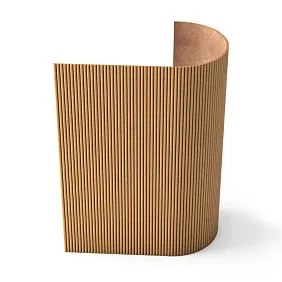
Flexible panels on fabric backing. Slats on a fabric mesh backing with the ability to bend to a radius from 100–150 mm. For columns, arches, rounded corners, curved partitions. Installation method—adhesive only plus mechanical fixing to a pre-prepared radius backing.
This distinction is fundamental. A rigid panel cannot be bent—it will break. A flexible panel cannot be glued to a flat wall without a fixing frame—it will sag. Make sure you have the correct type in hand—before starting work.




Tools and materials: what should be on hand
An amateur's mistake is to start installation without a full set of tools. 'I'll go get a level' in the middle of the job—that's a ruined plane and rework.
Essential tools:
-
Laser level (not a bubble level—it provides accuracy of ±2 mm/m, laser ±0.3 mm/m);
-
Hammer drill with concrete/brick drill bit Ø6 mm;
-
Screwdriver with torque adjustment;
-
Miter saw or miter box with wood blade;
-
Mounting gun (for adhesive foam or construction adhesive);
-
Notched trowel (6–8 mm tooth) for even adhesive application;
-
Utility knife with spare blades;
-
5 m tape measure, pencil, 90° square;
-
Finish nailer (brad nailer) or hammer with nail set.
Consumables:
-
Construction adhesive (heavy-duty liquid nails or specialized adhesive for MDF panels);
-
Butterfly anchors or Ø6×40 mm anchors with Ø3.5×35 mm screws;
-
Finish nails Ø1.2×30 mm;
-
Acrylic sealant in the color of the coating;
-
Painter's tape;
-
Deep penetration primer for the substrate.
Our factory also produces:
Substrate assessment: the first and main decision
The question of how to attach slatted panels starts with the question: what kind of wall do you have? The installation method depends on the answer.
Get Consultation
Plane check
Place a 2 m long straightedge against the wall in several places — horizontally, vertically, diagonally. The gap between the straightedge and the wall is your plane deviation.
-
Up to 3 mm — adhesive installation without a frame: the wall is sufficiently even;
-
3–5 mm — adhesive installation with leveling beacons (adhesive "mounds");
-
More than 5 mm — frame installation on a metal profile. Otherwise — visible irregularities on the panels.
Moisture Check
MDF is a hygroscopic material. Before installation, the wall must be completely dry. After plastering or puttying — at least 28 days under normal conditions. Substrate moisture: no more than 8%. Check with a moisture meter or the plastic bag method (attach for 24 hours — if condensation inside, the substrate is wet).
Checking load-bearing capacity
Adhesive installation on chalk whitewash, old wallpaper, or loose plaster is a fatal error. The adhesive will hold the coating, not the wall — panels will fall along with the top layer of the substrate. Tapping with a fist: a dull sound indicates poor adhesion, voids are present. Such areas must be cleared down to a stable substrate.
Wall type and fastening method
| Substrate type | Adhesive installation | Frame installation |
|---|---|---|
| Concrete, even | Yes (if deviation up to 5 mm) | Yes |
| Brick | Yes (if surface is even) | Yes |
| Tongue-and-groove slab (TGS) | Yes | Yes (dowels for TGS) |
| Aerated concrete | Yes | Yes (dowels for GSB) |
| Drywall (GKL) | Yes (if surface is even) | Yes (into frame studs) |
| Wooden beam/panel | No (mechanical only) | Yes (self-tapping screws into wood) |
| Old tile | Only with a full adhesion test | Yes |
First method: adhesive installation of slatted panels
Adhesive installation — fast, clean, no frame. The right choice for flat walls with a deviation of up to 5 mm. Let's examine in detail.
Preparing the base for adhesive installation
The wall is primed with a deep-penetration primer — mandatory, even on a seemingly clean surface. Primer increases adhesion by 2–3 times and prevents surface peeling. Allow to dry completely (4–8 hours depending on composition and temperature).
For a deviation of 3–5 mm — leveling 'mounds' of mounting adhesive under the backing in areas of maximum depressions. Apply in advance, allow to set until it reaches a 'stretchy' state, then glue the panel.
Applying adhesive
Mounting adhesive is applied to the panel backing — not to the wall. Application pattern: panel perimeter — a continuous bead 6–8 mm. Inner area — zigzag or mounds with a pitch of 200–250 mm. Setback from the edge of the backing — 15–20 mm (so adhesive does not squeeze out onto the front surface through the slat gaps).
Adhesive on the wall — only in special cases (on low-absorbing bases). On standard plaster and concrete surfaces — only on the backing.
Installing the first panel
The first panel is key. It sets the plane and vertical for the entire system. Installed strictly according to the laser level.
Press the panel against the wall, hold for 60–90 seconds (initial adhesive setting time). Check vertical alignment with a plumb bob or laser. Secure with finishing nails Ø1.2×30 mm around the perimeter every 300–400 mm — in areas that will be concealed by molding and baseboard. Drive flush or slightly below the surface using a nail set.
Important: after pressing the panel — do not move it along the wall. The adhesive has already begun to set in this position; shifting will break the bond. If the position is incorrect — remove completely, apply new adhesive.
Installation of subsequent panels
Join — butt joint without a gap. The slats of adjacent modules should form a single continuous rhythm. The condition for this is factory precision of pitch ≤ 0.5 mm. If the manufacturer's pitch is unstable, joints will be visible — and this is irreparable.
Align each subsequent panel with a laser level, check vertical alignment, press. Gap between modules — zero. Avoid 'spreading' of the pattern: if the slat of the previous module is a direct continuation of the slat of the next one, the installation is correct.
Time until full setting
The mounting adhesive achieves 80% strength in 24 hours, 100% — in 48–72 hours depending on temperature and humidity. During this period, avoid mechanical impacts on the panels, do not mount shelves or additional elements on them.
Second method: frame mounting of slatted panels
Frame installation is the correct choice when the base level difference exceeds 5 mm, on unstable substrates, or when a technical gap is needed for wiring, acoustic filling, or ventilation.
Frame preparation
Profile. CD profile 60×27 mm (standard for wall cladding). UD profile 28×27 mm — around the perimeter, to the floor, ceiling, and side walls. Metal thickness — at least 0.5 mm (thinner — deforms during installation).
Stud spacing. Horizontal rails — for vertical battens. Vertical studs — for horizontal battens. Spacing: 400–600 mm. Optimal — 400 mm: ensures rigidity and even load distribution. 600 mm — acceptable for lightweight MDF panels.
Attaching the profile to the wall. Direct hangers (PP 60/27) with a spacing of 600–800 mm. Hammer drill, Ø6 mm drill bit, Ø6×40 mm dowel with screw. For aerated concrete — specialized nylon dowels for cellular concrete (standard ones don't hold there).
Leveling the frame in plane
This is the most important stage of frame installation. A laser level is mandatory. Sequence:
-
Mark vertical lines for the outer studs with a laser;
-
Install the outer studs strictly along the laser line, secure them to the hangers;
-
Stretch horizontal cords between the outer studs — at the top and bottom;
-
Set intermediate studs along the cords, checking with the laser;
-
Permissible deviation of the finished frame plane — 2 mm over 2 m.
Frame deviation exceeding 2 mm over 2 m is fully reproduced on the panels. The surface will 'ripple'—a defect visible under side lighting.
Fastening slatted panels to the frame
The panel is laid on the profile. Self-tapping screws Ø3.5×35 mm—through the underlay into the profile flange. Fastening pitch: 400–500 mm along the length, at least two points across the width (into the outer profiles). Screw head—flush or 0.5 mm below the underlay surface (not protruding, not crushing the underlay).
Important: do not overtighten the screws. MDF compresses around the head when overtightened—the underlay loses rigidity, and the panel sags. The screwdriver's torque—the minimum necessary to sink the head.
Technical gap: what can be placed
Frame mounting provides a technical gap between the wall and the underlay—30–50 mm in the standard version. What is placed in it:
-
Electrical cables in corrugated pipes;
-
Low-voltage cables (audio, video, network);
-
Wires for LED lighting (the tape in gaps between slats is powered through this gap);
-
Acoustic filling (roll acoustic material, mineral wool in slabs)—to reduce reverberation.
When laying electrical cables — always in conduit. Secure cables to the wall or to the profile — not to the panel substrate.
Method three: installation of flexible slat panels on curved surfaces
FlexibleRack panelfabric-backed panels require a special approach. The slats are rigid, flexibility is only in the base. This means: the bend must be uniform across the entire panel area, without local kinks.
Preparing the radius substrate
On a curved surface (column, arched slope, radius partition) a rigid MDF base is required, bent to the desired radius. MDF 6–8 mm thick, when moistened with water, bends to a radius from 300–400 mm. For smaller radii — plywood 4–6 mm.
The substrate is fastened to the surface with screws to a wooden frame or to a metal profile. The plane is checked with a template made of plexiglass or a thin slat matching the surface shape.
Adhesive installation of the flexible panel
Adhesive is applied to the MDF substrate base in a serpentine pattern. The flexible panel is applied from one edge, gradually 'rolled' over the surface without forming bubbles. Fixation with finishing nails Ø1.2×25 mm every 150–200 mm across the entire area. Corners and edges — special attention: the fabric base here is prone to delamination.
Joining flexible panels
On curved surfaces, panel joining is more complex than on straight ones. Rule: the panel joint must always fall on a 'neutral' zone of the surface, not on the maximum curvature. On columns — joints on neutral axes (not on the 'front' side of the column, which is visible upon entry).
Installation of slatted panels on ceilings: fundamental differences
Ceiling installation is installation against gravity. Adhesive-only mounting without mechanical fastening is unacceptable here. Only framing plus adhesive.
Ceiling frame
Suspension system: UD-profile around the perimeter, CD-profile at 400 mm intervals. Direct hangers are fastened to the slab with anchors every 600–800 mm. Flatness — checked with a laser level. Permissible deviation — 2 mm over 2 m.
Stricter requirements for frame flatness than for wall installation: on ceilings, deviations are fully visible when viewed from below, especially with side lighting — even 3 mm creates a visible 'wave'.
Attaching panels to the ceiling frame
Self-tapping screws Ø3.5×35 mm through the underlay into the profile. Spacing: 300–400 mm. Additionally — mounting adhesive on the profile surface before laying the panel: double fixation that eliminates any sagging.
On the ceiling, the panel's weight is fully borne by the fasteners. With a standard MDF panel 0.6 × 2.4 m in oak — module weight up to 7–9 kg. On the ceiling, this is a significant load requiring a reliable frame.
Working with corners: three types and three solutions
Corners are the most technically complex part of installation. It is here that mistakes 'hide', which are immediately visible and can only be corrected by dismantling.
Internal corner (90°)
Two adjacent planes meet at a 'closed' corner. Solution: both panels are brought flush to the corner, with ends meeting at 90°. The gap at the corner joint is filled with acrylic sealant matching the finish color. For MDF to be painted — sealant in the same RAL, applied in a thin bead and smoothed flush with a finger. For oak — acrylic matching the wood color or clear acrylic.
Alternative: corner molding from the same product line. Mechanically covers the joint. For classic style — a traditional solution. For minimalism — visible, which may be undesirable.
External corner (90°)
An 'open' corner — panel ends face outward. MDF ends at an external corner are the most vulnerable spot: impacts, abrasion. Solutions:
-
Cut both ends at 45° (miter box or saw), join into a blunt seam — an inconspicuous, strong corner;
-
Metal corner profile (aluminum or stainless steel) — mechanically protects the end and creates a clean visual line;
-
Wooden corner molding from the same species — for classic style and oak systems.
Adjacency to door and window openings
Panel end at the opening — a vertical cut line. Three solution options:
-
A casing (wooden or MDF) frames the opening and conceals the end;
-
wooden moldingIn the same wood species — a concise vertical strip separating the slatted surface from the opening;
-
Metal profile edging — for a contemporary minimalist style.
Finishing elements: how to complete the system architecturally correctly
How to install slatted panels — this is not just a question of the main installation. It's a question of completion. An unfinished system is half the job. Finishing elements transform simply fixed panels into an architectural surface.
Molding for the top end
The upper boundary of the slatted surface is a visible horizontal end of the substrate. Without molding, this is a 'break' — the boundary appears random.wooden moldingFrom the same wood species creates a clear architectural horizontal. An MDF molding for painting in the same color — an invisible, but structurally precise boundary. Attached with mounting adhesive plus finishing nails.
For systems in neoclassical and classic styles —Wooden corniceWith a profiled front surface: an architectural frame along the upper perimeter of the slatted field.
Floor skirting board
Lower boundary of the system.solid wood baseboardNext to the oak slatted panel — a unified natural image from floor to upper boundary.MDF Skirting BoardFor painting in the same color as the MDF system — a monolithic white or dark system from bottom to top. Mounted with construction adhesive and/or finishing nails. Corner joints of the skirting board — 45° on a miter box.
Additional elements for non-standard sections
wooden plankMade from the same wood species — additional piece for corner transitions, window slopes, door frame trims. Inconspicuous, organic finishing where a standard module does not fit.
Decorative InsertsIn neoclassical and modern classic styles — horizontal and vertical framings of the slatted field, turning a beautiful wall into an architectural panel system.
Joint sealing
Acrylic sealant is applied to all junctions of the slatted system with smooth surfaces: along the molding line to the ceiling, along the skirting board line to the floor, along the side ends to adjacent walls. Applied with a caulking gun, smoothed with a wet finger or a special tool. Color — to match the coating.
Silicone sealant — not allowed. Silicone cannot be painted and repels paint on adjacent surfaces.
Preparation and painting of MDF panels: why this is done before installation
This question deserves a separate section — because this is where most people make the same mistake.
MDF panels are painted before installation, using a spray method (spray gun or aerosol), in a disassembled state. The reason is simple: the gaps between the slats are narrow (10–20 mm). A roller won't fit into the gap, a brush leaves streaks. Only spraying provides an even coating over the entire front surface, including the side edges of the slats and visible areas of the substrate.
MDF painting sequence:
-
Prime the edges and front surface with a specialized MDF primer (MDF primer);
-
Apply putty to the edges (MDF edges are porous — without putty, they absorb paint unevenly);
-
Sanding with P120, re-priming;
-
Final painting by spraying in 2 coats with intermediate drying.
After painting — installation. Scratches from fasteners around the perimeter are covered with molding and baseboard.
Integrating lighting during installation of slatted panels
Slatted relief and lighting are a system. Lighting must be planned before installation and integrated during the process. After installation — it's too late.
LED strip in the gaps between battens. The strip is mounted on a substrate in the gaps before attaching the panel to the wall. Power is routed through a technical gap (frame mounting) or through a hidden cable duct. Effect: the panel glows from within.
LED strip behind the top molding. Molding at a distance of 20–30 mm from the ceiling. The LED strip is mounted on the inner surface of the molding, directed upward toward the ceiling (indirect light) or downward toward the panel (direct light on the batten surface).
Recessed spotlights in the frame. With frame mounting — hidden spotlights in the technical gap, aimed at an angle to the batten surface. Require planning before the frame.
Typical installation errors: seven situations to avoid
Error 1. Installation without checking the base plane. Result: "waves" on panels under side lighting. Fix: only removal.
Error 2. Adhesive mounting on an unstable base. Whitewash, loose plaster, old wallpaper. Result: panels fall off along with the coating after 3–6 months.
Error 3. Skipping finish nails in adhesive mounting. The adhesive holds — but upon impact or vibration, the panel shifts before full curing. Nails secure the result.
Error 4. Joining with a gap. A 1–2 mm gap between adjacent modules. Seems minor — looks like a disaster. Joining: only butt-to-butt, without a gap.
Error 5. Frame with stud spacing of 800 mm. For MDF panels 0.6 × 2.4 m, 800 mm spacing is insufficient. The substrate sags between attachment points, the surface "moves." Maximum spacing: 600 mm, optimal — 400 mm.
Error 6. Painting MDF with a roller after installation. Gaps between battens are covered unevenly. Result: streaks, varying color saturation in gaps. Only spray before installation.
Error 7. Silicone sealant at joints. Silicone cannot be painted. Acrylic can be painted the same color. Only acrylic.
Care for installed slatted panels
Proper installation is half the result. Proper care is the other half.
MDF for painting: dry microfiber for dust weekly. Wet wiping with neutral (non-aggressive) detergent as needed. Abrasives and alcohol-containing compounds are not allowed. Refreshing the coating when appearance deteriorates: light sanding with P180 + one finishing coat of spray paint.
Solid oak: dry cloth for dust. Refreshing oil or varnish every 3–5 years. If an individual slat is damaged, replace only that element, not the entire panel: the modular principle allows for spot maintenance.
About the company STAVROS
Knowing how to install slatted panels is only half the success. The other half is the quality of the panels themselves. Because even with perfect installation, unstable factory spacing will still create visible joints. And precise color won't adhere properly to loose MDF with a density of 650 kg/m³.
STAVROS is a Russian manufacturer of MDF and solid wood products for interior finishing and furniture production. Slatted panels of all structural types: rigid on MDF backing, flexible on fabric backing, rectangular, semicircular, and trapezoidal profiles. Complete coordinated line of moldings: cornices, baseboards made of solid wood and MDF, additional slats, decorative overlays. Staircase elements, furniture decor, hardware.
MDF from European suppliers with density of 750–850 kg/m³. Control of slat spacing accuracy ≤ 0.5 mm in each batch. Sealed ends. Two-level quality control system (Standard and Prestige). Climate-controlled drying chambers for solid wood. Manual processing of decorative elements. Over 4000 models, 20,000 modifications, 39 product groups. Shipping from one piece. Delivery throughout Russia. Professional consultation before placing an order.
FAQ: answers to the most popular questions
Can slatted panels be installed without a frame?
Yes – using adhesive method on a flat, stable, dry base with deviation up to 5 mm. Additionally – finishing nails around the perimeter. A frame is necessary with deviation over 5 mm, on unstable bases, and when installing on ceilings.
What adhesive should be used for MDF slatted panels?
Mounting adhesive of the 'reinforced liquid nails' class or specialized adhesive for MDF panels. Foam adhesive is not recommended: it expands during curing and can deform the substrate. Two-component polyurethane is for increased loads.
From which corner should installation begin?
Always from the far corner of the room towards the exit. Or from the center to the edges — if a symmetrical accent wall is planned. The first panel — strictly according to the laser level. If the first panel 'goes off' — the entire row will go off.
Is acclimatization of panels needed before installation?
Yes. MDF panels should be kept in the room for 24–48 hours at installation temperature and humidity. This eliminates post-installation deformation due to humidity differences.
How to install slatted panels in corners without molding?
Internal corner: both panels are brought right up to the corner, the joint is filled with acrylic sealant in a matching color. External corner: ends are cut at 45°, joined 'mitered'.
Can slatted panels be attached to drywall?
Yes — with self-tapping screws Ø3.5×35 mm strictly into the metal studs of the drywall frame. Attachment only to drywall without a metal base is unacceptable: drywall does not hold pull-out loads.
What is the profile spacing for frame installation on a ceiling?
400 mm is optimal. 300 mm for heavy oak panels. 600 mm is the maximum allowable for lightweight MDF panels. Rule: more frequent is better than less frequent.