












































































Article Contents:
- Preparation: Tools, Materials, Marking
- Tools for Installing Skirting Boards
- Materials for Installing Skirting Boards and Molding
- Room Marking: Where to Start Installation
- Skirting Board Installation: Glue or Screws
- Adhesive Installation: Aesthetics Without Visible Fasteners
- Fastening with Screws: Reliability and Disassembly
- Cutting Corners: How to Cut at 45 Degrees
- Miter Box: A Simple Tool for Precise Corners
- Miter Saw: Precision and Speed
- Molding Installation: Moldings, Cornices, Rosettes
- Wall Moldings: Marking and Fastening
- Ceiling Cornices: Installation Technique at the Wall-Ceiling Junction
- Ceiling Rosettes Under Chandeliers: Centering and Installation
- Finishing: Putty and Painting
- Sealing Skirting Board and Molding Joints
- Painting Skirting Boards and Molding
- Frequently Asked Questions
- Conclusion: Savings and Satisfaction from DIY Work

DIY repair saves money, provides control over quality, and brings satisfaction from the result.How to glue wooden skirting boards— a question asked by thousands of people who have decided not to pay craftsmen 350-650 rubles/m for installation (for a 60 m² apartment with a perimeter of 65 meters, savings of 22,750-42,250 rubles just on skirting board installation). Wooden skirting board is glued with liquid nails (mounting adhesive in a 310 ml tube, one tube for 3-5 meters of skirting board, cost 180-320 rubles/tube) or fastened with screws (finishing screws 3.5×40 mm with a countersunk head, one screw every 40-50 cm, heads are countersunk with a countersink, puttied — the fastening is invisible, strong).installation guide for polyurethane molding— a step-by-step process for installing moldings on walls, ceiling cornices, rosettes under chandeliers (polyurethane molding is glued with special polyurethane adhesive, installation is easier than wooden skirting board — molding is lightweight, holds on adhesive without additional fasteners).correctly - a skill requiring practice and quality tools.— a critically important skill for beautiful corners (two skirting boards in a room corner meet at a 90-degree angle, each cut at 45 degrees, the joint is tight, without gaps — a sign of craftsmanship). This article covers preparation for installation (tools, materials, room marking), step-by-step installation of wooden skirting board (adhesive method and fastening with screws, advantages and disadvantages of each), cutting corners at 45 degrees (technique for using a miter box and miter saw, how to avoid gaps in corners), installation of polyurethane molding (moldings, cornices, rosettes — fastening technology, adhesive application, joint sealing), finishing (joint puttying, painting skirting boards and molding — how to achieve a perfect surface without installation traces), comparison of craftsmen's work cost and DIY installation (real savings figures). Prepare to install skirting boards and molding so that the result is professional, durable, beautiful — without visible seams, without gaps, without mistakes.




Preparation: Tools, Materials, Marking




Tools for Installing Skirting Boards
How to glue wooden skirting boardsbegins with preparing tools. Basic set for adhesive installation: mounting gun for liquid nails (mechanical or cordless — mechanical costs 450-1200 rubles, works by hand force, suitable for one-time repair; cordless costs 3500-8500 rubles, works on battery, more convenient, more productive, pays off with large volumes), miter box for cutting corners (plastic or metal miter box with slots for 45°, 90° angles costs 450-1200 rubles, suitable for small volumes of work), fine-tooth saw for cutting wood (tooth 1.5-2.0 mm, blade length 300-400 mm costs 650-1200 rubles, cuts MDF and solid wood without chips), tape measure 5-8 meters (350-850 rubles), carpenter's pencil, bubble level 60-100 cm long (450-1200 rubles) or laser level (projects horizontal and vertical lines on walls, costs 3500-15000 rubles — more convenient than bubble, but expensive for one-time use).
Additional tools for installation with screws: drill or cordless screwdriver (18-20 V, torque 40-60 N·m costs 4500-12000 rubles — if not available, can be rented for 2-3 days for 450-850 rubles/day), wood drill bits 2-3 mm diameter for pre-drilling holes for screws (drill bit set 1.5-10 mm costs 850-1800 rubles), conical countersink for countersinking screw heads (diameter 8-12 mm costs 320-650 rubles), Phillips screwdriver or PH2 bits for screwdriver.
Professional-level tools: miter saw (electric saw with rotating base for precise angle cutting — blade diameter 210-254 mm, power 1200-1800 W, costs 8500-35000 rubles depending on brand; if bought specifically for one repair, won't pay off, better to rent for a week for 1500-3500 rubles), laser level with plane projection function (projects a horizontal line around the entire room perimeter simultaneously — saves marking time, costs 8500-25000 rubles).
Our factory also produces:


Materials for Installing Skirting Boards and Molding
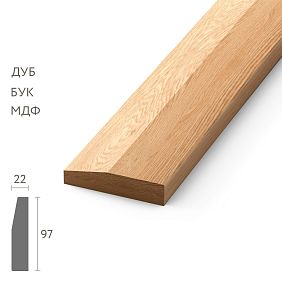
Wooden skirting board (solid oak, beech, ash, or veneered MDF): height is selected based on room height and interior style (60-80 mm for modern interiors, 100-120 mm for classic, 140-180 mm for rooms with high ceilings 3.0-3.5 m), length of one plank is 2.4-2.6 m (production standard), number of planks is calculated by room perimeter (perimeter divided by length of one plank, result rounded up to whole number, add 5-10% reserve for corner trimming and possible errors).
Liquid nails for wooden skirting board: mounting adhesive on polymer base (neoprene or acrylic) in 310 ml tube, one tube for 3-5 meters of skirting board (depends on width of adhesive strip you apply), cost 180-420 rub/tube. For a 60 m² apartment with 65-meter perimeter, 13-22 tubes of liquid nails are needed (2340-9240 rub). Adhesive is chosen by composition: neoprene (based on synthetic rubber, sets quickly 2-5 minutes, holds firmly, sharp chemical smell, requires ventilation), acrylic (water-based, odorless, sets slower 10-15 minutes, holds slightly weaker but sufficient for skirting boards, safe for living spaces).
Screws for wooden skirting board: finish screws 3.5×40 mm or 4.0×50 mm with countersunk head (conical head, sinks flush with skirting surface in countersink), screw length selected so that 20-25 mm enters wall (if skirting thickness 18 mm, wall is plastered, 40 mm screw enters skirting 18 mm, wall 22 mm — sufficient for secure fastening). Plastic dowels 6×40 mm for screws (if wall is concrete or brick — dowel hammered into hole, screw screwed into dowel; if wall is wooden — dowel not needed, screw screwed directly into wood).
Polyurethane molding: wall moldings (width 40-120 mm, length of one plank 2.0-2.4 m), ceiling cornices (height 60-150 mm, plank length 2.0 m), ceiling rosettes for chandeliers (diameter 30-120 cm). Polyurethane adhesive for molding (special polymer-based adhesive designed for polyurethane, tube 310 ml, one tube for 8-12 meters of molding or 5-8 meters of cornice, cost 280-520 rub/tube). Do not use ordinary liquid nails for polyurethane (may not hold or damage polyurethane), only specialized adhesive.
Acrylic putty for sealing skirting and molding joints (white paste in tube 280-400 ml, elastic after drying, does not crack, cost 120-250 rub/tube), acrylic enamel paint for final painting of skirting and molding (matte or semi-matte, 2.5-liter can costs 1200-2800 rub), painter's tape width 25-50 mm for protecting walls and floor during painting (50-meter roll costs 120-280 rub).
Get Consultation
Room marking: where to start installation
Marking determines where the top edge of skirting will run, where corners will be, where lengthwise joints will be (if wall longer than 2.4 m — length of one skirting plank, two planks need joining). Start marking from the most visible corner of room (corner seen immediately upon entering room — in living room this is corner opposite entrance door, in bedroom — corner behind bed headboard). In this corner skirting boards must join perfectly (no gaps, no steps, at exact 90-degree angle), as this is first thing that catches the eye.
Mark horizontal line on wall at skirting height (if skirting height 100 mm, line at 100 mm from floor). Use laser level (place it on floor, turn on, it projects horizontal line on all room walls simultaneously — fast, accurate, convenient) or bubble level (place against wall at 100 mm height, align by bubble, mark with pencil every 50 cm, connect points with line — longer but cheaper). Line shows where top edge of skirting will be (during installation place skirting so its top edge aligns with line — skirting runs strictly horizontal, even if floor uneven).
Measure wall lengths with tape measure, write dimensions on paper sheet, draw room plan (rectangle or square with each wall size, door opening marks). Plan helps calculate how many skirting planks needed, where lengthwise joints will be, how to minimize waste (plan so short skirting pieces used in less visible places — behind furniture, in corners, and long solid planks on visible walls).
Skirting installation: adhesive or screws
Adhesive installation: aesthetics without visible fasteners
Adhesive installation of wooden skirting on liquid nails — fast, clean, aesthetic method. Advantages: no visible fasteners (screw heads, even puttied, may show through paint over time, adhesive invisible), no risk of splitting skirting with screw (solid wood may crack when screwing, especially if screw close to edge or knot), installation faster (no need to drill holes, screw screws — just apply adhesive, press, done). Disadvantages: adhesive holds only on even walls (if wall uneven, variations over 3-5 mm over 2-meter length, skirting pulls away from wall, adhesive no contact, does not hold), removal damages skirting (if need to remove skirting after year or two, adhesive tears off with wood pieces — skirting ruined; with screws skirting removed carefully, can be reused).
Adhesive application: insert liquid nails tube into mounting gun (cut tube nozzle at 45-degree angle, hole diameter 5-7 mm — adhesive strip should be 5-7 mm wide, not wider, otherwise excess squeezed out when pressing skirting to wall). Apply adhesive to back of skirting in zigzag or dotted line (adhesive strip along top edge of skirting, strip along bottom edge, adhesive at edges holds better than middle — larger contact area with wall). For skirting height 100-120 mm two adhesive strips sufficient (along top and bottom edge), for skirting height 140-180 mm add third strip in middle (tall skirting heavier, needs more adhesive).
Placing and pressing: place skirting against wall (bottom edge on floor, top edge on marking line), press with hands evenly along entire length (not pointwise in one spot, but entire plank simultaneously — palms press center, edges pressed with elbows or knees if plank long 2.4 m). Hold pressed 2-3 minutes (adhesive sets, skirting holds independently). If wall slightly uneven (small depressions 1-2 mm), pressing with force pushes skirting in, adhesive fills depressions, skirting takes wall shape (adhesive elasticity allows compensating small unevenness).
Fixation with painter's tape: if after releasing hands skirting pulls away from wall (adhesive not yet set, skirting heavy, wall uneven), secure it with painter's tape (stick 50 mm wide tape strip to top edge of skirting, stretch tape at upward angle, stick to wall 30-40 cm above skirting — tape holds skirting pressed to wall until adhesive fully sets 4-6 hours). Remove tape after 6-8 hours when adhesive completely dry.
Fastening with screws: reliability and removability
Fastening wooden skirting with screws — traditional, reliable method. Advantages: holds on uneven walls (screw pulls skirting to wall even with 5-10 mm variations, skirting does not pull away), removable (if need to remove skirting after year or two, unscrew screws, remove skirting carefully, can be reused), independent of adhesive (no need to wait for adhesive drying, can paint skirting immediately after installation). Disadvantages: visible fasteners (screw heads puttied and painted, but over time may show — putty micro-shrinks, paint thins, heads visible as light dots), risk of splitting skirting (if screw close to edge or knot, solid wood may crack — requires care, experience), installation longer (need to drill holes, countersink, screw screws, putty heads — more operations than adhesive installation).
Marking holes for screws: place skirting against wall (bottom edge on floor, top edge on marking line), mark on skirting with pencil places for screws (first screw at distance 10-15 cm from skirting edge, then every 40-50 cm along length, last screw at distance 10-15 cm from other edge). Holes should be above middle of skirting height (if skirting height 100 mm, holes at height 60-70 mm from bottom edge — screw enters wall at slight downward angle, pulls skirting to wall and floor simultaneously).
Drilling holes: drill holes in skirting with drill bit diameter 2-3 mm (diameter slightly smaller than screw diameter 3.5-4.0 mm — screw screwed into hole with force, cuts thread in wood, holds firmly). Drilling depth — entire skirting thickness 18-22 mm plus 5-10 mm into wall (drill bit passes through skirting, enters wall, creates direction for screw). Drilling prevents skirting cracking (if screw screwed without drilling, wood spreads, stresses may split skirting, especially near edge).
Countersinking holes: widen top part of hole with countersink (conical drill bit diameter 8-12 mm, deepen it into hole 2-3 mm — creates conical recess where screw head sinks). Countersink allows sinking screw head 1-2 mm below skirting surface (after puttying head completely hidden, skirting surface smooth, no protrusions).
Screwing screws: place skirting against wall (align drilled holes with marks on wall), screw screws with screwdriver through holes (screw passes skirting, enters dowel in wall or directly into wooden wall, pulls skirting to wall). Screw carefully, without excessive force (over-tightening screw may compress wood around hole, create dent, split skirting; under-tightening leaves head protruding — need to screw so head sunk in countersink 1-2 mm, no more, no less).
Cutting corners: how to cut at 45 degrees
Miter box: simple tool for precise corners
correctly - a skill requiring practice and quality tools.— key skill for beautiful corners. Miter box (device for cutting at given angle — plastic or metal trough with slots at 45° and 90° angles, costs 450-1200 rub) — simple tool for those installing skirting for first time. Miter box ensures cutting accuracy at 45 degrees (slots factory-cut, angle precise, error minimal 0.5-1 degree — sufficient for skirting joining), suitable for small work volumes (4-8 corners in one room — miter box handles; for 20-30 corners in entire apartment better miter saw — faster, less tiring).
Cutting internal corner (room corner where two walls converge inward, forming protrusion toward room — four such corners in rectangular room): first skirting plank placed in miter box with base on bottom, back side against miter box edge (skirting stands as would on floor against wall — vertically), select slot at 45 degrees left (if plank goes on left side of corner, slot left; if on right side, slot right). Saw with handsaw along slot (hold saw horizontally, saw with smooth movements without jerks, without pressure — teeth themselves cut wood, pressure creates unevenness, chips). Second skirting plank placed in miter box similarly, select slot at 45 degrees right (mirror first plank), saw. Two planks with 45-degree cuts assembled in room corner (cuts match, form 90-degree angle, joint tight without gaps).
Cutting external corner (wall corner where two walls converge outward, forming protrusion away from room — such corners found in niches, bay windows, columns): first skirting plank placed in miter box with base on bottom, back side against miter box edge, select slot at 45 degrees right (for external corner slots selected mirror internal — if for internal left plank cut in left slot, for external left plank cut in right slot). Saw. Second plank cut in left slot. Two planks with cuts assembled on external wall corner (cuts match, joint tight).
Miter saw: precision and speed
Miter saw (electric saw with rotating base, blade diameter 210-254 mm, power 1200-1800 W, costs 8500-35000 rub) — professional tool for cutting corners. Advantages over miter box: speed (cutting one corner takes 10-15 seconds — place skirting on saw table, set angle on scale, press button, lower blade, done; with miter box same cut takes 1-2 minutes), precision (angle set on base scale with accuracy to 0.1 degree, cut perfectly even, without chips), cut cleanliness (blade with fine teeth 60-80 teeth rotates at speed 4000-5000 rpm, cuts wood like butter, cut smooth, no sanding, no tear-out). Disadvantages: high price (for one-time room repair not cost-effective, better rent for week 1500-3500 rub), dimensions (saw heavy 10-15 kg, requires stable table or workbench, inconvenient in small room).
Setting angle on miter saw: saw base has scale with divisions from 0° to 45-50° left and right (0° — straight cut at 90 degrees, 45° — cut at 45 degrees for corners). For cutting internal corner set base to 45° left (for left plank of corner) or 45° right (for right plank), secure base with locking screw (handle or lever on saw base). Place skirting on saw table (skirting lies flat, pressed against saw rear fence — bar ensuring perpendicular cut), turn on saw (let blade reach full speed 4000-5000 rpm — do not lower blade immediately after turning on, blade must spin up, otherwise cuts unevenly), lower blade smoothly onto skirting (saw handle lowered down, blade cuts through skirting in 1-2 seconds, do not press, do not push — blade itself cuts under saw weight). Raise blade, turn off saw, remove skirting — cut ready.
Corner fitting: ideal room corners rare, most corners not exactly 90 degrees (88-92 degrees — normal for standard apartments, corners 'vary' due to wall unevenness, vertical deviation). If room angle 88 degrees (acute angle, less than right), skirting boards need cutting not at 45 degrees, but at 44 degrees each (88 / 2 = 44). If angle 92 degrees (obtuse angle, more than right), cut at 46 degrees each (92 / 2 = 46). Measure room angle with protractor (simple tool — two rulers connected by hinge, scale shows angle between rulers, costs 650-1200 rub) or by eye (place two skirting planks in corner without cut, see what gap forms — if gap at top, angle acute, cut at smaller angle 43-44 degrees; if gap at bottom, angle obtuse, cut at larger angle 46-47 degrees). Fitting requires several attempts (cut, placed, gap exists — trimmed another 0.5-1 degree, placed, gap smaller — trimmed more, no gap — done), but result perfect.
Installation of moldings: moldings, cornices, rosettes
Wall moldings: marking and fastening
installation guide for polyurethane moldingbegins with marking. Moldings (horizontal or vertical strips 40-120 mm wide) are mounted on walls to create frames, panels, and architectural divisions. Mark on the wall where the molding frames will be (rectangles 120×80 cm, squares 100×100 cm, symmetrically placed on the wall). Use a laser level or tape measure with a pencil (measure from the room corner the distance to the left border of the frame, from the floor the height to the lower border of the frame, mark the corners of the frame, connect with lines — you get a rectangle on the wall, inside which the molding frame will be).
Cutting moldings: measure the lengths of the frame sides (for example, horizontal sides 120 cm, vertical 80 cm), transfer the dimensions to the moldings, mark with a pencil. Cut the moldings at 45 degrees at the frame corners (four frame corners — four pairs of cuts, each pair at 45 degrees mirrored). Moldings are cut the same way as baseboards (miter box or miter saw), but molding is lighter than wood (polyurethane density 180-250 kg/m³ vs. wood 650-800 kg/m³), cuts faster, cleaner cut.
Applying glue to moldings: use special polyurethane glue (tube 310 ml, cost 280-520 rub/tube, do not use regular liquid nails — may not hold polyurethane). Apply glue to the back of the molding in a snake or dotted line (a strip of glue 5-7 mm wide along the top edge of the molding, a strip along the bottom edge — two strips for molding 80-120 mm wide, one strip for narrow molding 40-60 mm). Glue should not protrude beyond the edges of the molding (if you apply too much glue, when pressing the molding to the wall, excess will squeeze out, stain the wall — wipe immediately with a damp cloth before it dries).
Applying and fixing the molding: place the molding on the wall along the marking line (align the edges of the molding with the frame lines drawn on the wall), press with hands evenly along the entire length (molding is light, 0.5-0.7 kg per linear meter, easy to press, no need for force like for wooden baseboard). Hold pressed for 30-60 seconds (polyurethane glue sets quickly, 1-2 minutes, molding holds on its own). If the molding is long (more than 1.5 m), secure it with painter's tape (apply tape strips every 40-50 cm, tape holds the molding pressed to the wall until the glue dries completely 4-6 hours). Remove tape after 6 hours.
Ceiling cornices: installation technique at the wall-ceiling junction
Polyurethane ceiling cornice (height 80-150 mm, strip length 2.0 m) is mounted at the wall-ceiling junction, creates architectural framing of the ceiling. Mark on the wall a horizontal line at a distance from the ceiling equal to the cornice height (if cornice is 100 mm high, line 100 mm below the ceiling — this is the lower edge of the cornice). Use a laser level (project a horizontal line around the entire room perimeter) or tape measure with a pencil (measure 100 mm from the ceiling, mark every 50 cm, connect points with a line).
Cutting cornices: measure wall lengths (for a 5×5 m room perimeter 20 meters), divide by the length of one cornice strip (20 m / 2 m = 10 strips). Cut cornices at corners at 45 degrees (in a rectangular room four corners — eight cuts at 45 degrees). Cornice has a complex cross-section (two contact planes — to wall and ceiling, relief on the front side), cutting is more complex than flat molding. In a miter box, the cornice is placed at an angle (simulating its position on the wall — cornice touches the miter box bottom with the ceiling contact plane, touches the miter box wall with the wall contact plane), cut along the 45-degree slot. On a miter saw, the cornice is laid flat (ceiling contact plane on the saw table), cut with the base angle set to 45 degrees and blade tilt (blade tilt left or right depends on whether cutting left or right cornice of the corner).
Applying glue to the cornice: apply polyurethane glue to both contact planes of the cornice (a strip of glue 5-7 mm wide along the wall contact plane, a strip along the ceiling contact plane — glue on both planes ensures reliable fastening, cornice holds on the wall and ceiling simultaneously). Do not apply glue to the front side of the cornice (relief part visible from the room — glue will stain the relief, will be visible).
Applying and fixing the cornice: place the cornice at the wall-ceiling junction (lower edge of cornice on the marking line on the wall, upper contact plane pressed to the ceiling), press with hands evenly along the entire length (one hand presses cornice to wall, the other to ceiling — cornice must have tight contact with both surfaces, otherwise glue won't work). Hold pressed for 1-2 minutes (polyurethane glue sets quickly). If the cornice is heavy (height 120-150 mm, weight 1.5-2.0 kg/m), additionally nail it with finishing nails 25-30 mm long or screws 3.0×30 mm (fastener into the upper cornice plane contacting the ceiling, heads countersunk, filled — fastener secures until glue dries completely, after 24 hours glue holds on its own, fastener can be removed or left).
Rosettes under chandeliers: centering and installation
Polyurethane rosette (round overlay diameter 60-120 cm with central hole for chandelier mounting) is mounted on the ceiling in the center of the room. Find the ceiling center (measure wall lengths, divide in half — for a 5×5 m room center at 2.5 m from each wall). Mark the center with a pencil on the ceiling (this is the point where the rosette's central hole will be, through which the chandelier's electrical cable will pass).
Preparing the rosette: if the chandelier is already installed, turn off the power (switch off the circuit breaker in the panel, check for no voltage with a tester), dismantle the chandelier (unscrew the decorative nut, remove the lampshade, disconnect wires, remove the mount). Thread the electrical cable through the rosette's central hole (cable comes from the ceiling, passes through the rosette, exits below — after installing the rosette, connect the chandelier to the cable).
Applying glue to the rosette: apply polyurethane glue to the back of the rosette in an even layer (glue over the entire surface, except the area around the central hole diameter 10-15 cm — glue should not get on the electrical wiring, it's dangerous). Use a spatula or brush (spread glue in a thin layer 1-2 mm thick, evenly, without gaps).
Applying and fixing the rosette: place the rosette on the ceiling (central hole aligned with the ceiling center mark, cable passes through the hole), press with hands from center to edges (press the center of the rosette, then gradually the edges — glue distributes evenly, air escapes from under the rosette, no bubbles form). Hold pressed for 2-3 minutes (rosette is light, diameter 60-80 cm weighs 1.5-3.0 kg, easy to press). If the rosette is large (diameter 100-120 cm, weight 4-6 kg), additionally screw it with screws 3.5×35 mm (4-6 screws around the rosette perimeter, fastened into the ceiling, heads countersunk into the rosette relief, filled — after painting invisible). Screws secure the rosette until the glue dries (after 24 hours glue holds on its own, screws can be removed or left).
Finishing: puttying and painting
Sealing joints of baseboards and moldings
Joints of baseboards in room corners and along length (if wall longer than 2.4 m, two baseboard strips join lengthwise), joints of moldings in frame corners, joints of cornices in room corners are sealed with acrylic putty. Putty fills gaps up to 2-3 mm wide (if gap wider than 3 mm, the cut is inaccurate, the joint needs adjustment — trim one of the baseboards until the gap is less than 2 mm, then putty). Putty is elastic (after drying does not crack with minor movements of baseboard or molding due to building thermal expansions), easy to sand (after drying 4-6 hours sand with fine sandpaper grit 180-220, becomes smooth, invisible).
Applying putty: squeeze putty from the tube onto your finger (work with or without a rubber glove — acrylic putty is safe for skin, washes off easily with water), run your finger along the joint (putty fills the gap, excess smears on the surface of the baseboard or molding on both sides of the joint — not a problem, excess will be removed with a damp cloth). If the gap is deep (2-3 mm), apply putty with a spatula (narrow spatula width 20-30 mm, load putty on spatula, press into the gap, smooth flush with the surface).
Joints of baseboard with floor and wall (if there are small gaps 0.5-1.5 mm due to wall or floor unevenness) are also sealed with putty (run your finger with putty along the joint of baseboard and wall, putty fills the gap, creates a sealed transition). Joints of cornice with wall and ceiling similarly (gaps up to 2 mm sealed with putty, gaps wider than 2 mm — a sign of wall or ceiling unevenness, need more putty, possibly in two-three layers with intermediate drying of each layer 4-6 hours).
Removing excess putty: 10-15 minutes after applying putty (putty not yet dry but has set, become denser) wipe off excess with a damp cloth or sponge (wipe the surface of the baseboard or molding along the joint, excess putty is removed, the joint remains filled). If the putty is already dry (more than 6 hours passed), excess is removed by sanding with sandpaper (light movements, no pressure, to avoid scratching the surface of the baseboard or molding).
Painting baseboards and moldings
Painting baseboards and moldings — the final stage, which hides joints, puttied screw heads, installation marks, gives a finished look. Paint (acrylic enamel matte or semi-matte, color white, gray, beige, any as desired, can 2.5 liters costs 1200-2800 rub) is applied with a roller or brush. Roller (velour or microfiber, width 80-100 mm for baseboards, 150-180 mm for wide cornices and moldings) gives an even layer without streaks, quickly paints large areas. Brush (width 40-60 mm, synthetic or natural bristles) is used for shaped baseboards and moldings with relief (roller does not paint relief depressions, brush penetrates all depressions, ensures uniformity).
Preparing the surface for painting: after sealing joints with putty and drying (4-6 hours) lightly sand the puttied areas with sandpaper grit 220-240 (a few light movements, putty becomes smooth, flush with the surface of the baseboard or molding). Wipe baseboards and moldings with a damp cloth (remove sanding dust, dirt, hand marks — paint adheres only to a clean surface). Protect floor and walls with painter's tape (apply a strip of tape width 25-50 mm on the floor along the lower edge of the baseboard, on the wall along the upper edge of the baseboard, on the ceiling along the upper edge of the cornice — tape protects from accidental paint strokes).
First coat of paint: pour paint into a paint tray (plastic container with ribbed bottom for removing excess paint from the roller, costs 150-320 rub), dip the roller in paint, roll on the ribbed bottom of the tray (excess paint remains in the tray, roller evenly saturated). Roll the roller over the baseboard or molding (movements top to bottom or along, even, no pressure, no rush — roller leaves a thin even layer of paint). For shaped elements with relief use a brush (dip brush in paint one-third bristle length, remove excess on the can edge, run the brush along the relief, paint fills depressions). First coat dries 4-6 hours (at temperature 20-22°C, humidity 50-60% — standard living conditions).
Second coat of paint: after the first coat dries (check with finger — paint dry, not sticky) lightly sand the surface with sandpaper grit 240-280 (a few light movements, remove raised nap — MDF wood fibers or polyurethane may give slight roughness after the first coat of paint, sanding makes the surface smooth). Wipe with a damp cloth (remove sanding dust). Apply the second coat of paint with roller or brush (technique same as for first coat, second coat covers the first, color becomes saturated, even, without gaps). Second coat dries 6-8 hours, full paint polymerization (paint gains maximum hardness and wear resistance) 24-48 hours.
Removing painter's tape: remove tape 1-2 hours after applying the second coat (paint not completely dry, slightly sticky — at this moment tape comes off easily, does not pull paint with it). If removing tape too early (immediately after painting), paint may run under the tape, stain the floor or wall. If removing too late (after 24 hours, when paint completely dry), tape may tear off with the paint (paint had time to stick to the tape, when removing tape a film of paint tears off — resulting in an uneven edge).
Frequently asked questions
Can wooden baseboard be glued to uneven walls?
On slightly uneven walls (variations 2-3 mm over 2 meters length) gluing is possible (liquid nails are elastic, fill small depressions, baseboard pressed with effort, takes the shape of the wall). On very uneven walls (variations 5-10 mm and more) glue does not hold (baseboard pulls away from the wall in depressions, glue does not contact, after a month or two baseboard falls off). In this case fasten with screws (screw pulls baseboard to the wall even with large variations, baseboard bends, takes the shape of the wall — if baseboard is thin 18-20 mm, bending is noticeable, baseboard wavy; if baseboard is thick 22-25 mm or tall 140-180 mm, rigidity higher, bending less). Alternative: level walls with plaster or drywall to variations no more than 3 mm (labor-intensive, expensive, but result ideal — baseboards glue evenly, hold firmly).
How much liquid nails are needed for one room?
A 20 m² room (size 5×4 m, perimeter 18 meters minus a door opening of 0.9 m = 17.1 m of skirting board). One 310 ml tube of liquid nails covers 3-5 meters of skirting board (depends on the skirting board height, width of the adhesive strip — for a 100 mm high skirting board, two adhesive strips 5-7 mm wide, one tube for 4 meters; for a 140 mm high skirting board, three adhesive strips, one tube for 3 meters). For a room with 17.1 m of skirting board, you need 17.1 / 4 = 4.3 tubes, rounded up to 5 tubes (allowance for possible mistakes, for sealing joints if the adhesive is squeezed out). Cost of 5 tubes of liquid nails at 250 rubles/tube = 1250 rubles.
Is it mandatory to sand between coats of paint?
It is advisable, but not mandatory. Sanding between coats of paint (light sanding with 240-280 grit sandpaper) removes raised fibers (MDF wood fibers or polyurethane after the first coat of paint may cause slight roughness, sanding makes the surface smooth), improves the adhesion of the second coat (paint adheres better to a slightly rough surface than to a smooth glossy one). But if the first coat of paint went on evenly, without roughness (quality MDF, quality polyurethane, good paint), sanding is not necessary (you can apply the second coat immediately — the result is slightly worse, but acceptable). If you don't sand, be sure to wipe the surface with a damp cloth before the second coat (remove dust that settled during the drying of the first coat — dust on the surface hinders the adhesion of the second coat).
What is the difference between polyurethane adhesive and liquid nails?
Polyurethane adhesive (specialized adhesive for polyurethane moldings, 310 ml tube, cost 280-520 rubles/tube) is designed for polyurethane (the polymers in the adhesive are compatible with polyurethane, do not corrode it, hold firmly). Liquid nails (universal construction adhesive, 310 ml tube, cost 180-320 rubles/tube) are suitable for wood, MDF, drywall, metal, but not always for polyurethane (some solvent-based liquid nails can corrode polyurethane, others do not provide reliable adhesion). For wooden skirting boards, use liquid nails (cheaper, hold well), for polyurethane moldings, use polyurethane adhesive (more expensive, but specialized, guarantees reliability).
How much does the work of craftsmen for installing skirting boards and moldings cost?
The cost of craftsmen's work depends on the region, complexity of the skirting board or molding profile, and volume of work. Average prices for Moscow and large cities (as of February 2026): installation of wooden skirting board 350-650 rubles/m (simple rectangular skirting board 350-450 rubles/m, shaped with a fillet 450-550 rubles/m, carved 550-650 rubles/m), installation of polyurethane moldings 420-720 rubles/m (narrow 40-60 mm 420-520 rubles/m, medium 70-100 mm 520-620 rubles/m, wide 110-140 mm 620-720 rubles/m), installation of ceiling cornices 480-850 rubles/m (small 60-80 mm 480-620 rubles/m, medium 90-110 mm 620-750 rubles/m, large 120-150 mm 750-850 rubles/m), installation of rosettes 1200-3500 rubles/piece (depends on diameter), painting of skirting boards and moldings 150-280 rubles/m² (one or two coats of acrylic enamel).
For a 60 m² apartment with a perimeter of 65 meters, four rooms with moldings (80 meters of moldings and cornices, four rosettes): cost of craftsmen's work = 65 m of skirting board × 450 rubles/m + 80 m of moldings × 620 rubles/m + 4 rosettes × 2000 rubles + painting 20 m² × 220 rubles/m² = 29250 + 49600 + 8000 + 4400 = 91250 rubles. Self-installation (with basic skills, tools, time) saves these 91250 rubles, expenses are only for materials (skirting boards, moldings, adhesive, putty, paint — 80000-120000 rubles for a 60 m² apartment).
Conclusion: savings and satisfaction from DIY work
Installing wooden skirting boards and polyurethane moldings yourself is a realistic task for a person with basic manual skills, a minimal set of tools, and a desire to learn something new.How to glue wooden skirting boards— choose the fastening method (adhesive or screws — adhesive is faster, more aesthetic, suitable for even walls; screws are more reliable, suitable for uneven walls, provide disassembly), prepare tools and materials (miter box or miter saw, liquid nails or screws, tape measure, level, putty, paint), mark the room (horizontal line at the height of the skirting board, room plan with wall dimensions).correctly - a skill requiring practice and quality tools.— a critical skill for beautiful corners (miter box for small volumes of work, miter saw for large volumes and professional quality, adjusting corners considering the actual room geometry — corners are rarely exactly 90 degrees, cut at 43-47 degrees depending on measurements).installation guide for polyurethane molding— marking frames on walls, cutting moldings at 45 degrees, applying polyurethane adhesive, attaching and fixing moldings, cornices, rosettes (moldings are lighter than wooden skirting boards, installation is easier, adhesive sets quickly in 1-2 minutes, painter's tape holds elements until the adhesive dries completely). Finishing (puttying joints with acrylic putty, sanding, painting with two coats of acrylic enamel — hides installation marks, creates a finished look) transforms installed elements into a unified whole, the interior looks professional.
Savings from self-installation are huge: for a 60 m² apartment with skirting boards along a 65-meter perimeter and moldings in four rooms (80 meters of moldings and cornices, four rosettes) savings on craftsmen's work are 80000-110000 rubles (cost of craftsmen's work 80000-110000 rubles, self-installation is free, expenses are only for materials). For one 20 m² room with 17 meters of skirting boards, 30 meters of moldings, savings are 18000-28000 rubles on work. Time for DIY installation: one 20 m² room with skirting boards and moldings takes 2-3 days of work for 4-6 hours a day (first day — marking, cutting, installing skirting boards; second day — installing moldings, sealing joints; third day — painting with two coats with intermediate drying). For a 60 m² apartment, installation time is 10-15 days (can be spread over weekends and evenings after work — do it gradually, without rush, quality is higher).
Satisfaction from DIY work is not measured in money: you look at the skirting boards and moldings you installed yourself, corners join perfectly without gaps, the surface is smooth and painted, the interior looks expensive, professional — pride that you did it yourself, didn't hire craftsmen. Skills learned from installing skirting boards and moldings (cutting corners, working with adhesive and screws, puttying, painting) are applicable to other renovation tasks (installing door casings, mounting shelves, assembling furniture — everything is easier after installing skirting boards and moldings). Investing in tools (miter box, caulking gun, screwdriver, level — total cost of a basic set 4000-8000 rubles), you recoup them through savings on work already when installing in one or two rooms, tools last a lifetime, you use them in future renovations, projects.
Company STAVROS has been supplying materials for interior renovation and finishing for over twenty-three years, offering a full range of wooden skirting boards, polyurethane moldings, tools, and installation materials. Wooden skirting boards made of solid oak, beech, ash — height from 60 to 200 mm (standard 80, 100, 120, 140, 160, 180 mm), profiles simple rectangular (for modern interiors), classic with fillet and grooves (for classic, neoclassical interiors), carved (dentils, egg-and-dart, acanthus leaves — for luxurious, palatial interiors), finish natural oiled (emphasizes wood grain, natural color), tinted (wenge, walnut, mahogany — changes shade), patinated (gold, silver patina on carved elements — effect of noble antiquity). MDF skirting boards white primed for painting — height from 60 to 140 mm, profiles simple and shaped, cost 2-4 times lower than wooden (650-1200 rubles/m versus 2200-7500 rubles/m), visually after painting indistinguishable from wood (suitable for budget projects where savings are important without loss of visual quality).
Polyurethane moldings for walls and ceilings — over 150 molding profiles (width from 30 to 150 mm, simple smooth, classic with fillet and bead, baroque with lush decor), over 80 ceiling cornice profiles (height from 60 to 200 mm, simple, classic, baroque — choice for any interior style), rosettes for chandeliers (diameter from 30 to 150 cm, classic with floral ornament, baroque with lush scrolls, simple with geometric ornament). Polyurethane from European manufacturers (Belgium, Germany, Italy) density 180-250 kg/m³ (high density ensures whiteness without yellowing for decades, clarity of relief, strength), moisture-resistant (can be installed in bathrooms, kitchens), lightweight (linear meter of molding 80 mm wide weighs 0.5-0.7 kg, cornice 120 mm high weighs 0.8-1.2 kg — adheres with adhesive without additional fasteners). Cost of moldings: 320-1450 rubles/m, cornices 450-1800 rubles/m, rosettes 2200-18000 rubles/piece depending on size and complexity of ornament.
Installation materials: liquid nails for wooden skirting boards (neoprene or acrylic, 310 ml tube, cost 180-420 rubles/tube, one tube for 3-5 meters of skirting board), polyurethane adhesive for moldings (specialized adhesive designed for polyurethane, 310 ml tube, cost 280-520 rubles/tube, one tube for 8-12 meters of molding or 5-8 meters of cornice), acrylic putty for sealing joints (white elastic paste, 280-400 ml tube, cost 120-250 rubles/tube, does not crack after drying, sands easily), acrylic enamel for final painting (matte or semi-matte, color white or tinted to any shade, 2.5-liter can, cost 1200-2800 rubles, consumption 80-120 ml/m² for two coats). Installation tools: plastic and metal miter boxes (450-1200 rubles), mechanical and battery-powered caulking guns (450-8500 rubles), fine-tooth saws (650-1200 rubles), bubble and laser levels (450-15000 rubles), miter saws for rent (1500-3500 rubles/week — if you don't want to buy, rent for the renovation period).
STAVROS specialists' consultations help select materials (what skirting board height suits your room, what molding profile matches the interior style, how much material is needed — consultants calculate the quantity based on your room plan, add allowance for cutting), choose the installation method (adhesive or screws — depends on wall material, evenness, your skills), calculate the budget (cost of materials + tools + consumables — a real estimate without hidden costs). Installation instructions (step-by-step guides with photos, video tutorials on the STAVROS website — watch how professionals install skirting boards and moldings, repeat at your place), technical support (if questions arise during installation — call or write, specialists will suggest a solution), material quality guarantee (on solid wood skirting boards 24 months, on MDF skirting boards 18 months, on polyurethane moldings 36 months — if the material is defective, we replace it free of charge).
Choosing STAVROS, you choose material quality (chamber-dried solid wood, polyurethane from European manufacturers), completeness of assortment (everything for installing skirting boards and moldings — from materials to tools — in one place), professional support (consultations, instructions, technical assistance at all installation stages), honest prices without markups. Install skirting boards and moldings yourself, save tens of thousands of rubles on craftsmen's work, get satisfaction from the result you created yourself. With STAVROS materials and support, DIY installation of skirting boards and moldings becomes accessible, understandable, successful.


