Article Contents:
- Preparation for Creating a Staircase
- Determining the Type and Style of the Staircase
- Selecting Materials and Tools
- Measurements and Determining Dimensions
- The Role of Balusters and Handrails in the Project
- Manufacturing Stringers or Treads
- Installing Steps and Risers
- Selecting and Installing Balusters
- Installing Handrails
- Sanding, Lacquering, and Painting
- Regular maintenance
- Where to Buy Components and How to Save Money
- Secrets of Durability and Style
- Conclusion
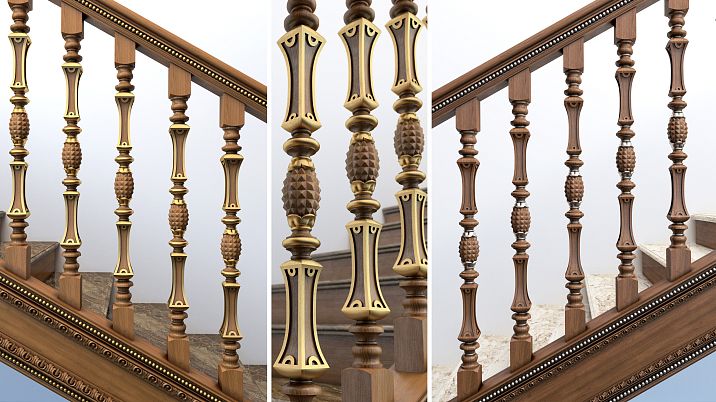
A wooden staircase is not just a functional structure connecting floors. It is part of the interior, capable of highlighting the homeowner's taste, adding warmth and coziness to the ambiance. It seems everything has already been invented: there are ready-made modular options, metal frames, and even glass solutions. But can they compare to the soulful atmosphere created by natural wood? The right approach to building a staircase from solid wood will make your home unique. In this article, I will tell you how to build a wooden staircase yourself, what to pay attention to when choosing materials, how to perform calculations, and what hardware you must purchase.
When starting work, many beginners make mistakes: they do not consider dimensions, choose wood incorrectly, forget about the quality of fasteners. Or they underestimate the importance of decorative elements, such as %sBalusters for staircase and handrails. But there is no need to be afraid. I intend to guide you through each step of this interesting journey — from measurements and design to final sanding and installation. Sometimes I will speak with challenge, as experience makes me strict and demanding. Sometimes I will soften my tone to support you in this difficult but exciting process. In the end, you will get a staircase you won’t want to hide behind a door or cover with rugs.


Preparation for Creating a Staircase




Determining the Type and Style of the Staircase
First, you should start by understanding what type of staircase you need. There are several main varieties:
- Straight-run: a classic construction in which steps form one or several runs. Suitable for spacious rooms.
- Helical: steps are attached in a circle around a central support. Ideal if you need to save space.
- On bolts: steps are held by special metal bolts (bolts), creating an effect of "floating" in the air.
. With these elements, you will be able to give the staircase a unique character, integrate it into the overall design of the house, and make the structure safe.staircase components. We provide the opportunityHandrails and balustersWith these elements, you will be able to give the staircase a unique character, integrate it into the overall design of the house, and make the structure safe.
The style of the staircase is usually dictated by the overall interior. If you have Scandinavian minimalism, choose light wood (pine, birch) and simple forms. For a classic style, oak or beech will work well, complemented by carved details. It is important to remember that a solid staircase always attracts attention, so be prepared to make it a central element of the room.
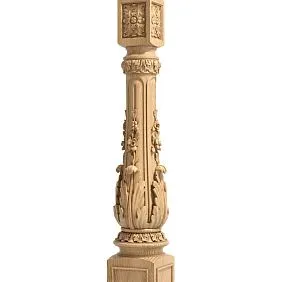
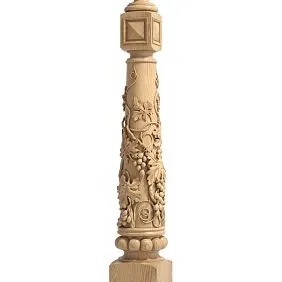
Our factory also produces:



Material and tool selection
The main material is wood. But here too there are nuances. If you want a cheap but sturdy staircase, choose pine. For a more "luxurious" option, oak, beech, or ash will do. It is very important that the wood is well dried: wet logs will warp over time, develop cracks, and all the beauty will be lost.
Tools needed:
● Tape measure, level, and square for precise measurements.
● Circular saw or jigsaw for cutting.
● Router for processing edges and creating decorative elements.
● Sander for finishing surfaces to smoothness.
● Drill and screwdriver for assembling the structure.
● Hand tools (hammer, chisel, screwdrivers).
Don't forget about fasteners (screws, brackets, anchors) and finishing materials: stains, varnishes, paints. All these details determine how sturdy and beautiful your staircase will be.
Get Consultation
Design and Calculations
Measuring and determining dimensions
Without precise measurements, the staircase may become a constant source of irritation. Too steep, too narrow, or steps that are too low or too high — all of this hinders comfortable movement and may be unsafe. You need to determine:
- The height between floors (from clean floor to clean floor of the upper level).
- The length of the opening (if the staircase is a straight run).
- The width of the run (usually no less than 80–90 cm for comfort).
Step count calculation: divide the total height by the assumed rise (usually 17–20 cm). Round the resulting number to the nearest whole number. The tread depth (horizontal part of the step) should be around 25–30 cm to ensure the foot fits completely on the step.
If you have a spiral staircase, calculations become more complex, as each step has a trapezoidal shape. But the basic principle remains the same: the larger the spiral diameter, the more comfortable it will be to climb. Do not economize on space, otherwise the staircase will become a dangerous "vertical spiral".
Role of balusters and handrails in the project
When the project is ready, it's time to think about safety. I always repeat: "Do not ignoreHandrails and balusters. They save lives and also decorate the interior." The correct height of the handrail is about 90–100 cm from the step. The distance between balusters also matters: to prevent children or pets from slipping through, the gap is usually no more than 10–12 cm.
hardwood species (oak, beech). For a more budget-friendly solution, pine is suitable. The shape of the balusters also varies: from simple cylindrical to ornate with carved elements. It is important that their style harmonizes with the overall design.Wooden balusters Technology of staircase assembly
Manufacturing stringers or treads
Depending on the type of staircase, you will need either treads or stringers. A tread is the side part to which steps are attached from the side. A stringer is the central load-bearing beam to which steps are attached from above. For straight runs, two stringers or two treads are usually used, although sometimes a third is added for reinforcement.
Marking: draw the step outline on the stock. It is important that the angle and dimensions match your calculations.
- Cutting: cut the notches for the steps (if it is a stringer). If it is a tread, make grooves for each step.
- Sanding: after cutting, carefully process the edges to avoid splinters and unevenness.
- Geometry check: place the tread (or stringer) vertically and ensure it matches the project dimensions.
- It is easy to make mistakes at this stage. It is better to double-check the marking several times than to redo the entire structure later. Remember: the quality of the base determines the longevity of your staircase.
At this stage, it is easy to make a mistake. It is better to check the layout several times than to have to redo the entire structure later. Remember: the quality of the foundation determines the longevity of your staircase.
Installing treads and risers
After preparing the load-bearing elements, you can proceed to the treads. Usually, they consist of a tread (horizontal part) and a riser (vertical part). Some modern designs omit risers, creating a sense of lightness. However, the classic version with risers is considered more reliable and safe.
- Mounting: screw the treads to the stringer or insert them into the mortises of the handrail.
- Riser: secure it from below the tread or fix it with special brackets.
- Fixation: use concealed-head screws so that the heads do not protrude above the surface. If necessary, fill holes with putty.
Do not be afraid to show creativity. If you want a warmer look, leave the wood in its natural color and apply a transparent varnish. If the interior requires a bright accent, paint the steps in vibrant colors.
Handrails and balusters: safety and aesthetics
Choosing and installing balusters
Now we move on to the most 'delicate' stage — installing balusters. The appearance of the entire staircase depends on which ones you choosebuy balustersbecause they not only support the handrails but also serve as decorative elements.
- Marking mounting locations: determine where the balusters will be placed. Consider the spacing between them to ensure the structure is safe.
- Installation: there are several methods. You can mount balusters on dowels (wooden cylindrical rods), metal spikes, or using special fasteners.
- Leveling: after securing each baluster, check its vertical alignment with a level.
If you haven't yet decided which onesWooden balusters will suit you, don't hesitate to consult professionals. The market offers a wide variety of options: turned, shaped, carved, rectangular. You canBuy wooden balusters purchase them ready-made or order a custom design based on your individual sketch. In any case, quality balusters are the guarantee of the staircase's longevity and beauty.
Installing handrails
After the balusters are securely fixed, you can install the handrails. They can be straight or shaped, solid or composed of several segments. Most often, handrails are mounted on top of balusters using screws or special mortises. It is important that the connection is strong and does not wobble.
- Fitting: if the handrails are assembled, ensure that the joints are even and well-fitted together.
- Mounting: use screws that can later be covered with decorative caps or filled with putty.
- Finishing: treat the handrails with stain, varnish, or paint to match the steps or, conversely, make them contrasting.
Remember thatHandrails and balusters They should look harmonious. Too ornate handrails with simple balusters may appear out of place, and vice versa. Play with shapes and shades, but do not forget about stylistic unity.
Final finishing and maintenance
Sanding, varnishing, painting
Once the structure is fully assembled, it is time for final finishing. The appearance of the staircase and its longevity depend on how carefully you perform this step.
- Sanding: run a sander over all surfaces, starting with coarse grit and gradually moving to finer grit. Pay special attention to corners and joints.
- Priming: if you plan to paint the staircase, it is better to apply a primer layer so that the paint adheres more evenly and lasts longer.
- Stain: allows you to highlight the wood's texture and give it the desired shade. Choose the color according to the overall interior color scheme.
- Varnishing: varnish protects wood from moisture, mechanical damage, and simplifies maintenance. Apply several layers with intermediate sanding.
- Painting: if you want a bolder solution, choose paint suitable for wood. But remember that bright colors may quickly become tiresome, whereas the natural wood grain is timeless.
Regular maintenance
To ensure your staircase lasts for decades, don't forget regular maintenance:
● Periodically wipe the steps andbalusters for staircase to buy dust off.
● Avoid aggressive cleaning agents that can damage the varnish.
● If chips or scratches appear, promptly touch up and re-varnish the damaged areas.
● If elements become loose, reinforce the fasteners.
All of this is not as difficult as it seems. Wood is a warm and forgiving material that responds beautifully to restoration. Even after many years, a staircase can look as if it were just built.
Additional tips and final thoughts
Where to buy components and how to save money
Today, the market offers numerous companies that providestaircase components. It's important to find the optimal balance of price and quality. As an SEO specialist with years of experience, I recommend carefully reading reviews and clarifying all details with the seller: from the type of wood to the methods of treatment.
If you wantbuy balusters For a low price, pay attention to promotional offers or sales. But don't chase the lowest price: low-quality wood may crack, and cheap hardware may rust quickly. It's better to invest once in good materials than to constantly redo everything later.
Secrets of longevity and style
● Proper microclimate: wood does not like sharp changes in humidity and temperature. If the house is too dry or too humid, the staircase may start creaking and warping.
● Regular inspection: inspect joints every six months, check for cracks, chips, or looseness.
● Timely restoration: it's easier to fix minor defects immediately rather than later dealing with major renovations.
● Play with decor: if the interior has changed, you can repaint the handrails or replace individual elements without altering the entire structure. Sometimes, simply changing the color of the steps is enough to refresh the design.
Conclusion
Creating a wooden staircase is a process requiring attention to detail, patience, and certain skills. But the result is worth it: you get not just a functional structure, but a true 'gem' of your home. A solid wood staircase can tell a story, as wood is 'alive' and retains the warmth of the craftsman's hands. And well-chosenHandrails and balusters will give your staircase individuality, ensure safety, and highlight the homeowner's taste.
If you doubt your abilities, don't hesitate to consult professionals or at least seek their advice. But remember: nothing is more satisfying than doing something yourself, especially if it will serve you every day and delight your eyes. You canbalusters for staircase to buy purchase components gradually as work progresses, or buy everything in advance. The key is not to fear experimenting, learning new things, and striving for perfection. After all, it is precisely this step-by-step process that creates a true masterpiece, which will delight you and your loved ones for many years.