Article Contents:
- Preparation Stage: From Concept to Technical Specification
- Artistic Concept Analysis
- Creating a technical specification
- Mockup Design: Checking the Concept in 3D
- Materials for Theater Set Production
- Wood: The Foundation of Classic Set Design
- Textiles: Lightness and Mobility
- Plastics and Composites: Technological Efficiency and Lightness
- Metal: Structural Strength
- Woodworking Technologies
- Material Cutting
- CNC milling: precision and productivity
- Laser Cutting: Delicate Precision
- Turning: Circular Forms
- Hand Carving: The Soul of the Piece
- Theater Set Construction
- Frame Structures: The Foundation of Pavilion Sets
- Disassemblable Structures: Requirements for Touring Theaters
- Stability Calculations: Safety Above All
- Final Finishing: From Wood to Artistic Form
- Surface Preparation: The Foundation of Quality
- Painting Techniques: Color and Texture
- Protective Coatings: Durability and Safety
- Specialized Theater Set Elements
- Columns and Pilasters: Architectural Verticality
- Arches and Portals: Framing Space
- Balustrades and Railing: Functional Decorativeness
- Stairs: Dynamics of Vertical Movement
- Quality control and certification
- Multi-Level Production Control
- Certification and Documentation
- Logistics and installation
- Packaging for Transportation
- Stage Assembly
- Frequently Asked Questions
- How long does it take to manufacture theater decorations?
- What materials are used to manufacture theater decorations?
- How is fire safety ensured for theater decorations?
- Can stage sets be made based on photos from other performances?
- How do decorations for dramatic and musical theaters differ?
- How to care for wooden theater decorations?
- What equipment is needed to produce theater decorations?
- Are special skills required for installing theater decorations?
- How much do wooden theater decorations weigh?
- What is the cost of custom-made theater decorations?
- Modern trends in theater decoration production
- Digital technologies: from sketch to finished product
- Ecological sustainability and development
- Modularity and universality
- Integration of technologies: projections and interactivity
- Conclusion: STAVROS — technology and tradition in unity

Stage decoration productionIt is a complex technological process where engineering, artistic craftsmanship, and understanding of stage art intersect. Each decoration goes through a path from a conceptual sketch to a finished product installed on stage, passing through dozens of technological operations. An error at any stage may result in schedule delays, artistic concept mismatch, or operational problems.
Modern technologies have radically changed the approach to creating theater decorations. CNC machines cut shapes unattainable with manual tools. Laser systems create intricate elements with perfect precision. Digital printing reproduces photorealistic images on textiles. But technology has not replaced humans — it has expanded their capabilities. Final finishing, artistic painting, assembly, and installation are still performed by artisans, for whom each decoration is a personal project.
Wooden decoration manufacturingWood remains a classic in theater production. Wood combines strength, ease of processing, durability, and the possibility of fine artistic finishing. Properly manufactured wooden decorations serve for decades, surviving hundreds of performances without loss of visual quality. But creating such decorations requires deep understanding of the material, mastery of processing technologies, and strict adherence to quality standards.




Preparation stage: from concept to technical specification
Any production begins with a clear understanding of the task. For theater decorations, this is especially critical — the artistic concept must be translated into the language of technology, materials, and construction.




Artistic concept analysis
The stage director creates sketches visualizing the stage space. Sketches show the overall appearance, color palette, style, and character of the decorations. But a sketch is an artistic vision, not a technical document. The production department's task is to understand how to realize this vision in material.
First question — scale. What are the actual dimensions of the elements? A column on a sketch appears a certain way, but the stage height dictates specific dimensions. If the stage mirror height is 5 meters, the column may be 4–4.5 meters. If 8 meters — up to 7 meters. Scale affects construction, weight, cost, and manufacturing technology.
Second question — functionality. Is the decoration purely visual, or do actors interact with it? If it's just a backdrop, the construction can be lightweight. If an actor leans on it, sits on it, or climbs a staircase — reinforced structures, load calculations, and higher safety standards are required.
Third question — mobility. Is the decoration stationary for the entire performance, or does it change between acts? If it changes — how quickly? Fast changes require a well-thought-out construction with quick-release fasteners, lightweight materials, and ergonomic design for stage crew.
Fourth question — budget. Artistic ideals often exceed financial capabilities. The production department seeks compromises: where cheaper materials can be used without sacrificing quality, where construction can be simplified, where imitation can replace expensive originals.
Our factory also produces:


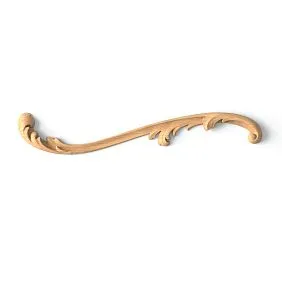
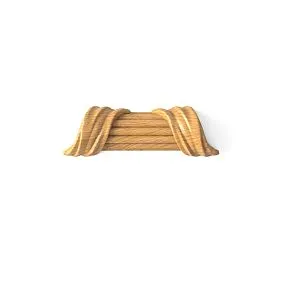
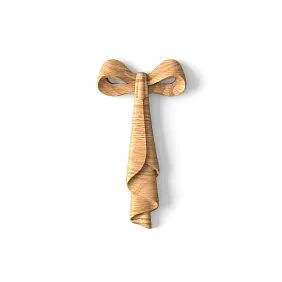


Creating a technical specification
After analyzing the concept, a technical specification is formulated — a document describing exactly what needs to be manufactured. The technical specification includes:
List of elements with names and brief descriptions. For example: "Doric column, height 4200 mm, diameter 350 mm, fluted, carved base and capital, marble finish". Clear nomenclature prevents confusion.
Materials for each element. "Frame — 50×50 mm spruce beam, cladding — 8 mm birch plywood, capital — linden solid wood, finish — acrylic paint, varnish". Material specifications are needed for procurement and cost calculation.
Constructive requirements. "Disassemblable structure, section connection using M8 bolts, stability without additional fasteners, mass not exceeding 35 kg". Engineering parameters determine the manufacturing technology.
Aesthetic requirements. "Color — Carrara marble with gray veins, capital with acanthus leaves, dark gray patina in recesses". Visual characteristics for stage designers.
Manufacturing timelines and priorities. Which elements are critical for starting rehearsals, which can wait. The schedule is synchronized with the theater's rehearsal process.
Safety requirements. Fire-retardant treatment, certification, absence of sharp edges, strength calculations — all are regulated in the Technical Specification.
Get Consultation
Modeling: checking the concept in 3D
For complex scenery, a 1:10 or 1:20 scale model is created. The model is a miniature replica of the future stage design, allowing to see the volumetric composition, check proportions, evaluate the relative positioning of elements.
Models are made from cardboard, foam board, balsa, plastic. Modern technologies complement traditional modeling: 3D printing creates complex shapes faster than manual work. However, traditional handcrafted modeling remains relevant — tactile contact with materials provides understanding that cannot be replaced by a computer screen.
The model allows the director and designer to see how the stage will look. Sometimes, what looks great on a flat sketch behaves differently in three dimensions. The model reveals problems: overcrowded space, poor proportions, conflicts between elements. Corrections at the model stage cost pennies. Corrections to finished scenery — thousands.
The model is used for lighting planning. The lighting designer experiments with miniature light sources, checks how shadows fall on the scenery, where dark zones form, which elements require accent lighting. This saves hours of precious stage time.
Materials for manufacturing theatrical scenery
Material selection determines the processing technology, characteristics of the finished product, cost, and durability.Stage decoration productionUses a wide range of materials, each with its own advantages and limitations.
Wood: the basis of classical scenery
Solid wood is used for elements requiring strength, durability, and deep carving. The choice of wood species depends on the element's function.
Linden is a classic material for carving. Soft, uniform, without pronounced grain, easy to cut, produces clean lines.Carving decorative sceneryThis usually means working primarily with linden. Capitals of columns, decorative panels, ornaments, applied elements — all are carved from linden. The disadvantage is relatively low strength, but for decorative elements this is not critical.
Oak — a strong hardwood with distinctive grain. Used for elements subjected to load: railings, handrails, staircase steps, load-bearing components. Oak is heavier than linden, harder to process, more expensive. However, oak's durability is unmatched among deciduous woods.
Spruce and pine — coniferous species, optimal for structural elements. Used to make frames, frames, stands, supports. Coniferous wood is light, strong, affordable, and easy to process. Spruce resin requires additional treatment before painting — degreasing and priming.
Birch — a hard deciduous wood, versatile for various tasks. Birch components are stronger than spruce but lighter than oak. Birch is well-suited for turning, milling, and holding shape. Used to make turned balusters, milled moldings, structural elements.
Plywood — a layered material made of veneer glued perpendicularly. Plywood combines the strength of solid wood with geometric stability — it does not warp, crack, or lose flatness.
Birch plywood — standard for theatrical scenery. Strong, with smooth surface, easily bends, holds fasteners. Thickness is selected based on purpose: 4–6 mm for curved surfaces, 8–12 mm for flat scenery, 15–18 mm for structural elements.
Plywood bonded with phenolic resin (PF) is used for interior work. Safe, odorless, but moisture-sensitive. Plywood bonded with water-resistant phenolic resin (PFO) is used when scenery is exposed to variable humidity.
MDF (fine particle board) — compressed wood dust. Homogeneous material without knots or voids. MDF provides an ideal smooth surface, mills excellently, creating relief elements. Used for flat scenery, relief panels, painting bases. Shortcoming — moisture-sensitive, swells irreversibly when wet. MDF is heavier than plywood.
Curved plywood — a special technology where thin veneer layers are glued onto a mold, creating a high-strength curved surface. Used to create cylindrical elements (column shafts), arches, domes. More expensive than regular plywood, but provides unmatched quality for complex shapes.
Textile: lightness and mobility
Textile scenery — a tradition remaining relevant. Modern technologies (digital printing, fire-retardant impregnation, synthetic materials) have expanded the possibilities of textile scenery.
Theatrical canvas — dense cotton fabric stretched over frames. Classic material for painted backdrops. The artist works on canvas with tempera or acrylic paints, creating painted panels. Canvas is stretched taut, primed, painted, and treated with fire-retardant compounds.
Moleskin — dense cotton fabric with smooth surface. Used for backdrops, stage costumes, drapery. Moleskin holds shape well, does not sag, suitable for printing and painting.
Gabardine — fabric with diagonal weave, dense, with characteristic texture. Used for backdrops, side curtains, upper panels. Gabardine is less translucent than thinner fabrics.
Theatrical tulle — transparent mesh fabric. Used for creating effects: fog, haze, projection screen. Tulle can be black (absorbs light, creates an illusion of emptiness) or white (projection screen, transparent drape).
Banner fabric — synthetic material (PVC or polyester) for digital printing. Ideal flat surface, high print resolution, water resistance. Drawback — characteristic sheen revealing synthetic nature. For touring decorations, outdoor events, short-term projects, banner fabric is optimal.
Plastics and composites: technological efficiency and lightness
Polystyrene (expanded polystyrene) — lightweight cellular material, cut with hot wire or milled on CNC machines. Expanded polystyrene is used to make volumetric elements: rocks, columns, architectural details. Polystyrene requires mandatory processing: spackling, priming, painting, fire-retardant treatment. Fragile, easily damaged, but acceptable for short-term projects with limited budgets.
Extruded polystyrene (penoplex) — denser and stronger than regular polystyrene. Better retains shape, less prone to crumbling, smoother surface. More expensive than polystyrene, but preferable for critical elements.
Polyurethane — material for casting decorative elements. Liquid polyurethane is poured into silicone molds, hardens, forming a lightweight, durable part. The technology allows mass production of complex elements: capitals, rosettes, ornaments. Polyurethane elements are glued onto wooden bases, creating the illusion of solid carving at lower cost.
Thermoplastics (plastic cardboard, PVC sheets) — bend when heated, retain shape after cooling. Used for creating curved surfaces, volumetric forms. Lightweight, water-resistant, but require special equipment for molding.
Metal: structural strength
Metal elements are primarily used for hidden structures — frames, fasteners, reinforcements.
Profiled tube — steel or aluminum tubes with rectangular or square cross-section. Profiles are welded into frames for tall columns, large-span arches, multi-level structures. Steel is stronger but heavier. Aluminum is lighter but more expensive and requires special welding.
Reinforcement — steel rods used for reinforcement and creating hidden supports. For example, tall narrow decorations are reinforced with vertical rods to prevent bending.
Fasteners — bolts, nuts, screws, angles, plates. Fastener quality is critically important for safety. Galvanized or stainless steel fasteners are used, resistant to corrosion.
Woodworking technologies
Wooden decoration manufacturingIncludes numerous technological operations, each requiring specialized equipment and skills.
Material Cutting
First operation — cutting blanks. Sheet materials (plywood, MDF) are cut to element dimensions. Solid wood is sawn into blanks of required length and cross-section.
Format-cutting machines ensure precise straight-line cuts for sheet materials. A movable carriage with a saw blade cuts sheets up to 3×2 meters with millimeter accuracy. Parallel fence ensures parallel cuts.
Circular saws are used for cutting solid wood, beams, boards. Powerful motor and large blade ensure cutting thick blanks. Angular fence allows precise angled cuts.
Miter saws — specialized tool for precise miter cuts at specified angles. Critically important for making frames and frames, where angle accuracy determines assembly quality.
Jigsaws are used for curved cuts. Complex-shaped flat decorations are cut with a jigsaw. Modern jigsaws with pendulum action cleanly and quickly cut plywood up to 20 mm thick.
Band saws cut thick solid wood along curved trajectories. Narrow blade allows sharp turns. Used for cutting complex shapes from solid wood.
CNC milling: precision and productivity
CNC milling revolutionized the production of wooden decorations. CNC milling machine — a machine where the cutter moves along a trajectory defined by a computer program, creating relief elements, cutting complex shapes, and processing surfaces with precision unattainable with manual tools.
CNC milling process begins with a 3D model. The designer creates the element model in a 3D modeling program. The model is converted into a control program (G-code), which is loaded into the machine. The cutter removes material layer by layer, reproducing the desired shape.
Types of milling operations:
-
Contour cutting — cutting flat parts of complex shape. The cutter moves along the contour, cutting material through.
-
Relief milling — creating volumetric forms of variable depth. The cutter moves along a complex 3D trajectory, forming relief.
-
Engraving — applying fine lines, text, patterns with a small-diameter fine cutter.
-
Pocket milling — creating slots, recesses, grooves of specified shape and depth.
Advantages of CNC milling:
-
Accuracy up to 0.1 mm — element geometry is ideal
-
Repeatability — the machine will produce 100 identical parts
-
Complex shapes — shapes impossible to achieve manually
-
Speed — milling is vastly faster than manual carving
-
Safety — the operator does not come into contact with cutting tools
CNC Limitations:
-
The smallest diameter cutter (usually 3-6 mm) cannot produce thinner parts
-
Deep narrow grooves are inaccessible due to cutter length
-
Cutter marks require final grinding
-
Complex undercutting, characteristic of manual carving, is impossible
Optimal strategy — rough milling on CNC, final finishing by hand. The machine does 80-90% of the work, the craftsman finishes 10-20%, giving the element liveliness that a machine cannot create.
Laser cutting: delicate precision
The laser cutter cuts wood with a focused high-power beam. The beam melts the material, creating perfectly clean edges. The laser is indispensable for creating delicate elements, pierced panels, complex ornaments.
Advantages of laser cutting:
-
Finest lines — beam diameter of a fraction of a millimeter
-
Most complex contours — any curves, angles, closed contours
-
Cutting precision — edges are sealed, no further processing required
-
Speed — the laser cuts faster than any mechanical tool
Laser Limitations:
-
Material thickness — usually up to 10-15 mm for wood
-
Charred edges — characteristic effect of laser cutting
-
Odor — the process is accompanied by the smell of burned wood
-
Equipment cost — laser cutters are more expensive than milling machines
Laser is ideal for flat pierced elements: inset panels, decorative grilles, delicate inlays for furniture, complex stencils.
Turning: round shapes
The turning lathe creates rotational parts: balusters, columns, turned capitals, round legs. The blank rotates, the tool removes material, forming the profile.
Traditional turning is performed manually by the craftsman. The turner holds the tool, controls material removal, creates the shape, referring to a template or drawing. Requires high skill, but provides uniqueness — each part is slightly different, has individuality.
Copying lathes are equipped with a stylus that traces the template, and the tool replicates the stylus movements. Precise reproduction of the standard, mass production of identical parts.
CNC turning lathes operate according to a program, creating parts of the specified profile with high precision. Complex profiles, impossible to achieve manually, combinations of turning and milling in one setup.
For theatrical decorations, turning is used for balusters, turned columns of small diameter, decorative round elements, handles, finials.
Hand carving: the soul of the piece
Despite automation, hand carving retains its place in productioncarved decorations. There are elements that cannot or are economically impractical to make on machines: small unique details, fine finishing of forms, creating complex recesses, patination of carvings.
Carver's tools — chisels of various profiles (straight, semi-circular, angles, clefts), gouges, and gouge knives. Each tool solves specific tasks. An experienced carver masters dozens of tools, sharpens them to razor edge, feels the wood, knows how it will behave under the chisel.
Carving techniques:
-
Flat relief carving — the background is selected at a shallow depth (5-15 mm), the pattern rises above the background
-
Deep relief carving — the background is not selected, the pattern is carved into the surface
-
Openwork carving — the background is completely removed, the pattern is through
-
Three-dimensional carving — a fully developed sculpture, worked on from all sides
Hand carving requires time. A square meter of average relief is created by a carver in 20-40 hours. Complex high relief with fine details — 60-100 hours and more. This explains the high cost of carved decoration. But the result possesses liveliness that a machine cannot create. It is evident that a person, who poured their soul into it, worked here.
Designing theatrical decorations
A decoration is not just a set of parts, but a structure that must be strong, lightweight, easy to assemble, and safe for actors.
Frame structures: the basis of pavilion decorations
Most three-dimensional theatrical decorations are frame-based. The load-bearing frame ensures strength, while the cladding provides shape and appearance.
Frame structures from timber — a classic solution. Timber with cross-sections of 40×40, 50×50, or 60×40 mm is assembled into a frame, clad with plywood or MDF. Joints are made using dowels, mortise-and-tenon joints, reinforced with glue and self-tapping screws. A properly assembled wooden frame is strong, lightweight, and repairable.
Metal frame structures are used for tall or heavily loaded constructions. Profiled tubes of 20×20, 25×25, or 30×30 mm are welded into a frame. Metal provides maximum strength with minimal weight. Cladding is attached to the metal frame using metal self-tapping screws. Drawbacks — welding is required, metal may resonate under impact, and it is heavier than wood.
Combined frame structures — wooden base with metal reinforcements at critical points. Optimal balance of strength, weight, and technological feasibility.
Disassemblable structures: requirements for touring theaters
Touring theaters and traveling troupes require disassemblable decorations, compactly packed and quickly assembled at a new location.
Requirements for disassemblable decorations:
-
Number of parts is minimal — fewer parts, less assembly time
-
Joints are quick-release — without tools or with minimal toolset
-
Joints are inconspicuous — disassemblable structure should not look disassemblable
-
Assembly markings — each part is marked, assembly diagram is provided
-
Packaging is thought out — each element has its place in the case
Connection systems:
-
Flanged — sections connect via flanges and are secured with bolts. Reliable, but requires tools.
-
Pin-and-socket — pins from one section fit into sockets of another, secured with split pins or latches. Fast, but limited in strength.
-
Magnetic — powerful neodymium magnets hold sections. Instant assembly, but expensive and suitable only for lightweight elements.
-
Bayonet — rotating connection, like on camera lenses. Fast, reliable, and technologically efficient.
Stability calculation: safety first
Falling decoration — catastrophe. Actor injuries, show cancellation, reputational damage. Decoration stability is calculated with a multiple safety factor.
Factors of stability:
-
Center of gravity — the lower it is, the more stable the structure
-
Base area — the wider the base, the more stable
-
Mass distribution — heavy elements at the bottom, light ones at the top
-
Fasteners — additional fasteners to the platform or adjacent decorations
Methods of ensuring stability:
-
Wide bases — column base 2-3 times wider than the top
-
Weights — sandbags, metal plates on the base
-
Tension lines — thin ropes or cords attaching the decoration to the grid
-
Fasteners to the platform — screws, bolts (requires theater approval)
For decorations that actors interact with, stability is tested: possible impacts (leaning, pushing, jerking) are simulated, and the structure must withstand them without tipping over.
Final finishing: from wood to artistic form
Quality finishing transforms a wooden structure into a piece of scenic art.Stage decoration productiondevotes as much attention to finishing as to construction.
Surface preparation: the foundation of quality
Sanding — the first stage of finishing. Sequential processing with progressively finer grits removes tool marks, smooths irregularities, and creates a smooth base for painting.
Sanding stages:
-
Coarse (P80-P120) — removal of obvious defects, saw marks, dents
-
Medium (P150-P180) — surface leveling
-
Final (P220-P320) — creation of an ideally smooth surface
Sanding is a labor-intensive operation. A square meter of flat surface takes 20-30 minutes to sand. Relief elements take longer — each indentation and protrusion is processed. Corners, ends, and edges require special attention — it is precisely these areas that reveal poor workmanship.
Putty fills minor defects, cracks, and joints. Acrylic putty for wood is applied with a putty knife, smoothed, and sanded after drying. For larger defects, epoxy putty is used — stronger, but more difficult to process.
Priming — mandatory stage. Acrylic primer seals wood pores, equalizes absorption, and improves paint adhesion. Primer is applied with a brush, roller, or spray gun, dries in 1-2 hours. After priming, the surface is sanded again with fine grit (P320-P400) — primer raises the wood grain.
Painting techniques: color and texture
Opaquing paint — application of opaque paint that completely hides wood texture. Acrylic paints are standard for theatrical decorations. They dry quickly (30-60 minutes between coats), have no odor, are safe, provide vibrant saturated colors, and are easily tinted.
Painting technology:
-
First coat — base coat, establishes primary color, applied evenly
-
Intermediate sanding (P400) — removes roughness, improves adhesion
-
Second coat — levels color, removes streaks
-
Third layer (optional) — final, creates color depth
Paint is applied with a brush (for relief elements, corners, complex shapes), roller (for large flat surfaces), or spray gun (for perfectly even coverage of large areas).
Painting — application of the artist's design. Theater painting includes many techniques:
Marble imitation — imitation of veins and color transitions characteristic of natural stone. The artist repeatedly overlays semi-transparent paints to create depth. Fine brushes are used to outline veins. Lacquers (semi-transparent layers) create color transitions. The result — a convincing illusion of marble from a distance.
Wood imitation — imitation of the texture of valuable woods (oak, walnut, mahogany). The base color is covered with a tinted glaze, which is partially removed with a rubber comb, sponge, or cloth, creating a wood grain pattern.
Decorative painting — ornaments, patterns, images. The artist works from a stencil or freehand, creating unique elements.Carving decorative sceneryWith painting — means achieving a symbiosis of relief and color, where painting emphasizes the carving, and carving enriches the painting.
Patination creates an effect of antiquity. The base color is covered with a darker paint (patina), which partially wears off, remaining in the recesses of the relief. This creates an effect of accumulated dirt, oxidation, and natural aging in the folds of the ornament.
Multi-color patination uses 2-3 patinas of different tones: dark in recesses, medium on main surfaces, light on protrusions. This creates richness of tonal transitions, visual complexity, and an illusion of ancient age.
Gilding — the pinnacle of decorative finishing. Real gold is used rarely (expensive); more often, leaf (gold imitation) or gold paint is used.
Leaf technology:
-
The surface is covered with mordant glue (special glue for gilding)
-
When the mordant reaches the desired tackiness, leaf sheets are applied
-
The leaf is gently pressed with a soft brush
-
Excess is removed after drying
-
Gilding is polished with an agate brush or soft cloth
-
Final shellac coating protects against oxidation
Gilding of Corinthian column capitals, carved cornices, decorative panels — a classic technique creating luxury, grandeur, and solemnity.
Protective coatings: durability and safety
Lacquering protects the finish from abrasion, dirt, and moisture. Water-based acrylic lacquers provide a transparent coating, do not yellow, and dry quickly. Matte lacquer preserves the natural appearance, glossy adds shine, semi-gloss is a compromise.
Lacquer is applied in 2-3 layers with intermediate sanding. The first layer absorbs, the second creates a protective film, the third enhances protection. For floor elements (practicals, stairs), high-strength parquet lacquers are used.
Fire-retardant treatment — mandatory requirement for theater decorations. All wooden elements are impregnated with fire-retardant compositions, reducing flammability to class G1 (slightly flammable).
Types of fire-retardant treatment:
-
Impregnations — liquid compositions absorbed into wood. Applied with a brush, roller, or dipping. Penetration depth 2-5 mm.
-
Coatings — film-forming compositions creating a protective layer on the surface. Layer thickness 0.1-0.3 mm.
-
Lacquers — fire-retardant lacquers combining fire protection with decorative function.
Fire-retardant treatment is certified. Each batch of decorations is issued a passport specifying the composition used, date of treatment, flammability class, and validity period (usually 1-3 years, after which re-treatment is required).
Specialized elements of theater decorations
Columns and pilasters: architectural vertical
Columns — a classic element of theater decorations, creating architectural structure, setting scale, and defining style.
Theatrical column construction:
-
Internal frame made of timber or metal pipe — provides rigidity
-
Cladding made of bent plywood — creates the cylindrical shape of the shaft
-
Base — turned or assembled, reinforced, ensures stability
-
Capital — carved or assembled from a turned base and attached carved elements
-
Fluting — CNC milled or glued-on decorative strips
Tall columns (over 3 meters) are made disassemblable: shaft from 2-3 sections, base and capital separately. Connections via flanges or sleeves. Section weight should not exceed 20-25 kg — limit for comfortable single-person handling.
Pilasters are simpler than columns: flat panel made of plywood or MDF, to which base, capital, and attached decorative elements are mounted. Pilasters save stage space, are cheaper than columns, but create a similar architectural effect.
Arcs and portals: framing space
Arcs structure the stage, create portals, frame areas of action. Arc construction: vertical posts (pilasters), arched vault, decorative framing.
Arc shapes:
-
Semicircular — classical, radius equals half the width of the opening
-
Pointed — Gothic, two arches converging at an angle
-
Elliptical — elongated vertically or horizontally
-
Crescent-shaped — Eastern, arch greater than a semicircle
-
Segmental — segment of a circle, less than a semicircle
Arched vault is made from bent plywood (for smooth arches) or assembled from segments (for decorated arches). Decorative framing — archivolts (profiled framing around the opening) with carved elements, rosettes, and keystone.
Balustrades and railings: functional decoration
Guardrails for balconies, staircases, terraces. Balustrade consists of balusters (vertical posts), handrail (top rail), and base.
Balusters are turned on a lathe according to a template. For mass production, copying or CNC lathes are used, ensuring identical balusters. Distance between balusters 10-15 cm — sufficient for visual lightness, yet safe.
Theatrical balustrades must withstand load — actors lean on railings. Reinforced fasteners, connections via dowels and glue with additional fixation using screws. Handrail made of hardwood (oak, beech), base securely attached to stage floor or platform.
Staircases: dynamics of vertical movement
Theatrical staircases — not just functional elements, but scenic tools. Key scenes unfold on staircases; they create multi-levelness and dynamism.
Safety requirements for theatrical staircases:
-
Riser height 15-18 cm — comfortable ascent without stumbling
-
Tread width 28-32 cm — full foot becomes stable
-
Slope angle 25-35° — safe ascent and descent
-
Anti-slip surface — glued abrasive tape or grooves
-
Strong railings 90-100 cm high — reliable support
Construction: stringers (side beams) made of strong wood or metal, treads made of 15-18 mm plywood or solid wood, fastened with bolts or tenons. For tall staircases (more than 8-10 steps), rest platforms are installed.
Multi-level production control
Quality control and certification
Multi-level production control
Quality is established at each stage, not checked at the end.Stage decoration productionincludes control system:
Incoming material control. Incoming materials are checked for compliance with standards. Wood moisture (should be 8-12%), presence of defects (cracks, knots, rot), geometry of sheet materials (flatness, dimensions). Defective materials are returned to the supplier or disposed of.
Operational control. After each technological operation, quality is checked. After cutting — geometry of parts. After milling — conformity to the model, absence of chips. After assembly — strength of joints, absence of misalignment. After painting — uniformity of coating, absence of drips.
Final acceptance. The finished product undergoes comprehensive inspection: visual inspection, strength testing, completeness check, verification against the technical specification. Identified defects are corrected before shipment.
Certification and documentation
Fire safety certificate confirms that decorations are treated with fire-retardant compounds and meet a flammability class no lower than G1. Includes: item name, used compound, treatment date, flammability class, validity period, executor details.
Product passport contains: item name, dimensions, weight, materials, construction features, installation instructions, usage rules, warranty obligations. The passport is attached to each decoration set.
Assembly diagram — drawing showing how to assemble disassemblable elements, locations of mounting points, type of fasteners used. The diagram marks parts, shows assembly sequence, indicates required tools.
Warranty on theater decorations is typically 12-24 months under proper usage conditions. Warranty covers manufacturing defects but does not cover damage from improper handling, storage in unsuitable conditions, or unauthorized repairs.
Logistics and installation
Packaging for transportation
Fragile carved elements require protection. Each element is wrapped in bubble wrap, cardboard spacers separate them, and they are placed in boxes with soft inserts. Large elements (columns, arches) are packed in wooden frames.
Specialized transport cases are made for touring theaters: sturdy plywood or plastic boxes with foam inserts, where each element has its designated place. Wheeled, handle-equipped, lockable cases turn decoration transport from a nightmare into a routine operation.
Stage mounting
Mounting is performed by manufacturer specialists in collaboration with the theater’s technical staff. Sequence:
-
Layout planning according to the mounting plan. Checking that all elements fit and do not create conflicts.
-
Stage preparation: marking installation points, preparing fasteners, checking feasibility of suspension.
-
Installation of elements in sequence from large to small, from background to foreground.
-
Mounting and securing: weights, mounting to panels, tensioning to lattices.
-
Stability check: simulating possible impacts, adjusting fasteners.
-
Final finishing: touch-up of transport-related scratches, cleaning, lighting check.
-
Training of theater technical staff on operating, dismantling, and storage rules.
Frequently asked questions
How long does it take to manufacture theater decorations?
The timeframe depends on complexity and volume. A simple set of decorations (5-7 medium-complexity elements) takes 4-6 weeks. A medium set with architectural elements, carved decoration, and complex finishing requires 8-12 weeks. A large-scale project with numerous unique elements, intricate carving, and gilding may take 3-4 months. Orders should be planned at least 2-3 months before the premiere, ideally 4-6 months in advance.
What materials are used to manufacture theater decorations?
Primary materials: solid wood (lime for carving, pine for frames, oak for load-bearing elements), plywood (birch for cladding and structural elements), MDF (for relief panels), textiles (canvas, moleskin, gabardine, tulle), polystyrene and polyurethane (for lightweight volumetric elements). Material selection is determined by the element’s function, budget, and durability requirements. Often, combinations of materials are used to optimize properties.
How is fire safety ensured for theater decorations?
All wooden elements are treated with fire-retardant impregnations or coatings, reducing flammability to class G1 (slightly flammable). Textiles are impregnated with flame retardants. Fire-retardant treatment is certified, and each batch is accompanied by a passport specifying the compound, treatment date, flammability class, and validity period. Treatment is periodically renewed (every 1-3 years depending on the compound). Without fire safety certificates, theaters are not permitted to operate decorations.
It is technically possible to create scenery inspired by other works, but direct copying is illegal. Stage design is protected by copyright belonging to the scenic designer. Copying without the author's permission violates the law and professional ethics. Legal options: commission original design, obtain permission from the original author, create a work "inspired by" with significant modifications. Professional manufacturers refuse orders to copy others' works without permission.
Musical theater (opera, ballet, musical) requires more elaborate, decorative solutions. Large forms, bright colors, abundance of details — everything must be readable from a distance (opera houses accommodate 1000–2000 spectators). Dramatic theater tends toward more intimate, psychological solutions. Less ornamentation, more conceptual weight per element. Musical theater uses more textiles, dramatic theater — more structural elements. But these are general trends; specific solutions are determined by the production's concept.
How do scenery for dramatic and musical theater differ?
Musical theater (opera, ballet, musical) requires more elaborate, decorative solutions. Large forms, bright colors, abundance of details — everything must be readable from a distance (opera houses accommodate 1000–2000 spectators). Dramatic theater tends toward more intimate, psychological solutions. Less ornamentation, more conceptual weight per element. Musical theater uses more textiles, dramatic theater — more structural elements. But these are general trends; specific solutions are determined by the production's concept.
How to care for wooden theatrical sets?
How to store wooden scenery?
What equipment is needed to produce theatrical scenery?
Are special skills required for assembling theatrical scenery?
Are special skills required for installing theater decorations?
Simple decorations can be installed by theater technical staff following instructions and diagrams. Complex structures (tall columns, arches, multi-level pavilions) require the involvement of manufacturer specialists. Critical skills include: reading assembly diagrams, understanding fastening systems, assessing stability, working with tools, and safety techniques. The first installation of a new set of decorations is preferably conducted under the guidance of manufacturer representatives, who will train theater personnel in proper methods. After training, technical services can independently install and dismantle decorations for repertoire changes.
How much do wooden theatrical scenery weigh?
Weight depends on size and construction. A flat decoration 2.5 meters high made of 10 mm plywood weighs 15-25 kg. A 3.5-meter-high hollow column weighs 25-40 kg. A 3-meter-wide arch weighs 40-60 kg. A 4×3 meter pavilion wall weighs 60-90 kg. Demountable elements are designed so that each section weighs no more than 25-30 kg—the maximum for comfortable carrying by two people. For heavy elements, sling attachment points are provided to allow the use of theater hoists.
What is the cost of custom theatrical scenery production?
Cost is determined by complexity, materials, and scope of work. Approximate prices: a simple flat plywood decoration with painting—8,000-15,000 rubles per element. A medium-complexity column 3-4 meters high—40,000-80,000 rubles. A carved column with an elaborate capital—100,000-200,000 rubles. A decorated arch—80,000-150,000 rubles. A pavilion decoration (set of walls, doors, windows)—300,000-600,000 rubles. A full set of decorations for a performance—from 400,000 to 3,000,000 rubles depending on scale. An exact estimate is prepared after developing the technical specifications.
Modern trends in theatrical scenery production
Integrates digital technologies at all stages. 3D modeling allows creating detailed virtual prototypes, visualizing scenery in the context of the stage, identifying issues before manufacturing begins.
ModernStage decoration production3D modeling software (SketchUp, Blender, Rhinoceros, AutoCAD) creates accurate models of elements. Models are used for material calculations, generating CNC control programs, and creating photorealistic visualizations for client approval.
Virtual reality allows the director and designer to "enter" the future scenery, assessing scale, proportions, and element placement. VR technologies reduce error risk and save time on revisions.
The theater community is increasingly paying attention to ecology.
Ecological Sustainability
Aligns with the sustainable development trend: wood is a renewable resource, biodegradable material, carbon-neutral when managed properly.Wooden decoration manufacturingResponsible manufacturers use wood certified by FSC (Forest Stewardship Council), confirming origin from sustainably managed forests. Production waste (sawdust, offcuts) is not discarded but used to produce fuel briquettes, compost, or mulch.
Water-based paints and varnishes replace toxic solvents. Fire-retardant compounds are chosen to be eco-friendly and safe for humans and nature. Packaging is minimized, and reusable transport cases replace single-use frames.
Water-based paints and varnishes replace toxic solvents. Fire-retardant compounds are chosen to be eco-friendly and safe for humans and nature. Packaging is minimized, and reusable transport cases are used instead of disposable crating.
Modularity and versatility
Budget constraints encourage the creation of modular scenery adaptable for different productions. Universal panels with mounting systems for removable elements. Basic architectural forms, changing character through interchangeable overlays, repainting, or drapery.
Modular approach optimizes investments: theaters purchase a basic set of elements used in dozens of productions, supplemented by specific details for each show. Significant savings are achieved while maintaining visual diversity.
Integration of technologies: projections and interactivity
Physical scenery is supplemented by digital projections, creating dynamic backdrops, effects, and visual accents. The projector is directed at a white surface of the scenery, the image changes in real time, synchronized with the action.
Interactive elements — scenery responding to actors' actions: doors that open automatically, windows that light up on approach, elements that change color. Electronics, motors, sensors are integrated into traditional wooden structures, creating hybrid solutions.
LED lighting is embedded into scenery: columns with internal lighting, arches with LED strips, panels with backlighting. Light becomes part of the scenery, controlled by the lighting designer.
Conclusion: STAVROS — technologies and traditions in unity
Wooden decoration manufacturingIt is an art where technology serves creativity, and craftsmanship realizes the artist's vision. High-quality theatrical decorations are created at the intersection of engineering calculations, advanced processing technologies, classical craftsmanship techniques, and artistic taste.
Stage decoration productionIt requires a comprehensive approach: understanding the specifics of theater, proficiency in woodworking technologies, experience in constructing complex forms, skills in finishing, and adherence to safety standards. Finding a manufacturer combining all these competencies is no easy task.
Carving decorative sceneryCompanies of the highest quality are those for whom working with wood is not merely a business, but a calling. Companies where every item is created with a sense of responsibility, where quality compromises are not tolerated, where traditional craftsmanship merges with modern technologies.
In this context, the company STAVROS occupies a unique position in the market. It is a manufacturer for whom wood is a native element, a material known, felt, and understood at all levels — from the structure of fibers to the philosophy of form.
STAVROS specializes in creating items from solid wood, requiring the highest level of craftsmanship. The company works on the most complex projects, where there is no room for error. Participation inreconstruction of the Alexandrovsky Palacea museum-level project, controlled by expert conservators, has demonstrated that STAVROS possesses competencies of the highest class.
Recreating lost historical interiors required not only technology but also a deep understanding of traditions, the ability to reproduce historical processing techniques, and the creation of items indistinguishable from originals of the 18th-19th centuries. STAVROS successfully accomplished this task, earning recognition from the professional community.
Experience working on museum projects is directly applicable to theatrical decorations. Historical authenticity required by museums is the same as that required by historical theater productions. Technologies such as carving, painting, patination, and gilding, refined in palace interiors, are fully applicable to theatrical decor.
STAVROS's production facility is equipped with state-of-the-art machinery. CNC routers with working areas up to 3×2 meters create relief elements of any complexity. Multi-axis machining centers perform operations inaccessible to traditional machines. Laser systems cut delicate elements with jewel-like precision. CNC lathes produce perfect round parts.
But STAVROS's greatest wealth is its masters. Carpenters who have refined their skills over years. Carvers who master their tools virtuosically. Decorative artists who know all classical theatrical finishing techniques. Technologists who control quality at every stage. For them, creating each item is a personal project, a matter of professional honor.
STAVROS understands the specifics of theatrical decorations. The company knows that theatrical structures must combine visual perfection with technological feasibility, strength, and ease of use. That carved decoration must be clearly visible from a distance and retain expressiveness under powerful spotlights. That premiere deadlines are sacred, and delays are unacceptable.
The work process at STAVROS begins with a careful study of the artistic concept. Company specialists meet with the set designer, discuss the vision, study sketches, and propose technical solutions. STAVROS's experience allows optimizing the balance between artistic effect and technical feasibility, finding solutions the client may not have even considered.
STAVROS's design department creates detailed technical documentation: drawings with dimensions, connection nodes, material specifications, load calculations. For complex projects, mock-ups are created, allowing to see the future result in three dimensions. Logistics is planned: how the decorations will be transported, how they will be assembled on stage, and how they will be stored between performances.
Production at STAVROS is controlled at every stage. Incoming material inspection rejects substandard raw materials. Operational control checks geometry after each processing step. Final inspection evaluates compliance with the technical specification. A multi-level quality system eliminates defects, ensuring the client receives exactly what was ordered.
Artistic finishing is STAVROS's strongest side. The company's masters master all classical techniques: marble-like painting and precious wood species, multi-color patination creating the illusion of ancient age, gilding with 24-karat gold and patina, glazing creating depth of color. Each technique is applied with perfection, resulting in authentic appearance, not imitation.
Carving decorative sceneryAt STAVROS — means obtaining museum-level items. The company's carvers create ornaments of any complexity: from classical acanthus leaves to intricate compositions with figures, scenes, and grotesques. Depth of execution, line purity, form expressiveness — all at the highest level.
STAVROS offers a full cycle of work: from concept to installation. If a theater needs assistance at the design stage, STAVROS artists will develop sketches. Designers will calculate optimal solutions. Production will manufacture decorations on time with quality guarantees. Logistics will deliver to any point in Russia. The installation crew will install on stage and train the theater staff on proper operation.
STAVROS's pricing policy is transparent and honest. The estimate is detailed, each element is evaluated separately. No hidden payments, unexpected additional charges, or vague wording. The client knows exactly what they are paying for. Prices correspond to quality — STAVROS is not the cheapest manufacturer, but the price-to-quality ratio is optimal.
STAVROS's deadlines are realistic and achievable. The company does not make unfulfillable promises. If unforeseen difficulties arise, the client is immediately informed and offered solutions. Communication at STAVROS is at a high level: managers are reachable, respond promptly, and regularly inform about the progress of work.
STAVROS works with theaters of various scales: state and private, capital and regional, large and small. The size of the order does not determine the attitude — a small project is executed with the same care as a large one. For STAVROS, each project is an opportunity to create something significant and contribute to culture.
STAVROS's geographical scope covers all of Russia and extends beyond its borders. The company ships items to any location where logistical capabilities exist. Experience in packaging fragile carved elements guarantees their preservation during transport. For large projects, the installation crew can be dispatched to any city.
STAVROS's reputation is based on real achievements. The company's works can be seen in the Alexandrovsky Palace, churches, private interiors, and theatrical productions. This is the best advertising — when the items speak for themselves. Quality that is visible, felt, and serves for decades.
Choosing STAVROS for manufacturing theatrical decorations means choosing reliability, professionalism, and the highest level of craftsmanship. You choose a company for whom your success is our pride, your satisfaction our reward, your performance our contribution to art.
STAVROS is Russian woodworking traditions passed down from generation to generation, combined with 21st-century technologies. It is respect for the material, love for craftsmanship, understanding of responsibility toward art. It is a team of professionals for whom creating beauty is not a job, but the meaning of existence.
Contact STAVROS, and your theatrical decorations will become works of applied art worthy of great performances. Decorations that will be remembered by audiences, talked about by critics, and become the visual legend of the production. Decorations created by masters for masters of the stage.
STAVROS — Stage decoration productionwhere technology serves art, and craftsmanship creates wonders.