












































































Article Contents:
- Foundation of Beauty: Multifaceted Role of Wooden Corner Strips in Design and Construction
- Functionality: Protective Barrier Against Elements
- Aesthetics: The Touch That Creates Character
- Longevity: Investment in the Future
- Wood Character: From Pine to Oak
- Scale and Proportions: Size Matters
- Purpose: Specialization for Better Results
- Right Tools — Half the Success
- Step-by-Step Guide: Measure Seven Times, Cut Once
- How to Make a Wooden Corner Strip Yourself?
- Coordination with other elements
- Corner Strip as Part of Architectural Style
- Which Wooden Corner Strip is Better for Facade: Exterior or Interior?
- Can You Buy Wooden Corner Strips in Saint Petersburg?
- How to Calculate the Required Quantity of Wooden Corner Strips?
- How Does the Connection of Wooden Corner Strips Affect Their Longevity?
- What is a 45-Degree Wooden Corner Strip?
- Can Wooden Corner Strips Be Used for Shelves?
- How Important Is a Wooden Corner Strip Fastener?
- Where Can You Buy Corner Strips for Fastening Wooden Structures?
- How to Calculate the Price of Wooden Corner Strips?
- How to Care for Corner Strips to Prevent Them from Losing Their Appearance?
- Can a 60x60 Wooden Corner Strip Be Used for Interior Installation?

Hello, dear reader. Over my long life in the world of construction and design, I have seen thousands of homes, hundreds of styles, and countless finishing materials. I have worked on the most expensive and the simplest projects, and every time the work neared completion, I found confirmation of one simple, yet profound truth: true craftsmanship lies in the details. Not in scale, not in price, but in how we treat the small things. In those very details, seemingly unnoticed, that transform a structure into a home, and a home into a work of art. And today, I want to talk about one such element — Wooden angles for finishing.
Some see them merely as a way to hide imperfections. But for me, as someone with fifty years of experience, they are much more. They are the final chord in the symphony of design, the last line in the poem of architecture. It is that delicate frame that surrounds your home and makes it whole. Without them, even the most beautiful facade, the most cozy room, will seem unfinished and vulnerable. Imagine smooth, warm, perfectly even lines that flow seamlessly around the corners of your home, protecting them and giving them a finished look. They don’t just hide joints—they emphasize them, turning vulnerability into strength. They tell a story of attention to detail, love for your home, and a desire to create something truly lasting and beautiful.
I urge you to discard all stereotypes and look at this element from a new perspective. I will share with you the knowledge, secrets, and wisdom accumulated over many years. We will examine every facet of this issue: from material selection and installation nuances to the deep philosophy hidden behind this simple yet crucial element. Let’s together dive into this world and learn how to properly choose and use wooden corner trim to make your home shine with beauty and reliability.


Foundation of Beauty: The Multifaceted Role of Wooden Corner Trim in Design and Construction
Every building is a complex system, and, like in any organism, its strength is determined by the integrity of its weakest points. In construction, these 'weak points' are often corners and joints. These are the areas where materials meet, where they are most vulnerable to environmental influences. And it is precisely here Wooden angles for finishing they reveal their true, multifaceted nature.




Functionality: Protective Barrier Against the Elements
The primary and most obvious task of the corner trim is protection. Open joints become ideal places for moisture accumulation. Rainwater, condensation, melting snow—all of this penetrates into gaps, causing rot, mold, and material degradation. Wooden corner trim tightly seals these vulnerable areas, creating a watertight barrier. This is especially important for facades clad with siding, paneling, or log siding. Without trim, the edges of cladding will be susceptible to deformation and cracking, leading to gradual degradation of the entire facade.
But this is not all. The corner trim protects not only from moisture. It serves as a barrier against insects that love to build nests in secluded gaps. It protects against dust and dirt that can spoil the appearance of walls. And finally, it prevents mechanical damage. Imagine how easily you could accidentally damage a wall corner, for example, while moving furniture or playing with children. The corner trim absorbs this impact, preserving the integrity of the main structure.
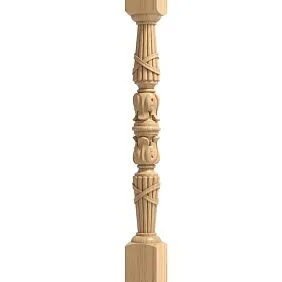
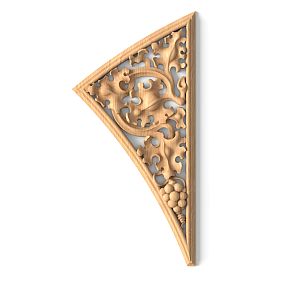
Our factory also produces:




Aesthetics: The Touch That Creates Character
Wood is a living, warm material capable of transforming any space. Its unique grain, texture, and tone give a room coziness and elegance. Wooden decorative corner trim is a designer’s tool. It can be a contrasting element that emphasizes the geometry of a room or building, or, conversely, be matched to the main cladding, creating an effect of monolithic harmony.
A properly chosen wooden corner trim can create a specific mood. In a room clad with paneling, a wooden corner trim for paneling perfectly completes the look, making it truly cozy and natural. On a facade, it can give a building a sense of status, formality, or, conversely, lightness and airiness. This is the final touch that distinguishes professional work from amateur efforts.
Get Consultation
Longevity: An Investment in the Future
Some people think wooden corner trim is just an unnecessary expense. But I assure you, this is one of the most profitable investments you can make. A quality wooden corner trim, properly selected and installed, extends the life of the entire cladding. It protects, supports, and reinforces. Think about how much money and effort you’ll save if you don’t have to redo the facade several years later due to rot or damage at the corners. The price you pay today for quality corner trim is the price of your peace of mind and confidence for tomorrow.
Choice Without Compromise: Wood Species, Sizes, and Features
Choosing wooden corner trim is not a spontaneous decision. It is a thoughtful step based on knowledge of the material, its properties, and its intended use. As an experienced craftsman, I can say there is no universal solution. Each corner trim must match its location, function, and character.
Wood Species: From Pine to Oak
Wood species is, perhaps, the most important parameter. It determines not only appearance but also durability, strength, and resistance to external influences.
-
Pine: The most popular and accessible species. Pine wooden corner trim has a beautiful, light tone and expressive grain. It is easy to work with, but, like any soft material, requires careful protection from moisture and pests. It is ideal for interior work where harsh conditions do not exist.
-
Larch: This is the true champion of longevity among coniferous species. Its wood is very dense and contains a large amount of resin, which acts as a natural antiseptic. An outdoor corner trim made of larch is the choice for those seeking maximum reliability and minimal maintenance costs. It is an ideal material for cladding facades, gazebos, and terraces.
-
Oak: A symbol of monumentality and strength. An oak corner trim is the choice for elite projects where beauty is important, but longevity for centuries is equally crucial. Oak is incredibly hard, resistant to moisture and rot. It is practically immune to deformation.
-
Aspen, Lime: These species are ideal for cladding saunas and bathhouses, as they do not release resin and do not heat up. Corner trim made from these species creates a unique, healthy atmosphere.
-
Ash, Beech: Hard, beautiful species often used for furniture and elegant interior elements. Corner trim made from these species will look luxurious, but will also cost accordingly.
Scale and Proportions: Size Matters
Choosing the right size of corner molding is key to harmony. A too-thin 20x20 wooden corner will be unnoticeable on a massive wall, while a 100x100 wooden corner will look bulky in a small room.
-
For cladding small rooms or narrow openings, 30 or 30x30 wooden corner trim is ideal. They look neat and elegant.
-
The most universal and popular sizes are 40x40, 50x50, and 60x60 wooden corner trim. They suit most standard tasks. If you want to buy 50x50 wooden corner trim, you won’t be wrong, as it is suitable for both interior and exterior applications.
-
For cladding facades or large wooden structures, it is better to use more substantial corner trim: 70x70, 80x80, or even 100x100 wooden corner trim. They provide reliable protection and look more monumental.
It is important to remember proportions. If you have a wooden house clad with massive beams, then an external 100x100 wooden corner trim will look more appropriate.
Purpose: Specialization for Better Results
Today, manufacturers offer wooden corner trim for various purposes, which is very convenient.
-
For window casings: The wooden casing corner has a special shape that allows it to perfectly cover the joint between the wall and window frame. This is not only aesthetically pleasing but also protects the mounting foam from damage.
-
For siding: The wooden corner for siding is ideal for creating neat joints between boards. It can be either external or internal, depending on which angle you need to cover. The internal wooden corner is especially popular, as it creates a sense of a finished, cohesive space.
-
For flooring: The wooden baseboard corner is used to cover the joint between the floor and wall. It can be finished in the same tone as the floor or in a contrasting color to emphasize interior lines.
From Theory to Practice: The Art and Science of Installation
Choosing a quality corner is only half the job. The other, equally important part is proper installation. I’ve seen expensive materials ruined by careless work, and conversely, how humble corners became masterpieces thanks to the installer’s skill.
The Right Tools — Half the Success
For quality installation, you don’t need much, but everything must be within reach:
-
Measuring Tools: Tape measure, pencil, square. Accuracy is the first rule.
-
Cutting Tools: Miter box and circular saw — these are your main helpers. With them, you can make a perfect 45-degree wooden corner. Without such a cut, joints will be uneven and allow moisture to seep through.
-
Fasteners: For outdoor work, use galvanized screws, which are resistant to corrosion. For indoor work, finish nails without heads are suitable. A wooden corner bracket can also be used for concealed installation.
Step-by-Step Guide: Measure Seven Times, Cut Once
-
Surface Preparation: Ensure the surface is clean, dry, and level. Use wooden strips if necessary to level it. This is especially important when working with corners in wooden houses, where walls may not be perfectly flat due to timber shrinkage.
-
Measurements: Carefully measure the length of each corner. If you’re using multiple corners for one joint, don’t forget to account for the joint space.
-
Trimming: Using a miter box or circular saw, make an accurate 45-degree cut. This is necessary to ensure the wooden corners join perfectly, seamlessly, and invisibly.
-
Installation: Start installing the corner from the top. Space fasteners 30–40 cm apart. Avoid over-tightening screws to prevent damaging the wood.
-
Protective Treatment: After installation, all fastener locations and joints can be spackled and then coated with a protective finish.
How to Make a Wooden Corner Yourself?
Of course, there’s always the temptation to do everything yourself. How to make a wooden corner? You’ll need a piece of timber with the appropriate cross-section and a router. You can make a standard L-shaped corner or a more complex one with decorative cutouts. But I always recommend consulting professionals. Factory production guarantees perfect geometry, proper drying, and quality finishing — which is very difficult to replicate at home.
More Than Just a Corner: A Comprehensive Solution for Your Home
We’ve spoken about corners as individual elements, but their true power is revealed in combination. A wooden corner is part of a larger family of trim products. They are designed to work together, creating a unified, harmonious composition.
Combination with other elements
-
Baseboards: Baseboards are trim for windows and doors. If you’re using corners for facade finishing, be sure to select baseboards made from the same wood, color, and style. This creates a sense of unity.
-
Baseboards: A wooden baseboard is a corner that covers the joint between the wall and floor. In interiors where you’ve used wooden corners, baseboards should also be wooden. This will emphasize your taste and attention to detail.
-
Crown Molding: Crown molding are elements that cover the joint between the wall and ceiling or between the wall and roof. They should also harmonize with the overall style.
Corner as Part of Architectural Style
-
Russian Terem: For Russian style, massive, carved wooden corners 100x100 from larch or pine are ideal.
-
Scandinavian Minimalism: Here, smooth, flat, light-colored corners without extra details look best.
-
Classic: Classic style requires elegant yet substantial corners made of oak or ash, possibly with decorative cutouts.
Frequently Asked Questions (FAQ)
As an expert, I’m often asked the same questions. And that’s wonderful! It means people approach their projects seriously. Let’s go over the most popular ones.
Which wooden corner is better for facade: external or internal?
Definitely outdoor. As we already mentioned, the wooden outdoor corner is designed for harsh conditions. It is made from denser, more moisture-resistant species and treated with special protective compounds. The wooden indoor corner will not withstand exposure to sun, wind, and rain, and will quickly deteriorate.
Can you buy wooden corner in Saint Petersburg?
Yes, of course. Such universal items as wooden corners can be found in many hardware stores. However, if you want to buy a high-quality wooden corner SPB that will serve you for many years, it is better to contact specialized manufacturers such as STAVROS.
How to calculate the required amount of wooden corners?
Very simple. You need to measure all the corners you want to cover and add up their lengths. For example, if you have 4 corners each 3 meters high, you will need 12 meters of material. Don't forget to add a 10-15% reserve for possible errors during installation and trimming.
How does the connection of wooden corners affect their durability?
If the connection of wooden corners is done poorly, gaps may form. Moisture will penetrate through these gaps, leading to rot and destruction of the corner. Therefore, it is important to make precise 45-degree angled cuts to ensure a tight connection.
What is a 45-degree wooden corner?
This is not the shape of the corner, but the angle of its cut. A 45-degree cut is necessary so that two corners, when joined at an external angle, form a straight line. This is a standard technique used during installation.
Can wooden corners be used for shelves?
Yes, wooden corners for shelves are an excellent way to give shelves a finished and neat appearance. They not only hide joints but also become an elegant decorative element.
How important is a wooden mounting corner?
A wooden mounting corner is not mandatory, but very useful. It allows you to mount the corner on the wall without visible screw heads. This makes the installation more aesthetically pleasing.
Where can you buy mounting corners for wooden structures?
This is metal hardware. You can find it in any hardware store or on specialized websites. Keep in mind that these are not decorative elements, but fasteners.
How to calculate the price of wooden corners?
The price of wooden corners depends on:
-
Wood species: Larch and oak are more expensive than pine.
-
Dimensions: The larger the cross-section, the higher the price.
-
Wood grades: Wood without knots, cracks, and other defects is more expensive.
-
Processing complexity: A wooden decorative corner with carving will cost more.
How to care for corners so they don't lose their appearance?
The key to longevity is regular maintenance. Inspect the corners every few years. If you notice that the protective coating (paint, varnish, oil) has started to wear off, sand these areas and apply a new layer. This will protect the wood from deterioration.
Can a 60x60 wooden corner be used for indoor installation?
Of course, you can. This is a fairly universal size. It will look great in spacious rooms or houses with high ceilings. A 60x60 wooden corner can be purchased for both indoor and outdoor use, but for outdoor use, choose a corner made from denser species.
Conclusion: Your home, your story, your strength STAVROS
We have reached the end of our journey. I hope I have revealed to you all aspects of such a simple, yet important element as Wooden angles for finishingIt is not just planks, it is a story. A story about your attention to detail, about your desire to create something lasting and beautiful.
Quality is not something you see immediately. It is something you feel over the years. It is your confidence that the home you built will withstand any test.
There are many offers on the market, but I always recommend contacting those who know their business. Those for whom wood is not just a material, but a passion. Such a company is STAVROS. Their products are not just wooden corners — they are the result of years of experience, craftsmanship, and respect for nature. STAVROS is your reliable partner when it comes to quality and beauty.


