Article Contents:
- Psychology of Perceiving Renewed Furniture
- Materials Science in Furniture Decoration
- Natural Materials: Wood as the Foundation of Creativity
- Metallic Accents and Their Role in Decoration
- Textile Elements and Upholstery Materials
- Technological Techniques of Decoration
- Painting Techniques: From Monochrome to Artistic Painting
- Decoupage: The Art of Paper Decoration
- Patina and Techniques of Artificial Aging
- Provence: French Romanticism in Interior Design
- Stylistic directions in furniture decoration
- Classic style: elegance and luxury
- Scandinavian Minimalism: Functionality and Simplicity
- Carved Decoration: The Craft of Handmade Work
- Loft: industrial aesthetics
- Types of Carving and Their Applications
- Motifs and Ornaments in Carved Decoration
- Functional Elements as Decoration
- Handles and Hardware: Small Details That Create Style
- Furniture Legs: The Foundation of Style and Stability
- Color Solutions in Furniture Decoration
- Natural Textures
- Color Combinations
- Color Decoration Techniques
- Surface Texturing
- Artificial Textures
- Lighting as an Element of Furniture Decoration
- Internal Lighting
- Ecological Aspects of Furniture Decoration
- Accent Lighting
- Natural Materials and Finishes
- Secondary Use and Upcycling
- Tools and Materials for the Home Craftsman
- Technology of Furniture Decoration
- Basic toolset
- Consumables
- Technology of Furniture Decoration
- Planning and design
- Preparatory work
- Basic Decoration Operations
- Final finishing
- Decoration of Various Types of Furniture
- Cabinet Furniture
- Soft furniture
- Modern Trends in Furniture Decoration
- Mixing Styles
- Technological Innovations
- Integration of smart technologies
- Care for Decorated Furniture
- Regular Maintenance
- Protection against damage
- Economic Aspects of Furniture Decoration
- Budget-friendly solutions
- Investment Projects
- Professional Secrets of Masters
- Preparation — the Foundation of Success
- Material quality
- Patience and Carefulness
Furniture forms the basis of any interior, defining not only the functionality of the space but also its aesthetic appeal. However, over time, even the highest-quality furniture loses its original luster, becomes outdated morally, or simply becomes boring. How to Decorate Furniture — a question that concerns many homeowners and apartment dwellers who wish to refresh their surroundings without significant financial expenditure.
Decorating furniture is an engaging creative process that allows one to express individuality and create unique interior elements. This art combines practical skills, artistic vision, and understanding of the stylistic features of various design directions.


Philosophy of Renewal: From Utility to Aesthetics
The modern approach to decorating furniture goes far beyond simple repair or restoration of functionality. It involves transforming ordinary items into applied art pieces capable of becoming central elements of interior composition.
Each piece of furniture possesses a unique potential for creative transformation. An old chest can become a stylish Provence-style sideboard, an ordinary chair — a bright accent in a Scandinavian interior, and a simple wardrobe — a luxurious piece of classic decor.




Psychology of Perceiving Renewed Furniture
Decorating furniture significantly influences the psychological perception of space. Renewed items create a sense of novelty and freshness, improve the mood of home inhabitants, and form a unique atmosphere of coziness. This is especially important in the context of modern life’s pace, when the home becomes an oasis of peace and harmony.
The decoration process also has a therapeutic effect, allowing one to realize creative ambitions and gain satisfaction from creating beautiful things with one’s own hands. Many people find in this activity a means of relaxation and self-expression.
Our factory also produces:


Material Science in Furniture Decoration
Choosing materials for decorating furniture requires a deep understanding of their properties, compatibility, and aesthetic characteristics. Each material possesses unique qualities that can either highlight the furniture’s strengths or conceal its weaknesses.
Get Consultation
Natural Materials: Wood as the Basis of Creativity
Wood remains the most popular material for creating decorative elements of furniture. Its versatility, eco-friendliness, and ability to undergo various treatments make it indispensable in furniture decoration. Carved appliqués, moldings, legs, and handles made of natural wood can radically change the appearance of any piece of furniture.
Different types of wood offer wide creative possibilities. Oak gives furniture a solid and respectable appearance, beech is known for its strength and beautiful texture, ash has an expressive wood grain structure, and pine delights with its accessibility and ease of processing.
Metallic Accents and Their Role in Decoration
Metallic elements add elegance and modernity to furniture. Bronze, brass, or steel details can serve as functional components (handles, locks, hinges) or purely decorative appliqués. Properly chosen metallic accents can transform even the simplest furniture, giving it a luxurious or industrial character.
Textile Elements and Upholstery Materials
Fabrics play an important role in decorating upholstered furniture. The choice of upholstery material determines not only the appearance of the item but also its tactile qualities, durability, and functionality. Modern technologies allow the use of fabrics with various properties: water-repellent, anti-static, hypoallergenic.
Decorative Techniques
There are many techniques that allow transforming the appearance of furniture. Each requires specific skills, tools, and materials, but the result justifies the effort invested.
Painting Techniques: From Monochrome to Artistic Painting
Painting is one of the most accessible and effective ways to refresh furniture. Modern lacquer and paint materials allow creating finishes with various effects: matte, glossy, metallic, with an aged or patina effect.
The preparatory stage includes thorough cleaning of the surface, sanding, filling defects, and priming. The quality of preparation directly affects the final result, so special attention should be paid to this stage.
The application technique depends on the type of paint and desired effect. A brush can create textured effects, a roller provides even coverage, and an airbrush allows for smooth color transitions and complex artistic compositions.
Decoupage: the art of paper decoration
Decoupage allows decorating furniture with beautiful images, creating the effect of hand-painted artwork. This technique is especially popular in Provence, shabby chic, and vintage styles. For decoupage, special transfer papers, decoupage sheets, or even ordinary beautiful pictures are used.
The process includes selecting and cutting out motifs, applying them to the prepared surface with special adhesive, and then covering them with protective varnish. Mastery lies in creating a harmonious composition and executing all stages of work with high quality.
Patina and artificial aging techniques
Patina gives furniture the noble appearance of antique items, creating a sense of historical value. There are several ways to create patina: chemical (using special compounds), mechanical (by creating scratches), and painterly (by applying contrasting paints).
Artificial aging includes creating cracks (crackle), scratches, signs of wear and tear. These techniques require artistic sensitivity and understanding of how different materials naturally age over time.
Stylistic Directions in Furniture Decoration
The choice of decoration style should correspond to the overall interior concept and the owner's personal preferences. Each stylistic direction has its characteristic features, color palette, and decorative elements.
Classic style: elegance and luxury
In furniture decoration, the classic style is characterized by the use of expensive materials, refined forms, and rich ornamentation. Carved elements, gilding, inlays, high-quality fabrics — all of this creates an atmosphere of luxury and respectability.
The color palette of the classic style includes noble shades: gold, burgundy, dark green, deep blue. Furniture forms are distinguished by the elegance of lines, proportionality, and harmony.
Provence: French romance in interior design
The Provence style embodies the charm of French countryside with its lavender fields, old estates, and measured lifestyle. Furniture in this style is characterized by lightness, elegance, and a special atmosphere of coziness.
Characteristic features include light pastel tones, floral motifs, artificial aging, carved elements, and wrought iron details. Special attention is paid to textiles: linen, cotton, fine cotton with small floral patterns.
Scandinavian minimalism: functionality and simplicity
The Scandinavian style in furniture decoration is characterized by minimalist forms, functionality, and use of natural materials. The main principles are simplicity, naturalness, and comfort.
The color palette is built on white, gray, and beige tones with bright accents. Decorative elements are minimal, emphasizing material quality and clean lines. Special attention is paid to wood texture, which should be clearly visible and perceptible.
Loft: industrial aesthetics
Loft style in furniture decoration is characterized by the combination of rough industrial materials with refined details. Metal, aged wood, leather, glass — these are the main materials of this direction.
Decorating in the loft style often involves preserving and emphasizing natural material defects: scratches, wear, signs of time. This creates a unique atmosphere of authenticity and character.
Carved decoration: craftsmanship of handwork
Wood carving is one of the oldest decorative arts, which remains relevant in furniture decoration today. Carved elements can transform ordinary furniture into a work of art, giving it uniqueness and artistic value.
Types of carving and their applications
Flat relief carving is characterized by shallow relief depth and clear image contours. It is ideal for decorating furniture facades, creating ornamental compositions, and floral motifs.
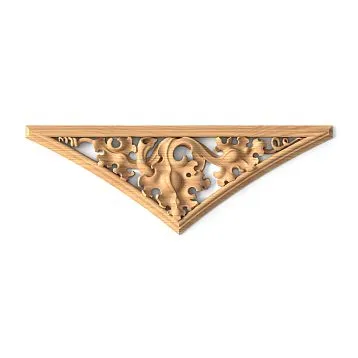
Three-dimensional carving creates three-dimensional images with deep relief. Such elements are often used as independent decorative details: appliqués, rosettes, corner elements.
Through carving involves complete removal of material in certain areas, creating delicate patterns. It is used for making decorative inserts, screens, and partitions.
Motifs and ornaments in carved decoration
The choice of motifs for carving depends on the interior style and the purpose of the furniture. Floral ornaments (leaves, flowers, grapevines) are universal and suitable for most styles. Geometric patterns look great in modern interiors. Historical motifs (heraldry, monograms, classical scenes) emphasize the classic character of the furniture.
Functional elements as decoration
Many functional elements of furniture can serve as decorative accents, combining practicality with aesthetic appeal.
Handles and hardware: small details that create style
Replacing handles is one of the simplest and most effective ways to refresh furniture. The modern market offers a vast variety of furniture hardware: from classic bronze handles to ultra-modern minimalist solutions.
When choosing handles, one should consider not only their appearance but also ergonomic characteristics, material quality, and mounting method. Good hardware lasts for decades, preserving its original look and functionality.
Furniture legs: the basis of style and stability
Legs define the silhouette of furniture and largely shape the stylistic perception of the item. Replacing legs can radically change the character of furniture: straight legs impart rigidity, curved legs elegance, carved legs luxury.
The material of the legs also plays an important role. Wooden legs emphasize naturalness, metallic ones add modernity, and combined ones create interesting stylistic solutions.
Color solutions in furniture decor
Color is a powerful tool for influencing the perception of furniture and the interior as a whole. A properly chosen color palette can visually alter the proportions of objects, create a specific mood, and highlight the stylistic concept.
Psychology of color in interior design
Each color exerts a certain psychological effect. White creates a sense of purity and spaciousness, blue calms and promotes concentration, red excites and attracts attention, green relaxes and harmonizes.
When choosing a color solution for decorating furniture, one must consider the purpose of the room, its lighting, size, and overall interior style.
Color Decoration Techniques
Monochromatic solutions involve using one color in various shades. This approach creates a calm, harmonious atmosphere and suits minimalist interiors.
Contrasting combinations use opposite colors from the color wheel, creating dynamic, energetic compositions. This technique requires caution and artistic sensitivity.
Gradient transitions create smooth color shifts, adding volume and expressiveness to furniture. This technique is especially effective on large surfaces.
Surface Texturing
Surface texture plays at least as important a role as color. It determines tactile sensations and influences the visual perception of furniture.
Natural textures
Wood texture is a classic solution that emphasizes the naturalness of the material. Various finishing methods (brushing, burning, planing) allow revealing and highlighting the natural beauty of wood.
Stone textures create a sense of monumentality and reliability. Imitation of marble, granite, or sandstone is especially effective on tabletops and furniture facades.
Artificial textures
Modern technologies allow creating diverse artificial textures: imitation of leather, fabric, metal. Special compositions and application techniques open boundless creative possibilities.
Lighting as an element of furniture decor
Integrating lighting into furniture creates additional opportunities for decoration and enhances the functionality of items.
Internal lighting
LED strips built into cabinets, shelves, or drawers not only facilitate finding items but also create an impressive decorative lighting effect. Especially impressive is backlighting for glass shelves and display cases.
Accent lighting
Directional lamps that highlight individual furniture or decor elements create dramatic lighting effects and draw attention to the most interesting details.
Ecological aspects of furniture decor
Modern interior design trends pay significant attention to the ecological nature of materials and decorating processes.
Natural materials and coatings
Using natural materials (wood, stone, metal) and eco-friendly coatings has become not only a fashionable trend but also a conscious choice for health and the environment.
Upcycling and reuse
Upcycling — creative rethinking of old furniture — not only allows creating unique design solutions, but also contributes to environmental preservation. Old furniture gets a new life, becoming a stylish and functional element of modern interiors.
Tools and materials for a home handyman
Successful furniture decoration requires the proper selection of tools and materials. Quality tools not only simplify work, but also ensure a professional result.
Basic tool set
Measuring tools: tape measure, ruler, square, compass — necessary for accurate marking and size control.
Cutting tools: various types of saws, chisels, knives — for processing materials and creating decorative elements.
Sanding tools: sandpaper of various grits, sanders — for preparing surfaces and final finishing.
Consumables
Adhesives and bonding agents: from standard PVA to specialized compositions for various materials.
Coating materials: primers, paints, varnishes, stains — for protecting and decorating surfaces.
Abrasive materials: sanding discs, blocks, pastes — for various stages of processing.
Furniture decoration technology
Any decoration process follows a certain technological sequence; deviation from it may result in unsatisfactory outcomes.
Planning and design
The conceptual stage includes defining the style, selecting color schemes, materials, and decorative elements. At this stage, sketches are created, material samples are chosen, and the volume of work is calculated.
Technical planning involves detailed elaboration of all work stages, preparation of a list of required materials and tools, and determination of operational sequence.
Preparation Work
Disassembly includes removal of hardware, glass, mirrors, and other removable elements. All parts must be neatly stacked and marked for subsequent installation.
Cleaning surfaces of old coatings, dirt, and defects. Cleaning methods depend on the material type and nature of contamination.
Repairing damage includes filling cracks, chips, dents. For this, various putties, adhesives, and repair compounds are used.
Main decoration operations
Priming ensures good adhesion of subsequent coatings and protects the material from moisture and other factors.
Applying a base coat creates a foundation for decorative elements. The quality of the base layer largely determines the final result.
Decorative operations include applying ornaments, creating textures, installing applied elements. This stage requires special care and artistic sensitivity.
Final finishing
Protective coating ensures the longevity of decorative finishes and protects them from mechanical damage and external influences.
Hardware installation completes the decoration process. New hardware must match the style and quality of completed work.
Specifics of decorating different types of furniture
Each type of furniture has its own characteristics that must be considered when planning decorative work.
Cabinet Furniture
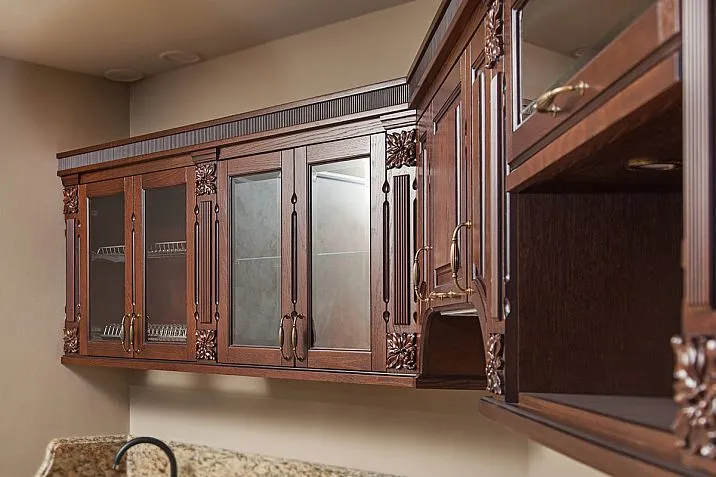
Cabinets and chests provide large surfaces for creativity. Fronts can be decorated with painting, decoupage, carved appliqués. Special attention should be paid to stylistic unity of all elements.
Tables of various types require a special approach to decorating the tabletop, which is subjected to the greatest loads. The coating must be not only beautiful but also practical.
Soft furniture
Sofas and chairs are mainly decorated through upholstery materials and decorative elements. Fabric choice determines not only the appearance but also the functional characteristics of the furniture.
Chairs can be decorated either by full replacement of upholstery or by adding decorative covers, cushions, and appliqués on the backs.
Modern trends in furniture decoration
The world of furniture design is constantly evolving, with new materials, technologies, and stylistic directions emerging.
Style mixing
The modern approach to furniture decoration is characterized by freedom in combining elements of different styles. Eclecticism allows creating unique, personalized solutions that reflect the owner's individuality.
Technological Innovations
3D printing opens up new possibilities for creating unique decorative elements with complex shapes. This technology is especially relevant for manufacturing individual parts and prototyping.
Laser engraving allows creating precise, detailed images on various materials. The technology is especially effective for personalizing furniture.
Integration of smart technologies
Modern furniture is increasingly equipped with electronic components: built-in charging devices, touch control panels, lighting systems. Decorating such furniture requires taking into account technical features and ensuring access to electronic components.
Care for decorated furniture
Proper care extends the lifespan of decorative finishes and preserves the original appearance of furniture.
Regular Maintenance
Cleaning should be performed using appropriate means that do not damage the decorative finish. Abrasive materials may damage delicate decorative layers.
Polishing helps maintain the shine and protects the surface from minor scratches. The frequency of polishing depends on the type of finish and the intensity of furniture use.
Protection against damage
Using protective coatings (tablecloths, napkins, coasters) prevents damage to decorative surfaces.
Controlling the microclimate is especially important for furniture made of natural wood. Sudden changes in temperature and humidity may cause deformations and damage to finishes.
Economic aspects of furniture decoration
Furniture decoration can be both a budget-friendly hobby and an expensive professional project. Proper planning allows achieving excellent results at reasonable costs.
Budget Solutions
Painting remains the most accessible way to refresh furniture. Modern paints allow creating finishes that do not fall short in quality compared to expensive alternatives.
Replacing hardware is a simple and effective way to refresh the appearance of furniture without significant expenses.
Decoupage and painting require minimal material investment but allow creating unique items.
Investment projects
Restoring antique furniture may require significant investment, but the result is an item possessing both aesthetic and material value.
Using expensive materials (natural gold leaf, valuable wood species, high-quality fabrics) is justified when creating furniture for formal spaces or collectible items.
Professional secrets of masters
Experienced furniture decorators have accumulated numerous practical techniques that allow achieving professional-quality work.
Preparation — the foundation of success
Thorough surface preparation accounts for up to 70% of the project's success. Deficiencies in preparation cannot be concealed even by the highest-quality decorative finish.
The responsible manufacturer provides complete information about the origin of the wood, drying methods, and processing. Quality and environmental certification confirm a serious approach to production.
Saving on materials often leads to unsatisfactory results and the need to redo the work. Quality materials not only look better but also last longer.
Patience and care
Haste is the main enemy of quality decoration. Each layer of finish must be fully dry before applying the next, and every detail must be executed with maximum precision.
In the world of modern design, furniture decoration occupies a special place, offering limitless opportunities for creative self-expression and creating unique interior solutions. Whether it's simply painting an old chair or complex restoration of an antique chest, How to Decorate Furniture — a question whose answer opens the door to the fascinating world of furniture art.
Every piece of furniture has its own history and character, and skilled decoration not only preserves this individuality but also gives it a new sound that corresponds to modern requirements of comfort and aesthetics. From material selection to final finishing — every stage of the process requires attention, knowledge, and a creative approach.
Success in furniture decoration depends not only on technical skills but also on understanding stylistic features, color harmony, and functional requirements. Modern materials and technologies open new horizons for realizing the boldest design ideas, while traditional techniques remain relevant due to their proven effectiveness.
STAVROS Company has been a reliable partner for many years for anyone striving to create unique interior solutions. An extensive range of decorative elements, high product quality, and deep understanding of modern design needs make STAVROS an indispensable assistant in implementing any furniture decoration projects. Entrusting your ideas to STAVROS professionals means not only receiving high-quality materials but also confidence that your home will become a reflection of your individuality and good taste.