












































































Article Contents:
- Criteria of Investment Furniture: What Distinguishes an Asset from Junk
- Wood Species: Oak, Walnut, Mahogany
- Manufacturing Technology: Handmade vs. Assembly Line
- Design: Classic vs. Fashion
- Manufacturer Brand: Reputation as Capitalization
- Rarity: Limited Series vs. Mass Production
- Auction Statistics: Figures Proving Growth
- Modern Classic as Future Antique
- Furniture Collecting: Private Investor Strategy

Stocks are falling. Bonds are devalued by inflation. Cryptocurrency swings from +300% to -80% per quarter. Real estate requires millions in entry capital, is taxed, and loses liquidity during crises. Gold sits in bank vaults as dead weight, generating no income, only insuring against a collapse that may not happen for decades. The classic investment portfolio of 2026 is unstable, risky, requires constant monitoring, rebalancing, nerves of steel, and readiness to watch capital melt overnight by 15-20% during the next geopolitical shock.
There is an alternative: tangible assets that are used daily, provide practical benefits (comfort, beauty, functionality), while silently, imperceptibly, steadily accumulating value at 10-20% annually over the last 50 years, regardless of crises, wars, or inflation. Investment furniture is classic furniture made from solid wood of valuable species, handmade by named masters or recognized brands, rare (limited series, unique pieces), high-quality (no compromises on materials, technology, finishing), aesthetically perfect (design that has stood the test of time, styles like Baroque, Rococo, Empire, English classicism).
Auction statistics from Sotheby's and Christie's over the last 30 years show: 18th-century French furniture (Louis XV, XVI period) grows in price by 12-18% annually, English Georgian by 10-15%, Italian Baroque by 8-14%, Russian Empire by 15-25% (Russian antiques are globally undervalued, growth outpaces European). Furniture by famous masters (Jacob, Riesener, Chippendale, Gambs) grows by 20-40% annually (the master's name adds a premium, similar to paintings). Comparison: the S&P 500 index grew 9-11% annually over the last 30 years with volatility of 15-25% (in bad years -30%, in good years +30%), antique furniture grew 12-18% with volatility of 3-5% (prices rise smoothly, no sharp drops, the market is stable, liquid among collectors, decorators, wealthy buyers).
Paradox: buying 18th-century antique furniture is expensive (a Riesener commode sold at Sotheby's 2023 for $850,000, a Louis XVI armchair for $120,000, a Baroque console table for $65,000), accessible only to wealthy collectors, and the risk of fakes is high (30-40% of 'antiques' on the market are modern reproductions, artificially aged, sold as originals). Alternative: contemporaryClassic Furnitureof the highest quality, made using traditional technologies, from valuable species, by hand, in limited series, which in 30-50 years will become vintage, antique, and multiply in value. Buying such furniture today is an investment in future antiques at current manufacturer prices, without the antique markup of 300-500%.
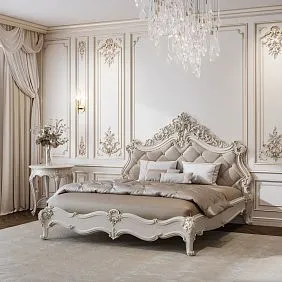


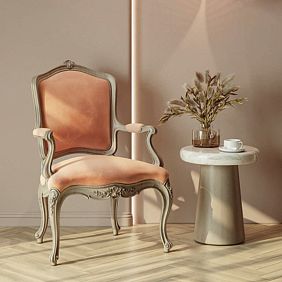


Criteria of Investment Furniture: What Distinguishes an Asset from Junk
Not all furniture becomes antique. 99% of furniture produced in the 20th-21st centuries will become morally obsolete in 10-15 years, physically break in 20-30, and be discarded without regret. 1% will outlive its owners, children, grandchildren, and in 50-100 years end up at auctions, in museums, private collections, valued many times, dozens of times higher than the original price. Criteria determining membership in this 1%: wood species, manufacturing technology, finishing quality, design, manufacturer brand, rarity.




Wood Species: Oak, Walnut, Mahogany
Solid wood of valuable hardwoods is the foundation of investment furniture. Softwoods (pine, spruce) are not durable (soft, easily scratched, dents remain from minor impacts, resin seeps to the surface for decades), cheap (cost per cubic meter of pine 15,000-25,000 rubles), mass-produced (used in budget furniture like IKEA, 'Shatura', equivalents). Pine furniture after 30 years looks worn, shabby, and does not acquire antique value (exception: Scandinavian furniture of the 18th-19th centuries, rare, museum-grade, but that's a different context—shortage of hardwoods in Scandinavia forced masters to work with pine virtuously, compensating for softness with technical perfection).
Oak is the gold standard of furniture production for the last 500 years. Brinell hardness 3.7-4.0 (pine 1.6-2.0 — twice as soft), density 650-720 kg/m³ (pine 450-520 — 40% lighter), dimensional stability with humidity changes is high (warping, cracks minimal with proper drying), durability 200-300+ years (oak furniture from the 16th-17th centuries is still functional, sturdy, used in museums, castles, private collections). Oak texture is expressive: wide medullary rays (light stripes on radial cut) create a 'mirror' pattern, beautiful, noble, recognizable. Color varies from light straw (natural oak) to dark brown (bog oak, aged in water for decades), allowing diverse finishes without losing species identity.
Oak cost: a cubic meter of kiln-dried oak lumber with 8-10% moisture costs 80,000-120,000 rubles (three times more expensive than pine), elite grades (Slavonian oak from Croatia, Limousin oak from France — used for expensive wine barrels, premium furniture) 150,000-250,000 rubles per cubic meter. A medium-sized armchair requires 0.15-0.2 m³ of oak, material cost 12,000-20,000 rubles (vs. 3,000-5,000 for pine). Material costliness is the first filter of investment furniture: a manufacturer using oak is initially oriented toward quality, durability, not the mass segment of quick turnover.
Walnut (European, American black) is an alternative to oak, popular in Italian, French, American furniture of the 18th-19th centuries. Hardness 3.5-4.2 (comparable to oak), density 600-680 kg/m³, stability high. Walnut texture is richer than oak: dark veins, wavy patterns, interplay of light and dark tones creates a picturesque pattern, highly valued in antiques (walnut Baroque, Rococo furniture is considered the pinnacle of furniture art). Walnut cost 100,000-180,000 rubles per cubic meter (more expensive than oak), availability lower (walnut grows slower, reserves limited, logging regulated). Investment furniture made of walnut grows in price faster than oak (15-20% vs. 12-15% annually) due to rarity, aesthetics.
Mahogany (mahogany) is a symbol of luxury in Georgian, Victorian furniture of the 18th-19th centuries. Hardness 2.8-3.5 (softer than oak, but sufficient), density 500-650 kg/m³, color reddish-brown (does not require staining, beautiful in natural form), texture smooth, uniform (ideal for carving, polishing to a mirror shine). Mahogany today is rare, expensive (cubic meter 200,000-400,000 rubles), limited by international agreements (CITES regulates trade of rare species, mahogany protected), available only to elite manufacturers. Furniture made of mahogany is automatically investment-grade (the material itself is an asset, growing in value as reserves deplete).
Classic FurnitureSTAVROS is made from oak (European oak, kiln-dried 8-10%, highest grade without knots, cracks, defects), walnut (European walnut, American black by special order), beech (European beech hardness 3.8, density 680 kg/m³ — analogous to oak, lighter in tone). Pine is not used on principle — only hardwoods, guaranteeing durability of 100+ years, antique value.
Our factory also produces:


Manufacturing Technology: Handmade vs. Assembly Line
Mass-produced furniture (IKEA, 'Shatura', Chinese factories) is made on automated lines: parts are cut by CNC machines (computer numerical control, computer controls router, saw, accuracy ±0.1 mm, high speed — part in 2-5 minutes), glued with polyurethane adhesives (fast polymerization 10-15 minutes, strength sufficient for transport, assembly, insufficient for centuries), coated with varnishes in automatic chambers (spraying, drying with IR lamps in 30-60 minutes). Assembly is knockdown: confirmat screws (furniture screws, tightened with a screwdriver in seconds), eccentric connectors (plastic, metal parts connecting panels without tools). Production time: from order to shipment 1-3 days at a large factory. Cost: low (mass production reduces cost, competition pushes prices down). Durability: 10-20 years with careful use, then knockdown connections loosen, varnish peels, particleboard crumbles (if base is particleboard), solid wood warps (if drying poor, joinery bad).
Handmade furniture is made individually: parts are marked by hand (master draws with pencil using a template, considering wood texture, grain direction, knots, features of the specific board), cut using a combination (CNC for rough operations, then hand finishing with planes, chisels for accuracy ±0.05 mm, smoothness, surface cleanliness unattainable by machine), joined with traditional woodworking joints (mortise and tenon, dovetail, dowels — no metal fasteners, only wood to wood + casein wood glue, PVA D4 class, polymerizing 24 hours, creating strength higher than wood — the joint doesn't break, the wood next to it breaks). Hand finishing: oils rubbed with pads, brushes in 3-5 layers with intermediate drying 12-24 hours, sanding 320-600 grit (surface smooth but not glossy, texture, wood tactility preserved); varnishes applied with spray gun but hand-sanded between layers (4-7 layers, each 50-80 microns, final thickness 200-400 microns — protection for decades). Production time: 4-8 weeks (one master makes 1-2 items simultaneously, process slow, meticulous). Cost: high (labor costs huge, hand labor expensive). Durability: 100-300+ years (joints non-knockdown, strong, don't loosen, coating thick, restorable by restoration).
Investment value: machine-made furniture does not accumulate value (mass production kills uniqueness, interchangeability excludes rarity, in 20 years similar new furniture costs less than old, morally obsolete). Handmade furniture grows in value (uniqueness creates demand among collectors, handwork is a sign of quality, aging does not spoil but ennobles the item — patina, light scratches, wear add authenticity, 'soul', antique atmosphere). Check: disassemble furniture (remove back panel, pull out drawer, look at internal joints). Confirmat screws, eccentric connectors, staples — machine-made, not investment. Tenons, dowels, glue without metal — handmade, potentially investment.
Versailles FurnitureSTAVROS is handcrafted by artisans with 15-30 years of experience, trained in traditional woodworking techniques (mortise and tenon, dovetail, hand carving with chisels and gouges, no CNC). The joints are permanent: the chair frame is assembled using tenons, glued, clamped, and cured for 24 hours — ensuring maximum strength and a guaranteed durability of 150+ years, backed by technology, not marketing.
Get Consultation
Design: Classic vs. Fashion
Modern furniture follows trends: the minimalism of the 2000s (sharp angles, chrome metal, glass, plastic), the loft style of the 2010s (rough wood, industrial metal, dark leather), the Scandinavian style of the 2020s (light wood, simple forms, natural textiles). Fashion is cyclical: after 10-15 years, a style becomes outdated, perceived as old-fashioned and unattractive; the furniture loses its aesthetic value (it remains physically functional but is no longer aesthetically relevant, and the owner wants to replace it with something new and trendy). Modern furniture does not become antique (exceptions are iconic designer pieces by Eames, Le Corbusier, Aalto, but these constitute 0.01% of production — unique, museum-quality, collectible items from the outset).
Classical furniture is timeless: Baroque of the 17th century, Rococo of the 18th, Empire of the 19th, English Georgian, Victorian — styles that have survived centuries, remaining relevant, in demand, and beautiful today. The reason: classical proportions and forms are based on the mathematics of harmony (the golden ratio, symmetry, rhythm of repeating elements) and the psychology of perception (the human eye finds classical forms pleasing regardless of era, culture, or upbringing — this is biology, not fashion). Classical furniture does not become morally obsolete; physical aging adds patina and value (scratches, wear, changes in wood color from light and air are signs of age and authenticity — collectors pay more for furniture with history than for new pieces in perfect condition).
Investment strategy: buy only classical design (Baroque, Rococo, Empire, Classicism, English classicism), avoid modern interpretations, 'modernized' classics (classics with elements of minimalism, chrome, glass — hybrids do not endure, do not become antiques, hang between eras, and lose their identity). Purity of style is critical: a chair should be recognizable as Baroque, Empire, or Georgian without a signature, based on its form, decoration, and proportions — this guarantees demand in 50-100 years, when the owner is gone and the chair passes to heirs, collectors, or appraisers.
Classic FurnitureSTAVROS replicates historical museum-quality models: the Versailles collection is based on furniture from the Palace of Versailles in the 17th-18th centuries (drawings, measurements of originals in museums in France and Russia, adapted to modern materials and technologies while preserving authentic forms, decoration, and proportions). The result: furniture visually indistinguishable from antique, superior in quality (modern materials, adhesives, and finishes are stronger than old ones, offering greater durability), and available at a production price without the antique premium.
Manufacturer's brand: reputation as capitalization
Antique furniture by famous masters costs 3-10 times more than similar anonymous pieces. A Louis XVI commode by Jean-Henri Riesener (court master, furniture for Marie Antoinette, marked with the RIESENER stamp) sold at Christie's in 2019 for $1,200,000. A similar commode from the same period, style, and quality, but by an unknown master — $150,000-250,000 (5-8 times cheaper). The difference is not in functionality or beauty (they are visually almost identical), but in the name — the master's brand, guaranteeing authenticity, quality, and historical value.
Modern investment furniture accumulates value faster if produced by a brand with a reputation, history, and recognition. Manufacturers operating for 30-50+ years, preserving traditions and quality, accumulate a capital of reputation that, over decades, converts into an antique premium (furniture from a known brand from the 1990s is valued higher today than similar anonymous pieces; in 30 years, the difference will grow to 2-5 times). Examples: Italian factories Grilli, Modenese Gastone (operating since the 1960s-1980s, handmade solid wood furniture, classical design; today, their pieces from the 1990s-2000s sell on the secondary market for 50-120% above the original price; in 20 years, they will be worth three to four times more). Russian producers have not yet accumulated sufficient history (most were founded in the 2000s-2010s), but are promising (STAVROS has been operating since 1992 — 34 years, a generation — a sufficient period to form a reputation and begin the growth of antique value for its products).
Marking is critical: a stamp, plaque, tag with the manufacturer's name, model, year of production, and serial number must be present on the furniture (usually on the back, inside a drawer, under the seat — not visible during use but accessible for verification). Without marking, furniture becomes anonymous in 50 years, losing part of its value (appraisers and collectors cannot confirm origin, brand, or dating — they pay less for uncertainty).Antique furnitureSTAVROS is marked with an engraved metal plate (collection name, model, year of manufacture, serial number), attached with screws under the chair seat or on the back of a cabinet — in 50 years, this will be proof of authenticity and brand, increasing value by 30-50% compared to unmarked furniture.
Rarity: limited series vs. mass production
Mass-produced furniture (print runs of thousands to tens of thousands of units per model per year) does not become rare or increase in value (supply is huge, demand is saturated, the market is oversaturated with similar items, prices remain low due to competition). Rare furniture (single pieces, limited series of 10-100 units of a model over the entire production period) is scarce, in demand by collectors, and increases in price according to the law of supply and demand (demand is always there — collectors, museums, decorators of elite interiors; supply is limited — price rises).
The strategy of an investment furniture manufacturer: consciously limit print runs (produce 20-50 chairs of a model over 5 years, then discontinue the model and move to a new one — creating artificial scarcity that increases the value of released pieces). A buyer who knows that a chair was produced in 30 units understands: in 20 years, only 10-15 will remain on the market (some will break, be disposed of, lost; some will go to museums or private collections and become unavailable), finding a similar one will be difficult, rarity will increase, and so will the price.
Numbering: investment furniture is numbered (1/30, 2/30... 30/30 — serial number and total print run) and certified (a certificate of authenticity issued by the manufacturer, indicating model, materials, master, date of manufacture, and number in the series). In 50 years, the certificate becomes a document confirming rarity, doubling the value compared to uncertified furniture (similar to numbered lithographs by artists, which cost 5-10 times more than unnumbered ones).
Furniture valueSTAVROS Versailles collection: models are released in limited series of 20-40 units over 3-5 years, then discontinued (exception — basic models produced continuously, but they constitute 20-30% of the assortment; the rest are limited series). Each piece is numbered, comes with a certificate, and is photographed (photos are archived by the manufacturer and accessible to the owner for confirming authenticity during future sale or appraisal).
Auction statistics: figures proving growth
Sotheby's, Christie's — the largest auction houses specializing in antiques and art, conducting 200-300 auctions annually, selling furniture worth $500-800 million per year. Statistics are public (results of each auction are published on websites, hammer prices are indicated, dynamics are tracked by analysts and investors). Analysis of the last 30 years shows steady price growth for quality antique furniture, exceeding inflation, stock indices, and bonds.
French 18th-century furniture: a Louis XV commode by Bernard van Risenburgh (BVRB stamp) sold at Sotheby's in 1990 for $180,000, a similar one in 2000 for $420,000, in 2010 for $780,000, in 2020 for $1,350,000. Growth over 30 years: 7.5 times, average annual increase of 17% (compound interest: $180,000 × 1.17^30 = $1,380,000 — matches the real price). For comparison: US inflation over the same 30 years was 2.5% annually, S&P 500 was 9.5% annually — antique furniture outperforms stocks by almost double and inflation by 7 times.
English Georgian furniture: a mahogany bureau-cabinet by Thomas Chippendale (Chippendale, one of the three greatest English furniture makers of the 18th century) sold at Christie's in 1995 for $95,000, in 2005 for $215,000, in 2015 for $480,000, in 2024 for $890,000. Growth over 29 years: 9.4 times, annual increase of 18.5%. English furniture is undervalued relative to French (with comparable quality and historicity, it costs 30-50% less), growth potential is higher (as the French market saturates, collectors switch to English, prices catch up).
Russian Empire furniture: a chair by Heinrich Gambs (Gambs, a German master working in Russia, furniture for imperial palaces) sold at Sotheby's in 2000 for $35,000, in 2010 for $120,000, in 2020 for $380,000, in 2024 for $520,000. Growth over 24 years: 14.8 times, annual increase of 24% — a record among categories. Russian antiques have exploded over the last 20 years (growth in the number of Russian collectors, museums, interest in national heritage, repatriation of items from abroad); forecast: growth will continue for 10-20 years until prices equalize with European ones, then stabilize at 10-15% annually.
Italian Baroque: a 17th-century Venetian carved gilded console sold at Christie's in 1998 for $48,000, in 2008 for $105,000, in 2018 for $198,000, in 2023 for $265,000. Growth over 25 years: 5.5 times, annual increase of 13% — slower than French or English, but stable. Italian furniture is widely represented on the market (Italy produced huge quantities of furniture for churches and palaces across Europe in the 17th-19th centuries, supply is large), competition is higher, prices rise slower.
Conclusion: quality antique furniture grows 10-25% annually depending on category, rarity, and master's name. On average: 12-18% annually — higher than stocks (9-11%), real estate (5-8%), bonds (4-6%), inflation (2-3%). Volatility is low (prices do not drop sharply; corrections of 5-10% occur every 10-15 years during crises, with quick recovery in 1-2 years). Liquidity is medium (selling quickly is difficult; one must go to auction, wait for a suitable date for 3-6 months, but selling is guaranteed, demand is always there).
Modern classic as future antique
The paradox of investing in antiques: the entry threshold is high (minimum price for an item of investment interest is $50,000-100,000 = 5-10 million rubles), the risk of fakes is great (30-40% of items on the market are fake, expertise costs $1,000-5,000 and does not guarantee 100% accuracy), liquidity is medium (sale through auction takes 6-12 months, auction commission of 20-25% of the hammer price eats up growth from 2-3 years). Alternative: buy modern quality classical furniture, which in 30-50 years will become vintage, antique, and increase in price multiple times.
Logic: 18th-century antique furniture was modern quality furniture in the 18th century. Court master Riesener made a commode for Marie Antoinette for 2,500 livres (equivalent to $80,000-100,000 today in purchasing power) — expensive, elite, quality, but not exorbitant, accessible to the wealthy, not just kings. After 250 years, the commode is worth $1,200,000 — a 12-15 fold growth accounting for inflation, annual real value increase of 6-7% (plus inflation of 2-3%, nominally 8-10% annually). If you buy quality classical furniture today for $5,000-20,000 (100,000-400,000 rubles), in 50 years it will be vintage, in 100 years antique, and will grow in price similarly (3-5 times in real terms, 10-15 times nominally).
Criteria for modern furniture that will become antique: solid valuable wood (oak, walnut, mahogany), handmade (traditional joints, hand carving), classical design (Baroque, Rococo, Empire — not modern or contemporary interpretation), manufacturer brand (reputation, 20+ years of history), rarity (limited series, numbering), marking (stamp, certificate). Furniture meeting all criteria will become vintage in 30 years (over 30 years old — the vintage threshold by international classification), antique in 100 years (over 100 years old — the antique threshold), and its price will grow proportionally.
Calculation example:Versailles FurnitureSTAVROS, Versailles-004-001 armchair costs 85,000 rubles (2026). The armchair is solid oak, handmade (hand-carved, mortise and tenon joints), Baroque design (copy of a 1680s Versailles Palace armchair), STAVROS brand (34 years on the market), limited series of 30 pieces, marked, certified. Forecast in 30 years (2056): the armchair is vintage, 30 years old, the vintage classic furniture market of the 2050s values similar items at 2-3 times the current price (accounting for inflation). 30-year inflation at 3% annually: 85,000 × 1.03^30 = 206,000 rubles — price maintaining purchasing power. Vintage premium 2-3 times: 206,000 × 2.5 = 515,000 rubles — projected price of the armchair in 2056. Real value growth (above inflation): 515,000 / 206,000 = 2.5 times, real annual growth 6% (nominal 9% = 6% real + 3% inflation).
Conservative scenario (vintage premium only 1.5 times, real value growth 3% annually, nominal 6% = 3% + 3% inflation): 85,000 × 1.06^30 = 488,000 rubles — still a 5.7-fold nominal growth, 2.4-fold real growth. Optimistic scenario (vintage premium 4 times, rarity increased, STAVROS brand recognized, armchair is a rarity, real growth 10% annually, nominal 13%): 85,000 × 1.13^30 = 3,300,000 rubles — 39-fold nominal growth, 16-fold real growth. Realistic: between conservative and optimistic — 500,000-1,000,000 rubles in 30 years, 2-4 million in 50 years (antique threshold de facto 50 years, de jure 100, but the vintage market considers 50+ as antique furniture, pays accordingly).
Furniture Collecting: A Private Investor's Strategy
Investing in furniture differs from stocks, bonds: furniture is used (stands in the home, serves functionally — you sit on the armchair, put things in the wardrobe), provides non-financial benefits (beauty, comfort, aesthetic pleasure, prestige), requires maintenance (dusting, repairing scratches, renewing finish every 10-20 years), occupies space (apartment, house must be large enough to accommodate the collection). It is not a pure financial asset (a stock is not used, stored in a depository account, requires no space or maintenance), but a hybrid of an asset and a consumer good.
Collecting strategy for a private investor: buy quality classic furniture for your own home, gradually replacing cheap modern, worn-out pieces — 1-2 items per year (budget of 100,000-300,000 rubles annually accessible to the middle class, accumulation over 10-15 years creates a collection of 10-20 items worth 1.5-3 million). Use the furniture fully (not 'museum' storage under covers, but daily use — this does not reduce value, but adds patina, history, authenticity). Provide basic care (wipe dust with a damp cloth weekly, renew oil/wax annually, repair scratches, chips as they appear). Mark, certify, document (keep receipts, certificates, photograph the furniture upon purchase, every 5 years to record condition, changes). Pass on to heirs (furniture as a family heirloom, not sold during lifetime, passed to children, grandchildren, great-grandchildren — after 50-100 years value is multiples higher, heirs are grateful, preserve, continue to pass on).
Diversification: do not concentrate on one type (only armchairs, only tables), but collect variety (armchairs, tables, wardrobes, chests of drawers, mirrors — different functions, different styles within classic, different price categories). Do not buy a full set at once (risk: if the manufacturer goes bankrupt, goes out of fashion, the entire set becomes unfashionable), but buy one item from different manufacturers, collections (risks are distributed, if one manufacturer is unsuccessful, others compensate).
Financing: not loans (furniture is an illiquid asset, cannot be sold quickly, loans require regular payments, mismatch between asset liquidity and loan obligations is dangerous), but own savings (set aside 10-20% of income annually for furniture purchases, after a year buy 1-2 items, repeat). Investment horizon: 30-50+ years (purchase at 30-40 years old, sale by heirs at 80-90 years of owner or after death — realistically 40-60 years of ownership, sufficient time for modern furniture to become antique, price to grow multiples).
Psychology: perceive furniture as an asset, but not speculative (do not expect quick profit, do not sell at the first opportunity), but long-term, family-oriented (analogous to real estate passed down generations, land preserved for centuries). Take pride in the collection (show guests, tell about origin, craftsmen, wood species, style history — this enhances social status, creates a reputation as a connoisseur, collector, person of taste, culture). Use with pleasure (sitting on an 18th-century armchair is more pleasant than on IKEA not only physically but psychologically — awareness of the value, history, beauty of surrounding items improves mood, self-perception, quality of life immaterially, but really).
CollectingSTAVROS furniture begins with one item: the Versailles armchair for 85,000 rubles — an entry ticket into the world of investment furniture, accessible, functional, beautiful, promising. In a year add a table, in two — a wardrobe, in five — a set is assembled, in twenty — the collection is mature, unique, valuable. In fifty — a family heirloom, passed to grandchildren, great-grandchildren, growing in value, preserving memory of you, your taste, your foresight, which invested in beauty, quality, eternity instead of cheap furniture, thrown out after a decade, forgotten after two.
Invest in what will outlive you. Buy furniture that your great-grandchildren will value. Create a collection that becomes part of family history, capital accumulating silently, imperceptibly, steadily, while you live, work, enjoy the beauty around. Investment furniture is not sacrificing comfort for profit, but a synthesis of utility, beauty, financial growth in one item, serving today, growing tomorrow, remaining forever.


