












































































Article Contents:
- The philosophy of wall decor: why walls need architecture
- The psychology of perceiving decorated surfaces
- Moldings: a universal tool for architectural expression
- Molding profiles: from minimalism to baroque opulence
- Functional application of moldings in interior design
- Trims: tradition reinterpreted in a modern context
- Typology of trims: from simple to carved
- Compositional solutions with trims
- Cove moldings: a delicate transition between planes
- Cove moldings in classic and modern interiors
- Batten strips: a modern interpretation of slat decor
- Functional capabilities of slat systems
- Wood species: choosing material for wall decor
- Oak: the standard of strength and nobility
- Beech: density and structural uniformity
- Ash: contrasting texture and elasticity
- Wooden Decor Production Technology
- Cabinet drying: basis of stability
- CNC Milling
- Hand finishing and carving
- Finishing: Color and Protection
- Clear coatings: preserving natural beauty
- Painting and decorative techniques
- Decor installation: technology for flawless mounting
- Surface preparation: the foundation for reliable fastening
- Fastening: adhesive and mechanical fixings
- Stylistic solutions: from classic to high-tech
- Classicism and Neoclassicism: Symmetry and Proportions
- Scandinavian style: conciseness and naturalness
- Modern Style: Geometry and Contrasts
- Frequently asked questions about wall decor
- Which wood species is best for moldings and trims?
- Can wooden decor be painted any color?
- How much time does it take to install moldings in a room?
- Does wooden decoration require special care?
- How does wall decor affect the perception of a room's size?
- Can wood be combined with polyurethane decor?
- Is wooden decoration eco-friendly?
- How to choose the size of moldings for a specific room?
- STAVROS: craftsmanship proven by time

Have you ever wondered why some interiors are remembered for a lifetime, while others—despite expensive furniture and quality renovations—remain faceless? The secret lies in the details, in architectural expressiveness, in that very interior wall decorthat transforms an ordinary room into a work of art. Wooden moldings, casings, covings, battens—these elements don't just decorate walls; they structure space, set a rhythm, create visual axes along which the eye moves. They tell the story of the house, reflect the character of its owners, and demonstrate a refined taste and understanding of architectural proportions.



The Philosophy of Wall Décor: Why Walls Need Architecture
A wall is not an empty canvas awaiting paint or wallpaper. A wall is a vertical plane that needs articulation, rhythmic organization, and a visual hierarchy. Imagine a symphony without pauses, without changes in tempo, without climaxes—a monotonous stream of sound. This is precisely how an interior with smooth, monochromatic walls devoid of decorative structure is perceived.interior wall decorperforms the same function as pauses and accents in music—it creates dynamics, emotional tension, and moments of rest for the eye.
Professional designers know: a large, empty wall psychologically weighs on a person with its monotony. The brain is wired to need visual anchor points, structure, and a comprehensible coordinate system. Moldings and casings create this coordinate system, breaking down a large plane into manageable fragments that are easily read and perceived as a harmonious whole. This is not mere ornamentation—it is a fundamental principle of architectural composition, known to the architects of antiquity and working flawlessly in modern interiors.




The Psychology of Perceiving Decorated Surfaces
Research in environmental psychology proves: rooms with architecturally developed walls are perceived as more spacious, taller, and more noble. Vertical moldings visually raise the ceiling, horizontal layouts create an illusion of expanded space. Symmetrical compositions are calming, asymmetrical ones—stimulate interest and curiosity. A textured surface plays with light, creating a constantly changing picture of shadows and highlights, making the interior lively, dynamic, and not tiresome over time.
Natural wood adds another important psychological layer—a connection with nature, a feeling of rootedness, stability. The texture of solid wood calms the nervous system, reduces stress levels, and creates an atmosphere of security and comfort. In an era of total urbanization and digitalization, the presence of natural materials in the interior becomes not a luxury, but a necessity for maintaining mental health.
Our factory also produces:


Moldings: A Universal Tool of Architectural Expression
What is a molding? Literally translated—'molding,' 'profiling.' Essentially, it is a strip with a shaped cross-section that is attached to a wall or ceiling and creates a three-dimensional relief. But this technical definition does not reflect the true role of moldings in shaping an interior. A molding is architectural punctuation, a punctuation mark in the spatial text. It separates one semantic zone from another, creates frames, frames important elements, emphasizes verticals and horizontals.
Wooden moldingspossess an incomparable advantage over plastic or polyurethane analogs—tangible materiality. When you run your hand over a wooden molding, you feel the density of the solid wood, the slight roughness of the natural texture, the warmth of the organic material. This tactile sensation enhances visual perception, creating a full sensory experience of the interior. Plastic remains cold and lifeless, wood radiates the energy of living nature.
Get Consultation
Molding Profiles: From Minimalism to Baroque Opulence
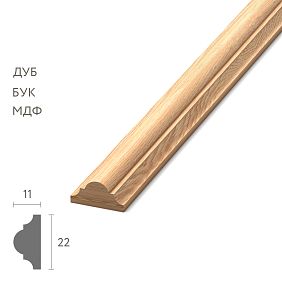
The variety of molding profiles is astounding. The simplest option is a rectangular strip with rounded corners, creating a barely noticeable relief. Such moldings are used in minimalist and Scandinavian interiors, where restraint and conciseness are important. A more complex profile includes several parallel protrusions and recesses, creating a rhythmic play of light and shadow. Classical moldings have a profile with quarter-rounds, ogees, and cavettos—elements borrowed from ancient architectural grammar.
Baroque and Rococo moldings are distinguished by the maximum plasticity of the profile—wavelike curves, asymmetrical scrolls, plant motifs integrated directly into the profile. Such moldings create an impression of luxury, abundance, and decorative excess characteristic of these historical styles. Modern designers often use Baroque moldings in a measured way, as accents against neutral surfaces, creating an effect of controlled opulence.
Functional Application of Moldings in the Interior
Horizontal moldings divide a wall into tiers—the dado, the main field, and the frieze. This tripartite system comes from classical architecture, where the building's plinth, main body, and crowning cornice form a harmonious whole. Transferred to an interior wall, this system creates correct proportions and visually adjusts the room's height. A low dado of 40-60 cm from the floor, separated by a molding from the main part of the wall, creates a feeling of stability and solidity. An upper frieze of 30-50 cm from the ceiling, also highlighted by a molding, gives completeness to the composition.
Vertical moldings organize the wall space into rhythmic panels. The classic scheme involves the symmetrical arrangement of rectangular panels framed by moldings. The inner space of a panel can be painted in a contrasting color, wallpapered with a pattern, decorated with fabric, or left in the same color as the rest of the wall—then the decorative effect is created solely by the relief of the molding.Wooden Planks for Wallsserve a similar purpose but create a different aesthetic—more graphic, linear, modern.
Casings: Tradition Reinterpreted in a Modern Context
Wooden casingis an element with deep cultural roots in the Russian architectural tradition. Carved casings on wooden houses were not just decoration but also a talisman, protection from evil spirits, a manifestation of the homeowner's skill. In the modern interior, casings have lost their magical function but retained their aesthetic and practical significance. They frame door and window openings, creating a visual frame that turns a utilitarian element into an architectural accent.
Wooden trimperform an important technical function—they cover the gap between the door frame and the wall, protecting it from dirt and damage. But their decorative role is much more important. A properly chosen casing turns an ordinary door into a portal, a significant element of the interior composition. A wide casing with a profiled surface creates a feeling of solidity and importance. A narrow, concise casing emphasizes the purity of lines and the modernity of the style.
Typology of Casings: From Simple to Carved
Simple, smooth casings with a rectangular cross-section are the basic option for minimalist interiors. Their task is to neatly close the technological gap without drawing excessive attention to themselves. Painted the color of the walls or doors, they are almost invisible but perform their function flawlessly. Profiled casings have a shaped cross-section with protrusions and recesses that create a play of light and shadow. They are more decorative, suitable for classical and neoclassical interiors.
wooden carved moldingsare the pinnacle of decorative craftsmanship. Plant ornaments, geometric patterns, stylized images—all of this can be carved on the surface of a casing, turning it into a work of art. Carved casings require an appropriate context—they look organic in interiors with a high degree of decorativeness, where other carved elements are present, creating a unified stylistic picture. In a minimalist space, a carved casing will look like a foreign element, disrupting the stylistic integrity.
Compositional Solutions with Casings
Classical framing of a doorway includes not only the side and top strips of the casing but also a pediment—a horizontal cornice above the door, which creates the effect of an architectural portal. The pediment can rest on brackets with carved decoration, which give the composition completeness and solemnity. Such a solution turns an ordinary interior door into a ceremonial entrance, marking the transition between spaces of different functional significance.
Contrast painting of casings relative to the walls enhances their decorative effect. White casings on dark blue or emerald walls create a graphic accent that structures the space and draws attention to the architecture of the openings. Dark casings on light walls create the opposite effect—strictness, elegance, emphasized graphic quality. Casings in the color of the walls blend into the surroundings, making the doorway less noticeable, which is useful in open-plan spaces where visual unity is important.
Covings: A Delicate Transition Between Planes
wooden corniceare profiled strips with a concave cross-section, intended for finishing the joints between wall and ceiling, wall and floor, wall and furniture. Unlike moldings with a convex profile, covings create a smooth concave transition that softens the harshness of a right angle. This is especially important in interiors with low ceilings, where a sharp transition between the vertical and horizontal plane visually presses down, reducing the already insufficient height of the room.
A wooden coving brings the nobility of natural material into the interior. The texture of solid oak, beech, or ash creates visual and tactile interest that cannot be achieved with a plastic skirting board or polyurethane cornice. A coving can be painted any color, patinated, stained, creating a perfect match for the interior's color palette. At the same time, the wood grain remains visible under the coating, adding depth and complexity to the color.
Coving in Classic and Modern Interiors
In classic interiors, coving serves as a ceiling cornice, completing the wall composition. The profile of classic coving includes several curves, creating a complex play of light and shadow. Large coving with a height of 10-15 cm corresponds to the high ceilings of palace interiors, creating a sense of scale and solemnity. Small coving with a height of 3-5 cm is suitable for standard apartments, where it is important not to overload the space with overly massive elements.
Modern interiors use coving more restrainedly. A simple concave profile without additional decorative elements creates a clean, minimalist transition between planes. Painted in the color of the ceiling, the coving visually increases its height, blurring the boundary between the wall and ceiling. Painted in the color of the wall, the coving emphasizes the horizontal line, making the room visually wider.
Slats: A Modern Interpretation of Slatted Decor
Wooden Planks for Walls— one of the main trends in modern interior design. Slatted systems create a graphic structure that zones space without erecting physical partitions. Vertical slats visually raise the ceiling, creating a rhythmic vertical structure that organizes the perception of space. Horizontal slats expand the room, creating a dynamic horizontal rhythm.
Slats are mounted on the wall with uniform gaps, creating a rhythmic structure. The spacing between the slats determines the character of perception — close spacing creates an almost continuous surface with delicate gaps, while wide spacing emphasizes the graphic quality of individual elements. Slats can be painted in a contrasting color relative to the wall, creating an expressive graphic pattern, or in the same tone as the wall, in which case the decorative effect is created solely by the relief and play of shadows.
Functional Capabilities of Slatted Systems
Slatted partitions zone the space of studios and open-plan apartments, visually separating the kitchen from the living room, the sleeping area from the work area. At the same time, a visual connection between the zones is preserved; the space is not broken up into isolated cells, as with the use of solid partitions. The slatted system allows light and air to pass through, creating a sense of lightness and freedom.
Slats on an accent wall create a textured surface that attracts attention and becomes the compositional center of the interior. Behind the headboard of a bed, in the TV area of a living room, in an entrance hall — slatted decor works as an expressive background against which furniture and accessories look advantageous. Slats made of natural oak or ash with a pronounced texture create tactile interest, a desire to touch the surface, to feel the natural material.
Wood Species: Choosing Material for Wall Decor
Choice of wood species forinterior wall decordetermines not only visual characteristics but also durability, stability, and processing possibilities. Each species possesses unique properties that make it preferable for certain operating conditions and stylistic solutions.
Oak: The Standard of Strength and Elegance
Oak is the king among wood species for interior decor. High density and hardness make oak products exceptionally strong and durable. Oak is not afraid of mechanical impacts, does not deform with humidity fluctuations, and retains its shape for decades. The expressive texture with large pores creates a characteristic pattern that cannot be confused with other species. Tannins in the wood composition give oak natural resistance to rot and fungal attack.
The color palette of oak varies from light sandy to dark brown depending on the processing method. Natural oak has a warm honey hue. Stained oak acquires a noble dark chocolate color with purple notes. Bleached oak exhibits a cool gray-beige tone, popular in Scandinavian interiors. All these shades can be obtained from the same wood through different processing, providing the broadest possibilities for color coordination with other interior elements.
Beech: density and structural uniformity
Beech is distinguished by a fine-pored, uniform structure, which makes it an ideal material for carving and milling. Ornament details come out clear, without chips or blurred boundaries. Beech wood has a pinkish hue that gives products special warmth and softness. After heat treatment, beech acquires a darker reddish-brown color, visually approaching valuable exotic species.
The density of beech is comparable to oak, ensuring high strength and wear resistance. Beech moldings and architraves withstand significant loads without deformation. Shape stability with proper drying makes beech a reliable choice for elements that must maintain geometry for many years. Beech decor is especially good in bedroom and children's room interiors, where the warm pinkish hue of the wood creates an atmosphere of coziness and security.
Ash: Contrasting Texture and Elasticity
Ash attracts with its contrasting texture with clearly defined annual rings. This feature makes it ideal for modern interiors, where the expressiveness of natural forms is valued. The light shade of ash with light olive notes visually expands the space, which is especially valuable in compact rooms. The texture of ash is readable even under a layer of paint, creating depth and complexity of the painted surface.
High elasticity of the wood allows creating elements of complex curvilinear shape without the risk of cracking. Bent moldings for arched openings, curvilinear architraves for bay windows — ash handles these tasks better than more fragile species. At the same time, the strength of ash is not inferior to oak, making it a universal choice for a wide variety of applications.
Wooden Decor Production Technology
The path from solid wood to a finished decorative element includes many technological operations, each of which influences the quality of the final product. Modern production combines traditional wood processing methods with the use of high-precision computerized equipment.
Cabinet drying: the foundation of stability
Freshly cut wood contains up to 50-60% moisture. Using such material for decor production is unacceptable — when drying under interior conditions, the wood will shrink, leading to deformation, cracking, and warping of products. Kiln drying reduces wood moisture to 8-12% — the optimal level for interior products.
The kiln drying process takes from several days to several weeks depending on the species and thickness of the material. Temperature and humidity in the chamber are regulated according to a special program that ensures uniform moisture removal without stresses in the wood. Too fast drying leads to cracking, too slow — to economic inefficiency of production. After kiln drying, the wood is stabilized — conditioned in conditions close to operational until equilibrium moisture content is established.
CNC milling
Modern production of moldings and architraves is unthinkable without CNC (Computer Numerical Control) machines. CNC milling centers reproduce the most complex profiles with an accuracy of up to tenths of a millimeter. A 3D model of the future product is created in specialized software, then converted into a control program for the machine.
Milling processing allows creating elements that are impossible or economically impractical to make by hand. Complex curvilinear profiles, precise repetition of ornament on hundreds of identical elements, flawless joining of parts — all this is ensured by computer control of the process. At the same time, the price of the product remains affordable due to the high productivity of the machines.
Manual Finishing and Carving
But technology does not replace human craftsmanship where soul and uniqueness are required. After mechanical processing, each product undergoes manual finishing, where experienced craftsmen eliminate the smallest imperfections, emphasize the expressiveness of the relief, and give the element completeness. Carved elements of high complexity are still created by hand by carvers who master traditional wood processing techniques.
Hand carving in wood is an art that requires years of learning and practice. The carver does not simply reproduce a given pattern but interprets it, introduces individuality, and creates a work possessing artistic value. Each hand-carved element is unique — it is impossible to repeat it exactly, even for the author. Such products become true works of decorative and applied art, passed down from generation to generation.
Finishing: Color and Protection
Wood requires a protective coating that protects it from moisture, dirt, mechanical damage, and fading. But finishing is not only protection but also an opportunity to change the color, emphasize the texture, and create special decorative effects.
Transparent Coatings: Preserving Natural Beauty
Oils and waxes penetrate the wood structure, emphasize the texture, and make the color more saturated and deep. An oil coating creates a matte surface with a slight silky sheen, pleasant to the touch. Oil protects wood from moisture but does not create a surface film, so the wood retains the ability to breathe, regulating humidity in the room.
Varnishes create a durable protective film on the wood surface. Glossy varnish emphasizes the relief, creating a contrasting play of highlights and deep shadows in the recesses of the ornament. Matte varnish retains protective properties but looks more natural, without creating a feeling of a plastic surface. Semi-matte varnish is a compromise between aesthetics and practicality, popular in modern interiors.
Painting and Decorative Techniques
Opaque paints completely conceal the wood grain, creating a uniform color surface. White enamel is a classic for French and Scandinavian interiors; it lightens the decor, making it airy. Black enamel creates dramatic contrast and emphasizes the graphic quality of forms. Colored enamels—blue, green, terracotta—allow wooden decor to be integrated into any interior color scheme.
Patination adds depth to a painted surface. The technique involves applying a contrasting pigment into the recesses of the relief and then removing the excess from the raised parts. Gold patina on a white background is a classic for luxurious interiors. Dark patina on a light base highlights carving details and makes the ornament legible. Silver patina creates a cold elegance popular in contemporary interiors.
Decor Installation: The Technology of Flawless Mounting
The quality of installation determines not only the appearance but also the durability of the decor. Improper installation can lead to elements peeling off, gaps appearing at joints, and product deformation.
Surface Preparation: The Foundation for Secure Mounting
The wall must be level, sturdy, clean, and dry. Loose plaster is reinforced with deep-penetration primer. Irregularities exceeding 3-5 mm are leveled with filler—decorative elements follow the profile of the base and reveal all its defects. The surface is degreased to improve adhesive bonding.
Layout is performed using a laser level, which ensures perfectly horizontal and vertical lines. Symmetrical compositions require determining a central axis from which the remaining elements are arranged. Pre-laying elements on the floor or temporarily fixing them to the wall with painter's tape helps evaluate the composition and make adjustments before final installation.
Mounting: Adhesive and Mechanical Fasteners
Light moldings and small-section battens are mounted with special installation adhesive. The adhesive is applied in dots or a zigzag pattern to the back of the element, the part is pressed against the wall, and fixed for several minutes until it sets. Excess adhesive that squeezes out from under the element is removed with a damp cloth before it hardens.
Heavy solid wood elements require combined mounting. The adhesive bond is supplemented with mechanical fastening—finish nails or screws. Fasteners are installed in the least noticeable places—in recesses of the relief, in areas that will be hidden by other elements. Fastener heads are filled with wood filler matching the product's tone, sanded, and become invisible.
Stylistic Solutions: From Classic to High-Tech
interior wall decorWooden wall decor is versatile—it organically fits into interiors of very diverse stylistic directions with the correct selection of forms, profiles, and finishing methods.
Classical and Neoclassical: Symmetry and Proportions
A classic interior is unthinkable without a system of moldings creating wall panels. Rectangular frames of correct proportions, symmetrically arranged relative to the central axis, create a solemn harmony.Wooden casings create a frame around the opening, visually highlighting it from the wall plane. A classic casing has a profiled section that corresponds to the profiles of baseboards and moldings.Door casings with carved corner rosettes frame doorways, turning them into architectural portals. Ceiling cornices with complex profiles complete the wall composition.
Neoclassicism retains the structural logic of classicism but simplifies the decor, making it more restrained. Moldings have a simple profile without an abundance of small details. The color palette tends toward neutral shades—white, gray, beige. Gilding is used sparingly, as a delicate accent, not as a total covering. Proportions become more elongated, vertical, aligning with modern concepts of spatial beauty.
Scandinavian Style: Laconicism and Naturalness
Scandinavian interiors value the naturalness of wood, so the decor often remains in its natural color, coated with oil or matte varnish. Moldings have a simple rectangular profile; battens are mounted with uniform spacing, creating a graphic structure. White painted moldings on white walls create a monochrome composition where the decorative effect is achieved solely through the play of light and shadow.
Minimalism of form does not mean primitiveness—Scandinavian decor is thought out to the smallest detail, every line is in its place, proportions are verified with mathematical precision. The absence of ornament is compensated by the quality of the material and the flawless execution. The wood grain becomes the main decorative element, which needs no additional embellishment.
Modern style: geometry and contrasts
Contemporary interiors use wooden decor in non-traditional ways. Asymmetrical compositions of moldings create dynamism, defy expectations, and provoke visual interest. Vertical battens are placed not across the entire wall but fragmentarily, forming accent zones. Horizontal moldings are mounted at different levels, creating a rhythmic structure without symmetry.
Contrast painting emphasizes the geometry of the decor. Black moldings on white walls, dark blue battens on light gray surfaces—such solutions create graphic expressiveness characteristic of contemporary aesthetics. Combining wood with metal, concrete, and glass creates textural contrasts that enrich the visual experience of the interior.
Frequently Asked Questions About Wall Decor
Which wood species is best for moldings and casings?
The choice of species depends on operating conditions and interior style. For rooms with normal humidity, any species are suitable—oak, beech, ash, pine. For humid rooms, oak is preferable due to its natural moisture resistance. For carved decor, the best choice is beech or linden, which are excellent for carving. For minimalist interiors with an emphasis on texture—ash with its contrasting annual rings.
Can wooden decor be painted any color?
Wooden elements are excellent for painting in any colors. The surface is first sanded, primed, then paint is applied in 2-3 coats. Acrylic and alkyd enamels provide a durable, opaque coating. If desired, the decor can be repainted a different color—the old coating is removed or sanded, and new paint is applied. This allows updating the interior without replacing decorative elements.
How long does it take to install moldings in a room?
Timelines depend on the complexity of the composition. Installing a simple ceiling cornice around the perimeter of a 20 sq.m room takes 1-2 days. Creating a system of molding panels on all walls requires 3-5 days. Installing a batten system on an accent wall—1-2 days. Installing casings on all doors in an apartment—2-3 days. Work by a professional crew reduces timelines due to experience and coordinated actions.
Does wooden decoration require special care?
Minimal care involves regular dusting with a dry or slightly damp cloth. Relief elements with small details are periodically cleaned with a soft brush or vacuum with a brush attachment. Painted and varnished surfaces do not require special maintenance. Oil finishes require renewal every few years—the surface is cleaned and coated with a fresh layer of oil.
How does wall decor affect the perception of room size?
Properly selected decor visually corrects room proportions. Vertical moldings and battens raise the ceiling, making the room appear taller. Horizontal elements expand the space, making it seem more extended. Light decor on light walls enlarges a room; dark decor on dark walls reduces it but adds intimacy and coziness. Large decor in a small room creates a feeling of crampedness; small decor in a large room gets lost and fails to produce the desired effect.
Can wood be combined with polyurethane decor?
Combination is possible and often used to optimize the budget. The most noticeable elements—casings, moldings at eye level—are made of natural wood, creating tactile and visual value. Ceiling cornices, which are out of reach and not touched by hands, can be polyurethane. With skillful selection of profiles and identical painting, the difference in materials becomes unnoticeable.
Is wooden decoration eco-friendly?
Natural wood is an absolutely eco-friendly material that does not emit harmful substances. Modern finishing compositions — natural-based oils, water-based acrylic paints — are also environmentally safe. After complete drying, the coatings are inert and do not affect indoor air quality. Wooden decor is not only safe but also beneficial — wood regulates indoor humidity, creating a comfortable microclimate.
How to choose the size of moldings for a specific room?
The main rule is proportionality. The height of the molding should be approximately 1/30-1/40 of the wall height. For a ceiling height of 2.7 m, the optimal cornice height is 7-9 cm; for a 3.5 m ceiling — 10-12 cm. In small rooms, large decor looks overwhelming; in spacious rooms, small elements get lost. When in doubt, it's better to choose a more restrained option — a lack of decor is easier to compensate with accessories than to correct an overloaded look.
STAVROS: craftsmanship proven by time
When it comes to creating truly outstanding interiors usinginterior wall decor, professionals turn to STAVROS — a recognized leader in the production of decorative elements from natural wood. For over two decades, STAVROS has been turning the dreams of designers and architects into reality, transforming noble wood into works of decorative art that transform spaces and create an atmosphere of sophistication.
STAVROS works exclusively with selected solid wood of noble species — oak, beech, ash — sourcing materials from trusted European suppliers. Each batch of wood undergoes strict incoming inspection, where material with defects, uneven structure, or excessive moisture is filtered out. Chamber drying according to individually developed regimes ensures material stability, eliminating deformations after installation in interiors.
STAVROS's production base is equipped with modern CNC milling centers of the latest generation, which reproduce the most complex profiles and ornaments with jewelry precision. But where artistic craftsmanship and individuality are required, experienced carvers step in, creating unique handmade elements that cannot be replicated. This organic combination of advanced technology and traditional craftsmanship — the philosophy of STAVROS — ensures impeccable quality at a reasonable price.
The STAVROS assortment includes thousands of items — moldings of all classic and modern profiles,Wooden casings create a frame around the opening, visually highlighting it from the wall plane. A classic casing has a profiled section that corresponds to the profiles of baseboards and moldings.smooth and carved,ceiling covings, Wooden Planks for Walls, cornices, baseboards, carved overlays. The full range of products allows for creating a cohesive interior where all elements harmoniously combine in style, scale, and execution quality.
Custom production is a strong suit of STAVROS. If the extensive catalog doesn't have the needed element, the company's designers will develop it based on your sketch. The engineering department will create a 3D model, coordinate details, and produce a prototype. After approval, serial production will commence — from a few pieces for a private interior to thousands of elements for a large commercial project.
STAVROS technical support accompanies the client at all stages — from material and profile selection to consultations on installation and maintenance. The company's specialists will help calculate the required amount of material, suggest the optimal layout scheme, and recommend suitable finishing methods. Years of experience working with wood, thousands of completed projects, and positive client feedback — a guarantee of success for your interior project.
Choosing STAVROS means choosing a partner for whom quality is not a marketing slogan but a daily practice, tested by time. It's an investment in the beauty, durability, and emotional comfort of your home, which will delight you and your loved ones for many years, creating an atmosphere of nobility, sophistication, and impeccable taste.


