












































































Article Contents:
- Why the Marine Theme Captures Hearts
- Aesthetics of Form: Why Fish Are So Beautiful
- Materials for Marine Decor: Wood vs. Polyurethane
- Wood Carving: Traditions and Living Energy
- Polyurethane: Modern Possibilities
- Combined approach: the best of both worlds
- Types of Marine Decor: From Realism to Stylization
- Naturalistic Carving: The Illusion of Life
- Decorative Stylization: Recognizability Through Simplification
- Abstraction: A Hint of Form
- Application of Marine Decor in Various Interiors
- Bathroom: A Natural Habitat
- Living Room: Creating Atmosphere
- Children's Room: Play and Education
- Study and Library: Respectability and Character
- Seafood Restaurant: Decor as Marketing
- Yacht and Boat: Functional Beauty
- Process of Creating Carved Marine Decor
- Concept and Sketch
- Wood Carving: From Blank to Masterpiece
- Creating Polyurethane Carving: Replication Technology
- Installation and Placement of Marine Decor
- Choosing a Location: Composition and Visual Balance
- Fastening technology
- Frequently Asked Questions About Marine Decor
- Is the Marine Theme Suitable for a Classic Interior?
- Can wooden decor be used in damp areas?
- How to Care for Carved Decor?
- How Much Does Carved Fish Decor Cost?
- Can I Order a Carving Based on a Photo of My Favorite Fish?
- Is Polyurethane Decor Safe for Health?
- How Does Marine Decor Affect the Perception of Space?
- Does the Marine Theme Combine with Modern Minimalism?
- STAVROS: where the sea meets craftsmanship

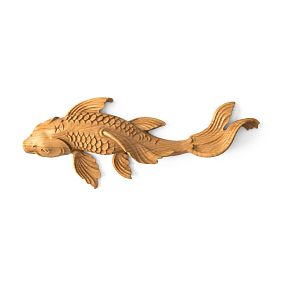
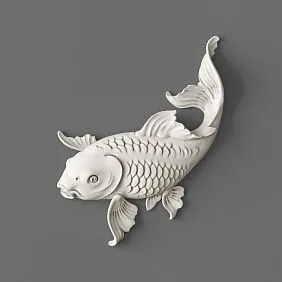
Close your eyes and imagine: a wave rolling onto the shore, sunbeams dancing on the water's surface, a silver school of fish gliding through the transparent depths. This image of eternal motion, freedom, and connection with nature can be transferred to your interior.Interior decor sea fish— is not just a decoration for walls or furniture. It is a way to create an atmosphere that will remind you of summer vacations on the coast, sailing adventures, the boundless freedom of ocean expanses. Carved overlays depicting fish, dolphins, seahorses, and shells transform an ordinary city apartment into a space where the spirit of the sea lives. And when such decor is made by the hands of masters, when every scale, every fin is crafted with jewelry precision, it becomes not just a decoration, but a work of art passed down through generations.
Marine-themed interiors never go out of style. They are universal — suitable for country houses by bodies of water and for city apartments far from the sea, for children's rooms and adult studies, for seafood restaurants and private yachts. But most importantly — they are emotional.handmade interior decor with marine motifs awakens memories, creates a mood, brings a smile. When a guest enters a room and sees a carved school of silver mackerel or a majestic marlin on the wall, they involuntarily stop, examine the details, recall their own sea stories. Such decor is an excellent conversation starter, a way to tell about yourself without words, to show your love for the sea, travel, and nature.





Why marine themes capture hearts
The sea lives in humanity's collective unconscious as a symbol of infinity, mystery, and adventure. We emerged from the ocean millions of years ago, but the genetic memory of the aquatic element remains. The sound of the surf calms, the sight of the sea's surface meditates, the salty wind invigorates. When we cannot live by the sea, we bring the sea into our homes — through colors, materials, and images. And the most expressive of these images are the living creatures that inhabit the aquatic environment.
Fish in decor carry many symbolic meanings. In Christian tradition, the fish is an ancient symbol of faith. In Chinese culture, the carp embodies perseverance and achieving goals, the goldfish — wealth and prosperity. In Celtic mythology, the salmon is associated with wisdom and knowledge. Dolphins symbolize friendship, playfulness, and helping humans. The seahorse — loyalty and paternal care. When you place a carved fish in your interior, you are not just decorating a wall — you are bringing these meanings, these energies into your space.




Aesthetics of form: why fish are so beautiful
From a visual art perspective, a fish is a perfect form. Millions of years of evolution have honed its silhouette to minimize water resistance. A streamlined body, smooth curves, dynamic fins create lines that please the eye. A carver working with the image of a fish deals with a form tested by nature for beauty and functionality. One only needs to correctly convey these lines in wood or polyurethane, preserve the vitality of movement, the feeling that the fish is not frozen, but has simply paused for a moment before a new dash.
The diversity of forms is astounding. The graceful seahorse with its whimsical curves and prehensile tail. The swift barracuda — a torpedo of muscle and teeth. The lazy flounder, flattened on the bottom. The spiny pufferfish, inflated into a ball. The majestic manta ray with wings spanning several meters. The tiny clownfish peeking out from anemones. Each species offers a unique visual language, each creates its own mood.Carved marine-themed overlays allow you to choose exactly the fish that resonates with your soul, that tells your story.
Our factory also produces:




Materials for marine decor: wood vs. polyurethane
When it comes to creating carved decor depicting fish, the master and the client face the question of material. Traditionally, carving was done in wood — a warm, living, noble material. But modern technology offers an alternative — high-quality polyurethane, which has its undeniable advantages. Which material to choose? The answer depends on the tasks, operating conditions, budget, and personal preferences.
Get Consultation
Wood carving: traditions and living energy
Wood is a material with a history spanning millennia. Wood carving existed in all cultures, from Polynesian Maori to Norwegian Vikings, from Russian masters to Chinese carvers. When a master carves a fish from solid wood, they continue this ancient tradition, investing not only technical skill but also a piece of their soul into the work. Wooden carving possesses an energy that everyone feels — it holds the warmth of the master's hands, the memory of the tree, the connection with nature.
The choice of wood species affects the character of the carving and the perception of the finished product. Linden — a classic material for carving. Soft, pliable, with a uniform fine-grained structure, it allows for the finest details to be worked out. Fish scales, fin rays, skin texture — all can be conveyed in linden with photographic precision. After staining, linden acquires a noble hue that emphasizes the carving. The disadvantage of linden is its relative softness; it is easily damaged with careless handling.
Oak — the complete opposite of linden. Hard, dense, with a pronounced texture, it requires more effort to carve but offers unsurpassed strength and durability. A carved fish made of oak will last for centuries without losing its shape or clarity of detail. The texture of oak adds an extra dimension to the carving — annual rings create a visual subtext that enhances the impression. Oak looks especially expressive under stain, when the pores darken and the raised parts remain light, creating contrast and depth.
Beech occupies a middle ground between linden and oak. Hard enough for strength, but not so much as to hinder carving. The texture is fine, uniform, not distracting from the form. Beech sands well to a silky smoothness and feels pleasant to the touch. If you plan for guests to be able to touch the decor, beech is an excellent choice. Its surface under the hand is warm, smooth, alive — unlike cold plastic or stone.
Ash, with its contrasting structure, creates a graphic effect. Dark and light stripes of annual rings turn a carved fish into an almost abstract work, where form and material texture interact, creating a complex visual message. Ash is more difficult to carve due to its layered structure, but in the hands of an experienced master, it yields a unique result that cannot be replicated in other species.
Polyurethane: modern possibilities
Polyurethane carved overlays are a product of modern technology. Polyurethane is a polymer that, after curing, acquires properties that in many respects surpass natural wood. It is absolutely impervious to moisture — can be used in bathrooms, saunas, even in swimming pools and on yachts, where wooden carving would quickly deteriorate. It does not crack, warp, or dry out — shape stability is guaranteed for decades. It is lighter than wood, simplifying installation and reducing load on structures.
The detailing of polyurethane carving can be phenomenal. Modern casting molds allow for the reproduction of the slightest nuances of the master model. If the reference carving is virtuosic, the casting will precisely replicate every detail. This means that the most complex carving, which in wood would require weeks of work by a master of the highest qualification, can be reproduced in series in polyurethane at an affordable price. The democratization of complex decor is an important achievement, allowing people with limited budgets to enjoy beauty previously accessible only to the wealthy.
Polyurethane is easily painted in any color, can be patinated, coated with metallic paints imitating bronze or silver. You can create an effect of aged wood or, conversely, brightly paint it in blue and green tones imitating tropical fish. Flexibility in finishing is a strong point of polyurethane. It allows for experimentation with color without fear of ruining expensive material.
Combined approach: the best of both worlds
Smart designers do not oppose wood and polyurethane but use them in combination, extracting the maximum from each material. Main structural elements — frames, panels, balusters — are made of wood, ensuring strength and naturalness. Decorative overlays, where fine detailing is important and which operate in challenging conditions, are made of polyurethane. This approach optimizes the price-quality-durability ratio.
For example,wooden decor for a yacht may include oak panels in the cabin, but overlays with images of fish and seashells are polyurethane, because they are not afraid of salt spray and high humidity. Or in a bathroom, the main finish is ceramic and stone, but the decorative insert above the mirror is a polyurethane carved composition with dolphins, which will not suffer from constant steam. Understanding material properties and the ability to combine them correctly is a sign of professionalism.
Types of marine decor: from realism to stylization
The image of a fish can be executed in different artistic manners — from photographic realism to abstract stylization. Each approach creates its own atmosphere, appeals to different emotions, and suits different interiors.
Naturalistic carving: the illusion of life
Realistic carving strives to reproduce a living fish as accurately as possible in all its details. Each scale is carved separately, creating a texture that feels real. The eye has a pupil and a highlight conveying moisture. The fins are detailed down to individual rays, the gills down to the opercula. The mouth is slightly open, revealing teeth. The body is curved in a dynamic pose—the fish is not frozen but captured in a moment of movement, a dash, a turn.
Such carving requires from the master not only technical skills but also knowledge of fish anatomy, understanding of their biomechanics, and artistic sense. One must study photographs, observe live fish in an aquarium or in their natural environment, feel how they move, how light plays on their scales, how fins are positioned in various poses. Only deep knowledge of the subject allows creating a carving that deceives the eye, making one momentarily believe that a real fish, miraculously frozen on the wall, is before them.
The coloring of naturalistic carving also strives for realism. All shades of gray, silver, and blue are used for common fish. Bright tropical species are painted with acrylics, detailing patterns, stripes, and spots that precisely match natural ones. A finishing varnish creates the effect of a wet surface, enhancing the illusion of a living fish. Such decor becomes the center of attention, the focal point of the interior, around which all other space is arranged.
Decorative stylization: recognizability through simplification
Stylized carving does not strive for photographic accuracy. It highlights the main characteristic features of the fish—silhouette, proportions, key details—and simplifies, generalizes the rest. Scales may be indicated by rhythmic notches rather than carved individually. Fins—by silhouette without detailing rays. The eye—simply a round indentation without a pupil or highlights. Such carving is more concise, reads faster, and fits more easily into different interior styles.
Stylization can go in different directions. Geometric stylization turns the fish into a set of simple shapes—circles, ovals, triangles. This creates a graphic, almost abstract image that works well in modern minimalist interiors. Ornamental stylization weaves the image of the fish into plant or geometric patterns, making it part of a larger decorative composition. This is typical for Eastern styles—Arabic, Persian, Indian—where realistic images are not favored, and decor is built on patterns.
Ethnic stylization draws on the traditions of specific cultures. Polynesian fish—angular, with clear contours, filled with geometric tattoo-like patterns. Japanese koi carp—fluid, graceful, with characteristic painting in the form of color spots. Scandinavian carved fish—concise, with minimal details, often painted white or light gray. Each tradition offers its own visual language, which can be used to create a specific atmosphere.
Abstraction: a hint of form
The boldest interpretation is abstract carving, where only a hint, an association of the fish remains. Wavy lines reminiscent of movement in water. A curved shape that could be a fish, a wave, or seaweed. A textured surface evoking associations with scales but not depicting it literally. Such carving appeals to the subconscious, to deep-seated images, to the emotional rather than rational part of perception.
Abstract marine decor is more complex to create than it may seem. One must find that line where the form is still recognizable as marine but already freed from literalism. Too obvious abstraction loses connection with the theme; too cautious—slides into simplified stylization. The master must feel the material, composition, and be able to create forms that speak the language of associations and hints. However, the result becomes unique, unlike anything else, a work of art, not just decor.
Application of marine decor in various interiors
Marine themes are universal, but in each type of room, they are realized differently, considering the space's function, style, and occupants' needs.
Bathroom: natural habitat
The bathroom is the most obvious place for marine decor. Water, tiles, often ceramics with marine motifs—all this creates a logical context for carved fish and shells. But to prevent the decor from looking banal, a thoughtful approach is needed. One should not turn the bathroom into an aquarium by filling every centimeter with marine images. It's better to choose one or two key focal points and accentuate them with quality decor.
Above the bathtub or shower cabin, a panel with a carved composition can be placed—a school of tropical fish swimming among corals. A mirror is framed with a border featuring carved shells and starfish in the corners. The bathroom door is adorned with an overlay depicting a seahorse or octopus. Shelves are held by brackets shaped like dolphins. Each of these elements enhances the marine theme without overloading the space.
The material here is critical. Wood in the bathroom requires special treatment with moisture-resistant compounds and regular maintenance. Polyurethane is the ideal choice for wet areas. It does not swell, rot, is easy to clean, and retains its shape and color for decades. After installing polyurethane trim, you can essentially forget about it—it requires no maintenance beyond occasional wiping of dust and splashes.
Living room: creating atmosphere
In the living room, marine decor serves to create a certain mood. If the owners are avid yachtsmen or divers, the marine theme can dominate, turning the living room into a kind of club room where every detail reminds of a favorite hobby. On the fireplace—a carved composition with a marlin or swordfish, a symbol of struggle and victory. On the walls—panels with wavy molding, imitating a sea wave.Balusters carved in marine styleon the staircase leading to the second floor, continue the theme.
If the marine theme does not dominate but is present as one of the motifs in an eclectic interior, a few accents are enough. A coffee table with carved legs shaped like dolphins. A console with an overlay-shell in the center of the facade. A mirror frame adorned with carved seahorses. These details create a subtext, a hint of connection to the sea, without turning the living room into a themed attraction.
The color palette of a marine interior traditionally includes shades of blue, turquoise, white, and sandy. But this is not a strict rule. A carved fish made of natural dark oak looks magnificent against a deep burgundy or emerald green background—an unexpected combination creates a dramatic effect. White carving on a dark blue wall—a classic of Mediterranean style. Polyurethane fish patinated with bronze on an ivory-colored wall—the elegance of Art Deco.
Children's room: play and education
For children, the marine theme is a source of endless interest. The underwater world is full of amazing creatures that captivate the imagination. Carved fish on the walls of a child's room turn it into an underwater cave or a sunken ship—a space for games and fantasies. But children's decor must be safe, durable, and easy to care for.
Polyurethane overlays are ideal for children's rooms. They have no sharp edges that could cause injury. They are sturdy and won't break even if a child accidentally hits them with a toy. They are easy to clean, and children are known artists on all available surfaces. Bright coloring of carved fish in cheerful colors makes the room lively and stimulates the child's development.
Marine decor in a child's room can be educational. Each carved fish is labeled—species name, habitat, interesting facts. The child grows up studying the diversity of marine fauna, developing an interest in nature and biology. This is unobtrusive learning through the environment—a pedagogical technique that works better than any textbooks.
Study and library: respectability and character
In a study, marine decor takes on a different meaning. Here it is not play but a serious statement about the owner's character. A carved tuna or sailfish on the wall behind the desk—a symbol of purposefulness, speed, strength. A wise old carp—a symbol of longevity, patience, wisdom. A shark—the ultimate efficiency of a predator that knows no defeat.
The execution in a study should be solid. Solid dark oak or walnut, noble patina, restrained color palette. Carving is fine, detailed, demonstrating craftsmanship. This is not a cheap souvenir but a status item speaking of taste and affluence. Size also matters—a large carved fish one to one and a half meters long makes a completely different impression than a miniature ten-centimeter overlay.
A library with a marine theme can refer to the era of great geographical discoveries, when ships plied uncharted oceans, discovering new lands. Carved fish here coexist with globes, maps, and models of sailing ships, creating the atmosphere of a traveler's or naturalist's study from the 18th-19th centuries. This works especially well in colonial or Victorian-style interiors.
Seafood Restaurant: Decor as Marketing
For an establishment specializing in seafood and fish dishes, nautical decor is not just decoration, but part of the marketing strategy. It creates an atmosphere that enhances the gastronomic experience, puts guests in the right mood, and makes the visit a memorable event. Carved fish hung on the walls should be large, expressive, realistic—they tell a story, showcasing the diversity of the sea's bounty.
Decor should be not only beautiful but also practical. The restaurant environment is harsh—heat from the kitchen, steam, grease in the air, constant cleaning with chemicals. Polyurethane handles these conditions better than wood. It does not absorb odors, is easy to clean, and does not change appearance. Wooden carvings in a restaurant require much more meticulous care and periodic refinishing.
The carving theme should match the menu. A Mediterranean cuisine restaurant is decorated with bream, red mullet, octopus, mussels—typical inhabitants of the Mediterranean Sea. A Japanese restaurant—tuna, salmon, eel, shrimp. A Russian cuisine establishment—sturgeon, sterlet, pike, catfish. This consistency creates a holistic impression, where all elements—from decor to menu—work towards a unified image.
Yacht and Boat: Functional Beauty
Nautical decor on board a yacht or boat is a special case. Here it is in its natural environment, where every detail must be functional and reliable. Wood on yachts is traditional—teak decking, mahogany in cabins. But solid wood carved decor requires constant maintenance—saltwater, ultraviolet light, humidity quickly destroy wood without proper protection.
Modern yachts increasingly use polyurethane decorative elements that look like wood but require no maintenance. A carved overlay with dolphins at the cabin entrance, seahorses on cabinet doors, wavycarved nautical trimthemed for finishing bulkheads—all of this can be made from polyurethane, painted to resemble teak or mahogany. The owner gets beauty without the headache of maintenance.
The Process of Creating Carved Nautical Decor
How is a carved fish born—from idea to finished piece on the wall? It's a journey involving several stages, each requiring professionalism and attention to detail.
Concept and Sketch
It all starts with an idea. The client comes with a desire—I want a nautical theme in the interior. A designer or consultant helps specify: what kind of space, what style, what fish, in what execution. Examples from a portfolio, catalogs with ready-made models are shown. If a suitable model doesn't exist, custom carving is designed.
An artist creates a sketch—a drawing of the future carving. This can be a pencil sketch, watercolor drawing, computer visualization. The sketch shows the composition, the fish's pose, the level of detail, the carving style. At this stage, adjustments are made—maybe the fish needs to be turned the other way, made larger or smaller, secondary elements added (seaweed, coral, other fish).
The approved sketch is passed to a carver or modeler. For wooden carving, a full-size drawing with front, side, and top views is created. For polyurethane casting, a master model is made—a reference sample from which a mold will then be created.
Wood Carving: From Blank to Artwork
The master selects a suitable blank—a board of the required thickness, without knots and defects, with the correct grain direction. The grain should run along the length of the fish so it doesn't crack at weak points. The blank is marked according to the drawing, and the general outline is cut out with a jigsaw or bandsaw.
Rough shaping removes excess wood, forming the general volume. This is done with large chisels, drawknives, rasps. The fish gradually gains three-dimensionality from a flat board—the body rounds out, fins are outlined, the head separates from the torso. This is the most critical stage—a mistake here can ruin the entire work; removed excess cannot be put back.
Detailed carving works out all the subtleties. Each scale, each fin ray is carved with thin chisels and gouges. The eyes are carved last—they must be symmetrical, lively, correctly positioned. This requires jeweler-like precision and a steady hand. The mouth, if open, is cut through, teeth are visible.
Sanding smooths out tool marks, bringing the surface to the desired degree of smoothness. Different areas may be sanded differently: smooth body parts—to a silky smoothness; textured areas (scales, fins)—only slightly, preserving the relief. After sanding, the carving is coated with a protective finish—oil, wax, varnish—and tinted or painted if necessary.
Creating Polyurethane Carving: Replication Technology
For polyurethane decor, a master model is first made. It can be carved from wood, sculpted from modeling clay, or 3D printed. The main thing is that it must contain all details with maximum accuracy, because the mold will copy every little thing exactly.
A silicone mold is made from the master model. The model is placed in a mold box, liquid silicone is poured in, which hardens, precisely replicating all undercuts and details. After hardening, the mold is cut open, and the model is extracted. The mold is ready for use.
Two-component polyurethane is mixed in precise proportions and poured into the mold. The material is fluid, filling all the finest details of the mold. After a few minutes, the polymerization reaction begins; the polyurethane hardens, gaining hardness and strength. After full curing (usually after 24 hours), the casting is removed from the mold.
The casting is finished: sprues—pouring marks—are removed, seams are cleaned if the mold was multi-part. Then comes priming and painting. Modern paints allow imitation of wood so convincingly that distinguishing polyurethane from wooden carving from a distance of one to two meters is practically impossible. Or it can be painted any other color, creating a bright tropical fish or a mysterious deep-sea inhabitant with a metallic sheen.
Installation and Placement of Nautical Decor
A beautiful carved fish will become an interior decoration only with proper placement and reliable installation.
Choosing a Location: Composition and Visual Balance
Where to place a carved fish? The first principle—it should be visible but not in the way. Don't hang decor in places where people constantly walk and might accidentally bump into it—in narrow corridors, near doors, at shoulder level. It's better to choose places where the decor can be calmly viewed from a distance—the wall opposite the entrance, the space above a fireplace, the area above a sofa in the living room.
The placement height depends on the element's size and the viewing point. Large carvings 50-100 cm in size look best at eye level of a standing person—approximately 140-170 cm from the floor to the center of the composition. Small elements 10-20 cm can be placed higher or lower, grouping them into compositions. If the decor is intended for viewing by seated people (in a dining area, living room), the height is reduced to 100-130 cm.
Compositional placement of multiple carved fish requires a sense of rhythm and balance. They can form a school swimming in one direction—this creates dynamics, directed movement. Or they can be placed scattered, as if each is swimming on its own—this is a calmer, more meditative composition. The sizes of the fish can be the same or different—large and small, creating hierarchy and depth.
Fastening Technology
Lightweight polyurethane overlays are attached with special mounting adhesive. The wall surface must be clean, dry, and dust-free. Adhesive is applied to the back of the overlay in dots or strips, the element is pressed against the wall and held for several seconds until the adhesive initially sets. Full curing takes 24 hours, during which it is advisable not to touch the decor.
Heavy wooden carved elements require more secure fastening. The adhesive is supplemented with mechanical fasteners—self-tapping screws screwed from the back or in inconspicuous places. A countersunk hole is drilled in the carving, a self-tapping screw is screwed into the wall (into a dowel if necessary), and the head is recessed below the wood surface. The resulting depression is filled with putty and painted to match the carving tone, making the fastener invisible.
Alternative method—hidden hangers. Metal eyelets or a toothed strip are attached to the back of the carving, with a corresponding part on the wall. The element is simply hung on the fastener, like a picture. This is convenient if you plan to periodically change the decor's placement or remove it for cleaning.
Frequently asked questions about marine decor
Is marine theme suitable for a classic interior?
Absolutely. Marine motifs have been used in classic interiors for centuries—think of aristocratic mansions in port cities adorned with trophies from sea voyages. The key is in execution. For classic style, choose restrained, noble carving, in natural wood or with a noble patina. Avoid bright colors and caricatured forms.
Can wooden decor be used in damp rooms?
Yes, but with caveats. The wood must be treated with moisture-resistant compounds—yacht varnish, special oil with wax. The species should be dense, not prone to warping—oak, teak, larch. Regular maintenance is required—periodic renewal of the protective coating. Polyurethane is simpler and more reliable for bathrooms and saunas, wood is for living rooms and bedrooms.
How to care for carved decor?
Maintenance is minimal. Regularly remove dust with a soft cloth or duster—dust gets clogged in the carving recesses, spoiling the appearance. Polyurethane can be wiped with a damp cloth and mild detergent. Wipe wooden carving with an almost dry cloth, renew the oil coating once a year or two by applying a thin layer of oil and polishing it.
How much does carved decor with fish cost?
Prices vary widely. A small polyurethane overlay 10-15 cm can cost 500-1000 rubles. Medium-sized wooden carving 30-40 cm in linden—3000-7000 rubles, in oak—5000-12000 rubles. A large exclusive carved composition one meter by one meter, handmade from valuable species, can reach 50000-150000 rubles. The cost depends on size, complexity, material, and the master's reputation.
Can I order carving based on a photo of my favorite fish?
Yes, many workshops accept custom orders. Provide high-quality photos from different angles, specify the desired size, material, and style of execution. The master will create a sketch, agree on it with you, then produce a unique item. This is more expensive than buying a ready-made model from a catalog, but the result will be one-of-a-kind.
Is polyurethane decor safe for health?
High-quality polyurethane after full curing is inert and safe. It does not emit harmful substances, does not cause allergies, and is approved for use in residential spaces, including children's rooms. Buy products from certified manufacturers, request documents confirming compliance with sanitary standards. Cheap polyurethane of unknown origin may contain toxic impurities—saving is inappropriate when health is concerned.
How does marine decor affect the perception of space?
Marine motifs visually expand space, create a sense of freedom and openness. Blue and turquoise tones, associated with water, calm and reduce stress. Images of fish and sea creatures add dynamics and movement, preventing the interior from being static and boring. Properly applied marine decor makes a room more lively, interesting, and emotionally rich.
Does marine theme combine with modern minimalism?
Yes, but restraint is required. For minimalism, choose laconic stylized carving, not detailed realistic. One large element on an empty wall will create the necessary accent without overload. Colors—natural wood, white, black, gray—no bright tropical colors. Forms—clean, graphic, without excessive detailing. Minimalism and marine theme can work together if principles of conciseness are observed.
STAVROS: where the sea meets craftsmanship
When you are looking forInterior decor sea fish, which will be not just decoration, but a work of art, you come to those for whom carving is not a business, but a calling. The company STAVROS has been creating carved elements for over twenty years that adorn palaces and mansions, restaurants and hotels, private yachts and country residences. Over these years, thousands of projects have passed through STAVROS workshops—from modest furniture overlays to monumental decorative panels covering dozens of square meters.
The philosophy of STAVROS is the combination of traditional hand carving with modern technology capabilities. The company's masters virtuously wield classic chisels and gouges, creating unique works where every stroke bears the trace of a human hand. But they also work with high-precision CNC machines of German production, which allow replicating complex forms with absolute accuracy. This allows offering clients a choice—exclusive hand carving or affordable, high-quality serial elements.
STAVROS materials—selected kiln-dried wood. Oak, beech, ash, linden are purchased from trusted European suppliers, each batch undergoes strict control. Wood moisture is brought to an optimal 8-10%, guaranteeing product stability. You will not encounter cracking, warping, or dimensional changes—STAVROS carving retains perfect shape for decades. STAVROS polyurethane products are made from premium European polyurethane, safe, durable, perfectly conveying the finest carving details.
The STAVROS marine collection includes dozens of models—from miniature seahorses to meter-long marlins, from realistic sturgeons to stylized abstract compositions. If the desired model is not found in the catalog, STAVROS designers will develop custom carving according to your wishes. Provide photos, sketches, describe your vision—specialists will bring it to life in wood or polyurethane.
STAVROS delivery geography covers all of Russia, CIS countries, and beyond. Own logistics ensure fast delivery with guaranteed safety. Each item is individually packaged, protected from impact and moisture. Professional consultants will help choose suitable elements, calculate quantities, and advise on installation. Technical support is available at all stages—from selection to installation.
Choosing STAVROS means choosing quality tested by time. You get not a product, but a partner interested in making your interior perfect. You invest in beauty that does not depreciate but grows in value—both materially and emotionally. STAVROS carved marine decor is a connection with eternity, with the power of the ocean, with the boundless freedom of blue expanses, embodied in noble materials by the hands of true masters.


