












































































Article Contents:
- Psychology of Perception: How Details Transform Space
- Vertical and Horizontal Lines: Guiding the Eye
- Color and Contrast: Managing Attention
- Moldings: Division and Structure
- Panels: Texture and Volume
- Overlays and Rosettes: Accents and Details
- Baseboards and Cornices: Completing the Look
- Space Zoning Without Walls
- Masking Flaws and Correcting Architecture
- Lighting and Decor: Mutual Enhancement
- Stylistic Identity: From Classic to Modern
- Materials: Practicality and Durability
- Installation: DIY or Professional
- Care and Maintenance: Minimal Effort
- Economic Feasibility: Beauty Without Bankruptcy
- Individuality and Self-Expression
- Frequently Asked Questions
- Can Interior Decor Be Used in Small Spaces?
- How to Choose the Color of Decorative Elements?
- Is Polyurethane Decor Suitable for Humid Areas?
- How Long Does It Take to Install Decorative Elements?
- Can Decor Be Repainted When Changing the Interior?
- How Does Decor Affect Room Acoustics?
- Is Special Permission Required to Install Decor?
- Conclusion

A space begins to breathe when rhythm appears within it. Walls gain character, ceilings reveal their height, a room tells its story—all thanks to details that may seem secondary at first glance.interior decorationcan radically change the perception of an apartment or house: visually expand boundaries, raise ceilings, create accents, establish an atmosphere of coziness or grandeur. This is not about costly renovations, but about the skillful use of moldings, overlays, panels, rosettes—elements that form the architectural logic of an interior and give it completeness.
Why do some spaces feel spacious and bright, while others seem cramped and unwelcoming, even if the area is the same? It all comes down to spatial organization—how lines, volumes, and details interact with each other. Properly selectedinterior wall decorcan correct a room's proportions, establish vertical or horizontal axes, create an illusion of depth. It is the art of manipulating perception without radical intervention in the layout, yet with maximum visual impact.




Psychology of Perception: How Details Transform Space
Human perception is structured so that the brain automatically reads lines, proportions, rhythms, and based on these, forms a sense of comfort or discomfort. Vertical lines draw the eye upward, creating an illusion of height; horizontal lines expand space in width. Decorative elements installed on walls and ceilings act as visual guides that either emphasize a room's strengths or mask its flaws.
Rhythm and repetition also play a crucial role. A series of identical panels placed on a wall at specific intervals creates structure, order, a sense of discipline. Conversely, chaotic placement of details or their complete absence makes an interior sparse, lacking anchor points. Elementsinterior wall decorhelp establish precisely the rhythm needed for a particular space—whether it's the calm symmetry of a classic hall or the dynamic asymmetry of a modern living room.
Light and shadow is another aspect that cannot be ignored. Textured surfaces, moldings with pronounced profiles, and three-dimensional overlays create a play of light and shadow, adding depth and drama to the interior. Even in daylight, such details 'come to life,' change depending on the angle of the light rays, and make walls not flat but multi-layered.




Vertical and horizontal lines: guiding the gaze
When we talk about correcting the proportions of a room, the first thing to pay attention to is the direction of the lines. A room with low ceilings can be visually 'stretched' upward by using vertically oriented elements—narrow pilasters, moldings running from floor to ceiling, panels with a vertical pattern. The gaze will slide along these lines, creating a sense of height and airiness.
The reverse task—to widen a narrow space—is solved with horizontal accents.Home interior decor, executed in the form of horizontal moldings, borders, and friezes, visually pushes the walls apart, making the room wider. This technique is especially effective in corridors, hallways, and elongated living rooms, where it is important to compensate for the disproportion of length and width.
A combination of vertical and horizontal elements allows for creating complex compositions, zoning space, and highlighting functional areas. For example, in a studio apartment, you can visually separate the living area from the kitchen by using vertical moldings and horizontal panels without building physical partitions. This preserves the openness of the layout while structuring the space, making it clear and convenient.
Our factory also produces:



Color and contrast: managing attention
The color scheme of decorative elements determines whether they will dominate the interior or remain an unobtrusive background. Decor that matches the wall color creates a volumetric effect without sharp accents—the walls become textured but not loud. This is an ideal option for minimalist and modern interiors, where the purity of lines and the absence of visual noise are important.
A contrasting solution, on the contrary, turnsinterior wall decorinto an independent design element. White moldings on a dark wall, black panels on a light background, gold overlays on a neutral surface—all these are accents that attract attention, structure space, and set the stylistic tone. Contrast works especially effectively in classical and neoclassical interiors, where the clarity of forms and expressiveness of details are important.
An intermediate option is the use of similar but not identical shades. Cream-colored decor on a beige wall, light gray on a white background—such combinations create soft depth without overloading perception. Suitable for bedrooms, children's rooms, and spaces where an atmosphere of calm and comfort is important.
Get Consultation
Moldings: division and structure
Moldings are perhaps the most versatile tool for working with space. With their help, you can divide a wall into zones, create panels, frame doors, windows, mirrors, and paintings. Moldings set the rhythm, form axes of symmetry, and make the interior orderly and meaningful.
A classic technique is creating wall panels, where the wall is divided into rectangular or square sections framed by moldings. Inside each section, there can be solid-color paint, patterned wallpaper, or decorative plaster. Such a structure gives the wall an architectural quality, making it not just a background but a full-fledged element of the interior. Vertical panels visually raise the ceilings, horizontal ones expand the space.
Moldings are also used to frame functional zones—TV panels, bed headboards, accent walls in the living room. A molding frame highlights this zone, makes it the center of the composition, and attracts attention. At the same time, the frame itself can be either laconic or richly ornamented—it all depends on the interior style.
Panels: texture and volume
Decorative panels are ready-made modules with a textured surface that are mounted on the wall, creating a continuous or fragmentary covering. Unlike moldings, which form a frame, panels fill the plane, giving it texture, volume, and expressiveness.
Panels with geometric relief are suitable for modern interiors—strict lines, symmetrical patterns, minimalism of forms. Panels with floral ornaments, curls, and baroque motifs—for classical spaces, where decorativeness and opulence are important. Intermediate options are also possible—neoclassicism, art deco, modernism, where elements of different eras and styles are combined.
An accent wall made of panels is a popular solution for bedrooms, living rooms, and halls. One wall is made textured, voluminous, and expressive, while the others remain smooth. This creates a focal point, structures the space, and adds character to it. At the same time, the panels can be painted to match the other walls or in a contrasting color—depending on the desired effect.
Overlays and rosettes: accents and details
Small decorative elements—overlays, rosettes, corner ornaments—work like jewelry for the interior. They do not take up much space but can radically change the perception of the entire composition, adding elegance, complexity, and individuality.
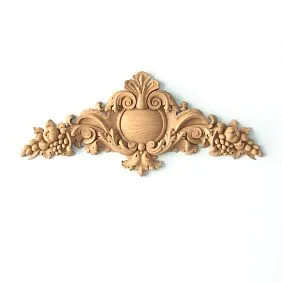
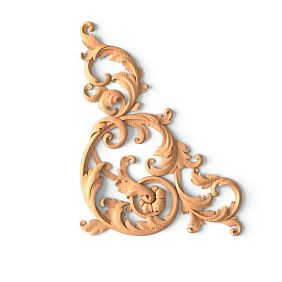
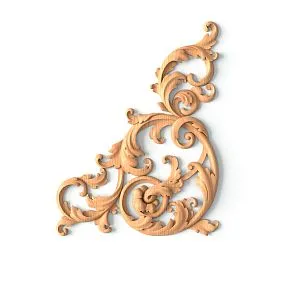
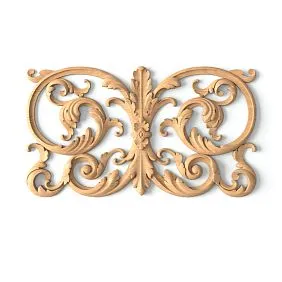
Overlays are used to decorate panels, frame doors, and complement moldings. These can be flowers, leaves, curls, geometric shapes—elements that are attached on top of the main decor, creating a multi-layered relief. Such details are especially effective in classical interiors, where decorativeness and richness of forms are important.
Rosettes—round or oval elements with volumetric ornamentation—are traditionally used on ceilings around chandeliers, hiding fasteners and wires. However, modern designers are increasingly using rosettes on walls as well—as independent accents or as the center of a composition in a panel. A large rosette on a wall can become the focal point of a room, especially if painted in a contrasting color or using gilding techniques.
Baseboards and cornices: completing the look
Baseboards and ceiling cornices are often underestimated, considered purely technical elements that hide the joints between walls and the floor or ceiling. In fact, these are crucial details that complete the interior, giving it a finished and professional look.
A wide baseboard visually 'grounds' the space, making it more stable and solid. A narrow one, on the contrary, creates a sense of lightness and airiness. The same applies to ceiling cornices—a massive profile is suitable for rooms with high ceilings, creating an effect of palace luxury, while a laconic one is for modern interiors with low ceilings.
Cornices are also used for hidden lighting—an LED strip is mounted behind them, creating soft diffused light that visually increases the height of the room. This is one of the most effective techniques in modern design, turning the ceiling into a light source and making the interior floating and weightless.
Zoning space without partitions
In modern apartments and houses, open planning is becoming increasingly popular—studios, combined kitchen-living rooms, multifunctional halls. However, a complete lack of boundaries can make the space chaotic and devoid of structure. This is wherebuy interior decorcomes to the rescue, allowing for visual zoning without building walls.
Vertical moldings installed at the boundary between the living room and kitchen create a visual barrier without blocking light and air. Pilasters placed at the corners of functional zones set boundaries and make the space clear. Decorative panels on one wall of the relaxation area separate it from the work area or dining room.
This zoning preserves the advantages of an open layout—light, air, a sense of spaciousness—while structuring the space and making it livable. Each zone gains its own identity, its own character, while remaining part of a unified whole.
Camouflaging Flaws and Correcting Architecture
Not all rooms initially have perfect proportions and high-quality finishes. Uneven walls, non-parallel corners, traces of old repairs, cracks—all of this can be hidden or masked using decorative elements.
Moldings installed on a wall draw attention away from minor defects, creating a clear structure for the eye to focus on. Panels completely cover problematic areas, turning a flaw into an asset—the wall becomes not just smooth, but textured and expressive. Corner trims hide chips and unevenness in room corners.
Architectural correction is another important function of decor. A low ceiling can be visually raised with vertical elements, a narrow room widened with horizontal ones. A disproportionately large room can be made cozier by dividing it into zones using pilasters and moldings. All of this works without re-planning, without major renovation—solely through the skillful use of decorative details.
Lighting and Decor: Mutual Enhancement
Light and decor work in tandem, enhancing each other. Textured elements create shadows and highlights that change throughout the day depending on the sun's position. Artificial lighting also plays a huge role—properly directed light emphasizes volume, reveals texture, and makes the decor lively and dynamic.
Hidden lighting behind cornices, in niches, under moldings creates a floating effect, visually enlarging the space. Spotlights directed at decorative panels or rosettes turn them into standalone art objects that attract attention. Side lighting enhances texture, making it more expressive.
It's also important to consider the color temperature of the light. Warm light emphasizes coziness, softness, and classic elegance of decor. Cold light emphasizes modernity, severity, and minimalism. The ability to adjust lighting allows changing the perception of the same interior depending on the time of day, mood, or room function.
Stylistic Identity: From Classic to Modern
The choice of decorative elements is determined by the interior's style. Classical spaces require rich ornamentation, symmetry, and proportionality. Moldings with floral motifs, rosettes with lush scrolls, pilasters with capitals, and decorative overlays are used. The color scheme tends toward white, cream, and possibly gilding.
Neoclassicism retains the main principles of classicism but in a more restrained form. Moldings are simpler, ornaments more concise, colors more neutral. It's elegance without opulence, solemnity without pomp. Suitable for modern apartments where a connection to tradition is important, but without archaism.
Modern styles—minimalism, high-tech, Scandinavian—require simplicity of form, purity of lines, and an absence of decorativeness for its own sake. Concise moldings, panels with geometric relief, and monochrome coloring are used. Here, decor works not as an ornament, but as a structural element creating order and spatial logic.
Intermediate styles—Art Deco, Art Nouveau, Eclectic—allow combining elements from different eras, creating individual, authorial interiors. Unexpected combinations are possible here—classical moldings in a modern color, geometric panels with floral overlays, contrasting color solutions.
Materials: Practicality and Durability
The choice of material for interior decor determines not only aesthetics but also practical characteristics—durability, resistance to moisture and temperature fluctuations, ease of installation and maintenance.
Polyurethane—a modern material combining all necessary qualities. It is lightweight, simplifying transportation and installation; durable, resistant to mechanical damage. Moisture resistance allows its use even in kitchens, bathrooms, and unheated rooms. Polyurethane does not crack, does not deform, and retains the clarity of its relief for decades.
Eco-friendliness and safety are important factors, especially for living spaces. High-quality polyurethane does not contain toxic substances, does not emit odors, and is suitable for children's rooms and bedrooms. The material is not afraid of ultraviolet light, does not fade, and does not yellow over time.
Ease of painting and the possibility of multiple updates is another advantage. Polyurethane elements can be painted with acrylic and latex paints, creating patina, gilding, and metallization effects. When changing the interior design, the decor can easily be repainted a new color and adapted to a new style.
Installation: DIY or Professional
Installing decorative elements does not require complex equipment or professional skills—this is one of the key advantages of modern materials. For installation, special adhesive, a handsaw or miter saw, a level, and a tape measure are sufficient. The process involves surface preparation, marking, trimming elements to size, applying adhesive, and pressing them to the wall.
However, when working with large compositions, complex panels, or curved surfaces, specialist assistance may be required. Professional installers have experience, know the nuances of working with different materials, and can perform installation quickly and with high quality. This is especially relevant for commercial projects—restaurants, hotels, offices—where speed and impeccable results are important.
Finishing—painting, patination, gilding—can be done either independently or by involving decorators. It all depends on the complexity of the desired effect and skill level. Simple painting in one color is accessible to everyone; complex decorative techniques require experience and professionalism.
Care and Maintenance: Minimal Effort
Decorative elements made of polyurethane do not require complex care. To remove dust, wiping the surface with a dry or slightly damp cloth is sufficient. Textured areas can be cleaned with a soft brush or a vacuum cleaner with a furniture attachment.
For stains, mild cleaning agents are used. Abrasive cleaners, solvents, or aggressive chemical compounds should not be used—they can damage the surface or paint. With proper care, the decor retains its original appearance for decades.
Repairing minor damage is also not difficult. Scratches are touched up with the same paint; chips are filled with putty and leveled. If an element comes loose, it's enough to clean the back from old adhesive residue, apply fresh adhesive, and press it firmly to the wall. Properly installed decor lasts for decades without needing repair.
Economic Viability: Beauty Without Bankruptcy
Creating an expressive interior does not necessarily require huge investments. Decorative elements made of polyurethane cost significantly less than plaster moldings or natural stone, while the visual effect is comparable or even surpasses traditional materials.
Savings are achieved not only on the cost of the elements themselves but also on installation. The lightweight nature of polyurethane allows for DIY installation without hiring a team of specialists, renting equipment, or reinforcing structures. This is especially relevant with a limited budget.
Durability and the absence of need for regular maintenance make decor an economically beneficial solution for many years. The products do not require repair, replacement, or special treatment. Once installed, the elements last for decades, preserving their original appearance and functionality.
Individuality and self-expression
An interior is not just a functional space, but also a reflection of the owner's personality, taste, and lifestyle. Decorative elements allow for expressing individuality and creating a unique atmosphere that differs from standard solutions.
The ability to combine various elements, styles, and colors opens up limitless possibilities for creativity. Classic moldings can be painted in an unexpected color, creating a modern interpretation of tradition. Geometric panels can be complemented with floral overlays, resulting in an eclectic composition. A symmetrical structure can be broken up with asymmetrical accents, adding dynamism.
Custom ordering of decorative elements is another path to uniqueness. The possibility of creating exclusive shapes, patterns, and sizes allows for the realization of authorial projects that cannot be found in a standard catalog. This is the way for those who do not want to settle for ready-made solutions but strive for complete personalization of space.
Frequently asked questions
Can interior decor be used in small spaces?
Yes, but it is important to observe moderation and choose laconic forms. In small rooms, an excess of decor creates a feeling of crampedness and overloads perception. The optimal solution is one or two expressive elements that will become accents but will not dominate. Vertical moldings will help visually raise the ceiling, horizontal ones will expand the space.
How to choose the color of decorative elements?
The color depends on the desired effect. Decor that matches the wall color creates soft volume without attracting excessive attention—suitable for minimalist interiors. A contrasting color turns elements into independent accents—effective in classical and neoclassical spaces. An intermediate option—similar shades—creates depth without sharp contrasts.
Is polyurethane decor suitable for humid rooms?
Yes, polyurethane is moisture-resistant and can be used in kitchens, bathrooms, and toilets. The material does not absorb water, does not swell, and does not become moldy. This makes it a universal solution for any room, including those where traditional materials deteriorate quickly.
How long does it take to install decorative elements?
The time depends on the complexity of the composition and the area. Installing simple moldings in a standard room can take several hours. Creating complex panels and multi-level structures requires several days. With basic skills, most work can be done independently over a weekend.
Can decor be repainted when changing the interior?
Yes, polyurethane elements can be repainted multiple times. For this, the surface is lightly sanded, primed, and painted in a new color. It is also possible to apply decorative finishes—patina, metallic paints, textured compounds. This allows adapting existing decor to a new style without dismantling.
How does decor affect the acoustics of a room?
Textured surfaces affect sound propagation, creating additional diffusion. This can improve acoustics in rooms with many smooth surfaces where echo occurs. When using decor together with soundproofing materials, the effect is enhanced. However, for serious acoustic correction, specialized solutions are required.
Is special permission required to install decor?
No, installing decorative elements on walls and ceilings does not require approvals or permits. This is cosmetic renovation that does not affect the structural elements of the building. However, when working in an apartment building, it is worth considering the timing of the work so as not to disturb the neighbors' peace.
Conclusion
Space is not only about square meters and layout, but also about sensations, emotions, and impressions. Properly selected decorative elements can transform perception, making a room more spacious, cozy, and expressive. This is not about superficial decoration, but about deep work with the interior architecture, with its lines, proportions, and rhythms.
Modern materials and technologies make the process of creating an expressive interior accessible to everyone. No huge budgets, complex equipment, or professional skills are needed. All that is required is an understanding of the basic principles of space perception, a competent selection of elements, and careful execution.
The company STAVROS specializes in the production of high-quality decorative elements made of polyurethane, offering a wide range of products for any interior tasks. Over 500 models of cornices, moldings, panels, overlays, rosettes, pilasters—each element is created with attention to detail, with respect for the material and the customer. High density of polyurethane, clarity of relief, dimensional accuracy, environmental safety—all this makes STAVROS products a reliable choice for those who value quality and durability. Create a space that will inspire, delight, and serve for decades.


