Article Contents:
- Principles of Interaction Between Furniture and Decor
- Furniture Decor as a Connecting Link
- Living Room: Where Furniture Meets Architecture
- Bedroom: Intimacy Through Details
- Office: solidity and status
- Materials and Their Role in Creating Unity
- Ornament: Echoing Motifs
- Symmetry and Asymmetry: The Play of Balance
- Scale and Proportions: Visual Weight
- Color solutions: from monochrome to contrast
- Lighting as a Composition Enhancer
- Installation and Practical Aspects
- Maintenance and Durability
- Stylistic Variations
- Custom solutions and customization
- Frequently Asked Questions
- Can Furniture of Different Styles Be Combined with Unified Decor?
- How to Choose the Scale of Decor for a Small Room?
- Should Wooden Decor Be Painted or Left Natural?
- How Often Should Decor Be Updated?
- Can Carved Overlays Be Installed Independently?
- How Does Decor Affect the Cost of Furniture?
- Conclusion
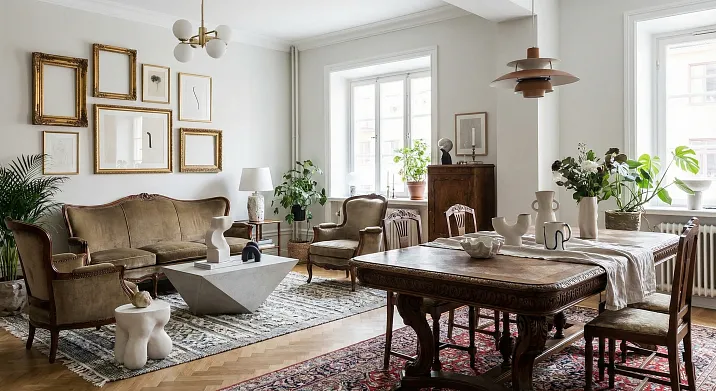
Style unity begins with a dialogue between furniture and space. How to make a massive wardrobe not look like a foreign element in the living room, and a carved bed headboard resonate with the architecture of the walls? The answer lies in the details — in howinterior decorationechoes the forms of furniture, how overlays repeat the profiles of facades, how moldings continue the lines of countertops and backs.
Creating a holistic composition in a home requires an understanding of not only aesthetics but also the architectural logic of the space. Furniture and decor should converse in the same language — the language of forms, proportions, ornaments. WhenClassic Furnitureorganically integrates into the architectural environment through thoughtful decor of walls, ceilings, and doors, that very harmony is born, which cannot be achieved by simply arranging objects.


Principles of Interaction Between Furniture and Decor
Visual connection between furniture and architecture is created through repeating motifs, rhythms, proportions. If a chest of drawers is adorned with carved floral ornaments, it is logical to use similar elements on the walls — overlays with the same swirls, moldings with an analogous profile. This does not mean literal copying; it is about stylistic kinship, about creating visual rhymes that unite disparate elements into a single whole.
Material also plays a key role. Wooden furniture requires support from decorative elements made of solid wood —carved appliqués, wooden panels, cornices made of natural oak or beech create a sense of material unity. Even if the walls are painted or wallpapered, the presence of wooden decor connects them with the furniture, creating a sense of thoughtfulness and integrity of the project.
Proportions are another connecting element. Tall wardrobes, massive chests of drawers, wide tables require a corresponding scale of wall decor. Small moldings and overlays will be lost against the backdrop of large furniture, whereas expressive, voluminous elements will create balance and equilibrium in the composition. Conversely, elegant furniture with thin legs and light proportions needs delicate, lacy decor that will not overwhelm its grace.
Color and finish complete the picture. Gilded furniture requires corresponding accents on the walls — gilded moldings, rosettes, overlays. Furniture stained in dark shades harmonizes with rich colors of decor, light furniture — with cream, white, pastel elements. Contrast is also possible, but it must be meaningful, working for the idea of the interior, not destroying its integrity.




Furniture Decor as a Connecting Link
Furniture decormade of solid wood serves not only as decoration for the furnishings themselves but also as a bridge between the furniture and the architecture of the room. Overlays used on wardrobe facades can find continuation on door panels, wall panels, and ceiling rosettes. This creates a visual rhythm that repeats throughout the space, uniting different functional zones into a single composition.
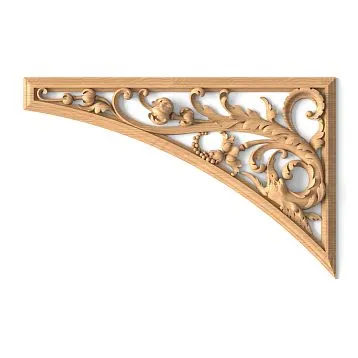
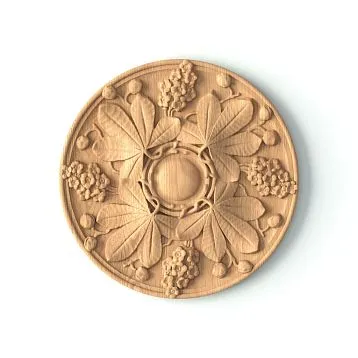
Carved overlays made of oak and beech offer an endless variety of shapes—from strict geometric to lush Baroque ornaments. The choice of a specific overlay type depends on the furniture's style. For classic furniture with carved fronts, overlays with botanical motifs, acanthus leaves, and rococo scrolls are suitable. For neoclassical—more restrained, symmetrical elements with clear lines. For furniture in the Empire style—geometric rosettes, laurel wreaths, military symbolism.
It is important to understand that overlays do not work in isolation but in conjunction with other decorative elements. The central overlay on a chest of drawers front can echo a wall panel above it, corner elements—with moldings framing the doorway. Such a system of echoes creates a complex, multi-layered composition where each detail enhances the other, and no element exists on its own.
Modular overlay-constructors open up additional creative possibilities. They can be combined with each other, creating individual compositions, adapted to specific furniture and space dimensions. The presence of connecting elements allows overlays to be joined with moldings, forming complex decorative frames that can frame both furniture fronts and wall sections.
Our factory also produces:


Living Room: Where Furniture Meets Architecture
The living room is the central space of the house, where the interaction between furniture and decor is most vividly manifested. Here, as a rule, the most expressive furnishings are located—sofas, armchairs, display cabinets, tables, consoles. Each of them requires architectural support to avoid looking like a random element.
Sofas and armchairs, especially in the classic style with carved backs and armrests, need visual support from the walls. One effective technique is creating a panel above the sofa, framed by moldings whose profile repeats the lines of the furniture elements. Inside the panel, decorative plaster, contrasting paint, or fabric upholstery can be placed—it is important that this panel forms a background for the sofa, linking it to the wall architecture.
Cabinets and display cases, especially large, massive ones, require even more pronounced integration into the space. Here, vertical elements help—pilasters installed on either side of the cabinet, moldings continuing its vertical lines to the ceiling. Thus, the cabinet ceases to be a freestanding object and becomes part of the wall composition, an integrated architectural element.
Consoles and tables are lighter elements, but they also require support. A mirror above the console in a carved frame, moldings framing the wall area behind the table, wall overlays repeating the ornament of the furniture legs—all this creates visual connections, making the composition cohesive. Solutions where the carved elements of the console literally continue into the wall decor, creating the illusion of a single structure, are especially effective.
Ceiling elements are also important for the living room. A rosette around the chandelier can echo the ornament on furniture fronts, cornices—repeat the profiles of tabletops and backs. If the furniture features arched elements, arched moldings on the ceiling or doorways can be used. All this works to create a unified rhythm, a single stylistic tonality of the space.
Get Consultation
Bedroom: Intimacy Through Details
The bedroom requires a more subtle, delicate approach to combining furniture and decor. Here, the atmosphere of coziness, calm, and intimacy is important, and the decor should support this atmosphere, not disrupt it with excessive pomp.
The bed is the central element of the bedroom, and its headboard sets the tone for the entire space. A carved headboard with botanical motifs can find a response in wall panels located on either side of the bed. Moldings framing these panels can repeat the profile of the headboard frame, creating a visual echo. Inside the panels, fabric similar to the bed upholstery can be used, enhancing the sense of unity.
If the headboard has a symmetrical ornament, it is logical to use symmetrical overlays on the walls—mirror elements placed on either side of the bed. This creates balance, order, and classical harmony. For asymmetrical, more modern solutions, asymmetrical compositions of overlays are suitable, creating dynamics and movement.
Nightstands and dressers also require decorative support. If the furniture fronts are adorned withcarved inlays, it is worth using similar elements on the walls next to the furniture—small corner overlays, moldings framing the chest of drawers area. This creates a visual frame around the furniture, integrating it into the wall architecture.
The ceiling in the bedroom is often kept neutral, but a perimeter cornice with a delicate profile will add completeness. If the furniture uses botanical motifs, a cornice with a light botanical ornament will be appropriate. For strict, geometric furniture, a cornice with a simple, straight-line profile is suitable.
Lighting in the bedroom plays a special role. Sconces placed on either side of the bed can be framed by small moldings or overlays that emphasize their position, making the light points part of the decorative composition. Hidden lighting behind cornices creates soft, diffused light, visually raises the ceiling, and makes the bedroom more airy.
Office: solidity and status
Study—a space whereClassic Furnituremanifests in all its solidity and representativeness. A massive desk, a high-backed chair, bookcases with carved fronts—all this requires appropriate architectural surroundings that will emphasize the status and seriousness of the setting.
The wall behind the desk is the key zone of the study. Creating a pronounced decorative composition here is appropriate—a panel of moldings, inside which a wooden panel, fabric upholstery, or decorative plaster can be placed. The moldings should echo the profile of the desk, the frames of the bookcases, and the cornice under the ceiling. This creates a visual framework within which the work area is located.
Bookcases and shelves—often built-in or appearing as built-in—require integration into the wall architecture. Pilasters installed at the edges of the cabinets, moldings above them, a cornice running along the entire wall with cabinets—all this turns the furniture into an architectural element, part of the wall. It is especially effective when the cabinets are painted to match the walls, and decorative elements are highlighted with a contrasting color—white, cream, gilded.
Doors in the study also deserve attention. Framing the doorway with moldings, installing overlays on the door leaf, using pilasters at the edges of the opening—all this connects the doors with the overall style of the room, the furniture, and the wall decor. Doors cease to be just a functional element and become part of the decorative program.
The ceiling in the study can be more expressive than in the bedroom. Coffers, beams, wide cornices, a rosette around the chandelier—all this adds solidity and monumentality. If the furniture features geometric ornaments, coffers on the ceiling will echo them. If the furniture is adorned with botanical motifs, a rosette with a corresponding ornament will become the center of the ceiling composition.
Materials and Their Role in Creating Unity
The choice of material for decor is critical for creating harmony with the furniture. If the furniture is made of solid oak, it is logical to use decorative elements from the same material—interior decorationfrom oak will create material unity, a visual and tactile connection. Even if the decor is painted, the texture of the wood, its density, and grain pattern will be felt, creating a subconscious sense of material kinship.
Oak and beech are the most popular species for making carved overlays and moldings. Oak is distinguished by a pronounced texture, strength, and noble hue. Beech is more uniform, lighter, and takes well to tinting and painting. Both materials are durable, eco-friendly, and suitable for both furniture and wall decor.
It is also important to consider the surface treatment. If the furniture is coated with a glossy varnish, the decor can also be varnished, creating a unity of finish. If the furniture has a matte surface or wax coating, the decor should be treated similarly. Contrast in finish is possible, but it should be a conscious decision, not an accident.
The color of the wood also plays a role. Dark stained oak furniture requires either similarly dark decor or contrasting light decor—white, cream. Light furniture made of natural beech harmonizes with equally light moldings and overlays or with contrasting dark elements. It is important to avoid intermediate, vague shades that create neither unity nor contrast but simply clash.
Ornament: Echo of Motifs
Ornament is the most direct way to connect furniture with decor. If the cabinet fronts feature botanical motifs—leaves, flowers, branches—it is logical to use similar elements in wall appliqués, ceiling rosettes, and moldings. This does not mean literally repeating the same element throughout the room; it is about variations on a theme, different interpretations of one motif.
For example, a large appliqué with acanthus leaves on a dresser front can echo smaller but stylistically related appliqués on the walls. A ceiling rosette can contain the same motif in a circular composition. Moldings can have a subtle botanical ornament in the form of a running wave, which also references acanthus leaves.
Geometric ornaments work differently. If furniture is decorated with frames, panels, squares, or rectangles, it is worth using similar geometric compositions on the walls—molding panels, ceiling coffers, rectangular appliqués. This creates a strict, orderly rhythm suitable for studies, libraries, and formal living rooms.
Mixing ornaments is possible but requires refined taste. Botanical motifs can be incorporated into geometric frames; geometric appliqués can be complemented with botanical corner elements. The main thing is to maintain balance, not to overload the space with an excessive number of details, and not to create visual chaos.
Symmetry and Asymmetry: The Play of Balance
Classical interiors tend toward symmetry—paired furniture items, mirrored compositions on walls, a central axis around which the space is organized.Classic FurnitureFurniture itself is often symmetrical—cabinets with a central accent, tables with identical legs, beds with symmetrical headboards. The decor should support this symmetry.
Paired appliqués on either side of a central element, mirrored moldings framing windows and doors, symmetrically placed pilasters—all of this enhances the sense of order, stability, and classical harmony. The central axis can be emphasized by a large wall appliqué, a ceiling rosette, or a vertical molding running from floor to ceiling.
However, complete symmetry can appear boring and predictable. A slight violation of symmetry—an asymmetrical appliqué in one of the corners, shifting the accent away from the center, an unequal number of elements on either side—creates dynamism, liveliness, and interest. It is important that this violation is deliberate, not accidental, and that it serves the interior's concept.
Asymmetrical interiors require a different approach. Here, decor can be more free, intuitive, and emotional. Appliqués are placed not in pairs but individually, in locations where they are most expressive. Moldings may not run along the entire wall perimeter but only on certain sections. This creates a sense of ease, individuality, and an authorial approach.
Scale and Proportions: Visual Weight
Large, massive furniture requires decor of a corresponding scale. Wide moldings, large appliqués, and expressive pilasters create balance, preventing the furniture from overwhelming the space with its mass. Small decorative elements against the backdrop of a massive cabinet or table will simply get lost, go unnoticed, and fail to fulfill their function of connecting furniture with architecture.
Conversely, elegant furniture with slender legs, light proportions, and delicate elements requires subtle decor. Narrow moldings, small appliqués, and thin cornices will support the lightness of the furniture, not compete with it, and avoid creating visual overload. Restraint, a sense of proportion, and knowing when to stop are important here.
The visual weight of elements is also determined by color and finish. Dark, contrasting elements appear heavier; light ones matching the walls appear lighter. Gilded, shiny details attract attention and seem more substantial than matte ones. All of this must be considered when choosing decor to create a harmonious composition where no element dominates unjustifiably.
Ceiling height also influences decor choice. In rooms with high ceilings, vertical elements are appropriate—pilasters, tall moldings, large ceiling rosettes. In rooms with low ceilings, it is better to use horizontal accents, restrained cornices, and small appliqués that will not visually reduce the height further.
Color solutions: from monochrome to contrast
Color is a powerful tool for creating unity or, conversely, for placing accents. A monochromatic solution, where furniture and decor are painted in one color or close shades, creates a calm, restrained atmosphere. All attention is focused on forms, texture, and the play of light and shadow. This is an approach for minimalist, elegant interiors.
A contrasting solution, where decor stands out against the background of walls or furniture, creates drama, expressiveness, and energy. White moldings on dark walls, black furniture with gilded appliqués, cream decor against rich wallpaper—all these are accents that structure the space and make it memorable. However, contrast requires caution to avoid turning the interior into chaos.
An intermediate option—gradation of shades—creates depth, layering, and complexity. Several shades of one color, smoothly transitioning into each other, form a visual hierarchy where the lightest elements recede and the darkest come to the foreground. This is a subtle, refined technique requiring a sense of color and composition.
Gilding and patination are traditional techniques for classical interiors. Gilded appliqués onfurniture decorcan echo gilding on moldings, mirror frames, and cornices. This creates a sense of luxury and palatial solemnity. Patina adds an effect of antiquity, noble wear, and an antique feel.
Lighting as a Composition Enhancer
Light is an invisible but critically important element that either enhances the connection between furniture and decor or destroys it. Properly directed light reveals the relief of carved appliqués, emphasizes the profile of moldings, and creates a play of shadows that makes flat surfaces appear three-dimensional.
Accent lighting directed at decorative elements turns them into independent art objects. Spotlights positioned so that light grazes along the relief surface of an appliqué create dramatic shadows, emphasizing the craftsmanship of the carving. The same applies to furniture—light directed at a carved bed headboard or a cabinet front reveals all details, making them expressive.
Hidden lighting behind cornices, moldings, and in niches creates an effect of floating elements, visually expands the space, and raises the ceilings. This is especially relevant for small rooms where it is important to create a sense of airiness and lightness, despite the presence of massive furniture and pronounced decor.
Natural lighting also plays a role. Throughout the day, sunlight changes its angle of incidence, and relief elements look different at different times. In the morning, when the light is cooler and more direct, shadows are deep and contrasting. In the evening, under warm, diffused light, surfaces become softer, and details less pronounced. This natural dynamism makes the interior alive and changing.
Installation and Practical Aspects
Creating a unified composition of furniture and decor requires not only design vision but also competent installation.carved appliquésSolid wood appliqués are attached with glue or small nails, depending on size and weight. It is important to ensure secure fastening so that elements do not come loose over time, but without damaging the surface of the furniture or walls.
Moldings require precise miter cuts, especially when creating frames and panels. A miter saw with adjustable cutting angles is a necessary tool. Joints must be perfectly fitted, without gaps or steps; otherwise, the composition will look sloppy and unprofessional.
Painting the decor after installation allows hiding joints, evening out the color, and creating the effect of a single surface. Primer, several coats of paint, and light sanding between coats are standard procedures that ensure the durability and beauty of the finish. Gilding and patination require special compounds and skills, but the result is worth it.
Professional installation is especially important for large projects, where many elements must be installed in a short time with impeccable quality. Experienced installers know all the nuances of working with wood, understand how to avoid cracking, deformation, and how to ensure the durability of the structure. For small jobs, self-installation is possible with basic skills and tools.
Care and longevity
Wooden decor and furniture require regular but simple care. Dust is removed with a dry or slightly damp cloth; textured areas with a soft brush. Do not use abrasive cleaners, harsh chemicals, or excessive amounts of water—all of which can damage the surface, paint, or wood.
Varnished and painted surfaces retain their appearance for decades with proper care. Small scratches are touched up with the same paint; chips are filled and leveled. Restoring wooden decor is easier than polyurethane or plaster decor, as wood can be sanded, stained, and re-varnished.
Furniture and decor made from solid oak or beech are not afraid of time—on the contrary, over the years the wood acquires a noble shade, a patina of natural aging. This adds depth, history, and a sense of lived-in space to the interior. Modern coatings protect the wood from moisture, insects, and fungus while preserving its naturalness, tactility, and warmth.
Stylistic variations
Classical style is not a monolith, but a spectrum of directions from strict antiquity to lavish Baroque, from restrained Empire to airy Rococo. Each direction requires its own approach to combining furniture and decor.
Baroque is an abundance of ornamentation, opulence of forms, and dynamic swirls.Classic FurnitureBaroque furniture is adorned with carved elements, gilding, and complex profiles. Wall decor should match—large overlays, massive moldings, ceiling rosettes with rich ornamentation. Colors are saturated, contrasting, with plenty of gold.
Classicism and Empire—strictness, symmetry, geometry. Furniture with clear lines, minimal ornamentation, and antique motifs—columns, laurel wreaths, meanders. Wall decor is also restrained—straight-line moldings, geometric panels, symmetrical overlays. Colors are noble—white, cream, gray; gilding is possible but in moderate doses.
Rococo—lightness, elegance, asymmetry. Furniture with curved legs, slender proportions, and floral ornaments. Wall decor is delicate, airy—thin moldings, small overlays with swirls and flowers, pastel colors. Lots of white, cream, pink, and blue. Gilding is present but not dominant.
Neoclassicism—a modern interpretation of classicism. Forms are simplified, ornamentation is minimized, proportions are more concise. Furniture retains classical features but without excessive decoration. Wall decor is also restrained—simple moldings, small overlays, monochrome or contrasting paint. Suitable for modern apartments where a connection to tradition without archaism is important.
Custom solutions and customization
Every home is unique, every project requires an individual approach. Standard catalogs of decorative elements offer a wide selection, but sometimes something special is needed—an overlay of a specific size, a molding with a unique profile, carving based on a custom sketch.
Customization of furniture decor allows for the creation of a completely unique interior, where every element is designed for a specific space and specific furniture. This is the path for those who do not want to settle for ready-made solutions but strive for maximum individualization. The process takes more time and requires a larger budget, but the result justifies the investment.
The ability to combine ready-made elements also opens up wide possibilities. Modular overlay-constructors, elements with mirror imaging, and joining parts allow for the creation of complex compositions from standard elements. This is the golden mean between fully custom and standard solutions—individuality with a reasonable budget.
Working with a designer or architect helps avoid mistakes and create a truly cohesive composition. A professional sees the space as a whole, understands how elements interact with each other, and can offer unexpected but effective solutions. This is an investment in the quality of the project, its durability, and aesthetic value.
Frequently asked questions
Can furniture of different styles be combined with unified decor?
Yes, if the decor serves as a connecting link. Neutral moldings, universal overlays can unite furniture of different styles, creating an eclectic but cohesive interior. It is important to find common elements—color, material, proportions—that will work as a unifying factor.
How to choose the scale of decor for a small room?
In small rooms, it is better to use concise, medium-sized decor. Too large elements will overwhelm the space; too small ones will get lost. Vertical moldings will help visually raise the ceiling; horizontal ones will expand the space. The main thing is restraint and a sense of proportion.
Should wooden decor be painted or left natural?
It depends on the furniture and the overall concept. Natural wood creates a warm, cozy atmosphere but requires that the furniture also be made of natural wood. Painted decor is more versatile and easier to fit into different styles. Combination is possible—some elements natural, some painted.
How often should decor be updated?
Quality wooden decor lasts for decades without needing replacement. Updating may only be required when changing the interior style—in this case, elements are repainted in a new color, patinated, or gilded. Restoration of minor damage does not require complete replacement.
Can carved overlays be installed independently?
Yes, with basic skills and tools. Small overlays are attached with adhesive; large ones may require additional fastening. It is important to properly prepare the surface, use quality adhesive, and ensure a tight fit. For complex compositions, it is better to involve specialists.
How does decor affect the cost of furniture?
Decor is a separate expense item, not included in the cost of the furniture. However, well-chosen decor increases the visual value of the furniture, making it part of the architectural composition, which justifies the investment. The budget for decor typically constitutes 15-30% of the furniture cost for full integration.
Conclusion
Harmony in an interior is not an accident, but the result of a thoughtful approach, where every element is in its place, fulfills its function, and supports the overall idea.interior decorationandClassic Furniture—are not just furnishings, but tools for creating a space that inspires, calms, and pleases the eye.
Unity of materials, interplay of ornaments, proportionality, and a well-thought-out color palette—all work together to create a cohesive composition. The living room, bedroom, study—each room requires its own approach, but all are united by a common logic, a common language of forms. When moldings repeat the profiles of furniture facades, whencarved appliqués—connect the walls with the furnishings, when the architecture supports the furniture, and the furniture responds to the architecture—that very effect is born, which cannot be achieved simply by arranging objects.
STAVROS offers a comprehensive range of solutions for creating a unified interior — fromcollection of furniture in classic styleto decorative elements made of solid oak and beech. Over 400 models of carved overlays, moldings, panels, pilasters — each element is crafted with attention to detail and respect for woodworking traditions. In-house production allows for quality control at every stage, creating custom solutions, and quickly responding to customer requests. Natural materials, hand carving, thoughtful logistics, professional support — all this makes STAVROS a reliable partner in creating interiors that will delight for decades. Let your home become a space where every detail speaks of taste, where furniture and architecture harmonize in unison, creating a symphony of forms, colors, and textures.