Article Contents:
- Philosophy of Decor: Why Are Interior Ornaments Needed?
- Balance Between Sufficiency and Excess
- Types of Decorative Elements: Diversity of Forms and Functions
- Carved Overlays: The Jewelry of Wooden Decor
- Rosettes: circular symmetry of beauty
- Moldings: Lines That Structure Space
- Sets of Interior Ornaments: Ready-Made Compositional Solutions
- Advantages of Ready-Made Decor Kits
- Standard Kits for Various Tasks
- Wall Decor: From Functionality to Art
- Wooden Panels: Painting with a Chisel
- Moldings as a Tool for Architectural Wall Decor
- Corner Elements: Accents at Intersections
- Furniture Decor: The Art of Transformation
- Overlays as a Transformation Tool
- Furniture Handles: Functional Jewelry
- Mirrors in Carved Frames: A Reflection of Style
- Functions of Mirrors in Interior
- Types of Mirror Frames
- Mirror Placement
- Consoles: Elegant Functionality
- Functionality of Consoles
- Styling of Consoles
- Interior Decor Trends 2026: Current Directions
- Return to Craft Techniques
- Ecological and Natural Materials
- Personalization and uniqueness
- Mixing Styles
- Color Boldness
- Maximalism Instead of Minimalism
- How to Properly Combine Decorative Elements?
- Style Unity
- Scale Consistency
- Color Harmony
- Balance of Fill
- Wooden Decor Care: Preserving Beauty
- Regular Cleaning
- Protection from Impacts
- Recoating
- Frequently Asked Questions about Interior Decor
- Can Wooden Decor Be Used in a Modern Minimalist Interior?
- How to Attach Carved Overlays to Furniture?
- What Thickness Should Decorative Overlays Be?
- Can Wooden Overlays Be Painted a Different Color After Purchase?
- How Long Do Wooden Decorative Elements Last?
- How to Choose the Size of Decorative Elements for Furniture?
- Can Wooden and Polyurethane Decor Be Combined?
- Should Decorative Overlays Be Coated with a Protective Compound Before Installation?
- How to Incorporate Classic Carved Elements into a Modern Interior?
- Where Is It Better to Buy Decorative Elements — Ready-Made or Custom-Ordered?
- Conclusion: Create Unique Interiors with STAVROS

What distinguishes a faceless apartment from a home with soul? Why do some interiors become memorable, evoke admiration, create a desire to return, while others remain merely functional living spaces? The secret lies in the details. Preciselyinterior decorationtransforms a standard room into a unique space, filled with character, history, and individuality.
Interior solutionsof modern design are built on the harmony of large architectural forms and small decorative accents. Furniture, finishes, and lighting create the foundation, whileinterior decorationsadd the final touches that form a complete image. It is about such elements, capable of transforming a home, that we will discuss in this article.


The Philosophy of Decor: Why Are Ornaments Needed in an Interior?
The minimalism of recent decades has accustomed us to the idea that less is more. Empty walls, laconic furniture, absence of unnecessary items. However, human nature is drawn to beauty, details, and personalization of space. We want to see around us not just functional objects, but things that please the eye, evoke emotions, and tell stories.
decorative interiorelements perform several crucial functions simultaneously. They create visual accents, drawing attention to specific areas of the room. They form the stylistic affiliation of the interior, making it recognizably classical, Scandinavian, loft, or eclectic. They reflect the individuality of the owner — their tastes, interests, life experience. They add textural and color diversity, making the space visually richer.
Good decor does not shout about itself, does not overload the space, but its absence is immediately felt. The room becomes flat, impersonal, unfinished. Properly selectedinterior itemswork like spices in cooking — in the right dosage, they turn a simple dish into a culinary masterpiece.




Balance Between Sufficiency and Excess
The main mistake when working with decor is the lack of a sense of proportion. Too few ornaments make the interior boring and cold. Too many — turn the room into a museum exhibition or an antique shop, where it is impossible to relax.
The golden rule of decor: each element must have its place and purpose. Before adding a new item, ask yourself: what does it bring to the interior? What emotion does it evoke? What other elements does it interact with? If the answer is not obvious — perhaps this item is unnecessary.
Professional designers use the rule of three: elements are grouped into three objects of different heights or sizes. This creates a visually pleasing composition that looks neither too symmetrical nor chaotic. Three candlesticks on a mantelpiece, three paintings on a wall, three vases on a console — such groups are perceived harmoniously.
Our factory also produces:


Types of Decorative Elements: Diversity of Forms and Functions
Worldhome interior decorationis incredibly diverse. From miniature overlays to large-scale panels, from functional items to purely aesthetic accents — each type of decor has its specific application and aesthetic characteristics.
Get Consultation
Carved Overlays: The Jewelry of Wooden Decor
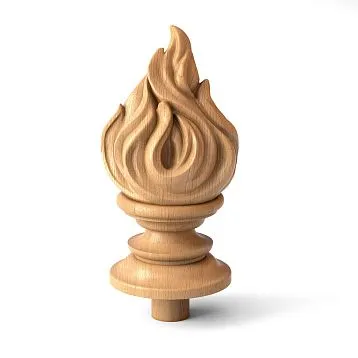
Wooden carved overlays are a classic of interior decoration, originating from palace interiors of past centuries. Small elements with floral, geometric, or figurative ornaments are attached to furniture, walls, and doors, transforming an ordinary surface into a work of art.
Decorative InsertsThey are made from solid wood — oak, beech, ash. Carving is performed on high-precision CNC machines, after which master carvers manually refine the details, adding depth, expressiveness, and eliminating the slightest imperfections. The finishing process includes multi-stage sanding and the application of a protective coating — natural oil, wax, varnish, or enamel.
Types of carved overlays by shape and purpose:
-
Central overlays — symmetrical compositions for placement in the center of a door panel, wall panel, or furniture facade
-
Corner elements — decor for framing the corners of frames, panels, mirrors
-
Vertical overlays — elongated elements for framing vertical surfaces
-
Horizontal friezes — extended ornaments for decorating the upper part of furniture, walls, cornices
-
Cartouches — oval or shield-shaped overlays, often with coats of arms, monograms
The application of overlays is incredibly diverse. On furniture, they adorn the facades of cabinets, dressers, beds, turning simple case furniture into exclusive pieces. On doors, overlays create relief, imitating paneled construction or adding a decorative accent. On walls, in combination with moldings, overlays form classic boiserie panels. On fireplace portals, carved elements emphasize the solemnity and significance of the fireplace as the focal point of the room.
Rosettes: Circular Symmetry of Beauty
carved wooden rosettesRosettes are round or polygonal decorative elements with radially symmetrical ornamentation. The name comes from the Latin 'rosa' — rose, as many rosettes feature a floral motif with petals radiating from the center.
Ceiling rosettes — a classic element of interiors with high ceilings. A large rosette with a diameter from 400 to 1200 millimeters is installed in the center of the ceiling, around which a chandelier is mounted. The rosette visually balances the lighting fixture, creates architectural completeness of the composition, and conceals mounting elements.
Wall rosettes of smaller diameter are used as independent decorative accents or in combination with other elements. A rosette above the entrance door, in the space between windows, or in the center of a wall panel creates a focal point that draws the eye.
Corner rosettes have a segmental shape — a quarter or half of a circle. They are used for decorating internal or external corners, creating a smooth transition between perpendicular planes.
The ornamentation of rosettes is extremely diverse. Floral motifs — acanthus, grapevine, oak leaves, roses, lilies. Geometric patterns — concentric circles, stars, meanders, braids. Classical order elements — egg-and-dart, bead-and-reel. Baroque and Rococo motifs — scrolls, rocaille, asymmetrical floral compositions.
Moldings: Lines that Structure Space
Moldings are profiled strips used for framing, dividing, and decorating flat surfaces. Unlike point overlays and rosettes, moldings are extended elements that form lines in the interior.
Wall moldings divide the wall into horizontal or vertical zones. The classic division is the baseboard (lower part 60-90 cm high), the main field, and the frieze (upper part under the ceiling). Moldings create frames, inside which a different finishing material can be used — wallpaper, paint of another color, fabric upholstery.
Ceiling moldings (cornices) frame the junction of the wall and ceiling, creating a visual boundary that adjusts the proportions of the room. A wide cornice visually lowers a high ceiling, making the room cozier. A narrow cornice in a room with a low ceiling creates a sense of greater height.
Door and window casings — a type of molding that frames openings. A profiled casing turns the technical joint between the frame and the wall into a decorative element.
Floor moldings (baseboards) cover the gap between the wall and the floor, protect the lower part of the wall from damage, and create visual completeness for the room.
Sets of Interior Decorations: Ready-Made Compositional Solutions
Selecting individual decorative elements requires experience, artistic taste, an understanding of proportions, and stylistic features. To simplify this task, manufacturers offer ready-madeinterior decor sets— sets of elements designed in a unified style and intended for joint use.
Advantages of ready-made decor sets
Harmony — all elements of the set are executed in a unified style, with the same carving depth and similar ornamental motifs. This guarantees visual consistency of the composition.
Time-saving — there's no need to select individual elements, compare sizes, styles, or proportions. The set already contains everything needed to decorate a specific object.
Optimal size ratio — the manufacturer has pre-calculated the proportions of the elements so that they harmoniously combine with each other and with the typical sizes of furniture and architectural elements.
Completeness of solution — the set usually includes central overlays, corner elements, vertical and horizontal details, allowing for the complete decoration of an object.
Standard sets for various tasks
A door decoration kit typically includes a central overlay for the top and bottom panels, corner elements for the four corners of each panel, and sometimes horizontal and vertical friezes for framing. Such a set transforms a smooth door leaf into a carved panel with a classic pattern.
A furniture kit is a set of overlays of various sizes for the fronts of cabinets, dressers, or buffets. Large central elements for large doors, small ones for drawers, and corner elements for decorating corners.
A wall panel kit contains elements for creating classic boiserie — moldings for frames, corner elements for finishing joints, central overlays for filling panels, baseboards, and cornices for framing the entire composition.
A fireplace kit includes overlays for the portal, capitals for columns or pilasters, a frieze for the upper part, and sometimes a central cartouche with a coat of arms or monogram.
Wall decor: from functionality to art
Walls occupy a significant area in any room, so their design is critically important for the overall perception of the interior.Wall interior decorIt can be functional, solving practical tasks, or purely aesthetic, existing for the sake of beauty.
Wooden panels: painting with a chisel
A carved wooden panel is a picture created not with paints, but with volume. Relief carving creates a play of light and shadow, forming an image through varying depths and shapes of elements.
Panel subjects are diverse. Floral ornaments are the most common motif. Grapevines with clusters and leaves, roses, lilies, oak branches with acorns create a natural, organic composition. Geometric panels are built on the rhythm of shapes — circles, squares, rhombuses, interweavings form an abstract but orderly pattern.
Narrative panels depict hunting scenes, mythological subjects, historical events. Such panels require the highest skill of a carver, capable of conveying not only form but also movement, emotions, and perspective.
Panel sizes vary from small 300×400 millimeters, which can be placed in any wall space, to large-scale 2000×3000, occupying an entire wall and becoming the dominant feature of the interior.
Panel placement requires thoughtfulness. The center of the panel should be at eye level of a standing person — approximately 150-160 centimeters from the floor. The panel should be visually balanced with other interior elements — furniture below it, symmetrical objects on the sides.
Panel lighting is critical for perceiving the relief. Directed light from the side or top reveals volume, creates contrasting shadows, and emphasizes details. Diffused frontal light flattens the panel, making it less expressive.
Moldings as a tool for architectural wall decor
Moldings and cornicesThey allow creating complex architectural compositions on a smooth wall without large-scale construction work.
The classic scheme is dividing the wall into panels. Moldings are attached to the wall, forming rectangular or square frames. Inside the frame, there can be contrasting paint, patterned wallpaper, or fabric upholstery. Panels create rhythm, structure the wall, and add volume to a flat surface.
The size and proportions of panels depend on the ceiling height and wall area. In rooms with ceilings of 2.7 meters, panels 60-80 centimeters high in the lower part of the wall are optimal. In high rooms of 3.5-4 meters, panels can be created for the entire wall height or the wall can be divided into two tiers of panels.
The distance between moldings should correspond to architectural proportions. The classic panel aspect ratio is 1:1.5 or 2:3. Square panels are appropriate in modern interiors, vertically elongated ones — in classic ones.
Corner elements: accents at intersections
Corner decorative elementsThey solve two tasks: technical — finishing the joint of moldings — and aesthetic — creating an accent in the corner of the panel.
The simplest option is smooth corner elements that repeat the molding profile and ensure neat joining at a 90-degree angle. Such elements are inconspicuous, work for the overall geometry, without drawing attention to themselves.
Decorated corners with an ornament — a rosette, an acanthus leaf, a geometric pattern — turn a technical solution into an artistic accent. The eye catches the corners, reads the rhythm of the decor, and perceives the composition as a whole.
Furniture decor: the art of transformation
Furniture occupies a significant part of living space. The quality of its execution and stylistic expressiveness largely determine the character of the interior.decor for furnitureIt can transform the simplest item, turning standard cabinet furniture into a unique author's piece.
Overlays as a transformation tool
interior furniture decalsThe term is not entirely accurate, as it refers not to adhesive films but to wooden overlay elements that are attached to fronts, sides, and tabletops using wood glue or small headless nails.
A simple technique allows achieving impressive results. A smooth IKEA cabinet front, supplemented with carved overlays and repainted in a noble shade, looks like antique furniture worth hundreds of thousands of rubles. A boring dresser turns into an object of pride for the owners. A typical kitchen gains individuality.
The process of decorating furniture with overlays includes several stages:
Composition planning — determining overlay placement locations, selecting sizes, coordinating patterns. A large central element is positioned at the center of the door or drawer. Corner overlays decorate the corners. Vertical and horizontal friezes create framing.
Surface preparation — cleaning, degreasing, light sanding to improve adhesive bonding. If the furniture is laminated, it is necessary to create roughness using 120-150 grit abrasive.
Overlay installation — applying adhesive to the back of the overlay, pressing it onto the surface, securing with clamps or weights during adhesive polymerization (typically 2-4 hours).
Finishing — filling small gaps between the overlay and the base with putty, sanding, painting, or varnishing. The overlay and base should blend into a single whole, without visible boundaries.
Furniture handles: functional jewelry
Furniture handles — an element we touch daily. Ergonomics, material, and shape influence tactile sensations and the overall impression of using the furniture.
Wooden handlesWooden handles are pleasant to the touch, warm, natural. Carved handles with patterns transform a utilitarian detail into a miniature piece of applied art.
Types of furniture handles:
-
Knobs — round or polygonal elements with a diameter of 30-50 mm, installed on a single hole
-
Bars — U-shaped handles with two mounting points, distance between hole centers from 64 to 320 mm
-
Recessed handles — inset handles, flush with the facade
-
Profiles — linear handle strips for hinged or sliding doors
Handle styling should match the overall furniture concept. Carved Baroque handles with gilding are suitable for classic furniture. Minimalist cylindrical handles made of light wood — for Scandinavian or modern dressers. Forged handles with wooden inserts — for furniture in loft or country style.
Mirrors in carved frames: reflecting style
A mirror is not just a functional object. It is a portal, visually doubling space, reflecting light, creating an illusion of depth.framed mirrorsMirrors with frames made of solid wood become full-fledgedinterior objectsthat shape the style of the room.
Functions of mirrors in interior design
Visual space expansion — a mirror on the wall creates the illusion of an additional room, makes the room more spacious and airy. Especially effective in narrow corridors, small entryways, compact bedrooms.
Light reflection — a mirror opposite a window or artificial light source doubles the amount of light in the room, making it brighter and cozier.
Decorative function — a beautiful carved frame turns a mirror into an art object, comparable to a painting or panel.
Functionality — mirrors in entryways, bathrooms, and bedrooms serve a utilitarian function, allowing one to check their appearance.
Types of mirror frames
Classical frames with panels and carved elements — massive, solid, often with gilding or patina. Frame width from 80 to 200 millimeters, creating an impressive border.
Baroque frames with abundant carving, asymmetrical scrolls, cartouches, rocaille. Luxurious, decorative, attention-grabbing. Require a matching interior — rooms with high ceilings, classic furniture, stucco elements.
Minimalist frames — narrow (30-50 mm), smooth or with a simple profile. Painted to match the wall color or in a contrasting color. Suitable for modern interiors where restraint of form is important.
Oval and round frames — an alternative to rectangular ones. Soft, flowing lines create a feminine, romantic image. Appropriate in bedrooms, boudoirs, bathrooms.
Mirror placement
The height of mirror placement depends on its function. A full-length mirror in an entryway for checking appearance is positioned so that the bottom edge is 40-50 cm from the floor. A mirror above a console or dresser is hung so that there is a 10-20 cm gap between the furniture and the bottom edge of the frame.
A mirror opposite the entrance is a controversial decision from a feng shui perspective, but striking from a design standpoint. The person entering sees their reflection, and the space visually elongates.
A mirror opposite a window reflects the view and light, creating the feeling of an additional window. Effective in dark, north-facing rooms.
Compositions of several mirrors — a gallery of mirrors of different sizes and shapes on one wall creates a dynamic art installation.
Consoles: Elegant Functionality
consoles— narrow wall-mounted tables with a depth of 30-50 centimeters — have become a popular element in modern interiors. They take up minimal space but perform numerous functions.
Functionality of Consoles
In the hallway, a console serves as a place for keys, bags, hats. A basket for shoes or umbrellas can be placed underneath. A mirror usually hangs above the console, creating a functional area for getting ready before heading out.
In the living room, a console behind the sofa zones the space and serves as a stand for lamps, books, decorative objects. In the dining room, a console along the wall becomes an additional work surface during gatherings.
In the bedroom, a console can replace a dressing table. With a mirror above it and a comfortable pouf, you get a compact beauty zone.
Styling of Consoles
Classic consoles on four or two curved legs, with a carved frieze under the tabletop, sometimes with a drawer. Solid oak or beech, stained or painted white, gray, black.
Modern consoles of laconic forms — straight legs, smooth tabletop, minimal decor. Emphasis on the texture of natural wood, contrasting combination of materials — a wooden tabletop on metal legs.
Transformer consoles — compact when folded, unfold into a full-fledged dining table. A smart solution for small apartments.
Interior Decor Trends 2026: Current Directions
Worldof interior productsconstantly evolves, reflecting cultural, social, and technological changes. Which trends dominate in 2026?
Return to Artisanal Techniques
In the era of mass production, the value of handmade work sharply increases.Interior details, created by master carvers, where the artist's hand and individuality of execution are visible, become especially in demand.
Wood carving, painting, patination, gilding — techniques requiring years of experience — are returning to modern interiors. Owners of premium housing are willing to pay for uniqueness, for the story behind each element.
Eco-Friendliness and Natural Materials
Wood, stone, metal, glass — natural materials are displacing plastic and synthetics.An interior element made of solid oak is not only beautiful but also eco-friendly, safe, and durable.
Conscious consumption involves choosing quality items that will last for decades, not fashionable novelties that will become outdated in a season.
Personalization and uniqueness
Standard solutions are becoming a thing of the past. People want to see objects around them that tell their personal story. Monograms, family crests, individual patterns created from the client's sketches turn decor into a family heirloom.
Manufacturers offer customization services — changing dimensions, adapting patterns, creating unique elements based on individual projects.
Style mixing
Pure styles — Baroque, Classicism, Minimalism — are becoming increasingly rare. Modern interiors are eclectic, combining elements from different eras and cultures.
Classical carved decor in a loft, minimalist furniture in a classical interior, ethnic elements in a Scandinavian apartment — such combinations create unique, memorable spaces.
Color boldness
White, beige, gray — neutral colors that dominated in recent years — are giving way to rich shades. Emerald, sapphire, burgundy, terracotta are appearing not only in textiles but also in the coloring of wooden elements.
Enameled overlays in deep blue on white facades. Gilded rosettes on dark chocolate-colored walls. Contrasting combinations create dramatic, emotional interiors.
Maximalism instead of minimalism
The austere interiors with minimal furnishings have become tiresome. People want to see beauty, details, and decor around them. The trend for abundant decor, layered compositions, and rich textures is making a comeback.
This does not mean chaos and bad taste. Modern maximalism is thoughtful, harmonious, where each element has its place, but there are many of them, they are diverse, creating a visually rich space.
How to correctly combine decorative elements?
The beauty of an interior is not the sum of beautiful objects, but a harmonious composition where each element supports the others.
Style Unity
Alldecorative interiorElements in a room should belong to one style or harmoniously combined styles. Baroque overlays do not combine with minimalist furniture. Rough loft elements are out of place in delicate Provence style.
If you have chosen a classic style — use carved elements with floral ornaments, symmetrical compositions, traditional materials and finishes. For Scandinavian style, choose laconic forms, light shades, minimal carving.
Consistency of scale
The size of decorative elements should correspond to the scale of the room and furniture. In a small room, large carved overlays will look bulky. In a spacious hall, miniature details will get lost.
Ceiling height also affects the scale of decor. Rooms with 4-meter ceilings require large cornices, massive frames, large panels. In an apartment with a 2.6-meter ceiling, use more delicate elements.
Color Harmony
Wooden decor can be in natural shades or painted. The choice of decor color depends on the overall color scheme of the interior.
In monochrome interiors, wooden elements in natural shades add warmth, liveliness, and naturalness. In colorful interiors, decor can be painted to match the main palette or in contrast.
Balance of fullness
Not every surface requires decor. Empty space is an important element of composition, giving the eye a rest.
Rule: if one wall is actively decorated, the others should be more restrained. If furniture is abundantly adorned with carving, it is better to leave the walls smooth.
Caring for wooden decor: preserving beauty
QualityHome interior decorWith proper care, it retains its original appearance for decades.
Regular cleaning
Dust is the main enemy of carved decor. It accumulates in the recesses of the carving, tarnishes, and makes the surface gray.
Use a soft brush or a brush to remove dust from the relief. You can use a vacuum cleaner with a soft attachment on minimum power.
For wet cleaning, use a slightly damp (not wet!) soft cloth. Excessive moisture is dangerous for wood.
Protection from exposure
Direct sunlight lightens and dries out wood. If the decor is located on the sunny side, use protective coatings with UV filters.
Sharp changes in temperature and humidity cause deformations. Maintain a stable microclimate — temperature 18-24°C, humidity 40-60%.
Mechanical damage — chips, scratches — are inevitable with careless handling. Avoid impacts, do not hang heavy objects on decorative overlays.
Recoating
Oil finishes can be renewed every 2-3 years by applying a fresh coat of oil. This restores protection, refreshes the color, and emphasizes the texture.
Varnish finishes are more durable, but if damaged, they require professional restoration. Local varnish repair is ineffective; it is better to consult specialists.
Frequently asked questions about interior decor
Can wooden decor be used in a modern minimalist interior?
Yes, but wisely. Choose laconic forms without excessive carving. Smooth moldings, simple geometric overlays, minimalist frames made of light wood work excellently in modern interiors. The key is restraint and quality of material.
How to attach carved overlays to furniture?
Use high-quality PVA wood glue or polyurethane glue. Apply glue to the back of the overlay, press it onto the surface, and secure with clamps or weights for 2-4 hours. After drying, you can additionally fasten with small headless nails, sinking them and filling with putty.
What thickness should decorative overlays be?
Typical overlay thickness is 8-15 mm. Thin overlays (6-8 mm) are used for small elements, thicker ones (12-18 mm) are for large central overlays with deep carving. Thickness affects the expressiveness of the relief and the overall weight of the element.
Can wooden overlays be painted a different color after purchase?
Yes. If the overlays have a natural oil or varnish finish, they can be repainted. Lightly sand the surface with P220-P280 abrasive, remove dust, apply primer, then paint in 2-3 coats. Use acrylic or alkyd enamels for wood.
How long do wooden decorative elements last?
With proper care, they last for decades. Solid oak or beech is practically eternal. The main risks are mechanical damage and unfavorable conditions (high humidity, temperature fluctuations). Under normal conditions, quality wooden decor will outlast several generations of owners.
How to choose the size of decorative elements for furniture?
Focus on the size of the surface being decorated. The overlay should occupy 40-60% of the panel or facade area, leaving space around the perimeter. An overlay that is too large looks bulky, one that is too small gets lost. Use the rule of thirds—place the center of the overlay at the intersection of lines dividing the surface into three parts.
Can wooden and polyurethane decor be combined?
Yes, but carefully. Polyurethane is cheaper, lighter, and moisture-resistant, but visually and tactilely differs from wood. Use polyurethane for elements placed high (ceiling rosettes, cornices) where tactile contact is excluded. Use wood for elements at eye and hand level, where texture and warmth of the material are important.
Do decorative overlays need to be coated with a protective compound before installation?
Quality overlays from the manufacturer already have a finish—oil, wax, or varnish. Additional treatment is not required. If you purchased unsanded blanks, you need to sand them with P180-P220 abrasive, remove dust, and apply a protective coating in 2-3 layers.
How to incorporate classic carved elements into a modern interior?
Use the principle of contrast. Carved elements in natural color on smooth white or gray surfaces. A gilded rosette on a concrete loft wall. A Baroque frame around a modern abstract poster. Contrast creates tension, interest, and uniqueness.
Where is it better to buy decorative elements—ready-made or custom-ordered?
Depends on the task and budget. Ready-made elements from the manufacturer's stock program are available immediately, cheaper, and sufficient for most projects. Custom production is justified for unique interiors, non-standard sizes, and exclusive patterns. Combine—use ready-made elements for the main parts, and custom ones for accents.
Conclusion: create unique interiors with STAVROS
Interior decor is the language through which a space tells the story of its inhabitants. Every overlay, rosette, molding, frame is a letter in this narrative. A harmonious interior is a coherent text where everything is in its place, each detail enhances the others, creating a cohesive, memorable image.
Choosing decorative elements requires knowledge, experience, and artistic taste. But most importantly, it requires an understanding of what exactly you want to say with your interior. What emotions to evoke? What character to demonstrate? What atmosphere to create?
The company STAVROS helps realize the boldest ideas. For over two decades, we have been producing premium-level carved decor—overlays, rosettes, moldings, cornices, baseboards, mirror frames, furniture, and doors. Our own 6,000-square-meter production facility in St. Petersburg, equipped with modern CNC machinery and staffed by experienced master carvers, allows us to create decor of any complexity.
We work exclusively with selected solid oak and beech, which undergo multi-stage kiln drying to 8-9% moisture content. This guarantees geometric stability, absence of deformation, and durability of the products. Each element undergoes hand sanding, finishing with natural oils from European manufacturers, or multi-layer varnishing with intermediate sanding.
The STAVROS catalog includes over 4,000 decor models in various styles—from strict classic to lavish Baroque, from minimalist modern forms to ethnic patterns. A large stock program ensures immediate shipment of popular items. Custom production based on customer sketches allows for the implementation of unique design concepts.
Showrooms in Moscow and St. Petersburg are open for visits. Here you can see material samples, evaluate carving quality, feel the wood texture, and choose a finish shade. Professional consultants will help select elements for your project, calculate quantities, and offer optimal solutions.
Delivery is carried out to all regions of Russia and CIS countries. Products are carefully packaged, protected from damage during transportation. Self-pickup from the production warehouse is possible.
STAVROS is not just a decor manufacturer. It is a team of enthusiasts passionate about wood, appreciating beauty, and striving for perfection. Every product is the result of years of experience, meticulous work, and love for the craft. Choosing STAVROS means choosing quality, reliability, and beauty that won't go out of style in a season but will delight for decades.
Create interiors worthy of admiration. Turn your home into a space where every detail tells your story. Trust the masters of STAVROS—together we will create beauty that will stand the test of time.