Article Contents:
- What is interior molding and why is it back in fashion
- Molding in modern interior styles
- Types of interior molding: variety of forms and functions
- Classical carved moldings: heritage of past masters
- Smooth profiled moldings: elegant restraint
- Wide cornice moldings: monumentality under the ceiling
- Narrow wall moldings: framing and accenting
- Corner Elements: Completing the Composition
- Materials for interior molding: choosing wisely
- Solid Wood: Nobility and Durability
- MDF: affordability and stability
- Individual Approach: Molding to Your Taste
- Plaster: classic for ceilings
- Where interior molding is applied: ideas for inspiration
- Ceiling cornices: finishing the upper part of the room
- Wall panels: structuring vertical surfaces
- Framing openings: accenting architectural elements
- Furniture decor: individuality of mass production
- Framing mirrors and paintings: classic genre
- How to choose quality interior molding: evaluation criteria
- Profile geometry: precision is the key to beauty
- Surface quality: smoothness and uniformity
- Wood moisture: key to stability
- Eco-friendliness: health safety
- Interior molding installation: doing it right
- Surface preparation: foundation for success
- Marking: precision to the millimeter
- Angle cutting: mastery of joining
- Fastening: glue or screws
- Finishing: bringing to perfection
- 2026 trends: what designers choose
- Wide monumental profiles: return of scale
- Contrasting color solutions: playing with opposites
- Natural textures: closeness to nature
- Lighting integration: molding as a light fixture
- Asymmetric compositions: rejecting classical symmetry
- Interior molding care: preserving beauty
- Regular cleaning: dust removal
- Damage protection: preventing problems
- Restoration: returning to pristine condition
- Common purchasing mistakes: what to avoid
- Scale error: too narrow or too wide
- Style mismatch: classic in loft
- Saving on quality: paying twice
- Purchasing without calculation: not enough or too much left
- Frequently asked questions about purchasing interior molding
- Where to buy quality interior molding: choosing a supplier
- Manufacturer or intermediary: direct sales are more profitable
- Showroom availability: see and touch
- Consultation support: help with selection
- Ordering and delivery system: convenience and reliability
- Warranties and returns: buyer protection
- Conclusion: create dream interiors with STAVROS

Interior design in 2026 is undergoing an amazing metamorphosis. Minimalist emptiness is being replaced by richness of detail, expressiveness of forms, and play of volumes.Buy interior moldingMore and more people are striving for this — from professional designers to apartment owners wanting to transform their space. This decorative element can radically change the perception of a room, adding depth, nobility, and history. But how to choose quality molding among hundreds of offers? Which materials are preferable? Where to find a reliable manufacturer? Let's examine these questions in detail.




What is interior molding and why is it back in fashion
Interior molding is a profiled trim element with a complex cross-section, designed for decorating walls, ceilings, furniture, and door/window openings. Unlike simple slats and baseboards, molding has an expressive relief profile that creates a rich play of light and shadow. Classical moldings were decorated with carved ornaments — floral swirls, geometric patterns, antique motifs.
The history of molding dates back to the Renaissance, when Italian masters created luxurious frames for paintings and mirrors. Gradually, molding penetrated architectural decor, becoming an integral part of palace and mansion interiors. Baroque and Rococo brought the art of molding decor to its peak — walls were covered with complex compositions of moldings of various widths, creating paneled boiserie systems.
The 20th century, with its focus on functionalism, practically banished molding from interiors. Decorativeness was considered excessive, a sign of poor taste. But the pendulum has swung back. Modern people are tired of the sterile anonymity of office spaces and standard apartments. The soul craves beauty, individuality, connection with history.Buy interior moldingToday, it means bringing nobility back into the home, creating an atmosphere where one wants to live.




Molding in modern interior styles
Surprisingly, picture frame molding fits organically not only into classic but also into contemporary interiors. Neoclassicism actively uses moldings with simplified profiles without excessive carving. American classic prefers wide moldings that create monumentality. Even Scandinavian style allows for concise white moldings to frame accent walls.
Art Deco, with its love for geometry, uses moldings with stepped profiles, creating graphic compositions. Modern classic combines smooth moldings with gilded or silver inserts, adding a light touch of luxury without excess.
Even loft, seemingly incompatible with classic elements, finds use for moldings. Rough wooden moldings in dark shades emphasize industrial brutality, creating contrast with brickwork and concrete surfaces.
Our factory also produces:




Types of interior picture frame molding: diversity of forms and functions
The world of picture frame molding is incredibly diverse. Manufacturers offer hundreds of profiles of varying complexity, width, and purpose. Understanding the classification will help make the right choice.
Get Consultation
Classical carved moldings: the legacy of past masters
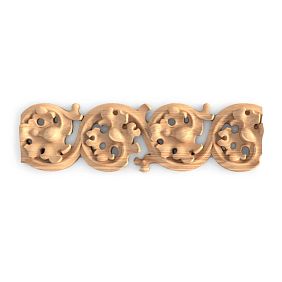
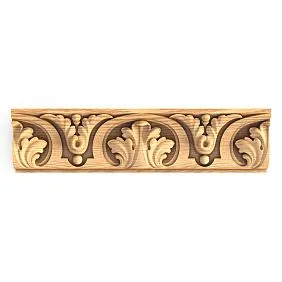
Classical carved moldings are made from solid wood using hand or machine carving techniques. The surface is decorated with ornaments of varying complexity—from simple grooves and beads to intricate compositions featuring acanthus leaves, rosettes, and grape clusters.
Such moldings are ideal for classic interiors where authenticity and richness of decor are important. They create an atmosphere of palace luxury, especially if additionally treated with gilding, patina, or artificial aging. The cost of carved moldings is high, but the aesthetic effect is incomparable.
Smooth profiled moldings: elegant restraint
Smooth moldings have no carved decoration; their expressiveness is created by a complex profile—a combination of convex and concave elements, planes, and rounded edges. Such moldings are universal and suitable for most modern interiors.
The profile can be simple—one or two protrusions with soft radii. Or complex—a multi-step composition of various elements, creating rich plasticity. Smooth moldings are easier to produce, cheaper than carved ones, but not inferior in elegance.
Wide cornice moldings: monumentality under the ceiling
Wide moldings with a height of 100 to 250 mm are used as ceiling cornices. They visually separate the ceiling from the walls, creating a sense of architectural completeness. In rooms with high ceilings, wide cornices are necessary to maintain proportions—a narrow cornice will get lost and look out of place.
Wide moldings often have a complex combined profile, where various elements alternate. The lower part may be decorated with carving, the middle part may be a smooth strip, and the upper part may contain a cove for a smooth transition to the ceiling.
Narrow wall moldings: framing and accenting
Narrow moldings with a width of 30-80 mm are used to create panel compositions on walls, frame door and window openings, and decorate furniture. They can form rectangular frames of various sizes, creating a rhythmic wall structure.
Such moldings are often combined with each other—a wider one becomes the outer frame, a narrower one the inner frame. This creates a multi-layered frame, adding depth and volume. Inside the frames, the wall can be painted a different color, wallpapered, or decorated with fabric.
Corner Elements: Finishing the Composition
A separate category is corner molding elements. These are special decorative inserts for finishing corners when joining moldings. The simplest option is to cut the molding at a 45-degree angle and join it without additional elements. But in classic interiors, corners are often decorated with carved rosettes, cartouches, or corner inserts with complex ornamentation.
Such elements turn a utilitarian joint into a decorative accent. They require skill during installation, but the result is worth the effort—the corners become the highlight of the composition, drawing the eye.
Materials for interior picture frame molding: choosing wisely
The material affects not only the appearance of the molding but also its durability, weight, installation complexity, and cost. Let's consider the main options.
Solid wood: nobility and durability
Solid wood moldings are the pinnacle of quality and prestige. Oak, beech, ash, walnut—each species has a unique texture and shade. Solid wood allows for the creation of moldings of any complexity, including the finest carving. The material is eco-friendly, emits a characteristic aroma, and creates a special atmosphere.
The advantages of solid wood are undeniable: strength, the possibility of multiple restorations, and a noble appearance. Wooden molding can last for decades, acquiring a noble patina over time. It can be repainted, tinted, or have its finish renewed.
There are also disadvantages: high price, significant weight (which complicates installation), and sensitivity to humidity. Solid wood requires a stable microclimate; deformations are possible with sharp fluctuations in humidity. Wooden molding is not suitable for bathrooms.
MDF: affordability and stability
MDF moldings offer the optimal balance of price and quality. The material is a medium-density fiberboard made by pressing ground wood. MDF is completely homogeneous, has no knots or cracks, and is geometrically stable.
A decorative coating is applied to the surface of MDF molding—lamination, veneering, or painting. High-quality lamination accurately imitates the texture of valuable wood species; visually, MDF is indistinguishable from solid wood. Veneered moldings have a thin layer of natural wood, combining the advantages of both materials.
MDF is lighter than solid wood, easier to install, and not afraid of moderate humidity. The price is 2-3 times lower than wooden counterparts. This is the ideal choice for most residential interiors where the budget is limited but quality is required.
Polyurethane: Lightness and Moisture Resistance
Polyurethane moldings are a modern solution gaining popularity. The material is a foamed polymer molded in special presses. Polyurethane is incredibly lightweight, not afraid of moisture, and easy to install with adhesive.
The surface of polyurethane moldings can imitate any material—wood, plaster, stone. Modern painting technologies allow for effects like gilding, patina, and metallic finishes. Polyurethane is ideal for bathrooms, kitchens, and rooms with high humidity.
The drawback of polyurethane is its artificiality. Upon close inspection, the material reveals its synthetic nature. Tactilely, it is cold, smooth, and lacks the warmth of natural wood. Polyurethane is not suitable for premium interiors, but it is an excellent option for budget projects.
Plaster: a classic for ceilings
Plaster cornices and moldings are a classic solution for ceiling decor. Plaster allows for the creation of elements of any complexity—from simple cornices to multi-meter friezes with high reliefs. The material is eco-friendly, 'breathes,' and regulates humidity.
Plaster cornices are heavy, fragile, and require professional installation. They are attached with special plaster adhesive, and joints are carefully filled. Restoring plaster moldings is complex work that requires skill.
In modern interiors, plaster is used less frequently, giving way to polyurethane. But for historical interiors and the restoration of architectural monuments, plaster is indispensable—only it conveys the authenticity of classical moldings.
Where interior molding is used: ideas for inspiration
Buy interior moldingIt is used for many purposes. Let's consider the main application options.
Ceiling cornices: finishing the upper part of a room
The most traditional use of molding is a ceiling cornice, separating the wall from the ceiling. The cornice conceals the joint, masks imperfections, and creates a finished composition. A wide cornice visually lowers the ceiling height, which is useful in rooms with ceilings above 3.5 meters. A narrow cornice delicately defines the boundary without overwhelming the space.
The cornice can be simple and single-level or complex and multi-tiered. In classical interiors, cornices are decorated with modillions, dentils, and rosettes. LED lighting can be hidden behind the cornice to create a floating ceiling effect.
Wall panels: structuring vertical surfaces
Panel systems made from moldings transform plain walls, creating a rhythmic structure. Rectangular frames of various sizes are arranged symmetrically or asymmetrically, in one or several rows. Inside the frames, the wall is painted in a contrasting color, wallpapered, or covered with fabric.
The classic boiserie system involves dividing the wall into three parts: lower (up to 80-90 cm), middle, and upper. Each part is framed with moldings of varying widths, creating a complex hierarchy. Such finishing is characteristic of classical interiors, studies, and libraries.
The modern interpretation of panels is simpler—large rectangles on an accent wall behind a sofa or bed. Minimal elements, maximum effect. The molding is painted to match the wall color or in a contrasting shade.
Framing openings: accentuating architectural elements
Door and window openings framed with molding gain architectural expressiveness. Wide molding creates a sense of a portal, a ceremonial entrance. Narrow molding delicately emphasizes the geometry of the opening.
The framing can be simple—a rectangular frame around the perimeter. Or complex—with an upper decorative overlay (pediment), side pilasters, and plinth elements. In classical interiors, door framing turns into an architectural composition, becoming an independent decorative object.
Furniture decor: individuality in mass production
Buy interior profileIt is used not only for walls and ceilings. Moldings are actively used in furniture production to decorate the fronts of cabinets, dressers, and buffets. Applied to flat fronts, moldings create relief, turning simple furniture into a work of furniture art.
Kitchen cabinet fronts decorated with molding frames look more expensive and noble than smooth ones. Even budget MDF furniture, decorated with moldings and painted with high-quality enamel, creates the impression of expensive classical furniture.
Bed headboards, sofa backs, cabinet fronts—wherever volume and classical aesthetics are needed, molding finds application. Furniture workshops purchase kilometers of molding to decorate their products.
Framing mirrors and paintings: a classic genre
Historically, molding was created specifically for framing paintings. And today, high-quality molding is an essential element in the presentation of paintings and graphics. A properly chosen frame can enhance the perception of a work, highlighting its merits.
For classical paintings, wide carved moldings with gilding are suitable. For modern graphics—concise profiles in neutral shades. Mirrors in molding frames become independent decorative objects, especially if the molding is wide and expressive.
How to choose quality interior molding: evaluation criteria
The market is flooded with offers. How to distinguish quality molding from mediocre?
Profile geometry: precision is the key to beauty
Quality molding has perfectly calibrated geometry. The profile must be consistent along its entire length, without deviations or warping. Check: place two moldings on top of each other—they should match absolutely. Any discrepancies indicate low production quality.
The ends must be perpendicular to the planes, without chips or tears. Gaps are unacceptable when joining at a 45-degree angle. If gaps form during cutting, the molding cannot be installed properly.
Surface Quality: Smoothness and Uniformity
The surface of the molding must be perfectly smooth, without drips, dents, or roughness. Check painted moldings for color uniformity — spots, streaks, and gaps are unacceptable. Inspect laminated moldings for film peeling, bubbles, and scratches.
Evaluate veneered moldings based on veneer quality — the texture should be natural, without sharp color transitions. The veneer must be firmly glued, without peeling at the edges.
Wood Moisture Content: The Key to Stability
For wooden moldings, the moisture content of the material is critically important. The optimal level is 8-12%. With higher moisture content, the molding will dry out after installation, creating gaps at the joints. If the moisture content is too low, the molding will begin to swell and deform when exposed to normal conditions.
Moisture content can be checked with a moisture meter. Professional manufacturers indicate moisture content in certificates and provide a guarantee against deformation.
Eco-Friendliness: Health Safety
Buy interior moldingswith consideration for environmental safety. Request certificates confirming the formaldehyde emission class for MDF products. Class E1 or E0 is a mandatory requirement for residential spaces.
Paints and varnishes should be water-based, without toxic solvents. Check polyurethane moldings for the absence of a strong chemical odor. High-quality polyurethane is odorless or has a faint neutral smell.
Interior Molding Installation: Doing It Right
Installation quality determines 50% of the final result. Even a perfect molding can be ruined by improper installation.
Surface preparation: the foundation of success
Walls and ceilings must be leveled, puttied, and primed. Irregularities greater than 3-5 mm will cause problems during installation — the molding will not fit tightly, creating gaps. Use a straightedge or long level to check the plane.
Clean the mounting areas of the molding from dust and degrease them. Primer improves adhesive bonding and ensures a reliable connection.
Marking: Precision to the Millimeter
Marking is a critically important stage. Use a laser level to create perfectly straight lines. A chalk line helps snap long straight lines. Check all corners with a square.
When creating panel systems, first draw a diagram on paper and calculate the dimensions of all elements. Symmetry is the foundation of beauty in classical compositions. The central axis must be found accurately, and all marking is based on it.
Angle Cutting: The Art of Joining
Cutting at a 45-degree angle is the most complex operation. Use a miter saw with a laser guide. A miter box is only suitable for simple moldings with small cross-sections. Complex profiles require high-precision equipment.
Practice on scraps before cutting. Remember: you can always cut more, but you can never glue it back. It's better to measure multiple times than to ruin an expensive molding with an inaccurate cut.
Internal corners are less critical — small gaps can be masked with putty. External corners must be perfect — any gap will be noticeable.
Fastening: Adhesive or Screws
Light moldings (MDF, polyurethane) are fastened with construction adhesive like 'liquid nails'. Apply the adhesive in a zigzag or dots on the back side, press the molding to the surface, and secure it with painter's tape or spacers while it sets.
Heavy wooden moldings require additional mechanical fastening. Use screws or headless finish nails. The fasteners are countersunk, and the holes are filled with putty to match the molding color.
Heavy ceiling cornices are mounted on special brackets installed at 40-50 cm intervals. The brackets are mounted during the marking stage, the molding is placed over them, and additionally glued.
Finishing: Bringing It to Perfection
After installation, inspect all joints, and fill gaps with acrylic sealant or putty. Apply the sealant in a thin strip and smooth it with a wet finger. Remove excess immediately with a damp sponge.
Fastener holes are filled with putty, and after drying, sanded with fine-grit sandpaper. If necessary, perform local touch-up painting with retouching compounds to match the molding color.
The final touch is cleaning. Wipe the molding with a dry, soft cloth to remove dust and adhesive residue. Painted and varnished surfaces can be additionally polished to create a slight shine.
Trends for 2026: What Designers Are Choosing
The world of interior design is constantly evolving. What molding solutions are relevant in 2026?
Wide monumental profiles: the return of scale
After decades of minimalism, designers are returning to large-scale solutions. Wide moldings with a height of 150-250 mm create a sense of monumentality, adding weight and significance to the interior. Combined profiles, where convex and concave elements of varying widths alternate, are especially relevant.
Wide moldings are ideal for rooms with ceilings from 3.2 meters. In standard apartments with 2.7-meter ceilings, they can visually 'overwhelm,' so they require careful application.
Contrasting color solutions: playing with opposites
Molding in the color of the walls is a classic solution that creates a delicate volume. But the 2026 trend is contrasting combinations. Black molding on white walls, gold on graphite, white on emerald. Contrast makes the molding the main decorative element, attracting the eye.
Two-tone moldings, where protruding elements are painted one color and recesses another, create a complex play of light and color. This requires painting skill, but the result is impressive.
Natural textures: closeness to nature
Imitation plastic and smooth monochrome surfaces are giving way to natural textures. Moldings that mimic natural wood, preserving the texture of growth rings, knots, and natural irregularities, are gaining popularity. The effect of brushed wood, where soft fibers are removed to create relief, is being used more and more often.
Even artificial materials—MDF and polyurethane—strive to imitate natural textures as accurately as possible. Digital printing technologies allow wood to be reproduced with photographic precision.
Lighting integration: molding as a light fixture
Moldings with built-in LED lighting are an innovation gaining momentum. An LED strip is laid inside the molding, with light exiting through special slits or translucent inserts. The ceiling cornice turns into a source of soft, diffused lighting.
Lighting control is integrated into the smart home system. Brightness, color, and flicker modes are controlled via smartphone or voice. The molding becomes not just decor, but a functional lighting element.
Asymmetric compositions: moving away from classical symmetry
Classical panel systems are strictly symmetrical relative to the central axis. The modern approach allows for asymmetry—panels of different sizes, arranged chaotically or diagonally. This creates dynamism, reflecting the modern rhythm of life.
Asymmetry requires impeccable artistic taste. Randomness must be deliberate, chaos must be ordered. Not every designer manages to create a harmonious asymmetric composition.
Caring for interior molding: preserving beauty
Quality molding lasts for decades with proper care.
Regular cleaning: dust removal
Moldings with a relief surface accumulate dust in recesses. Regular dry cleaning with a soft brush or vacuum with a soft attachment prevents soiling. This is especially important for carved moldings with deep relief.
Damp wiping is permissible for painted and laminated moldings. Use a well-wrung soft cloth, avoid excess moisture. Wipe wooden moldings treated with oil or wax with special wood care products.
Protection from damage: preventing problems
Molding at touch level (lower wall panels, corners in passageways) is susceptible to mechanical damage. Protect corners with transparent corner guards, especially if there are children or pets in the house.
Avoid hitting with furniture when rearranging. Scratches and chips on painted molding can be retouched, but on laminated molding they are difficult to eliminate.
Restoration: returning to the original appearance
Painted wooden moldings can be completely renewed every 10-15 years. Old paint is removed with stripper or sanding, the surface is re-primed and painted. The molding looks like new.
MDF and polyurethane moldings are more difficult to restore. Local repair is possible, but complete renewal is problematic. For serious damage, it is easier to replace damaged sections with new ones.
Common mistakes when purchasing: what to avoid
Lack of knowledge of nuances leads to disappointment. Let's consider typical mistakes.
Scale error: too narrow or too wide
The most common mistake is choosing the wrong width of molding relative to the scale of the room. Narrow molding in a spacious room with high ceilings will get lost and fail to create the desired effect. Wide molding in a small room will visually shrink it and create a feeling of tightness.
Rule: the width of the ceiling cornice should be 1/20 to 1/15 of the room's height. For a standard height of 2.7 m, an optimal width is 130-180 mm. For a height of 3.5 m — 175-230 mm.
Style mismatch: classic in a loft
The molding should match the overall interior style. Carved, gilded molding looks absurd in a minimalist apartment. Rough wooden molding is inappropriate in an elegant neoclassical interior.
If in doubt, choose universal, concise profiles in neutral shades. They will fit into most styles.
Saving on quality: paying twice
The desire to save is understandable, but cheap molding of questionable quality will create more problems than joy. Crooked geometry, poor coating, unpleasant odor — you'll have to live with this for years.
Quality molding costs more but will last for decades without needing replacement. It's an investment that pays off with durability and aesthetic pleasure.
Buying without calculation: not enough or too much left over
Accurate calculation of the required amount is critically important. Measure all areas where installation is planned, add 10-15% for trimming and possible errors. Buying just enough is risky — if you're short by a few centimeters, you'll have to search for molding from the same batch (shades may differ).
Excess is also undesirable — several meters of unused molding will take up space and remind you of the inaccurate calculation.
Frequently asked questions about buying interior molding
Question: Can wooden molding be used in a bathroom?
Answer: Not recommended. High humidity and temperature fluctuations will cause wood deformation and mold growth. For bathrooms, use polyurethane or moisture-resistant MDF moldings with special impregnation.
Question: Which molding is better — solid wood or MDF?
Answer: Depends on budget and requirements. Solid wood is more prestigious, more durable, but more expensive and finicky. MDF is more practical, more stable, cheaper, but less prestigious. For most residential interiors, quality MDF is the optimal choice.
Question: Can laminated molding be painted?
Answer: Theoretically yes, but special primer for plastic will be required. The result is unpredictable — the paint may peel over time. It's easier to buy pre-painted molding or molding ready for painting.
Question: How much molding is needed for a 20 m² room?
Answer: For ceiling cornice — the perimeter of the room plus a 10-15% reserve. For a 4×5 m room, the perimeter is 18 m, with a reserve you need 20-21 m. For panel systems, the calculation is individual and depends on the complexity of the composition.
Question: Can molding be installed independently?
Answer: Simple, lightweight moldings — yes, with basic skills and tools. Complex, heavy moldings with carvings are better entrusted to professionals. Incorrect installation will ruin expensive material.
Question: How long does quality molding last?
Answer: Wooden molding with proper care lasts 30-50 years. MDF — 20-30 years. Polyurethane — 15-25 years. Service life depends on operating conditions and installation quality.
Question: What is the difference between molding and trim?
Answer: The terms are often used as synonyms. Formally, molding is a wide trim with a complex profile, originally intended for framing paintings. Trim is a more general concept, including any decorative strips.
Question: Can molding be bent for arched openings?
Answer: Polyurethane moldings allow slight bending. For larger radii, special flexible moldings are used. Wooden moldings can be bent after steaming, but this is a complex technique. It's easier to order custom-made bent molding of the required radius.
Where to buy quality interior molding: choosing a supplier
Choosing a supplier is no less important than choosing the molding itself.
Manufacturer or middleman: direct sales are more profitable
Buying directly from the manufacturer eliminates intermediary markups, guarantees product freshness, and provides a wide assortment. The manufacturer is invested in quality—reputation is critical for them.
Middlemen offer a limited assortment, higher prices, and questionable guarantees. If the product turns out to be defective, returns and exchanges can become problematic.
Showroom availability: see and touch
Buying blindly from photos is risky. Colors on screen differ from reality, texture cannot be assessed, and dimensions are perceived inaccurately. A showroom allows you to see samples, evaluate quality, and compare them with your own materials to check compatibility.
Good manufacturers have showrooms in major cities and offer the option to order samples with delivery.
Consultation support: help with selection
Professional consultants will help calculate the quantity, select the optimal profile for your style, and provide installation recommendations. This is especially important for beginners working with molding for the first time.
Manufacturers with years of experience have accumulated extensive expertise, which they willingly share with customers.
Ordering and delivery system: convenience and reliability
A convenient online store with clear navigation, detailed descriptions, and high-quality photos makes selection easier. The ability to order online saves time.
Delivery must be reliable, and packaging must be high-quality. Molding is a fragile material; poor packaging will lead to damage during transportation.
Warranties and returns: buyer protection
A manufacturer confident in quality provides a warranty against manufacturing defects. The possibility of returns and exchanges upon discovering defects is a mandatory condition.
Review return conditions before purchasing. Some sellers refuse to accept molding returns even in the presence of obvious defects.
Conclusion: create dream interiors with STAVROS
Interior molding is not just a decorative element; it is a tool for creating atmosphere, shaping the character of a space, and expressing individuality. In 2026, molding is experiencing a renaissance, returning to interiors as a symbol of quality, taste, and connection to cultural heritage.
STAVROS is one of the leading Russian manufacturers of premium-quality interiormolding and millwork products. Since 2002, STAVROS has been creating decorative elements that transform spaces, making them unique.
STAVROS's assortment includes dozens of molding models of varying complexity—from sleek modern profiles to exquisite carved compositions in classic styles. Production is based on in-house facilities equipped with high-precision European machinery. Each product undergoes multi-stage quality control, ensuring perfect geometry and flawless finishing.
STAVROS works with premium materials—solid oak and beech, high-density MDF of European production. Wood moisture is strictly controlled at 8-12%, eliminating post-installation deformation. All finishes are environmentally safe, meeting emission classes E1 and E0.
STAVROS's production capabilities allow for not only standard products but also custom orders. If the desired profile is not in the catalog, the company's workshop will develop and manufacture a unique model based on your drawings, subject to a minimum order quantity. This opens limitless possibilities for realizing the boldest design projects.
STAVROS's customer service system is built on principles of convenience and reliability. A broad stock program ensures shipment of standard products on the day of inquiry. Delivery is available throughout Russia and CIS countries via trusted transport companies. In Moscow and St. Petersburg, there are company-owned warehouses with self-pickup options.
For professionals—designers, architects, construction, and furniture companies—STAVROS offers a special loyalty program. Individual cooperation terms, priority production, and technical support at all project stages make STAVROS the preferred partner for large-scale projects.
STAVROS consultants are professionals with deep knowledge of materials, production technologies, and installation specifics. They will help calculate the required material quantity, select optimal profiles for your interior style, and provide care and maintenance recommendations. Call toll-free at 8 (800) 555-46-75—STAVROS specialists will answer all questions and help you make the right choice.
STAVROS showrooms in Moscow and St. Petersburg are open for visits. Here you can see all molding models andmolding, evaluate finishing quality, and select colors and textures. Experienced consultants will give a tour of the exhibition, explaining the advantages of various materials and profiles.
The STAVROS online store operates 24/7. Convenient navigation, detailed descriptions, high-quality photos, and video reviews simplify selection. The online ordering system allows purchases to be completed in minutes. Multiple payment methods—cash, bank transfer, card payment—ensure convenience for every customer.
STAVROS is not just a manufacturer of millwork products. It is a team of like-minded individuals passionate about their craft, striving to create products of the highest quality. The title 'Industry Leader of Russia' is not just an award; it is recognition of professionalism, quality, and innovation.
Choosing STAVROS means choosing reliability proven by time. Quality confirmed by thousands of completed projects. Professionalism based on years of experience. A partner invested in your success and satisfaction.
Create interiors that inspire! Spaces where you want to live, work, and entertain guests. Interiors that reflect your personality, taste, and lifestyle. With quality interior molding from STAVROS, this isn't just possible—it's easy, affordable, and reliable.
Start transforming your home today. Visit the STAVROS website, choose suitable models, order samples, or place an order right away. Create beauty that will delight you and your loved ones for decades. STAVROS is your guide to the world of quality interior decor!