












































































Article Contents:
- What are interior slats and why they changed the approach to space design
- Seven ways to use slats: from obvious to unexpected
- Accent wall as an artistic object
- Zoning without losing space
- Ceiling compositions: height and architecture
- Bed headboard: function and aesthetics
- Decorating niches and architectural recesses
- Screens for radiators and utilities
- Balconies and loggias: from technical to residential
- Materials for interior slats: choosing between aesthetics, durability and budget
- MDF with coating: affordability and variety
- Oak: standard of strength and status
- Beech: balance of characteristics
- Comparative table of material characteristics
- Slats in different rooms: application specifics and technical nuances
- Living room: compositional center and zoning
- Bedroom: Coziness and Privacy
- Kitchen: functionality and protection
- Balcony and loggia: expanding living space
- Interior strips, profiles and moldings: specialized decorative elements
- Carved and milled strips
- Interior molding for complex compositions
- Corners and blocks for frame systems
- Installation of interior slats: from preparation to finishing
- Preparation stage: acclimatization and inspection
- Frame installation: foundation of the structure
- Slat Installation: Rhythm and Precision
- Final Finishing: Protection and Aesthetics
- Care for wooden slats: preserving the original appearance
- Stylistic solutions: slats in different interior directions
- Scandinavian minimalism: light and air
- Neoclassicism: symmetry and proportions
- Loft: industrial aesthetics
- Frequently asked questions about interior slats
- About STAVROS: Traditions of Quality and Modern Technologies

When a space needs structure but must remain light and airy, Interior Rail comes to the rescue. This is not just a strip on the wall — it is a tool for creating rhythm, an architectural element capable of transforming the perception of a room without major reconstruction. In 2026, slat systems are experiencing a real boom: from minimalist Scandinavian interiors to luxurious neoclassical designs, designers are choosing wooden slats as a universal solution for zoning, decoration, and creating visual accents.



What is an interior slat and why has it changed the approach to space design
wall-mounted interior rails are narrow wooden or composite slats of various cross-sections that are mounted on vertical or horizontal surfaces at a specific pitch. Unlike solid cladding, they form an air-permeable structure that allows light and sight to penetrate through the construction. It is this semi-transparency that makes slats an ideal tool for zoning — they divide space psychologically without creating a sense of tightness.
Functionality extends far beyond decoration. Interior slat can conceal wall irregularities, mask utilities, serve as a base for built-in lighting or acoustic panels. In studio layouts, they become an alternative to massive partitions, preserving the visual connection between kitchen and living areas. On the ceiling, slats create volumetric compositions, visually increasing the room's height with proper orientation.
Why does wood remain the priority material? Natural texture brings warmth to modern interiors dominated by concrete, glass, and metal. Decorative interior rail made of solid oak or beech is not only visually appealing but also improves room acoustics by absorbing echo and reverberation. The eco-friendliness and tactile qualities of wood align with the modern demand for conscious consumption and connection with natural materials.




Seven ways to use slats: from obvious to unexpected
Our factory also produces:


Accent wall as an artistic object
Vertical cladding of one wall with slats instantly turns it into the compositional center of the room. The rhythmic alternation of slats and gaps creates visual dynamism, attracting the eye and setting the mood for the entire interior. In the living room, such a wall often becomes a backdrop for the TV or fireplace area. The pitch between slats is chosen in the range of 80-120 mm depending on the desired cladding density. A narrow pitch creates an almost solid surface with subtle graphics, while a wide pitch creates an airy, almost sculptural structure.
Horizontal placement of slats visually expands the room, which is relevant for narrow rooms or corridors. wall-mounted interior rails are mounted at eye level, forming a panel system 2.4-2.6 meters high. This technique is characteristic of modern neoclassicism, where horizontal wall articulation creates architectural expressiveness without excessive decorativeness.
Get Consultation
Zoning without losing space
In studios and transformer apartments, slat partitions have become the standard for separating functional zones. A floor-to-ceiling partition visually separates the kitchen from the living room while maintaining air and light circulation. Unlike drywall constructions, it does not require approval for redevelopment and can be dismantled if necessary. To enhance the zoning effect, LED lighting is integrated between the slats, creating soft contour lighting in the evening.
In the bedroom, a slat structure separates the rest area from the workspace or dressing room. The partition height can be partial — 1.8-2.0 meters is sufficient for psychological separation while maintaining a sense of unified space. Buy interior slats for such purposes should have a cross-section of 30×40 or 30×50 mm — substantial enough for structural stability but not overloading the space.
Ceiling compositions: height and architecture
A slat ceiling transforms a flat surface into a volumetric structure, creating visual height even in rooms with standard 2.7-meter ceilings. Vertically oriented slats, attached to the ceiling base, form a coffered system, with LED strips hidden between the ribs. Soft diffused light emanating from the gaps creates a floating ceiling effect.
Curvilinear ceiling structures made of bent slats — a solution for non-standard spaces. Radial compositions require the use of beech, which, after steaming at 100-110°C, bends with a minimum radius of 600-800 mm without fiber damage. Such elements are especially effective in bay window areas, halls with non-standard layouts, or interiors styled after Art Nouveau.
Bed headboard: function and aesthetics
A vertical slat panel behind the bed headboard solves several tasks at once. It protects the wall from mechanical damage and stains, creates a visual accent, and can serve as a base for built-in shelves or bedside lighting. The panel height is usually 1.2-1.5 meters from the floor, with the width matching the bed width plus 30-50 cm on each side.
Directional reading lights or LED strips for soft lighting are integrated between the slats. To enhance sound insulation, acoustic material is placed between the slats and the main wall — such a construction is especially relevant in apartment buildings with thin interior partitions.
Finishing niches and architectural recesses
Wall niches clad with slats in a contrasting color or direction become expressive decorative elements. If the main wall is clad vertically, the slats in the niche are installed horizontally — such contrast creates visual depth. Built-in lighting enhances the effect, turning the niche into a light box.
In living rooms, niches with slat cladding are used for placing TVs, audio systems, or decorative objects. Slats mask cables and mounting elements, creating a clean, minimalist composition.
Screens for radiators and utilities
Interior slatIdeal for decoratively concealing heating appliances, pipes, or electrical panels. The slatted screen ensures free air convection without reducing the radiator's heat output. The structure is mounted on a removable frame, allowing quick access to utilities for maintenance.
For screens, slats with a cross-section of 20×40 mm and an installation spacing of 50-70 mm are optimal. A denser spacing is more effective at visually concealing the radiator but requires precise calculation to preserve heat exchange.
Balconies and loggias: from technical to residential
Glazed balconies with slatted cladding on one wall transform into full-fledged offices or relaxation areas. Wood creates coziness in a space traditionally finished in a utilitarian manner.Interior stripson the balcony require mandatory protective treatment — even glazed spaces are subject to temperature and humidity fluctuations.
A slatted structure can zone a balcony, separating the storage area from the relaxation area. Lights integrated between the slats provide comfortable evening lighting, turning the balcony into a functional space for year-round use.
Materials for interior slats: choosing between aesthetics, durability, and budget
MDF with coating: affordability and variety
MDF Interior Striprepresents a compromise between cost and visual qualities. The medium-density fiberboard is covered with natural wood veneer, laminate, or painted with enamel. Modern printing technologies allow for high-fidelity imitation of oak, walnut, or exotic wood textures.
The main advantage of MDF is geometric stability. Unlike solid wood, MDF slats do not deform with changes in humidity and temperature. This is critical for spaces with unstable microclimates — kitchens, bathrooms (provided with water-resistant coating), balconies. The weight of the structure is significantly less, simplifying installation and reducing the load on walls.
interior MDF panel buycan be found with various finishing coating options. Veneered slats are virtually indistinguishable in appearance from solid wood but cost 60-80% less. Enamel-painted options offer a wide color palette unattainable for natural wood without complex tinting.
The disadvantages of MDF are related to lower tactile value and limited repairability. Deep scratches or chips on a veneered surface cannot be restored without complete re-veneering. For high-traffic areas — wall sections in hallways, headboard areas — solid wood is preferable.
Oak: the standard of strength and status
Interior oak plank— the choice for interiors where durability and prestige are top priorities. Oak wood density of 700-800 kg/m³ provides exceptional resistance to mechanical impact. Oak slats withstand significant loads without deformation, which is important for load-bearing elements of slatted partitions or ceiling structures.
Oak texture with pronounced annual rings and medullary rays creates a rich visual pattern. The natural color varies from light straw to dark brown depending on the cutting method and part of the trunk. Staining with wood stains enhances texture contrast, creating an effect of noble patina over time.
Oak has natural resistance to rot and biological infestation due to its high tannin content. This makes oak slats suitable for spaces with high humidity — provided proper protective treatment. Thermally treated oak is further stabilized, acquiring a dark chocolate hue and almost zero hygroscopicity.
The disadvantages include high cost and significant structural weight. Oak wall cladding requires a reinforced frame and reliable fastening to the base. Processing oak requires quality tools due to the wood's high density and hardness.
Beech: a balance of characteristics
Beech slats occupy an intermediate position between oak and more affordable species. Beech density of 650-700 kg/m³ provides good strength with less weight compared to oak. The homogeneous wood structure with fine pores creates a smooth matte surface, ideal for modern minimalist interiors.
Beech processes excellently, allowing for the creation of profiled slats with clear edges. For curved structures, beech is the optimal choice due to its ability to bend after steaming. Radial partitions, rounded ceiling elements, curved screens are made from beech with a minimal defect rate.
The natural color of beech — light pinkish or yellowish — creates a warm atmosphere. The species takes well to tinting, allowing for a wide range of shades from light ash to dark walnut. Steamed beech acquires a uniform pinkish-brown tone, smoothing out natural spotting.
The disadvantage of beech is its high hygroscopicity. Without protective treatment, beech products actively absorb and release moisture, leading to warping. Thorough impregnation with antiseptics and finishing with oils or varnishes is mandatory.
Comparative table of material characteristics
| Material | Density kg/m³ | Stability | Price | Moisture resistance | Texture |
|---|---|---|---|---|---|
| MDF veneer | 700-800 | High | Low | Medium | Imitation |
| Oak | 700-800 | High | High | High | Pronounced |
| Beech | 650-700 | Medium | Medium | Low | Uniform |
Reiki in Different Rooms: Application Specifics and Technical Nuances
Living Room: Compositional Center and Zoning
In the living room, slatted structures most often serve as an accent wall behind the sofa or TV. Vertical orientation visually increases the height of the room, which is especially valuable in standard apartments with 2.7-meter ceilings. The cross-section of slats for the living room is chosen as medium — 30×40 or 40×50 mm, creating sufficient massiveness for the element to be perceived as architectural.
The color scheme depends on the overall interior palette. In Scandinavian and minimalist spaces, light natural tones of oak or bleached beech are preferred. For neoclassical styles, slats tinted in walnut or wenge are suitable, creating a contrast with light walls. In modern eclectic interiors, slats are painted in graphite, terracotta, or even matte black — the emphasis is on the rhythm's graphic pattern, not on the wood texture.
Built-in lighting turns a slatted wall into a light object. An LED strip is placed behind the slats in vertical gaps, creating a floating plank effect. Dimmable light sources are used to control intensity and color temperature, allowing the atmosphere to change from cool daylight to warm evening light.
Bedroom: coziness and privacy
In the bedroom, priority is given to materials and shades that create a sense of coziness and calm. Warm tones of natural wood — beech, ash, light oak — are preferable to cold graphite or wenge. A slatted panel behind the bed headboard serves protective and decorative functions; the height of such a panel is usually 1.2-1.5 meters.
For bedrooms with insufficient sound insulation, slatted wall cladding bordering an adjacent apartment is performed with acoustic material filling. Mineral wool or specialized sound-absorbing boards are laid between the main wall and the slats, reducing noise penetration by 15-25 dB.
If a work area is organized in the bedroom, a partial-height slatted partition (1.8-2.0 meters) zones the space without creating a feeling of confinement. Such a partition is mounted at a distance of 1.5-2.0 meters from the bed headboard, forming a visual barrier between the sleeping area and the workspace.
Kitchen: Functionality and Protection
In the kitchen, slats are used to zone the dining area from the work area. A floor-to-ceiling slatted partition visually separates the kitchen island or work countertop from the dining table or living room in studio layouts. The open structure preserves visual connection, but the spaces are psychologically separated.
The material for kitchen slats must withstand high humidity and temperature fluctuations. Oak slats with protective varnish coating or thermally treated options with reduced hygroscopicity are optimal. MDF with moisture-resistant veneering is also acceptable provided high-quality end sealing.
The distance from a slatted partition to a gas stove must be at least 1.5 meters for fire safety reasons. If the partition is located closer, the slats are treated with fire-retardant compounds, reducing the flammability class to G2.
Balcony and Loggia: Expanding Living Space
Glazed, insulated balconies with slatted cladding turn into offices, workshops, or relaxation areas. Vertical slats on one of the walls create visual depth in a narrow space. For balconies, material stability is important — even in a glazed space, temperature fluctuations are more significant than in main rooms.
MDF slats for balconies are preferable to solid wood due to geometric stability. Thermally treated oak or larch are also suitable due to low hygroscopicity. Protective treatment is mandatory: antiseptic treatment, priming, and a finishing coat of oil or varnish.
A slatted structure on a balcony can integrate functional elements — a fold-down table, shelves, hooks for storage. Built-in lighting ensures comfortable work in the evening, turning the balcony into a full-fledged year-round room.
Interior Slats, Profiles, and Molding: Specialized Decorative Elements
Carved and Milled Slats
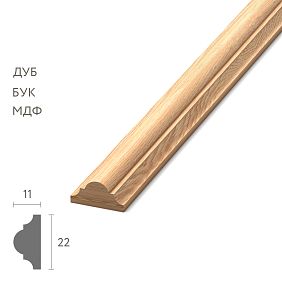
Interior profilewith milled relief is used to create classical and neoclassical interiors. Unlike simple rectangular slats, profiled slats have a complex cross-section with protrusions, grooves, and roundings. Such elements form panel systems on walls, frame door and window openings, and decorative overlays on furniture.
The width of interior profiles varies from 15 to 150 mm depending on the purpose. Narrow 15-30 mm slats are used for framing paintings, mirrors, and panels. Medium 40-80 mm slats form wall compositions, dividing the plane into symmetrical rectangular or square sections. Wide 90-150 mm profiles serve to decorate columns, pilasters, and fireplace portals.
Carved interior slats are created on CNC machines with subsequent manual refinement of small details. Ornaments vary from strict geometric meanders to lush floral compositions in Baroque or Rococo style. Carving can be bas-relief (depth 3-5 mm) or deep (8-15 mm), creating an expressive play of light and shadow.
Interior Molding for Complex Compositions
Picture frames — a special category of molding products, distinguished by complex profiles and rich decoration. If a molding is a functional element with decorative properties, a picture frame is primarily decorative, although it performs certain functions.is a wide profile with a complex cross-section, used for ceiling and wall compositions. Unlike simple slats, molding has a multi-level relief with a combination of protruding and recessed elements. Classical molding is mounted at the junction of the wall and ceiling, creating a cornice line.
Modern use of molding goes beyond the traditional cornice. Wide molding profiles are used to form coffered ceilings — the plane is divided into rectangular or square sections framed by protruding molding frames. The recesses between the frames are painted in a contrasting color or wallpapered, creating a complex multi-level composition.
On walls, molding forms panel systems in classical style. The wall is divided horizontally into two or three parts: a lower panel 90-120 cm high, a middle zone up to 2.0-2.2 meters, and an upper frieze part. The boundaries of the sections are framed by molding slats, creating an architectural division of the plane.
Corners and Battens for Frame Systems
solid wood trim piecesinclude structural elements — square and rectangular cross-section battens, corner profiles, filler slats. These elements form a supporting frame for facing slats or panels. Battens with a cross-section of 40×40 or 50×50 mm are used as guides to which the face slats are attached.
Corner profiles solve the problem of joints when navigating internal and external corners of a room. Internal corners cover gaps between slats on adjacent walls; external ones protect the cladding ends from mechanical damage. Using specialized corner elements ensures neat installation without complex angled cutting of slats.
Installation of Interior Slats: From Preparation to Finishing
Preparation Stage: Acclimatization and Inspection
Before installation begins, the battens must acclimate in the room for a minimum of 7-10 days. The material is unpacked and laid out horizontally with gaps for air circulation. The wood equalizes its moisture content with the surrounding atmosphere, preventing deformation after installation.
Quality inspection of each batten is mandatory. Straightness is checked by applying a long ruler or a taut string — a curvature of more than 2 mm per meter of length makes the batten unsuitable for visible areas. Such planks are set aside for short inserts or areas where slight curvature is visually unnoticeable.
The base surface is prepared depending on the installation method. For mounting on a frame, the requirements for wall evenness are minimal — it is sufficient to remove flaking plaster areas and treat with an antiseptic. When mounting battens directly onto the wall, leveling is required — variations of more than 3 mm per meter of length will result in a wavy cladding surface.
Frame Installation: The Foundation of the Structure
For vertical battens, horizontal guides made of 40×40 or 50×50 mm timber are installed with a spacing of 60-80 cm. The first guide is mounted at a height of 10-15 cm from the floor, the last one — 10-15 cm from the ceiling. Intermediate battens are distributed evenly. Attachment to the wall is done with dowel nails or anchors depending on the base material.
For horizontal battens, the frame is formed from vertical posts with a spacing of 50-60 cm. It is important to maintain a single plane for all guides — any deviation will show on the front surface. Plane checking is done with a long level or a taut string. Protruding wall areas are compensated for with shims under the guides.
A ventilation gap of at least 10-15 mm between the wall and the frame is mandatory for air circulation. Stagnant moisture behind the cladding leads to mold and wood rot. If the wall is external or borders a damp room, a vapor barrier membrane is laid under the frame.
Slat installation: rhythm and precision
Battens are cut to the size of the room height minus the thickness of the top and bottom battens minus a 5 mm installation gap. An expansion gap is necessary for seasonal changes in wood dimensions — when humidity increases, battens swell slightly in length. Rigid fixation without gaps will lead to warping.
Attachment to the battens is done with glue reinforced with finish nails or screws. Screws are driven from the inside at an angle so the fastener is invisible from the front side. Nails are driven in places where the head will be hidden by the next batten or a decorative element.
The installation spacing is controlled with a template — a piece of batten or a calibrated spacer of the required width. The template is placed between the already fixed batten and the next one, ensuring an even gap along the entire length. Even minor spacing fluctuations are perceived by the eye as a rhythmic defect.
Final finishing: protection and aesthetics
If battens are supplied without a finish coating, treatment is performed after installation. The surface is sanded with 180-220 grit abrasive, removing minor irregularities and dirt. Dust is thoroughly removed with a vacuum and a damp cloth — dust residue will impair coating adhesion.
Antiseptic treatment is mandatory for all wooden battens. The impregnation protects against fungus, mold, and wood-boring insects. The composition is applied with a brush in two coats with intermediate drying. Pay special attention to the ends and areas of contact between the battens and the frame — moisture lingers there the longest.
The finish coating is chosen depending on the desired effect. Oils highlight the texture, create a matte or semi-matte surface, and are easy to renew. Varnishes form a protective film, increase wear resistance, and provide a glossy or matte finish. Waxes create a silky surface with a soft sheen but require regular renewal.
Care for Wooden Battens: Preserving the Original Appearance
Weekly dry cleaning with a vacuum cleaner and a soft brush attachment prevents dust accumulation in the gaps between battens. Dust settling on horizontal edges and in crevices gradually absorbs moisture and creates a favorable environment for microorganisms. Regular cleaning eliminates this problem at the initial stage.
Wet cleaning is performed once a month with a well-wrung cloth. Excess moisture is harmful even to protected wood — water penetrates through micro-cracks in the coating, causing swelling. Wiping is done along the grain, without lingering in one spot. After wet cleaning, the surface is immediately wiped dry with a soft cloth.
Climate control is critical for the longevity of wooden battens. Relative air humidity should be maintained in the range of 45-60%. Sharp humidity fluctuations cause cyclic changes in wood dimensions, leading to cracking and deformation. During the heating season, using a humidifier is recommended; in summer — ventilation to reduce excess humidity.
Coating renewal is performed when signs of wear appear — dulling, local abrasions, disappearance of the protective film. For oil finishes, renewal is done every 2-3 years by applying a new coat of oil after light sanding. Varnish finishes require complete re-sanding and re-varnishing every 5-7 years.
Stylistic Solutions: Battens in Different Interior Styles
Scandinavian minimalism: light and air
In Scandinavian interiors, battens are used in light natural tones — whitewashed oak, birch, light ash. The batten cross-section is thin — 20×30 or 20×40 mm, creating a light, airy structure. Installation spacing is wide — 120-150 mm, emphasizing not the density of the cladding but the rhythm of the lines.
The color palette is monochrome — white or light gray walls, natural wood battens, minimal contrasts. Batten structures do not overload the space, remaining background elements. Functionality prevails over decorativeness — battens zone, organize space, but do not become the dominant element of the composition.
Neoclassical: Symmetry and Proportions
Neoclassical interiors use profiled planks and moldings to create panel systems. Walls are divided horizontally and vertically into symmetrical sections framed by moldings. The color scheme is built on contrast — light walls and dark wooden frames or vice versa.
Battens are mounted not chaotically, but in a strict geometric system. Vertical pilasters at a certain distance from each other, horizontal belts at a fixed height, symmetrical panels around windows and doors. Proportions are verified according to classical canons — the golden ratio, modular grid, visual balance.
Loft: industrial aesthetics
In loft interiors, battens contrast with rough textures — brickwork, concrete walls, metal structures. Dark tones are preferred — wenge, walnut, tinted graphite, or black. Battens can be deliberately rough, with preserved tool marks, knots, and uneven texture.
Installation emphasizes constructiveness — visible metal frame, deliberately protruding fasteners, open utilities between battens. The combination of wood and metal — a characteristic feature of lofts — is realized through a combination of wooden battens and steel profiles.
Frequently Asked Questions About Interior Battens
What spacing between battens is optimal for zoning?
For visually separating spaces while maintaining through visibility, a spacing of 100-120 mm with a batten cross-section of 30×40 mm is optimal. A denser spacing creates an almost solid wall, a wider one reduces the zoning effect.
Can slats be used in humid areas?
Oak and thermally treated battens with waterproof varnish coating are suitable for bathrooms provided there is good ventilation. MDF battens are only permissible if they are moisture-resistant with complete end sealing. For saunas and steam rooms, only thermally modified wood or larch is suitable.
How to calculate the required amount of material?
For vertical wall cladding, the wall area is multiplied by a coefficient of 1.15-1.25 depending on the installation spacing. The allowance is needed for trimming, possible defects, and spare planks. For curvilinear structures, the coefficient increases to 1.3-1.4.
What thickness of slats is optimal for an accent wall?
For accent walls in residential spaces, a cross-section of 30×40 or 40×50 mm is optimal. Thinner slats appear fragile on large surfaces, while thicker ones create excessive bulkiness.
Is protective treatment needed for slats inside a room?
Antiseptic treatment is mandatory for all wooden slats regardless of location. A finishing coat of oil or varnish protects against soiling and mechanical damage, making maintenance easier.
Can slats be mounted without a frame directly onto the wall?
Direct mounting is possible for perfectly flat walls with deviations not exceeding 2 mm per meter. Slats are attached using wood mounting adhesive with temporary clamping until set. This method is suitable for MDF slats; solid wood requires additional fasteners.
How do interior slats affect room acoustics?
Slat cladding with an air gap behind the structure absorbs mid-range sound frequencies, reducing reverberation. To enhance the effect, acoustic material is placed between the slats and the wall. Slats do not completely solve sound insulation issues but noticeably improve acoustic comfort.
About STAVROS Company: Traditions of Quality and Modern Technologies
STAVROS specializes in manufacturing wooden interior products, combining traditional craftsmanship with modern technologies. Production uses solid oak and beech, as well as high-quality MDF panels with various finishing options. The entire cycle from timber procurement to final processing is controlled at its own production facilities.
solid wood trim piecesMoldings constitute a significant part of the assortment — over 200 profiles of skirting boards, cornices, moldings, architraves, and slats. Each product undergoes multi-stage quality control, including checks for geometry, wood moisture content, surface treatment quality, and finish coating. The moisture content of solid wood is maintained at 8-12%, ensuring dimensional stability after installation.
The production base is equipped with CNC milling machines, allowing the creation of profiles of any complexity with an accuracy of up to 0.1 mm. Carved elements are produced on specialized equipment with subsequent manual detailing. Finishing includes sanding, antiseptic treatment, priming, and application of protective coatings — oils, waxes, varnishes, or enamels.
STAVROS offers not only standard catalog items but also custom production according to customer drawings. An integrated approach enables the creation of fully coordinated interiors where furniture,Trimand decorative elements are made from the same batch of wood with uniform finishing. This ensures perfect color and texture matching of all interior elements.
Product delivery is available across Russia and CIS countries. An in-house installation service performs the installation of moldings with a workmanship guarantee. Consultative support includes assistance in selecting profiles, calculating material quantities, and providing recommendations for installation and maintenance.


