Article Contents:
- Custom furniture: advantages of individual production
- Exact fit to space dimensions
- Material and finish selection
- Ergonomics tailored to a specific user
- Uniqueness and exclusivity
- Quality control at all stages
- Interior armchairs made of solid wood: styles and materials
- Classic armchairs: tradition and solemnity
- Armchairs in Art Nouveau style: fluidity and organic forms
- Modern armchairs: minimalism and functionality
- Materials for interior armchairs
- Tables and chairs made of solid wood: the centerpiece of the dining area
- Dining tables: shapes and constructions
- Chairs for the dining area: comfort and style
- Table and chair sets
- Wardrobes and dressers: classic storage solutions
- Living room and dining room cabinets: display cases and sideboards
- Dressers for bedrooms and hallways
- Bedroom wardrobes: wardrobe solutions
- Premium interior items: details that define status
- Premium segment materials
- Premium furniture production technologies
- Exclusive Design
- Furniture ordering process: from sketch to installation
- Consultation and measurements
- Sketch and Drawing Development
- Furniture Production
- Delivery and Installation
- Frequently asked questions about custom furniture
- How much does custom solid wood furniture cost?
- How long does manufacturing take?
- Can the dimensions of a standard model be changed?
- Which wood species should I choose?
- Which upholstery is more practical for dining chairs?
- Do you provide a warranty for solid wood furniture?
- Can furniture be ordered from a photograph?
- How to care for solid wood furniture?
- Can solid wood furniture be repaired if it gets damaged?
- Where to buy quality custom-made furniture?
- Conclusion: furniture as an investment in quality of life

Furniture is not just a functional object. It is a sculpture in which one lives. It is architecture scaled to the human body.Custom interior furnitureSolid wood furniture is the choice of those who understand: space is shaped not by walls, but by the objects that exist within it. Standard factory-made furniture is reproducible in thousands of copies. Custom-made furniture is unique. It is created for a specific person, for a specific space, in accordance with a unique vision.
Why solid wood? Because it is a material with memory. The tree grew for decades, accumulating structure, density, the pattern of growth rings. This history remains in the material. An oak table remembers the forest. A beech armchair holds the warmth of the sun that nourished the tree. This is not pathos—it is physical reality. Wood is tactilely warm, unlike metal or plastic. It breathes, absorbs moisture, releases it. It is alive.
Interior designAn interior is built around key objects. A sofa, dining table, armchair, wardrobe—these are the anchors of the composition. Everything else—walls, textiles, decor—is arranged around them. If the anchors are solid, high-quality, and well-thought-out, the entire interior gains integrity. If the anchors are random, of varying scales, bought at different times from different collections—the interior falls apart.
Ordering furniture individually is not a whim or a luxury for the select few. It is a rational decision for those who want to get exactly what they need. The right size—not 180 cm as in the catalog, but 215 cm so the table fits exactly between the columns. The right height—not the standard 75 cm, but 78 cm, suited to your height. The right color—not 'medium walnut' from the factory palette, but stained oak with patina, matching the floor tone. Custom-made furniture solves the specific tasks of a specific space and a specific person.




Custom-made furniture: advantages of individual production
Why not buy ready-made? Because ready-made is a compromise. You adapt to the furniture, not the furniture to you.Interior itemscreated to order, adapt to your body, your habits, your space.




Precise fit to the dimensions of the space
Standard furniture is designed for average spaces. But your room is not average. It may have niches, protrusions, slanted ceilings, non-standard doorways. Custom-made furniture is designed considering every centimeter.
A dining table for a dining room 3.2 meters wide. A factory table is either too short (leaving empty corners) or too long (the door won't open). A custom-made table is made exactly 2.8 meters long—exactly what is optimal for this space.
A wardrobe for a bedroom with a ceiling height of 3.2 meters. A standard wardrobe 2.4 meters high leaves an 80 cm void above—a dust collector, a visual dissonance. A custom-made wardrobe is made 3.1 meters high—up to the ceiling, using the entire volume, visually cohesive.
A console table for a narrow hallway 90 cm wide. Standard consoles 40-50 cm deep are too bulky, narrowing the passage. A custom-made console 25 cm deep—just enough to place keys, a vase, without hindering movement.
Our factory also produces:


Choice of materials and finishes
Factory furniture offers a limited choice of finishes. 3-5 color options, 2-3 types of upholstery. Custom-made furniture gives freedom to choose materials, finishes, and hardware.
Wood species: oak, beech, ash, walnut, cherry. Each species has its own texture, color, density. Oak is massive, brutal, expressive. Beech is lighter, softer, more elegant. Ash is contrasting, with pronounced rings. Walnut is dark, noble, prestigious.
Finish: clear oil that reveals the texture. Matte varnish, creating a silky surface. Glossy varnish, emphasizing the wood grain. Staining, changing the color from honey to black ebony. Patination, creating an aged effect.
Upholstery: genuine leather, velour, burlap, linen, silk. Upholstery color from thousands of options, not just five. Filler density: a soft armchair for relaxed reading or a firm one for active work.
Hardware: bronze handles with patina for a classic style. Minimalist metal for contemporary. Carved wooden for traditional. Every detail is chosen, not imposed by the manufacturer.
Get Consultation
Ergonomics for a specific user
Standard furniture is designed for a person of average height 170-175 cm. If your height is 190 cm, a standard dining table height of 75 cm is uncomfortable—your knees hit the tabletop. A custom-made table is made 80 cm high—your legs are free, your back is straight.
Interior armchairCustom-made furniture considers the anatomy of a specific person. Seat height, depth, backrest angle, height and width of armrests—every parameter is adjustable. The result is an armchair that is comfortable to sit in for hours because it is designed for your body.
A desk for working at a computer. A standard tabletop height of 75 cm may be uncomfortable. A custom-made desk is made with a height of 72 or 78 cm—depending on your height and preferred chair height. The keyboard at the correct height—wrists are not strained, shoulders are relaxed.
Uniqueness and exclusivity
Factory furniture is replicable. Your sofa is owned by thousands of other people. Custom-made furniture is unique. It is created as a one-of-a-kind piece, based on your sketch, for your home.
Unique carving on the chair back. A master carver creates an ornament based on your sketch or reinterprets a classic motif in a new way. Each carved element is individual—no two acanthus leaves are identical.
Tabletop inlay. Fragments of contrasting wood species—light ash and dark walnut—create a geometric or floral pattern. The inlay is done by hand, requiring precision down to fractions of a millimeter.
A family crest or monogram carved on the back of an armchair, inlaid into a tabletop. The furniture becomes personalized, a family heirloom passed down through generations.
Quality control at all stages
Factory furniture undergoes assembly line quality control. Selective inspection, statistical methods. Custom-made furniture is individually controlled at every stage.
Wood selection—the master personally selects boards, checks for defects, and assesses the expressiveness of the grain. Rejects boards with knots, cracks, or uneven color.
Manufacturing—each operation is controlled. Precision of tenon and mortise fitting, geometry of parts, quality of sanding. If a part does not meet requirements—it is remade.
Assembly—the master checks the stability of the structure, smoothness of drawer and door opening, and absence of squeaks. Adjusts hinges, soft-close mechanisms, and guides to a perfect state.
Finishing—uniformity of coating, absence of drips, runs, or matte spots on a glossy surface. Each layer of varnish or oil is applied by hand, with intermediate sanding.
Solid wood armchairs for interiors: styles and materials
Buy interior chairMass-produced—a compromise between price, quality, and design. A custom-made solid wood armchair—the embodiment of your very idea of the perfect armchair.
Classic armchairs: tradition and solemnity
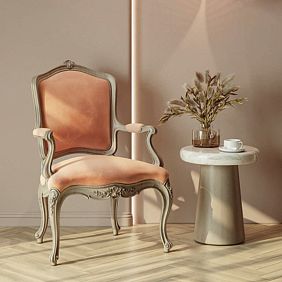
A classic armchair—symmetry, proportions, canonical forms. It harks back to French royal armchairs of the 17th-18th centuries, English club armchairs of the Victorian era, Russian noble armchairs of the Empire period.
High-back armchair—a throne. A back height of 100-120 cm creates monumentality and a sense of protection. The person sitting in such an armchair is elevated, dominating the space. The back can be straight—strictness, solemnity. Or curved—comfort, following the shape of the back.
Carved, curved armrests. They are not just supports for the arms, but sculptural elements. Volutes, scrolls, lion's paws, griffin heads—the armrest becomes a work of wood carving.
Cabriole legs—curved, resembling an animal's legs. A classic form originating from Baroque and Rococo. The leg widens at the top, curves, narrows towards the bottom, ending in a paw. Carving on the legs—floral ornaments, fluting, reeding.
Upholstery of a classic armchair—velvet, velour, tapestry, leather. Colors are rich: burgundy, emerald, sapphire. Upholstery with diamond tufting—a diamond pattern of buttoned tufts creating a three-dimensional relief.
Armchairs in the Art Nouveau style: fluidity and organic forms
Art Nouveau armchair is characterized by flowing lines, asymmetry, stylized plant motifs. It is a reaction to the strictness of classicism—a striving for naturalness, fluidity of forms.
The armchair back is curved in a wave-like manner, without right angles. It follows the natural curve of the back, but not functionally-ergonomically, but artistically, with an exaggerated curve.
Armrests are thin, graceful, curved. They resemble plant stems. Carving on the armrests—stylized flowers (irises, lilies), trailing leaves.
Legs can be straight, but with a complex cross-section—not round, but oval, with fluting. Or curved, but not in the cabriole style, but along a smooth curve, like a tree branch.
Upholstery of an Art Nouveau armchair—solid color, in pastel shades (pale green, gray-blue, dusty pink). Or with an Art Nouveau-style floral print—stylized flowers, flowing lines.
Contemporary armchairs: minimalism and functionality
A contemporary solid wood armchair—purity of lines, minimal decor, emphasis on material texture and ergonomics. This is not a rejection of beauty, but a different understanding of beauty—through simplicity, geometry, honesty of material.
The armchair frame made of solid oak or ash is fully visible. Straight or slightly curved elements, no carving, no unnecessary details. Mortise and tenon or metal fastener joints, but aesthetically played up.
The back and seat can be made of leather straps stretched between frame elements—a nod to mid-20th century Scandinavian design. Or made of plywood, molded to the body's shape—biomorphic outlines within a strict structure.
Armrests are minimalist—simply horizontal rails at the right height. Or absent altogether, if the armchair is designed for tight grouping around a table.
Finish—clear oil, maximally revealing the wood grain. Or black stain, turning oak into ebony. Or white oil, lightening the wood, creating Scandinavian freshness.
Materials for interior armchairs
Oak is the primary material for premium-class chairs. A density of 700 kg/m³ ensures frame strength. The large-pored texture is expressive under transparent finishing. Color ranges from golden to dark brown.
Beech is an alternative to oak. Density is 650 kg/m³, texture is fine-pored and uniform. Beech is lighter than oak, with a pinkish hue. It bends more easily — bent beech elements (backs, armrests) are classics of Viennese furniture.
Ash — light contrast. Texture with expressive dark rings. Strength is close to oak. Ash chairs suit light, Scandinavian interiors.
Walnut — dark nobility. Chocolate-brown color, wavy texture. Walnut chairs are prestigious, expensive. They are good for studies, libraries, masculine interiors.
Combining wood species — oak frame, back and seat elements from ash. The contrast of dark and light creates graphic quality, visual richness.
Solid wood tables and chairs: the centerpiece of the dining area composition
Interior tableTables and chairs are the main objects in the dining room. The family gathers around them, guests are received, important conversations happen. A table is not just a surface for eating. It is the social center of the home.
Dining tables: shapes and constructions
Rectangular table — classic, versatile. It accommodates the maximum number of people, efficiently uses the space of a rectangular dining room. Length from 160 cm (for 6 people) to 300 cm (for 12-14 people).
Solid oak tabletop 40-50 mm thick — massiveness, solidity. Tabletop edges can be straight (modern style), rounded (classic style), with a bevel (transitional style).
The table base defines the character. Four legs — traditional, stable. Turned, carved, cabriole legs — classic style. Straight legs, square cross-section — modern style.
Central support — a monumental turned or carved column in the center of the table, from which paw-like legs radiate. Such a table creates a sense of unity — everyone sits around the center, without highlighting the ends.
Oval table — softness, safety (no sharp corners), visual lightness. An oval accommodates as many people as a rectangle of the same area but looks more elegant.
Round table — democracy, equality. At a round table, there are no ends, no head of the table. All seated are equal, see each other. Diameter from 120 cm (for 4 people) to 180 cm (for 8 people).
Extendable table — practicality. Compact in normal state, accommodates the family. When receiving guests, it extends, an additional leaf is inserted, the table lengthens by 40-80 cm, accommodating more people.
Chairs for the dining area: comfort and style
Interior chairA chair must be comfortable — people spend considerable time at the table. And beautiful — chairs are visible from all sides, define the dining room style.
Chair seat height 45-48 cm from the floor — standard, comfortable for most people with a table height of 75-78 cm. The seat can be hard (solid wood, plywood) or soft (with padding and upholstery).
Hard seat — laconicism, easy cleaning. Wood can be anatomically profiled — slightly concave, following the shape of the buttocks. For prolonged sitting, a hard seat is uncomfortable — cushions are needed.
Soft seat — comfort. Padding (foam, batting) 3-5 cm thick creates resilient support. Upholstery (leather, velour, burlap) is wear-resistant, easy to clean. For the dining room, upholstery stain resistance is important.
The chair back defines the style. High back (80-100 cm from the seat) — solemnity, formality. It supports the back fully but weighs down the construction. Low back (30-40 cm) — lightness, modernity. It supports the lower back, visually light.
Carved back — classic. Vertical or horizontal rails with carving: floral ornaments, geometric patterns. Openwork carving creates lightness while maintaining decorativeness.
Bent back — Viennese classic. Wood (usually beech) is steamed, bent to shape, fixed. Smooth curves result, impossible in carved furniture. Bent chairs are light, elegant, comfortable.
Soft back — modern comfort. The back is upholstered with fabric or leather, with padding. It adapts to the back, creates maximum comfort. But requires care — upholstery gets dirty.
Table and chairs set composition
The table and chairs should form a harmonious ensemble. Not necessarily identical, but a stylistic connection is mandatory.
Uniform wood species — oak table and oak chairs. Texture and color match, creating integrity. Finishing is the same — the same oil or varnish.
Uniform style — classic carved table and classic carved chairs. Ornaments may differ, but the stylistics are common: volutes, acanthus leaves, proportions.
Contrasting combination — dark table and light chairs. Or vice versa — light table and dark chairs. Contrast creates dynamism, highlights each element. But requires a subtle sense of measure.
The number of chairs is determined by the table size and frequency of receiving guests. For a table for 6 people — 6 chairs. But you can order 8 chairs, storing the extras separately, taking them out as needed.
Armchairs for table ends — highlighting the head of the table. Two armchairs with armrests at the ends, regular chairs on the sides. The armchairs distinguish the hosts of the house, creating a hierarchy.
Wardrobes and chests of drawers: classic storage solutions
Interior wardrobeA solid wood wardrobe and chest of drawers are not just storage, but also an architectural element of the interior. A large-scale wardrobe structures the space, a chest of drawers creates a focal point.
Wardrobes for living rooms and dining rooms: display cabinets and sideboards
Display cabinet — a glazed cabinet for displaying tableware, collections, decorative objects. Height 180-220 cm, width 100-150 cm. The upper part is glazed — the contents are visible through the glass. The lower part is closed with solid doors — storage for less decorative items.
The glass in the display cabinet can be transparent — maximum visibility of the contents. Or beveled — the glass edges refract light, creating a shine. Or with wooden muntins — a classic solution where the glass is divided into sections by wooden frames.
Sideboard — a low cabinet for the dining room, 90-120 cm high. The sideboard's top serves as a serving surface — dishes are placed on it before serving. Inside — shelves and drawers for storing tableware, table linens.
Sideboard fronts can be carved — milled panels, carved overlays. Or smooth — solid wood panels with expressive wood grain, without additional decoration.
Hardware — bronze or brass handles, hinges. For classic style — decorative handles in the form of rings, brackets with patina. For modern — minimalist bracket handles or even concealed, where the door opens with a push.
Chests of drawers for bedrooms and hallways
Chest of drawers — a low case piece with drawers, 80-100 cm high, 80-120 cm wide. It consists of 3-5 drawers. A chest of drawers is convenient for storing linens, clothes, small items.
Chest of drawers top — a surface for placing decor. On a bedroom chest, lamps, photographs, boxes are placed. In a hallway — a vase, a key holder, a mirror can hang above the chest.
Chest drawers slide out on ball-bearing or roller slides. Quality slides ensure smooth, silent opening, full extension of the drawer. The drawer can hold up to 20-30 kg, does not deform.
Drawer fronts can be smooth or with panels. A panel — a frame around the perimeter of the front with a recessed central part. Paneling creates a classic style, visual structure.
Carved overlays on drawer fronts — decorative elements applied over the front. These are carved cartouches, rosettes, floral ornaments. They turn a simple chest into an adorned object.
Chest of drawers legs lift it 10-20 cm off the floor. This creates visual lightness, makes cleaning underneath easier. Legs can be turned, carved, cabriole — depending on the style.
Wardrobes for bedrooms: wardrobe solutions
Wardrobe cabinet — tall, up to the ceiling (2.4-2.7 m), wide (1.5-3 m). It accommodates clothes on hangers, shelves for folded items, drawers for accessories.
The internal layout of the wardrobe is designed individually. Hanging section — a rod at a height of 160-180 cm, free space below for hanging clothes. Section height 140-160 cm for short items (shirts, jackets), 180-200 cm for long items (dresses, coats).
Shelves for folded items — sweaters, jeans, bed linens. Distance between shelves 30-40 cm. Shelves made of solid wood or plywood covered with veneer. Pull-out shelves with sides — for small accessories, jewelry.
Drawers inside the wardrobe — for underwear, socks, accessories. Drawers with dividers — each item in its place, order is maintained.
Wardrobe fronts can be hinged — a classic solution. Two doors on hinges open outward. Require space to open, but look traditional, prestigious.
Sliding fronts — a modern solution. Doors move on tracks, do not require space to open. Practical for small bedrooms. Sliding systems are silent, smooth, durable with quality hardware.
Premium-class interior items: details that define status
Interior itemsPremium-class items differ from mass-market ones not only in price. The difference lies in materials, technologies, attention to detail, exclusivity.
Premium segment materials
Select solid wood — wood with minimal knots, uniform grain, expressive annual ring pattern. Each board is selected by hand, boards with defects are
rejected. For a single table, wood may be selected from hundreds of boards.
Kiln drying to 8-10% moisture content — critical for stability. Wood with natural moisture (18-25%) dries out, cracks, warps after furniture is made. Kiln drying removes excess moisture, stabilizes the material. Furniture made from dry wood lasts for decades without deformation.
Exotic woods — mahogany, ebony, rosewood, teak. They are expensive, rare, have unique color and grain. A tabletop made from a mahogany slab — a piece of trunk, cut lengthwise, preserving the natural edges — is unique, one-of-a-kind.
Natural leather for upholstery — thick (1.5-2 mm), elastic, with natural texture. Premium-class leather retains natural irregularities, scars, folds — signs of authenticity. It ages nobly, acquiring a patina, becoming softer and more beautiful.
Premium Furniture Manufacturing Technologies
Mortise and tenon joinery is a traditional assembly method without metal fasteners. The tenon on one piece fits into the mortise of another and is glued. The joint is strong, invisible, and lasts for centuries. It requires precision to tenths of a millimeter, achieved with high-precision equipment.
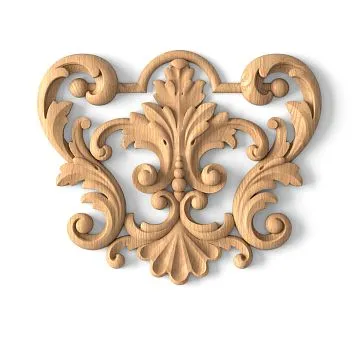
Hand carving — ornaments are carved by hand by a carver. The master works with a set of chisels, creating relief according to a sketch. Hand carving is individual, has a lively character, and differs from mechanical stamping.
French polishing — a traditional finishing technique. Dozens of ultra-thin layers of shellac (natural resin) are applied to the wood surface with a pad. Each layer dries and is sanded. The result is a mirror shine that emphasizes the wood grain and depth of color. French polishing requires weeks of work but creates unparalleled finishing quality.
Patination — artificial aging. Dark patina is rubbed into the recesses of the carving and wood pores. The raised parts are wiped, remaining light. Contrast is created, giving the effect that the furniture has served for decades and acquired the patina of time.
Exclusive design
Premium-class furniture is designed individually. The designer creates sketches and drawings considering the client's wishes and interior features. The client participates in the process — selects options and approves decisions.
Unique proportions — a table not at the standard height of 75 cm, but 78 cm, tailored to the client's height. An armchair with armrests not at the standard height of 65 cm, but 70 cm, as comfortable for a specific person.
Author's carving — the carver interprets classical ornaments in a new way or creates unique motifs. The carving on a cabinet tells a family story — symbols, significant places, dates.
Material combination — a tabletop made of solid oak, legs made of bronze. Cabinet fronts made of walnut, panels inlaid with mother-of-pearl. Combination creates richness of textures and visual diversity.
Furniture ordering process: from sketch to installation
Ordercustom interior furniture— a process that requires time, but the result is worth it. Understanding the stages helps plan timelines, budget, and expectations.
Consultation and measurements
The first stage is a meeting with a designer or manager. You talk about your needs, show photos of the interior, examples of furniture you like. The specialist asks clarifying questions, determining style, materials, and functional requirements.
Space measurements are critical for custom furniture. The designer visits the site, measures the room, records the location of doors, windows, outlets, and switches. Checks floor level, wall verticality — even minor deviations are considered during design.
Budget discussion — financial boundaries are set immediately. The designer estimates the approximate project cost based on size, materials, and complexity. If the budget is limited, alternatives are offered — more affordable wood species, simplified decor.
Sketch and drawing development
The designer creates sketches — visualizations of the future furniture. 3D models show how the furniture will look in the interior and how it combines with the existing setting. The client sees the result before production begins and can make adjustments.
Drawings with dimensions — precise technical documents for production. All dimensions, materials, joining methods, and hardware types are specified. Drawings are approved by the client — this finalizes all parameters.
Material and finish selection — the client sees samples of different wood species, different finish shades. Chooses upholstery fabrics from catalogs, applies samples to the existing interior, assessing compatibility.
Contract signing — legal confirmation of all conditions. The contract specifies: furniture description, materials, dimensions, cost, production timeline, payment terms, warranty obligations. The contract protects both parties and establishes clarity.
Furniture production
Material procurement — selected wood is delivered to production. Quality, moisture content, and compliance with the order are checked. The wood is acclimatized — kept in the workshop for several days, adapting to the temperature and humidity of the production facility.
Cutting and processing — boards are cut into parts according to drawings. Profiles are milled, mortises and tenons are cut, holes for hardware are drilled. Each part is checked for dimensional compliance.
Carving and decoration — carvers create ornaments and overlays. CNC machines cut the basic relief, masters refine details by hand. Carving is sanded and prepared for finishing.
Assembly — parts are joined into the product. Wood joints are glued and clamped until the glue dries. Geometry, stability, and absence of warping are checked. Hardware is adjusted — hinges, drawer slides.
Finishing — coating application. Oil or varnish is applied in several layers with intermediate drying and sanding. The first layer soaks into the wood, revealing the grain. Subsequent layers create a protective film. Final polishing adds shine.
Quality control — the finished product is checked for defects, compliance with drawings, and finish quality. All drawers and doors are opened and closed, smooth operation is checked. The product is photographed, and photos are sent to the client for preliminary approval.
Delivery and installation
Packaging — furniture is professionally packaged. Corners are protected with cardboard corners, surfaces are wrapped in bubble wrap, the item is placed in a wooden crate or cardboard box. Fragile elements — glass cabinet doors, marble tabletops — are packaged especially carefully.
Delivery — furniture is delivered by specialized transport. For large furniture — trucks with hydraulic lifts, furniture vans. Transportation is insured — in case of damage during transit, the loss is compensated.
Floor delivery — movers bring the furniture to the required floor. Stairwell and door dimensions are considered. If the furniture doesn't fit, on-site disassembly or lifting through a window or balcony with a crane is possible.
Installation and assembly — craftsmen install furniture in the desired location, assemble it if required. Adjust legs for stability on uneven floors. Check the operation of all mechanisms. Provide care recommendations.
Warranty — the manufacturer provides a warranty on furniture from 1 to 5 years depending on the type of product and materials. The warranty covers manufacturing defects — hardware breakage, coating delamination, frame deformation. It does not cover damage from improper use.
Frequently Asked Questions About Custom Furniture
How much does custom solid wood furniture cost?
Price depends on size, wood species, complexity, finish. A simple oak dining table 180×90 cm — from 80,000-120,000 rubles. A carved table with inlay — from 200,000-300,000 rubles.Interior armchairA simple chair — from 40,000-60,000 rubles. An armchair with hand carving and leather upholstery — from 100,000-150,000 rubles.
How long does manufacturing take?
Timelines depend on complexity. Simple items — chairs, small tables — are manufactured in 4-6 weeks. Complex items — carved cabinets, furniture sets — in 8-12 weeks. Unique projects with author's carving — up to 16 weeks. Timelines are specified in the contract.
Can the dimensions of a standard model be changed?
Yes, this is an advantage of custom furniture. You liked a table from the catalog, but need a different length? The manufacturer will make a table of the required size, preserving the design. Changing the size usually does not significantly affect the price.
Which wood species to choose?
Oak — a universal choice, durable, expressive, prestigious. Beech — lighter, more elegant, good for painted furniture and bent elements. Ash — light, contrasting texture, suitable for Scandinavian style. Walnut — dark, noble, prestigious, for studies and libraries.
Which upholstery is more practical for dining chairs?
Natural leather — durable, easy to clean, ages nobly, but expensive. Burlap (dense fabric from plant fibers) — wear-resistant, pleasant to the touch, more budget-friendly than leather. Velvet — luxurious, soft, but requires careful maintenance.
Do you provide a warranty on solid wood furniture?
Yes, warranty on frame and construction — from 3 to 5 years. Warranty on coating — 1-2 years. Warranty on upholstery and hardware — 1 year. The warranty covers manufacturing defects with proper use.
Can furniture be ordered from a photograph?
Yes, you can provide a photo of the furniture you like. The designer will assess the possibility of reproduction, create drawings. If the furniture is protected by copyright, a similar design with changes avoiding copying will be created.
How to care for solid wood furniture?
Wipe dust with a dry soft cloth weekly. Once a month, wipe with a slightly damp cloth. Avoid direct sunlight — it discolors wood. For oil-finished furniture, renew the oil coating with a thin layer every 2-3 years. For lacquered furniture — use furniture polishes.
Can solid wood furniture be repaired if it gets damaged?
Yes, solid wood furniture is repairable. Scratches and chips are sanded, coating is renewed. Broken elements are replaced. Unlike chipboard furniture, which is often impossible to repair, solid wood lasts for decades with timely maintenance.
Where to buy quality custom furniture?
Choose manufacturers with experience, portfolio, reviews, own production. The company STAVROS has been producingcustom interior furniturefrom solid oak and beech for over 23 years. Tables, chairs, armchairs, cabinets, dressers — a full range of furniture for the home. Possibility of individual orders based on client sketches.
Conclusion: furniture as an investment in quality of life
Custom interior furnitureSolid wood furniture — is not just furnishings. It is the environment where life unfolds. The family gathers around the dining table, important decisions are made, holidays are celebrated. Books are read in the armchair, conversations are held, rest is taken after a workday. The wardrobe stores clothes, belongings, memories.
The quality of these items determines the quality of everyday life. A comfortable armchair, designed for your anatomy, does not cause back fatigue. A table of the correct height does not strain your shoulders. A wardrobe with thoughtful storage maintains order, saves time searching for items.
The aesthetics of furniture influence mood. A beautiful carved chair delights the eye every time you see it. An oak tabletop with an expressive texture creates a sense of connection with nature, solidity. Solid wood furniture is pleasant to the touch — you want to run your hand over the smooth surface, feel the warmth of the wood.
The durability of solid wood furniture — economic rationality. Yes, it is 3-5 times more expensive than chipboard furniture. But it does not last 5-7 years, but 50-70 years and more. An oak table purchased today will serve your children and grandchildren. It will not become morally obsolete — classic design is timeless. It will not physically deteriorate — solid oak is stronger than most modern materials.
Custom furniture adapts to your needs. You do not adjust to standard sizes and shapes. Furniture is created for you. This is an inversion of the usual consumption logic, where a person adapts to a product. Here, the product adapts to the person.
The company STAVROS has been creatingFurniture and interior itemsPremium class. Tables, chairs, armchairs, cabinets, dressers — all made from solid wood. Oak and beech are the species that ensure strength, durability, and expressive texture.
All wood undergoes chamber drying to a moisture content of 8-10%. This guarantees stability — the furniture will not warp or crack after manufacturing. The wood acclimatizes in the workshop before processing, adapting to temperature and humidity.
Furniture is manufactured using European equipment. Processing accuracy to tenths of a millimeter ensures perfect fitting of parts. Mortise and tenon joinery is strong, invisible, and lasts for decades.
Carved elements are created using a combined approach. CNC machines cut the basic relief precisely according to the digital model. Master carvers refine the details by hand — adding nuances that make the carving lively and individual.
Finishing is done with natural compounds. Linseed-based oils enhance the wood's texture and protect against moisture and dirt. Water-based varnishes are eco-friendly, create a protective film, and do not alter the wood's color.
STAVROS offers both standard models from the catalog and fully custom projects. Standard models feature proven designs, fast production times (4-6 weeks), and predictable pricing. Custom projects offer unique designs, any dimensions, custom carving, longer timelines (8-12 weeks), and individually calculated pricing.
The ordering process begins with a consultation. A designer visits the site, takes measurements, and discusses preferences. They create 3D visualizations showing how the furniture will look in your interior. After approving the sketches and signing the contract, production begins.
Finished furniture is delivered and installed by professional installers. They adjust, check the operation of all mechanisms, and provide care recommendations. Warranty from 1 to 5 years on different furniture elements.
STAVROS showrooms in Moscow and St. Petersburg. Here you can see the furniture in person, assess the quality of materials, finish, and carving. Sit in an armchair and feel the comfort. Touch a tabletop and feel the wood's texture. Consultants will assist with selection, show options, and process your order.
Create an interior whereSolid wood furnitureIt is not just functional, but beautiful. Where a dining table is the center of family life, not just a surface for eating. Where an armchair is a place for reflection and rest, not just a seat. Where a cabinet is an architectural element that structures space, not just a storage box.
Choose quality from STAVROS — and your space will gain the solidity that only genuine furniture can create. Furniture made from natural wood, crafted by masters, designed for you, serving generations. Furniture that does not become outdated or deteriorate, but gracefully patinates with time, becoming part of your family's history.