Article Contents:
- Philosophy of door decor: why decorate what can simply be opened?
- Door as a psychological boundary
- Aesthetic pleasure: beauty for beauty's sake
- Status function: home as a reflection of personality
- Materials for door decor: from natural wood to high-tech polyurethane
- Natural wood: warmth, nobility, timeless relevance
- Polyurethane: lightness, versatility, affordability
- Combined Solutions: The Best of Both Worlds
- Stylistic directions in door decoration: from classic to futurism
- Classical style: symmetry, proportionality, traditional motifs
- Baroque and Rococo: opulence, excess, theatricality
- Modern and Art Deco: line, movement, geometry
- Minimalism: Less Means More
- Loft and industrial: contrasts and unexpected combinations
- Specific door decoration ideas for different rooms
- Entrance door: first impression that cannot be repeated
- Living room interior doors: formality and presentability
- Bedroom door: coziness, privacy, restraint
- Children's room: safety, brightness, playfulness
- Kitchen and dining room: practicality plus style
- Bathroom and toilet: moisture resistance is mandatory
- Doors of pantries, wardrobes, technical rooms: beauty in details
- Techniques for mounting decor on doors: from preparation to finish
- Preparation of door leaf
- Adhesive Selection
- Installation process
- Joint sealing
- Painting and Final Finishing
- Mistakes to avoid
- Mismatch with interior style
- Over-decorating
- Incorrect proportions
- Poor quality installation
- Unsuitable paint
- Ignoring functionality
- Care for decorated doors
- Frequently asked questions about door decoration
- How much does it cost to decorate a door with decorative elements?
- Can you decorate a door yourself or are professionals absolutely necessary?
- Which decorative elements are better — wooden or polyurethane?
- Can metal and plastic doors be decorated?
- How to choose a color for a decorated door?
- How does door decoration affect the perception of space?
- Should all doors be decorated the same way?
- How long does door decor last?
- Can the decor be changed if you want to update the interior?
- Conclusion: Transform the ordinary into the extraordinary with&amA door is a boundary, a transition, a portal. It is a moment of pause between spaces, an opportunity to stop, evaluate, and feel. To decorate a door is to turn this moment into an aesthetic experience, a daily encounter with beauty.
- Why STAVROS is the optimal choice for door decoration
- Individual approach and full service
- Pricing policy: Quality at a fair price
- Additional elements for comprehensive design
- Expertise and experience: 20+ years in the market
- Ecological Safety
- Start the transformation right now

A door is not just a space divider. It is an opportunity. An opportunity to transform the ordinary into the exceptional, the standard into the personalized, the boring into the exciting. Every day we pass through doors dozens of times, but how often do we truly see them? Notice them? Admire them? For most people, a door remains invisible — until it becomes a work of art.
Imagine: an entrance door adorned with carved wooden elements greets guests with solemnity and elegance. An interior door with elegant moldings turns the transition between rooms into an aesthetic experience. Even a pantry door can become an art object if approached creatively.door decoration purchase— is not a waste of money, but an investment in daily visual pleasure, in increasing the value of your home, in creating a space you won't want to leave.
But where to start? What styles exist? Which materials work best? How to combine decorative elements so the result looks professional, not amateurish? In this article, we will cover all aspects of door decoration — from design philosophy to specific technical solutions, from classical techniques to avant-garde experiments.


The philosophy of door decor: Why decorate something you can simply open?
The question is not as simple as it seems. Why spend time, money, and effort decorating a door at all? After all, its function is utilitarian: to separate spaces, ensure privacy, protect from noise, cold, and prying eyes. Isn't that enough?




The door as a psychological boundary
A door is not only a physical barrier but also a psychological boundary. Crossing the threshold, we switch: from public space to private, from work mode to home, from the chaos of the street to the tranquility of home. The visual design of a door enhances this feeling of transition, makes it conscious, ritualistic.
An entrance door adorned withdecorative wooden overlayssignals: here begins my world, a space where my rules, my tastes, my aesthetics reign. Interior doors with elegant moldings mark transitions between functional zones: from the public living room to the intimate bedroom, from the active children's room to the quiet study. Decor enhances these transitions, makes them more pronounced, helps the brain switch between modes.
Our factory also produces:
Aesthetic pleasure: Beauty for beauty's sake
There is a utilitarian approach to life: everything must be functional, practical, rational. But humans are aesthetic beings. We derive pleasure from contemplating beauty. Elegant carving on a door panel, the harmonious play of light and shadow on relief elements, the noble texture of natural wood — all this creates visual enjoyment that enriches everyday life.
A decorated door is a daily dose of beauty. You don't need to go to a museum, you don't need to seek special moments. Beauty greets you every morning, sees you off in the evening, accompanies you throughout the day. This forms an aesthetic environment that influences mood, self-perception, even creativity and productivity.
Get Consultation
Status function: The home as a reflection of personality
Interior is a self-portrait. How we decorate living space speaks about us more than words. Decorating a door with decorative elements transmits certain messages.
Classical wood carving is respect for tradition, commitment to proven values, striving for stability. Modern minimalist moldings are orientation toward relevance, purity of forms, functional elegance. Eclectic combinations are openness to experiments, individualism, unwillingness to follow ready-made patterns.
The door is one of the first elements guests see. The entrance door forms the first impression of the house and its owners. Interior doors support or destroy this impression. Skillful door decoration creates a holistic image, demonstrates taste, attention to detail, respect for the space and for the people in it.
Materials for door decor: from natural wood to high-tech polyurethane
Material choice is critical. It determines not only appearance but also durability, practicality, processing possibilities, cost.
Natural wood: warmth, nobility, timeless relevance
Wood is the classic of door decor. For millennia, people have decorated doors with wood carving, and this technique remains relevant today.
Advantages of wooden decor:
Aesthetics: natural texture, unique grain pattern, warm shades create a sense of coziness, organicity, connection with nature.
Tactility: wood is pleasant to touch. Tactile experience is important—we touch door handles, sometimes the door leaf itself. Smooth, warm wood creates positive sensations.
Durability: quality wood (oak, beech, ash) lasts for decades, even centuries. It does not lose properties, does not deform (with proper processing), does not fade.
Prestige: natural wood is associated with luxury, quality, high status. This is a material valued in all eras.
Restoration possibility: wooden elements can be repaired, restored, updated. Scratches are sanded, chips are filled, coating is renewed.
Disadvantages:
Price: quality wood is expensive.Carved furniture decorSolid oak or beech is a significant investment.
Weight: wood is heavy. Large decorative elements require reliable fastening, reinforced door.
Sensitivity to humidity: wood reacts to humidity—swells, dries out, deforms. For wet rooms (bathroom, kitchen) special treatment is required.
Demanding care: wood needs periodic treatment with oils, waxes, varnishes for protection from moisture, dirt, mechanical damage.
Popular wood species for door decor:
Oak: hard, durable, with expressive texture. Ideal for classical styles, for large elements.
Beech: dense, uniform, cuts well. Suitable for detailed carving, for medium-sized elements.
Ash: flexible, durable, with beautiful grain. Used for modern forms, for elements requiring bends.
Walnut: dark, noble, expensive. Used for exclusive decor, for creating contrasts.
Polyurethane: lightness, versatility, affordability
Polyurethane revolutionized decor. This synthetic material imitates wood, plaster, stone, but surpasses them in many parameters.
Advantages of polyurethane decor:
Lightness: polyurethane is several times lighter than wood of similar volume. This simplifies installation, reduces load on the door, allows using large elements without risk of deformation.
Moisture resistance: polyurethane does not absorb water, does not swell, does not rot. Ideal for bathrooms, kitchens, entrance doors in regions with humid climate.
Strength: polyurethane is not brittle like plaster. It is difficult to break, withstands impacts, does not crumble.
Detailing: casting technology allows reproducing the smallest details. Thin lines, complex curls, multi-layer compositions—all are conveyed with highest precision.
Versatility of painting: polyurethane paints excellently with any paints. Any color, any texture, any effect can be created—from wood imitation to metallic coatings.
Affordable price: polyurethane decor is significantly cheaper than wooden decor of similar detailing level.
Disadvantages:
Lack of natural texture: polyurethane can be painted to resemble wood, but tactilely and visually (upon close inspection) the imitation remains an imitation.
Lower prestige: for some clients, the naturalness of the material is important. Polyurethane, no matter how high-quality, remains a synthetic material.
Sensitivity to high temperatures: polyurethane can deform at temperatures above 80-90°C. Not recommended to be placed near fireplaces or heaters.
Application of polyurethane for doors:
Moldings: creating frames, framing panels, decorative strips.
Overlays: central elements, corner details, rosettes.
Cornices: finishing the top part of the door, creating volumetric compositions.
Pilasters: vertical elements on the sides of the door, imitating columns.
Combined solutions: the best of both worlds
The most interesting results come from combining materials. The base is polyurethane moldings and frames (lightweight, inexpensive, moisture-resistant). Accents are wooden overlays (prestigious, tactilely rich, unique).
For example, an interior door is framed with polyurethane moldings, and in the center is installedcarved wooden insertwith a floral ornament. Visually, it creates the impression of a fully wooden door, but the cost is lower, the weight is less, and maintenance is easier.
Another option: an entrance door with polyurethane pilasters on the sides and a wooden cartouche in the center. The pilasters provide monumentality to the composition, the cartouche provides uniqueness and status.
Stylistic directions in door decoration: from classic to futurism
Style defines everything: the choice of elements, their size, placement, color, material.
Classical style: symmetry, proportionality, traditional motifs
Classic is eternal. Interiors in the classical style are always in demand, regardless of fashion trends. A classic door is a symmetrical composition with a clear structure, proven proportions, and traditional ornaments.
Characteristic elements:
Molding frames: rectangular or arched panels created by medium-width moldings (5-10 cm).
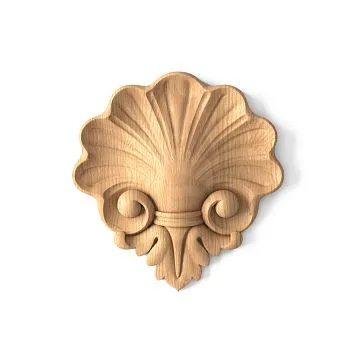
Central overlays: rosettes, cartouches with symmetrical ornamentation (acanthus leaves, palmettes, volutes).
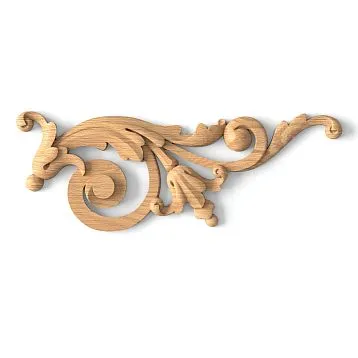
Corner elements: decorative details in the corners of frames, complementing the composition, connecting vertical and horizontal moldings.
Pilasters: on the sides of the doorway, with a base, shaft, capital, creating the impression of a portal.
Color Solutions:
White: pure, solemn, expanding space. A white door with white decor is the classic of classics.
Pastel tones: beige, cream, light gray. Create softness, coziness, elegance.
Contrasting combinations: white door with gilded decor, dark gray with silver elements. Luxury, presentability.
Natural wood: oak, walnut without painting or with clear varnish. Emphasizes materiality, connection with tradition.
Baroque and Rococo: opulence, excess, theatricality
For those who are not afraid of luxury. Baroque doors are maximum saturation with decor, complex multi-layered compositions, an abundance of details.
Characteristic elements:
Large molded overlays with putti (baby angels), garlands of fruits and flowers, shells, masks.
Asymmetric rocaille (for Rococo): elegant scrolls resembling sea waves, shells, foam.
Gilding: abundant or accent, emphasizing relief, creating richness, solemnity.
Carving: deep volumetric carving, creating a dramatic play of light and shadow.
Where appropriate:
Spacious rooms with high ceilings. Baroque decor requires space, otherwise it creates a feeling of being overloaded.
Formal areas: living rooms, dining rooms, halls. Bedrooms and studies are usually decorated more restrained.
Interiors with appropriate furniture and finishes. A Baroque door in a minimalist room looks ridiculous.
Modern and Art Deco: line, movement, geometry
Modern (late 19th — early 20th century) rejected historical styles, created a new language of forms. Characterized by flowing, asymmetrical lines, plant motifs (irises, algae, female figures with flowing hair).
Art Deco (1920s-30s) geometrizes Modern, adds luxury of materials, graphic quality, exotic motifs.
Characteristic elements for Modern:
Asymmetric overlays with plant motifs.
Curvilinear moldings repeating organic forms.
Stained glass inserts with floral compositions.
Characteristic elements for Art Deco:
Geometric overlays: trapezoids, zigzags, stepped forms, sun rays.
Symmetry, but not classical, rather dynamic, directed.
Contrasting materials: wood and metal, matte and glossy.
Metallic finishes: imitation of bronze, brass, chrome.
Minimalism: less is more
Minimalism seems like an antagonist of decor. But well-chosen elements enhance the minimalist aesthetic, not destroy it.
Principles of minimalist door decor:
Simplicity of forms: straight lines, clear angles, minimal details.
Monochromaticity: door and decor in one color or with minimal contrast.
Functionality: every element must have meaning. Decor for the sake of decor is unacceptable.
Quality of materials: minimalism does not tolerate cheapness. Better one quality element than many mediocre ones.
Solutions:
Thin metal or wooden inserts creating graphic patterns.
HiddenPolyurethane moldings for wallscreating an unobtrusive relief.
Geometric overlays in the tone of the door, discernible only under certain lighting.
Focus on hardware: a minimalist handle as the only decorative element, but executed flawlessly.
Loft and industrial: contrasts and unexpected combinations
Loft is rough textures, industrial materials, exposed utilities. It would seem that elegant molding is out of place here. But it is precisely the contrast that creates the effect.
How it works:
An old wooden door (or imitation of old wood) with a deliberately rough surface is adorned with one elegant classical overlay. The contrast of roughness and elegance creates tension, intrigue.
A metal door with rivets is complemented by a Baroque gilded rosette. Industrialism plus aristocracy.
Concrete wall, raw wood door, polyurethane pilaster painted to resemble rusty metal. Multi-layered texture play.
Rules:
Sense of proportion. One or two decorative elements, no more.
Contrast. Elements should clearly differ from the base but be connected by color or shape.
Irony. Loft allows for irony, playfulness, unconventional solutions.
Specific door decoration ideas for different rooms
Each door is unique in function, location, context. Let's consider the specifics of decorating different types of doors.
Entrance door: the first impression that cannot be repeated
The entrance door is the face of the house. It is seen by everyone: guests, couriers, random passersby. It forms the first impression, which often proves decisive.
Ideas for entrance doors:
Classical portal: polyurethane or wooden pilasters on the sides of the door opening, a cornice on top, a central overlay on the door leaf. Creates an impression of a grand entrance, solemnity.
Carved cartouche: a large wooden overlay in the center of the door with the owners' monogram, coat of arms, or symbol. Personalization, exclusivity.
Geometric panels: moldings creating symmetrical rectangular frames on the door leaf. Inside the frames — contrasting paint or textural treatment. Classic with a modern touch.
Facade decor: if the entrance door is on the facade of a private house, use Facade decoration for exterior finishing— cornices, architraves, pediments. The door becomes part of the architectural composition.
Metal plus wood: for modern houses — a metal entrance door with wooden overlays. Contrast of cold metal and warm wood, combination of security and coziness.
Lighting: complement the decorated entrance door with lighting. Side lights, built-in lighting in the cornice, accent lighting on the central overlay. In the evening, the door turns into a glowing object, attracting the eye.
Living room interior doors: formality and presentability
The living room is the main room of the house. The door to the living room should match its status.
Ideas:
Double-leaf door: if the opening allows, install a double-leaf door. Each leaf is decorated with a symmetrical composition of moldings and overlays. When opened, it creates a solemn effect.
Molding panels: divide the door leaf into 4-6 rectangular panels using moldings. Inside the panels — contrasting paint. A classic solution, always relevant.
Central rosette: a large decorative rosette in the center of the door. Can be carved wood or polyurethane, painted in a contrasting color. An accent that draws the eye.
Glazing with decor: if you want a visual connection between the living room and hallway, use a door with glazing. Frame the glass insert with moldings or decorative wood compositions.
Bedroom door: coziness, privacy, restraint
The bedroom is an intimate space. The door should not be flashy but can be elegant.
Ideas:
Pastel tones: paint the door in a soft pastel color (beige, lavender, mint), add thin moldings in the same tone or slightly lighter. Creates a calm, relaxing atmosphere.
Minimalist overlays: one small overlay with a floral or abstract pattern. Unobtrusive but elegant.
Soft upholstery: an unusual solution — upholster the central part of the door with soft fabric (velvet, velour, leather) in a tufted style. Around the perimeter — wooden or polyurethane moldings. Combination of hard and soft, visual and tactile comfort.
Hidden mounting: a door without architraves, built flush with the wall. Minimal decor — only on the leaf. Modern, laconic.
Children's room: safety, brightness, playfulness
Children's rooms require a special approach. Safety is paramount, but brightness and creativity are welcome.
Ideas:
Bright colors: paint the door in a bright, cheerful color (yellow, blue, pink, green). Add contrasting moldings.
Thematic overlays: use polyurethane overlays with children's motifs — clouds, stars, animals, flowers. Custom manufacturing can be ordered.
Chalkboard surface: cover part of the door with chalkboard paint. The child will be able to draw on the door with chalk. Creativity, development, constantly changing decor.
Safe materials: use polyurethane — it has no sharp edges, does not crumble, and is non-toxic. Mounting — with adhesive, without protruding screws.
Kitchen and dining room: practicality plus style
Kitchen doors undergo intensive use, exposure to moisture, grease, and temperature fluctuations.
Ideas:
Polyurethane decor: use exclusively moisture-resistant polyurethane. Wooden decor in the kitchen degrades quickly.
Smooth surfaces: avoid deep relief where dirt accumulates. Flat or shallow moldings are preferable.
Washable coatings: paint the door and decor with moisture-resistant paint, cover with protective varnish. The surface should be easy to clean.
Glass inserts: a door with a glass insert provides a visual connection between the kitchen and dining area. Frame the glass with moldings.
Contrast with furniture: if the kitchen set is minimalist, the door can be more decorative, and vice versa. Balance is important.
Bathroom and toilet: moisture resistance is mandatory
The bathroom is a high-humidity area. Decor should be not only beautiful but also practical.
Ideas:
Polyurethane with additional protection: use polyurethane elements coated with moisture-resistant paint and varnish.
Minimalism: avoid excessive decor. Simple moldings, one or two overlays.
Light tones: bathrooms are often small. Light doors with white or pastel decor visually expand the space.
Frosted glass: a door with frosted glass ensures privacy while letting light through. Frame the glass with thin moldings.
Doors for pantries, dressing rooms, technical rooms: beauty in the details
Even utilitarian doors can be decorated, integrating them into the overall design.
Ideas:
Hidden doors: a pantry door can be disguised by continuing the wall decor on it. Wall moldings continue onto the door panel, creating the illusion of a solid surface.
Minimal decor matching the interior: simple moldings repeating the decor of the main doors, but in a simplified version.
Functional elements: instead of purely decorative overlays, use functional ones — hooks, holders, shelves, styled to match the decor.
Techniques for mounting decor on doors: from preparation to finish
Beautiful decor can be ruined by improper installation. Technique is important.
Preparing the door panel
Cleaning: remove dust, dirt, grease stains. Use a damp sponge with mild detergent, then wipe dry.
Sanding: if the surface has defects (old paint is peeling, scratches), sand with fine-grit sandpaper (grit 180-220). Remove dust.
Priming: apply a primer compatible with the door material and the planned paint. Primer improves adhesion of adhesive and paint, evens out absorbency. Dry according to instructions (usually 2-4 hours).
Marking: before mounting the decor, make precise markings. Use a level, square, tape measure, pencil. For symmetrical compositions, find the center of the door (intersection of diagonals), measure from it. Asymmetric compositions require a preliminary sketch.
Adhesive selection
For polyurethane: special polyurethane adhesive (polyurethane-based or MS-polymer-based), universal mounting adhesive (liquid nails), acrylic adhesive. Avoid solvent-based adhesives — they can damage polyurethane.
For wood: carpenter's PVA (for lightweight elements on a wooden base), two-component epoxy or polyurethane adhesive (for heavy elements, for attaching to metal or plastic), contact adhesive (quick fixation but requires precision).
Additional fastening: heavy elements (large wooden overlays) are additionally secured with headless finishing nails or thin screws. The holes are filled with putty, sanded, and become invisible after painting.
Installation process
Applying adhesive: apply adhesive to the back of the decorative element. For small elements — in dots (5-7 dots), for large ones — in a snake or zigzag pattern, for very large ones — in a thin, continuous layer with a spatula.
Pressing: place the element on the marked spot, press firmly. Move it slightly (if the adhesive allows) for precise positioning. Press firmly for 30-60 seconds.
Fixation: most adhesives do not set instantly. Secure the element with painter's tape during drying time (according to the adhesive instructions, usually 12-24 hours). For large elements, use supports.
Removing excess adhesive: wipe away any squeezed-out adhesive immediately with a damp cloth (for water-based adhesives) or solvent (for contact adhesives). It is difficult to remove after hardening.
Joint sealing
Moldings are joined butt-to-butt (straight connections) or at a 45° angle (frame corners). An ideal joint is tight, without a gap. In reality, there are often micro-gaps.
Sealant: apply acrylic sealant (white or paintable) carefully into the gap in a thin strip. Smooth it with a wet finger or a special spatula. Remove excess. After drying (4-6 hours), the sealant can be sanded and painted.
Putty: acrylic wood putty (for wooden elements) or universal putty (for polyurethane). Apply with a spatula, let dry, sand with fine sandpaper.
Painting and final finish
Priming the decor: if the elements are not primed by the manufacturer, prime them before installation or after (if confident in the installation accuracy).
Painting: use a brush for detailed work on the relief, a roller for smooth surfaces. Apply thin coats (2-3 coats are better than one thick one). Between coats — drying (usually 2-4 hours) and light sanding with fine sandpaper to remove lint and imperfections.
Paints: water-based, acrylic, latex (for interiors), alkyd (for wet areas, entry doors). Matte, semi-matte, glossy — according to taste and style.
Special effects:
Patina: apply a base color, after drying — a darker paint, immediately partially wipe off with a cloth, leaving it in the recesses. An aging effect.
Gilding/silvering: special metallic pastes or paints are applied with a brush or sponge to the raised parts of the relief.
Crackle: a special varnish that creates cracks. Applied between paint layers. A vintage effect.
Varnish: a finishing coat. Matte, semi-matte, glossy. Protects the paint, makes maintenance easier, gives a finished look.
First mistake - unstructured mixing. A classic chair, loft table, Scandinavian chest, and minimalist cabinet in one room is not eclecticism, but visual chaos. Each item draws attention to itself, not creating cohesion. A system, logic, unifying idea is needed. Choose one dominant style, add a second as an addition, and possibly a third as an accent. But no more than three, and all should have something in common - color, material, era, or functionality.
Even experienced craftsmen sometimes make mistakes. Let's consider typical mistakes when decorating doors.
Mismatch with interior style
Baroque carving on a door in a minimalist apartment looks absurd. Modern geometric moldings in a classic living room disrupt harmony. Decor should match the overall style or create a deliberate, well-thought-out contrast (as in a loft).
Excessive decoration
More is not always better. A door overloaded with decor looks heavy and garish. Leave 'air' — empty zones where the eye can rest.
Incorrect proportions
Too large elements on a small door — the door appears even smaller. Too small elements on a large door — get lost, look insignificant. Maintain proportions.
Poor quality installation
Crooked moldings, gaps in joints, unputtied screw holes, adhesive drips — all of this ruins the impression, even if the elements themselves are of high quality.
Unsuitable paint
Glossy paint on a bedroom door — too active, hinders relaxation. Matte paint on a kitchen door — difficult to clean, gets dirty quickly. Choose paint according to the room's purpose.
Ignoring functionality
Deep relief on a children's room door — risk of injury. Fragile wooden elements in a damp bathroom — quick deterioration. Decor should be not only beautiful but also practical.
Care for decorated doors
To keep the decorations looking good, proper care is needed.
Regular cleaning: every 1-2 weeks, wipe the door and decor with a soft dry or slightly damp cloth. Remove dust from the relief with a soft brush or a vacuum with a soft attachment.
Local stain removal: for stubborn stains use a soft sponge with neutral detergent. Avoid abrasives, harsh chemicals, solvents.
Refinishing: after 5-10 years (depending on usage intensity) paint may fade or scratch. Light sanding, priming, a new coat of paint — and the door looks like new.
Humidity control: for wooden decor it's important to maintain stable humidity (40-60%). Use humidifiers in winter when heating dries the air.
Protection from mechanical damage: avoid impacts, scratches. Door stoppers prevent the handle from hitting the wall, protective corner guards prevent chips.
Frequently asked questions about door decoration
How much does it cost to decorate a door with decorative elements?
Cost varies widely. Simple polyurethane moldings to create frames on one door — from 1500-3000 rubles (materials). Wooden carved overlays — from 5000-15000 rubles per set (depends on size, complexity, wood species). Exclusive carved decor made to order — from 30000 rubles and up.
Master's work (if not doing it yourself): installation of decor on one door — from 3000-8000 rubles (depends on complexity, region). Painting — from 2000-5000 rubles per door.
Total: to decorate one door with polyurethane decor and painting — from 6500-15000 rubles (materials + labor). Wooden decor — from 15000-40000 rubles.
Can you decorate a door yourself or are professionals definitely needed?
Most operations are accessible for DIY. Installing moldings and overlays with adhesive, painting — this doesn't require special skills, just care and following instructions.
Professionals are needed for: complex compositions with many elements (easy to make mistakes in layout, break symmetry); work with expensive exclusive elements (a mistake will be costly); creating special effects (patina, gilding, crackle — require experience).
Advice: start with a simple project (one door, a few moldings, simple painting). Gain experience, confidence. Then move on to more complex ones.
Which decorative elements are better — wooden or polyurethane?
There's no single answer. Depends on priorities.
Choose wood if:
-
You value naturalness, tactile sensations, prestige of the material
-
Budget allows (wood is more expensive)
-
Door is in a dry room with stable microclimate
-
You want exclusivity (especially hand carving)
Choose polyurethane if:
-
Practicality, moisture resistance, durability are important
-
Limited budget
-
Door is in a humid room (bathroom, kitchen) or an entrance door (temperature fluctuations, humidity)
-
You need large elements (polyurethane is lighter, doesn't overload the door)
Optimal solution: combination. Base — polyurethane moldings. Accents — wooden overlays.
Can you decorate metal and plastic doors?
Yes. Modern adhesives provide reliable bonding to any surfaces.
Metal door:
-
First degrease the surface (acetone, solvent)
-
Use polyurethane or epoxy adhesive (regular PVA doesn't hold on metal)
-
For heavy elements - additional fastening with screws
-
Painting - metal paints or universal paints
Plastic door:
-
Sanding the surface with fine sandpaper to improve adhesion
-
Polyurethane glue or special plastic adhesive
-
Light elements (polyurethane), heavy wood may not hold
How to choose a color for a decorated door?
Selection principles:
Matching the walls: the door blends with the wall, decor creates texture but no color contrast. Expands space, creates integrity.
Contrasting: the door becomes an accent. White door on a dark wall, dark door on a light wall. Draws attention, structures space.
Color accent: bright color (blue, green, red) in a neutral interior. Energy, individuality. Works in modern interiors, children's rooms, creative spaces.
Natural wood: natural wood tones. Warmth, coziness, classic. Suitable for most styles, especially classic, country, Scandinavian.
Decor:
-
Matching the door: creates texture but no color contrast
-
Contrasting: white decor on a colored door, colored decor on a white door
-
Metallic: gold, silver, bronze on classic doors; chrome on modern doors
How does door decoration affect space perception?
Visual expansion: light door with white decor expands space. Especially effective in small rooms, narrow corridors.
Visual ceiling height increase: vertical elements (pilasters, vertical moldings) create the illusion of higher ceilings.
Zoning: different door decoration styles in different zones of an open space help visually separate them without physical partitions.
Creating rhythm: identically decorated doors in a long corridor create rhythm, making movement through the corridor less monotonous.
Accentuation: richly decorated door attracts attention, becomes a focal point of the interior.
Do all doors need to be decorated identically?
Not necessarily, but it's desirable to maintain stylistic unity.
Options:
Complete unity: all doors decorated identically (same moldings, same overlays, same color). Creates maximum harmony, integrity.
Unity with variations: one style, but different degrees of saturation. For example, entrance door - richly decorated, interior doors - simpler, technical room doors - minimal. Or: formal room doors (living room, dining room) - richer, private room doors (bedrooms, study) - more restrained.
Stylistic unity with material diversity: all doors in classic style, but some - with wooden decor, others - with polyurethane decor. Unity of form, diversity of texture.
Controlled eclecticism: different styles, but connected by color or repeating elements. For example, all doors different in decor, but all painted the same color.
How long does door decor last?
Polyurethane: 30-50 years unchanged with proper use. Does not deform, does not lose properties. May only require repainting (after 10-15 years).
Wooden: 50-100+ years. High-quality wood (oak, beech) with proper treatment lasts for decades. Requires periodic maintenance (oil, wax treatment), restoration is possible.
Factors affecting durability:
-
Quality of materials and installation
-
Operating conditions (humidity, temperature, mechanical impact)
-
Regularity of maintenance
-
Quality of protective coating (paint, varnish)
Can the decor be changed if you want to update the interior?
Yes. This is one of the advantages of removable decor.
Demolition:
Polyurethane elements glued with acrylic or PVA glue can be carefully removed by cutting the glue with a thin knife or fishing line. The door will require minor restoration (removal of glue residue, possibly light puttying).
Elements on polyurethane or epoxy glue are more difficult to remove, often damaging the base. A complete repainting of the door may be required.
Change without demolition:
Repainting: the simplest way. Change the color of the door and decor — get a new look.
Adding elements: add overlays, rosettes to existing moldings, creating a richer composition.
Partial replacement: remove the central overlay, replace it with another one. The moldings remain, only the accent changes.
Conclusion: turn the ordinary into the outstanding with&amA door is a boundary, a transition, a portal. It is a moment of pause between spaces, an opportunity to stop, evaluate, feel. Decorating a door means turning this moment into an aesthetic experience, into a daily encounter with beauty.
We have considered the philosophy of door decor, materials, styles, specific ideas for different rooms, installation technology. You have learned about mistakes to avoid, about care rules, and received answers to common questions. Now you have a complete picture — from concept to technical details.
It's time to act. And here the company STAVROS enters the stage — a recognized leader in the Russian marketwooden decorand polyurethane, a partner of thousands of satisfied clients, from private apartment owners to large design bureaus and construction companies.
Why STAVROS is the optimal choice for door decoration
Assortment, striking in its breadth:
The STAVROS catalog includes over 400 models of woodendecorative inserts, hundreds of options for polyurethane moldings, cornices, rosettes, pilasters. Here you will find a solution for any style: from classic collections with plant ornaments to modern geometric shapes, from lush Baroque to restrained minimalism.
Collections for different styles:
Classic— symmetrical compositions, acanthus leaves, traditional motifs, tested by centuries.
Modern— smooth lines, plant patterns, asymmetrical forms, characteristic of the early 20th century style.
Russian Style— unique ornaments inspired by traditional Russian wood carving, the flavor of national culture.
Plant ornaments — elegant leaves, flowers, grapevines, creating an organic connection with nature.
Quality without compromise:
STAVROS works exclusively with selected wood. Oak, beech, ash — species that have an optimal combination of strength, beauty of texture, durability. Each element undergoes thorough drying (humidity 8-12%), which guarantees the absence of deformations after installation.
Polyurethane products are made from high-density material (280-320 kg/m³) on modern equipment. Molds are created using 3D modeling and precision processing, ensuring perfect reproduction of even the smallest details of the ornament.
Each product undergoes multi-stage quality control. Geometry, absence of defects, surface finish quality, and compliance with stated dimensions are checked. Only flawless elements go on sale.
Individual approach and full service
STAVROS is not just a manufacturer and seller. It's a partner invested in your results.
Designer consultations:
STAVROS specialists will help select elements for your interior, calculate the required quantity, and create visualizations of future decor. Consultations are free with order placement. You'll see how your door will look before purchase—eliminating mistakes and saving time and money.
Custom manufacturing from sketches:
Didn't find what you need in the catalog? STAVROS will produce decor based on your sketch or photo. In-house production enables unique projects. Minimum order—from one piece. Production time—from two weeks depending on complexity.
Professional installation:
The team of experienced STAVROS craftsmen will perform turnkey decor installation. From measurement and marking to final painting and polishing. Professional materials, tools, and technologies are used. Installation work warranty—24 months. You get flawless results without effort on your part.
Delivery throughout Russia:
STAVROS delivers orders to any region of Russia. In Moscow and Moscow Region, St. Petersburg and Leningrad Region—via own courier service. To other regions—via reliable transport companies. Each order is packaged with special care—multi-layer protection prevents damage during transportation.
Pricing policy: quality at a fair price
STAVROS adheres to a philosophy of fair pricing. In-house production, direct timber supplies, and absence of intermediary markups allow offering products at prices 15-25% below market average with comparable or higher quality.
Regular promotions and special offers make purchases even more advantageous. Loyalty program for regular customers, wholesale discounts for professionals (designers, construction companies, furniture manufacturers), seasonal clearance sales of collection remainders.
With no compromises on quality. STAVROS proves: premium decor can be affordable.
Additional elements for comprehensive design
Door decoration is often just one element of a larger project. STAVROS offers a full range of decorative elements for comprehensive interior design:
Furniture Handles— wooden, carved, styled after various eras. The finishing touch of door decor, a functional and aesthetic element.
Facade Decoration— for decorating entrance doors of private houses. Cornices, architraves, pilasters, and pediments create architectural composition, transforming the entrance group into a ceremonial portal.
Carved furniture decor— overlays, cornices, legs that can be used not only on doors but also on furniture fronts, creating stylistic unity of space.
Polyurethane moldings and rosettes— for decorating walls and ceilings, creating holistic interior solutions where doors, walls, and ceilings form a harmonious ensemble.
Expertise and experience: 20+ years in the market
STAVROS has been in the decorative elements market for over two decades. During this time, immense experience has been accumulated: thousands of projects implemented, from modest apartments to luxurious mansions and public buildings.
The company collaborates with leading interior designers, architects, and construction companies in Russia and CIS countries. STAVROS is a name trusted by professionals. It guarantees quality, reliability, adherence to deadlines, and attention to detail.
Oak skirting boards are an indispensable element of classic interior styles. In the English style, oak skirting boards with rich carving emphasize the aristocracy and solidity of the space. Dark wood tones harmonize beautifully with traditional materials — natural stone, leather, bronze.
All STAVROS products are environmentally safe. Timber is sourced from ecologically clean regions and treated with non-toxic compounds. Polyurethane is an inert material that doesn't emit harmful substances, is hypoallergenic, and safe for children's rooms and bedrooms.
Products have all necessary compliance certificates and sanitary-epidemiological approvals. STAVROS bears full responsibility for the quality and safety of its products.
Start your transformation right now
Don't postpone creating your dream interior. Door decoration is an accessible, fast, and impactful way to transform space. Just a few hours of work (or one visit from the STAVROS installation team)—and your door transforms from an invisible element into a work of art.
Visit the STAVROS website, explore the catalog, choose elements that resonate with your vision of beauty. Call or write—specialists will answer all questions, help with selection, calculate costs, and organize delivery and installation.
Visit the STAVROS showroom in Moscow or St. Petersburg—see products in person, evaluate finish quality, touch the noble wood texture, compare options, and make an informed decision.
STAVROS is where quality, aesthetics, durability, and fair pricing unite to make your home more beautiful. It's the choice of those who understand: details create the whole, decor creates atmosphere, beauty creates joy.
Transform your doors into works of art. Start with STAVROS—and every day will begin with an encounter with beauty!