












































































Article Contents:
- Plaster and Ceilings: A Conversation That Lasts Centuries
- What is Plaster Ceiling Molding: Material, Character, Tradition
- The Nature of Plaster and Its Decorative Properties
- What Plaster Brings to Ceiling Decoration
- Where Ceiling Plaster Molding is Used
- Types of Plaster Ceiling Molding: Complete Classification
- Plaster Ceiling Cornices
- Plaster Ceiling Rosettes
- Gypsum moldings
- Decorative inserts, medallions, and corner elements
- Coffers and coffered systems
- Gypsum stucco on the ceiling: strengths
- Maximum detail of relief
- Natural composition
- Historical Authenticity
- Good acoustic properties
- Restoration possibility
- Objective limitations of gypsum stucco on the ceiling
- Significant weight
- Complex and expensive installation
- Brittleness
- Moisture Reaction
- High cost
- Gypsum and Polyurethane: What's the Difference and What to Choose
- Interior Styles and Gypsum Ceiling Molding
- Classic Interior
- Baroque and Rococo
- Empire and Neoclassical
- Art Deco
- Modern Interior
- How to Choose Gypsum Ceiling Molding: Criteria and Logic
- Ceiling Height
- Room area
- Interior style
- Manufacturing quality
- Weight and Base Requirements
- Budget
- Ceiling Molding in Different Rooms: Where and How It Works
- Living Room
- Bedroom
- Dining Room
- Hall and Foyer
- Office
- Formal Areas of a Private House
- Installing Gypsum Ceiling Molding: What You Need to Know
- Foundation Preparation
- Marking
- Product Preparation
- Fastening
- Joint sealing
- Puttying and painting
- Care for plaster ceiling moldings
- Modern decorative polyurethane elements as an addition
- Ceiling molding decor: application ideas and visual solutions
- Monochromatic white design
- Colored ceiling with white moldings
- Ceiling with patinated moldings
- Coffered ceiling
- Ceiling with central rosette and molding frames
- Common mistakes when working with plaster ceiling moldings
- What to combine plaster ceiling moldings with
- Frequently Asked Questions About Plaster Ceiling Molding
- How Does Plaster Molding Differ from Polyurethane Molding?
- Can Plaster Molding Be Used in the Kitchen or Bathroom?
- How to Independently Determine if a Ceiling Can Support Plaster Molding?
- How Often Should Plaster Molding Be Repainted?
- Can Plaster Molding Be Installed Independently?
- How to Care for Plaster Molding?
- What Are the Advantages of Modern Polyurethane Molding Over Plaster?
- What Diameter Rosette to Choose for a Standard Room?
- Conclusion

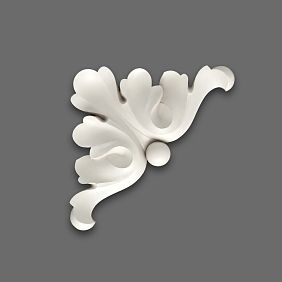


Plaster and Ceiling: A Conversation That Lasts Centuries
There are materials that never age. Plaster is one of them. For thousands of years, it was the primary decorative language of architecture: stucco workers carved ornaments on palace ceilings, adorned church vaults, and formed cornices for aristocratic mansions. And today, when it comes to ceiling design, plaster stucco remains the benchmark—the material against which everything else is compared.
Why? Because plaster is natural, substantial, and historically authoritative. Plaster stucco on a ceiling carries the memory of genuine craftsmanship, of manual work, of a time when decor was not created in a factory mold but in the hands of a specific person. This is a value that is not so easy to explain but very easy to feel.
At the same time, technology does not stand still. Today, those who want expressive ceiling decor have a choice—and this choice is broader than it seems. In this article, we will examine plaster stucco for ceilings in detail: what it is, what types exist, how to choose and install it, its strengths and objective limitations, as well as how to skillfully use all available solutions—including modern materials that now offer worthy competition to plaster.




What is plaster stucco for a ceiling: material, character, tradition
Our factory also produces:




The nature of plaster and its decorative properties
Plaster is a natural mineral, calcium sulfate dihydrate. In construction and decor, it is used in powder form, which, when mixed with water, produces a plastic mass capable of taking any shape and, after drying, turning into a hard, stable substance. It is this plasticity and ease of processing that have made plaster the primary sculptural and decorative material for millennia.
Plaster stucco for a ceiling is made either by hand—using manual molding and extrusion—or by casting in molds. Handmade work today is a costly craft, available primarily in restoration and elite projects. Industrial casting allows for high-precision replication of the form, while the product retains the texture and tactile weight characteristic of plaster.
Get Consultation
What plaster brings to ceiling decor
Plaster stucco for a ceiling possesses several properties that define its aesthetics. The first is relief. Plaster allows for the reproduction of complex ornaments with the finest detail: small leaves, scrolls, cords, rosettes with multi-layered patterns. It is in complex relief that plaster has traditionally been unrivaled.
The second is surface texture. High-quality plaster stucco has a special, lively surface—slightly matte, with fine pores that react differently to light. It is this texture that creates a sense of authenticity—what professionals call a 'living material'.
Third – historical authenticity. In old houses with pre-revolutionary floor structures, in spaces being restored in the spirit of the era, plaster stucco is not just decoration, but part of the building's architectural fabric. Here, it is appropriate both technically and aesthetically.
Where is ceiling plaster stucco used?
Ceiling plaster stucco is used primarily where maximum historical authenticity and visual weight are important. These are restoration projects – manor houses, mansions, historical buildings. These are elite interiors where the client wants to emphasize status and is ready to invest the corresponding budget. These are theaters, museums, representative halls where the ceiling carries not only a decorative but also a symbolic function.
In ordinary apartments, plaster ceiling stucco is less common – for objective reasons, which we will discuss below. But understanding its properties is important for anyone seriously involved in ceiling design.
Types of plaster stucco for ceilings: a complete classification
Decorative plaster stucco for the ceiling is not a single product, but a whole system of elements with different functions and characteristics. Understanding this system is necessary even before starting the selection process.
Plaster ceiling cornices
Plaster cornices are mounted along the perimeter of the room at the junction of the wall and ceiling. This is one of the most functional elements of stucco decoration: the cornice simultaneously conceals the technical joint, frames the space, and sets the ornamental tone for the entire ceiling decor.
Plaster cornices can be smooth (profiled) or ornamental. Smooth ones are a simple architrave with a clear profile that emphasizes the geometry of the space. Ornamental ones are rich with acanthus leaves, egg-and-dart molding, wave-like friezes, meanders, and other classical motifs.
The width of a plaster cornice for residential spaces typically ranges from 8 to 25 cm. For grand halls and high ceilings, composite cornices with widths up to 40–50 cm or more are used.
Ceiling rosettes made of plaster
Ceiling rosettes made of plaster are decorative discs mounted in the area of a chandelier or in the center of the ceiling plane. This is one of the most expressive elements of plaster stucco: a well-executed rosette can completely define the character of the ceiling.
The diameter of plaster rosettes ranges from 20 to 100 cm and more. Large rosettes with multi-tiered ornamentation are true sculptural objects. For residential apartments, rosettes with a diameter of 30–60 cm are typically used.
Moldings made of plaster
Plaster moldings are profile strips used to create geometric frames on the ceiling, divide the plane into sections, and imitate coffered ceilings. Moldings can be smooth or ornamented, flat or relief, wide and narrow.
In a classic interior, a system of moldings on the ceiling is a full-fledged architectural structure: several nested rectangular frames, separated by strips of stucco ornamentation, with a rosette in the center.
Decorative inserts, medallions, and corner elements
Corner inserts cover the joints of cornices at corners. Medallions are decorative oval or round elements installed on walls or ceilings as independent decorative accents. Decorative belts and friezes add horizontal rhythmic elements to the overall system.
Coffers and coffered systems
Plaster coffers are rectangular recesses in the ceiling framed by moldings. This is one of the most complex and visually powerful types of ceiling decor. A coffered ceiling made of plaster is at the level of ceremonial architecture: such a solution is used in representative rooms with high ceilings (from 3.5 m).
Plaster Ceiling Molding: Strengths
Before discussing limitations, it's important to honestly state the advantages. Plaster has not remained the primary decorative material for thousands of years by accident.
Maximum detail of relief
Plaster excellently reproduces complex ornaments with the finest details. In this, it surpasses most modern materials. If you need ceiling molding with rich historical ornamentation, deep relief, and the most delicate plasticity—plaster remains the benchmark.
Natural composition
Plaster is a natural mineral without synthetic additives. For those who fundamentally choose natural materials, this is an important argument. Plaster molding does not emit any chemical compounds, has no odor, and does not cause allergies.
Historical authenticity
In restoration projects, in buildings with historical architecture, in interiors where authenticity is important—plaster is irreplaceable. No other material provides the same sense of 'originality' that plaster molding creates in a historical setting.
Good acoustic properties
Plaster is a dense, porous material with decent sound-absorbing characteristics. In rooms with rich plaster decor, the acoustics are noticeably better than in empty spaces with bare planes.
Restoration Possibility
Damaged plaster molding can be restored—repaired, re-formed, leveled. The restoration of plaster decor is a separate profession, and in skilled hands, even a severely damaged element can be returned to its original state.
Objective Limitations of Gypsum Ceiling Molding
An honest conversation requires honest words. Gypsum ceiling molding has real limitations that define its scope of application.
Significant Weight
This is the main limitation. Gypsum products are heavy. A 1 m long cornice weighs 3–7 kg depending on width and profile. A 60 cm diameter rosette weighs from 8 to 15 kg. When installed on a ceiling, this creates serious requirements: special anchors, dowels, and reinforcing structures are needed. The weight loads the floor slab, and in some cases (for example, in wooden houses or old buildings with weakened floor slabs) this can be a fundamental limitation.
Complex and Expensive Installation
Gypsum molding is installed by a specialist. Self-installation of heavy gypsum products on the ceiling is a risk both for the decor and for safety. The services of a professional plasterer are not cheap, and the installation time significantly exceeds working with lightweight materials.
Fragility
Gypsum is a hard but brittle material. During transportation, installation, and subsequent operation, it can crack, chip, or develop chips from mechanical impact. Thin ornamental elements are especially vulnerable — leaves, curls, thin bridges of complex patterns.
Reaction to Moisture
Gypsum is afraid of moisture. In rooms with high humidity (kitchen, bathroom), unprotected gypsum molding quickly loses its appearance: it becomes damp, deteriorates, and darkens. Special hydrophobic treatment partially solves the problem but does not eliminate it completely.
High cost
High-quality plaster stucco on the ceiling is an expensive pleasure. This applies both to the products themselves (especially handmade ones) and to installation work. The total cost of decorating a ceiling with professional plaster stucco is several times higher than a similar result with modern lightweight materials.
Plaster and polyurethane: what's the difference and what to choose
This question is one of the most practical in the topic of ceiling decor. And it deserves an honest, detailed answer.
Polyurethane decor is a synthetic material produced by precision casting. The mold for casting is created precisely from plaster master models, so the relief of the polyurethane product replicates the original with high accuracy.Polyurethane moldingstoday is a direct functional analogue of plaster stucco in appearance — with fundamentally different technical characteristics.
| Parameter | Plaster molding | Polyurethane molding |
|---|---|---|
| Weight | Heavy (3–15 kg/element) | Light (0.2–1.5 kg/element) |
| Installation | Requires a specialist | Available for self-installation |
| Moisture resistance | Low | High |
| Fragility | High | Low |
| Relief detail | Maximum | High |
| Cost | High | Moderate |
| Repairability | Medium | High |
| Painting | Possible | Convenient |
The conclusion is simple: for restoration projects and elite developments with maximum requirements for historical relief — plaster. For apartments, houses, offices, commercial interiors, where results matter with reasonable costs and installation convenience — polyurethane.
Polyurethane ceiling decorationis now offered in a full range of forms: cornices, moldings, rosettes, corner elements — exactly what's needed for professional ceiling design.
Interior Styles and Plaster Ceiling Molding
Classic interior
Classicism is the native environment for plaster molding. Here, rich ornamental cornices, multi-level rosettes, molding frames with decorative friezes are appropriate. White or cream molding on a white or colored ceiling — this is the language of classicism that hasn't lost its expressiveness over centuries.
Baroque and Rococo
The most ornamentally rich styles. Plaster molding in a Baroque interior features voluminous scrolls, grapevines, angelic figures, multi-tiered rosettes, cornices with several ornamental bands. The ceiling in a Baroque interior is an independent work of decorative art.
Empire and Neoclassicism
Empire style is stricter than Baroque: military trophies, laurel wreaths, meanders, strict geometry. Plaster molding in Empire style features powerful cornices with clear profiles, rectangular rosettes, geometric coffers. Neoclassicism is a modern interpretation of these motifs, more restrained and architecturally precise.
Art Deco
The style demands geometry, symmetry, and decorative richness. Plaster molding in Art Deco interiors features stepped cornices, radial rosettes, geometric ornaments with repeating motifs. Gilding and metallization of decor are often applied.
Modern interior
In contemporary style, plaster is used less frequently — it's heavy both literally and figuratively for minimalist spaces. Here, lightweight, laconic forms are preferable. However, a geometric plaster cornice without ornamentation or a simple smooth rosette is quite appropriate even in modern environments — as an intentional architectural accent.
How to choose gypsum ceiling molding: criteria and logic
Choosing decorative ceiling molding is not an intuitive decision, but the result of analyzing specific parameters.
Ceiling height
This is the first and defining criterion. Ceilings up to 2.6 m require thin, flat elements with moderate relief. Massive gypsum cornices and large rosettes on a low ceiling compress the space, creating a feeling of confinement. The optimal height for full application of gypsum ceiling molding is from 3 m. At a height of 3.5 m and above — complete freedom for complex ornamental systems.
Room area
The scale of the molded decor must correspond to the scale of the space. In a 20 sq. m room, one rosette with a diameter of 40–50 cm and a modest cornice is appropriate. In a hall of 50–80 sq. m — a complex system with molding frames, large cornices, and ornamental friezes.
Interior style
The ornament of the molding should belong to the same stylistic vocabulary as the furniture, fabrics, and lighting. A Baroque rosette in a Scandinavian interior is not 'eclecticism', it is a stylistic error. Geometric gypsum molding in a neoclassical space is an impeccable solution.
Manufacturing quality
High-quality gypsum molding is distinguished by clear edges of the ornament, a smooth surface without bubbles and cavities, and correct proportions. Cheap products often have blurred relief, uneven edges, and visible surface defects. This is noticeable immediately — and becomes even more obvious after painting.
Weight and base requirements
Before choosing gypsum molding, it is necessary to assess the condition of the ceiling base and the load-bearing capacity of the floor. In wooden houses, old buildings, and rooms with drywall suspended ceilings, the installation of heavy gypsum molding requires a special engineering solution. This factor cannot be ignored.
Budget
Gypsum molding is an investment. Quality products plus professional installation is a significant expense item. Before making a decision, it is worth soberly assessing the total cost of the project and comparing it with alternative solutions that provide a comparable visual result.
Ceiling molding in different rooms: where and how it works
Living Room
The main room of the house, where the plaster stucco truly shines. A rich cornice, molding frames, a large ceiling rosette for the chandelier—all of this transforms the living room into a formal space. With ceiling heights from 3 meters, plaster decor creates an effect that cannot be achieved by other means.
Bedroom
In the bedroom, stucco works more subtly: not for grandeur, but for coziness and intimate sophistication. Here, it's better to limit yourself to a delicate cornice and a small rosette. A heavy ornamental ceiling in the bedroom creates tension that hinders rest.
Dining Room
The dining area traditionally leans towards formality. A rosette above the table, a molding frame around the dining area, a cornice along the perimeter—this is an expressive system that gives the dining room a representative character.
Hall and Entrance
The hall is the first impression. Here, plaster stucco works as a statement about the character of the entire interior. Even one beautifully executed cornice in the entrance sets the tone.
Office
Strict architectural stucco in the study is a marker of the space's seriousness. Geometric moldings, a clear cornice, a restrained rosette—all of this creates an environment conducive to concentration and work.
Formal areas of a private house
The hall, living room, and fireplace hall of a country house—these are precisely where plaster stucco fully justifies itself. High ceilings, spacious areas, a substantial budget—all the conditions for professional plasterwork.
Installing plaster stucco on the ceiling: what you need to know
Installing plaster stucco is a separate profession. Below are the main principles a client needs to understand.
Foundation Preparation
The ceiling surface must be strong, clean, and level. Loose, crumbling coatings must be removed. The surface is primed to improve adhesion. Heavy plaster molding will not hold on an unstable base.
Marking
Before installation, precise marking is performed: axes of symmetry, cornice contours, positions of rosettes, molding frames. Marking is the foundation of the entire job. Any error here is multiplied across the entire scale of the element.
Preparation of products
Plaster elements are cut to length. Corner joints of cornices are made at a 45° angle using a miter box. Cutting plaster requires tools with fine teeth and care—plaster is brittle, and a careless movement can chip the ornamental relief.
Fastening
Plaster molding is attached with special plaster glue or alabaster. Heavy elements are additionally secured with screws and anchors through the body of the product. Fastening points are subsequently filled and puttied flush.
Joint sealing
Joints between elements, fastening points, and gaps are filled with plaster mortar. High-quality joint filling is one of the main signs of professional work. Visible seams are a gross installation error.
Puttying and painting
After installation, the surface of the molding is puttied with fine-grained putty, sanded, and painted. The traditional color is white. But in historical interiors, painting to resemble bone, patination, and gilding are used.
Care for plaster ceiling molding
Plaster ceiling molding requires careful handling. The main rules are:
Dust is removed with a soft brush or a vacuum cleaner with a delicate attachment. Wet cleaning is strictly prohibited in rooms with unprotected plaster moldings—water damages unprotected plaster. Minor chips and cracks are repaired with plaster filler followed by painting. Periodically (every few years), the molding is repainted—this refreshes its appearance and protects the surface.
Modern decorative elements made of polyurethane as an addition
Today, designers often combine: plaster where maximum historical depth and relief are needed, polyurethane—where ease of installation, moisture resistance, and practicality are important. This approach offers the best of both worlds.
Polyurethane Itemsare produced with a relief that, when painted, is visually indistinguishable from plaster. This allows the use of polyurethane cornices, moldings, and rosettes as the main system—and, if necessary, supplementing it with plaster elements where maximum detail is required.
For a standard apartment, polyurethane is perhaps the optimal choice today. For a country house with high ceilings, for a restoration project, for a formal interior with a claim to authenticity—it is plaster that sets the right tone.
Ceiling molding decor: application ideas and visual solutions
Monochromatic white design
A classic of the genre. White molding on a white ceiling is a refined solution that works in all styles. The pattern is perceived through relief and shadows—not color. This is exactly how European palaces and mansions were decorated: a unified white ceiling space where relief creates depth.
Colored ceiling with white molding
A ceiling painted in a rich color—deep blue, dark green, terracotta—with white plaster molding. This is a modern solution that turns the ceiling into a dominant element of the interior. Spectacular, bold, requires confidence.
Ceiling with patinated molding
Plaster molding treated with patina—gold, bronze, silver—creates a sense of a historical interior. This technique is used in classical, Baroque, and Art Deco solutions. Patina emphasizes the relief, making the ornament three-dimensional and 'alive.'
Coffered Ceiling
Rectangular recesses framed by moldings are one of the most architecturally powerful ceiling solutions. Plaster coffers create a sense of structural depth, making the ceiling an independent architectural object.
Ceiling with a central rosette and molding frames
A system consisting of a perimeter cornice, one or two molding frames, and a central rosette for the chandelier is the optimal balance between decorative richness and readability. Such a ceiling looks thoughtful and complete without overloading details.
Common mistakes when working with plaster molding on the ceiling
Knowing the mistakes is part of the expertise. Let's list the main ones.
Ignoring the weight and load-bearing capacity of the floor slab. Heavy plaster molding on an unreliable base is a direct risk. Before installation, it is necessary to assess the condition of the floor slab and the load-bearing capacity of the ceiling base.
Mismatch between the scale of the decor and the room. Large ornamental cornices in a small room or a small rosette in a huge hall—this loss of proportion is glaring.
Attempting to install heavy plaster elements independently. Incorrectly secured plaster molding can fall—and this is not only a loss of decor but also a serious danger.
Choosing decor without considering style. Ornamental molding unconnected to the interior's stylistic solution looks random and out of place.
Saving on product quality. Cheap gypsum molding with blurred relief and poor casting does not deliver the expected result. Unlike polyurethane, gypsum is difficult to tint to an acceptable appearance—defects in the relief remain visible.
Incorrect sealing of joints. Visible seams between elements ruin the sense of monolithic decor. Seams should be invisible.
What to combine gypsum ceiling molding with
Gypsum ceiling decor unfolds in the right environment. Several principles.
Furniture. Classic wooden furniture with carving, gilding, fabric upholstery is a natural pair for gypsum molding. Furniture in the neoclassical style with clear lines and quality materials also combines organically with a molded ceiling.
Textiles. Heavy fabrics—velvet, jacquard, brocade—create a tectonic context in which gypsum molding looks organic. Light modern fabrics require more delicate molding.
Lighting. Chandeliers with crystal, bronze, multi-tiered design are classic partners for a gypsum rosette. Modern minimalist pendants pair better with laconic gypsum elements without rich ornamentation.
Wall color. Walls in neutral classic colors—white, ivory, pale gray, dusty blue—create a background against which gypsum ceiling molding reads as pure and expressive. Bright, saturated walls require a more thoughtful approach to balancing the ceiling decor.
Frequently asked questions about gypsum ceiling molding
How does gypsum stucco differ from polyurethane stucco?
Gypsum is a natural material, heavy, fragile, with the highest relief, requiring professional installation. Polyurethane is a synthetic lightweight material, moisture-resistant, durable, and can be installed independently. Externally, when painted, they are practically indistinguishable. The choice depends on the task: for restoration — gypsum, for an apartment — polyurethane.
Can gypsum stucco be used in the kitchen or bathroom?
With limitations. Gypsum is afraid of moisture. Unprotected gypsum decor in the kitchen or bathroom will quickly lose its appearance. With the use of special hydrophobic impregnation and regular painting, the service life is extended. But for wet rooms, it is still preferabledecorative polyurethane elements— they are moisture-resistant by nature.
How to independently determine if the ceiling can support gypsum stucco?
Assess the type of ceiling (reinforced concrete, wooden, drywall suspended ceiling) and the condition of the surface. A concrete ceiling in good condition will support professional installation of gypsum stucco. Wooden structures and suspended systems require engineering calculation.
How often does gypsum stucco need to be repainted?
On average, once every 5–7 years under normal operating conditions. In rooms with high humidity or pollution — more often.
Can gypsum stucco be installed independently?
Small, lightweight gypsum elements—yes, with careful handling. Heavy cornices, large rosettes, composite systems—only a specialist. This is not overcaution; it's a safety requirement.
How to care for gypsum stucco?
A soft brush or vacuum with a delicate attachment—for dust removal. Wet cleaning—only if there is a protective coating. Minor damage—gypsum putty. Periodic painting—to refresh the appearance and protect the surface.
What are the advantages of modern polyurethane stucco over gypsum?
Lightweight, moisture-resistant, easy to install, resistant to mechanical loads, lower overall cost with comparable appearance. It's not 'worse'; it's a different balance of priorities—what most modern interiors need.
What diameter rosette to choose for a standard room?
For a room area of 15–20 sq. m with ceilings 2.7–3 m—a rosette diameter of 35–50 cm. For larger spaces—from 50 to 80 cm. General rule: the rosette should be proportionate to the chandelier and the room.
Conclusion
Gypsum stucco on the ceiling is not just decoration. It is an architectural language that has shaped the best interiors of human civilization for centuries. It carries the weight and nobility of natural material, the finest plasticity of ornament, a special tactile quality of the surface that no synthetic analogue fully reproduces.
At the same time, being objective means acknowledging: for most modern residential and commercial interiors, gypsum requires significant investment and professional expertise. Where expressive ceiling decor is needed with reasonable costs and installation convenience, modern polyurethane products deliver results visually comparable to gypsum and practically superior.
If you are looking for professional ceiling decor—the full range of cornices, moldings, rosettes, and decorative elements is available in the STAVROS company catalog. To select the right element, compare shapes and sizes, get application advice—all this can be done by going to the section Polyurethane Items.
STAVROS offers European-quality plaster decor, meticulously detailed relief, and a complete range for any interior project. The company works for designers, architects, and everyone who creates spaces with character—and knows the difference between renovation and architecture.


