












































































Article Contents:
- What is a Wooden Baseboard?
- Philosophy of Wooden Baseboard in the Modern World
- Evolution of Style: From Palaces to Modern Apartments
- Multifunctionality: More Than Decoration
- Technical Necessity
- Protective Barrier
- Aesthetic Harmony
- Variety of Woods: Each Wood Has Its Character
- Oak: aristocrat among trees
- Beech: elegant strength
- Ash: Flexibility and Reliability
- Exotic Woods: Touches of Luxury
- Manufacturing Technologies: From Solid to Veneer
- Solid Baseboard: The Classic of the Genre
- Veneered Baseboard: Compromise Between Price and Quality
- Laminated Baseboard: Practicality Above All
- Geometry of Style: Sizes and Profiles
- Baseboard Height: The Art of Proportions
- Profiles: From Classic to Avant-Garde
- Finishing: The Final Touch of Perfection
- Lacquering: protection and gloss
- Oil finishes: breath of wood
- Wax Coatings: Velvet Softness
- Staining: Play of Tones
- Stylistic Solutions: Baseboard as a Design Element
- Classic Style: The Grandeur of Traditions
- Scandinavian Minimalism: Simplicity as Philosophy
- Loft: Contrast of Materials
- Modern: Smooth Lines
- Where to Buy Wooden Baseboard: Criteria for Choosing a Supplier
- Manufacturer's Reputation
- Assortment and Warehouse Program
- Service and consultations
- Price Categories: Investment in Quality
- Budget Segment: From 300 to 800 Rubles per Linear Meter
- Mid-range: from 800 to 2000 rubles per sq. m.
- Premium class: from 2000 rubles per sq. m.
- STAVROS product application cases: real interiors
- Apartment in classic style (Saint Petersburg)
- Country-style house (Moscow Region)
- Modern studio apartment (Moscow)
- STAVROS production technology: quality at every stage
- Raw Material Selection
- Modern equipment
- Multi-stage drying
- Quality Control
- Professional installation secrets
- Preparation Stage: The Foundation of Success
- Mounting methods: choice of professionals
- Corner processing: mastery in details
- Step-by-step installation algorithm
- Maintenance and use: preserving beauty for years
- Daily Care: Simple Rules
- Protection against damage
- Restoration: Returning to Original Beauty
- Ecological safety: care for health
- Naturalness as an advantage
- Humidity Control
- Anti-allergenic properties
- Custom solutions: custom baseboard
- Non-standard sizes
- Exclusive profiles
- Complex geometric solutions
- Comparison with alternative materials
- Wooden vs. MDF baseboard
- Wooden vs. plastic baseboard
- Wooden vs. polyurethane baseboard
- Trends in Modern Design
- Hidden baseboard
- Baseboard with lighting
- Large-format baseboards
- Composite Materials
- Regional application specifics
- Climate impact on selection
- Local Traditions
- Features of urban construction
- Common mistakes in selection and installation
- Incorrect proportions
- Style mismatch
- Savings on mounting
- Ignoring acclimatization
- Incorrect corner processing
- Advantages of buying from STAVROS
- Own Production
- Wide warehouse program
- Professional consultations
- Quality guarantees
- Delivery Across Russia
- Conclusion
- Frequently Asked Questions


What is a wooden baseboard?
A wooden baseboard is a decorative and functional interior element, consisting of a profiled strip made of natural wood, installed along the junction between the floor covering and the wall. The baseboard performs several tasks simultaneously: it conceals the technical gap between the floor and the wall, protects the lower part of the wall from mechanical damage and dirt, and also gives the room a finished, harmonious appearance.
In essence wooden baseboards They are long-form items made of solid wood or composite materials based on wood, with a special profile that ensures tight fitting to floor and wall surfaces. The standard length of a baseboard is 2-3 meters, height varies from 40 to 200 mm and more, and thickness ranges from 15 to 25 mm.
Unlike their plastic and MDF counterparts, wooden baseboards possess unique properties of natural material: natural texture, ability to "breathe", ecological purity, and the possibility of multiple restorations of appearance through sanding and re-finishing.
Imagine an ideal scene: luxurious parquet, exquisite furniture, thoughtfully chosen color palette... And suddenly, your gaze is interrupted by an unattractive junction between the floor and the wall. All harmony is shattered! That is why a quality baseboard has become an indispensable part of professional interior design — it does not merely conceal technical flaws, but creates a finished composition, much like a frame for a work of art.




Philosophy of wooden baseboards in the modern world
Have you ever wondered why, in the era of high technology and synthetic materials wooden baseboard wood remains a symbol of aristocracy and taste? The answer lies in humanity's genetic memory — wood has always been a companion to civilization, a source of warmth and comfort.
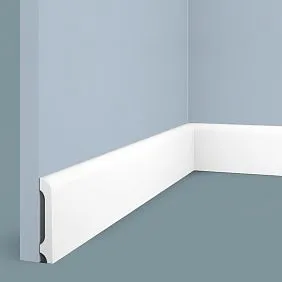
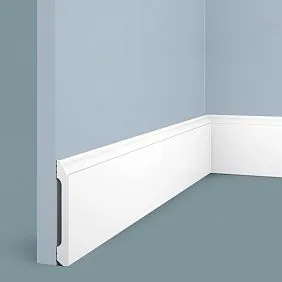
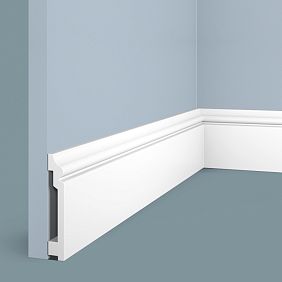
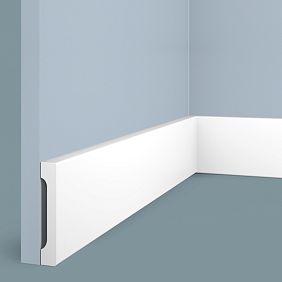
Our factory also produces:
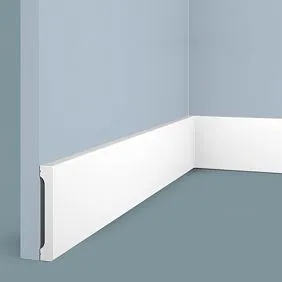
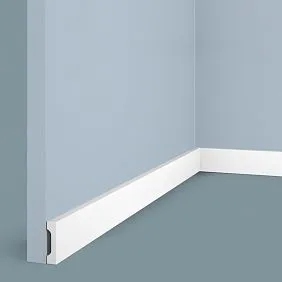
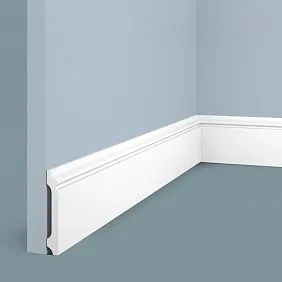
Evolution of style: from palaces to modern apartments
The history of wooden baseboards goes back to antiquity. In ancient Greece and Rome, architects used massive stone plinths that visually "lifted" buildings above the ground. Over time, this tradition transformed into elegant wooden strips adorning the palaces of European nobility.
In Baroque interiors of the 17th-18th centuries, baseboards became true works of art — with carving, gilding, and complex profiles. Every detail carried symbolic meaning, telling about the owner's status and aesthetic preferences.
Modernism brought a new understanding of form: smooth lines, botanical ornamentation, harmony with nature. Solid wood baseboard has become more minimalist, yet no less expressive.
Modern trends dictate minimalism, but not abandonment of wood. On the contrary — in a world of plastic and composites, natural wood is perceived as luxury and a sign of care for health.
Get Consultation
Multifunctional: more than decoration
Technical necessity
A wooden baseboard performs a critically important function — concealing the compensatory gap. Any floor, especially wooden, reacts to changes in temperature and humidity. Without a technical gap, the floor covering may deform, "stand up like a house," or crack.
Protective barrier
The lower part of the wall is the most vulnerable zone. Vacuum cleaner impacts, splashes during wet cleaning, accidental furniture touches... Wide wooden baseboard absorbs these impacts, preserving the integrity of wall finishes.
Aesthetic harmony
A properly selected baseboard visually "raises" the ceiling, creating a sense of completeness and thoughtful interior design. It acts as a connecting element between the horizontal floor and the vertical walls.
Variety of species: each wood — a character
Oak: the aristocrat among trees
Oak baseboard This is the choice of those who value tradition and durability. Oak's hardness reaches 3.7 on the Janka scale, making it practically immune to household damage. Its unique texture with clearly visible growth rings creates an unmistakable pattern.
Oak's color palette is stunningly diverse: from light yellow (young oak) to deep brown with golden hues (mature wood). Weathered oak acquires a noble gray-brown tone, reminiscent of centuries of history.
Beech: elegant strength
Beech is a worthy alternative to oak with a more democratic price. Its dense structure ensures excellent performance characteristics, and its light pinkish hue complements modern Scandinavian-style interiors perfectly.
Ash: flexibility and reliability
Ash combines the strength of oak with a more expressive texture. Contrasting stripes create a dynamic pattern that looks especially striking on wide baseboards.
Exotic species: touches of luxury
Wenge, merbau, tiger wood — these names sound like music for connoisseurs of exclusivity. Exotic species bring a touch of mystery and uniqueness to the interior.
Manufacturing technologies: from solid to veneer
Solid baseboard: the genre's classic
A baseboard made from solid wood offers maximum strength and the possibility of multiple restorations. Such a baseboard can be sanded, repainted, or re-toned. It serves for decades, becoming better with age.
Veneered baseboard: compromise between price and quality
A baseboard with a base of inexpensive wood or MDF, covered with a thin layer of valuable veneer, allows achieving the look of solid wood at a reasonable price. Quality veneering is practically indistinguishable from solid wood.
Laminated baseboard: practicality above all
A cover made of special film imitates wood texture and provides high resistance to moisture and stains. Ideal choice for spaces with high usage loads.
Geometry of style: sizes and profiles
Baseboard height: art of proportions
In rooms with low ceilings (up to 2.5 m), the optimal baseboard height is 60-80 mm. A higher baseboard visually 'eats' space.
Standard ceilings (2.7-3.0 m) harmonize well with baseboards 80-120 mm high.
High ceilings (from 3.2 m) allow using wide baseboards up to 200 mm and more, creating a palace-like luxury effect.
Profiles: from classic to avant-garde
Rectangular profile — embodiment of minimalism. Clear lines, absence of decorative elements, focus on material and finish quality.
Classic decorative profile with soft curves and delicate bends creates a sense of comfort and tradition.
Modern designer profiles may include LED lighting, cable channels, and non-standard geometric shapes.
Finishing: the final touch of perfection
Lacquering: protection and gloss
Polyurethane lacquers create a durable protective film that highlights the natural beauty of wood. Matte lacquers impart nobility, while glossy ones convey grandeur.
Oil finishes: the breath of wood
The oil penetrates the wood structure, highlighting its texture and preserving its ability to 'breathe'. Such a skirting board is pleasant to the touch and creates a special atmosphere of coziness.
Wax coatings: velvety softness
Wax imparts a silk-like smoothness and subtle gloss to the surface. It is an eco-friendly coating that is easy to renew.
Staining: play of tones
Stains allow you to change the color of the wood without hiding its texture. From light yellow to deep black — staining opens up boundless creative possibilities.
Stylistic solutions: skirting board as a design element
Classic style: greatness of traditions
In a classic interior wooden floor skirting board becomes part of the architectural solution. High skirting boards (150-200 mm) with carved decoration, pilasters, cornices — all contribute to creating a unified ensemble.
Color solution: dark oak, walnut, mahogany harmonize with luxurious wallpaper, natural stone, bronze hardware.
Scandinavian minimalism: simplicity as a philosophy
Light woods (birch, beech, whitewashed oak), simple shapes, natural tones. Skirting board in modern style at a height of 80-100 mm does not draw attention, remaining a functional element.
Loft: contrast of materials
In an industrial style, a wooden skirting board creates a warm contrast with concrete, brick, and metal. Intentionally rough processing and preservation of natural wood defects emphasize the authenticity of the style.
Modern: smooth lines
Curved profiles, flowing forms, harmony with furniture and other interior elements. The skirting board may have an asymmetrical shape or unusual texture.
Where to buy wooden skirting board: criteria for choosing a supplier
Manufacturer's reputation
When choosing a supplier, pay attention to the company's experience, presence of its own production, and quality control system. Buy wooden skirting board Better from proven manufacturers with a long history.
Assortment and warehouse program
A wide selection of sizes, profiles, and wood species allows finding the ideal solution for any interior. Having the product in stock guarantees fast delivery without waiting for production.
Service and consultations
Professional consultations help avoid mistakes when choosing sizes, species, and mounting methods. Quality service includes assistance in calculating material quantities and recommendations for installation.
Price categories: investment in quality
Budget segment: from 300 to 800 rubles per linear meter.
Skirting boards made of pineBirch, MDF-based veneered products. Good quality for a limited budget, but with some compromises in durability.
Mid-range: from 800 to 2000 rubles per linear meter.
Baseboard from beech, oak, solid standard-sized products. Optimal price-to-quality ratio for most interiors. This category includes popular models such as PLT-001-075 from 590 rubles.
Premium class: from 2000 rubles per linear meter.
Oak baseboards, exotic species, exclusive profiles, handcrafted. An investment in longevity and prestige. For example, model PLT-001-006 in oak, 120 mm high, costs from 7088 rubles.
STAVROS product application cases: real interiors
Apartment in classic style (Saint Petersburg)
Task: create a palace-like luxury atmosphere in a three-room apartment with 3.2 m ceilings.
Solution: used baseboard PLT-004 160 mm high, oak, with classic profiled decoration. Combined construction (MDF with oak veneer on the bottom + solid oak on top) ensured optimal price-to-quality ratio.
Result: the interior gained completeness and elegance, visually increasing the ceiling height. The client noted the perfect match of the baseboard’s shade with the parquet flooring.
Country-style house (Moscow region)
Task: enhance the natural wood interior with eco-friendly materials.
Solution: installed wooden beams and baseboards from beech with oil finish. Simple rectangular profile emphasized the natural beauty of the wood.
Result: created an atmosphere of coziness and harmony with nature. The oil finish allowed the wood to 'breathe' and easily renew itself when needed.
Modern studio apartment (Moscow)
Task: visually divide the space without overloading the minimalist interior.
Solution: applied modern baseboards from bleached oak, 100 mm high, with integrated LED lighting.
Result: the baseboard became both a zoning element and decorative lighting. The contour lighting created a 'floating' floor effect.
STAVROS production technology: quality at every stage
Raw material selection
STAVROS Company uses only premium wood from ecologically clean regions of Russia. Each batch undergoes moisture control (no more than 12%) and defect rejection.
Modern Equipment
German and Italian machines ensure the highest precision of processing. Profiling milling occurs with accuracy to 0.1 mm, guaranteeing ideal geometry of products.
Multi-stage drying
Special drying chambers with programmable control ensure even drying of wood to the optimal moisture level of 8-10%. This eliminates deformation of skirting boards during operation.
Quality control
Each item undergoes a three-stage inspection: incoming (raw material), intermediate (semi-finished product), and final (finished product). The ISO 9001 quality management system guarantees stability of characteristics.
Secrets of professional installation
Preparation stage: the foundation of success
Material acclimatization — a critically important step. STAVROS skirting boards must remain in the room for at least 48 hours, adapting to temperature and humidity.
Surface preparation: walls must be flat (deviation no more than 3 mm per 2 linear meters), clean, and dry.
Mounting methods: choice of professionals
Clip system — a modern solution for concealed mounting. Metal clips are secured to the wall with anchors, and the skirting board clicks into place without visible fasteners. The ability to remove without damage is the main advantage of the system.
Installation with self-tapping screws — a classic and reliable method. The screw passes through the skirting board into the wall, and the mounting point is concealed with a wooden plug or wood-colored putty.
Adhesive connection is suitable for lightweight skirting boards and perfectly flat walls. Polyurethane adhesive ensures a strong bond, but removal becomes problematic.
Corner processing: mastery in details
Internal corners are mitered at 45 degrees using a miter gauge or corner pieces.
External corners require special precision — even the slightest inaccuracy will be noticeable. Professionals use circular saws with laser guides.
Step-by-step installation algorithm
- Marking the installation line with a painter's string
- Preparation of the first element with precise miter cut
- Fixing the starting skirting board with level control
- Step-by-step installation of remaining elements with joint checks
- Finishing joint treatment and fastener concealment
Care and operation: preserving beauty for years
Daily care: simple rules
Dry cleaning with soft cloth or special brush removes dust without damaging the finish. Avoid abrasive materials and stiff brushes.
Wet cleaning is permissible for lacquered surfaces. Use slightly damp cloth and special wood cleaning agents.
Protection from Damage
Direct sunlight may cause color change in wood. Use curtains or blinds during periods of maximum sun exposure.
Air humidity should be maintained within 40-60%. Excessively dry air may cause cracking, while excessive humidity leads to deformation.
Restoration: returning original beauty
One of the main advantages wooden skirting board — the ability to restore. Minor scratches can be removed with light sanding followed by reapplication of finish. Serious damage requires full sanding and re-finishing.
Ecological: care for health
Naturalness as an advantage
Unlike artificial materials, wood does not emit harmful substances, creating a healthy microclimate in the room. This is especially important for children's rooms and bedrooms.
Humidity regulation
Wood has the ability to absorb excess moisture and release it when deficient, naturally regulating the room's microclimate.
Anti-allergenic properties
Properly treated wood does not accumulate dust and does not create conditions for microorganism proliferation, which is especially important for allergy sufferers.
Custom solutions: skirting board to order
Non-standard sizes
When ready-made solutions do not fit, skirting board to order allows implementing any design ideas. STAVROS manufactures skirting boards to custom sizes from 50 to 300 mm in height.
Exclusive profiles
Creating a unique profile based on the customer's sketches — the opportunity to highlight the individuality of the interior. Hand carving, inlay, combining species — the only limit is imagination.
Complex geometric solutions
Curved walls, bay windows, columns require a special approach. Radius skirting boards, manufactured according to templates, perfectly replicate any architectural curves.
Comparison with alternative materials
Wooden vs. MDF skirting board
Durability: wood lasts 30-50 years, MDF — 10-15 years
Restoration: wood can be renewed multiple times, MDF requires replacement
Ecological: natural wood vs. composite material
Price: MDF is cheaper, but wood is more cost-effective in the long run
Wooden vs. plastic skirting board
Prestige: wood is associated with quality and status
Temperature deformation: wood is more stable
Repairability: plastic is difficult to restore when damaged
Disposal: wood is environmentally safe
Wooden vs. polyurethane skirting board
Weight: wood is heavier and requires secure mounting
Moisture resistance: polyurethane better withstands humidity
Naturalness: wood creates a healthy microclimate
Processing: wood is easier to cut and fit
Trends in modern design
Hidden skirting board
Revolutionary solution — skirting board recessed into the wall. Creates a "floating" floor effect and visually expands the space. Requires planning during construction.
Skirting board with lighting
Built-in LED strip turns the skirting board into a lighting element, creating soft contour lighting and a unique atmosphere. Especially effective in modern minimalist interiors.
Large-format skirting boards
Height up to 300 mm and more — a trend for rooms with high ceilings. Such a skirting board becomes a significant decorative element, often complemented by cornices and moldings.
Combined materials
Combining wood with metal, glass, and stone creates unique design solutions. For example, a wooden base with a metal insert or glass lighting.
Regional application specifics
Climate influence on selection
In regions with sharp temperature and humidity fluctuations, stable species — oak, beech, larch — are preferred. In southern regions, softer species can be used.
Local traditions
In northern regions, light-colored species (birch, pine) are popular, emphasizing connection with nature. In the south, dark noble shades (walnut, stained oak) are preferred.
Features of urban construction
In modern monolithic houses with perfectly flat walls, any mounting method can be used. In older buildings with uneven walls, flexible mounting systems are preferable.
Common mistakes in selection and installation
Incorrect proportions
Too low a skirting board in a high room disappears and fails to fulfill its aesthetic function. Excessively high skirting board in a small room visually "presses" and reduces the space.
Style mismatch
A classic carved skirting board in a minimalist interior looks inappropriate, as does a simple rectangular profile in a baroque hall.
Saving on mounting
Poor mounting leads to skirting board deformation, gaps, and squeaking when walking. Using cheap self-tapping screws in hardwoods may cause wood cracking.
Ignoring acclimatization
Installing skirting board immediately after delivery may cause deformation after it adapts to room conditions. Especially critical for wide solid wood skirting boards.
Incorrect corner processing
Failure to observe cutting angles leads to gaps at joints. Absence of compensating gaps may cause deformation due to thermal expansion.
Advantages of purchasing from STAVROS
In-house production
Full quality control from raw material to packaging of finished products. The absence of intermediaries allows us to offer competitive prices while maintaining maximum quality.
Wide warehouse program
New skirting board models and classic models are always in stock. Fast delivery within 1-3 working days.
Professional consultations
Experienced specialists will help you choose the optimal solution, calculate the amount of material, and provide recommendations for installation and maintenance.
Quality guarantees
All STAVROS products come with a manufacturer's warranty. The quality management system eliminates claims due to manufacturing defects.
Delivery across Russia
Streamlined logistics ensures delivery from 1 piece across all of Russia. Professional packaging prevents damage during transport.
Conclusion
Wooden skirting boards are not just a functional element, but an important component of a harmonious interior. A properly chosen and installed skirting board can transform a room, giving it completeness and elegance.
Choosing products from leading manufacturers means investing in the beauty and longevity of your home. Natural wood never goes out of style — it only improves with time, acquiring the patina of age and a unique charm.
STAVROS company offers a full range of wooden skirting boards — from classic solutions to modern innovations. Decades of experience working with natural wood, in-house production, and quality control at every stage guarantee that your choice will delight you for many years. STAVROS offers skirting boards made from various wood species, diverse profiles and sizes, capable of meeting the most demanding requirements for quality and design.
Investing in a high-quality wooden skirting board creates the foundation for an interior that will remain relevant for many years. This is the solution for those who understand the value of natural materials and strive to create a truly cozy and stylish home.
Frequently Asked Questions
What height should the skirting board be in an apartment with 2.7 m ceilings?
For standard ceilings 2.7 m high, the optimal height of the wooden skirting board is 80-100 mm. This proportion creates a harmonious look and does not overload the space. If you wish to create a more formal atmosphere, you can use skirting boards up to 120 mm. STAVROS offers models of various heights: from compact 60 mm to prestigious 200 mm, allowing you to choose the ideal solution for any room.
Can wooden skirting boards be installed in bathrooms and kitchens?
Yes, but with special requirements for material and finish. For humid areas, STAVROS recommends using moisture-resistant species: larch, teak, thermally treated wood or high-quality veneered skirting boards with enhanced water resistance. Essential: multi-layer lacquer finish, good room ventilation, and regular treatment with water-repellent agents. For kitchens, veneered models are preferable — they are more resistant to fluctuations in humidity and temperature.
How long does a wooden skirting board last, and what factors affect its longevity?
With proper care, high-quality Solid wood baseboard can last 30-50 years or more. Longevity depends on several factors: wood species (oak lasts longer than pine), finish quality (polyurethane lacquers outperform nitrocellulose), operating conditions (humidity 40-60%, absence of direct sunlight), and maintenance frequency. The main advantage of wood is the possibility of multiple restorations: skirting boards can be sanded, repainted, or re-toned, effectively becoming a new product.
How to determine the amount of skirting board for a room and how much to buy with a reserve?
Measure the room's perimeter with a tape measure and subtract the width of doorways (usually 80-90 cm). Add 15% to the result for trimming — this is the optimal reserve for standard rooms. For complex configurations (bay windows, columns, niches), the reserve increases to 20-25%. STAVROS specialists provide free consultations on material quantity calculation, taking into account the specific features of your room and installation method.
Which method of installing baseboard is more reliable and aesthetically pleasing?
For quality STAVROS baseboards a hidden mounting system using metal clips is recommended — it ensures secure fixation without visible fasteners and allows for disassembly without damage. For uneven walls, use screws with decorative wooden plugs. Adhesive mounting is only suitable for lightweight baseboards on perfectly flat surfaces. The choice depends on wall material, baseboard weight, and aesthetic requirements.
What is the difference between solid and veneered baseboards?
Solid baseboards are made from a single piece of wood — offering maximum durability and the ability for multiple restorations, but at a higher price. Veneered baseboards have an MDF or inexpensive wood base covered with a thin layer (0.6–3 mm) of natural veneer from premium species. Visually indistinguishable from solid wood, they cost 30–50% less but are less durable. STAVROS produces both types of baseboards, helping you choose the optimal solution based on your specific budget and requirements.
Can wooden baseboards be painted, and how often can this be done?
This is the main advantage of natural wood over artificial materials! wooden baseboard They can be repainted multiple times, the color tone can be changed, and various finishes (lacquer, oil, wax, enamel) can be applied. Solid baseboards withstand 5–7 full restoration cycles with preliminary sanding. This allows you to refresh your interior without replacing the baseboard — simply change its color to match a new design concept.
How to care for wooden baseboards in the case of underfloor heating?
Underfloor heating imposes additional care requirements. Maintain air humidity at 45–55% using humidifiers — dry air may cause wood to crack. Floor temperature should not exceed 27°C. Regularly (2–3 times per year) treat the baseboard with special oils or waxes to prevent drying out. STAVROS recommends baseboards made from stable species (oak, beech) or high-quality veneered models on an MDF base for underfloor heating.
Can you order a baseboard of non-standard height or custom profile?
Yes! STAVROS manufactures custom baseboards to custom sizes: from 40 to 300 mm in height, unique profiles based on customer sketches, curved elements for curved walls. Minimum order — 10 linear meters. Production time — 7–14 working days depending on complexity. Exclusive finishing options are also available: hand-carved details, inlays, combination of wood species.
How does an oak baseboard differ from a beech baseboard in terms of performance?
Oak (Janka hardness 3.7) — stronger and more durable, moisture-resistant, with a pronounced grain. Ideal for prestigious rooms and high-load zones. Beech (Janka hardness 3.8) is technically even stronger than oak but less stable under humidity changes and has a more uniform, calm grain. Beech is 20–30% cheaper than oak for comparable performance. STAVROS offers both options with various staining and finishing choices.
How to choose a baseboard for an apartment with uneven walls?
For uneven walls, critical factors include: flexibility of the mounting system (screws with adjustable options are preferable), sufficient baseboard thickness to compensate for unevenness (at least 18 mm), use of corner elements instead of 45° miter cuts. STAVROS recommends models with classic profiles — they better conceal gaps at the wall. For significant unevenness (more than 5 mm per linear meter), consider preliminary wall leveling or using flexible baseboards.
What tools are needed for self-installation of a baseboard?
Basic set includes: measuring tape (5 m), construction level (80–100 cm), pencil for marking, miter saw or miter gauge for precise angled cuts, drill with drill bit set, impact driver, hammer. For professional results, recommended: laser miter saw for perfect joints, pneumatic stapler for hidden mounting, laser level for marking. STAVROS provides detailed installation instructions and tool selection recommendations for each baseboard type.
What is best for different interior styles?
Classic style: tall baseboards (120–200 mm) made of oak or walnut with carved elements, dark tones. Minimalism: simple rectangular profiles (60–100 mm) from light species, matte finishes. Scandinavian: modern baseboards made of ash or bleached oak. Loft: contrasting combinations of dark wood with industrial elements. Provence: light tones with aged effect. STAVROS specialists will help you choose the ideal solution for your specific style and interior color palette.


