Article Contents:
- What Are Flexible Slat Panels and Their Fundamental Difference from Rigid Ones
- Construction of a Flexible Slat Panel
- Bending Radius: A Key Technical Parameter
- Why Flexible Slat Panels Have Become a Necessity in Modern Design
- Commercial architecture
- Residential architecture
- Public spaces
- Where Flexible Slat Panels Are Used: Zones and Scenarios
- Columns
- Arches and Arch Openings
- Radius Walls and Curvilinear Partitions
- Reception Counters and Bar Counters
- Alcoves, niches, and semicircular zones in residential interiors
- Ceilings with curvilinear elements
- Materials for flexible slat panels: what's important to know before choosing
- Solid wood
- MDF on a flexible base
- Base: fabric mesh
- Base: silicone layer
- Technical specifications of flexible slat panels
- Minimum bending radius: what it means in practice
- Flexible slat panels in different interior styles
- Modern style and High-Tech
- Neoclassical with curvilinear elements
- Loft with industrial elements
- Scandinavian and biophilic style
- Art Deco
- How flexible slat panels work with lighting
- Convex surface
- Concave surface
- Built-in lighting in flexible panels
- Installation of flexible slat panels: technology and practice
- Fundamental differences from rigid panel installation
- Step-by-Step Installation Process
- Mounting on frame
- Color and texture solutions for flexible slat panels
- For painting (MDF)
- Natural oak
- Tinted oak
- Brushed and Thermally Treated Slats
- Flexible slat panels in commercial interiors: specific examples
- Restaurant with radius walls
- Hotel: lobby and reception area
- Office: meeting room with columns
- Medical center: waiting area
- Flexible slat panels in residential interiors
- Column in the living room
- Archway between the living room and dining room
- Radius wall in the bedroom
- Staircase flight with a curved wall
- How to choose a flexible slatted panel correctly: criteria and guidelines
- First question: what is the radius of your surface?
- Second question: what material of slats is needed?
- Third question: what are the operating conditions?
- Fourth question: how does it combine with the rest of the decor?
- Care for flexible slatted panels
- Lacquered and enameled surfaces
- Oil-coated surfaces
- Care features in commercial spaces
- Common mistakes when choosing and installing flexible slat panels
- Mistake 1: Ignoring the minimum bending radius
- Mistake 2: Installation on an unprepared surface
- Mistake 3: Using rigid (non-elastic) adhesive
- Mistake 4: Insufficient fixation before adhesive polymerization
- Mistake 5: Inconsistency with ceiling and baseboard finishing
- Mistake 6: Incorrect calculation of material quantity
- Flexible slatted panels and acoustics
- Frequently asked questions about flexible slatted panels
- Can regular rigid slatted panels be used instead of flexible ones for slightly curved surfaces?
- What adhesive should be used when installing flexible slatted panels on curved surfaces?
- Can flexible slatted panels be installed independently?
- Are flexible slatted panels suitable for wet areas?
- How to calculate the number of flexible slatted panels for a column?
- How to combine flexible slatted panels with flat walls in one space?
- How much do flexible slatted panels cost compared to rigid ones?
- Conclusion
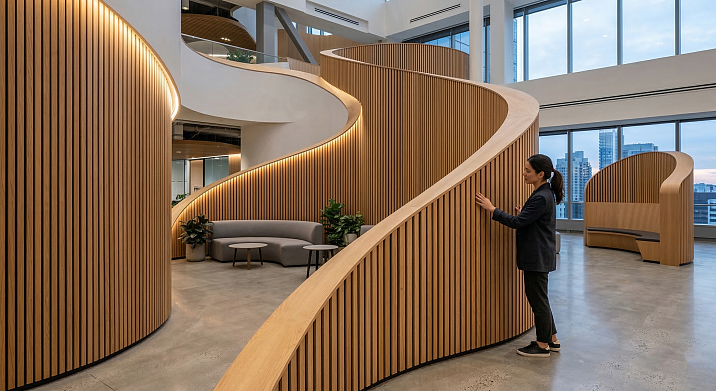
There are tasks that stump designers. A curved wall. A column. An arched opening. A radius reception desk. A semicircular alcove in a bedroom. A regular rigid panel is powerless here — it cannot be bent without damaging the material, nor can it be fitted to a curved surface without endless trimming. It is precisely for such cases that flexible slatted panels exist — a product that has changed the game in finishing non-standard spaces.
What makes a flexible slat panel unique? Not just the ability to bend. But the ability to preserve the rhythmic structure of the slats—equal spacing, clean lines, architectural order—on any surface: concave, convex, S-shaped. Where previously a designer was forced to compromise, the flexible panel provides a solution without loss of quality.
This article contains everything you need to know about flexible slat panels: construction, materials, applications, technical parameters, selection, and installation. For designers, builders, and anyone who wants to create an interior without compromising on geometry.
What are flexible slat panels and what is their fundamental difference from rigid ones?
A conventional slat panel is a rigid structure: slats are fixed to a solid MDF backing. Such a panel does not bend, and this is its main design limitation. It works perfectly on flat walls but capitulates before a curved surface.
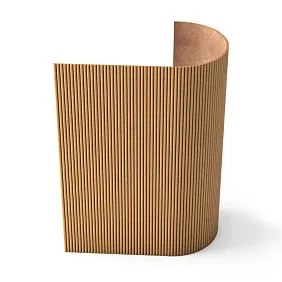
A flexible slat panel solves this problem in a fundamentally different way. The slats are attached not to a rigid backing but to a soft, elastic base—typically a fabric mesh, silicone layer, or special polymer non-woven material. This base bends with the panel, allowing it to conform to the shape of any surface—convex, concave, cylindrical, even wavy.
At the same time, the slats themselves remain rigid—they retain their shape, profile, and clean lines. The backing bends, not the slats. This is why a flexible panel mounted on a radius surface looks exactly like a rigid panel on a flat wall: even parallel slats, uniform spacing, architectural precision.




Construction of a flexible slat panel
A typical construction looks like this:
-
Slats—wooden (solid oak, pine, ash) or MDF, of fixed cross-section, with smooth ends
-
Flexible base—fabric or polymer mesh, providing the ability to bend without loss of load-bearing capacity
-
Slat spacing is fixed along the entire panel length, consistent within each batch.
-
Panel length is standard 2400–3000 mm, custom non-standard lengths are available upon request.
-
Panel width varies from 200 to 1200 mm depending on the configuration.
Our factory also produces:
Bending radius: a key technical parameter.
Each flexible slat panel has a minimum bending radius—the smallest curvature radius at which the panel can be installed without slat deformation or risk of substrate delamination. This parameter depends on:
-
Slat width and thickness
-
Slat material (wood is more flexible than MDF at the same width)
-
Substrate type
-
Slat spacing (closer spacing reduces flexibility)
For most standard flexible panels, the minimum bending radius is 300–600 mm. Special panels with narrow slats and a soft base can bend to a radius from 150–200 mm.
Get Consultation
Why flexible slatted panels have become a necessity in modern design
Look at modern commercial architecture. Restaurants with radius walls. Shopping malls with curved columns. Hotel lobbies with curvilinear reception desks. Private villas with semicircular bedrooms and arched niches. These are all spaces where right angles are fundamentally absent.
Historically, such spaces either remained unclad in non-standard areas or were finished with plaster—which lost all the architectural character of slatted decor. Flexible slatted panels have filled this gap. Now the architectural rhythm of slats is possible everywhere—regardless of surface curvature.
Commercial architecture
This is perhaps the main area of application for flexible slatted panels. Reception desks, columns, curvilinear waiting areas, curved bar counters, radius partitions—wherever the space shape is non-standard, flexible panels provide a solution. The effect is especially strong when flexible panels transition from a curvilinear surface to a flat wall—and the slats continue their movement uninterrupted.
Residential architecture
In residential interiors, flexible slatted panels are used for finishing columns, arched openings, semicircular alcoves and niches, radius walls in bedrooms and living rooms. Private homes with non-standard architecture are one of the most active segments of application.
Public spaces
Theaters, cinemas, concert halls, museums, libraries—spaces where curvilinear architecture is not the exception, but the rule.decorative slatted panelsIn such spaces, they create acoustically and visually rich surfaces that work simultaneously as decor and as a functional element.
Where flexible slatted panels are applied: zones and scenarios
Columns
A column is a classic challenge for any finish. Round, square with rounded corners, polygonal—each type requires a material that conforms to its shape. The flexible slat panel wraps around the column along its entire circumference, maintaining an even slat pitch and clean vertical lines. The result is a column finished with architectural precision.
For a full circumference of a standard column with a diameter of 300 mm, a panel about 940 mm wide is needed. For a diameter of 500 mm—about 1570 mm. This is important to consider when calculating material.
Arches and arched openings
An arched opening consists of two radius transitions. A standard rigid panel here requires complex cutting and inevitably leaves visible seams. The flexible panel wraps around the arch as a single continuous sheet—no seams, the rhythm of the slats remains uninterrupted.
Radius walls and curved partitions
Convex and concave walls in modern architecture—from bespoke residential projects to commercial and hospitality spaces.Flexible slatted panelsOn such walls, they create an effect unattainable with rigid finishes: a smooth movement of the slat rhythm along the curved surface.
Reception desks and bar counters
The front surface of a reception or bar counter often has a radius or complex shape. A flexible slat panel clads the facade of such a counter, perfectly following the contour, creating a professional and visually strong image.
Alcoves, niches, and semicircular zones in residential interiors
A semicircular alcove in the bedroom, a niche area with a radiused back wall, a curved space under the stairs — these are architectural details that require a precise cladding solution. The flexible panel clads them without a single compromise.
Ceilings with curvilinear elements
On the ceiling, flexible slatted panels are used to design curvilinear bulkheads, transitions between levels, and wavy surfaces. This requires additional fastening, but the visual result — a radiused ceiling with an even slatted rhythm — justifies the effort.
Materials for flexible slatted panels: what's important to know before choosing
Solid wood
Natural wood — oak, ash, pine, walnut, larch — possesses natural flexibility at a small cross-section. Thin wooden slats (up to 20–25 mm in width with a thickness of 8–12 mm) bend relatively freely without losing integrity. This allows for creating flexible panels from real wood with a living texture and natural grain pattern.
Advantages of solid wood in flexible panels:
-
Unique natural pattern of each slat
-
Tactile richness of natural wood
-
Possibility of tinting and repainting
-
Eco-friendliness and high level of perception
Limitations:
-
Wood reacts to humidity changes — stabilizing the microclimate is important
-
Higher cost compared to MDF
-
Limited minimum bending radius (typically 400–500 mm)
MDF on a flexible base
MDF slats on a fabric or polymer base — the most common format for flexible slat panels. MDF with a density of 750–850 kg/m³ provides a smooth surface for painting, good slat geometry, and less dependence on humidity changes compared to natural wood.
Advantages of MDF:
-
Perfect surface for any paint and varnish coatings
-
Stable geometry
-
More affordable cost
-
Wide range of tint options
Limitations:
-
MDF is less flexible than wood at the same cross-section — the minimum bending radius is larger
-
Not recommended for high-humidity environments without moisture-resistant coating
Base: fabric mesh
Fabric mesh made of fiberglass or polyester fiber is a classic base for flexible panels. Provides good flexibility, does not deform, and holds adhesive well during installation. When stretched over a frame or glued to a surface, it ensures reliable fixation of the entire structure.
Base: silicone layer
Silicone backing is more elastic than fabric mesh and performs better under extreme bends (small radius). Used in specialized flexible panels for complex curved surfaces.
Technical specifications of flexible slat panels
Before purchasing, it is important to understand that specific limitations and capabilities are hidden behind the parameters.
| Parameter | Typical values |
|---|---|
| Panel length | 2400 / 2700 / 3000 mm (non-standard — custom order) |
| Panel width | 200–1200 mm |
| Slat width | 15–80 mm |
| Slat thickness | 10–25 mm |
| Minimum bending radius | 150–600 mm (depends on configuration) |
| Slat material | Solid oak / MDF / Coated MDF |
| Base | Fabric mesh / Silicone layer |
| Slat surface | For painting / tinted / with oil finish |
Minimum bending radius: what it means in practice
A radius of 300 mm corresponds to, for example, a column with a diameter of 600 mm. A radius of 500 mm corresponds to a column with a diameter of 1000 mm or a reception desk with a smooth curve. A radius of 150 mm is practically for decorative elements of small diameter.
If your project requires a smaller radius than the panel's specified minimum, forcing the bend is not allowed: the slats will deform, the substrate will delaminate, and the appearance will be irreparably damaged.
Flexible slatted panels in different interior styles
Modern style and High-Tech
Curvilinear architecture is one of the key languages of the modern style. Smooth forms, absence of right angles, streamlined contours — this is the architectural handwriting of modernity. Flexible MDF slatted panels for painting in white or gray tones, installed on radius walls and columns, are an absolutely organic solution for a modern interior.
Neoclassicism with curvilinear elements
Neoclassicism historically implies arches, columns, apses, and semicircular niches. Flexible oak slatted panels with warm tinting on columns and in arched openings, combined withpolyurethane moldings and cornices— is a full-fledged neoclassical finishing system where the material's flexibility provides precision previously available only with plaster.
Loft with industrial elements
In a loft interior with exposed columns, flexible wooden slats on metal or brick columns create a warm, natural counterpoint to industrial materials. This is a balance of ruggedness and coziness that makes the loft livable.
Scandinavian and biophilic style
Light wooden slats on curved walls, radius niches with natural texture, smooth transitions between surfaces — biophilic design involves abandoning sharp corners and rigid straight lines. Flexible slatted panels made of light oak or ash are the ideal material for this concept.
Art Deco
Art Deco is geometry, symmetry, and expressive contours. Semicircular receptions, symmetrical columns, arched entrance groups with slatted decor in golden or deep dark tones — this is an architectural image where flexible panels are indispensable.
How flexible slatted panels work with lighting
This is a separate topic deserving of detailed discussion. On a flat wall, slatted decor and lighting interact predictably: side lighting creates shadows in the gaps between slats, forming a linear shadow pattern. On a curvilinear surface, this effect is multiplied.
Convex surface
On a convex surface (column, curved wall), slats facing the light source are maximally illuminated. Slats receding beyond the horizon of the curve gradually sink into shadow. The result is a smooth transition from light to shadow, which emphasizes the form of the surface and makes it visually more voluminous.
Concave surface
On a concave surface, the effect is reversed: the light source 'flows' into the concave plane, creating soft diffuse lighting in the depth. The slats at the edges are more illuminated, while in the center they are less so. This creates a sense of depth and intimacy.
Integrated lighting in flexible panels
An LED strip integrated into the structure of a flexible slat panel — between the slats or behind the substrate — creates a glow that wraps around the shape of the surface. A column illuminated from within with slat panels is one of the most expressive architectural techniques in commercial interiors.
Installation of flexible slat panels: technology and practice
Fundamental differences from rigid panel installation
A rigid panel is mounted on a flat surface — using adhesive or a frame. A flexible panel is mounted on a surface with curvature, and this requires a different approach:
-
Precise radius measurement — before installation, be sure to measure the bending radius of the surface and compare it with the minimum bending radius of the selected panel
-
Surface preparation — the curved surface must be even in cross-section: without bumps, dents, or level differences that would disrupt the uniform adhesion of the panel
-
Uniform adhesive application — adhesive is applied over the entire surface of the substrate, including the bending zones; spot fixation on a curved surface is not permissible
-
Fixation before polymerization — during glue drying, the panel is fixed to the surface: with elastic ties, tape, temporary self-tapping screws in technological holes.
Step-by-step installation process
Step 1. Acclimatization
For wooden flexible panels — mandatory conditioning in the room for at least 48 hours before installation. The wood must adjust to the humidity and temperature of the workspace.
Step 2. Marking
Apply horizontal guide lines on the surface to control the verticality of the slats during installation.
Step 3. Surface preparation
Surface — clean, dry, degreased, primed. For curved drywall surfaces — primer and putty to level minor defects.
Step 4. Applying adhesive
Mounting adhesive is applied evenly over the entire surface of the back side of the panel (substrate). Use a notched trowel — for maximum adhesion. For flexible panels, elastic mounting adhesive is preferred, which does not lose plasticity after polymerization.
Step 5. Panel installation
The panel is applied to the surface and pressed evenly. On a curved surface — starting from the center, gradually smoothing towards the edges. Avoid bubbles under the substrate.
Step 6. Fixation
During the adhesive polymerization period (usually 24–48 hours), the panel is fixed. On columns — it is wrapped with elastic straps. On walls — it is pressed with battens or tape.
Step 7. Joint and end treatment
Joints between panels are covered with horizontal profiles or moldings. The top and bottom ends — with baseboard or cornice. Corner transitions — with corner inserts orpolyurethane decorative elements.
Mounting on frame
For surfaces with serious irregularities or when it is necessary to run utilities behind the panels — installation on a metal frame made of profile. The frame follows the shape of the curved surface; panels are attached to it with self-tapping screws through technological holes in the substrate.
Color and texture solutions for flexible slatted panels
Flexible slatted panels are available in the same color and texture palette as rigid ones — the difference is only in the base construction.
For painting (MDF)
Pure white MDF surface without coating — an ideal base for any enamel. On a curved surface, painted slats work especially effectively: the curvature of the plane creates smooth tone transitions depending on the viewing angle.
Popular Color Solutions:
-
White matte — a classic, suitable for any style
-
Gray (light and dark) — a modern neutral choice
-
Black — maximum contrast, only for accent zones with good lighting
-
Pastel tones — a delicate accent in residential interiors
Natural oak
Light oak in a natural tone with a transparent oil or varnish finish — a lively natural grain pattern on a curved surface. Each slat carries a unique pattern, and on the curved surface of a column or arch, this creates an especially rich visual effect.
Tinted oak
Oak for tinting opens up a wide palette:
-
Scandinavian light gray
-
Warm cognac
-
Deep walnut
-
Tobacco and Mocha
-
Graphite and Anthracite
Tinting penetrates the fiber structure, preserving its pattern. On curved surfaces, tinted oak creates smooth light transitions that literally 'sculpt' the surface form.
Brushed and Thermally Treated Slats
Brushing — removing soft fibers to enhance relief — creates a particularly expressive texture under side lighting. On curved surfaces with directional light, this produces a maximally rich visual effect.
Thermowood — dark, stable, moisture-resistant. Suitable for spaces with unstable humidity.
Flexible Slat Panels in Commercial Interiors: Specific Examples
Restaurant with Radius Walls
Imagine: a dining hall with smoothly curved walls covered in continuous vertical wooden slats — seamlessly, without a single joint, wrapping around every wall turn. Bottom lighting creates a soft glow along the slats. The natural texture of oak fills the space with warmth. This isn't an imaginary picture — it's a real application scenario for flexible slat panels in restaurant design.
Hotel: Lobby and Reception Area
Reception desk with a radius front, clad in flexible slatted panels made of tinted oak. The slats follow the curve of the desk — smoothly, architecturally precise, without visible joints. Behind it — a curvilinear wall with the same slats, transitioning into a flat plane. A unified material system, continuous rhythm, professional image.
Office: meeting room with columns
Four load-bearing columns in a meeting room — a typical task for corporate design. Flexible MDF slatted panels for painting in the corporate style tone, mounted on the columns — transform structural elements into decorative accents. The columns no longer 'get in the way' — they become part of the architectural concept.
Medical center: waiting area
Soft curvilinear walls, light slats of bleached oak — an atmosphere of calm and quality. In medical spaces, slatted decor reduces anxiety: natural texture, soft forms, absence of sharp corners — this is architectural psychology that works for the patient.
Flexible slatted panels in residential interiors
Column in the living room
A load-bearing column in the center of the living room — an architectural given that must be worked with. A flexible oak slatted panel, wrapping the column from floor to ceiling — transforms the structural element into a decorative accent. Directed top-down lighting emphasizes the vertical lines of the slats. The column stops 'getting in the way' and starts 'talking'.
Arched opening between the living room and dining room
An arch — a beautiful architectural element that often remains unfinished or plastered 'to zero'. A flexible slatted panel on the arch — is a continuous slatted rhythm that wraps around the vault and transitions onto flat walls. The architectural detail receives material expression.
Radius wall in the bedroom
In non-standard layouts — bay windows, semicircular niches, rounded corners — flexible panels allow you to preserve slatted decor on all surfaces without exception. A wall behind the bed with flexible slats that wrap around a semicircular alcove — this is design without compromise.
Staircase flight with a curved wall
The wall along the staircase often has an inclined or curved geometry. Flexible slatted panels mounted on this wall while maintaining the vertical direction of the slats — an architecturally flawless solution for one of the most challenging areas in the house.
How to choose the right flexible slatted panel: criteria and guidelines
First question: what is the radius of your surface?
Measure the bending radius of the wall or structure to be clad. Compare it with the panel's minimum bending radius. If your surface's radius is smaller than the minimum for the selected panel — look for another configuration (narrower slats, different base type).
Second question: what material of slats is needed?
Natural oak — for spaces where naturalness, tactility, and unique grain are valued. MDF for painting — for modern interiors with a specific color scheme. Tinted MDF — a compromise between the appearance of wood and affordability.
Third question: what are the operating conditions?
Normal humidity - suitable for most options. High humidity (pool, spa area, kitchen in the work area) - requires moisture-resistant coatings or thermally modified wood. High traffic, physical loads - solid oak with a hard lacquer coating.
Fourth question: how does it combine with the rest of the decor?
Rafter panels— part of the overall finishing system. They should work in tandem with ceiling decor, flooring, furniture, and lighting. For neoclassical interiors — combination withpolyurethane cornices and moldingscreates architectural integrity.
Care for flexible slatted panels
Flexible slatted panels do not require specific care — the requirements are the same as for rigid ones.
Surfaces coated with lacquer and enamel
Soft damp cloth, neutral cleaning agent. No abrasives, stiff brushes, aggressive chemical compounds. A closed coating — lacquer or enamel — provides complete surface protection.
Surfaces with oil coating
The oil creates a protective layer inside the fiber without forming a film. Care — soft cloth, if necessary — special wood care products. Periodic oil renewal every 1–3 years restores protective properties.
Care features in commercial spaces
In high-traffic areas — more frequent cleaning. For surfaces with an open structure (brushing, oil) in commercial spaces — additional coating with a protective matte varnish that does not change the appearance but increases wear resistance.
Common mistakes when choosing and installing flexible slatted panels
Mistake 1: Ignoring the minimum bending radius
This is the most costly mistake. A panel bent beyond the permissible limit deforms the slats or delaminates the backing. Result — ruined material and the need for complete replacement.
Mistake 2: Installation on an unprepared surface
Bumps, pits, and irregularities on a curved surface are not 'absorbed' by the panel's flexibility — they are transmitted through it and visible on the finish. The surface must be prepared no less thoroughly than for ordinary rigid panels.
Mistake 3: Using rigid (non-elastic) adhesive
On a curved surface, rigid adhesive creates internal stresses upon drying, which over time cause the panel to detach from the base. For flexible panels — only elastic mounting adhesive that retains plasticity.
Error 4: Insufficient fixation before adhesive polymerization
The flexible panel, under the influence of its own elasticity, tends to return to its original flat position—especially with significant bending. Without reliable fixation during the adhesive polymerization time, the panel 'pulls away' from the surface. Fixation is a mandatory element of the technology.
Error 5: Inconsistency with ceiling and baseboard finishing
Flexible slatted panels on curved surfaces require equally flexible finishing elements along the top and bottom edges.Cornices and moldings made of polyurethane—lightweight and easy to work with—allow for a smooth transition even on a curved section.
Error 6: Incorrect calculation of material quantity
On a curved surface, material must be calculated based on the development (unfolded length of the surface), not the chord. The difference ranges from 5% to 15% depending on the curvature. A 15–20% allowance for trimming and unforeseen offcuts when working with curved surfaces is necessary.
Flexible slatted panels and acoustics
This is an aspect that is often overlooked. Wooden slats with gaps between them act as a partial acoustic diffuser. On curved surfaces (especially concave ones), the acoustic diffusion effect is enhanced: the curved surface breaks up sound waves in different directions, reducing concentrated echo.
This is precisely why flexible slatted panels are so popular in restaurants, meeting rooms, and hotel lobbies—in addition to the visual result, they improve the acoustics of the space. This is especially noticeable in comparison to hard, smooth surfaces that 'reflect' sound without diffusion.
To enhance the acoustic effect, an acoustic absorber—mineral wool or specialized acoustic foam material—can be laid behind the panel substrate. This transforms the slatted panel into a full-fledged acoustic finishing element.
Frequently Asked Questions about Flexible Slatted Panels
Can regular rigid slatted panels be used instead of flexible ones for slightly curved surfaces?
Theoretically—for very gentle curves (radius over 2–3 meters)—some rigid panels allow slight bending during installation. However, this disrupts the calculated substrate geometry and can lead to delamination. For curved surfaces with a radius less than 1–1.5 m, flexible panels are a mandatory choice.
What adhesive should be used when installing flexible slatted panels on curved surfaces?
Elastic mounting adhesive such as MS-polymer or specialized adhesive for wooden panels that retains plasticity after polymerization. Under no circumstances use rigid cement or gypsum mortar.
Can flexible slatted panels be installed independently?
On simple curves (gentle curve, radius over 500 mm)—quite possible. For complex configurations (small radius, S-shaped surfaces, full column circumferences), engaging an experienced installer is recommended. Mistakes during installation on curved surfaces are significantly harder to correct than on flat ones.
Are flexible slatted panels suitable for wet areas?
When using moisture-resistant materials (thermowood, MDF with moisture-resistant coating, sealed lacquer)—acceptable in areas with moderate humidity. For pools, saunas, and other areas with extreme humidity—specialized moisture-resistant composites are required.
How to calculate the number of flexible slatted panels for a column?
Measure the circumference of the column (diameter × π ≈ diameter × 3.14). Add 10–15% margin. Divide by the panel width to get the number of panels. For height: column height plus 5% for trimming.
How to combine flexible slatted panels with flat walls in the same space?
The ideal scheme is material continuity: the same slats, the same tone, the same spacing on curved and flat surfaces. The slats 'flow' from the curve to the straight surface without changes. This creates a sense of a unified architectural system.
How much do flexible slatted panels cost compared to rigid ones?
Flexible panels typically cost more than rigid ones of similar configuration—due to more complex production and a special base. The price difference is justified in cases where a rigid counterpart is simply not applicable.
Conclusion
Flexible slatted panels are not exotic or a niche product 'for complex cases.' They are a response to a fundamental design challenge: how to preserve the architectural language of slatted decor where there is no right angle. Columns, arches, radius walls, curved reception desks—all these are spaces that previously had to be 'avoided' in decor or compromised on. Now there is no compromise.
A properly chosen flexible slatted panel—by bend radius, material, tone, and configuration—delivers a result indistinguishable from a rigid panel on a flat wall: the same clean lines, the same even rhythm, the same architectural precision. Only the surface is alive, curved, sculptural.
Full rangesolid oak and MDF slat panels—including solutions for curved surfaces—as well asdecorative polyurethane elementsfor the architectural completion of any interiors are presented in the STAVROS company catalog.
STAVROS — manufacturing decorative interior solutions with European quality standards. Slatted panels with precise geometry, a rich selection of wood species and finishes, and professional support for non-standard tasks. For designers and clients who do not compromise on the form of space.