












































































Article Contents:
- The Slatted Panel Market Today: What's Happening and Why It's Important to Know
- Slatted Panel Purchase Channels: All Options Under the Microscope
- Manufacturer Direct
- Online stores and marketplaces
- Construction Hypermarkets
- Design Showrooms and Studios
- Regional Construction Markets
- Slatted Panel Manufacturer Selection Criteria: 10-Point Checklist
- MDF Slatted Panels: What to Look for When Choosing
- MDF Base Density
- Load-bearing base thickness
- Slat profile
- Finish Coating
- Solid oak slatted panels: when naturalness is needed
- Additional elements when purchasing slatted panels: what is often overlooked
- Baseboard matching the panel color
- Moldings and Cornices
- Decorative slats for adjacent elements
- Furniture handles
- Balusters and stair elements
- How to calculate the quantity of slatted panels: step-by-step algorithm
- Slatted panels: price segment comparison
- Budget segment
- Mid-range segment
- Premium Segment
- Comparison table of slatted panel purchasing channels
- Regional specifics: where to buy slatted panels in different cities
- Custom Slatted Panels: When Standard Doesn't Fit
- Mistakes When Buying Slatted Panels: Top 7 from a Practitioner
- FAQ: Answers to Popular Questions About Buying Slatted Panels
- About the Company STAVROS

This question is asked by everyone who seriously delves into the topic of slatted panels for the first time. The search bar fills up, results pour in—and it feels like everything is simple. In reality, it turns out differently: there are many offers, quality varies, prices differ multiple times, and after purchase, it turns out that the slats are crooked, the MDF is cheap, and the coating peeled off after three months. Sound familiar?
Where to buy slatted panels is not a question of geography, but of strategy. It's about how not to make a mistake with the manufacturer, not to overpay an intermediary, not to buy a pretty picture instead of a quality product. This article is an honest breakdown of all purchasing channels, selection criteria, pitfalls, and the right questions to ask before the money is transferred.
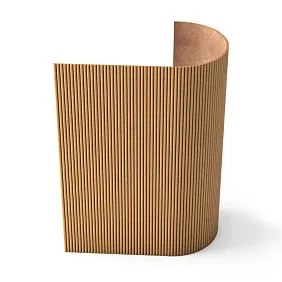
The Slatted Panel Market Today: What's Happening and Why It's Important to Know
Wood and MDF slatted panels are experiencing a period of maturity—not the peak of hype, but stable demand supported by genuine consumer interest. Designers include slatted walls and ceilings in most modern residential projects; private clients independently panel apartments, having seen plenty on Instagram and Pinterest. The market has grown—and along with it, the number of manufacturers has grown: from serious factories with a full production cycle to garage workshops cutting MDF on budget equipment and selling the result under the marketing sauce of 'premium panels'.
The gap in quality between the best and worst offers on the market today is colossal. Panels may look identical in catalog photos. In reality, some will last 15–20 years without a single problem, while others will warp within a year at the first change in humidity. That's why the question 'where to buy' is primarily a question of 'who to buy from' and 'how to check quality before payment'.




Slatted Panel Purchasing Channels: All Options Under the Microscope
Our factory also produces:
Direct from Manufacturer
Buying slatted panels directly from the manufacturer is the best scenario in all respects: price, quality, service. There is no intermediary markup. You have direct contact with people who know everything about the product: what MDF it's made from, what coating was used, how to install it correctly, what to do in case of a claim.
The manufacturer can provide samples of finishes and tints—this is crucial because the color on a monitor screen and the color in real space under natural lighting are different things. Only from the manufacturer will you get an exact color match for a repeat order if you need to purchase additional panels for replacement or to expand the area.
The key question when working with a manufacturer: does he have his own production—machinery, workshop, quality control at every stage—or is he a reseller masquerading as a 'manufacturer'? Ask directly: 'Can we visit the production facility?' A real manufacturer is happy about this. A reseller will find a thousand reasons to refuse.
Rafter panelsMade from MDF and solid oak—this is exactly what you should look for from a specialized manufacturer with a full production cycle, not in a construction hypermarket.
Get Consultation
Online stores and marketplaces
Buying slatted panels on marketplaces (Wildberries, Ozon, Yandex.Market) and in specialized online stores is a common scenario that holds both opportunities and risks.
Opportunities: wide selection, convenient price comparison, reviews from real buyers, fast delivery across Russia. For standard-sized panels 'for painting' in white or a neutral tone, this is a viable option.
Risks: panels are long and fragile goods. Damage to corners and edges during delivery by courier services is the norm, not the exception. Most marketplaces work with pallet stacking, which is not designed for long, delicate items. Check the packaging and delivery conditions before placing an order.
The second risk is the discrepancy between the actual color and finish and what is shown in the product photo. Photos in online catalogs are often taken in studio conditions with professional lighting, which radically changes the perception of the tone.
The third risk is the lack of professional consultation. For a non-standard project, when you need to precisely match a tone to existing finishes, or for complex structural solutions—the marketplace won't help.
Construction hypermarkets
Leroy Merlin, OBI, Petrovich, and similar chains are a convenient option for those who value the ability to 'touch and feel' before buying. Hypermarkets display samples of slatted panels at actual scale, allowing you to assess the texture of the coating, check geometric accuracy, and compare several options side by side.
Limitations: standardized assortment, no option for custom tinting or non-standard geometry. Price is typically higher than buying directly from the manufacturer — the retailer takes its margin. Consultants often lack deep expertise on specific products.
For simple projects — a flat wall, standard ceiling height, budget segment — a hypermarket meets the need. For custom projects with precise requirements for color, geometry, and material — it does not.
Designer showrooms and studios
In major cities, there are specialized showrooms for finishing materials where slatted panels are presented as full-size displays — exactly as they will look in your interior, with proper lighting and in combination with other materials. This is a fundamentally different experience compared to a product card on a marketplace.
A showroom allows you to compare 5–10 panel options in real conditions, consult with a specialist, and assess compatibility with specific flooring and furniture. Prices in showrooms are typically higher than from the direct manufacturer — this is the cost for service, expertise, and demonstration infrastructure.
Optimal strategy: choose an option in the showroom, then order directly from the manufacturer while preserving the color code and article number.
Regional construction markets
Construction markets (like 'Stroydvor', 'Megastroy', and regional equivalents) — this is a platform for those who want to touch, haggle, and buy on the same day. The market provides live contact with the seller, the ability to inspect the goods and take them immediately.
The pitfalls are obvious: the quality of materials at construction markets often falls short of products from specialized manufacturers, the origin of goods is difficult to verify, guarantees are minimal. For an urgent purchase of a small volume of standard panels — the market works. For a serious project with quality requirements — not the best choice.
Criteria for choosing a slatted panel manufacturer: a 10-point checklist
Regardless of where you buy, the manufacturer decision comes first. Here is a specific list of questions and parameters to check.
1. Own production or resale?
Ask directly. A real manufacturer has its own workshop with milling and painting equipment. A reseller buys panels from a third-party factory and sells them under its own brand — while not controlling the quality of the raw materials.
2. What MDF are the panels made from?
Density should be 720–850 kg/m³. Formaldehyde emission class — E1 or E0. For children's rooms and bedrooms — only E0. For kitchen areas and bathrooms — moisture-resistant MDF of HMR category.
3. What finish coating is used?
For painting — factory primer or finish enamel. Lamination — high-quality PVC with UV stabilizers. Oil — natural or synthetic, with manufacturer specified. Surface characteristics of the coating must be documented.
4. Accuracy of slat geometry
Permissible deviation in slat width — ±0.2 mm. In height — ±0.15 mm. In panel length — ±2 mm. Exceeding these tolerances leads to uneven gaps during installation and a 'shifting' pattern.
5. Availability of samples
A serious manufacturer provides samples of finish coatings—either free of charge or for a nominal fee that is credited against a future order. Refusal to provide samples is a red flag.
6. Production Time and Stock Availability
Standard colors are typically in stock. Custom colors are produced to order. Production times range from 5 to 21 business days, depending on the manufacturer and order volume. Clarify in advance.
7. Packaging and Delivery Terms
Long panels require rigid wooden or cardboard packaging with corner protectors. Soft packaging or film without a rigid base guarantees damage during transportation.
8. Warranty Obligations
The minimum reasonable warranty period for slatted panels is 1 year. Serious manufacturers offer 3–5 years. Clarify: what exactly the warranty covers (coating defects, geometry, deformation under normal operating conditions) and the claims procedure.
9. Availability of Installation Instructions
A professional manufacturer provides detailed installation instructions: nodal diagrams, expansion gaps, fastener recommendations. Lack of instructions is a sign of negligence.
10. Reviews and Completed Projects
Real photos of completed projects with panel specifications are a strong argument. Customer reviews on independent platforms. Having architectural and design studios among clients is additional proof of quality.
MDF slatted panels: what to look for when choosing
MDF Plank Panels— the widest market segment, and it's here that the quality range is greatest. Let's examine the key parameters you need to know before purchasing.
Density of the MDF core
This is the first and most important question. Density below 680 kg/m³ is 'lightweight' MDF, intended for furniture fronts without significant load. In a slatted panel, such a core will deform over time—especially in spaces with unstable humidity (kitchens, hallways, rooms without air conditioning). The optimal density for a slatted panel is 780–830 kg/m³.
Thickness of the load-bearing core
9 mm is the minimum for wall panels in residential interiors. 12 mm is the professional standard, ensuring structural rigidity and reliable holding of any fasteners. For panels with slat heights of 22 mm or more—only a 12 mm core.
Profile of the slat
Rectangle, trapezoid, with a chamfer, with a radius—visually different results. Rectangular profile—clean geometry, sharp shadows. Chamfer—refined detailing. Radius—softness. Choose based on interior style, not on the principle of 'what's cheaper.'
Finishing coating
For painting—the most flexible option. On-site painting after installation hides seams between modules and provides an exact color match with other surfaces. Factory painting—convenient and fast, but the color is fixed. PVC lamination—enhanced moisture resistance, no need for additional coating.
Solid oak slatted panels: when naturalness is needed
If MDF is about technological precision and manageability, thenWooden railssolid oak is about natural authenticity, which cannot be replicated by any synthetic material. Each plank carries a unique grain pattern. Under transparent oil, oak reveals a warm golden tone with a hint of honey; stains provide any required shade—from Scandinavian cool gray to deep wenge.
When purchasing solid wood panels, pay attention to the following:
-
Wood moisture content—should be 8–12% for kiln-dried wood. Green wood will crack and warp as it dries.
-
Wood species—oak, ash, walnut, pine. Each species has its own characteristics: oak is hard and durable; pine is soft and visually warmer; ash has a fine texture.
-
End grain sealing—the ends must be factory-treated with a protective coating, otherwise moisture will penetrate through them.
-
Acclimatization—mandatory: 48 hours in the installation room before installation.
Additional elements when purchasing slatted panels: what is often overlooked
This is a practical chapter for those buying slatted panels for the first time. The panels themselves are only part of what needs to be ordered. Without accompanying elements, the finished result will look incomplete.
Baseboard matching the panel color
wooden baseboard— finishing the slat wall at the bottom. The baseboard conceals the expansion gap at the floor, covers the joint between the panel and the flooring, and creates a visual frame for the entire composition. Choose a baseboard in the same tone and material as the panels.buy MDF skirting boardin white finish is perfect for white or light MDF panels.wooden skirting board purchasemade of solid oak is optimal for veneered or solid slat constructions.
Moldings and cornices
The upper boundary of the slat wall is no less important than the lower one. Ceiling molding or cornice completes the panel construction and creates a transition to the ceiling. In classic interiors, this can be an expanded profile cornice; in minimalist ones — a narrow straight strip.
Decorative slats for adjacent elements
wooden plankis used not only in wall and ceiling panels. It is a universal element: framing mirrors and paintings, open shelves, decorative dividers, stair tread cladding. Order slats from the same manufacturer as the panels — this guarantees a perfect match in tone and texture of the finish.
Furniture handles
Furniture Handles из натурального дерева — небольшая деталь, которая замыкает материальный круг интерьера. Реечная стена, деревянный плинтус, деревянные ручки на шкафу — это ансамбль, в котором материал присутствует на всех уровнях пространства.
Balusters and stair elements
If there is a staircase in the house,balusters for staircasesmade from the same wood species as the slat panels create a continuous wooden theme from floor to ceiling. This is a detail that distinguishes a project with a concept from a set of unrelated solutions.
How to calculate the number of slat panels: step-by-step algorithm
One of the most common practical questions is exactly how many panels to buy. Underestimating risks a shortage of material and problems with purchasing the correct shade later. Overestimating means unnecessary expenses.
Step 1: Determine the surface area. Measure the height and width of each wall (or wall section) you plan to cover. Subtract the area of windows, doors, and other openings.
Step 2: Add an allowance for installation waste. The standard allowance for trimming ends, fitting corners, and openings is 10–15%. For rooms with non-standard angles and many openings — 20%.
Step 3: Convert to panels. Divide the total area (with allowance) by the area of one panel (length × width of the panel module, not the width of an individual slat).
Step 4: Order +5% extra as a reserve. This reserve is for future replacements in case of unforeseen damage. Store it flat in a dry place.
Example: wall 4 × 2.7 m = 10.8 m². Two windows 1.0 × 1.4 m each = 2.8 m². Net area = 8.0 m². With a 15% allowance = 9.2 m². Panel 0.6 × 2.7 m = 1.62 m². Number of panels: 9.2 / 1.62 = 5.7 → order 6 panels plus one spare.
Slatted Panels: Price Segment Comparison
The slatted panel market is clearly structured into three price segments. Understanding this structure helps make an informed choice.
Budget Segment
MDF with a density of 650–680 kg/m³, lamination with budget PVC without UV protection, simplified slat profile (only rectangle), limited color range. Plus — affordable price, availability at construction markets and hypermarkets. Minus — service life of 5–8 years under normal conditions, risk of deformation, inability to achieve precise color matching.
When justified: temporary housing, rental apartments, utility rooms without claims to durability.
Mid-Range Segment
MDF with a density of 720–800 kg/m³, laminated with high-quality PVC or factory-painted with water-soluble enamel, several slat profiles, extended color range. This is the main market volume — products from specialized manufacturers, aimed at residential and light commercial projects. The price-to-quality ratio is optimal. Service life — 10–15 years.
When justified: most residential projects, offices, cafes, shops.
Premium segment
MDF with a density of 800–850 kg/m³ or solid oak/ash, natural veneer or high-quality painting with matte enamels in precise RAL colors, variety of profiles, custom non-standard sizes, full set of accompanying elements (moldings, baseboards, corner profiles). The manufacturer provides full technical documentation and an extended warranty. Service life — 20+ years.
When justified: residential projects with long-term requirements, commercial projects with high finishing standards, houses for sale in the 'business' and 'premium' segments.
Comparison table of slat panel purchasing channels
| Channel | Price affordability | Selection | Consultation quality | Warranty | Risk |
|---|---|---|---|---|---|
| Direct manufacturer | Best price | Maximum | Expert | Extended | Minimal |
| Manufacturer's online store | Good | Wide | Online chat | Standard | Low |
| Marketplace | Medium | Wide | No | Minimal | Medium |
| Hypermarket | Above average | Limited | Basic | Standard | Low |
| Design showroom | Above average | Limited | High | Standard | Low |
| Construction market | Varies | Limited | No | Minimal | High |
Regional specifics: where to buy slatted panels in different cities
The question "where to buy slatted panels" receives different answers depending on the customer's geography.
Moscow and Moscow Region — the highest concentration of manufacturers and distributors. Several dozen specialized companies with showrooms, the ability to purchase almost any material retail. Delivery in Moscow and the region — typically fast, from 1 to 3 days.
Saint Petersburg — the second largest market. Several large manufacturers, a wide distributor network. The logistics leg to Moscow is short — orders can be placed with Moscow manufacturers with delivery within 3–5 days.
Yekaterinburg, Novosibirsk, Kazan — major regional centers with their own distributors. Retail selection is narrower than in the capitals. The optimal strategy: ordering from a manufacturer with delivery by a transport company (SDEK, Delovye Linii, PEK). Lead times — 5–10 business days.
Small towns and rural areas — delivery by transport companies with pickup from the nearest terminal. When ordering long-length panels (2700–3000 mm), clarify the possibility of "door-to-door" delivery and vehicle parameters.
Practical advice for regions: when ordering via a transport company, always ask the manufacturer to pack the panels in wooden crating (not just stretch film). This increases the packaging cost by 300–500 rubles but drastically reduces the risk of damage during handling.
Custom slatted panels: when standard doesn't fit
A significant portion of design projects require non-standard solutions: specific paint tones, non-standard slat widths, non-standard panel lengths, or material combinations. It is in this niche that a direct manufacturer unequivocally wins over all other channels.
What is produced to order:
-
Non-standard lengths — 3600, 4200 mm and more for rooms with high ceilings
-
Non-standard slat width — any value from 20 to 150 mm
-
Exact color by RAL/NCS — any shade from catalogs if color mixing equipment is available
-
Combined panels — slats of two widths or two tones on one base
-
Veneering — applying natural veneer of oak, walnut, ash to an MDF base
When placing an order for production: clarify the minimum batch. Most manufacturers set a minimum volume for non-standard orders — typically from 10 to 50 linear meters. This is due to the need to set up milling or painting equipment.
Also clarify the lead times. A non-standard order requires from 7 to 21 working days. Plan your order in advance — especially if installation is strictly tied to renovation deadlines.
Mistakes when buying slatted panels: top 7 from a practitioner
These mistakes are made again and again — and each one costs money, time, or nerves.
Mistake 1: Ordering without a color sample.
Color on screen ≠ color in real space. Always order a sample before the final order. This is not a whim — it's a necessity.
Mistake 2: Calculating without a trimming allowance.
10–15% loss during installation is normal. Ordering 'exactly' means a shortage at the first trimming error.
Mistake 3: Choosing the cheapest offer without checking MDF characteristics.
Cheap MDF is a compromise that will show itself in 1–2 years as deformations, delamination, or uneven coating.
Mistake 4: Buying panels without matching components from the same manufacturer.
Baseboard from one place, panels from another, moldings from a third — and the colors don't match even in the same 'white' shade. Order the entire set from one manufacturer.
Mistake 5: Ignoring acclimatization.
Delivered — installation began immediately. Within a month — deformations and gaps. Minimum 48 hours of acclimatization is not a recommendation, but a technical requirement.
Error 6: Installation without expansion gaps.
Even MDF moves slightly with humidity changes. A 3–5 mm gap at the ends and near the baseboard is mandatory.
Error 7: Purchase without checking warranty terms.
Before payment, ensure: what exactly the warranty covers, its duration, and how claims work. A reliable manufacturer never hides this information.
FAQ: answers to popular questions about buying slatted panels
Where to buy slatted panels in Moscow?
The best option is directly from a manufacturer with their own workshop and showroom. Study the catalog, order samples, compare several offers based on MDF parameters, coating, and warranty. Avoid anonymous sellers at construction markets without product documentation.
Can slatted panels be purchased with delivery across all of Russia?
Yes. Most specialized manufacturers work with transport companies that deliver across all of Russia. Clarify: packaging type (wooden crate or film), delivery cost, timelines, receiving conditions, and the procedure for transport damage.
What is the manufacturer's minimum order quantity?
For standard items — typically from 1 panel. For custom tints and sizes — minimum batch from 10 to 50 linear meters. Check with the specific manufacturer.
How to choose the color of slatted panels online?
Use RAL or NCS catalogs according to which the manufacturer colors the enamel. Match the codes with real printed color catalogs — they are available in most paint and varnish material stores. Always order a physical sample before production.
Are slatted panels and classic furniture compatible?
Yes, and very organically.Classic Furniturewith profile details and carving combined with wide white slatted panels on the walls — this is a modern interpretation of a classic interior. The main thing is to maintain a unified logic of color and material.
How much do MDF slatted panels cost?
The price range is wide. Budget segment — from 600 rubles/m². Mid-range segment — 1200–2500 rubles/m². Premium — from 3000 rubles/m² and above. When comparing prices, always clarify: whether painting is included in the price or if the panels are supplied 'for painting'.
What are panels 'for painting' and why are they needed?
Panels 'for painting' come with factory primer—without a finish color. The finish enamel is applied on-site after installation. Advantage: joints between modules are hidden under a single layer of paint; exact color match with any other surface in the room. Disadvantage: requires a professional painter and time for painting.
How to store slatted panels before installation?
Horizontally on a flat surface, in a dry room. Not vertically—otherwise, deformation of the lower panels under the weight of the stack is possible. Not outdoors under the open sky—even in packaging. Minimum 48 hours in the installation room before setup.
Is a professional installer needed?
For standard flat walls when using modular panels—no, a careful person with basic construction skills can handle it. For non-standard geometry, complex junctions, or ceiling installation—it's better to involve a professional.
Can already installed MDF slatted panels be repainted?
Yes. This is exactly why panels 'for painting' are a flexible option: after 5–7 years, if you want to change the color, sanding and repainting without dismantling is sufficient.
About the company STAVROS
STAVROS is a Russian manufacturer of wooden architectural elements for interiors with a full production cycle and years of experience working with private clients, designers, and architects across Russia. This is where you'll find the answer to 'where to buy slatted panels'—not in a search, but in the catalog:slatted panels made of MDF and solid oakfor walls and ceilings with precise geometry and a rich color palette,Wooden planksfor decorative and installation tasks,wooden baseboardin the material and tone of slatted panels,wooden skirting board purchasefrom oak and ash array,Furniture Handles— made of natural wood,balusters for staircaseshandcrafted, as well asClassic Furniturewith attention to detail. STAVROS provides samples, expert consultation, delivery across Russia, and an extended warranty on all products. If you want a result you won't be ashamed of today or in twenty years — choose a manufacturer, not a middleman. STAVROS is exactly that choice.


