Article Contents:
- Anatomy of quality trim: what lies behind the beautiful facade
- MDF vs. cardboard dust: battle of materials
- Profile geometry: mathematics of beauty
- Finish: protection and aesthetics in one bottle
- Geography of quality: where to find the best trim
- Moscow factories: center of manufacturing excellence
- Regional manufacturers: hidden gems
- Import solutions: when it's worth paying more
- Production technology nuances: what affects quality
- Modern machines vs. outdated equipment
- Drying and stabilization: guarantee of longevity
- Quality control: system or formality?
- Classification by application: each interior deserves its own trim
- Residential interiors: comfort and durability
- Commercial spaces: strength above all
- Wet areas: special requirements
- Stylistic features: from classic to avant-garde
- Classic profiles: beauty proven over time
- Modern Solutions: Minimalism and Functionality
- Avant-garde solutions: creativity without limits
- Mounting systems: from traditional to innovative
- Adhesive mounting: classic of the genre
- Mechanical fastening: reliability above all
- Combined systems: the best of both worlds
- Economic aspects of selection: investments vs. savings
- Analysis of total cost of ownership
- Seasonal price fluctuations
- Wholesale vs. retail purchases
- Logistical features: from warehouse to site
- Transportation: preserve quality during transit
- Warehouse storage: conditions and terms
- Goods Acceptance: What to Check First
- Modern Trends in Molding Design
- Integration with lighting systems
- Ecological Materials and Coatings
- Digital technologies in production
- Professional Secrets of Choosing a Supplier
- Company Reputation and History
- Technical Support and Service
- Warranty Obligations
- Installation and Operation: Practical Recommendations
- Preparing the Base: The Foundation of Quality
- Marking and Cutting: Precision is the Key to Success
- Features of Corner Joints
- Maintenance and Care: Extending Service Life
- Regular Cleaning
- Coating restoration
- Preventive Maintenance
- Frequently Asked Questions
- Conclusion
Stop. Before you spend money on the first molding you find, honestly answer: do you know the difference between a quality profile and a cheap imitation? Can you distinguish high-density MDF from cardboard crumbs in a nice package? Do you understand why one molding lasts decades while another falls apart within a year? If you answered 'no' to even one question, this article may save your renovation from disaster and your wallet from unnecessary expenses.
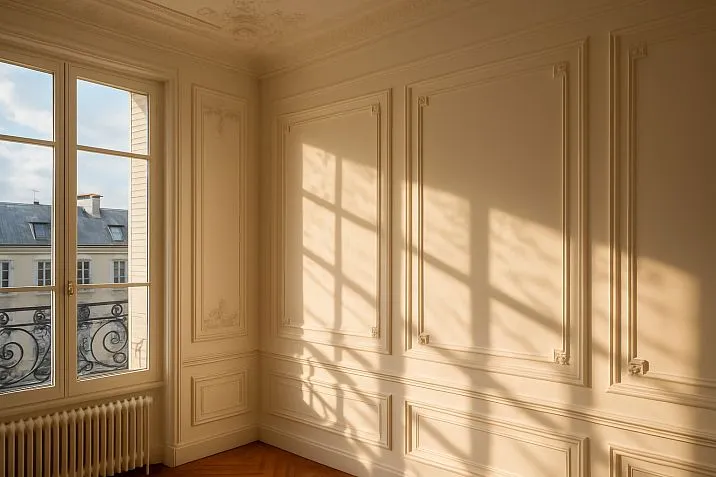
Moldings have transformed from simple decorative strips into a powerful designer tool capable of radically changing the perception of space. But the paradox of the modern market is that Where to Buy Moldings for Wall Decoration it is becoming increasingly difficult to find high-quality products among the sea of mediocre offers. The market is flooded with counterfeits, pseudo-experts, and sellers for whom profit is more important than reputation.
Imagine: you install moldings on the walls of the living room, and after half a year they begin to warp, crack, and lose their original appearance. Money is spent, time is lost, nerves are worn out. Yet this nightmare could have been avoided by knowing a few professional secrets for choosing quality material.


The Anatomy of a Quality Molding: What Lies Behind the Beautiful Facade




MDF vs. Cardboard Dust: The Battle of Materials
Not all moldings are born equal. The modern market offers MDF products of varying densities, and this characteristic is key to understanding quality. High-density MDF (over 750 kg/m³) ensures profile clarity, resistance to deformation, and long-lasting coating. Cheap analogs are made from loose MDF with a density of 400-500 kg/m³ — such material absorbs moisture like a sponge and swells even with minor humidity fluctuations.
How to check density without special equipment? Professional tip: tap the end of the molding. Quality MDF produces a clear, resonant sound, while loose MDF sounds dull, like tapping cardboard. When purchasing, always inspect the end cut — it should be dense, uniform, without visible pores or delamination.
Our factory also produces:




Profile Geometry: The Mathematics of Beauty
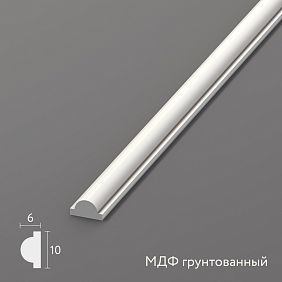
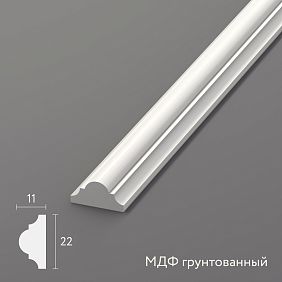
The accuracy of the molding profile determines the quality of joints, the possibility of creating complex compositions, and the overall impression of the finished work. The dimensional tolerance for quality products does not exceed 0.2 mm — it may seem like a minor detail, but it is precisely these fractions of a millimeter that distinguish professional results from amateur ones.
Check the profile symmetry by placing two moldings together with their backsides touching. Quality products will match perfectly, while cheap ones will show noticeable discrepancies. Pay attention to the clarity of the relief — all lines should be straight, without blurring or chips.
Get Consultation
Coating: Protection and Aesthetics in One Bottle
The finish coating of a molding is not only about beauty but also about protecting the material from moisture, ultraviolet radiation, and mechanical damage. A quality primer-enameled coating is applied in multiple layers with intermediate drying between each. This technology ensures even color, absence of drips, and high adhesion.
Cheap moldings are often painted with a single thick layer, which leads to pooling in the profile recesses and gaps on protruding parts. Over time, such a coating begins to peel off, especially at joints and corners.
The Geography of Quality: Where to Find the Best Moldings
Moscow Factories: The Center of Production Excellence
Moscow and the Moscow region have concentrated the most technologically advanced molding production in Russia. Proximity to European equipment and raw material suppliers allows Moscow factories to maintain high quality standards. Decor where to buy in Moscow — this question has clear answers for those who know the market.
Leading Moscow manufacturers invest in modern German and Italian equipment and use high-quality raw materials from trusted suppliers. The quality control system includes checking each batch for compliance with technical requirements.
Regional Manufacturers: Hidden Gems
Some regional factories specialize in producing moldings, achieving mastery in their niche. Vladimir, Tver, and Novgorod manufacturers often offer products not inferior in quality to Moscow-made ones, but superior in price.
The secret to their success lies in specialization and the absence of high overhead costs for renting space in the capital. Many regional manufacturers work under a subcontracting model with Moscow design studios, ensuring compliance with capital quality standards.
Import Solutions: When is it worth paying extra?
European moldings are traditionally considered the benchmark of quality, but is this truly the case? German and Italian manufacturers indeed use advanced technologies, but Russian factories have significantly narrowed the quality gap in recent years.
Import surcharge is justified only in cases of exclusive profiles unavailable from Russian manufacturers, or when working with design projects requiring strict compliance with European standards.
Technological nuances of production: what affects quality
Modern machines versus outdated equipment
The quality of profile milling directly depends on the accuracy and condition of the equipment. Modern 5-axis CNC machining centers provide ideal profile geometry and sharpness of all design elements. Outdated milling machines produce visible errors to the naked eye.
When choosing a supplier, inquire about the equipment used to produce moldings. Serious manufacturers do not hide this information and even offer factory tours.
Drying and stabilization: the guarantee of longevity
Proper drying of MDF blanks is a critically important stage, about which few buyers even think. The residual moisture content of the material should be 6-8%. At higher moisture levels, moldings will deform after installation; at lower levels, they will crack.
Quality manufacturers use a multi-stage drying system with humidity control at each stage. Cheap factories cut corners on this process, leading to problems during operation.
Quality control: system or formality?
Serious manufacturers implement multi-stage quality control: inspection of incoming raw materials, monitoring of production parameters, final inspection of finished products. Each batch is accompanied by a quality certificate specifying key characteristics.
Cheap manufacturers limit themselves to visual inspection of finished products, which cannot guarantee stable quality.
Classification by application: each interior has its own molding
Residential interiors: comfort and durability
For residential spaces, key requirements for moldings are eco-friendliness, resistance to household wear, and ease of maintenance. where to buy moldings for decoration For living rooms with guaranteed safety? Choose products with environmental safety certificates confirming the absence of harmful emissions.
For children's rooms, the durability of the coating to wet cleaning and mechanical impacts is especially important. It is recommended to choose moldings with acrylic or polyurethane coating — they are easy to clean and do not fear children's experiments.
Commercial spaces: strength above all
Offices, stores, and restaurants impose higher requirements for the strength and durability of moldings. Here, resistance to intensive use, frequent cleaning, and furniture rearrangements is crucial.
For commercial interiors, moldings made of high-density MDF with reinforced coating are recommended. Saving on quality in this case results in the need for frequent replacement of decorative elements.
Wet areas: special requirements
Bathrooms, kitchens, saunas require special moisture-resistant moldings. Ordinary MDF quickly deteriorates under high humidity, so special moisture-resistant materials or polyurethane analogs are used.
When selecting moldings for wet areas, be sure to clarify the moisture resistance class and the presence of appropriate certificates.
Stylistic features: from classic to avant-garde
Classic profiles: time-tested beauty
Traditional moldings with rich detailing remain popular in classic interiors. Complex multi-tiered profiles, floral ornaments, geometric patterns require the highest level of manufacturing quality — any inaccuracy will be noticeable.
Classic profiles often imitate gypsum moldings of past centuries, but modern technologies allow achieving even greater detail at lower weight and cost.
Modern Solutions: Minimalism and Functionality
Modern interiors require sleek profiles without excessive detailing. Clear geometric lines, simple shapes, emphasis on material quality and craftsmanship — these are the main requirements for modern moldings.
The apparent simplicity of modern profiles is deceptive — achieving high-quality minimalist design requires exceptional precision and craftsmanship.
Avant-garde Solutions: Creativity Without Boundaries
Modern designers experiment with forms, creating unique molding profiles. Asymmetric elements, unusual combinations of convex and concave surfaces, integration with LED lighting — possibilities are limited only by imagination.
Such solutions often require custom manufacturing, which is only possible with high-tech equipment.
Installation Systems: From Traditional to Innovative
Adhesive Installation: The Classic Approach
The traditional method of installing moldings with adhesive remains the most popular due to its simplicity and reliability. Modern polyurethane adhesives provide strong bonding with any substrate when applied correctly.
Key requirements for adhesive installation: clean and flat surface, proper adhesive selection, adherence to temperature and humidity conditions during installation.
Mechanical Fastening: Reliability Above All
Mechanical fastening is used for heavy moldings or installations in areas with high loads. Modern concealed fastening systems ensure reliable connections while preserving aesthetics.
Mechanical fastening is especially important when installing moldings with large cross-sections or in rooms with unstable temperature and humidity conditions.
Combined Systems: The Best of Both Worlds
A modern trend is the use of combined fastening systems that combine adhesive and mechanical connections. This approach ensures maximum reliability under any operating conditions.
Economic Aspects of Selection: Investments vs. Savings
Total Cost of Ownership Analysis
When choosing moldings, it is important to consider not only the initial cost but also the total cost of ownership: longevity, need for replacement, maintenance costs. Quality moldings may cost 2-3 times more than cheap alternatives, but they last 10 times longer.
A professional approach implies calculating the cost of ownership over the entire service life. In most cases, investments in quality materials pay off multiple times.
Seasonal Price Fluctuations
The molding market is subject to seasonal price fluctuations. Maximum demand occurs during the spring-summer period of active renovations, while the minimum is during winter. Planning purchases with consideration for seasonality can save up to 20-30% of the cost.
Large projects are best planned during the winter period, when manufacturers are eager to utilize their production capacity and are willing to offer significant discounts.
Wholesale vs. Retail Purchases
The volume of purchase significantly affects the final cost. Wholesale prices typically start at 500-1000 linear meters, but savings can amount to 30-50% off the retail price.
For individual buyers, it makes sense to combine purchases with neighbors or colleagues, especially during renovations in new constructions.
Logistical Features: From Warehouse to Site
Transportation: Maintain Quality During Transit
Moldings are a relatively fragile product requiring special handling during transport. Quality packaging, proper placement in transport, and adherence to temperature conditions are critically important for maintaining product appearance.
Serious suppliers use special racks for transporting long items, protective film, and humidity control during transit.
Storage Conditions: Requirements and Duration
Moldings require special storage conditions: stable temperature of 18-22°C, humidity of 45-65%, horizontal placement on flat racks. Violating storage conditions leads to deformations that cannot be corrected.
When purchasing, pay attention to the storage conditions provided by the supplier. Products stored outdoors or in unheated warehouses are likely to have hidden defects.
Goods acceptance: what to check first
Proper goods acceptance helps avoid problems during installation. Check the integrity of packaging, absence of mechanical damage, compliance with quantity and assortment on the delivery note.
Pay special attention to checking geometry — moldings must be straight, without bends or twisting. Even minor deformations make high-quality installation impossible.
Modern trends in molding design
Integration with lighting systems
A modern trend is integrating moldings with LED lighting systems. Special profiles with channels for LED strips allow creating striking backlighting and visually enlarging space.
Such solutions require careful planning of the electrical part of the project and use of specialized profiles with appropriate characteristics.
Ecological materials and coatings
Growing demands for eco-friendliness stimulate the development of new materials and coatings for moldings. Odorless water-emulsion paints, biodegradable adhesives, recycled materials — trends of the near future.
Digital technologies in production
Introducing digital technologies allows creating unique molding profiles based on individual sketches. 3D modeling, CNC milling, automated painting open new possibilities for designers.
Professional secrets of choosing a supplier
Company reputation and history
Longevity of a business in the construction materials sector is a good indicator of product quality and supplier reliability. Companies operating in the market for more than 10 years typically value their reputation and maintain stable quality.
Study the company's history, read customer reviews, and inquire about projects where the supplier's products were used.
Wooden facade decoration in Saint Petersburg embodies the harmony of northern architecture and traditional carving craftsmanship. Wooden columns, ornaments, and carved elements create a unique aesthetic, preserving architectural heritage and highlighting the beauty of facades.
A quality supplier provides not only goods but also a full range of services: consultations on selection, material requirement calculations, installation recommendations, warranty service.
where to buy decor With full service support? Contact companies that have their own design studios and technical support services.
Warranty obligations
A serious manufacturer is not afraid to provide a warranty on its products. Standard warranty for quality moldings is 2-3 years, premium segment may offer warranty up to 5 years.
Carefully study warranty terms — what exactly is covered, what cases are excluded from warranty obligations, warranty claim procedures.
Installation and operation: practical recommendations
Foundation preparation: the foundation of quality
Quality installation begins with proper foundation preparation. Walls must be flat, clean, dry, and dust-free. Any unevenness exceeding 2 mm per meter must be corrected.
Sealing the foundation improves adhesive bond and prevents discoloration on the molding surface. Use sealants recommended by the adhesive manufacturer.
Marking and cutting: precision — the key to success
Accurate marking is the basis of quality installation. Use laser levels to draw horizontal and vertical lines. Measure twice, cut once.
When cutting, use a miter saw with a fine-toothed blade. Cuts must be straight, without chips or scratches. The quality of joints directly depends on cutting accuracy.
Features of corner joints
Corner joints are the weakest point of any molding composition. Use special corner elements where possible. When cutting corners at 45°, ensure perfect accuracy — even a 0.5° deviation will be noticeable.
For complex profiles, use a coping saw or jigsaw with a guide. Smooth joints with fine-grit sandpaper for perfect fit.
Care and maintenance: extending service life
Regular cleaning
Moldings accumulate dust in profile grooves, which over time damages their appearance. Regular dry cleaning with a soft brush or vacuum cleaner with a soft attachment maintains the original look.
Wet cleaning is allowed only for moldings with moisture-resistant coating. Use soft non-abrasive cleaning agents, avoid excessive wetting.
Coating restoration
Local coating damage can be repaired by touch-up. Use paint of the same manufacturer and shade. Before painting, sand the damaged area with fine sandpaper and degrease it.
Preventive maintenance
Regular inspection of moldings allows identifying problems at an early stage. Pay attention to the condition of joints, the strength of fastening, and the absence of deformations.
Timely elimination of minor defects prevents the development of serious problems requiring complete replacement of components.
Frequently asked questions
Can MDF moldings be used in humid rooms?
Standard MDF moldings are not recommended for installation in rooms with high humidity. For bathrooms and kitchens, use special moisture-resistant moldings or polyurethane products with appropriate labeling.
What adhesive is best for installing moldings?
The choice of adhesive depends on the molding material and substrate. For MDF moldings on gypsum board walls, acrylic adhesive is suitable; for concrete walls, use polyurethane adhesive. Always follow the manufacturer's recommendations for moldings.
How long does it take to install moldings in a room?
Installation time depends on the complexity of the profile, number of corners, and wall condition. On average, an experienced craftsman can install 10-15 linear meters of simple moldings in one working day.
Where to Buy Decorative Planks and moldings in the same place?
Many specialized companies offer a full range of decorative elements — from simple rails to complex molding systems. This is convenient for comprehensive interior design in a unified style.
Can moldings be painted in another color?
Quality moldings with primer-enameled coating can be repainted. The surface must be lightly sanded for better adhesion of the new coating. Use paints of the same type as the original coating.
How to calculate the required amount of moldings?
Measure the room's perimeter and add 10-15% for trimming and possible defects. For complex compositions with many corners and joints, reserve 20-25%.
Is special wall preparation needed before installing moldings?
Walls must be flat, clean, and dry. Significant unevenness must be leveled with putty. Loose substrates require priming to improve adhesive bond.
Which molding profile to choose for a small room?
In small rooms, it is better to use moldings with a simple profile and small cross-section. Complex relief profiles visually reduce space and may look inappropriate.
Conclusion
Choosing quality moldings for wall decoration is an art requiring knowledge, experience, and understanding of production and installation nuances. In the era of mass production and aggressive marketing, finding truly quality products becomes increasingly difficult. But armed with professional knowledge, you will be able to distinguish real quality from attractive packaging.
Remember: moldings are not just decorative strips — they are an investment in the beauty and comfort of your home for many years. Saving on quality results in multiple expenses for redoing, repairs, and replacements. Choose proven suppliers, quality materials, and professional installers.
The modern market offers solutions for any task and budget. The key is to clearly understand your needs, know quality criteria, and not fall for deceptive marketing tactics of unscrupulous sellers.
For many years, STAVROS has remained a benchmark of quality in the production and supply of interior decorative elements. The combination of long-term experience, modern European technologies, strict quality control, and individual approach to each client makes STAVROS the ideal choice for those unwilling to compromise on quality. In-house full-cycle production, wide product range, professional technical support, and quality guarantees — these are what distinguish STAVROS from competitors and make cooperation with the company a profitable and reliable investment in your future interior.