












































































Article Contents:
- Why the Handle Matters: The Psychology of Small Details
- The Handle as a Style Marker
- The Handle as a Means of Renewal
- The Handle as an Investment in Durability
- Materials of Furniture Handles: From Wood to Ceramic
- MDF: democratic elegance
- Brass: The Noble Metal of Classicism
- Bronze: Antique Luxury
- Stainless Steel: Modern Reliability
- Ceramic: Porcelain Elegance
- Leather: Tactile Luxury
- Styles of Furniture Handles: From Baroque to Minimalism
- Baroque: Luxury and Decorativeness
- Rococo: elegance and lightness
- Classicism: Symmetry and Strictness
- Empire: Grandeur and Monumentality
- Neoclassicism: modern elegance
- Provence: Romance and Simplicity
- Scandinavian Style: Functionality and Purity
- Loft and Industrial Style: Brutality
- Minimalism: Form Without Excess
- How Handles Change the Character of Furniture: Style Experiments
- Example 1: Transforming Soviet into Provence
- Example 2: From Cheap to Premium
- Example 3: From Classic to Contemporary
- Where to Buy Quality Furniture Handles: Market Overview
- Construction Hypermarkets: Affordable but Mediocre
- Specialized Hardware Salons: Selection and Prices
- Internet Marketplaces: An Ocean of Choice and Risks
- Buying from the Manufacturer: The Optimal Solution
- STAVROS: Manufacturer of Wooden and Metal Handles
- STAVROS Handle Assortment
- STAVROS Product Quality
- Advantages of buying from STAVROS
- Rules for choosing handles: size, style, quantity
- Handle size: proportions matter
- Handle shape: bracket, knob, ring
- Material: matching the furniture
- Quantity: how many handles to buy
- Installing furniture handles: step-by-step instructions
- Tools
- Marking
- Drilling
- Installing the handle
- Inspection
- Common Mistakes
- Frequently asked questions about furniture handles
- Where to buy wooden furniture handles in St. Petersburg and Moscow?
- How much do furniture handles cost?
- Can handles be installed on furniture without holes?
- How to choose handles for old furniture?
- Can custom-sized handles be ordered?
- Which handles are best for kitchen furniture?
- Does STAVROS deliver handles to the regions?
- How to care for wooden handles?
- Conclusion: A Small Detail with Great Significance

Imagine entering a room with an expensive classic solid oak sideboard: carved fronts, noble patina, elegant proportions. Everything is impeccable, but... something is off. The eye stumbles upon cheap chrome-plated handles, clearly bought at a construction hypermarket for a hundred rubles. And that's it—the magic is ruined. Luxurious furniture looks like a fake because one small detail—the handle—gives away a lack of taste or misguided savings.
Furniture handles are not just functional elements for opening doors and drawers. They are the jewelry of furniture, the final touch that either crowns the image or destroys it. A massive bronze handle with patina turns an ordinary chest of drawers into an antique masterpiece. An elegant ceramic handle with painting adds Provençal charm to furniture. A minimalist wooden handle emphasizes Scandinavian simplicity. And the wrong handle—too modern for classic furniture, too cheap for an expensive piece, too ornate for a minimalist interior—can kill the entire concept.
Questionwhere to buy furniture handlesChoosing high-quality, stylish handles made from noble materials concerns everyone who creates or updates furniture. The market offers thousands of options—from Chinese mass-produced goods to European brands with astronomical prices. How to find the golden mean? How to choose handles that emphasize the style of the furniture, last for decades, and don't break the budget? This article is your guide to the world of furniture handles, from materials to installation.


Why the handle is so important: the psychology of small details
The furniture handle is the first thing a person's hand touches when opening a cabinet or pulling out a drawer. This tactile contact forms an impression of the furniture on a subconscious level. Cold, smooth plastic creates a feeling of cheapness. Warm wood with a natural texture—coziness and quality. A heavy metal handle with patina—reliability and history. Our brain instantly reads these signals and delivers a verdict: expensive furniture or cheap, quality or not, meticulously detailed or hastily assembled.




Handle as a style marker
The handle instantly communicates the style of the furniture. Seeing a ring on a chain, we think 'Baroque.' Seeing a brass bracket—'Neoclassical.' A ceramic knob with a flower—'Provence.' A strict metal bar—'Minimalism.' The handle is a business card that, in the language of form and material, tells about the furniture's belonging to an era and style.
Our factory also produces:


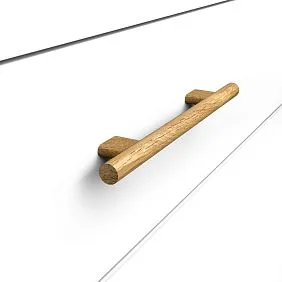

Handle as a means of updating
Replacing handles is the easiest and cheapest way to transform furniture. An old Soviet cabinet with plastic knobs turns into a stylish piece after installing beautiful wooden or brass handles. It's magic that doesn't require large investments: a set of 10 quality handles costs 2000-5000 rubles, but the effect is like a full restoration costing tens of thousands.
Get Consultation
Handle as an investment in durability
A quality handle made of solid wood or metal lasts for decades. A cheap plastic or zinc alloy one breaks within a year or two (especially on frequently opened drawers). By saving on handles, you doom yourself to regular replacements, frustration from broken elements, and damage to the furniture (when the handle tears off with a piece of the front).
Materials of furniture handles: from wood to ceramics
The material determines the appearance, tactile sensations, durability, style, and price of the handle.
Solid wood: warmth and nobility
Wooden handles—the choice of those who value naturalness, warmth, and eco-friendliness. Wood is pleasant to the touch (especially in winter when metal is cold), has a natural beautiful texture, and easily fits into classic and country interiors.
Wood species for handles:
Oak: the king of furniture wood. Durable, hard, with an expressive texture. Oak handles are heavy (which creates a sense of quality), long-lasting, and beautiful. Color ranges from light honey to dark brown (depending on treatment). Oak is the choice for classic, solid furniture.
Beech: lighter than oak, uniform texture, high density. Beech handles are durable and take well to painting (if a color different from natural wood is desired). Beech is ideal for Scandinavian style, for furniture intended for white painting, and for Provence style.
Ash: similar to oak but lighter, with a more contrasting texture. Ash handles are expressive, durable, and beautiful. Suitable for modern and neoclassical furniture.
Walnut: dark, noble wood with a beautiful grain. Walnut handles are the choice for expensive, status furniture. They add warmth and respectability.
Exotic woods (wenge, rosewood, mahogany): very expensive, unique in color and grain. Used in exclusive furniture.
Shapes of wooden handles:
-
Bars (arc-shaped or straight planks, grasped by hand)
-
Knobs (round, square, oval protrusions)
-
Mushrooms (knob on a stem)
-
Shells (recess in the facade where the hand fits)
Finishes for wooden handles:
-
Natural wood under oil or varnish (emphasizes the grain)
-
Toning (staining) — changing the color while preserving the grain
-
Painting (enamel) — solid color, hiding the grain
-
Patination — an antique effect (light base color + dark patina in recesses)
Advantages of wooden handles:
-
Naturalness, eco-friendliness
-
Warm tactile feel
-
Beautiful grain
-
Easily fit into classic interiors
-
Can be made in any shape
Disadvantages:
-
Fear moisture (for kitchens and bathrooms, protective treatment is needed)
-
May darken over time (requires coating renewal)
-
Wood is softer than metal (dents from impacts may appear)
Brass: the noble metal of classicism
Brass is an alloy of copper and zinc. Golden-yellow color, pleasant weight, noble appearance. Brass handles are a classic of furniture hardware.
Why brass:
-
Does not rust (unlike steel)
-
Beautiful warm color
-
Responds well to processing (casting, chasing, engraving)
-
Patina develops over time (acquires a noble antique patina)
Finishes for brass handles:
-
Polished brass (bright golden shine, modern look)
-
Matte brass (muted color, noble restraint)
-
Patinated brass (artificially aged, with dark areas — for an antique look)
-
Lacquered brass (coated with protective lacquer, does not tarnish over time)
Styles for brass handles:
-
Classicism (symmetrical shapes, rosettes, engraving)
-
Neoclassicism (restrained elegant shapes)
-
Art Deco (geometric patterns)
-
Provence (rings, brackets with decorative overlays)
Shapes of brass handles:
-
Brackets (arched, straight)
-
Rings (round handles, suspended on a rosette)
-
Knobs (round, square, with engraving or relief)
-
Drops (teardrop shape)
Advantages of brass handles:
-
Durability (last for decades)
-
Noble appearance
-
Do not rust
-
Heavy (feeling of quality)
-
Patination over time adds charm
Disadvantages:
-
High price (more expensive than steel and aluminum)
-
Tarnish without lacquer (require polishing or acceptance of patina)
Bronze: antique luxury
Bronze is an alloy of copper and tin. Darker than brass, with a reddish or brownish tint. Bronze handles are the choice for luxurious, historic furniture.
Features of bronze:
-
Darker and more noble color than brass
-
Denser and stronger than brass
-
Patinates beautifully
-
Associated with antiquity, museum exhibits
Application: furniture in Baroque, Empire, Classicism, Gothic styles, antique or antique-style items.
Finish: most often patinated (artificially aged) — this emphasizes historicity and nobility.
Advantages:
-
Maximum nobility of appearance
-
Longevity
-
Unique patina
Disadvantages:
-
Very high price (more expensive than brass)
-
Heavy (but this is also a plus — solidity)
Stainless steel: modern reliability
Steel is a strong, durable, corrosion-resistant material. Steel handles are the choice for modern interiors, kitchens, bathrooms (where moisture resistance is important).
Finishes of steel handles:
-
Polished (shiny, chrome-plated)
-
Matte (satin-finished, subdued shine)
-
Black (PVD coating, black metal — fashionable trend)
Styles:
-
Minimalism (straight bars, simple shapes)
-
High-tech (technological appearance)
-
Loft (industrial aesthetic)
-
Scandinavian (combination of steel and wood)
Advantages:
-
Maximum strength
-
Moisture resistance (ideal for kitchens, bathrooms)
-
Do not darken, do not oxidize
-
Modern look
-
Affordable price (cheaper than brass and bronze)
Disadvantages:
-
Feel cold to the touch
-
Not suitable for classic interiors (too modern)
Ceramics: porcelain elegance
Ceramic (porcelain) knob handles — a traditional element of Provence, vintage, shabby chic furniture. White or colored, smooth or with painting (flowers, patterns).
Features:
-
Light, fragile (require careful handling)
-
Beautiful, decorative
-
Cold and smooth to the touch
-
Variety of painting (from simple to complex)
Styles:
-
Provence (white or lavender knobs with flowers)
-
Shabby chic (distressed ceramic handles with vintage painting)
-
Country (simple ceramic knobs in natural colors)
Advantages:
-
Unique appearance (especially with painting)
-
Variety of colors and patterns
-
Lightness (do not weigh down furniture)
Disadvantages:
-
Fragility (may crack upon impact)
-
Smooth (may slip from wet hands)
-
Feel cold to the touch
Leather: tactile luxury
Leather handles (usually straps covered in leather, or leather loops) — a choice for furniture in loft, Scandinavian, and ethnic styles. Leather is warm, pleasant to the touch, and rugged.
Features:
-
Very pleasant tactile sensations
-
Unique appearance
-
Develop a patina over time, darken (which adds charm)
Application: dressers, wardrobes, cabinets in modern and eclectic interiors.
Disadvantages:
-
Require maintenance (leather may dry out, crack)
-
Not suitable for classic styles
Styles of furniture handles: from Baroque to minimalism
The handle should match the style of the furniture. Let's examine characteristic shapes and materials for different styles.
Baroque: luxury and decorativeness
Materials: bronze, brass (with gilding or patina), sometimes carved wood.
Shapes: rings on rosettes (rosette — a decorative overlay, often in the form of a flower, scroll, mask), brackets with scrolls, carved drop handles, handles with heraldic symbols (lions, griffins).
Decoration: abundant carving, chasing, engraving. Baroque handles are lush, theatrical, attention-grabbing.
Finish: gilding, patination, complex multicolor processing.
Application: furniture in palace, ceremonial style. Buffets, dressers, wardrobes in the style of Louis XIV, XV.
Rococo: elegance and lightness
Materials: brass, bronze, porcelain.
Shapes: asymmetrical scrolls, shells (rocaille), floral motifs. Ring handles on elegant rosettes, brackets with smooth curves.
Decoration: lighter and more delicate than Baroque. No monumentality, there is playfulness.
Finish: gilding, silvering, pastel enamels on porcelain.
Application: boudoir furniture, romantic bedrooms, salons.
Classicism: symmetry and strictness
Materials: brass, bronze (often matte), wood (for simpler furniture).
Shapes: symmetrical, geometrically correct. Rings on round or oval rosettes, straight brackets, buttons with meanders (Greek ornaments), laurel wreaths.
Decoration: restrained, architectural. Fluting, rosettes, garlands.
Finish: matte brass or bronze, sometimes blackening (for contrast).
Application: libraries, studies, dining rooms in classic style.
Empire: grandeur and monumentality
Materials: bronze (dark, patinated), brass (bronze-finished).
Shapes: rosette rings with heraldic symbols (eagles, lions, laurel wreaths), brackets with military attributes (swords, helmets, shields), massive knobs.
Decor: ceremonial, majestic, associated with Napoleon's empire.
Finishing: patination, gilding of individual elements.
Application: ceremonial furniture in Empire style, formal interiors.
Neoclassicism: modern elegance
Materials: brass (matte or polished), stainless steel, wood (light or painted).
Shapes: simple yet noble. Straight or gently curved brackets, round or square knobs, rings on minimalist rosettes.
Decor: minimal or absent. Emphasis on material quality and proportions.
Finishing: matte brass, black metal (fashionable trend), white or gray wood.
Application: modern classic furniture, interiors combining classic and contemporary styles.
Provence: romance and simplicity
Materials: ceramics (white, colored, painted), wood (painted, patinated), brass (simple forms).
Shapes: ceramic knobs with floral patterns, rings on simple rosettes, wooden mushroom knobs, brackets with decorative overlays.
Decor: floral motifs, simple patterns, distressing (aged effect).
Finishing: white, cream, lavender color with patina, matte brass, hand-painted ceramics.
Application: kitchens, dining rooms, bedrooms in Provence, country, shabby chic styles.
Scandinavian style: functionality and purity
Materials: wood (light natural or white), leather, stainless steel (matte).
Shapes: simple, concise. Straight or slightly curved brackets, round knobs, leather loops.
Decor: absent. Beauty lies in simplicity and material quality.
Finishing: natural light wood (beech, ash, birch) with oil finish, white paint, matte metal.
Application: Scandinavian interiors, minimalist furniture, kitchens, children's rooms.
Loft and industrial style: brutality
Materials: black metal, steel, leather, bronze (rough, untreated).
Shapes: straight, angular, industrial. Pipe brackets, rail handles, leather loops, rings on simple mounts.
Decor: minimal. Emphasis on functionality and material texture.
Finishing: black metal (matte or slightly distressed), rough bronze, natural leather.
Application: furniture in loft, industrial style, brutal interiors.
Minimalism: form without excess
Materials: stainless steel, aluminum, wood (simple forms).
Forms: maximally simple. Straight bars (brackets), integrated handles (recesses in the facade), plain buttons without decoration.
Decor: completely absent.
Finish: polished or matte metal, white or gray wood.
Application: minimalist interiors, modern furniture, high-tech style kitchens.
How handles change the character of furniture: style experiments
Replacing handles is the fastest way to change the perception of furniture. Let's look at transformation examples.
Example 1: Transforming Soviet into Provence
Initial data: an old Soviet chipboard dresser veneered with wood veneer. Plastic mushroom-shaped buttons, worn surface.
Transformation:
-
Paint the dresser white with a light distressed effect (shabby chic)
-
Replace plastic buttons with white ceramic ones with a delicate floral pattern
-
Add decorative overlays (moldings) to the facades
Result: the dresser transforms from a nondescript Soviet piece into a romantic Provence-style item that can be proudly placed in a modern interior.
Key element: it's precisely the ceramic handles with painting that create the Provence character. With plastic buttons or modern metal brackets, the effect would be lost.
Example 2: From cheap to premium
Initial data: a simple IKEA dresser. Cheap hardware (thin metal brackets).
Transformation:
-
Replace cheap brackets with massive brass handles with patina
-
Add wooden or gold legs (if there were none)
Result: the dresser looks many times more expensive. Brass handles create a sense of quality, premium, and classic style.
Key element: the weight and material of the handles. Heavy brass with patina is perceived as expensive hardware, while lightweight aluminum is seen as cheap.
Example 3: From classic to contemporary
Initial data: an old classic sideboard with brass rings on rosettes. Looks old-fashioned.
Transformation:
-
Remove the brass rings
-
Install minimalist black metal brackets (straight, without decoration)
-
Paint the sideboard dark gray or black
Result: the sideboard transforms from classic to contemporary, fitting into a loft or minimalist interior.
Key element: replacing decorative handles with laconic ones. The handle's shape dictates the style.
Where to buy quality furniture handles: market overview
The furniture hardware market is vast, but quality and prices vary significantly.
Construction hypermarkets: affordable but mediocre
Leroy Merlin, OBI, Castorama offer a basic range of handles: inexpensive metal brackets, plastic knobs, simple ceramic handles.
Pros: accessibility, can be purchased immediately, low prices.
Cons: limited selection (50-100 models), mostly cheap hardware (aluminum, plastic, silumin), few wooden and brass handles, lack of exclusive models.
Conclusion: suitable for budget repairs, temporary solutions, but not for quality furniture.
Specialized hardware salons: selection and prices
In Moscow, St. Petersburg, and major cities, there are furniture hardware salons offering hundreds of handle models, including imported collections.
Pros: wide selection, quality hardware (European brands), you can see and touch, consultations.
Cons: high prices (intermediaries mark up 50-100%), limited geography (mostly capitals), the desired model is not always in stock.
Conclusion: a good option for those in a major city, willing to overpay for service.
Internet marketplaces: an ocean of choice and risks
Wildberries, Ozon, AliExpress — thousands of handle models at any price.
Pros: huge selection, low prices (especially on Chinese platforms), ordering convenience, delivery.
Cons: impossible to assess quality before purchase (photos are often misleading), lots of low-quality goods (thin metal, brittle plastic), size mismatch, return problems, long delivery (from AliExpress).
Conclusion: can be used for search and comparison, but buy cautiously, having studied reviews. For responsible projects, the risk is high.
Buying from the manufacturer: optimal solution
Where to buy furniture handlesquality ones at a fair price? From a furniture hardware manufacturer.
Advantages:
-
Manufacturer's price (without intermediary markups)
-
Quality guarantee (the manufacturer is responsible for the product)
-
Wide assortment (the entire manufacturer's catalog)
-
Possibility of custom orders
-
Professional consultations
-
Delivery across Russia
Cons: not always an offline point in your city (but this is compensated by delivery).
Conclusion: the best option in terms of price/quality/selection ratio.
STAVROS: manufacturer of wooden and metal handles
The company STAVROS manufacturesFurniture Handlesfrom solid wood and offersfurniture hardwarefrom metal (brass, steel).
STAVROS handle assortment
Wooden handles:
-
Brackets of various shapes (arched, straight) made of oak, beech, ash
-
Knobs (round, square, cylindrical)
-
Mushrooms (knob on a stem — a classic for classic furniture)
-
Shells (recessed handles, milled into the solid wood)
Sizes: bracket length from 64 mm to 320 mm (center-to-center distance of mounting holes), knob diameter from 20 mm to 50 mm.
Materials: solid oak, beech, ash. Chamber-dried wood (moisture 8-10%), without knots and defects.
Finish: untreated (for independent finishing) or with factory finish (toning, painting, patination, varnishing, oil).
Metal handles (STAVROS assortment through partners):
-
Brass brackets, rings, knobs (polished, matte, patinated)
-
Steel handles (matte, black, polished)
-
Bronze handles (with patina, for classic furniture)
STAVROS Product Quality
Material: only solid hardwood (oak, beech, ash). Softwoods (pine, spruce) are not used — they are not durable enough for hardware.
Processing: handles are turned on lathes or milled on CNC machines. After machining — manual sanding to perfect smoothness.
Fasteners: supplied with quality screws (stainless steel) of the required length. Everything needed for installation is included.
Geometry: all holes are drilled precisely, dimensions correspond to those stated (important for replacing old handles).
Advantages of buying from STAVROS
Price: 30-40% lower than retail stores. A 128 mm wooden bracket in a store — 800-1200 rubles, at STAVROS — 500-700 rubles.
Quality: solid wood, precise processing, thorough sanding. Handles are strong, beautiful, durable.
Assortment: dozens of models of various shapes and sizes. For any furniture style.
Custom orders: if you need a handle of non-standard size or unique shape, STAVROS will manufacture it according to a sketch.
Consultations: specialists will help select handles to match the furniture style, calculate the quantity, and advise on finishing.
Delivery: throughout Russia, packaging prevents damage.
Rules for choosing handles: size, style, quantity
Choosing handles is not just buying beautiful hardware. You need to consider dimensions, load, style, ergonomics.
Handle size: proportions matter
Center-to-center distance: the distance between the centers of the mounting holes. Standards: 32, 64, 96, 128, 160, 192, 224, 256, 320 mm.
Rule: the wider the front (door or drawer), the longer the handle should be. On a narrow drawer (30 cm wide) a 160 mm handle will look absurd. On a wide door (80 cm) a 64 mm handle will get lost.
Recommendations:
-
Drawers 30-40 cm wide — handles 64-96 mm
-
Drawers 50-60 cm wide — handles 96-128 mm
-
Drawers 70-90 cm wide — handles 128-160 mm
-
Cabinet doors 40-50 cm wide — handles 96-128 mm or knobs
-
Cabinet doors 60-80 cm wide — handles 128-192 mm
Knobs: universal in size, suitable for any fronts. But on very wide doors they look a bit small — better to use two knobs (top and bottom) or a bracket.
Handle shape: bracket, knob, ring
Bracket (arc-shaped or straight bar): the most convenient for frequent use. Easy to grip, open a heavy door or drawer. Suitable for kitchens, dressers, wardrobes, cabinets.
Knob (protruding element): compact, elegant. Convenient for light drawers and doors. Not suitable for heavy ones (inconvenient to pull, can break). Ideal for decorative dressers, sideboards, bedside tables where drawers are not overloaded.
Ring (on a rosette): classic shape for antique and antique-style furniture. Less convenient than a bracket (the ring needs to be lifted, then pulled), but very decorative.
Shell (recessed handle): minimalist, does not protrude above the surface. Convenient, but only if the front is thick enough (so the recess is deep).
Material: furniture compatibility
Wooden furniture: wooden or metal (brass, bronze) handles. Plastic and cheap aluminum cheapen the appearance.
Painted furniture: any handles, but color and style should harmonize. White furniture - brass, wooden (white or natural), ceramic handles. Black furniture - black metal, brass.
Modern furniture: metal handles (steel, aluminum, brass), minimalist wooden ones.
Quantity: how many handles to buy
Drawers: usually one handle in the center (if width up to 60 cm) or two (if width 70+ cm).
Doors: one handle (if the door is narrow, up to 50 cm) or two (if wide, 60+ cm, or very tall).
Spare: always buy 1-2 more handles than needed. The spare will come in handy if the fastener breaks, a handle gets lost, or you want to add handles to other furniture in the same style.
Installing furniture handles: step-by-step instructions
Installing handles does not require professional skills, but precision is important.
Tools
-
Tape measure, ruler
-
Pencil
-
Drill or screwdriver
-
Drill bits (diameter depends on screws, usually 3-5 mm)
-
Screwdriver or power drill
-
Template for marking (optional, but very convenient)
Marking
For a bar handle (two mounting holes):
-
Determine the handle position (usually centered on the front, at a height of 1/3 or 1/2 from the bottom of the drawer/door)
-
Measure distances from the edges of the front to the holes (so the handle is exactly centered)
-
Mark drilling points with a pencil
-
Check that the distance between points matches the handle's center-to-center distance (measure the handle)
Tip: use a ready-made template (a cardboard piece with holes at the required distance). Place the template on the front, mark points through the holes - quick and accurate.
For a knob (one mounting hole):
-
Find the center of the front (or desired position)
-
Mark the point with a pencil
Drilling
-
Pre-drill points with a thin drill bit (1-2 mm) - this prevents the main drill from slipping
-
Drill holes with a drill bit of the required diameter (usually 4-5 mm for furniture handles)
-
Drill strictly perpendicular to the surface (so the screw goes in straight)
-
If the front is thick (more than 20 mm), drill a through hole. If thin (16-18 mm), the drill may exit the back side - place a piece of chipboard underneath to avoid chipping
Installing the handle
-
Insert screws into the handle from the front side of the front
-
From the back side, start threading the nuts or screw the screws into the handle body (depends on the design)
-
Tighten the screws with a screwdriver or power drill (do not overtighten — you can strip the threads or crack the wooden handle)
-
Check that the handle sits firmly and does not wobble
Inspection
Open and close the drawer/door several times, ensure the handle is comfortable, does not interfere, and is securely fastened.
Common Mistakes
Incorrect marking: holes are not aligned or not centered — the handle hangs crookedly. Solution: careful marking, use a template.
Hole too large: screw falls through. Solution: use a washer on the backside or fill the hole with a wooden dowel and drill again.
Overtightened screw: cracked wooden handle or stripped threads. Solution: tighten carefully, without excessive force.
Frequently Asked Questions about Furniture Handles
Where to buy wooden furniture handles in St. Petersburg and Moscow?
where to buy furniture handleshigh-quality solid wood ones? The best option is to order from the manufacturer STAVROS with delivery to Moscow and St. Petersburg. Delivery 1-2 days, wide selection, manufacturer's price.
How much do furniture handles cost?
Prices depend on material and size. Plastic button — from 20-50 rubles. Wooden 128 mm bracket made of oak — from 500-800 rubles. Brass 128 mm bracket — from 800-1500 rubles. Bronze carved handle — from 2000-5000 rubles.
Can handles be installed on furniture without holes?
Yes, but you will need to drill new holes. Mark the handle positions, drill, install. If you are afraid of making a mistake, use a ready-made template or consult a furniture maker.
How to choose handles for old furniture?
Determine the furniture style (classic, baroque, provence, minimalism). Choose handles of the corresponding style. Measure the old handles (center-to-center distance) — it's better if the new handles fit the existing holes (no need to drill new ones).
Can custom-sized handles be ordered?
Yes, STAVROS fulfills custom orders. If you need a handle of non-standard length, shape, or with unique decoration, describe the requirements — production will manufacture it.
Which handles are best for kitchen furniture?
For kitchens, moisture resistance and ease of cleaning are important. Best options: stainless steel (not afraid of moisture, easy to clean), lacquered brass (does not tarnish), wooden handles with protective varnish. Avoid porous materials (untreated wood, some types of ceramics) — dirt and grease get trapped in them.
Does STAVROS deliver handles to regions?
Yes, delivery throughout Russia. Handles are packed securely and shipped by transport companies. Delivery times: Moscow, St. Petersburg — 1-2 days, regions — 3-7 days.
How to care for wooden handles?
Wipe with a dry or slightly damp cloth. Avoid aggressive cleaning agents. If the finish has dulled, renew with varnish or oil (if the handles are oil-finished). Wooden handles are durable with minimal care.
Conclusion: a small detail with great significance
A furniture handle is the finishing touch in creating the image of furniture. It can elevate an item, make it noble, elegant, expensive. Or, conversely, ruin the entire concept, cheapen it, strip it of style. Choosing handles is not a minor detail, but a crucial stage that must be approached consciously, understanding style, materials, proportions.
A high-quality handle made of solid wood or noble metal lasts for decades, does not break, does not tarnish, brings joy every day. A cheap plastic or zinc alloy one breaks, scratches, loses its appearance in a year or two. Saving on handles is false economy that leads to disappointment and additional costs for replacement.
The company STAVROS manufactures furniture handles from solid oak, beech, ash at its own production facility in Russia. Each handle is turned on high-precision equipment, hand-sanded to perfect smoothness, and comes with quality fasteners. STAVROS offers dozens of handle models: from classic brackets and buttons to elegant mushroom knobs, from simple forms for minimalism to decorative ones for baroque and rococo.
By buying handles from STAVROS, you get manufacturer quality at manufacturer price — 30-40% lower than retail stores. You get consultations from specialists who will help you choose handles to match your furniture style, calculate the quantity, advise on finishes. You get delivery throughout Russia with careful packaging that prevents damage. You get a quality guarantee — if a handle has a defect (which is extremely rare with STAVROS control), it will be replaced.
The STAVROS website is not only a catalog of handles but also an educational resource. Here you'll find detailed descriptions of each model with photos, dimensions, recommendations. Here are articles about furniture styles, restoration, creating interiors. Here you can ask a question and get a professional answer from people who have worked with wood and furniture for decades.
Whether you are creating furniture from scratch, updating an old chest of drawers, restoring an antique, or simply want to replace worn-out handles on your favorite wardrobe — STAVROS will offer a solution that highlights beauty, adds character, and lasts for many years. Because beautiful furniture is the sum of its details, and quality details start with STAVROS!


