












































































Article Contents:
- Criteria for selecting suppliers of decorative materials
- Polyurethane moldings: optimal choice for modern interiors
- Product assortment: what is needed for a complete project
- Molding catalog: how to navigate the variety
- Where to buy in Moscow: choosing a reliable supplier
- Purchase Process: From Selection to Delivery
- Additional materials and tools
- Saving Without Compromising Quality
- Common mistakes when purchasing and how to avoid them

Deciding on decorative interior finishing is only the first step toward transforming the space. The next, equally important step is to find a reliable supplier of quality materials, offering a wide assortment, where you can see the products in person, receive professional consultation, calculate the exact quantity of elements, and organize delivery. Dozens of companies in Moscow offer materials for interior wall finishing, but not all provide the combination of quality, selection, service, and pricing that makes the purchase truly advantageous and comfortable. Finding the right place to buy moldings and decorative elements requires understanding the market, criteria for selecting suppliers, characteristics of different materials and manufacturers.
The modern market of decorative materials offers products made from different materials — polyurethane, gypsum, polystyrene foam, wood. Each material has its own characteristics, field of application, price range. The choice depends on the specific goals of the project, budget, conditions of use, and personal preferences. However, regardless of the material, it is critically important to purchase from a reliable supplier who guarantees the quality of the product, its compliance with stated characteristics, and a complete assortment to implement a cohesive design project. A store of decorative elements should not be merely a retail outlet, but a partner in creating an interior, offering expertise and support at every stage — from selection to installation.


Criteria for selecting suppliers of decorative materials
When deciding where to buy materials for interior finishing, evaluate the supplier based on several key parameters that determine the quality of the buyer's experience and the final result.
Assortment — the first and most important criterion. A complete catalog of moldings should include all categories of elements: ceiling cornices of different sizes and profiles, wall moldings, baseboards, decorative outlets, pilasters and half-columns, decorative overlays, corner elements, brackets, beams, 3D panels. It is important that elements are organized into collections — sets of items of a unified style with coordinated ornamentation. This allows creating harmonious interiors where all elements are visually connected. Variety of styles is also important — from strict classicism to baroque, from minimalism to art deco. The wider the assortment, the higher the likelihood of finding exactly the elements that will perfectly fit a specific project.
Product quality determines durability, visual appeal, and ease of installation. Quality moldings have clear relief with well-defined ornamental details, smooth edges without chips or burrs, uniform structure without voids or hollows, stable dimensions without deformation. The material must meet stated characteristics — polyurethane should be sufficiently dense and strong, gypsum — high-strength sculptural, not low-quality construction-grade. The finish should be smooth, ready for painting without additional treatment. Serious suppliers work with proven manufacturers, control quality at all stages, and provide warranties.
Pricing policy should be transparent and fair. Unjustifiably low prices often indicate compromises in quality — use of cheap raw materials, simplified technologies, lack of control. Unjustifiably high prices may result from excessive markups. The optimal option is a balanced price-quality ratio, where the cost reflects the real value of the product. The presence of a price list on the website, calculators for project cost estimation, loyalty programs for regular and wholesale customers — signs of a serious approach to pricing.
Service and consultative support are critically important, especially for buyers without experience working with decorative materials. Professional consultants should assist with selecting elements to match a specific style and room dimensions, calculating the required quantity accounting for trimming and reserves, choosing adhesive and installation tools, and recommending painting and maintenance methods. A good supplier provides installation instructions, video tutorials, technical documentation. Some offer designer services for developing decor concepts and visualizing future interiors.
The presence of a showroom or exhibition hall is a significant advantage. Photographs in the catalog do not always convey the real scale, texture, or visual effect of elements. In a showroom, you can see samples in actual sizes, touch them, assess the quality of execution, and observe how elements look in interior compositions. This is especially important when selecting large elements — cornices, outlets, pilasters. The ability to visit, view, and compare several options before purchasing reduces the risk of error.
Logistics and delivery — a practical aspect affecting the convenience of purchase. Having a warehouse in Moscow ensures quick dispatch without long waiting. Organizing city and regional delivery saves time and effort — moldings are bulky and inconvenient to transport in a passenger car, especially long cornices and moldings. Some suppliers offer delivery throughout Russia for customers from other regions. The presence of a pickup point — an option for those who want to save on delivery and can pick up the goods themselves.
Additional services expand possibilities. Professional installation services — for those unwilling to install moldings themselves. Painting and decorating — patina, gilding, creating aging effects. Custom-made elements based on individual sketches — for unique projects where standard elements do not fit. Restoration of old moldings — for historic buildings and apartments with preserved original decor.




Polyurethane moldings: optimal choice for modern interiors
Among materials for decorative finishing, polyurethane holds a leading position due to its unique combination of characteristics.Polyurethane ItemsThey replicate the visual elegance of classical gypsum moldings but lack their drawbacks — heaviness, brittleness, susceptibility to moisture, and complex installation.
Lightweight — one of the key advantages. Polyurethane is 3-4 times lighter than gypsum for comparable sizes. A two-meter gypsum cornice weighs 15-20 kilograms, while a polyurethane one weighs only 4-6 kilograms. This is critical for installation: lightweight elements do not exert pressure on walls and ceilings, do not require heavy fasteners, can be installed even on gypsum board structures, mounted using adhesive without screws or anchors. Physically light installation is accessible even for one person without helpers.
Moisture resistance makes polyurethane suitable for any room. The material does not absorb water, does not swell, does not deform, does not lose strength upon prolonged contact with moisture.polyurethane moldingIt can be installed in bathrooms, kitchens, pools, saunas — anywhere where gypsum is unacceptable due to the risk of damage. Elements can be washed without fear of damage.
Impact resistance significantly exceeds that of gypsum. Gypsum moldings are brittle — an impact causes chips, cracks, and destruction of relief details. Polyurethane is elastic and absorbs impacts. Accidentally bumping into a cornice while rearranging furniture will result in at worst a small dent, but not a chip. This is important in residential spaces, where the risk of mechanical damage is higher than in museums.
Ease of processing — polyurethane elements are easily cut with a standard fine-toothed hacksaw or a circular saw. No special tools are needed, unlike for gypsum. Cuts are clean and even. Elements can be trimmed to fit the location, cutting the required length and forming joints at any angle for complex room configurations.
Paintability — polyurethane holds any type of paint well. Acrylic, latex, and alkyd paints lay evenly without requiring special primers. It can be painted in any color, creating patina, gilding, or silvering effects. The surface is smooth and does not require additional puttying before painting. This provides unlimited color solution possibilities.
Dimensional stability — polyurethane does not deform under temperature and humidity fluctuations, maintaining geometry for years. Elements do not shrink, swell, or warp. Joints made during installation remain invisible and do not separate over time.
The durability of quality polyurethane decor is measured in decades. The material does not age, yellow, or lose its properties. The only thing that may be needed after years — repainting. The polyurethane itself remains unchanged.
Economic efficiency — at comparable visual quality, polyurethane elements cost 2-3 times less than handcrafted gypsum equivalents. Mass production by casting allows obtaining identical elements at an affordable price. Savings are also achieved during installation — ease of installation reduces labor costs and work expenses.
Our factory also produces:


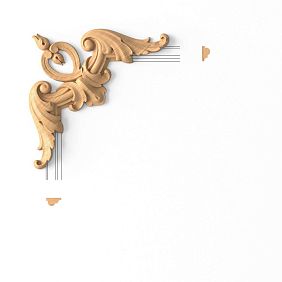
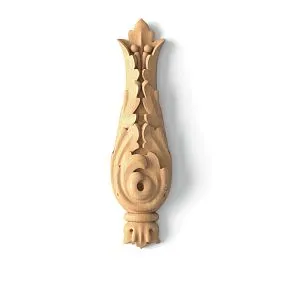


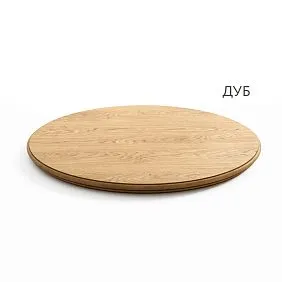
Product range: what is needed for a complete project
Comprehensive interior decoration requires diverse elements, each serving its own function within the overall composition.
Ceiling Molding— ceiling decoration base installed at the junction of wall and ceiling. The assortment should include cornices of different heights — from 50 to 250 millimeters, various profiles — from simple to ornate, different styles — classical, baroque, minimalist. Special cornices with a shelf for hidden lighting — a popular modern solution. Corner elements for cornices simplify installation in room corners.
Wall moldings— decorative strips for creating architectural divisions on walls. Different widths — from 30 to 150 millimeters, different profiles — flat, three-dimensional, with ornamentation. Flexible moldings for curved surfaces — arches, bay windows, columns. Corner elements for joining moldings at different angles.
floor skirting boards— wall finish at the bottom, covering the junction with the floor. Height from 60 to 200 millimeters, different profiles from simple to classical. Flexible baseboards for rounded walls. Corner elements and plugs for neat joints.
decorative rose outlets— central ceiling elements for framing chandeliers. Diameters from 300 to 1000 millimeters and more. Round, oval, square, and shaped forms. Different ornaments — from simple concentric circles to elaborate baroque compositions. Smaller wall-mounted rosettes for framing wall sconces and decorative accents.
Pilasters and half-columns — vertical architectural elements. Complete sets include base, shaft, and capital. Different orders — Doric, Ionic, Corinthian. Height corresponds to standard and raised ceilings. Smooth shafts and fluted shafts (vertical grooves).
Decorative Inserts— carved elements for decorating walls, doors, furniture. Vertical, horizontal, corner. Plant motifs, geometric patterns, shaped compositions. Different sizes — from small medallions to large panels.
Door and window casings — sets of moldings, pediments, and sills for creating architectural portals. Straight and arched variants. Simple and elaborately decorated.
Brackets and consoles — decorative support elements. For shelves, under cornices, corner. Different styles — from classical curved to minimalist triangular.
3D panels — volumetric wall elements with relief. Geometric, organic, abstract patterns. Sizes usually 500x500 or 600x600 millimeters for modular wall cladding.
Facade decoration — elements for exterior building finishing. Cornices, pilasters, window casings, keystone stones, rusts, decorative panels. Polyurethane for facades has increased density and UV stabilization.
Get Consultation
Moldings catalog: how to navigate the variety
Modernmoldings catalogcontains hundreds, sometimes thousands of items. How not to get lost in this variety and find exactly what is needed?
Organization by categories — basic catalog structure. Division into ceiling decoration, wall decoration, floor decoration, architectural elements, facade decoration helps quickly find the required type of items. Within categories — subcategories: in ceiling decoration — cornices, rosettes, coffered panels; in wall decoration — moldings, pilasters, appliqués.
Organization by collections — more advanced approach. A collection unites elements of a single style that are guaranteed to match each other. A collection may include a cornice, moldings of different sizes, a rosette, pilasters, appliqués — all with coordinated ornamentation. Choosing elements from one collection creates a harmonious ensemble without the risk of stylistic mismatches.
Filters by characteristics help narrow the search. Size filter — cornice height, rosette diameter, molding width. Style filter — classical, baroque, modern, minimalism, art deco. Price filter — for working within budget. Material filter — polyurethane, gypsum, polystyrene. Purpose filter — for interior use, for facades, moisture-resistant.
Product detail cards must contain comprehensive information. High-quality photos from different angles, close-up of relief and ornament. Precise dimensions — length, width, height, thickness. Weight — for load calculation and adhesive selection. Material and its characteristics. Area of application. Installation recommendations. Price and availability in stock. Option to order non-standard length or custom decoration.
Visualization in interior — useful tool offered by advanced catalogs. Photos of elements installed in real interiors help assess scale and visual effect. Some catalogs offer 3D visualizers, where you can virtually "try on" elements in your space.
Instructions and guides in the catalog increase its value. Articles on how to choose a cornice for ceiling height, how to calculate the quantity of moldings for wall panels, how to combine elements of different sizes, how to select color. Video installation instructions. Compatibility tables for adhesives with materials.
Ability to create a favorites list and shopping cart simplifies the selection process. You can add liked elements, compare them, form a complete set for the project, and calculate the final cost.
Where to buy in Moscow: choosing a reliable supplier
Moscow offers many options for purchasing moldings and interior finishing materials. How to choose the optimal one?
Specialized manufacturers or official factory dealers — preferred option. They offer a full assortment, control quality, provide warranties, have warehouses with consistent availability of popular items, offer professional consultations. Buying directly from the manufacturer or official partner eliminates the risk of counterfeits, ensures fair prices without excessive intermediary markups.
Construction hypermarkets have decorative elements in their assortment, but selection is usually limited to best-selling items. This is convenient for standard solutions but insufficient for complex designer projects. Hypermarket consultants often lack deep expertise in decoration. Advantage — you can buy other construction materials in one place.
Decor online stores offer convenience of online ordering with delivery. Extensive catalogs, ability to compare prices, customer reviews. However, there is a risk — without seeing the product physically, it is difficult to assess real quality, scale, and visual effect. A good online store compensates for this with high-quality photos, detailed descriptions, option to order samples, or presence of an offline showroom where you can visit before ordering.
Professional decor salons for designers and architects offer premium collections, exclusive elements, services for custom design. Prices are higher, but quality and uniqueness are maximum. This is the choice for elite projects where budget is not limited and aesthetic requirements are exceptionally high.
Markets and small hardware stores offer cheap moldings, often of low quality. Saving money on purchase may result in disappointment — poor relief detail, warped elements, brittleness, short lifespan. Such places are not recommended for serious projects.
Purchase process: from selection to delivery
A properly organized purchasing process saves time, money, nerves, and ensures the desired result.
The planning stage begins even before visiting the store. Measure the room — perimeter for calculating cornices and baseboards, wall height for pilasters, zone sizes for molding panels. Make sketches or find interior references you like. Define the style — this narrows the selection in the catalog. Estimate your budget — how much you’re willing to spend on decoration.
Reviewing the catalog — second stage. Browse the catalogmoldings catalogonline, mark the items you like. Pay attention to collections — if elements are from the same collection, this guarantees stylistic unity. Check the dimensions — do they match your rooms? Compare prices of different elements to see if you stay within budget.
Consultation with specialists — critical stage for first-timers. Contact store consultants — by phone, online chat, or showroom. Describe your project, show sketches, discuss selected elements. A professional consultant will adjust your selection if elements don’t fit in size or style, suggest alternatives, calculate exact quantities accounting for trimming and reserve, recommend adhesive and tools.
Visiting the showroom — desirable stage if possible. Seeing elements in person, assessing scale, touching, comparing several options — this reduces the risk of error. In the showroom, you can see how elements look in interior compositions and get inspiration for your own project.
Final calculation and order — once the selection is made, the consultant calculates the total cost, checks availability in stock, agrees on delivery timelines. Some elements may be in stock, others — custom-made from production. Clarify timelines — when you can pick up or when delivery will occur. Place the order, make a prepayment if required, receive a contract or receipt.
Delivery or self-pickup — final stage. If delivery is chosen, agree on a convenient time and prepare a space for unloading. Moldings must be stored in a dry room in horizontal position. Upon receipt, inspect elements — check for damage, chips, warping. If defects are found, note them in the driver’s presence and contact the store for replacement. For self-pickup, arrange transportation — long cornices and moldings require a suitable vehicle, possibly renting a truck or van.
Additional materials and tools
Buying moldings is not all that is needed for finishing. Additional materials ensure quality installation and final finishing.
Adhesive — critical material. For polyurethane, use special polyurethane adhesives like "liquid nails" with high initial adhesion — from 70 kg/m² for light elements to 100 kg/m² for heavy ones. For plaster — plaster or polymer-based adhesives. It’s important to choose adhesive compatible with the molding material and base surface. Acrylic adhesive for joints ensures airtight connection between elements.
Primer for base surfaces improves adhesive bond. Walls and ceilings are primed before installing moldings. Universal acrylic primer suits most cases.
Joint filler for gaps and joints between elements. Acrylic filler is elastic, doesn’t crack, easily sands. After installation, joints are filled with filler, smoothed, and sanded after drying for perfect smoothness.
Paint for final finish. Water-based acrylic or latex paints are suitable for polyurethane and plaster. Color choice depends on design concept. White paint — classic option. Colored paints allow creating contrasts or tonal transitions. Metallic paints for gilding and silvering. Patina compounds for aging effect.
Installation tools include: circular saw or hacksaw with fine teeth for cutting elements, miter saw for 45-degree cuts, tape measure and level for marking, putty knives for applying adhesive and filler, brushes and rollers for painting, sandpaper for sanding joints.
Installation tools include: a circular saw or fine-toothed hacksaw for cutting elements, a 45-degree miter saw for angled cuts, a tape measure and level for marking, putty knives for applying adhesive and spackle, brushes and rollers for painting, sandpaper for sanding seams.
Saving without compromising quality
Decorative finishing projects can be expensive, but there are ways to optimize the budget without compromising visual results.
Choosing polyurethane instead of plaster — first cost-saving option. Polyurethane elements are 2-3 times cheaper than plaster ones with comparable appearance. Savings are also achieved during installation — polyurethane is easy to install yourself, while plaster requires professionals.
Accent approach instead of full decoration — second strategy. Instead of decorating all walls, focus on the main wall — behind the sofa, bed, fireplace. Minimally decorate other walls — with baseboards and door frame moldings. Decorate the ceiling with cornice and rosette. This creates a luxurious effect at lower costs.
Installation of polyurethane elementsInstallation of polyurethane elementsInstallation is not complicated with basic skills, care, and proper tools. Study instructions, watch video tutorials, don’t rush — and the result will be professional.
DIY painting also saves money. Painting moldings is easy — elements are painted after installation using a roller or spray gun. Quality paint and careful application ensure excellent results without hiring painters.
Bulk purchases for large projects. If decorating multiple rooms or an entire house, order all elements at once. Many suppliers offer bulk discounts for large orders — from 5% to 15% depending on volume.
Participating in promotions and sales. Follow supplier promotions — seasonal sales, discounts on specific collections, loyalty programs. Subscribing to store newsletters informs you of advantageous offers.
Experience shows that many buyers make typical mistakes leading to disappointment, additional costs, and the need to redo work.
Scale error — choosing elements that are too large or too small. A massive cornice in a low room visually presses down, "eating" height. A miniature cornice in a spacious living room disappears, looking disproportionate. Avoid: follow the rule — cornice height is approximately 3-4% of ceiling height. For 2.7-meter ceilings — 80-110 mm. For 3 meters — 90-120 mm. For 3.5 meters and above — 120-200 mm.
Scale error — choosing elements that are too large or too small. A heavy cornice in a low room visually presses down, "eating" the height. A miniature cornice in a spacious living room disappears and looks disproportionate. Avoid: follow the rule — the cornice height should be approximately 3-4% of the ceiling height. For 2.7-meter ceilings — cornices 80-110 mm. For 3-meter ceilings — 90-120 mm. For 3.5 meters and above — 120-200 mm.
Stylistic mismatch — mixing elements of incompatible styles. Baroque cornice with minimalist moldings, classical rosette with modern pilasters. Avoid: choose elements from one collection or at least one stylistic direction. If unsure — consult professionals.
Insufficient reserve — purchasing materials exactly according to calculations without allowance for trimming, possible defects, or future repairs. Result — lack of one meter of cornice, and buying more from the same batch is no longer possible. Avoid: order 10% more than the calculated amount. Extra materials will be useful for repairs or can be returned if the store accepts returns of unused items.
Cutting corners on quality — purchasing cheap, low-quality moldings. Poor relief detail, warping, brittleness result in an inexpensive appearance despite the presence of decor. Avoid: don’t chase the lowest price. QualityPolyurethane Itemshas a reasonable price reflecting the use of quality raw materials and technologies.
Ignoring usage conditions — installing non-water-resistant elements in bathrooms, using facade decor for interiors or vice versa. Avoid: when purchasing, clarify the intended application of elements. For humid areas, choose polyurethane; for facades — special high-density facade polyurethane.
Starting purchases without a plan — chaotic buying of liked elements without an overall concept. Result — elements don’t match, something important is missing, and unnecessary items are purchased. Avoid: start with a sketch, define the style, compile a list of all required elements with dimensions and quantities, then purchase.
Creating a harmonious interior using decorative moldings begins with choosing the right place to buy. A reliable supplier with a full assortment, quality products, professional consultations, and convenient logistics — your partner in implementing the design project. In Moscow, there are companies meeting all these criteria, offeringa catalog of moldings and trim itemsfor any styles and budgets. Spend time studying offers, visit showrooms, consult with specialists — and your interior will achieve architectural refinement, visual completeness, and elegance that professional decorative finishing provides.


