












































































Article Contents:
- What is Polyurethane Molding and Why is it Replacing Plaster
- Polyurethane: The Material of the 21st Century
- Advantages of Polyurethane Over Gypsum
- Disadvantages of Polyurethane (Honestly)
- Types of Polyurethane Molding: Complete Catalog of Elements
- Ceiling Cornices: The Border Between Wall and Ceiling
- Moldings: Universal Linear Elements
- Ceiling Rosettes: The Center of Attention
- Pilasters and Half Columns: Vertical Architecture
- Consoles and Brackets: Decorative Supports
- Corner Elements: Accents at Junctions
- Decorative Panels and 3D Panels: Volume on Walls
- Pediments and Sandriks: Above Doors and Windows
- Friezes and Borders: Horizontal Ornaments
- How to Choose Polyurethane Molding for Your Interior
- Define the Interior Style
- Consider the room's dimensions
- Ceiling Height and Cornice Selection
- Color palette
- Combination with Furniture
- Where to Buy Polyurethane Molding: Market Analysis
- Construction hypermarkets: affordable but limited
- Specialized Molding Salons: More Choice, Higher Prices
- Online Stores: Huge Selection, But No Guarantees
- Buying from the Manufacturer: The Optimal Solution
- STAVROS Molding: Russian Quality at European Level
- STAVROS Polyurethane Molding Catalog
- STAVROS Product Quality
- Advantages of buying from STAVROS
- Polyurethane Molding Installation: Step-by-Step Guide
- Surface Preparation
- Marking
- Cutting Corners
- Adhesive Application
- Temporary fixation until drying
- Filling Joints
- Puttying Minor Defects
- Painting polyurethane molding
- Primer
- Choosing paint
- Painting technique
- Decorative Effects
- Molding and Wooden Furniture: Creating a Harmonious Ensemble
- Stylistic Unity
- Color Harmony
- Scale and proportions
- Frequently Asked Questions About Polyurethane Moldings
- Where to Buy Quality Polyurethane Molding in St. Petersburg?
- How much does polyurethane molding cost?
- Can Polyurethane Stucco Be Used in a Bathroom?
- Is it difficult to install molding yourself?
- Can polyurethane molding be painted?
- Why Is Polyurethane Moldings Better Than Gypsum?
- Does STAVROS Deliver Molding to Regions?
- Can I Order Molding in Non-Standard Sizes?
- Conclusion: Accessible Luxury of Classic Interior

Have you ever noticed that interiors you can't take your eyes off are rarely simple and flat? Palace halls, historic mansions, luxury apartments—they all share one detail: volume. Ceilings are adorned with cornices and rosettes, walls are divided by moldings and pilasters, doorways are framed with portals. This volume creates play of light and shadow, adds depth, transforms an ordinary room into a space with character and history. And if such luxury was once available only to the select few (plaster molding cost a fortune and required months of craftsmen's work), today anyone can afford a classic interior with molding thanks to modern materials.
polyurethane molding— a revolution in the world of interior decor. Lightweight, durable, moisture-resistant, affordable, easy to install—it democratized the classic style, made it achievable for the mass consumer. Now you don't need to own a palace to have ceiling rosettes and cornices. You don't need to hire a team of plasterers and wait six months. Just choose elements from the catalog, order delivery, install over the weekend, and paint in any color.
But where to buy quality polyurethane molding? How not to make a mistake choosing among hundreds of offers? What elements are needed to create a harmonious classic interior? How to properly install and paintPolyurethane Decor? Our article will answer these and other questions—a complete guide to polyurethane molding from selection to implementation.
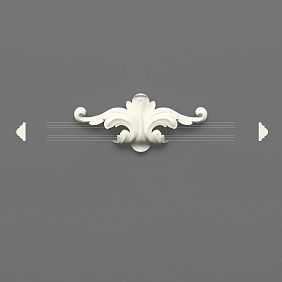
What is polyurethane molding and why is it replacing plaster
Molding—volumetric decorative elements on walls, ceilings, facades. Traditionally made from plaster: a master plasterer would create a mold, pour plaster solution, wait for it to set, attach to the surface, fill joints, paint. The process is labor-intensive, expensive, requiring high skill.




Polyurethane: the material of the 21st century
Polyurethane—a synthetic polymer obtained from the reaction of polyols and isocyanates. Sounds complicated, but the result is simple and clear: a lightweight, durable, elastic material that can be molded into any shape. Polyurethane molding is produced by casting in molds: liquid polyurethane is poured into a silicone mold, sets, extracted—a ready element requiring no additional processing.
Our factory also produces:


Advantages of polyurethane over plaster
Weight: polyurethane is 5-10 times lighter than plaster. A 2-meter cornice in plaster weighs 15-20 kg, in polyurethane—2-3 kg. This is critical for installation: polyurethane molding can be glued with regular adhesive without additional mechanical fastening, it doesn't create load on walls and ceilings.
Durability: plaster is brittle, chips and cracks upon impact. Polyurethane is elastic, withstands impacts, doesn't crumble. If you drop a cornice during installation, plaster will break, polyurethane will remain intact.
Moisture resistance: plaster fears moisture, swells, loses shape. Polyurethane is absolutely moisture-resistant, can be used in bathrooms, kitchens, pools, on facades.
Ease of installation: plaster molding is attached with special compounds, joints are filled, waiting for drying. Polyurethane is glued with polymer adhesive, joints are almost invisible, can be painted immediately after installation.
Price: polyurethane molding is 3-5 times cheaper than plaster of similar complexity. This makes classic interior accessible.
Longevity: polyurethane doesn't age, yellow, or crack over time (unlike plaster, which develops cracks after 10-15 years).
Get Consultation
Disadvantages of polyurethane (honestly)
Artificiality: polyurethane is a synthetic material, not natural like plaster or wood. For some, this matters.
Less expressive texture: plaster molding has a slightly more expressive, lively texture (especially handmade). Polyurethane is smoother, more industrial. But after painting, the difference is practically unnoticeable.
Flammability: polyurethane is flammable (class G3-G4), plaster is non-flammable. But with proper painting using non-flammable paints, this drawback is mitigated.
Conclusion: for 95% of applications, polyurethane is preferable to plaster. Plaster remains the choice of purists, restorers of historical interiors, those willing to pay for authenticity.
Types of polyurethane molding: complete catalog of elements
Polyurethane molding is diverse. Each type of element serves its decorative and functional purposes.
Ceiling cornices: boundary between wall and ceiling
Cornice (cove, ceiling skirting)—a profiled strip attached at the junction of wall and ceiling. Cornice serves several functions:
-
Hides unevenness of wall-ceiling junction
-
Visually raises the ceiling (if cornice is wide and white on colored walls)
-
Creates completeness, frames the ceiling
-
Adds classicism, volume to interior
Cornice sizes: height from 3 cm (minimalist) to 30 cm and more (palatial). For standard apartments with ceilings 2.5-3 m, cornices 8-15 cm high are optimal. For high ceilings (3.5 m and above)—15-25 cm.
Styles: from simple smooth profiles (neoclassical, minimalism) to lavishly decorated with ornaments (baroque, rococo).
Installation: cornice is glued with polymer adhesive to wall and ceiling. Corners are cut at 45 degrees (miter box or miter saw). Joints are filled with acrylic sealant, sanded.
Moldings: universal linear elements
Molding is a profiled strip for decorating walls, doors, and furniture. Moldings are narrower and flatter than cornices; their purpose is to create frames, borders, and visually separate planes.
Application of moldings:
-
Framing wall panels (creating faux panels)
-
Dividing a wall into zones (e.g., the bottom painted one color, the top another, with the border covered by molding)
-
Framing doors, arches
-
Furniture decoration (creating frames on facades)
-
Framing mirrors and pictures
Dimensions: width from 2 cm to 12 cm, thickness 0.5-2 cm.
Styles: from strict straight profiles to ornamented ones.
Ceiling rosettes: the focal point
A ceiling rosette (medallion) is a round or oval element mounted in the center of the ceiling. Traditionally, the rosette serves as a base for a chandelier, covering the wire outlet and mounting point, but most importantly, it creates a focal point, the center of the ceiling composition.
Dimensions: diameter from 20 cm (for small rooms) to 100 cm and more (for halls).
Styles: from simple concentric circles to complex ornaments with leaves, roses, scrolls.
Installation: the rosette is glued to the ceiling with polymer adhesive. A hole for the chandelier wire is cut in the center.
Important: the rosette should be proportionate to the room. In a small room, a huge rosette will look absurd. In a large hall, a small rosette will get lost.
Pilasters and half-columns: vertical architecture
A pilaster is a vertical element imitating a column but not load-bearing (unlike a real column). A half-column is a protruding half of a column from the wall. These elements add architectural and monumental qualities to the interior.
Application:
-
Framing doorways, arches
-
Dividing a wall into sections
-
Decorating a fireplace portal
-
Creating visual supports (e.g., in room corners)
Structure: a pilaster consists of three parts: base (bottom foundation), shaft (central part), capital (top). The shaft can be smooth or with flutes (vertical grooves).
Styles: Doric (simple capital), Ionic (capital with scrolls), Corinthian (capital with acanthus leaves).
Consoles and brackets: decorative supports
A console is an S-shaped element imitating a support for protruding parts (cornices, shelves, balconies). In interiors, consoles are purely decorative but visually create a sense of support.
Application:
-
Under a cornice (creating the impression that the cornice rests on consoles)
-
Under shelves, windowsills
-
Decorating a fireplace portal
-
Framing arches
Dimensions: height from 10 cm to 50 cm.
Styles: from strict classical to lavish Baroque with scrolls and ornaments.
Corner elements: accents at joints
Corner elements are decorative overlays for room corners, cornice joints, and panel framing. They hide joints, add accents, and simplify installation (no need to miter corners at 45 degrees; a ready-made corner element can be used).
Application:
-
Corners of ceiling cornices (instead of mitering)
-
Corners of wall panels
-
Door frame corners
Decorative panels and 3D panels: volume on walls
Polyurethane 3D panels are relief square or rectangular elements that are mounted on the wall, creating a three-dimensional pattern. Panels can imitate leather, fabric, geometric ornaments, or plant motifs.
Application:
-
Accent wall in the bedroom (headboard area)
-
Wall in the living room (behind the sofa, behind the TV)
-
Hallway, corridor decor
-
Walls of restaurants, offices, commercial spaces
Sizes: usually 50×50 cm or 60×60 cm squares.
Effect: 3D panels create expressive texture, play of light and shadow, making the wall not flat but three-dimensional.
Pediments and sandriks: above doors and windows
Pediment (sandrik) is a triangular or arched element that is mounted above a door or window, imitating a classic architectural element. Pediments add solemnity and significance to the opening.
Application:
-
Above the entrance door (in interior or on facade)
-
Above interior doors in classic interiors
-
Above windows (less common, mainly on facades)
Styles: triangular (classicism), arched (baroque), with a central break for decoration.
Friezes and borders: horizontal ornaments
Frieze is a narrow strip with a repeating ornament, used for horizontal wall decoration, zone separation.
Application:
-
Horizontal wall division (e.g., at 1 meter height from the floor)
-
Panel framing
-
Decor under ceiling cornice
-
Door, window framing
Ornaments: plant-based (grapevine, leaves), geometric (meander, braid), abstract.
How to choose polyurethane molding for your interior
Choosing molding is not just buying beautiful elements. You need to consider the interior style, room dimensions, color scheme, and functionality.
Determine the interior style
Classicism: strict symmetrical cornices with geometric profiles, rosettes with concentric circles or laurel wreaths, pilasters with Ionic or Corinthian capitals, restrained moldings.
Baroque: lavish cornices with ornaments, large rosettes with scrolls and acanthus leaves, S-shaped consoles with carvings, moldings with plant motifs.
Empire: strict cornices, rosettes with heraldic symbols (eagles, laurel wreaths), Doric pilasters, moldings with military attributes (swords, shields).
Neoclassicism: clean lines, moderate decor, symmetry, neutral colors. Medium-width cornices, simple-shaped rosettes, restrained moldings.
Provence, shabby chic: light cornices, small rosettes with floral motifs, subtle moldings, often painted white or in pastel tones with a distressed effect.
Modern classic: minimal decor, emphasis on material quality and form restraint. Simple cornices, moldings for creating wall panels, without rosettes and pilasters (or very restrained).
Consider the room dimensions
Small rooms (up to 15 sq.m): avoid massive molding. Cornice no wider than 8 cm, rosettes up to 40 cm in diameter, moldings thin. Excess decor will overwhelm the space.
Medium rooms (15-30 sq.m): cornices 8-15 cm, rosettes 40-60 cm, you can use moldings to create wall panels, pilasters in corners or near doors.
Large rooms, halls (30+ sq.m): wide cornices 15-25 cm, large rosettes 60-100 cm, pilasters, consoles, friezes, complex molding compositions. In large spaces, small decor will get lost.
Ceiling height and cornice selection
Low ceilings (2.4-2.7 m): narrow cornices (5-8 cm), light-colored, preferably white. A wide cornice will visually lower the ceiling even further.
Standard ceilings (2.7-3 m): cornices 8-12 cm — the golden mean.
High ceilings (3+ m): cornices 12-25 cm. Here you can and should use wide cornices, otherwise they will get lost.
Tip: if you want to visually raise the ceiling, paint the cornice and ceiling the same color (white), and the walls a different color. The 'wall-ceiling' boundary will shift downward, to the lower edge of the cornice, making the ceiling appear higher.
Color palette
White molding: classic, universal. White cornices, moldings, rosettes suit walls of any color. White refreshes, adds purity, contrast.
Molding in wall color: creates a monochrome, sophisticated interior. The decor is perceived not through color contrast, but through the play of light and shadow on the relief. This is a more refined, intellectual approach.
Contrast molding: dark molding on light walls or light on dark. Creates a dramatic, expressive look. But requires flawless installation — all imperfections are visible on contrast.
Gold/silver molding: for luxurious interiors. Cornices, rosettes, moldings with gilding or patination. It's important not to overdo it — gold should be an accent, not dominant.
Combination with furniture
If the interior featuresClassic Furnituresolid wood furniture with carved elements, the molding should echo its style. If the furniture is Baroque, opulent — the molding should be corresponding. If the furniture is neoclassical, restrained — the molding should also be laconic.
Color harmony: if the furniture is dark (wenge, stained oak) and the molding is white, contrast arises. If the furniture is light (bleached oak, white painted), it's better to make the molding light too — creating a soft, airy interior.
Where to buy polyurethane molding: market analysis
The polyurethane molding market in Russia is extensive. There are imported manufacturers (European, Chinese) and Russian ones. Prices vary from very low to high. Quality also varies.
Construction hypermarkets: accessible but limited
Leroy Merlin, OBI, Castorama have molding departments. Assortment: several dozen positions of cornices, moldings, rosettes. Predominantly simple shapes, mass-market demand.
Advantages:
-
Accessibility (many stores)
-
Can buy immediately, see in person
-
Relatively low prices
Disadvantages:
-
Limited selection (20-50 items, mostly basic)
-
Average quality (often Chinese products)
-
No exclusive, complex elements
-
Lack of professional consultations
Conclusion: suitable for simple projects when a standard cornice or molding is needed.
Specialized molding salons: more selection, higher prices
In large cities (Moscow, St. Petersburg) there are salons specializing in molding. They offer a wider assortment, including imported collections.
Advantages:
-
Wide selection (hundreds of items)
-
Quality products (European brands)
-
Professional consultations
-
Samples can be viewed
-
Installation services
Disadvantages:
-
High prices (showroom as intermediary, markup 50-100%)
-
Limited geography (mainly capital cities)
-
Often long delivery times (if item is out of stock)
Conclusion: a good option for those in Moscow or St. Petersburg, willing to overpay for service and selection.
Online stores: huge selection, but without guarantees
Marketplaces and specialized sites offer thousands of polyurethane molding items from dozens of sellers.
Advantages:
-
Huge selection
-
Competitive prices
-
Convenient ordering
-
Delivery across the entire country
Disadvantages:
-
Impossible to assess quality before purchase (photos often don't match reality)
-
A lot of low-quality products (thin polyurethane, unclear relief)
-
Difficulties with returns (bulky goods)
-
Lack of consultations
Conclusion: can be used for searching and comparing, but buy cautiously after studying reviews.
Buying from the manufacturer: optimal solution
Purchasing molding directly from the manufacturer is the most sensible option. You get factory quality, full catalog, prices without markups, professional support.
Advantages:
-
Manufacturer's price (30-50% lower than retail)
-
Quality guarantee
-
Full range
-
Professional consultations
-
Delivery organized by the manufacturer
-
Possibility of custom orders
Disadvantages:
-
Need to order remotely (not always a showroom in your city)
-
Possible production lead times (if a rare element is needed)
Conclusion: best option for price/quality/service ratio.
STAVROS Molding: Russian quality at European level
STAVROS is a Russian manufacturer of decorative elements made from polyurethane and solid wood. Production is located in Russia, allowing for quality control and ensuring fast delivery across the country.
STAVROS Polyurethane Molding Catalog
STAVROS offers a complete range of elements for creatingclassic interior:
Ceiling cornices: over 50 models of various widths (from 5 to 25 cm), styles (from minimalist to Baroque), profiles. Smooth and with ornaments, symmetrical and asymmetrical.
Moldings: dozens of options for walls, doors, furniture. Narrow (2-3 cm) for delicate framing, wide (8-12 cm) for large-scale wall panels.
Ceiling rosettes: from modest 30 cm to large-scale 80 cm in diameter. Simple geometric, floral, with scrolls, with roses and leaves.
Pilasters and half-columns: full set (base, shaft, capital) in various styles (Doric, Ionic, Corinthian). Height from 1.5 to 3 meters.
Corbels and brackets: S-shaped, straight, with ornaments. From compact 10 cm to large-scale 40 cm in height.
Corner elements: for cornices, moldings, panels. Simplify installation, add accents.
3D panels: relief panels with geometric and floral patterns for creating accent walls.
Decorative overlays: elements for furniture and doors —Where to buy stuccofor decorating cabinets, dressers, doors.
STAVROS Product Quality
Material: high-quality European-made polyurethane (raw materials from German and Italian suppliers). Density 250-300 kg/m³ — a high indicator ensuring strength and clarity of relief.
Technology: casting in high-precision silicone molds. Molds are made based on samples selected from historical interiors or developed by STAVROS designers. This guarantees authenticity of ornaments and high detail.
Finish: elements are supplied white, primed, ready for painting. Surface is smooth, without bubbles, cavities, or drips — defects are excluded by multi-stage quality control.
Geometry: all elements have correct geometry, right angles, even planes. This is critical for installation — joints must be perfect.
Advantages of buying from STAVROS
Price:Where to buy polyurethane moldingsat manufacturer's price — 30-50% lower than in retail showrooms. A cornice that costs 1500 rubles for 2 meters in a showroom is 800-1000 rubles at STAVROS.
Assortment: full catalog of hundreds of items. Everything needed for a classic interior, in one place.
Consultations: STAVROS specialists will help select elements for your project, calculate quantities, advise on optimal sizes. This is a free service that saves time and money.
Delivery: STAVROS organizes delivery throughout Russia. Elements are packaged in shrink wrap and cardboard boxes, preventing damage during transportation. Delivery to Moscow and St. Petersburg — 1-2 days, to regions — 3-7 days.
Custom orders: if the catalog does not have the needed element, STAVROS can manufacture it according to your sample or sketch. A mold is created, and a batch is produced. Minimum order quantity is discussed individually.
Completeness: STAVROS offers not only molding but also everything necessary for installation: glue, sealants, paints, primers. You can order everything in one place.
Installation of Polyurethane Molding: Step-by-Step Guide
Installing polyurethane molding does not require professional skills. With basic tools and care, you can do everything yourself.
Surface preparation
The surface (wall, ceiling) to which the molding will be attached must be clean, dry, and strong. Remove old wallpaper, peeling paint, dust. If the wall is uneven, level it with putty. Polyurethane molding is flexible and can follow minor irregularities, but a perfectly even surface will ensure the best result.
Prime the surface with deep-penetration primer. This will improve the adhesion of the glue.
Marking
Before installation, apply markings. For ceiling cornice: measure down from the ceiling the height of the cornice, draw a line around the perimeter of the room (use a laser level or water level — the line must be strictly horizontal). This is the lower boundary of the cornice.
For moldings on walls: mark the position of frames, panels. Use a tape measure, level, pencil.
Cutting Corners
Corners of cornices and moldings are cut at a 45-degree angle. Use a miter box (plastic or wooden box with slots at different angles) and a fine-toothed saw. Or a miter saw (if available).
Important: internal and external corners are cut differently. Internal corner: right plank - cut on the left, left plank - cut on the right. External corner: the opposite. Practice on scraps before cutting the main elements.
Alternative: use ready-made corner elements (if available in the catalog). They are glued into the corners, planks are butted up to them - no cutting is needed.
Adhesion
Apply adhesive to the back of the element. Use polymer mounting adhesive (e.g., liquid nails, Titebond, Moment Montage). Apply adhesive in a zigzag pattern or dots along the entire length of the adjacent planes (for cornices - planes adjacent to the wall and ceiling).
Press the element against the surface, aligning it with the markings. Hold for 30-60 seconds (adhesive setting time). If the element is long (2-meter cornice), work with an assistant.
Immediately remove excess adhesive squeezed out along the edges with a damp cloth.
Fixation during drying time
Polyurethane molding is lightweight, but until the adhesive is completely dry (usually 24 hours), it may slide or detach. Secure the elements with painter's tape, sticking it to the molding and wall/ceiling. Or use thin nails (finishing nails, without heads), driving them into inconspicuous places (holes will be filled later).
Filling joints
After the adhesive dries, fill the joints between elements with acrylic sealant (white or paintable). Squeeze sealant from the tube (use a sealant gun), remove excess with a spatula or wet finger. Sealant closes micro-gaps, making joints invisible.
Also fill gaps between the molding and wall/ceiling with sealant (if the surface is uneven and gaps have formed).
After the sealant dries (24 hours), sand the joints with fine sandpaper for perfect smoothness.
Puttying minor defects
If small dents, nail holes, or unevenness remain - fill them with acrylic putty. Sand after drying.
Painting polyurethane moldings
Polyurethane molding comes white, but it can be painted any color.
Primer
Before painting, prime the molding with acrylic primer. This improves paint adhesion, makes the color more even, and reduces paint consumption. Apply primer with a brush or roller (for large areas - spray gun).
Paint Selection
Use water-based acrylic or latex paints. They are odorless, dry quickly, safe, and provide even coverage.
Matte paint: hides minor unevenness, defects. Suitable for ceiling cornices, moldings.
Semi-matte, satin: light silky sheen, easier to clean. Suitable for elements that may get dirty (moldings at hand level).
Glossy: bright shine, but highlights all defects. Used rarely, for creating special effects.
Painting Technique
Apply paint with a brush or roller in 2-3 coats. First coat - primer, may be uneven. Second and third coats - finishing, provide dense coverage. Between coats - drying (usually 2-4 hours).
For relief elements (rosettes with deep ornamentation) use a brush to paint all recesses.
Decorative Effects
Patination: base coat (e.g., white), over it - dark patina (gray, brown, black), applied with a brush and immediately partially wiped off with a cloth. Patina remains in the recesses of the relief, emphasizing the ornament.
Gilding: base coat (white or colored), over it - gold paint or imitation gold leaf, applied with a brush to the protruding parts of the relief. Creates a luxurious effect.
Wood imitation: molding can be painted in wood color, imitating wood carving. Use acrylic paints with wood texture or glazing compounds.
Stone, marble effect: special painting techniques with multiple colors, creating the illusion of marble or stone surface.
Molding and wooden furniture: creating a harmonious ensemble
If the interior features classic wooden furniture (chests of drawers, sideboards, tables, beds made of solid wood with carved elements), the molding should harmonize with it.
Stylistic unity
The style of molding and furniture should match. If the furniture is Baroque, with lush carvings, twisted legs, gilding - the molding should be corresponding: wide cornices with ornaments, large rosettes, consoles, pilasters.
If the furniture is Neoclassical, restrained, with clear lines - the molding should be laconic: simple cornices, small rosettes, geometric moldings.
Color Harmony
White molding + dark furniture: classic contrasting combination. White cornices, moldings on light walls + dark furniture made of stained oak, wenge. Creates a clear, expressive composition.
White molding + light furniture: a soft, airy combination. White molding + white or light wood furniture (whitewashed oak, ash) + light walls. The interior becomes light, filled with light.
Molding in the color of the furniture: a complex but effective solution. The molding is painted the color of the furniture wood (e.g., walnut, oak). An illusion is created that the molding is also wooden. The interior becomes cohesive, monolithic.
Gilded molding + gilded furniture: for luxurious interiors. Both the molding and the furniture have gilded elements. It's important not to overdo it — gold should be a measured accent.
Scale and proportions
If the furniture is massive, large, the molding should be corresponding — wide cornices, large rosettes. If the furniture is delicate, miniature — the molding should be delicate.
Imbalance (heavy furniture + thin molding or light furniture + massive molding) creates disharmony.
Frequently Asked Questions about Polyurethane Moldings
Where to buy quality polyurethane molding in St. Petersburg?
The best option is to order from the manufacturer STAVROS with delivery to St. Petersburg. Delivery takes 1-2 days, prices are lower than in local showrooms, selection is wider. Orders are placed via the website or by phone.
How much does polyurethane molding cost?
Prices depend on the type of element and its size. Ceiling cornice 10 cm wide — from 250-400 rubles for 2 meters. Rosette 40 cm in diameter — from 600-1200 rubles. Pilaster 2 meters high — from 3000-6000 rubles. Exact prices are listed in the STAVROS catalog.
Can polyurethane molding be used in a bathroom?
Yes, polyurethane is completely moisture-resistant. It can be used in bathrooms, showers, swimming pools. The main thing is to paint it with moisture-resistant paint (latex or acrylic for wet areas).
Is it difficult to install moldings yourself?
No, installing polyurethane molding does not require professional skills. Basic tools are needed (miter box, saw, glue, spatula), care, and time. Detailed instructions are available on the STAVROS website.
Can polyurethane molding be painted?
Yes, polyurethane molding can be painted with any water-based paints (acrylic, latex). It can also be patinated, gilded, and decorative effects can be created.
Why is polyurethane molding better than gypsum?
Polyurethane is 5-10 times lighter, stronger, moisture-resistant, easier to install, cheaper. Gypsum molding only has an advantage in authenticity (for restoring historical interiors).
Does STAVROS deliver molding to the regions?
Yes, STAVROS delivers throughout Russia. Elements are packed securely and shipped by transport companies. Delivery times: Moscow, St. Petersburg — 1-2 days, regions — 3-7 days depending on distance.
Can I order molding of a non-standard size?
Yes, STAVROS fulfills custom orders. If you need an element of a non-standard size or unique design, contact the company, provide a sketch or description. A mold will be made and a batch produced.
Conclusion: affordable luxury of a classic interior
A classic interior with molding is not a privilege of palaces and museums. It is an accessible reality for everyone who values beauty, elegance, volume, and depth of space. Polyurethane molding has democratized classic style, made it achievable without months of work by plasterers and astronomical budgets. Today, over a weekend, you can transform an ordinary apartment by adding ceiling cornices, wall moldings, a rosette around the chandelier — and the interior will sparkle anew, gaining nobility and character.
But it's important to choose quality molding. Thin polyurethane with unclear relief, crooked geometry, defects will not decorate but ruin the interior. Buying from a serious manufacturer is a guarantee of quality, durability, and beauty.
Company STAVROS is a Russian manufacturer of decorative elements from polyurethane and solid wood, combining European quality and affordable prices. STAVROS produces molding on modern equipment from quality raw materials, controls every stage from mold creation to packaging of the finished product. The result is elements with clear relief, correct geometry, smooth surface, which are easy to install and look excellent after painting.
The STAVROS catalog includes hundreds of itemsof polyurethane molding: from simple cornices to luxurious ceiling rosettes, from laconic moldings to large-scale pilasters with capitals. Any style — from strict classicism to lush baroque — will find its elements here. And if a unique design is needed, STAVROS will make a custom mold and produce an element specifically for your project.
By purchasingbuying moldingfrom STAVROS, you save significant funds (prices are 30-50% lower than retail showrooms), receive professional consultations (specialists will help select elements, calculate quantity, advise on installation and painting), fast delivery throughout Russia (Moscow, St. Petersburg — 1-2 days, regions — 3-7 days), and a quality guarantee from the manufacturer.
The STAVROS website is not just a product catalog, it's an educational resource. Here you will find detailed descriptions of each element with photos, dimensions, application recommendations. There are articles about styles, installation, decoration. Here you can ask a specialist a question and get a detailed professional answer. STAVROS doesn't just sell molding — the company helps create beautiful interiors.
A classic interior with molding is an investment in the beauty and comfort of your home. It's an atmosphere that doesn't get boring, a style that never goes out of fashion, elegance that delights every day. And starting to create such an interior is easier than it seems: just go to the STAVROS website, select elements, place an order — and in a few days, you'll have everything you need to transform your space at home. Don't postpone beauty for later. A classic interior with molding from STAVROS is affordable luxury that you deserve today!


