












































































Article Contents:
- Revolution in the world of facade decoration
- From plaster to polyurethane: evolution of materials
- Why quality matters
- Geography of quality decoration: map of reliable sources
- Major production centers
- Retail networks and specialized stores
- Online platforms: new reality of shopping
- Criteria for Professional Selection
- Technical specifications: what the numbers mean
- Geometric accuracy and surface quality
- Certification and quality standards
- Product range matrix: navigating the world of forms
- Moldings: universal elements of architectural language
- Cornices: crowning elements of architectural composition
- Pilasters and columns: vertical dominance of the facade
- Trim and frames: accents of architectural composition
- Technological secrets of quality production
- Raw Material Base: Foundation of Quality
- Molding: the art of precision
- Casting process: chemistry in action
- Economic purchasing strategy
- Pricing: decoding cost
- Seasonal fluctuations and optimal purchase timing
- Wholesale and retail strategies
- Logistical Solutions and Delivery
- Transportation specifics of decorative elements
- Warehouse Infrastructure
- Digital transformation of logistics
- Installation solutions: from theory to practice
- Preparatory work: the foundation of success
- Adhesive systems: chemistry of reliable bonding
- Mechanical fastening: redundancy of reliability
- Stylistic Directions and Design Solutions
- Classicism: eternal harmony of proportions
- Baroque: theatricality in architecture
- Modernism: natural forms in architecture
- Art Deco: Geometric Luxury
- Frequently Asked Questions
- How to distinguish quality polyurethane from counterfeit?
- How much does quality facade decoration cost?
- Can polyurethane decoration be installed in winter?
- What warranties do manufacturers provide?
- How to choose a reliable supplier?

In modern construction, there is no more exciting moment than when bare walls transform into an architectural masterpiece. And the first question that arises for every homeowner or architect —Where to buy facade decorationThis question seems simple at first glance. Behind it lies a whole world of technologies, materials, styles, and manufacturers. The wrong choice can lead to years of disappointment — crumbling plaster, cracked moldings, faded paint. The right solution will turn your home into an object of admiration for decades.
Revolution in the world of facade decoration
From plaster to polyurethane: evolution of materials




The times when
Times whenpolyurethane productswere considered cheap imitation have long passed. Modern science has created a material that surpasses traditional solutions in all parameters. The density of quality architectural polyurethane reaches 600-800 kg/m³ — comparable to hardwoods, yet the material does not rot, crack, or become a target for insects.
The secret lies in a special production technology developed by American scientists in the 1970s. Two components — polyol and isocyanate — when mixed, create an exothermic reaction resulting in polyurethane foam. But the real magic begins when this mixture is poured into closed molds under high pressure.
Imagine the process: liquid components, heated to 40-60°C, are mixed with the precision of a chemical laboratory, then under pressure of up to 5 atmospheres, fill metal molds. The foaming reaction occurs in a confined space, creating a material with a unique gradient structure — a dense surface for perfect detailing and a lighter core to reduce weight.
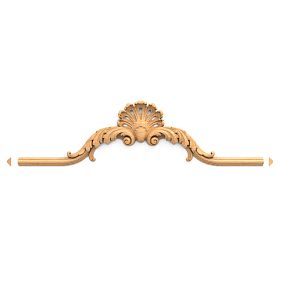
Our factory also produces:


Why quality matters
When the questionWhere to buy facade decorationarises, many make a fatal mistake by focusing exclusively on price. Cheap items made from low-quality polyurethane have a porous structure, low density, and unstable chemical composition. Within 2-3 years, such decoration begins to yellow, crumble, and peel off the walls.
Quality polyurethane has a closed-pore structure with pore size less than 100 microns. Water absorption does not exceed 1.5% by volume — this is dozens of times less than in plaster or porous concrete. The coefficient of thermal expansion is 70×10⁻⁶ m/(m·K), which prevents cracking during temperature fluctuations from -40°C to +60°C.
ModernMoldings and cornicesare produced using UV stabilizers, antioxidants, and flame retardants. These additives protect the material from destructive effects of sunlight, oxygen, and fire. Quality decoration retains its original appearance for 25-30 years even in aggressive climatic conditions.
Get Consultation
Geography of quality decoration: map of reliable sources
Major production centers
Russian industryfacade decorationare concentrated in several key regions, each with its own advantages. The Moscow region leads in production volume due to proximity to the largest market and well-developed transportation infrastructure. Here are factories of leading domestic and foreign manufacturers.
Leningrad Oblast specializes in high-tech production of the premium segment. Proximity to Baltic ports ensures access to quality imported raw materials — European polyisocyanates and polyols. St. Petersburg factories are known for strict adherence to technological regulations and high product quality.
The Volga region develops mass production with optimal price-to-quality ratio. Presence of its own petrochemical base ensures stable supply of raw materials and competitive pricing.
Southern regions of Russia specialize in products with enhanced resistance to ultraviolet radiation and high temperatures. Local manufacturers have developed special formulations adapted to hot climates.
Retail networks and specialized stores
Federal construction hypermarkets offer a wide range ofdecorative elementsin various price categories. Advantages — product availability in stock, ability to compare different options, qualified specialist consultations. Disadvantages — limited selection of exclusive items, standardized approach.
Specialized architectural decoration boutiques operate in the premium market segment. Here you can find unique collections, receive professional designer consultation, order custom-made elements based on individual sketches. Such boutiques often work directly with manufacturers, guaranteeing authenticity and quality of products.
Regional dealer centers combine the advantages of large networks and personalized service. They deeply understand local climate characteristics, construction traditions, and customer preferences. Many dealers offer comprehensive services — from design to installation.
Online platforms: new reality of purchasing
The digital revolution has fundamentally changed the ways of purchasing construction materials. Online stores offer huge catalogs with detailed technical specifications, high-resolution photos, and customer reviews. Interactive calculators help calculate the required amount of materials with precision down to the unit.
Virtual showrooms use augmented reality technology, allowing you to "try on" different decoration options on your facade. Special mobile applications let you photograph a building and see how a particular design option will look.
B2B e-platforms connect buyers directly with manufacturers, eliminating intermediary markups. Here you can find unique offers, get wholesale discounts, order custom-made non-standard items.
Criteria for professional selection
Technical specifications: what the numbers mean
Material density — the first and most important indicator of quality. Architectural polyurethane must have a density of at least 400 kg/m³ for interior use and 600 kg/m³ for facade decoration. Lighter items have a porous structure and low strength.
The compressive strength of quality material is 25-35 MPa, comparable to some concrete grades. At the same time, polyurethane retains a certain elasticity, allowing it to withstand foundation deformations without damage.
Water absorption is a critical parameter for facade applications. Quality polyurethane absorbs no more than 1.5% water by volume due to its closed-cell structure. This is significantly less than traditional materials — gypsum, cement mortar, porous concrete.
Freeze resistance is determined by the number of freeze-thaw cycles the material withstands without damage. Quality products endure at least 300 cycles, corresponding to 20-25 years of service life in a moderate climate.
Geometric accuracy and surface quality
Modernproduction technologiesensure geometric accuracy of products with tolerances of ±1-2 mm for standard elements and ±0.5 mm for precision items. This is critically important for quality installation — inaccurate dimensions result in visible seams, unevenness, and additional fitting work.
Surface quality is assessed by several parameters: absence of pores and cracks, uniform color, clear relief detail. The surface layer must be dense and smooth, free of foreign particles.
Geometric stability is verified by measuring products after storage at various temperatures and humidity levels. Quality polyurethane does not deform, warp, or lose its original dimensions.
Certification and quality standards
Certificate of conformity is a mandatory document for any construction materials. It confirms that the product meets state standards for safety, environmental friendliness, and technical specifications.
Test protocols contain detailed information on the material's physical and mechanical properties: density, strength, water absorption, freeze resistance, fire safety. Serious manufacturers conduct tests in accredited laboratories.
Environmental certifications confirm the safety of materials for human health and the environment. Quality polyurethane contains no formaldehyde, heavy metals, or ozone-depleting substances.
ISO certification of the quality management system guarantees stable product characteristics, adherence to technological regulations, and continuous process improvement.
Product matrix: navigation through the world of forms
Moldings: universal elements of architectural language
Moldings made of polyurethaneform the basis of any decorative composition. Their variety is impressive — from the simplest rectangular profiles to complex multi-tiered compositions with classical fragments.
Simple moldings with rectangular or square cross-sections are ideal for modern minimalist architecture. Sizes range from miniature 10×5 mm to substantial 200×100 mm. Such profiles create clear lines, emphasize facade geometry, and serve as transition elements between different materials.
Classical moldings reproduce historical profiles — gusset, cove, bead, ogee. These elements have been tested over centuries and harmoniously integrate into traditional architecture. Modern molding technologies allow reproducing antique profiles with museum-grade accuracy.
Decorative moldings are adorned with ornaments — botanical motifs, geometric patterns, stylized elements. Such items transform an ordinary facade into a work of art, creating a unique architectural image.
Cornices: crowning elements of architectural composition
A cornice is not just decoration — it is a functional element protecting walls from atmospheric precipitation.Polyurethane cornicesThey weigh several times less than stone equivalents, without creating additional load on load-bearing structures.
Simple cornices with straight profiles are suitable for modern buildings where functionality and minimalist forms are valued. The projection from the wall is 50-300 mm, providing effective protection of the facade from rain.
Profiled cornices with classical fragments create rich light-and-shadow modeling. Doric, Ionic, and Corinthian profiles differ in proportions and degree of ornamentation. Each order has strictly defined size ratios — deviation from them destroys the composition's harmony.
Modular cornices consist of several elements, simplifying transportation and installation of large items. The connection system ensures perfectly flat joints without visible seams.
Pilasters and columns: vertical dominance of the facade
Vertical elements create grandeur, emphasize the height of the building, and organize the rhythm of the facade.Polyurethane pilastersconsist of three main parts: base, shaft, and capital. Each part has strictly defined proportions according to classical canons.
Tuscan pilasters are characterized by simplicity and formality. Smooth shaft without decoration, simple rectangular base, minimalist capital — such elements are universal for various architectural styles.
Ionic pilasters are adorned with characteristic volutes on capitals and fluting on shafts. Elegant proportions and refined details create a sense of lightness and elegance.
Corinthian pilasters are the pinnacle of ornamentation in classical architecture. Richly ornamented capitals with acanthus leaves, complex bases, and decorated shafts require the highest level of craftsmanship.
Casings and frames: accents of architectural composition
Window and door openings require decorative trim that not only enhances the facade but also protects joints from moisture ingress.Polyurethane trimThey impress with a variety of forms and styles.
Flat trim with simple geometry suits minimalist architecture. Width varies from 50 to 300 mm, allowing proportions to be tailored to any opening. Such elements create clear contours, emphasizing the building's geometry.
Profiled trim with various breaks creates expressive play of light and shadow. Classic profiles — quarter-round, gusset, cove — have been proven over centuries of architectural use.
Decorative trim is adorned with ornaments, rosettes, and mascarons. Plant motifs, geometric patterns, and historical elements transform ordinary openings into works of art.
Technological secrets of quality production
Raw Material Base: The Foundation of Quality
The quality of finished products is determined by 70% of the quality of raw materials. Main components — polyols and isocyanates — are produced by large chemical corporations using strictly controlled technologies.
Polyols are complex esters of polyalcohols and acids. Their molecular mass, functionality, and water content critically affect the properties of the final material. High-quality polyols have low moisture content (less than 0.05%), stable viscosity, and no mechanical impurities.
Isocyanates are highly reactive compounds containing active NCO groups. They determine the reaction rate, mechanical properties, and chemical resistance of polyurethane. The NCO group content must correspond to the stoichiometric ratio with the hydroxyl groups of the polyol.
Catalysts control the speed and direction of chemical reactions. Amine catalysts accelerate foam-forming reactions, organometallic catalysts — polymerization reactions. Proper selection of the catalytic system ensures optimal material structure.
Stabilizers protect polyurethane from destructive external factors. UV absorbers absorb ultraviolet radiation, antioxidants prevent oxidative degradation, and flame retardants increase fire resistance.
Molding: the art of precision
Manufacturing molds for casting is a separate high-tech industry. Mold material must withstand high pressure from expanding foam, accurately transfer the finest relief details, and have low adhesion to polyurethane.
Metal molds are made from high-strength steel or aluminum alloys. Working surfaces are machined with high precision and polished to a mirror finish. Such molds serve tens of thousands of cycles, ensuring geometric stability of the products.
Silicone molds are used for items with complex relief. Silicone accurately reproduces all details of the master model, has low adhesion, and is easily removed. The drawback is relatively short service life — about 1000 cycles.
Composite molds combine the advantages of metal and silicone — strength, durability, and precision in detail transfer. A fiberglass frame provides rigidity, while a polyurethane or epoxy matrix ensures smooth surface finish.
Casting process: chemistry in action
Component preparation begins with heating to working temperature 20–25°C. The polyol component is thoroughly mixed for homogenization of composition and removal of possible precipitates. The isocyanate component is filtered to remove mechanical impurities.
Dosage is performed with precision ±1% by volume or mass. Modern pouring machines are equipped with electronic control systems ensuring stoichiometric component ratios. Deviations from specified proportions lead to material property failure.
Mixing is performed in high-speed mixers at 3000–6000 rpm for 5–15 seconds. Proper mixing is critical for material homogeneity. Insufficient mixing leads to non-uniform structure, while excessive mixing causes premature reaction initiation.
Pouring into molds occurs under pressure of 1–5 atmospheres depending on the item’s complexity. Rapid pouring ensures complete filling of all mold details before intensive foaming begins. Pouring time is 30–120 seconds.
Curing occurs at 40–80°C for 10–30 minutes. The exothermic reaction heats the material, accelerating polymerization. Temperature control ensures optimal structure and properties of the finished product.
Economic purchasing strategy
Pricing: cost breakdown
Pricefacade decorationIt consists of several components: raw materials (40–60%), energy costs (15–20%), labor payment (10–15%), equipment depreciation (5–10%), overheads and profit (15–25%). Understanding cost structure helps objectively evaluate price offers.
Raw materials are the main cost item. Prices for polyols and isocyanates depend on global oil and petroleum product quotations. High-quality European raw materials cost 20–30% more than Chinese analogs but provide significantly better properties of finished products.
Energy costs include electricity for equipment, heat for component and mold preheating, and compressed air for pneumatic systems. Modern energy-efficient technologies allow reducing these costs by 25–35%.
Labor costs depend on production automation level and product complexity. High-tech factories with robotic lines have minimal manual labor, reducing cost and improving quality stability.
Seasonal fluctuations and optimal purchasing time
The construction materials market is subject to pronounced seasonal fluctuations. Understanding these patterns will help significantly save money when purchasing.decorative elements.
Spring demand peaks in March-May, when the active construction season begins. Prices reach their maximum, delivery times increase, and the likelihood of discounts decreases. However, new collections and technological solutions appear in spring.
The summer period is characterized by stable prices and good material availability. Manufacturers operate at full capacity, warehouses are replenished, and competition among suppliers intensifies. This is the optimal time for large purchases with the possibility of substantial discounts.
The autumn decline begins in September-October. Construction companies complete seasonal projects, demand decreases. Manufacturers and dealers strive to clear warehouses, offering discounts up to 20-30% off summer prices.
The winter minimum lasts from December to February. Prices reach their annual minimum, but selection may be limited by remaining stock. This is the ideal time to purchase materials for spring-summer installation.
Wholesale and retail strategies
Purchase volume significantly affects the final cost of materials. Wholesale discounts start at orders of 50-100 thousand rubles and can reach 40-50% off retail prices for volumes exceeding one million rubles.
Minimum wholesale orders typically consist of 500-1000 linear meters for linear items or 10-20 pieces for individual items. Large manufacturers offer flexible discount systems depending on volume, buyer status, and payment terms.
Group purchases allow individual buyers to obtain wholesale prices. Organizing such purchases through online communities, construction forums, and neighborhood chats is becoming increasingly popular.
Dealer programs offer regular buyers special conditions: increased discounts, payment deferrals, free delivery, technical support. Some manufacturers provide dealers with exclusive collections.
Logistical solutions and delivery
Special features of transporting decorative elements
polyurethane productsRequire special transportation conditions due to their relative fragility and sensitivity to mechanical damage. Improper transportation may result in chips, cracks, or deformations that only become apparent after installation.
Packaging plays a critical role in preserving cargo integrity. Each item is wrapped in protective film, padded with soft material, and placed in individual compartments. Long items are packed in special rigid containers to prevent bending and deformation.
Transportation must be equipped with shock absorption systems, moisture protection, and temperature control. Specialized carriers use vehicles with pneumatic suspension, soft sides, and various types of securing systems.
Routing considers road conditions, dimensional and weight restrictions, and warehouse receiving schedules. Modern logistics systems optimize routes in real-time, taking into account traffic jams, roadworks, and weather conditions.
Warehouse infrastructure
Modern warehouse complexes are high-tech facilities with automated storage and handling systems. Climate control maintains optimal temperature (15-25°C) and humidity (40-60%), preventing material deformation.
Address-based storage allows instant retrieval of any item among tens of thousands of positions. Barcodes and RFID tags contain complete product information: article number, batch, manufacturing date, specifications. Automated warehouse management systems (WMS) optimize item placement and retrieval.
Robotic systems ensure fast and accurate order fulfillment. Robotic loaders move goods along predefined routes, automated cranes service high racks, conveyor systems transport goods to dispatch points.
Warehouse quality control includes incoming goods inspection, periodic inventories, and storage condition checks. Any defects are recorded in a database, defective items are isolated and returned to the manufacturer.
Digital transformation of logistics
The Internet of Things (IoT) transforms routine warehouse operations into intelligent processes. Sensors monitor temperature, humidity, lighting, and vibrations. Smart racks report on item movement, automatically update stock levels, and generate replenishment requests.
Blockchain technologies ensure full transparency of supply chains. Each product batch receives a unique digital passport containing information on raw material origin, production conditions, quality control results, and delivery routes.
Artificial intelligence analyzes historical data and forecasts demand with high accuracy. Machine learning identifies hidden patterns in buyer behavior, optimizes inventory, prevents shortages and overstocking.
Mobile applications provide buyers with full control over orders. In real-time, you can track order processing status, cargo location, and estimated delivery time. Push notifications inform about key events — dispatch, arrival at the warehouse, readiness for delivery.
Installation solutions: from theory to practice
Preparatory work: the foundation of success
Quality of installationfacade decorationSurface preparation accounts for 80% of installation success. The surface must be flat, strong, dry, and free of dust, dirt, peeling coatings, efflorescence, and grease stains.
Foundation strength is assessed using the standard disk pull-off method. Minimum allowable strength is 0.5 MPa for light elements and 1.0 MPa for heavy items. Weak areas are reinforced with deep-penetration primers or removed until reaching a strong layer.
Unevenness is leveled using plaster or putty compounds. Permissible deviations from flatness should not exceed 3 mm per 1 meter of length. Large unevenness creates uneven loads on adhesive joints, leading to premature failure.
Priming improves adhesive bond strength and reduces moisture absorption of the substrate. Primer selection depends on surface type: acrylics for concrete, silicate for brick, and adhesive primers for old paint.
Adhesive systems: chemistry of reliable bonding
Modern adhesives forpolyurethane decorrepresent high-tech compositions ensuring strong and durable bonding. Main types: polyurethane, hybrid, acrylic — each has its advantages and applications.
Polyurethane adhesives provide chemical bonding with decorative material, creating a practically monolithic connection. The bonding strength exceeds the strength of the polyurethane itself. Setting time is 5-15 minutes, full strength is achieved within 24-48 hours.
MS-polymer adhesives combine the strength of polyurethanes with the elasticity of silicones. They compensate for thermal deformations, are UV-resistant, and contain no isocyanates. Such adhesives are ideal for large elements subjected to significant thermal deformation.
Epoxy adhesives provide maximum bonding strength but require precise mixing ratios. They are used for critical structures operating under high loads.
Water-based acrylic adhesives are safe to use, odorless, and dry quickly. They are used for interior work and lightweight outdoor decorative elements.
Mechanical fastening: redundancy for reliability
Additional mechanical fastening is mandatory for elements weighing more than 10 kg or exposed to significant wind loads. Modern fastening systems provide secure fixation without compromising the decor's aesthetics.
Hidden fastening is performed through the rear surface of the element at a 45° angle. Holes are drilled with special drill bits that prevent chipping and cracking. Screws are made of stainless steel with anti-corrosion coating.
Anchoring fastening is used for particularly heavy elements — cornices, balustrades, columns. Chemical anchors provide a holding strength of up to 50 kN per anchor. The quantity and placement of anchors are calculated according to building codes.
Clamp systems allow for disassembly of elements without damaging the decor or substrate. Special brackets are mounted to the wall, and the decor is secured with clips or screws. Such systems are used for expensive or unique items.
Stylistic directions and design solutions
Classicism: eternal harmony of proportions
The classical style remains the benchmark of architectural beauty for several centuries.Decor in the classical styleis based on strict proportional relationships borrowed from ancient architecture.
Core principles of classicism: symmetry, proportionality, use of the order system, restrained ornamentation. Each element has a precisely defined place within the overall composition, adheres to a unified concept, and harmonizes with adjacent details.
The Doric order is characterized by strictness and monumentality. Massive columns without bases, simple capitals, triglyph-metope friezes create a sense of reliability and solidity. Modern interpretations of the Doric order often simplify details while preserving overall proportions.
The Ionic order is more elegant and decorative. Characteristic volutes on capitals, fluted column shafts, richly profiled cornices create a sense of lightness and elegance. Ionic elements are ideal for residential buildings.
The Corinthian order is the pinnacle of classical ornamentation. Luxurious capitals with acanthus leaves, complex entablatures, rich profiles require the highest level of craftsmanship. Modern technologies allow reproducing Corinthian details with jewel-like precision.
Baroque: theatricality in architecture
The Baroque style brought movement, emotion, and theatricality to architecture.Baroque decoris characterized by complex forms, rich ornamentation, and play of light and shadow.
Key features of Baroque: curved forms, abundance of decoration, contrast, dynamic compositions. Baroque facades are rich with decorative elements — pilasters, cornices, pediments, cartouches, mascarons.
Plant motifs are the hallmark of Baroque. Acanthus leaves, grapevines, floral garlands create a sense of natural organicism. Modern casting technologies allow reproducing the most complex plant compositions.
Cartouches and mascarons add individuality to Baroque facades. These decorative elements may carry symbolic meaning, reflect the building's purpose, or emphasize the owner's status.
Broken pediments are a characteristic feature of Baroque architecture. Classical triangular pediments are broken in the center, creating space for decorative vases, statues, or coats of arms. Such elements introduce dynamism into the rigid geometry of classical forms.
Modern: natural forms in architecture
The Modern style revolutionized architectural thinking, abandoning historical stylization in favor of natural forms.Decoration in the Modern styleis characterized by smooth lines, asymmetrical compositions, and organic forms.
Plant motifs are the foundation of Modernist decor. Stylized flowers, leaves, branches create a sense of organic connection between architecture and nature. Popular motifs include irises, lilies, foxgloves, and grapevines.
Animalistic elements — birds, insects, marine creatures — are frequently found in Modern decor. Dragonflies, butterflies, owls are transformed into decorative elements while retaining recognizability and symbolic meaning.
Asymmetrical compositions distinguish Modernism from classical styles. Decorative elements are placed freely, creating a sense of natural growth. This apparent chaos requires refined artistic sensitivity to achieve harmony.
Fluid forms imitate the movement of water, flame, and growing shoots. Modern casting technologies allow creating the most complex curved forms, inaccessible to traditional materials.
Art Deco: geometric luxury
The Art Deco style emerged in the 1920s-30s as a reaction against the organic forms of Modernism.Art Deco style decorcombines geometric strictness with the luxury of materials and finishes.
Geometric motifs — zigzags, rhombuses, chevrons, stepped forms — create dynamic compositions. Simple geometric elements combine into complex patterns, creating a sense of movement and energy.
Egyptian motifs became popular after the discovery of Tutankhamun's tomb. Pyramids, sphinxes, hieroglyphs, and sun disks introduce the exoticism of ancient civilizations into architecture.
Art Deco stylized plant elements are more geometric and stylized than modernist ones. Leaves transform into symmetrical patterns, flowers simplify into symbolic representations.
Industrial motifs reflect the spirit of the machine age. Gears, bolts, and rails become sources of inspiration for decorative elements. This approach emphasizes the connection between architecture and technological progress.
Frequently asked questions
How to distinguish quality polyurethane from counterfeit?
Qualitypolyurethane decorHas a uniform fine-pored structure without voids or inclusions. Surface is smooth, without shells or bulges. Color is uniform, without spots or streaks. The product has sufficient density — not less than 400 kg/m³ for interior and 600 kg/m³ for facade applications.
Counterfeits usually have a coarse-pored structure, low density, uneven surface with visible defects. They may have an unpleasant odor, unstable dimensions, poor relief detail. Serious manufacturers provide quality certificates and test results.
How much does quality facade decor cost?
Prices forFacade DecorationPrices vary significantly depending on the complexity of the items, order volume, and delivery region. Simple moldings cost 150–500 rubles per linear meter, complex cornices — 800–2000 rubles per meter, individual elements — 500–5000 rubles per piece.
Saving on material quality inevitably leads to additional expenses in the future. Cheap items quickly lose their appearance, requiring frequent repairs or complete replacement. Quality decor lasts 25–30 years with minimal maintenance costs.
Can polyurethane decoration be installed in winter?
Installationpolyurethane decorInstallation is possible at temperatures not lower than -10°C using special frost-resistant adhesives. However, winter installation requires additional measures — heating the substrates, protection from precipitation, and using heat blankets for particularly critical areas.
The optimal temperature for installation is +5°C and above. At this temperature, adhesive compositions achieve maximum strength, condensation is avoided, and temperature-related material deformations are minimized.
What warranties do manufacturers provide?
Leading manufacturers provide a 10–15 year warranty on the material if installation and usage conditions are met. The warranty covers material defects — delamination, cracks, geometric changes — but does not cover damage from mechanical impacts or improper installation.
Installation companies typically provide a 2–3 year warranty on completed work. An extended warranty of 5–7 years may be offered when using an integrated solution — materials and installation from one company.
How to choose a reliable supplier?
A reliable supplier should have official registration, licenses for trading construction materials, dealer certificates from manufacturers. Important are real customer reviews, portfolio of completed projects, and technical support from specialists.
Beware of suppliers,


