












































































Article Contents:
- Criteria for choosing a theater decoration supplier
- Portfolio and experience
- Production base
- Materials and Technologies
- Timeline and logistics
- Types of theater decorations: what the market offers
- Foam decorations: budget solution
- Textile decorations: softness and mobility
- Wooden decorations: classic of professional theater
- Combined decorations: optimization of possibilities
- Price range: from budget to premium
- Budget segment (up to 100,000 rubles)
- Mid-range segment (100,000 - 500,000 rubles)
- Premium segment (from 500,000 rubles)
- Features of ordering theater decorations
- Stage 1: Concept and sketches
- Stage 2: Technical Design
- Stage 3: Production
- Stage 4: Delivery and installation
- Where to find manufacturers in Moscow
- Specialized companies
- Furniture and carpentry manufacturers
- Wood carving workshops
- Private artisans
- Frequently Asked Questions
- How much does a set of theater decorations cost?
- How long does it take to make theater decorations?
- What documents are needed to order decorations?
- Can you buy ready-made theater decorations?
- What materials are best for theater decorations?
- How to care for wooden theater decorations?
- Who makes sketches for theater decorations?
- Are certificates required for theater decorations?
- Can theater decorations be rented instead of purchased?
- How to check the quality of decorations upon acceptance?
- Conclusion: STAVROS — Craftsmanship Proven by Time

Searching for quality theater decorations in Moscow resembles a quest. The market is fragmented: here operate large manufacturers and individual artisans, specialized factories and general workshops. Prices range from several thousand to millions of rubles per set. Quality varies from amateur crafts to museum-level standards.Order theater decorationsFinding the right quality within the deadline and budget — a task requiring an understanding of the market.
Theater does not tolerate compromises. Poor-quality decorations shatter the illusion, reveal their cheapness under stage lights, and fall apart after a few assemblies. Investing in professional decorations pays off through longevity, visual impact, and absence of operational issues. But where to find a manufacturer combining craftsmanship, technology, reasonable prices, and reliability?
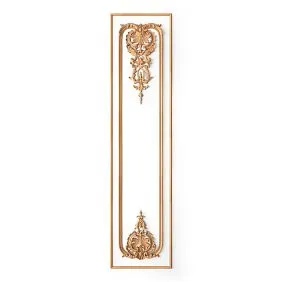
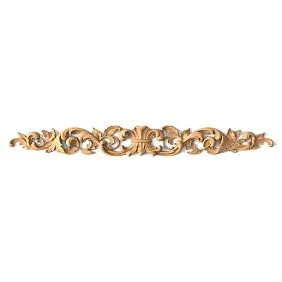
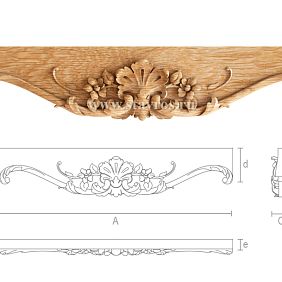
Premium segment —carved theater decormade from solid wood with delicate artistic finishing, intricate painting, gilding, and patination.



Criteria for selecting theater decoration suppliers
A professional manufacturer differs from an amateur by a set of characteristics that manifest at every stage of work.




Portfolio and experience
The first thing to study is the company's portfolio. Photos of completed projects tell more than any advertising promises. Pay attention to variety: does the company work only with one style or master multiple techniques? Are there projects for well-known theaters — this indicates the level of trust within the professional community.
Experience is measured not only in years but also in the number of completed projects. A company that has created decorations for hundreds of performances has accumulated a knowledge base, refined technologies, and understands typical problems and their solutions. A young studio may be talented, but experience is built over years.
Theater reviews are a valuable source of information. The professional community is small, and reputation spreads quickly. If a theater is satisfied with the supplier's work, it recommends them to colleagues. If dissatisfied, it warns others. Request contacts of previous clients and speak directly with them.
Our factory also produces:



Production base
In-house production — guarantee of quality and delivery control. Companies working through subcontractors lose control over the process. Delays, deviations from sketches, and quality issues occur more frequently when the manufacturer cannot physically oversee each stage.
Equipment determines capabilities. CNC routers allow creating complex reliefs with millimeter precision. Laser cutters cut delicate lace-like elements. Turning machines produce perfectly shaped round parts. Painting booths ensure even coating without dust or drips. Lack of modern equipment limits the complexity and quality of products.
Craftsman qualifications — the foundation of quality. Carpenters must feel wood, carvers must master tools virtuosically, artists must understand the specifics of theatrical painting. Professionals cost more, but it is precisely their work that distinguishes a masterpiece from a craft project. Companies that cut corners on craftsmen inevitably lose out on quality.
Get Consultation
Materials and technologies
Material quality determines the longevity of products. Birch plywood is stronger than coniferous wood. Linden solid wood for carving provides clean lines, oak solid wood — durability. Water-based acrylic paints are safe and resistant to fading. Cheap alternatives save pennies but create problems: warping, cracking, color loss.
Processing technologies affect the result. Kiln-drying wood to 8-10% moisture content prevents deformation. Multi-layer painting with intermediate sanding provides depth of color. Fire-retardant treatment performed according to regulations ensures fire safety. Simplifying technologies for speed inevitably affects quality.
Quality control at every stage eliminates defects. Material inspection before production start, geometric control after manufacturing, connection strength testing, final finish inspection — all are standards of professional production. Companies that cut corners on control produce defective products.
Deadlines and logistics
Realistic deadlines — a sign of professionalism. Promising to manufacture a complex set of decorations in one week either indicates a lack of understanding of the process or a willingness to sacrifice quality. A professional will estimate the realistic deadline, taking into account technological limitations and production workload.
Adhering to deadlines is critically important for theaters. A premiere is not postponed due to decoration delays. A manufacturer missing deadlines lets down the entire team. Project management systems, time reserves, and streamlined logistics ensure obligations are met. Feedback on deadline adherence — an important selection criterion.
Delivery and installation require professionalism. Fragile carved elements must be packed specially, large-scale structures — loaded correctly. Stage installation must be performed by people who understand the specifics of theatrical space.Buy theater decorations for stage in Moscowwith delivery and installation — a comprehensive solution that removes headaches for the client.
Types of theater decorations: what the market offers
The Moscow market offers scenery made from different materials, for various budgets and purposes. Understanding the capabilities and limitations of each type helps make the right choice.
Foam scenery: budget solution
Polystyrene has gained popularity due to its low cost and fast production. Laser cutting or thermoforming allows creating volumetric elements in hours. The material's lightness simplifies transportation and installation. Prices start from 2000-3000 rubles per square meter for flat scenery, 5000-10000 rubles for volumetric elements.
But polystyrene has significant drawbacks. Fragility is the main disadvantage. Impact, pressure, or careless handling leave dents and chips. For theaters with intensive use and frequent installations, this is a problem. Polystyrene crumbles, forming small particles that clog the stage. The surface requires careful preparation — spackling, priming, multi-layer painting — otherwise, the characteristic grainy texture becomes visible.
Polystyrene's fire hazard requires mandatory treatment with fire-retardants. Untreated polystyrene ignites easily and releases toxic gases when burning. Certified fire-retardants solve the problem but increase the cost of items. Cheap manufacturers cut corners on treatment, creating risks.
Polystyrene is optimal for short-term projects: one-off concerts, corporate events, exhibitions. For permanent repertory theaters, where scenery is used for months and years, polystyrene is not the best choice. Savings result in constant repairs and premature replacement.
Textile scenery: softness and mobility
Textile scenery — a long-standing theatrical tradition. Painted backdrops, draperies, soft structures create atmosphere, are easily transported, and compactly stored. Modern digital printing on fabric allows applying photorealistic images of any complexity. Prices start from 1500-2500 rubles per square meter for banner fabric printing, 3000-5000 rubles for theatrical gabardine or moleskin.
Textile scenery is versatile. A 6×4 meter backdrop folds into a compact roll, weighs only a few kilograms, and can be installed in minutes. For touring theaters and outdoor productions, this is an ideal solution. Fabric drapes to create volumetric forms, concealing stage technical elements.
But textile has limitations. It cannot create rigid architectural structures. Columns, staircases, volumetric constructions from fabric cannot be made. Fabric sags and flutters in the wind, sometimes undesirably. Dirt, dust, and light spots require regular cleaning. Fire-retardant treatment of fabrics — a mandatory requirement, periodically renewed.
Textile works well in combination with rigid scenery. A wooden frame creates structure, fabric fills surfaces, draperies add softness. Such a combination optimizes budget and provides artistic flexibility.
Wooden scenery: classic of professional theater
Wood — traditional and most versatile material for theatrical scenery. It combines strength, ease of processing, durability, and the possibility of fine artistic finishing.Order theater decorationsWood — means obtaining a professional solution, proven over centuries.
Structural elements — frames, beams, stands, supports — are made from coniferous timber (pine, spruce) or birch. Prices for simple stands start from 15000-25000 rubles per unit depending on size and complexity. Flat scenery made of 6-10 mm thick plywood on supports costs 8000-15000 rubles per element 2-2.5 meters high.
Architectural elements — columns, pilasters, arches, cornices — require more complex processing. A smooth column 3 meters high with a simple capital and base costs 30000-50000 rubles. A column with fluting and decorated capital — 60000-100000 rubles. A Corinthian column with richly carved capital — 120000 rubles and above.
carved theater decor— the pinnacle of craftsmanship. Carved panels, capitals, cornices with ornamentation, decorative elements with fine detailing create the visual luxury that distinguishes professional stage design. Prices depend on carving complexity, size, and wood species: from 50000-80000 rubles per square meter for medium relief to 150000-300000 rubles per square meter for high relief with fine details.
Wood allows creating scenery of any complexity. Full-scale pavilions with interiors, building facades, complex architectural compositions — all are realized in wood. Properly made wooden scenery lasts for decades, survives hundreds of performances, maintaining visual quality.
Combined scenery: optimization of capabilities
Professional scenery often uses combinations of materials, optimizing the balance of quality/price/functionality. Wooden frames provide strength, plywood cladding — smooth surfaces, textile inserts — softness, carved wooden elements — artistic expressiveness.
For example, a palace interior may have wooden columns and pilasters, plywood walls with painting, textile draperies, carved wooden cornices and moldings. Such a solution is cheaper than solid-wood construction but retains visual richness and strength.
Metal frames combined with wooden finishes are used for large structures requiring increased strength. Metal creates the load-bearing structure, wood — the visual shell. This is optimal for tall columns, large-span arches, multi-level constructions.
Price range: from budget to premium
Understanding market prices helps plan the budget and evaluate the adequacy of suppliers' offers.
Budget segment (up to 100,000 rubles)
This range includes simple scenery for small productions:
-
Set of flat plywood scenery (3-5 elements) with simple painting — 50000-80000 rubles
-
Textile backdrop 4×3 meters with digital printing — 15000-25000 rubles
-
Foam scenery for one-time events — 30000-70000 rubles per set
-
Simple curtain for puppet theater with basic design — 40000-60000 rubles
Budget decorations are suitable for kindergartens, school theaters, amateur groups, short-term projects. Quality is sufficient for non-critical use, but not for professional stages with intensive performance schedules.
Mid-range segment (100,000 - 500,000 rubles)
Main market for professional theater decorations:
-
Set of wooden decorations for chamber performances (7-10 medium-complexity elements) — 150,000-300,000 rubles
-
Pavilion decoration with architectural elements (columns, arches, practice walls) — 250,000-450,000 rubles
-
Carved columns or pilasters (set of 4-6 pieces) with decorative elements — 200,000-400,000 rubles
-
Combined decorations (wood + textile + painting) for full-scale performances — 300,000-500,000 rubles
This segment provides professional quality at a reasonable cost. Decorations are durable, artistically expressive, meet safety requirements. Optimal choice for municipal theaters, private theatrical projects, productions with limited budgets.
Premium segment (from 500,000 rubles)
Museum-level decorations for responsible productions:
-
Full-scale pavilion withcarved decoration for theater, intricate painting, gilding — from 800,000 rubles
-
Set of Corinthian columns (6-8 pieces) with carved capitals made of solid wood — from 1,000,000 rubles
-
Palace interior with panels, carved cornices, moldings, parquet — from 1,500,000 rubles
-
Historical interior reconstruction with authentic details — from 2,000,000 rubles
Premium decorations are created for state theaters, major commercial projects, productions with large budgets. Here, the best craftsmen work, expensive materials are used, simplifications are not allowed. The result is a visual masterpiece, worthy of filming, publications, and professional recognition.
Features of ordering theater decorations
The process of creating theater decorations is more complex than purchasing ready-made items. It is a project requiring collaboration between the stage designer, the manufacturer, and the theater’s technical staff.
Stage 1: Concept and sketches
Everything begins with an artistic concept. The stage designer creates sketches visualizing their vision. Sketches show the overall stage appearance, individual decorative elements, color palette, and stylistic direction. At this stage, key decisions are made: which materials to use, which technologies to apply, and within what budget to work.
The meeting between the stage designer and the manufacturer is a key moment. The manufacturer assesses the feasibility of the ideas, proposes technical solutions, and estimates the approximate cost. An experienced manufacturer may suggest alternatives that optimize the budget without compromising the artistic effect.
Adjusting sketches according to technical and budgetary constraints is standard practice. An ideal artistic solution is not always feasible within the budget or technical capabilities of the stage. Constructive dialogue between the designer and manufacturer finds a compromise that preserves the artistic concept while ensuring technical feasibility.
Stage 2: Technical design
Approved sketches are handed over to drafters. Detailed drawings with dimensions, connection joints, and material specifications are created. Loads are calculated, structural stability is verified, and transportation and installation methods are planned.
For complex decorations, 1:10 or 1:20 scale models are created. The model allows viewing the three-dimensional composition, assessing proportions, and checking the relative positioning of elements. Sometimes the model helps identify problems not visible on flat sketches.
Technical documentation must be coordinated with the theater. The theater’s technical director checks whether the decorations match the stage’s capabilities: whether elements fit within the stage’s dimensions, whether they do not exceed the allowable load on the stage floor, and whether there are attachment points for hanging elements. Identified issues are resolved by adjusting the project.
Stage 3: Production
Manufacturing begins after full documentation approval and deposit payment (usually 50-70%). Production time depends on complexity: simple decorations are ready in 3-4 weeks, complex ones take 2-3 months.
Production oversight is desirable. The stage designer or theater representative periodically visits the production site, evaluates intermediate results, and makes adjustments. This prevents unpleasant surprises at the final stage.
Acceptance of finished decorations is conducted at the manufacturer’s facility. Compliance with sketches, manufacturing and finishing quality, completeness, and absence of defects are checked. Identified shortcomings are corrected before shipment. After acceptance, final payment is calculated and shipment is arranged.
Transporting theatrical decorations requires care. Fragile elements are individually wrapped in bubble wrap, cardboard, and wooden frames. Large-scale structures are disassembled for transport and packed with impact protection.
Installation on stage is performed by manufacturer specialists in collaboration with the theater's technical staff. Elements are assembled according to the installation plan, stability and reliability of fasteners are checked, and alignment with the artistic concept is verified. Minor adjustments and on-site fitting are standard practice.
The technical staff of the theater receives final instruction. Manufacturer specialists explain how to properly assemble and dismantle decorations, how to store and maintain them. Installation plans, fastener lists, and operational recommendations are provided.
Where to find manufacturers in Moscow
Where to find manufacturers in Moscow
The Moscow market for theatrical decorations includes various players with different specializations and levels.
Specialized companies
Several Moscow companies specialize exclusively in theatrical decorations. They understand the specifics, have accumulated experience, and have developed technologies. Advantages: specialized expertise, understanding of theater needs, streamlined processes. Disadvantages: sometimes higher prices due to narrow specialization, limited flexibility for non-standard tasks.
Furniture and woodworking factories
Furniture and woodworking production
Many companies producing furniture and woodworking items take on theatrical decorations as an additional direction. Advantages: strong technical base, experience working with wood, often lower prices. Disadvantages: not always understanding of theater specifics, absence of theater painters skilled in theatrical painting techniques.
When working with furniture makers, it is important to clearly define requirements, control the process, and possibly involve your own artist for final finishing.Buy theater decorations for stage in MoscowWorking with woodworking factories is advantageous if there is a clear technical specification and quality control.
Wood carving workshops
Manufacturersof carved theater decoration— a separate category. High-artistic carving requires special skills, mastered by few. Interestingly, the best carvers often work on church decoration — iconostases, altarpieces, church interiors. The technologies and skill levels applied in church carving are fully applicable to theatrical decorations.
Church carving is the pinnacle of woodworking art. Iconostases require meticulous detailing, deep relief, and complex ornamentation. Masters creating church decorations master all classical carving techniques, know traditions, and understand the symbolism of ornamentation. These same skills are in demand in theaters, especially for historical productions requiring authentic decoration.
Companies specializing in church decoration often have excellent production facilities, experienced carvers, and art restorers. Their products are museum-quality. For theaters staging performances where historical authenticity and artistic excellence of carved decoration are crucial, collaboration with such workshops is the optimal solution.
Private artisans
Individual artists-decorators and generalists offer their services. Advantages: personalized approach, flexibility, sometimes lower prices due to absence of overhead costs. Disadvantages: limited production capabilities (cannot handle large projects alone), risk of missed deadlines, absence of legal guarantees.
Working with private artisans is optimal for small projects, exclusive elements requiring handcrafting. For large sets of decorations, companies with production facilities and teams are preferable.
Frequently asked questions
How much does a set of theatrical decorations cost?
Cost depends on scale, complexity, and materials. A simple set for a chamber performance with 5-7 elements costs from 80,000 to 150,000 rubles. A medium set for a full production with architectural elements — 250,000 to 500,000 rubles. A complex pavilion with carved decoration, painting, and gilding — from 800,000 rubles and above. Exact price is calculated after developing sketches and technical specifications. Preliminary estimation is possible based on similar items from the manufacturer’s portfolio.
How long does it take to manufacture theatrical decorations?
Timeline depends on complexity and factory workload. Simple decorations take 3-4 weeks. Medium-complexity sets require 6-8 weeks. Complex decorations with carving, fine painting, and gilding take 2-3 months. Orders should be planned at least 2 months before premiere, ideally 3-4 months in advance. Rush production is possible with a 30-50% markup, but is limited by technological processes — some stages require time.
What documents are needed to order decorations?
For budget organizations (state theaters, schools, kindergartens), a contract, technical specification, and approved estimate are required. The manufacturer prepares a commercial proposal, coordinates it with the client, and signs a supply contract. For private clients, the process is simpler — a contract and advance payment suffice. Fire safety certificates and material compliance certificates are provided by the manufacturer upon request.
Can you buy ready-made theatrical decorations?
Few manufacturers offer ready-made decorations, mostly standard elements for kindergartens and schools: trees, houses, screens for puppet theaters. Professional theatrical decorations are almost always custom-made for a specific performance. Sometimes theaters sell decorations from withdrawn productions — such offers can be tracked. However, using someone else’s decorations limits artistic freedom and is suitable only if the style matches the concept.
What materials are better for theater decorations?
Wood is a universal and optimal material. Strong, durable, safe, allows any artistic treatment. Foam is suitable for short-term projects with limited budgets. Textile is good for backdrops, drapery, touring decorations. Metal is used for frames requiring high strength. Optimal — combination of materials, where each is used for its purpose. Choice depends on budget, service life, artistic goal.
How to care for wooden theatrical sets?
Store in a dry room at 15-25°C and 40-60% humidity. Regularly clean with a dry soft cloth. For stains, damp cleaning with slightly damp (not wet) cloth is allowed. Avoid impacts, drops, storage in damp cellars. Promptly repair damage — reattach loose parts, touch up scratches. Every 1-3 years, renew fire-retardant treatment according to certificate. With proper care, wooden decorations last 15-20 years or more.
Who creates stage set sketches?
The stage set sketches are created by the stage designer — the key figure in visual solution development. If the theater does not have a permanent stage designer or wishes to hire an external specialist, a freelancer can be engaged. Some set manufacturers offer designer services — convenient for small theaters and amateur groups. Sketch development cost ranges from 30,000–50,000 rubles for a simple show to 150,000–300,000 rubles for complex productions with multiple scenes.
Are certificates required for stage decorations?
Stage decorations must comply with fire safety requirements. Wooden elements are treated with fire-retardant compounds, and treatment is certified with a fire resistance class (must be at least G1). Textile is impregnated with fire-retardants certified for use. During inspections, fire safety authorities may request documentation. The manufacturer must provide certificates with the decorations. Absence of documents constitutes a violation, potentially resulting in fines and prohibition of use.
Can stage decorations be rented instead of purchased?
Some manufacturers and specialized companies offer decoration rentals. This is cost-effective for one-time performances or short-term projects. Rental cost is typically 10–15% of the item’s price per month plus a deposit (50–100% of price). For shows lasting more than six months, purchasing is more cost-effective than renting. Rental’s drawback — limited selection of ready-made decorations, inability to fully adapt to a specific concept. Advantage — cost savings for short-term needs.
How to check decoration quality upon acceptance?
Check compliance with sketches and technical specifications. Inspect finish quality — even paint application, absence of drips or undercoats, clear painting. Check joint strength — wobbling or load testing reveals weak points. Inspect edges and ends — they must be processed, without sharp edges. Check completeness — presence of all ordered elements, fasteners, assembly diagrams. Test stability — decorations must not tip over under reasonable forces. All identified defects are recorded in an act and rectified before final payment.
Conclusion: STAVROS — craftsmanship proven by time
Order theater decorationsHigh-quality production in Moscow — a task requiring careful selection of a manufacturer. The market offers many options, but only a few companies combine deep material understanding, mastery of classical techniques, modern technologies, and impeccable reputation.
Theater demands a special approach. Here, every detail is visible, every carelessness stands out. The stage under powerful spotlights mercilessly reveals defects that might go unnoticed in a regular interior.Buy theater decorations for stage in MoscowA manufacturer who understands this specificity and is ready to meet high quality standards is required.
carved theater decor— the pinnacle of woodworking art, where technical skill and artistic sense converge. Creating complex carved elements requires years of experience, deep material understanding, mastery of classical techniques — not taught from textbooks — passed down from master to master.
STAVROS occupies a special place in the Moscow market. This is a manufacturer for whom working with wood — is not a business, but a calling. A company where every item is created with understanding of responsibility to the client and respect for the material.
STAVROS specializes in manufacturing high-quality solid wood items. The company works on the most complex projects requiring flawless execution. Participation inreconstruction of the Alexandrovsky Palace— a museum-level project — demonstrated STAVROS’s capabilities. Reconstructing lost historical interiors from archival sources required extreme precision, mastery of traditional techniques, and ability to create items indistinguishable from historical originals.
If STAVROS can handle tasks of such level, then theater decorations for the company — are well within its capabilities. Moreover, experience working withchurch decorationmakes STAVROS a unique partner for theaters staging historical plays requiring authentic carved decorations.
Church carving and theater decorations have more in common than might appear. Both fields require the highest level of craftsmanship, deep understanding of traditions, ability to create artistically expressive forms. Techniques used in iconostases — relief and three-dimensional carving, gilding, patination, fine detailing — are fully applicable to theater decorations. Masters creating church interiors possess the entire arsenal of classical woodworking techniques.
STAVROS has its own production equipped with the most modern equipment. CNC routers of the latest generation create the most complex 3D forms with precision down to tenths of a millimeter. Laser cutters cut delicate lace-like elements. Computer-controlled lathes turn perfect columns and balusters. Painting chambers ensure flawless finish coating.
But STAVROS’s greatest wealth — is its people. Experienced carpenters, virtuoso carvers, talented stage designers, skilled technicians. For them, quality — is not merely a client’s requirement, but an inner necessity. STAVROS masters cannot work poorly — it contradicts their nature.
STAVROS understands the specifics of theater decorations. The company knows that theater structures must be not only beautiful, but also strong, lightweight, easy to assemble. That carved elements must be clearly visible from a distance, retain expressiveness under strong lighting. That premiere deadlines are sacred, and delays are unacceptable.
STAVROS’s work begins with careful study of the artistic concept. Company specialists meet with the stage designer, discuss the concept, propose technical solutions optimizing the balance between artistic effect and budget. STAVROS’s experience allows finding solutions the client never suspected.
STAVROS’s constructors create detailed technical documentation, calculate loads, plan logistics. Theater decorations often require transportation, so the structure must be disassemblable, but joints — reliable. STAVROS finds optimal solutions combining mobility and strength.
Production at STAVROS is controlled at every stage. Material inspection before production start, geometry control after processing, final finish inspection — a multi-level quality system eliminates defects. Each item passes through the hands of a master personally responsible for the result.
Artistic finishing at STAVROS is performed by highly qualified specialists. Marble imitation painting, imitation of valuable wood species, patination, gilding — all classical theater decoration techniques are applied with perfection. STAVROS artists have worked on museum projects where quality requirements are maximal.
STAVROS offers a full cycle of work: from concept to stage installation. Company artists are ready to develop sketches if the theater needs assistance. Constructors will calculate optimal solutions. Production will manufacture decorations on time. Logistics will deliver by premiere date. Installation crew will mount on stage and train theater staff on proper operation.
STAVROS’s prices correspond to quality. It is not the cheapest manufacturer on the market, but the price-to-quality ratio is optimal. Investment in STAVROS decorations pays off through longevity, absence of operational issues, visual perfection impossible to achieve by cutting corners on craftsmanship.
STAVROS works with theaters of all levels: from state to private, from large to small. The scale of the project does not determine the approach — a small order is executed with the same care as a large one. For STAVROS, it is not the size of the contract but the opportunity to create something meaningful and contribute to theatrical art.
The geographical scope of STAVROS’s work extends beyond Moscow. The company ships items throughout Russia and abroad. Experience in packaging and transporting delicate carved elements guarantees their preservation during delivery. For complex projects, a mounting crew can be dispatched to any city.
STAVROS’s reputation is built on real projects. The company’s works can be seen in the Alexandrovsky Palace, churches, and private interiors. This is the best advertising — when the items speak for themselves. Quality that cannot be faked, visible to a professional at first glance.
Choosing STAVROS for creating theatrical decorations means choosing reliability, professionalism, and craftsmanship proven through real projects. You are choosing a company for which your success is our success, your satisfaction our pride, and your performance our contribution to art.
STAVROS is Russian woodworking traditions combined with modern technologies. It is respect for the material, love for craftsmanship, and understanding of responsibility toward art. It is a team of like-minded individuals for whom creating beauty is not just a job, but a life’s purpose.
Contact STAVROS, and your theatrical decorations will become more than just a backdrop — they will be full participants in the performance, creating the atmosphere for which the audience comes to the theater. Decorations that will be remembered, talked about, and become the hallmark of your production.


