












































































Article Contents:
- Polyurethane vs. tradition: battle of epochal materials
- Wood: a beautiful past with a limited future
- Gypsum: fragile grandeur
- Polystyrene: lightness without quality
- Technological perfection: anatomy of polyurethane cornice
- Chemical formula of success
- Structural features
- Strength characteristics
- Production technologies: from raw materials to masterpiece
- Preparation of raw components
- Molding process
- Final finishing
- Design possibilities: limitless forms
- Classic profiles: traditions in modern execution
- Author's solutions: uniqueness as standard
- Size range: from miniature to monumentality
- Color solutions: palette without restrictions
- Painting: art of color
- Material imitation
- Patina and Special Effects
- Installation of polyurethane cornices: simplicity at professional level
- Preparation stage
- Tools for work
- Fastening technology
- Joint and corner processing
- Operational characteristics: durability without compromises
- Resistance to external influences
- Mechanical strength
- Fire safety
- Maintenance and care: minimum effort, maximum result
- Regular maintenance
- Coating restoration
- Repair of damage
- Economic efficiency: investments in the future
- Initial costs
- Savings on installation
- Operational savings
- Impact on property value
- Application areas: universality without limits
- Residential Construction
- Commercial real estate
- Public buildings
- Restoration and reconstruction
- Extreme conditions
- Ecological aspects: responsibility to the future
- Health safety
- Secondary recycling
- Energy efficiency
- Trends in development: looking into the future
- Intelligent systems
- Functional integration
- Biodegradable polymers
- Nanotechnologies
- Comparative analysis: polyurethane in the context of alternatives
- Polyurethane vs. Wood
- Polyurethane vs. gypsum
- Criteria for selecting high-quality polyurethane cornices
- Appearance
- Geometric parameters
- Material density
- Documentation
- Innovations in production: technologies of tomorrow
- 3D modeling and prototyping
- Robotized production
- Quality control systems
- Ecologically clean technologies
- STAVROS: pioneer of polyurethane perfection
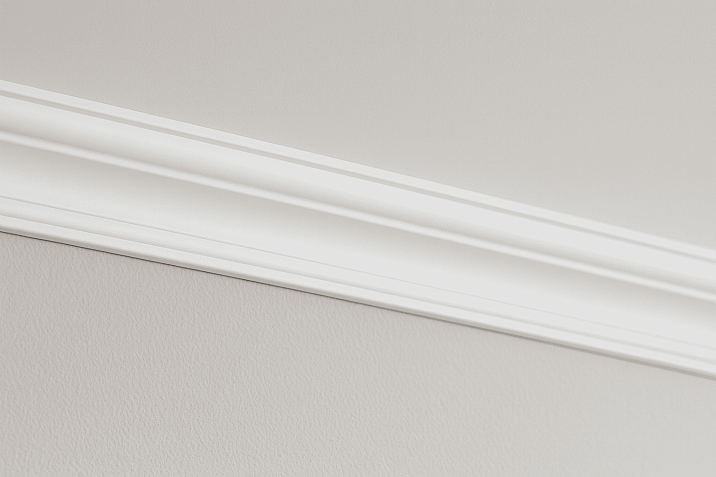
Forget everything you knew about traditional finishing materials! Today we will talk about a real breakthrough in architectural decoration — polyurethane cornice, a material that literally overturned designers' and builders' perceptions of interior finishing possibilities.
What if I told you there is a material that combines the lightness of a feather with the strength of steel, the simplicity of plastic installation with the nobility of natural stone? Sounds fantastic? But this is the reality of modern polyurethane cornices — a material that, within a few decades, has won the hearts of architects, designers, and homeowners around the world.
In an era when time is money and quality is reputation, polyurethane offers solutions that seemed impossible just yesterday. Imagine: a cornice weighing only a few grams, yet capable of bearing loads comparable to metal structures. A profile of Baroque complexity that can be installed faster than you can brew a cup of coffee. Decor that doesn't fear moisture, temperature fluctuations, or time.




Polyurethane vs. Tradition: The Battle of Materials Across Eras
When German chemist Otto Bayer synthesized the first polyurethane in 1937, he likely did not anticipate that this material would revolutionize the construction industry within a few decades. Today, polyurethane moldings do not merely compete with traditional materials — they surpass them on most parameters.




Wood: A Beautiful Past with a Limited Future
For centuries, wood has been the king of architectural decoration. But let’s be honest about its drawbacks: susceptibility to rot, deformation from moisture, difficulty in processing complex shapes, high cost of quality species, and limited color palette. Moldings made of polyurethane Lacking all these drawbacks while retaining the visual appeal of natural material.
Our factory also produces:


Gypsum: Fragile Grandeur
Gypsum moldings — a symbol of classic interiors. But who among professionals hasn’t encountered problems with transporting, installing, and using gypsum products? Cracks from the slightest vibrations, inability to use in humid areas, enormous weight requiring reinforced mounting — all this makes gypsum a material of the past.
Get Consultation
Polystyrene: Lightness Without Quality
Polystyrene moldings conquered the market due to low cost, but at what price? Brittleness, flammability, rudimentary shapes, short lifespan — these drawbacks outweigh the single advantage of low cost.
Polyurethane moldings combine the advantages of all materials while eliminating their drawbacks. This is not a compromise — it is a qualitative leap in the development of decorative materials.
Technological Perfection: The Anatomy of Polyurethane Moldings
To understand the revolutionary nature polyurethane moldingsit is necessary to understand the structure and properties of this unique material.
The Chemical Formula of Success
Polyurethane is a polymer obtained through the polycondensation of polyols (polyols) and polyisocyanates. Sounds complicated? In reality, behind these chemical terms lies a simple truth: by controlling the synthesis process, one can obtain a material with predetermined properties.
Modern polyurethane moldings are made from foamed polyurethane with a density of 200-400 kg/m³. This density ensures an optimal balance between weight and strength — the material is 2-3 times lighter than wood, yet does not fall short of it in mechanical properties.
Structural Features
The microscopic structure of polyurethane consists of numerous closed cells filled with inert gas. It is precisely this structure that determines the unique properties of the material:
Thermal insulation: the thermal conductivity coefficient of polyurethane is 0.019-0.035 W/(m·K), which is 5-10 times lower than that of wood. This means that polyurethane moldings do not create "cold bridges" and contribute to the energy efficiency of buildings.
Sound insulation: the porous structure effectively absorbs sound waves, improving acoustic comfort in rooms.
Moisture resistance: closed pores prevent moisture from penetrating the material's structure, eliminating rot, swelling, and deformation.
Strength characteristics
Modern polyurethane moldings possess impressive mechanical properties:
- Bending strength limit: 15-25 MPa
- Compressive strength limit: 10-20 MPa
- Elastic modulus: 100-300 MPa
- Relative elongation at break: 200-400%
These indicators are comparable to or exceed the characteristics of many wood species, yet at significantly less weight.
Production technologies: from raw material to masterpiece
Production of high-quality polyurethane moldings is a high-tech process requiring precise adherence to parameters at every stage.
Raw material preparation
The quality of the final product is established during raw material preparation. Polyols and isocyanates must have strictly defined characteristics: molecular weight, functionality, water content. Even minor deviations lead to defects in finished products.
Catalytic systems are selected individually for each profile type. They determine reaction speed, pore structure, and physical-mechanical properties of the polymer.
Molding process
Modern Production polyurethane moldings Uses injection technology into precise silicone molds. This method allows reproducing the finest details of the original sample with accuracy down to fractions of a millimeter.
The molding temperature is critically important: too low a temperature leads to incomplete foaming, too high a temperature causes polymer degradation. The optimal temperature is 40-60°C.
The holding time in the mold depends on the profile thickness and ranges from 5 to 30 minutes. During this time, the material fully polymerizes and the final structure forms.
Final finishing
After removal from the mold, moldings undergo a stabilization stage at room temperature for 24-48 hours. During this time, polymerization processes complete and the material acquires its final properties.
Quality manufacturers necessarily conduct geometric dimension, density, and strength characteristic checks for each batch of products.
Design possibilities: limitless forms
One of the main advantages of polyurethane is the ability to create virtually any shape and profile. If it can be drawn, it can be manufactured from polyurethane.
Classic profiles: traditions in modern execution
Simple quarter-round moldings, stepped profiles, complex cornice shapes — all the variety of classic solutions is available in polyurethane execution. At the same time, the accuracy of detail reproduction is unattainable with traditional materials.
Custom solutions: uniqueness as standard
The ability to manufacture custom forms opens limitless prospects for designers. Complex ornaments, custom profiles, exclusive solutions — all of this has become accessible thanks to polyurethane technologies.
Size range: from miniature to monumental
Polyurethane moldings are manufactured in the widest size range — from delicate profiles 20 mm high to monumental structures over 500 mm high. At the same time, large profiles remain surprisingly lightweight and easy to install.
Color solutions: palette without limits
Traditionally, polyurethane moldings are supplied in white for painting, but modern technologies offer far more options.
Painting: art of color
Polyurethane accepts any type of paint: acrylic, alkyd, polyurethane. This allows achieving any desired shade and surface texture.
Important feature: due to low surface porosity, paint consumption on polyurethane items is significantly less than on wood or plaster.
Material imitation
Modern painting technologies allow imitating almost any material: marble, wood, metal, stone. In this case, visual similarity reaches 90-95%, and tactile sensations also closely match the original.
Patina and special effects
Techniques of artificial aging, patination, and creating a worn effect transform modern polyurethane moldings into antique artworks.
Installation of polyurethane moldings: professional-level simplicity
If installing wooden or plaster moldings requires high skill from the craftsman, then installation polyurethane skirting board accessible even to a beginner craftsman.
Preparation stage
Unlike wooden products, polyurethane moldings do not require acclimatization — they are stable under any climatic conditions. Simply unpack the material and you can start installation.
Preparation of the base is also minimal: the surface must be clean and dry. Minor irregularities (up to 3-5 mm) are compensated by the molding’s elasticity.
Tools for work
A minimal set of tools is required for installing polyurethane moldings:
- Fine-toothed hacksaw or miter saw
- Adhesive for Polyurethane
- Painters' tape
- Joint smoothing trowel
- Wet cloth for removing excess glue
Technology of mounting
The main method of attachment is adhesive. Modern polyurethane adhesives provide joint strength exceeding the material’s own strength.
The choice of adhesive depends on the operating conditions:
- For dry rooms — acrylic adhesives
- For wet rooms — polyurethane adhesives
- For extreme conditions — epoxy compounds
Application technique: adhesive is applied in a thin, even layer to the entire contact surface. Excess adhesive is removed immediately after pressing the molding onto the base.
Joint and corner processing
One of the main advantages of polyurethane is the ease of processing joints. The material cuts easily with a standard hacksaw, and minor cutting inaccuracies are compensated by the material’s elasticity.
For corner joints, pre-made corner elements are used or a "on-the-fly" cut is made. Special adhesive sealants allow achieving perfectly flat joints without visible seams.
Operational characteristics: durability without compromise
The service life of quality polyurethane moldings is 30–50 years while retaining their original appearance. This is comparable to the best examples of wooden products, but with significantly lower maintenance costs.
Resistance to external influences
Water resistance: polyurethane is completely unaffected by moisture. Moldings can be installed in bathrooms, pools, saunas without any additional protection.
Temperature stability: the operating temperature range from -40°C to +80°C allows using polyurethane moldings in any climatic conditions.
UV resistance: modern formulations contain UV stabilizers that prevent material degradation under sunlight exposure.
Chemical resistance: polyurethane is resistant to most household chemicals, simplifying maintenance and cleaning.
Mechanical strength
Polyurethane moldings withstand significant mechanical loads:
- Impact resistance up to 15 J without damage
- Static loads up to 500 N/cm
- Cyclic loads exceeding 1 million cycles without fatigue damage
Fire safety
Modern polyurethane moldings belong to the fire hazard class G1-G2 (slightly flammable), allowing their use in residential and public buildings. Special flame-retardant additives increase fire resistance to the non-combustible class NG.
Care and maintenance: minimal effort, maximum result
One of the indisputable advantages of polyurethane moldings is minimal maintenance requirements.
Regular Maintenance
To maintain an ideal appearance, it is sufficient to periodically wipe the moldings with a damp cloth. Due to the smooth surface, dust and dirt do not penetrate the material and are easily removed.
For deep cleaning, any household cleaning agents can be used — polyurethane is chemically inert and does not fear aggressive substances.
Coating restoration
Polyurethane moldings can be easily repainted when needed. Due to the excellent adhesion of paints to polyurethane, no complex surface preparation is required — just light sanding with fine-grit sandpaper is sufficient.
Minor scratches and scuffs are removed by local sanding and coating. Serious damage may require replacement of the affected area.
Minor damage (scratches, chips) can be easily repaired with special repair compounds. For significant damage, individual sections can be replaced without dismantling the entire structure.
Economic efficiency: investment in the future
Although initially more expensive than polystyrene, polyurethane moldings demonstrate excellent economic efficiency in the long term.
Initial costs
The cost of polyurethane moldings depends on the profile complexity and is as follows:
- Simple profiles: 300-800 rubles per linear meter
- Medium complexity: 800-1500 rubles per linear meter
- Complex cornice profiles: 1500-3000 rubles per linear meter
These prices are comparable to those of quality wooden analogs, but taking into account all the advantages of polyurethane.
Installation cost savings
The ease of installing polyurethane moldings allows installation labor costs to be reduced by 2-3 times compared to wooden or gypsum analogs. This represents significant savings for large-scale projects.
Operational cost savings
Minimal maintenance requirements, no need for periodic repairs or replacements, and the ability for multiple repaints — all of this ensures significant savings during operation.
Impact on property value
Quality finishing with polyurethane moldings increases the attractiveness and value of real estate. Such properties are perceived as more prestigious and high-quality when sold.
Areas of application: universality without limits
The versatility of polyurethane moldings opens up wide possibilities for their application in various fields.
Residential construction
In apartments and houses Polyurethane Decor used for:
- Decorating transitions between ceiling and wall
- Creating decorative elements
- Framing door and window openings
- Space zoning
Commercial real estate
Offices, stores, restaurants, hotels — everywhere polyurethane moldings help create a stylish and respectable interior with minimal maintenance costs.
Public Buildings
Schools, hospitals, administrative buildings especially value the combination of aesthetics, durability, and hygiene in polyurethane moldings.
Restoration and Reconstruction
When restoring historical buildings, polyurethane moldings allow for the precise reproduction of lost decorative elements at significantly lower costs and shorter completion times.
Extreme Conditions
Swimming pools, saunas, industrial spaces with aggressive environments — everywhere traditional materials quickly fail, polyurethane demonstrates its unique properties.
Ecological Aspects: Responsibility to the Future
Modern society is increasingly paying attention to the ecological aspects of building materials. Polyurethane moldings fully comply with the strictest ecological standards.
Health Safety
Fully polymerized polyurethane is chemically inert and does not emit harmful substances into the environment. The material has all necessary hygiene certificates for use in residential and children's facilities.
Recycling
Polyurethane is recyclable and can be used to produce new products or as high-calorific fuel.
Energy efficiency
The thermal insulation properties of polyurethane moldings contribute to reducing building energy consumption, which is important for overall ecological safety.
Trends in development: looking to the future
The market for polyurethane moldings continues to actively develop, offering new solutions and technologies.
Intelligent Systems
Polyurethane moldings with integrated humidity, temperature, and air quality sensors are being developed. Such systems are becoming part of the "smart home" concept.
Functional integration
Modern moldings can integrate lighting, ventilation, and air conditioning systems. This is especially relevant for commercial and public buildings.
Biodegradable Polymers
Research is underway to develop polyurethanes based on renewable raw materials with the potential for complete biodegradation after the end of their service life.
Nanotechnology
The use of nanomodifiers allows creating polyurethane materials with unique properties: self-cleaning surfaces, antibacterial coatings, color-changing materials.
Comparative Analysis: Polyurethane in the Context of Alternatives
To fully assess the advantages of polyurethane moldings, we will conduct a detailed comparison with the main alternative materials.
Polyurethane vs. Wood
|
Parameter |
Polyurethane |
Wood |
|
Weight |
0.2–0.4 kg/m |
0.8–1.5 kg/m |
|
Moisture resistance |
Excellent |
Requires Protection |
|
Installation complexity |
Simple |
High |
|
Longevity |
30-50 years |
20-30 years |
|
Price |
Medium |
High |
Polyurethane vs. Gypsum
|
Parameter |
Polyurethane |
Gypsum |
|
Strength |
High |
Low |
|
Moisture resistance |
Excellent |
Unsatisfactory |
|
Transportation |
Simple |
Complex |
|
Repairability |
Excellent |
Poor |
|
Ecological |
Safe |
Dust |
Criteria for selecting high-quality polyurethane sleeves
Not all polyurethane sleeves are equally good. There are clear criteria to distinguish quality products from counterfeits.
Appearance
A quality sleeve has a uniform structure without visible pores, cracks, or deformations. The surface should be smooth, without blisters or bulges.
Geometric parameters
Deviation from nominal dimensions should not exceed ±1 mm. The profile should be sharp, without rounded corners or deformed elements.
Material density
The optimal density of polyurethane sleeves is 200-400 kg/m³. Too light products will be brittle, while too heavy ones will be uneconomical.
Documentation
Quality products are always accompanied by a complete set of documents: quality certificates, hygiene reports, technical specifications.
Innovations in production: technologies of tomorrow
Polyurethane sleeve production is constantly improving due to the introduction of new technologies and materials.
3D modeling and prototyping
Modern CAD systems allow creating 3D models of any complexity and testing them before manufacturing molds. This reduces the time to develop new profiles and improves their quality.
Robotized production
Automated lines ensure consistent product quality and high productivity. Robots perform dosing, pouring, and demolding operations with precision unattainable by humans.
Quality control systems
Modern control systems allow monitoring all production process parameters in real time and automatically adjusting them when deviations occur.
Ecologically clean technologies
Waste-free production technologies, waste disposal and recycling systems, and use of renewable raw materials are being developed.
STAVROS: Pioneer of polyurethane perfection
In the world of polyurethane products, there are follower companies and pioneer companies. STAVROS undoubtedly belongs to the second category — it is a company that not only follows modern trends but also creates them, setting new quality standards in the industry.
What makes STAVROS a leader in producing polyurethane moldings? Primarily — a comprehensive approach to solving client challenges. The company does not merely produce items but creates complete architectural solutions where each element perfectly complements the others.
STAVROS's production facility is a modern, high-tech complex equipped with equipment from leading global manufacturers. Here, the most advanced molding technologies are used, ensuring flawless quality of each item. A multi-level quality control system guarantees compliance with the strictest standards.
STAVROS's R&D center continuously works on improving polyurethane compositions, developing new production technologies, and creating innovative profiles. Collaboration with leading global chemical companies ensures access to the most modern raw materials.
STAVROS pays special attention to the ecological safety of its products. All items undergo mandatory certification in reputable laboratories, confirming their complete safety for human health and the environment.
The company's design department creates not only classic profiles but also custom solutions based on individual client sketches. The capabilities of modern equipment allow for the realization of the most daring design ideas in polyurethane.
STAVROS's service support includes not only the sale of materials but also comprehensive project support: consultations on profile selection, calculation of requirements, installation recommendations, and technical support at all stages of project implementation.
By choosing STAVROS products, you get not just polyurethane moldings — you get a guarantee of quality, reliability, and beauty that will delight you for many years. This is an investment in the future, which pays off not only economically, but also aesthetically, creating around you an atmosphere of comfort and elegance.


