












































































Article Contents:
- Golden ratio in action: how dimensions affect perception
- Impact on visual height of the room
- Psychology of proportion perception
- Standard dimensional grid: from miniature to monumental
- Miniature moldings (10-25 mm)
- Standard sizes (30-60 mm)
- Large moldings (70-100 mm)
- Monumental sizes (over 100 mm)
- Profile geometry: how shape affects perception of size
- Simple profiles
- Complex crown molding profiles
- Asymmetric profiles
- Dimensions in the context of architectural styles
- Classical styles
- Modern directions
- Technical limitations of the dimensional series
- Material constraints
- Dimensional stability
- Economic Factors
- Impact of dimensions on installation and operation
- Fastening requirements
- Complexity of corner processing
- Transportation and storage
- Dimensions for specific applications
- Ceiling moldings
- Baseboards
- Furniture moldings
- Custom manufacturing: when standards are insufficient
- Equipment limitations
- Economic feasibility
- Technological specifics
- Errors in selecting dimensions and their consequences
- Mismatch with room scale
- Violation of stylistic unity
- Ignoring Technical Limitations
- Modern Trends in Molding Sizes
- Size Polarization
- Functional Sizes
- Customization
- Selecting Sizes: Practical Recommendations
- Room measurement
- Style Analysis
- Modeling
- Consultations with Specialists
- Need Calculation: Purchase Mathematics
- Basic Calculation
- Considering Sizes in Calculation
- Economic optimization
- Quality Control of Sizes Upon Receipt
- Measuring Tools
- Permissible Deviations
- Visual inspection
- Sizes and Durability: Parameter Interrelation
- Mechanical strength
- Shape Stability
- Repairability
- STAVROS: Where Sizes Become Perfection
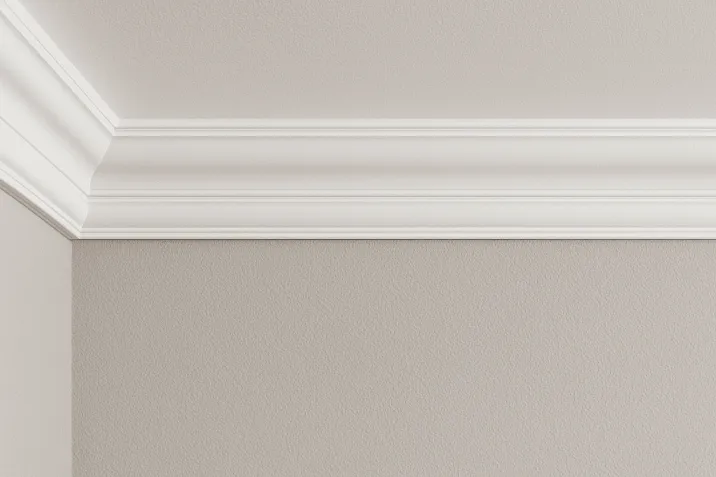
Size matters — this truth is especially true when it comes to wooden moldings. It seems simple to choose a small decorative strip, but it is precisely the correctly selected parameters Wooden molding dimensions of which must create an ideal harmony with the space, determine the entire character of the interior. An overly massive molding in a small room creates a sense of pressure, while a miniature one in a spacious hall simply disappears, like a drop in the ocean.
Over fifty years of working with interiors, I have seen thousands of examples of how incorrect size selection turns potentially magnificent projects into mediocrity. Conversely, properly chosen proportions can transform a modest dwelling into a work of art. Today, we will examine all nuances of selecting wooden molding sizes, from the mathematical laws of perception to practical installation tips.


Golden Ratio in Action: How Sizes Affect Perception
Human perception follows certain laws known to ancient architects. The principle of the golden ratio, the relationship of parts to the whole, the play of proportions — all this applies when selecting molding sizes.




Influence on Visual Height of the Room
A wide molding visually 'eats' the ceiling height, making the room feel more intimate and cozy. A narrow one, conversely, creates a sense of spaciousness and airiness. This is not just theory — it is a practical designer's tool that should and must be used consciously.
In rooms with ceilings 2.5–2.7 meters high, a molding over 80 mm in height will appear disproportionately massive. The optimal size for such a height is 40–60 mm. Meanwhile, in halls with four-meter ceilings, a 50 mm molding will simply disappear — here, sizes of 100 mm and above are needed.
Our factory also produces:



Psychology of Proportion Perception
The human brain automatically analyzes the relationships between elements in space. Disharmonious proportions create a subconscious sense of discomfort, even if the person cannot explain what exactly is bothering them. wooden cornice Correct sizes, on the contrary, create a sense of completeness and harmony.
Classic Rule: The molding size should be 1/30 — 1/40 of the room's height. This ratio is based on centuries of experience and ensures optimal visual balance.
Get Consultation
Standard Size Grid: From Miniature to Monumental
The modern industry offers a wide range of wooden molding sizes, each with its own application area and distinctive features.
Miniature moldings (10-25 mm)
The smallest sizes are used for decorative purposes, furniture detailing, and creating fine accents. wooden cornice Such sizes require special precision in manufacturing — any irregularity will be noticeable to the naked eye.
These sizes are popular in Scandinavian style, where delicacy and subtlety of decorative elements are valued. Miniature moldings are perfect for children's rooms, where it is important to avoid hazardous protruding elements.
Standard sizes (30-60 mm)
This is the most popular size group, suitable for most living spaces. Sizes 40×40 mm and 50×50 mm have become a de facto standard for typical housing. They are noticeable enough to serve a decorative function, but not so bulky as to dominate the interior.
Moldings of these sizes are easy to install, have an optimal strength-to-weight ratio, and suit most stylistic directions — from modern minimalism to moderately formal classicism.
Large moldings (70-100 mm)
Sizes in this group are intended for spacious rooms with high ceilings. wooden molding Such sizes create a sense of solidity and sturdiness, emphasizing the scale of the space.
Large moldings require more secure mounting due to increased weight. They pair well with classic interiors, styles such as Empire, Baroque, and English classicism.
Monumental sizes (over 100 mm)
This is the realm of large spaces — halls, living rooms with ceilings over 3.5 meters, public interiors. Moldings of such sizes may feature complex profiles, multiple levels, and decorative elements.
Installing large moldings requires professional skills and special fasteners. The weight per linear meter may reach 2-3 kg, creating significant loads on the fasteners.
Profile Geometry: How Shape Affects Perception of Size
The size of a molding is determined not only by overall dimensions but also by the profile shape. The same height may be perceived differently depending on the cross-sectional geometry.
Simple Profiles
Quarter-round, semi-round, and rectangular profiles appear more compact than their actual dimensions. This is due to the absence of complex shadow transitions that visually enlarge the object.
Simple profiles are an ideal choice for spaces where functionality without excessive decoration is needed. They suit modern styles where every element must be functionally justified.
Complex Molding Profiles
Multi-level profiles with grooves, ovals, stepped transitions visually appear larger than their actual dimensions. The play of light and shadow on the relief surface creates additional volume and expressiveness.
Wooden ceiling molding Profiles with complex geometry require special attention to proportions. What looks good at 80 mm may become excessive at 120 mm.
Asymmetric Profiles
Modern design offers asymmetric solutions, where different heights and widths create dynamic compositions. Such profiles require a special approach to size selection and professional installation.
Sizes in the Context of Architectural Styles
Each interior style has its own preferences for decorative element sizes, based on historical traditions and aesthetic principles.
Classic styles
Baroque and Rococo prefer large, richly decorated moldings. Sizes from 100 mm are standard for these styles. The principle 'bigger is better' applies fully here.
Empire leans toward grand but more restrained forms. Sizes 80-120 mm with clear profile geometry create the desired impression of grandeur without excessive decoration.
English classicism prefers moderation in everything, including molding sizes. 60-80 mm is the optimal range for creating an atmosphere of restrained elegance.
Modern trends
Minimalism requires either very thin moldings (20-30 mm) or complete absence of them. Every element must be functionally justified.
High-tech allows non-standard sizes and proportions, especially when integrating technological elements — lighting, communications.
Scandinavian style prefers moderate sizes (40-60 mm) with simple geometry, emphasizing the naturalness of the material.
Technical limitations of the size range
Production of wooden moldings has technical limitations that affect available sizes and their cost.
Raw material limitations
Maximum sizes are limited by the dimensions of the original lumber. Standard boards have a thickness up to 50 mm, which determines the maximum thickness of simple profiles. For larger sizes, glued beams or special technologies are used.
Dimensional stability
The larger the molding, the higher the requirements for wood stability. Large cross-sections are more prone to warping and cracking with changes in humidity. This requires special selection of raw materials and processing technologies.
Economic factors
Material consumption for moldings increases not linearly, but quadratically with size. A 80×80 mm molding uses four times more wood than a 40×40 mm one, significantly affecting cost.
Influence of dimensions on installation and operation
Molding dimensions determine not only aesthetic but also technical aspects of its use.
Fastening requirements
Light moldings up to 40 mm can be mounted only with adhesive. Medium sizes 50-70 mm require combined fastening. Large moldings over 80 mm require reliable mechanical fastening with a spacing of 40-50 cm.
Complexity of corner processing
Jointing of wooden moldings Corner processing becomes more complex with increasing size. Large cross-sections require more precise cutting, high-quality fitting, and may require the use of pre-made corner elements.
Transportation and storage
Dimensions affect logistics. Standard molding length is 2000-3000 mm, but large cross-sections may have length restrictions due to weight. This affects the number of joints and the overall appearance of the finished result.
Sizes for specific applications
Different application areas impose specific requirements on molding sizes.
Ceiling moldings
Ceiling wooden molding on paneling Usually have smaller dimensions than floor counterparts. This is due to perception characteristics — on ceilings, large elements appear even more massive.
Optimal sizes for ceiling moldings: 30-60 mm for standard rooms, up to 100 mm for high ceilings. The profile is usually asymmetrical, with a larger vertical dimension.
Floor skirting boards
Floor wooden cornice Must have sufficient height to protect walls from mechanical damage during cleaning. Minimum height — 40 mm, optimal — 60-80 mm.
The base width of floor skirting boards must ensure stable mounting to walls and floors. Typically, it is 15-25 mm.
Furniture moldings
Miniature sizes — 10-30 mm — are used for furniture. Here, manufacturing precision and surface quality are crucial, as elements are viewed up close.
Custom manufacturing: when standards are insufficient
Modern technologies allow manufacturing moldings to custom sizes, but this requires a special approach.
Equipment limitations
Milling machines have limitations on the maximum size of the profile being processed. Usually, this is 150-200 mm in height. For larger sizes, composite constructions or special equipment are used.
Economic feasibility
Manufacturing non-standard sizes requires retooling equipment, which increases cost. Economically justified only for large batches or exclusive projects.
Technological features
Non-standard sizes may require the use of glued material, special drying technologies, additional stabilization operations. All of this affects cost and manufacturing time.
Errors in selecting sizes and their consequences
Incorrect selection of sizes is one of the most common errors in interior design.
Mismatch with room scale
Too large moldings in small rooms create a feeling of confinement, visually reducing space. Too small moldings in large halls disappear and fail to serve a decorative function.
Violation of stylistic unity
Moldings must match the overall interior style. Heavy profile moldings are inappropriate in minimalist interiors, as are thin modern strips in classical halls.
Ignoring technical limitations
Choosing sizes without considering installation specifics may lead to serious problems. Heavy moldings on weak walls, incorrect mounting — all of this threatens structural collapse.
Modern trends in molding sizes
Design and technology development form new trends in wooden molding sizes.
Size polarization
A trend toward polarization is observed: either very thin, almost invisible moldings, or large, dominant interior elements. Medium sizes are losing popularity.
Functional sizes
Sizes are increasingly determined not only by aesthetics but also by functionality. Moldings with integrated lighting, communication channels require specific sizes.
Customization
Demand for non-standard sizes, created specifically for a particular project, is growing. This requires flexible manufacturing technologies and high manufacturer qualifications.
Choosing sizes: practical recommendations
When choosing Wooden molding dimensions which must correspond to the project's specifics, follow proven principles.
Measuring the room
Accurately measure ceiling height, determine room proportions. Consider architectural features — presence of beams, niches, other decorative elements.
Style analysis
Determine the interior's stylistic direction and its requirements for decorative element sizes. Study historical examples and modern interpretations.
Mockup creation
Use cardboard mockups to visualize different sizes. This will help assess the impact on spatial perception before finalizing the decision.
Consulting specialists
Consult professional designers and material suppliers. Their experience will help avoid mistakes and find the optimal solution.
Material Purchase Calculation
Accurate calculation of material quantity based on dimensions is an essential part of project planning.
Basic Calculation
Measure the room's perimeter, add 10-15% for trimming and possible errors. For complex configurations, waste can reach up to 20%.
Dimension Consideration in Calculation
Large moldings produce more waste when cutting corners. Account for this when calculating requirements. Standard stock length also affects the number of joints and waste.
Economic optimization
Sometimes it is more cost-effective to choose a size close to standard rather than ordering custom fabrication. Calculate all options considering material and labor costs.
Quality Control of Dimensions Upon Receipt
When receiving moldings, always check that the dimensions match the ordered specifications.
Measuring Tools
Use a caliper for precise profile measurement, a tape measure for length control. Check several items from the batch.
Allowed Tolerances
Standard tolerances are ±0.5 mm for cross-section and ±2 mm for length. Exceeding these values is grounds for a claim.
Visual inspection
Check uniformity of dimensions along the entire length of the molding, absence of deformations, and profile quality. Any defects must be noted during acceptance.
Dimensions and Durability: Relationship of Parameters
Molding dimensions affect their durability and performance characteristics.
Mechanical strength
Larger sections have greater mechanical strength and better resistance to deformation. However, they also create greater internal stresses when humidity changes.
Shape Stability
Thin moldings are more prone to warping but adapt faster to microclimate changes. Thick sections are more dimensionally stable but respond more slowly to environmental changes.
Repairability
Standard sizes are easier to replace during repairs. Non-standard sizes may require re-fabrication, increasing maintenance costs.
STAVROS: Where Dimensions Become Perfection
In the world of wooden products, STAVROS has taken a unique position as a master for whom every millimeter matters. Dimensional accuracy is not just a technical requirement — it is a philosophy of perfection that permeates the entire company’s activity, from raw material selection to final packaging of finished products.
What makes STAVROS’s approach to dimensions special? Primarily — a deep understanding of how dimensions affect interior perception. Each size in the company’s range is the result of careful market needs analysis, study of classical proportions, and understanding of modern design trends.
STAVROS’s production facility is equipped with high-precision equipment capable of achieving dimensional tolerances as tight as ±0.1 mm. This is not just a technical specification — it is a guarantee that each molding will perfectly match adjacent elements, creating flawless joints and transitions.
STAVROS’s dimensional grid covers the entire spectrum of needs — from miniature 15×15 mm for delicate work to monumental 150×150 mm for large spaces. At the same time, the company does not limit itself to standard sizes — advanced technologies allow manufacturing moldings to individual specifications with minimal lead times and without compromising quality.
STAVROS pays special attention to dimensional stability over time. Special drying and wood stabilization technologies ensure that moldings retain their dimensions throughout their service life. The company’s own laboratory controls every batch of products, excluding the delivery of materials with deviations from specified parameters.
STAVROS’s service team is ready to assist in selecting optimal sizes for any project. Experienced consultants will take into account the room’s specifics, interior style, and client preferences, offering a solution that will become the perfect complement to the envisioned design.
The company’s logistics network ensures dimensional accuracy throughout the entire journey from production to the consumer. Special packaging protects products from deformation during transport, and controlled storage conditions on warehouses prevent dimensional changes due to humidity and temperature fluctuations.
Choosing STAVROS, you get not just moldings of the required size — you get confidence that each element will perfectly match the project, creating harmony of proportions and perfection of details worthy of the most demanding interiors.


