Article Contents:
- The Sociology of Remote Work: When Home Became the Office
- First Impressions Are Formed in 100 Milliseconds
- The Professor Effect: Why Bookshelves Equal Expertise
- Why Books Specifically?
- The Psychology of Trust in the Era of Online Meetings
- Compensatory Perception Mechanisms
- How to Quickly Create a Professional Background for Video Calls
- Option 1: A Bookshelf or Cabinet
- Option 2: Wall Decor with Molding
- Option 3: Plants as a Sign of Care and Stability
- Mistakes to avoid
- Bedroom in the Frame
- Virtual Backgrounds with Futuristic or Entertainment Themes
- Clutter and Household Items
- Too Dark or Busy Background
- Classic Furniture as an Investment in Business Image
- Why Natural Materials Are Important
- Practical Tips for Organizing Your Background
- The Three-Level Rule
- Symmetry and Balance
- Lighting Is More Important Than the Background
- Test Before Important Meetings
- Numbers Worth Remembering
- Frequently Asked Questions About Zoom Backgrounds
- Can I Use a Blurred Background?
- Is One Bookshelf Enough?
- What to Do If I Work from a Rented Apartment and Can't Change the Interior?
- Should I Hang Diplomas and Certificates on the Wall?
- Does Gender and Age Affect Background Perception?
- How Often Should I Change the Background?
- What if I have a creative profession — can I use a bright, unusual background?
- Is it worth investing in special equipment for the background?
- Conclusion: visible space as part of professional identity

The pandemic turned video calls from a rare corporate tool into a daily reality for hundreds of millions of people. Negotiations, deals, interviews, consultations moved to Zoom, Teams, Google Meet — and suddenly the background behind the interlocutor became as important an element of business communication as a suit or handshake a decade earlier. Research by psychologists at Durham University showed: a bookcase or library behind one's back increases the perception of competence and builds trust among interlocutors, while domestic clutter or futuristic virtual backgrounds reduce trust and professionalism in the eyes of clients. This is not a whim of perception — it's the work of archaic brain mechanisms that read visual markers of status, education, and reliability in milliseconds.


Sociology of remote work: when home became the office
Before 2020, video communication was used sporadically — for international negotiations, consultations with specialists from other cities, distance learning. The COVID-19 pandemic moved billions of people to remote format within a few months: corporate employees, freelancers, doctors, lawyers, consultants, teachers — all found themselves in front of a laptop camera in their apartments, where bedrooms, kitchens, and children's rooms served as the background.
Zoom conducted a large-scale study, collecting data on user behavior on the platform. The results were telling: almost half of people join video calls from bed, 40% wear a 'decent top' while remaining in home clothes below the waist, and 71% of participants have at least once said the phrase 'your mic is off.' Video calls from home blurred the line between personal and professional space, creating a new challenge: how to maintain a business image in a domestic setting?




First impression is formed in 100 milliseconds
Psychologists have long known: a person evaluates an interlocutor in the first fractions of a second of contact. Neurobiological research shows that the brain forms a judgment about the competence, reliability, and status of another person within 100-200 milliseconds after visual contact. This happens at a subconscious level, long before rational thinking engages in the assessment.
In offline communication, signals of status are clothing, accessories, posture, and meeting location. In the online format, the visible area is limited — the upper body and everything behind the back. Clothing is easy to choose. But the background? The background became an unintentional window into private life — and simultaneously a tool for impression management.
Our factory also produces:


The professor effect: why bookshelves equal expertise
Durham University (UK) published in the journal PLOS One the results of an experiment in which 167 participants evaluated photographs of men and women simulating video calls with various backgrounds. Respondents assessed the competence, reliability, and overall impression of the people in the pictures.
The results were unambiguous: participants with bookshelves or plants behind them received significantly higher ratings for competence and trust. Backgrounds with a visible living room, household items, or virtual images (e.g., an animal photo) created a negative impression. A blurred background occupied an intermediate position — neutral, but not enhancing the impression of professionalism.
Get Consultation
Why books specifically?
Bookshelves are associated with education, intellectual work, and status. Historically, a large personal library was a privilege of the aristocracy, scholars, clergy — people who had access to knowledge and time for reading. Mass printing democratized access to books, but the cultural association 'many books = educated person' has persisted.
Research shows that 83% of respondents agree: the background helps make a good impression on interlocutors, and 53% admitted that the initial impression of a person during a video call is largely formed based on what is visible behind their back.Classic cabinetswith books, folders, decorative elements create the effect of a 'specialist's office' — a space where thinking, work, and decision-making occur.
Psychology of trust in the era of online meetings
Trust is the foundation of any business relationship. A client chooses a lawyer they trust to protect their interests. A patient chooses a doctor they trust with their health. An investor chooses a consultant they trust with their money. But how is trust formed when a personal meeting is impossible, and all contact is limited to a 15-inch screen?
Psychologists identify several components of trust: competence (the person knows what they are doing), reliability (the person will keep promises), benevolence (the person cares about my interests). In the online format, we are deprived of many signals that in offline help assess these qualities — handshakes, gait, office environment, interactions with other people.
Compensatory mechanisms of perception
The brain compensates for the lack of information by attaching increased importance to available signals. The background behind the back becomes a powerful source of information about a person: their lifestyle, priorities, status. Bookshelves signal: this person reads, learns, is interested in knowledge — therefore, they are likely competent in their field. Plants signal: this person cares for living things, creates order — therefore, they are likely responsible and organized.
Research by Canadian scientists from the University of Alberta School of Business confirms: 83% of respondents agree that the background directly influences the impression made. This is not a subjective opinion of individuals — it is a systemic feature of human perception.
How to quickly create a representative background for video calls
Not everyone has a separate office with a library. But creating a representative background is possible even in a one-room apartment — it's a matter of proper space organization and understanding the psychology of perception.
Option 1: Bookshelf or cabinet
The most effective way is to place the workspace in front of a bookshelf or cabinet. You don't need hundreds of books. 2-3 shelves filled with books, folders, decorative elements (figurines, photo frames, vases, boxes) are enough. It's important that the shelves look lived-in but not chaotic.
Home officecan be equipped with a cabinet with glass doors — this protects books from dust and creates a sense of order. Closed lower sections allow hiding household items, leaving only 'representative' elements in view.
Option 2: Wall decor with molding
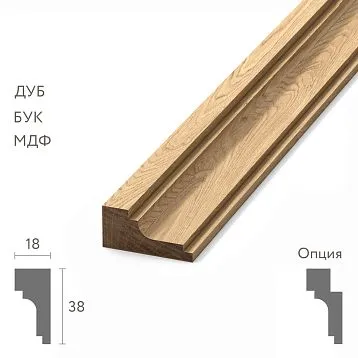
If there is no bookcase and nowhere to place one, an alternative is a wall decorated with moldings.Moldings on the WallThey create a classic interior associated with studies, libraries, and meeting halls. Rectangular frames made of moldings (panels) visually structure the wall, add depth, and hint at status and taste.
Inside the molding frames, you can place paintings, diplomas, certificates—this enhances the effect of expertise. The wall should not be overloaded—2-3 frames within the camera's field of view are sufficient.
Option 3: Plants as a sign of care and stability
The Durham study found: plants behind you also increase trust. A large floor plant (ficus, monstera, palm) or several plants on shelves create a sense of life, care, and stability. A person who cares for plants is perceived as responsible, patient, and capable of long-term commitments.
Important: plants must be alive and well-maintained. Artificial flowers or dried leaves produce the opposite effect—sloppiness, imitation, lack of attention to detail.
First mistake - unstructured mixing. A classic chair, loft table, Scandinavian chest, and minimalist cabinet in one room is not eclecticism, but visual chaos. Each item draws attention to itself, not creating cohesion. A system, logic, unifying idea is needed. Choose one dominant style, add a second as an addition, and possibly a third as an accent. But no more than three, and all should have something in common - color, material, era, or functionality.
Not all backgrounds are equally beneficial. Some options reduce trust and professionalism, even if they seem neutral.
Bedroom in the frame
A bed, nightstand, personal items—all of this is perceived as a violation of the boundary between personal and professional space. Research shows that communicating from a bedroom is considered less professional than from a home office. If there is no separate office, it's better to position the workspace facing a wall, hiding bedroom attributes from the camera.
Virtual backgrounds with futuristic or entertainment themes
Virtual backgrounds (space, tropical beaches, cartoon scenes) create a negative impression. They are perceived as unseriousness, an attempt to hide reality, play instead of work. An exception is neutral virtual backgrounds that mimic office space, but even they lose to a real interior.
Clutter and household items
Visible piles of laundry, dirty dishes, children's toys, an unmade bed—all of this destroys the business impression. Even if the client understands you are working from home, they subconsciously evaluate you based on your ability to organize space. Clutter = chaos = unreliability.
Too dark or overly colorful background
A dark background makes the face poorly distinguishable and creates a gloomy atmosphere. A colorful, contrasting, bright background distracts attention from the speaker. The optimal choice is calm tones (beige, gray, dark green, brown), even lighting, and a minimum of bright spots.
Classic furniture as an investment in business image
Classic FurnitureThese are not just interior items, but tools for shaping an image. A solid oak bookcase with carved elements, a writing desk with a leather top, a high-back chair—all of these are visual markers of status, taste, and stability.
Unlike trendy interior solutions that look outdated in 5-7 years, classic style is timeless. An office in a classic style is equally appropriate for a lawyer, doctor, consultant, teacher, or psychologist. It doesn't shout about wealth (like glamorous luxury), but speaks of dignity and professionalism.
Why natural materials are important
The brain distinguishes between natural and artificial materials even on screen. Wood, leather, and metal have texture, depth, and light play that cannot be fully imitated by plastic or film. A solid wood bookcase looks solid and convincing. A laminated chipboard bookcase with a 'wood-like' photo print looks cheap, even if the viewer can't articulate why.
Natural materials are subconsciously associated with quality, durability, and investment. A person who surrounds themselves with quality items is perceived as successful, reliable, and capable of investing in long-term solutions.
Practical tips for organizing the background
The rule of three levels
A good background has visual depth—foreground, middle ground, and background. If the camera is pointed at a flat wall a meter away from you, the background looks flat, like a backdrop in a school play. Add depth: move the workspace 1.5-2 meters away from the wall, place objects at different distances on the wall or shelves—this creates volume.
Symmetry and balance
The human brain loves symmetry—it is perceived as order, harmony, and control. If you have a bookcase behind you, try to position yourself in the center of the frame so that the shelves on the right and left are roughly equal in fullness and height. If there is a shelf with books on the right and a bare wall on the left—this creates an imbalance that subconsciously unsettles the viewer.
Lighting is more important than the background
Even a perfect background is useless if your face is in shadow. The main light source should be in front of you (ring light, desk lamp, window), not behind you. Light from behind creates a silhouette, the face becomes dark—and all the advantages of the background are lost because the viewer cannot see your facial expressions, and thus loses trust.
Test before important meetings
Before negotiations, an interview, or the first call with a client, record a short video or open the camera and look at yourself through the eyes of the interlocutor. What is visible behind you? Is there enough light? Are there any distracting objects? Adjusting takes 5 minutes but can determine the outcome of the meeting.
Numbers worth remembering
-
83% of respondents agree that the background influences the impression made
-
53% form a first impression of a person based on what they see behind them
-
50% more trust is generated by a real interior compared to a plain background
-
94% more views are received by posts with thoughtful visuals compared to text-only ones
Frequently Asked Questions about Zoom Backgrounds
Can I use a blurred background?
Yes, but the effect will be neutral. Blurring hides clutter but does not add competence. Suitable for routine meetings; for important negotiations or first contact with a client, a real, representative interior is better.
Is one bookshelf enough?
Yes, if it is well-filled and within the camera's view. The volume of the library is not important; the visual impression of 'a person who reads and learns' is. Even 20-30 books create the desired effect if they are neatly arranged and visible to the camera.
What to do if I work from a rental apartment and cannot change the interior?
Use mobile furniture: a bookcase stand that can be placed behind the workspace and removed when necessary. Floor plants in pots. A movable screen to hide the living area. All of this does not require renovation and can be moved when relocating.
Are diplomas and certificates on the wall necessary?
For professions where qualification is critical (doctors, lawyers, psychologists, financial consultants), diplomas and certificates on the wall enhance trust. However, they should be framed and placed neatly, not crookedly attached with thumbtacks.
Does gender and age affect the perception of the background?
Research has shown that women generally inspire more trust than men, and smiling people of any gender are perceived as more competent. The background enhances or diminishes the basic impression but does not replace facial expressions, intonation, or speech content.
How often should I change the background?
No need. Background stability is part of your visual brand. Clients get used to how your workspace looks; this creates a sense of reliability. Frequent background changes are confusing and create an impression of inconsistency.
What if I have a creative profession—can I have a bright, unusual background?
For designers, artists, creative directors, a non-standard background can be part of their image. But even in creative professions, clients value professionalism—the background should be thoughtful, not random. An art studio with easels and paintings is good. Chaos and clutter are bad.
Is it worth investing in special equipment for the background?
If video calls are a regular part of your work (negotiations, consultations, teaching), investing in quality furniture, lighting, and possibly a green screen for a professional virtual background pays off. These are not expenses but an investment in a business image that directly affects income.
Conclusion: Visible Space as Part of Professional Identity
The era of mass video calls has changed the rules of business communication. Home space is no longer private territory—it has become a public stage where negotiations are conducted, careers are decided, and deals are made. The background behind you is not a decoration but a powerful tool for impression management that works on a subconscious level, forming trust or distrust in fractions of a second.
Research by psychologists has proven:Classic cabinetswith books,Classic Furnituremade of solid wood, neatly decorated walls withmoldingscreate the 'professor effect'—a visual code of expertise, education, and reliability. This is not manipulation but an honest signal: a person who cares about their workspace is likely to be equally careful in their professional activities.
The company STAVROS has been creating furniture for offices, libraries,home offices—spaces where people work, think, and make decisions. Bookcases made of solid oak and beech, writing desks with carved elements, moldings, and decorative panels—all these are tools for creating a representative interior that shapes a professional image not only in real space but also on screen.
In a world where first impressions are formed in 100 milliseconds and meetings happen through laptop cameras, background quality is not a luxury but a necessity. It's an investment in customer trust, partner respect, and negotiation success. By choosing furniture and decor for your workspace from STAVROS, you're not just creating an interior, but a visual foundation for your professional reputation—one that works every day, in every video call, shaping the impression of you as a competent, reliable, and trustworthy specialist.