Article Contents:
- Why Has Polyurethane Become the Number One Material for Facade Decor?
- Weight as a Critical Parameter
- Absolute moisture resistance
- Temperature Stability and Frost Resistance
- UV Stability: Protection Against Fading
- Range of Facade Polyurethane Decor: From Cornices to Columns
- Facade Cornices: The Crown of the Building
- Window and Door Casings: Framing Openings
- Corner Rustication: Imitation of Stone Masonry
- Facade Moldings: Horizontal Articulation
- Columns and Half-Columns: Classical Monumentality
- Pilasters: flat columns
- Decorative Elements: Rosettes, Brackets, Pediments
- Stylistic Solutions: From Classicism to Art Nouveau
- Classicism and Neoclassicism: Symmetry and the Order System
- Baroque: Opulence and Dynamism
- Modern: organic and asymmetry
- Modern Style: Minimalism and Functionality
- Installation technology: from preparation to finishing
- Foundation Preparation
- Facade Marking
- Cutting Elements
- Gluing Elements
- Joint sealing
- Finishing
- Application Areas: From Conceptual Design to Mass Construction
- Polyurethane vs. Polystyrene
- Polyurethane vs. fiber concrete
- Polyurethane vs. Wood
- Practical Aspects: Cost, Timelines, Operation
- Economic efficiency
- Implementation timelines
- Operation and Maintenance
- Climatic Features of Operation
- Southern Regions: UV Radiation and Heat
- Northern Regions: Frost and Snow Loads
- Coastal Regions: Humidity and Salt Spray
- Popular Questions and Answers
- STAVROS: Leader in Production of Facade Polyurethane Decor
- In-house full-cycle production
- Extensive assortment for any style
- Custom Production for the Project
- Logistics Across Russia and CIS
- Technical support and consultations
- Warranties and Reputation
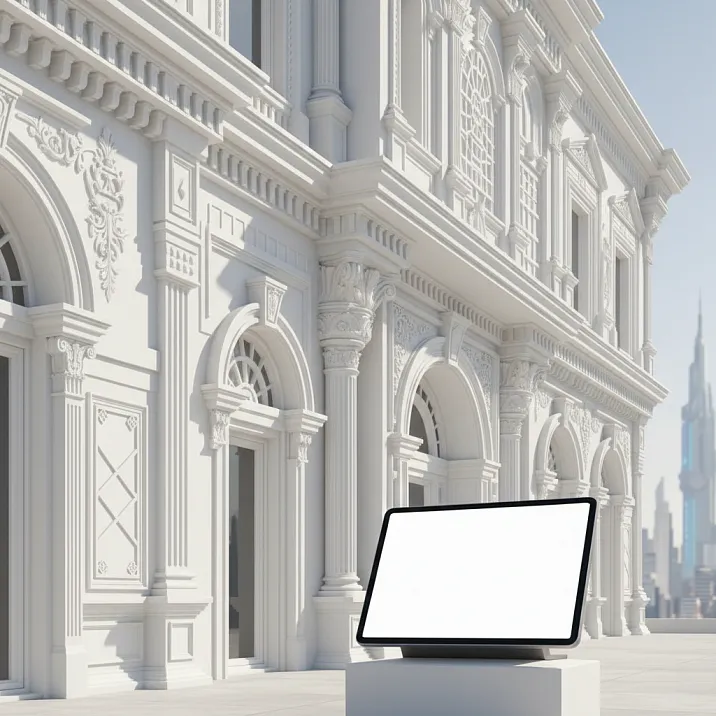
What makes a random passerby stop, tilt their head back, and freeze in front of a stranger's house facade? What distinguishes a faceless box of modern construction from a building you want to examine, photograph, and remember? The answer is simple and complex at the same time: architectural expressiveness, detailing, the play of volumes and shadows, that very textural depth created by well-designed facade decor. In 2026, when individual construction is experiencing a true renaissance, and mass standard construction is giving way to authorial projects,Polyurethane molding allows creating a stylish and presentable exterior of a house, while the material retains its qualities in any weather conditions.becomes not just a fashionable trend, but a basic tool for the architect, designer, and builder, allowing the transformation of a standard country house into a work of architectural art without astronomical budgets, complex technologies, or multi-month implementation timelines.
The facade is the face of a building, its business card, the first and strongest impression the house makes on guests, neighbors, and random passersby. But over the past half-century, residential architecture has lost that richness of detail, that love for ornament, that play of light and shadow that made buildings of past eras memorable. Modernism, with its slogans "form follows function" and "ornament is a crime," gave birth to endless blocks of monotonous boxes, where savings on every square centimeter of construction cost led to visual poverty of the environment. Fortunately, the pendulum has swung back. Modern clients want their homes to have character, individuality, and a connection to architectural traditions. And it is preciselyFacade Molded Decorationmade of polyurethane that provides the tool to realize this desire.


Why Has Polyurethane Become the Number One Material for Facade Decor?
Historically, facade stucco was made from natural stone, gypsum, concrete, and fiber-reinforced concrete — materials that had critical drawbacks for mass application. Natural stone is phenomenally durable but astronomically expensive, incredibly heavy, and requires professional processing and installation. Gypsum is cheap and technologically efficient to produce but is completely unsuitable for exterior cladding: it is hygroscopic, absorbs moisture like a sponge, deteriorates from freeze-thaw cycles, loses strength, and becomes covered with mold and fungus. Concrete and fiber-reinforced concrete are strong and weather-resistant but monstrously heavy: a meter of facade cornice made of concrete weighs 30–50 kilograms, which requires reinforced fastenings, special lifting equipment, reinforcement of load-bearing structures, and limits its use on lightweight frame houses and buildings with insulated facades.
Polyurethane changed everything. This synthetic polymer material, developed in the mid-20th century by German chemist Otto Bayer, found applications in hundreds of industries from automotive to medicine, but it was in the production of architectural decor that it made a real revolution. Polyurethane for facade applications is not just plastic; it is a high-tech composite material with precisely calculated characteristics: a density of 350–420 kilograms per cubic meter, which ensures strength with low weight; a closed-cell structure that makes the material completely waterproof; the inclusion of UV stabilizers that protect against solar radiation; and frost resistance of over 300 freeze-thaw cycles, guaranteeing durability in any climate from Sochi to Yakutsk.




Weight as a critical parameter
Imagine: a facade cornice 2 meters long and 250 millimeters wide made of concrete weighs 40–45 kilograms. A similar element made of polyurethane weighs 3.5–4 kilograms. A tenfold difference! These are not just numbers; this is a fundamental change in installation technology. A concrete cornice requires at least two to three installers, special anchor fastenings, drilling into load-bearing walls to a depth of 150–200 millimeters, installing expansion anchors, additional gluing with polyurethane adhesive, and hours of waiting for it to set. A polyurethane cornice is installed by one person in 15–20 minutes: apply special mounting adhesive to the back side, press it against the wall, secure it with temporary props until the adhesive sets, remove the props after an hour — done!
Low weight opens up the possibility of usingfacade decor for exterior cladding made of polyurethaneon structures where heavy decor is impossible: frame houses, SIP panels, buildings with insulated ventilated facades, reconstructed historical buildings with weak walls. The load on load-bearing structures is minimal, no special fastenings, no reinforcement, no complex logistics.
Our factory also produces:
Absolute water resistance
Water is the main enemy of facade materials. The cycle of wetting-drying, freezing-thawing destroys most materials within a few seasons. Gypsum absorbs moisture, swells, loses strength, and crumbles. Concrete is porous; moisture penetrates the capillaries, freezes, expands, creates microcracks that widen with each cycle. Wood swells from moisture, shrinks when drying, cracks, rots, and requires constant protection and coating renewal.
Polyurethane is hydrophobic at the molecular level. The closed-cell structure means that each microscopic cell is isolated from its neighbors; moisture cannot penetrate the material. The water absorption coefficient of polyurethane is less than 1% by mass, which corresponds to the water resistance of glass. An element can be immersed in water for weeks, months — no changes in dimensions, strength, or structure. This makes polyurethane an ideal material for regions with heavy precipitation, coastal areas with high air humidity, and mountainous regions with frequent fog.
Get Consultation
Temperature stability and frost resistance
Russia's climate is harsh: summer temperatures reach plus 35–40 degrees in the south, winter temperatures drop to minus 40–50 in the north. Daily fluctuations can be 20–30 degrees in spring and autumn. Such extreme conditions are a serious test for facade materials. Many plastics become brittle in the cold and crack upon impact. Others soften in the heat, deform, and sag.
Polyurethane retains elasticity and strength in a temperature range from minus 60 to plus 80 degrees Celsius. The material does not become brittle in the cold, does not soften in the heat, and does not deform when the facade is heated by direct sunlight. Frost resistance of over 300 cycles of freezing to minus 40 degrees and thawing means the element will survive at least 300 winters without losing its characteristics. In reality, the service life is significantly longer because real cycles are less extreme than laboratory tests.
UV stability: protection against fading
Solar ultraviolet radiation has a destructive effect on most polymers: it breaks molecular bonds, leads to degradation, yellowing, loss of strength, and turns them into brittle, crumbling mass. Many cheap polymer decors after 2–3 years of use on a southern facade turn yellow, become chalky, and start to crumble.
High-quality facade polyurethane contains UV stabilizers — special additives that absorb ultraviolet light, converting its energy into safe heat, protecting the polymer matrix from degradation. The surface of the elements is coated with special primers with additional UV filters, creating a protective barrier. Final painting with acrylic or silicone facade paints with UV protection forms a third level of protection. The result: elements retain whiteness, color brightness, and strength for decades even on southern facades under direct sunlight.
Assortment of facade polyurethane decor: from cornices to columns
Modern manufacturers offer a full range of elements for decorating any architectural style.
Facade cornices: the crown of the building
A cornice is a horizontal protruding element that crowns the wall under the roof, visually completes the building's verticality, creates protection for the wall from water running off the roof, casts an expressive shadow, emphasizing the volumetric nature of the architecture. The cornice is one of the oldest architectural elements, present in all historical styles from ancient temples to Art Nouveau mansions.
Facade cornices made of polyurethane vary in projection width from the wall — from modest 100–150 millimeters for small single-story houses to monumental 400–600 millimeters for two- to three-story mansions. The cornice profile varies from a simple rectangular one with one or two beads for modern facades to complex multi-tiered ones with flutes, beads, modillions, and dentils for classical styles. The length of a standard element is usually 2000 millimeters, which is optimal for transportation and installation: elements are joined with a minimal number of seams, the joint is easily sealed with sealant, becoming invisible after painting.
Cornice installation is critical: this is the most loaded zone of the facade, where the element is subjected to wind loads, snow weight, and running water. Therefore, combined fastening is used: mounting polyurethane adhesive creates continuous contact with the base, additional anchor fastenings through the element into the wall provide mechanical fixation. After installation, the top plane of the cornice is sealed to prevent water from seeping under the element.
Window and door architraves: framing openings
An architrave is a frame that surrounds a window or door from the outside of a building, performing a protective function — covering the mounting seam between the frame and the wall, preventing drafts and water infiltration — and a decorative one — turning a technological opening into an architectural object. Historically, architraves were wooden, carved, showcasing the carpenter's skill. Polyurethane architraves allow recreating any historical forms with modern performance characteristics.
Architraves can be simple flat strips for minimalist facades and complex profiled ones with carved overlays, pediments, and keystones for classical styles. A pediment is a protruding canopy over a window, protecting from rain and creating an expressive shadow. A keystone is a decorative element in the center of the upper part of the architrave, imitating the central stone of an arch lintel. Side pilasters are vertical elements on the sides of the architrave, creating solemnity.
Polyurethane architraves are mounted with adhesive, joints are sealed with weather-resistant sealant, and painted with facade paints. The color scheme can be contrasting — white architraves on a colored facade create a graphic effect — or tonal — architraves in the color of the walls with details accented in a different shade.
Corner rustication: imitation of stone masonry
Rustication is a rectangular protruding block imitating masonry made of hewn stone. Rusticated corners are a classic technique of architectural decoration, giving a building monumentality, solidity, and a connection to the traditions of stone architecture. Corner rustication creates a rhythmic structure, a vertical accent, and visually strengthens the building's corners.
Polyurethane rustication can be smooth with an even surface, imitating polished stone, and textured with a relief of chips, imitating roughly processed stone. The size of rustication is proportional to the scale of the building: for single-story houses, rustication height is 200–300 millimeters; for two- to three-story houses, 400–600 millimeters. Rustication placement can be along the entire height of the corner from the plinth to the cornice or only on the first floor with smooth upper sections.
Installation of rustication starts from the bottom with the first element set level. Subsequent elements are installed with precise vertical alignment; joints between elements are minimal and sealed with sealant. Painting rustication can imitate natural stone of different types: sandstone, limestone, granite.
Facade moldings: horizontal articulation
Molding is an extended horizontal profiled element that divides the facade horizontally, separating floors, the plinth from the main wall, and creating decorative bands. Moldings structure the facade plane, break up monotony, create a sense of scale, and emphasize horizontal lines.
Interfloor moldings are installed at the level of floor slabs between stories, visually separating the floors from each other. Plinth moldings separate the plinth from the main wall, emphasizing the building's foundation. Windowsill moldings run beneath the first-floor windows, uniting them into a horizontal band. The profile of moldings varies from simple rectangular to complex with flutes, beads, and coves.
Columns and Pilasters: Classical Monumentality
A column is a vertical cylindrical element, traditionally serving a load-bearing function, used decoratively in modern architecture. A column consists of three parts: the base at the bottom forms the transition from the horizontal foundation to the vertical shaft; the shaft is the main body of the column; the capital crowns the column, creating a transition to the supported structure.
Classical orders define the proportions and decoration of columns. The Doric order is the most austere, with a simple capital in the form of a circular cushion, a smooth or fluted shaft, and a massive base. The Ionic order is more elegant, with a capital featuring volutes (scrolls), a slender fluted shaft, and a complex base. The Corinthian order is the most ornate, with a capital of acanthus leaves, a slender fluted shaft, and a developed base.
Polyurethane columns consist of separate elements: the base is supplied as a single block; the shaft is made of sections 1000–1500 millimeters long, joined together; the capital is a single block. This design simplifies the transportation and installation of columns 3–4 meters high. Pilasters protrude from the wall by half their diameter, are mounted directly onto the facade plane, creating vertical accents.
Pilasters: flat columns
A pilaster is a flat vertical element of rectangular cross-section, imitating a column but having no structural function. A pilaster consists of a base, shaft, and capital, repeating the structure of a column but in a simplified flat form. Pilasters flank entrance doors, frame windows, zone the facade, and create vertical rhythms.
The shaft of a pilaster can be smooth, fluted with vertical grooves, or ornamented with carved plant motifs. The capital repeats the forms of classical orders or interprets them in a modern style. The base can be simple or complex, multi-stepped.
Decorative Elements: Rosettes, Brackets, Pediments
Rosettes are round or polygonal elements with centric ornamentation, installed on the facade plane as decorative accents. Rosettes are placed above windows, on pediments, in the center of piers between windows. Rosette ornaments can be floral, geometric, or combined.
Brackets are projecting elements that visually support cornices, balconies, and canopies. A bracket has the shape of an inverted pyramid, a volute, or a carved modillion. Brackets are installed at a specific pitch beneath the cornice, creating a rhythmic structure.
Pediments are triangular or semicircular completions of the facade above entrances, windows, or risalits. A pediment consists of a frame and a tympanum—the inner field, which can be smooth or filled with ornamentation, a rosette, or a coat of arms. Pediments create a sense of solemnity, emphasize the main entrance, and highlight the compositional center of the facade.
Stylistic Solutions: From Classicism to Art Nouveau
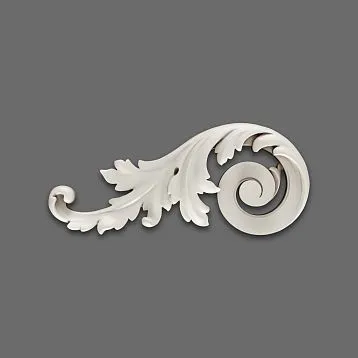
Polyurethane molding allows creating a stylish and presentable exterior of a house, while the material retains its qualities in any weather conditions.is universal in style, allowing the implementation of any architectural direction.
Classicism and Neoclassicism: Symmetry and the Order System
A classicist facade is built on the principles of symmetry, proportionality, and the order system. The central axis of symmetry is marked by the entrance, framed by columns or pilasters, and crowned with a pediment. Windows are arranged rhythmically, framed by architraves with pediments (sandrils). The facade is divided horizontally by interfloor moldings and topped with a developed cornice. Building corners are rusticated or accentuated with pilasters. The color palette is restrained: white, ivory, light gray, cream for decoration; pastel tones—light yellow, blue, greenish, ochre—for the walls.
21st-century Neoclassicism retains structural principles but simplifies detailing, enlarges the scale of elements, and uses a modern color palette with graphite, anthracite, and dark blue. A neoclassical facade comfortably combines with modern windows and insulation technologies, without looking like a museum piece.
Baroque: opulence and dynamism
A Baroque facade is an abundance of decoration, complex curvilinear forms, a profusion of sculpture, and a play of light and shadow. Cornices are multi-tiered with modillions and dentils; window architraves are framed with volutes and acanthus leaves; pediments are curvilinear and broken; the facade is saturated with rosettes, cartouches, and garlands. Baroque knows no restraint—every surface is decorated, every element demonstrates wealth.
Polyurethane is ideal for realizing Baroque forms: it allows the reproduction of the most complex curves and carvings with a precision unattainable for heavy materials. A Baroque facade made of polyurethane is a luxury accessible not only to palaces but also to private homes.
Modern: organic forms and asymmetry
Art Nouveau of the turn of the 19th–20th centuries rejected historical quotations in favor of new forms inspired by nature. An Art Nouveau facade is asymmetrical; windows are of different sizes and shapes; decoration represents stylized plants, flowing ribbons, and female faces with flowing hair. Lines are curved, there are no right angles, creating a feeling of organic growth rather than construction.
Polyurethane allows the realization of Art Nouveau forms, which are difficult to achieve in stone or concrete. Asymmetrical architraves, curved moldings, and organic rosettes create a recognizable Art Nouveau character.
Modern Style: Minimalism and Functionality
A contemporary facade is restrained in decoration, focusing on the purity of lines, quality of materials, and proportions of volumes. Decoration is present but laconic: simple cornices without ornamentation, flat moldings for dividing planes, smooth architraves. Color can be contrasting: white decoration on a dark gray facade creates a graphic composition.
In contemporary architecture, polyurethane is used to create clear lines, even planes, and geometric accents without excessive ornamentation.
Installation technology: from preparation to final finishing
The quality of installation determines the durability and appearance of the facade.
Foundation Preparation
The substrate must be strong, level, dry, and clean. Crumbling plaster, peeling paint, and weak areas are removed. The surface is dusted and primed with an acrylic deep-penetration primer, which strengthens the substrate and improves the adhesion of the adhesive. If the facade has significant unevenness, it is leveled with plaster. Special attention is paid to corners: they must be straight, vertical, and without tilting.
Facade Layout
Before installation, precise layout of the location of all elements is performed. Horizontal lines for installing cornices, moldings, and windowsill bands are determined—using a laser level or water level, lines are snapped with a chalk line. Vertical axes for columns, pilasters, and rustication are determined—checked with a plumb line. Window and door architraves are laid out with precise alignment to the axes of the openings.
Cutting elements
Elements are cut to size: cornices are cut to the required length, corners are mitered at 45 degrees for joining at building corners. A miter saw with a fine-toothed blade is used, which gives a clean cut without chipping. Polyurethane cuts easily, like wood. Cut edges are smoothed with fine sandpaper to remove burrs.
Gluing Elements
Special polyurethane mounting adhesives are used for installation, providing a strong, elastic bond resistant to thermal deformation, moisture, and vibrations. The adhesive is applied to the back of the element in a zigzag pattern or dots; the element is pressed against the substrate according to the layout and held in place for 30–60 seconds for initial setting. Heavy elements—cornices, columns—are additionally secured with temporary supports until the adhesive is completely dry, which takes 24 hours.
Additional mechanical fastening is used for elements subjected to increased loads: cornices are additionally secured with anchors through the element into the wall at intervals of 500–700 millimeters; the anchor heads are countersunk, filled with putty, and become invisible.
Joint sealing
After installing all elements, the joints between them are sealed with white weather-resistant acrylic or polyurethane sealant. The sealant is applied using a caulking gun, excess is removed with a damp sponge, and the seam is smoothed with a spatula or a gloved finger. A properly sealed joint becomes completely invisible after painting. The upper horizontal planes of cornices are additionally sealed to prevent water ingress.
Final finishing
Polyurethane elements are supplied primed with white UV-protective primer. For final finishing, they are painted with facade paints based on acrylic or silicone, which are resistant to weathering, UV radiation, and temperature fluctuations. Paint is applied in 2–3 coats using a roller on flat areas and a brush on textured areas, with intermediate drying times of 4–6 hours. The first coat is a primer, creating a base; the second and third are topcoats, ensuring uniform color.
The color scheme can be monochromatic—all decor in white or matching the wall color—or contrasting—white decor on colored walls or colored decor on white walls. Multicolor painting with accent details is possible: for example, the main body of the cornice is white, modillions are gilded, dentils are gray. Special techniques are used to imitate natural materials: patination creates an aged stone effect, texturing mimics sandstone texture.
Advantages over alternative materials
Polyurethane vs. Polystyrene Foam
Expanded polystyrene (foam) is also used for facade decor; it is cheaper than polyurethane, lighter, and easier to process. However, it has critical drawbacks: low density of 15–25 kilograms per cubic meter makes the material brittle and easily damaged during transportation and installation. The open-cell structure absorbs moisture, though less than gypsum. Flammability: expanded polystyrene supports combustion and releases toxic gases. Low relief clarity: fine ornamental details are blurred and indistinct. UV degradation: unprotected expanded polystyrene yellows and crumbles after 2–3 years.
Polyurethane with a density of 350–420 kilograms per cubic meter is strong, elastic, and holds the finest relief details. Its closed-cell structure is completely waterproof. Self-extinguishing: does not support combustion. Relief clarity is comparable to gypsum. UV stability ensures decades without degradation.
Polyurethane vs. Fiber Concrete
Fiber-reinforced concrete—concrete reinforced with glass fiber—is strong, durable, and non-combustible. But it is monstrously heavy: an element is 10 times heavier than a polyurethane one, requiring reinforced fastenings and special equipment for lifting. Difficult to process: cutting and fitting fiber-reinforced concrete on-site is extremely labor-intensive. Expensive: production is energy-intensive, and transportation is costly due to weight. Limited detailing: fine ornamental details are difficult to reproduce in concrete.
Polyurethane solves all these problems: lightweight, easy to cut, affordable, and reproduces the finest details.
Polyurethane vs. wood
Wooden facade decor is eco-friendly, has a natural texture and tactile feel. But it requires constant maintenance: regular renewal of protective coatings every 3–5 years; otherwise, the wood grays, cracks, and rots. Reacts to humidity: swells during wet periods, shrinks during dry ones, cracks, and deforms. Expensive: carved decor from noble wood species costs several times more than polyurethane. Flammable: wood supports combustion.
Polyurethane requires no maintenance after painting, is stable at any humidity, affordable, and self-extinguishing.
Practical aspects: cost, timelines, operation
Economic Efficiency
The cost of polyurethane facade decor is significantly lower than alternatives with comparable visual effect. A linear meter of polyurethane facade cornice costs 800–2,500 rubles depending on profile complexity; a similar one in fiber-reinforced concrete costs 3,000–8,000 rubles; in natural stone, 10,000–30,000 rubles. Savings are multiple, especially on large projects.
Polyurethane installation is fast and simple, requiring no special equipment or high qualifications, which reduces labor costs. Installing a cornice around a 10×12-meter house takes 1 day for two installers, with labor costs of 15,000–25,000 rubles. Installing a fiber-reinforced concrete cornice requires 3–4 days, special equipment, a crew of 4–5 people, and labor costs of 80,000–120,000 rubles.
Implementation Timeline
Polyurethane facade decor is available in stock; popular items ship on the day of order. Custom elements are manufactured to order within 2–4 weeks. Installing decor on a medium-sized cottage facade (150–200 square meters) takes 5–10 days for a two-person crew. The full cycle from order to completion of installation and painting is 4–6 weeks.
Alternative materials require significantly longer timelines: fiber-reinforced concrete is manufactured to order in 6–8 weeks, installation takes 2–3 times longer. Custom wooden carving is manufactured in 2–3 months.
Operation and Maintenance
After installation and painting, polyurethane decor requires no special maintenance. It is sufficient to wash the facade with a hose or pressure washer every 2–3 years to remove dust and dirt. Repainting is done every 10–15 years as the paint fades, but this depends on paint quality and climate.
Repairability is high: a accidentally damaged element is easily removed and replaced with a new one. Local chips are filled with acrylic putty, sanded, and touched up with paint.
Climatic operational features
Southern regions: UV radiation and heat
Southern Russia—Krasnodar Krai, Crimea, the Caucasus—is characterized by high insolation, heat up to plus 40 degrees Celsius, and intense ultraviolet radiation. It is critical to use polyurethane with maximum UV protection and paint with UV-filtering paints. Light colors are preferable: they reflect solar radiation and heat up less. A ventilated gap between the decor and the wall is desirable for heat dissipation.
Northern regions: frost and snow loads
Northern Russia—Siberia, the Far East, Arkhangelsk Oblast—is characterized by frosts down to minus 50 degrees Celsius, heavy snowfall, and long snow periods. Critical factors are polyurethane frost resistance of at least 300 cycles, elasticity of sealants at low temperatures, and strength of cornice fastenings under snow loads. Additional mechanical fastening of all horizontal elements is recommended.
Coastal regions: humidity and salt spray
Seaside and oceanfront areas—zones of high humidity, salt spray, and aggressive marine atmosphere. Critical factors are absolute waterproofness of the material, use of anti-corrosion fastenings made of stainless steel, and painting with paints with increased salt resistance. Regular facade washing to remove salt is mandatory.
Popular questions and answers
Can polyurethane decor be used on wooden houses?
Yes, polyurethane combines excellently with log or frame houses. It is important to ensure proper fastening: wood is mobile with changes in humidity, so adhesive bonding is supplemented with mechanical fasteners, and elastic sealants compensating for substrate movement are used.
Will a polyurethane cornice withstand snow loads?
Yes, with proper installation. The cornice is secured not only with adhesive but also mechanically with anchors through the element into the wall at intervals of 500–700 millimeters. Polyurethane itself is strong, withstanding loads of 50–100 kilograms per meter length under distributed load.
How long will polyurethane facade decor last?
Manufacturers provide a warranty of 10–15 years, with an actual service life of 30–50 years or more with quality installation and periodic repainting. The material itself is practically eternal; the only limitation is the paint, which fades in the sun after 10–15 years.
Can polyurethane be painted a dark color?
Yes, polyurethane can be painted with facade paints of any color. Dark colors—anthracite, chocolate, blue—are popular in contemporary architecture. It is important to use high-quality paints with UV protection; otherwise, dark colors fade quickly.
Is polyurethane primed before painting?
Elements are supplied primed with white primer, ready for painting. Additional priming is not required; you can paint directly with the finish coat. If an element has been stored for a long time, the surface is dusted, washed with water if necessary, dried, and then painted.
What should be done if an element is accidentally damaged during installation?
Small chips and dents are filled with acrylic exterior putty, sanded after drying, and painted. A seriously damaged element is best replaced with a new one, fortunately the cost of elements is low.
Can decor be installed in winter?
It is advisable to install at temperatures above plus 5 degrees Celsius, when adhesives cure properly. If winter installation is necessary, frost-resistant adhesives that work down to minus 10 degrees are used, and the installation area is locally heated with a heat gun.
How to care for polyurethane facade decor?
No special care is required. Every 2–3 years, it is advisable to wash the facade with pressurized water to remove dust, dirt, and soot. If the paint has faded, the facade is repainted after 10–15 years.
STAVROS: The leading manufacturer of polyurethane facade decor
When the question arises of where to purchaseFacade Molded Decorationof the highest quality with a durability guarantee, a wide range, and professional support at all stages from selection to installation—professional architects, builders, and designers choose STAVROS. The company has specialized for over two decades in producing architectural decor from wood, polyurethane, and MDF, offering solutions for interiors and facades of any complexity.
Own full-cycle production
STAVROS controls quality at all stages of the production process. Master models are created on high-precision CNC milling equipment from digital 3D models, ensuring perfect geometry, clarity of the finest relief details, and absolute consistency from element to element. Molding silicone forms are made from premium European silicone, which withstands hundreds of casting cycles without loss of accuracy.
Raw materials for polyurethane are supplied by leading European chemical producers: German BASF and Bayer, Italian companies, guaranteeing stable characteristics, environmental safety, and durability. Facade polyurethane compositions have a density of 350–400 kilograms per cubic meter, frost resistance of over 300 cycles, and contain next-generation UV stabilizers that protect the material from degradation under solar radiation.
Production is carried out under controlled conditions: precise dosing of components by computerized systems, optimal temperature regimes for polymerization, and multi-stage quality control at each step. Finished elements are primed with professional UV-protective primers and supplied ready for installation and painting.
Extensive assortment for any style
The STAVROS catalog includes over 300 models of elementsfacade decor for exterior cladding made of polyurethane, covering all architectural styles from classicism to modern, from Baroque to minimalism.
Facade cornices—dozens of profiles of different widths from 100 to 600 millimeters, varying in complexity from simple smooth ones to richly ornamented ones with modillions, dentils, flutes, and acanthus leaves. Window and door surrounds—from concise flat trims for modern facades to complex sets with pediments, pilasters, and keystones for classical ones. Corner rustications—smooth and textured, in various sizes for buildings of any number of stories.
Facade moldings—inter-floor, plinth, and windowsill moldings of different profiles. Columns and half-columns—Doric, Ionic, Corinthian in all sizes. Pilasters—smooth, fluted, ornamented. Decorative elements—rosettes, brackets, pediments, cartouches, garlands.
Systematization of the assortment by styles allows for easy selection of compatible elements: classical collections unite cornices, surrounds, pilasters, and rustications in a unified stylistic key, created for harmonious combination. This significantly simplifies the work of architects and builders, eliminating errors of style incompatibility.
Custom production for the project
STAVROS offers services for manufacturing exclusive elements according to the customer's individual drawings and sketches. The engineering department helps develop technical documentation, create a 3D model, and optimize the design for production capabilities. A master model and mold are made, and production of the required batch volume is launched.
This enables the realization of unique architectural projects with elements specially designed for a specific building, reflecting the architect's signature style, unavailable in standard catalogs. The production time for custom elements is 4–6 weeks depending on complexity.
Logistics across Russia and CIS
STAVROS supplies products to all regions of Russia from Kaliningrad to Vladivostok, as well as CIS countries. Own warehouses in Moscow and St. Petersburg ensure fast shipment for clients in central and northwestern regions with the possibility of pickup. Delivery to regions is organized by reliable transport companies with years of experience in transporting fragile goods.
Professional packaging guarantees safety during transportation: each element is individually wrapped in protective film, fragile parts are padded with cardboard spacers, batches are palletized, wrapped in stretch film, and marked with fragility warnings. The percentage of breakage during transport is minimal thanks to the elasticity of polyurethane and quality packaging.
Technical support and consultations
STAVROS specialists provide professional consultations at all project stages. Assistance in selecting elements for a specific architectural style, building proportions, and project budget. Calculation of the required material quantity, considering trimming and reserve for defects or damage. Recommendations on installation technology, selection of adhesives, sealants, and paints for specific regional climatic conditions.
For large projects—cottage communities, apartment buildings, public buildings—an on-site visit by a technologist is possible to supervise installation, train the crew, and resolve technical issues.
Warranties and reputation
STAVROS provides an official 10-year warranty on products, confirming the manufacturer's confidence in the material quality, production technology, and durability of the items. Over 20 years in the market, thousands of completed projects from private cottages to large public buildings, and partnerships with leading construction and architectural companies—all this is a reputation earned through years of impeccable work.
STAVROS clients are professional architects designing elite mansions, construction companies implementing cottage communities, interior designers creating unique spaces, and private clients building their dream homes. They all choose STAVROS for the combination of European product quality, the widest range, individual approach, professional support, and honest pricing policy.
Polyurethane molding allows creating a stylish and presentable exterior of a house, while the material retains its qualities in any weather conditions.In 2026, it is not just a decorative option, but a fundamental tool for creating architecturally expressive, stylistically cohesive, and visually memorable buildings. The era of faceless boxes is fading, giving way to a new architecture where technology serves beauty, where modern materials embody classical forms, where a house is not just a shelter but a work of art reflecting the owner's taste, status, and individuality. And STAVROS is a reliable partner in creating such homes, offering everything needed to turn architectural visions into reality.