Article Contents:
- The Philosophy of Decorative Art: Beauty Connected to Life
- What is Decorative Art
- Decorative and Applied Art: When Beauty Serves a Purpose
- The Boundary Between Decorative and Applied Art: Does It Exist
- The Role of Art Elements in Modern Interior Design
- Creating a Unique Space
- Connection to Tradition and Culture
- Tactile and Emotional Value
- Investment Value
- Wooden Decorative Items: Sculpture in Everyday Life
- Carved Shelves: Function Meets Art
- Boxes: Keepers of Secrets and Beauty
- Mirror and Picture Frames: Framing as an Art
- Murals and Reliefs: Sculpture on the Wall
- Polyurethane Molding: Classical Art in a Modern Material
- The Tradition of Stucco Decoration: From Plaster to Polyurethane
- Ornaments of Classical Styles: A Language of Forms
- Applying Molding in Modern Interior Design
- Painting and Patination: Personalizing Molding
- Author's Furniture: When Function Becomes Sculpture
- What Makes Furniture Author's
- Types of Author's Furniture in Interior Design
- Integrating Author's Furniture into Modern Interior Design
- Integrating Art into Everyday Life: Practical Tips
- Start Small
- Respect the Items
- Create Context
- Trust Professionals
- Frequently Asked Questions About Elements of Decorative Art
- How to Distinguish Genuine Decorative Art from Mass-Produced Fakes
- Can you mix elements from different historical styles
- How much does authentic designer furniture cost
- How to care for carved wooden elements
- Where to buy authentic decorative art elements
- Can you use classical molding in a modern interior
- Conclusion: living surrounded by beauty is a luxury available to everyone
- STAVROS: the workshop where decorative art is born

Why do some interiors leave you indifferent, while others etch themselves into memory, linger, and make you return again and again? It's not about square footage. Not about the cost of finishes. Not even about the designer's fame. It's all about the presence of soul — that invisible substance whichdecorative art elementsbring into a space, transforming it from a set of functional zones into a living organism.
Decorative art is the oldest form of human self-expression. Long before the emergence of painting and sculpture in their pure forms, people decorated utensils, weapons, and dwellings. They carved patterns on knife handles, painted clay pots, and wove ornaments into clothing. Beauty was not separated from function — it elevated it, sanctified it, made it sacred. A bowl ceased to be just a container for food and became a ritual object connecting humans with the cosmos.
Today, in the era of mass production, when identical chairs are stamped out by the millions, when interiors are assembled from catalog pictures,decorative and applied art elementsare regaining value. Not as a tribute to fashion, but as the soul's need to live in a space filled with meaning, uniqueness, and connection to tradition and craftsmanship.
What is decorative art in a modern interior? How to distinguish a genuine applied art object from mass-produced decoration? What role do carved wooden elements, classical molding, and designer furniture play in creating a home's atmosphere? How to integrate art into everyday life without turning a dwelling into a museum? And where to find those very objects that carry the soul of the maker, the energy of the material, the magic of handcraft?
In this article, we will embark on a journey through the world of decorative art — from the philosophy of the object to specific examples of integration into modern living. We'll examine the differences between decorative and decorative-applied art. Explore wooden decorative objects as art pieces. See how classical polyurethane molding continues the traditions of Baroque and Empire. Learn how designer furniture differs from mass-produced furniture and why its presence transforms the entire space.
Ready to open the door to a world where every object is a work of art? Come in.


The philosophy of the decorative: beauty connected to life
Pure art — painting, sculpture, installation — lives in museums, galleries, separated from daily life. You come to it, contemplate, and leave. Decorative art is different — it enters your home, becomes part of everyday life, serves you, while remaining art.




What is decorative art
Decorative art is an area of artistic creativity whose works are intended to decorate space, objects, and architecture. Its main function is aesthetic. Beauty for beauty's sake. An ornament on a wall, carrying no informational load other than visual pleasure. A carved ceiling rosette, existing solely to delight the eye.
Characteristic features:
-
Ornamentality — the use of repeating motifs, patterns, rhythms
-
Decorativeness — the predominance of aesthetic function over informational
-
Connection to space — the work is created for a specific place, taking architecture into account
-
Materiality — the art is realized through specific materials (wood, plaster, metal, fabric)
decorative art elementsin an interior — these are carved wall overlays, ceiling rosettes, friezes with ornaments, stained glass, mosaics, painting. Everything that decorates space without claiming a utilitarian function.
Our factory also produces:


Decorative-applied art: when beauty serves
Decorative-applied art (DAA) goes further. Here beauty combines with function. The object not only decorates — it serves, is used in daily life, while being a work of art.
Characteristic features:
-
Utilitarianism — the object has a practical function (to sit, store, illuminate)
-
Artistry — the form, decor, and execution reach the level of art
-
Craftsmanship — creation requires mastery of craft, technique, and skill
-
Uniqueness or limited production — handmade or author-supervised
decorative applied elements— this includes carved furniture, handmade ceramic tableware, forged lamps, painted chests, woven carpets, carved boxes. Everything that is usable and simultaneously art.
Get Consultation
The boundary between decorative and applied art: does it exist
The boundary is blurred, fluid, sometimes insignificant. A carved wooden panel on a wall is a purely decorative element. But if the same panel is a cabinet door, it becomes applied art (function: to close while also decorating). A ceramic plate on a wall is decor. The same plate on a table, with fruit, is applied art.
Classification is less important than the essence: in both cases, we are dealing with works where the aesthetic principle dominates, where the form is thoughtful, the material is noble, and the execution is masterful. This is the antithesis of mass-produced goods, where form is dictated by cost minimization, the cheapest material is chosen, and execution is mechanical.
The role of art elements in modern interiors
Why, in the era of minimalism, Scandinavian simplicity, and industrial loft, are carved panels, molded cornices, and author-designed furniture with ornaments needed?
Creating uniqueness of space
Standard apartments resemble each other. Identical layouts, the same finishing materials (laminate, wallpaper, stretch ceilings), furniture from IKEA. Entering such an apartment, you don't feel the presence of the owner — only standard solutions.
The appearance of a single piece of decorative art changes everything. A carved solid oak console in the hallway, made by a master — and the space gains a face. A ceiling rosette with a classical ornament in the living room — and the flat, featureless ceiling transforms into an architectural element.Custom furniturewith carved legs and an inlaid front—and the room ceases to be a set of functional zones, becoming a space with character.
Connection with tradition and culture
Elements of decorative art carry a cultural code. The acanthus ornament on molding is not just swirls; it is a connection with antiquity, with Greco-Roman civilization, with the idea of harmony and perfection of forms. A carved wooden spoon with Khokhloma painting — a connection with Russian culture, peasant life, the tradition of making even the simplest object beautiful.
Living surrounded by such objects, you are not cut off from your roots, not adrift in the timeless space of globalization. You are a continuer of tradition, a person who values what was created before you and preserves it for those who will come after.
Tactile and emotional value
Mass-produced furniture made of chipboard, laminated with wood-grain film, is tactilely dead. Touching it — you feel cold plastic. A carved wooden overlay, polished by hand, is warm, alive. Running your hand over the relief — you feel the carver's labor, the movement of their tool, the energy invested in every curl.
The emotional connection with art objects is deeper than with factory-made items. You won't throw away a carved chair inherited from your grandmother, even if the upholstery is worn — you'll restore it, preserve it. But a plastic chair from a mass-market store will fly to the landfill at the slightest damage. The difference is in the soul, which one has and the other lacks.
Investment value
Qualitydecorative and applied art elementsgrow in value. Antique carved furniture from the 18th century costs hundreds of times more today than when it was created. Authorial works by contemporary masters, bought today, will become antiques in 30-50 years, their value will multiply.
Mass-produced furniture depreciates immediately after purchase. You bought a sofa for 100 thousand — a year later its market value is 30 thousand. You bought a carved author-made chest of drawers for 300 thousand — in 10 years its value is 400-500 thousand (if the master became more famous), in 50 years — millions (if they became a classic).
Wooden decorative objects: sculpture in everyday life
Wood is the material of decorative art par excellence. Warm, living, yielding to the chisel, preserving the scent of the forest, the texture of annual rings, the memory of the tree from which it was born.
Carved shelves: function meets art
A shelf is a utilitarian object. A horizontal board holding books, vases, figurines. In mass production — the most boring element of an interior. But in the hands of a carving master, a shelf transforms into an art object.
Construction: A board 30-40 mm thick made of solid oak or walnut (strength, beauty of texture). The edges of the board are processed with a shaped profile — rounded, provided with coves, cornices. Along the end runs a carved ornament — a plant frieze (grapevine, oak leaves), a geometric meander, stylized waves. The brackets (consoles) supporting the shelf are not just metal triangles, but carved wooden elements in the shape of volutes, S-shaped curls, adorned with acanthus leaves.
Placement: A carved shelf is not hidden — it is exhibited. Above the fireplace (if present), on an accent wall (the one first seen upon entering), in the pier between windows. On it — not a chaotic pile of things, but a thoughtful composition: a couple of books in leather bindings, a ceramic vase (also an authorial work), a bronze figurine. The shelf together with its contents becomes an installation, a considered artistic statement.
Styles: For classic interiors — shelves with Baroque ornaments (lush, complex, multi-layered). For neoclassicism — strict, with geometric motifs. For country, Provence — simple, with soft plant patterns. For modern interiors (contemporary classic, eclectic) — minimalist in form, but with an accent carved element (a small overlay in the center, carved bracket ends).
Boxes: repositories of secrets and beauty
A box is one of the most ancient objects of applied art. A casket for jewelry, documents, relics. In it, people stored what is more precious than money — memory, a secret, something intimate.
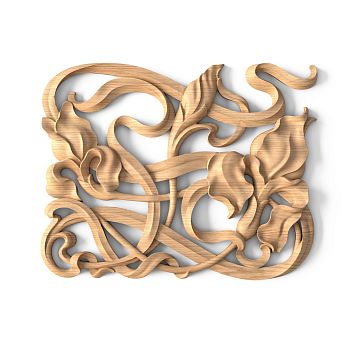
Carved boxes made of solid wood — small sculpture. The body is made of walnut, oak, mahogany, wall thickness 8-12 mm. The surface is not smooth — covered with carving. The facades (front and side walls) are adorned with plant panels (roses, peonies, birds in branches), geometric rosettes, narrative scenes (hunting, pastoral motifs). The lid — the central element of the composition, here the carving is deepest and most complex. Often — a bas-relief (three-dimensional image), protruding by 5-10 mm.
Inside: The box is divided by partitions into compartments. The walls of the compartments are lined with velvet and silk (to protect the contents from scratches and create softness). The lid opens on hinges (brass, bronze, often with engraving) and has a lock (miniature, mortise, with a key).
Carving techniques: Bas-relief (the ornament is raised 2-5 mm above the background, the background remains flat). Deep relief (the background is recessed, the ornament is at the level of the original surface). Openwork (the background is completely removed, the carving is lace-like, translucent — used for decorative boxes where the storage function is secondary).
Use in interior: The box is not hidden in a closet — it is displayed in plain sight. On a dressing table (for storing jewelry), on a desk in a study (for storing important small items — cufflinks, watches, pens), on a mantelpiece (purely decorative function, containing nothing or small mementos). The box is a focal point, attracting the eye, evoking a desire to examine, touch, and open it.
Frames for mirrors and paintings: framing as an art
A frame is not just a border. It is a transition between the space of the room and the space of the image (painting, photograph) or reflection (mirror). The right frame enhances the work, the wrong one ruins it.
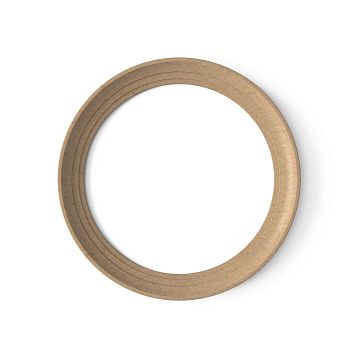
Carved wooden frames are independent works of decorative art. The molding (frame profile) is 8-15 cm wide (for mirrors), 5-10 cm (for paintings). Made from solid wood (linden — for complex carving under gilding, oak — for natural finishes, walnut — for dark noble frames). The surface of the molding is covered with ornament — continuous (runs the entire length) or local (corner overlays, central elements on the sides).
Types of ornaments:
-
Floral — grapevines, laurel branches, garlands of flowers. Styles: Baroque, Rococo, Victorian.
-
Geometric — meander, egg-and-dart, guilloche. Styles: Classicism, Neoclassicism, Art Deco.
-
Baroque — cartouches (shields with curled edges), rocaille (asymmetrical shell forms), masks, putti (cherub heads). Style: Baroque, Neo-Baroque.
Finishing: Gilding (gold leaf, imitation gold leaf) — classic for museum and palace interiors. Patination (painting with partial wiping, an aged effect) — for vintage, Provençal interiors. Natural finish (oil, wax, varnish) — for modern interiors where wood texture is valued.
Placement: A large mirror in a carved frame — the center of the composition (above the fireplace, on an accent wall). A group of small paintings in identical carved frames — creating a gallery-style hanging (a composition of 6-9 paintings, symmetrically arranged). A single painting in an ornate frame — a solo element (requires space around it, minimal other accents).
Panels and reliefs: sculpture on the wall
Carved wooden panels — an intermediate form between decorative art and sculpture. An image (landscape, portrait, ornamental composition, narrative scene) is carved in wood, the relief creates volume, chiaroscuro, and expressiveness.
Technique: High relief (figures project by 1/2 to 3/4 of their volume, almost sculpture). Bas-relief (low relief, projection of 1/4 to 1/3 of the volume, a flatter image). Coelanaglyph (sunken relief, the image is carved inward, an inversion of normal relief — a rare technique).
Sizes: Small panels 30×40 cm, 40×60 cm — for small walls (wall sections, area above switches, door panel decoration). Medium 60×80 cm, 80×120 cm — for accent zones (headboard, wall behind a sofa). Large 120×180 cm and more — for formal rooms (halls, living rooms with high ceilings).
Subjects: Floral compositions (bouquets, garlands, arabesques) — neutral, suitable for any interior. Landscapes (forests, mountains, seascapes) — for studies, libraries, create a mood. Animalistic (horses, deer, birds) — for country houses, hunting-themed interiors. Mythological scenes (ancient gods, allegories) — for palatial, pompous interiors.
Finishing: Natural (emphasizes wood texture, play of light on the relief). Stained (fumed oak, ebony — creates a noble darkness). Polychrome (colored painting — for folk styles, ethnic interiors). Gilded (following the example of iconostases — for luxurious interiors).
Polyurethane moldings: classical art in a modern material
Molding is an element of architectural decoration, known for millennia. Ancient temples, Baroque palaces, Art Nouveau mansions — everywhere, molded cornices, rosettes, friezes, and columns created visual richness, emphasized status, and amazed with craftsmanship.
The tradition of molded decoration: from plaster to polyurethane
Traditionally, moldings were made from plaster (alabaster). A master would sculpt the ornament by hand or cast it in molds. Plaster allowed for the finest details but was fragile, heavy, and finicky (afraid of moisture, crumbled over time).
Modern polyurethane moldings are a technological breakthrough, preserving the aesthetics of classicism while vastly improving performance characteristics. Polyurethane is lightweight (5-7 times lighter than plaster), durable (does not crack or crumble), moisture-resistant (can be used in bathrooms, on facades), and easy to work with (cuts with a saw, glues to any surface). At the same time, the quality of the relief is not inferior to plaster — modern casting technologies can reproduce the smallest details of the ornament.
Ornaments of classical styles: a language of forms
Moldings speak the language of historical styles. Each era corresponds to its own ornamental vocabulary.
Classicism (late 18th — early 19th century): Strictness, symmetry, antique motifs. Ornaments: meander (a broken line forming rectangular spirals), egg-and-dart (egg-shaped forms alternating with darts), acanthus (stylized leaves of the acanthus plant), rosettes (circular floral motifs). Moldings are restrained, not overloaded, emphasize architecture without overwhelming it.
Empire (first third of the 19th century): The style of Napoleon's empire, theatrical, pompous. Ornaments: laurel wreaths (symbol of victory), military attributes (swords, shields, helmets), Egyptian motifs (sphinxes, lotuses), imperial eagles. Moldings are large, expressive, often gilded.
Baroque (17th — mid-18th century): Opulence, dynamism, abundance of forms. Ornaments: cartouches (decorative shields with curled edges), garlands (chains of flowers and fruits), putti (chubby cherubs), rocaille (asymmetrical shell-like forms). Moldings are abundant, multi-layered, create a sense of luxury, sometimes excess (which was the goal — demonstrating wealth).
Rococo (mid-18th century): Lightness, playfulness, asymmetry. Ornaments: elegant scrolls (C- and S-shaped), shells, floral garlands, pastoral scenes. Moldings are thin, lacy, often gilded or painted in pastel colors.
Art Nouveau (late 19th — early 20th century): Flowing plant lines, asymmetry, stylization of natural forms. Ornaments: winding stems, lilies, irises, female heads with flowing hair. Moldings are soft, fluid, create a sense of organic unity.
Application of moldings in modern interiors
It might seem that moldings are an attribute of palaces and museums. But the skillful integration of classical decoration into a modern home creates a unique atmosphere, unattainable through minimalist means.
Ceiling Cornices: The transition between wall and ceiling was traditionally finished with a cornice (a horizontal projection, often with ornamentation). Modern ceilings (stretch, drywall) are often made without a cornice — and look unfinished, flat. Installing a polyurethane cornice (width 8-15 cm, with a classic ornament) instantly elevates the room. The height visually increases (the cornice separates the ceiling, creates architectural articulation), and a connection to classical tradition appears.
Ceiling Rosettes: The central element of a ceiling, traditionally placed around a chandelier. A rosette with a diameter of 60-100 cm and a radial ornament (diverging rays decorated with leaves, flowers) transforms a flat ceiling into an architectural element. The chandelier no longer hangs in a void — it is integrated into a decorative composition.
Wall Mouldings: Creating panels (rectangular frames on walls) from mouldings is a classic decorating technique. The wall is divided into symmetrical sections, each framed by a moulding (width 3-6 cm, with ornamentation or smooth). Inside the panel, the wall is painted a contrasting color, wallpapered, or left smooth. Effect: a flat wall turns into an architectural work, gaining depth, rhythm, and classical elegance.
Pilasters and Half-Columns: Vertical elements imitating columns, projecting from the wall. A pilaster is flat (projection 2-3 cm), a half-column is volumetric (projection 10-15 cm). They are installed in room corners, frame doorways, and zone space. They create vertical articulation, visually stretch the room upward, and add architectural character.
Corbels and Brackets: Decorative projections that visually support cornices, shelves, arches. Shapes: volutes (S-shaped scrolls), acanthus leaves, masks. Placed under cornices (in room corners, spaced 1.5-2 meters along walls), under shelves (creating the illusion that the shelf rests on a corbel, though it's actually held by hidden brackets).
Painting and Patination: personalizing moldings
Polyurethane moldings are supplied white (primed, ready for painting). This is not a limitation, but an opportunity for personalization.
Monochromatic painting: Moldings are painted the same color as the walls/ceiling. The ornament is perceived only through relief, play of light and shadow. The approach is modern, delicate. White molding on a white ceiling — a classic of minimalism with a historical accent.
Contrast painting: The molding contrasts with the background. White on colored walls (blue, green, gray) — a classic technique emphasizing the ornament. Gold or silver on white — luxury, solemnity. Black on light — modern graphics, a bold move.
Patination: Applying paint followed by partial wiping. Base layer (white, beige, gray), overlaid with patina (gold, bronze, dark brown). The patina remains in the recesses of the ornament, wiped from the projections. Effect: artificial aging, a patina of time, the nobility of an antique.
Gilding: Imitation of gold leaf (gold paint, imitation gold leaf) or real gilding (for exclusive projects). The molding becomes a piece of jewelry art, suitable for palatial, pompous interiors.
Custom Furniture: when function becomes sculpture
Mass-produced furniture is designed for mass production. Forms are simplified (cheaper to manufacture), materials are standard (chipboard, MDF), decor is minimal (expensive). Result: functional, but bland.
Custom furnitureCustom furniture is the opposite pole. A designer or craftsman creates an item as a work of art. The form is unique, dictated by an aesthetic idea, not economy. Materials are noble (solid wood, genuine leather, bronze, marble). Decor is abundant, it is the essence of the item.
What makes furniture custom
Unique design: The form does not repeat existing models, it is conceived by the author. A chair's legs are not standard turned, but carved, with a unique profile. The back is not rectangular, but shaped, with an expressive silhouette.
Handmade or small batch: Production is not assembly line. A craftsman (or a small team) creates the item by hand or with minimal machine use. Carving is done with a chisel (not a CNC router, which leaves a perfect but lifeless trace). Assembly is individual, with parts fitted to the specific piece.
High-quality materials: Solid wood of valuable species (oak, walnut, mahogany, rosewood), not veneer on chipboard. Genuine leather for upholstery, not faux leather. Hardware is brass or bronze, often vintage or custom-made, not stamped from zamak.
Artistic value: The item can be viewed as sculpture. Proportions are precise, lines are expressive, details are refined. Even without its function (if you remove the ability to sit, store) the item remains a work of art.
Author's signature: The craftsman or designer signs the work (brand, engraving, certificate), taking responsibility for quality, confirming authorship.
Types of custom furniture in interiors
Armchairs and chairs: The most expressive items (a person sits — the furniture is in view, being examined). Carved legs (cabriole — curved, ending in animal paws or scrolls), carved back (central cartouche, openwork pierced carving), upholstery (jacquard, velvet, tapestry with ornaments). Style: Baroque (opulence, gilding), Neoclassical (strictness, elegance), Art Nouveau (flowing lines, stylized flora).
Tables: Tabletop made of solid wood (oak, walnut, marble), edges are shaped (rounding, bevels, carved ornament). The underframe (legs and connecting elements) — a work of art. Legs are turned with carved details, balusters, brackets. The apron (horizontal frame under the tabletop) is decorated with a carved frieze.
Cabinets and dressers: Carcass made of solid wood, fronts (doors, drawers) with carved overlays, inlay, marquetry (mosaic of different wood species). Handles are custom (bronze, in the shape of lion heads, plant motifs). Legs are carved, transforming the cabinet from a heavy volume into a light, elegant structure.
Beds: The headboard is the main element. Tall (150-200 cm from the floor), carved, upholstered with patterned fabric, or entirely wooden with a bas-relief. The bed frame on carved legs, often with a canopy structure (posts at the corners supporting draperies).
Consoles: Narrow tables placed against walls (in hallways, corridors, behind sofas). An ideal item for custom work — small size (affordable price), high visibility (at eye level), potential for complex decor (marble tabletop, carved underframe, gilding).
Integrating custom furniture into a modern interior
Mistake: filling a room entirely with custom furniture. It becomes a museum, overloaded, lacking air. Correct: 1-3 pieces of custom furniture per room, the rest — a neutral background.
The soloist principle: One item is the star, the others are accompaniment. In the living room, the star is a carved throne chair by the fireplace. The rest of the furniture (sofa, coffee table) is modern, simple, not competing. The gaze is drawn to the chair, it sets the tone for the space.
The contrast principle: Custom classical furniture in a modern minimalist interior. Walls are white and smooth, floor is concrete, ceiling is stretch without decor. And — a carved oak table on shaped legs in the center. The contrast of styles creates tension, interest, uniqueness.
Eclecticism principle: Mixing items from different styles and eras, united by quality of execution. A Baroque armchair, an Art Deco console, a modern floor lamp, an ethnic rug — all together in one room. It works if each item is of high quality and the overall color palette is harmonious.
Integrating art into everyday life: practical tips
How to bring decorative art elements into daily life without turning the house into an exhibition where you're afraid to move?
Start small
Don't try to create a palace right away. Start with one item. Wooden decoration— a carved wall overlay, a shelf, a mirror frame. Assess how it changes the space, how you feel. If comfortable — add the next element. If it feels alien — look for a different style, a different item.
Respect the items
Art elements require care. Wooden items — periodic treatment with oil/wax, protection from moisture. Moldings — dusting (with a soft brush to avoid damaging the relief). Author-made furniture — careful handling (do not place hot items on the tabletop, avoid scratches, timely reupholstery restoration).
If you are not ready to care for it — don't acquire it. A dusty carved frame, peeling gilding on molding, scratches on an author's table — are not decoration, but dreariness.
Create context
One art item gets lost in a chaotic space. Create context around it. A carved armchair requires space around it (1.5-2 meters of free zone for viewing), a neutral background (a plain wall, a calm color), proper lighting (directed light emphasizing the carving relief).
A ceiling rosette molding requires a quality chandelier (cheap Chinese plastic will kill all the beauty), even ceiling painting (stains, roller marks are unacceptable next to elegant ornamentation).
Trust professionals
If you lack experience, taste, confidence — hire an interior designer specializing in classic, historical decor. They will select elements, create a composition, supervise installation. Cheaper than redoing after DIY mistakes.
Frequently asked questions about decorative art elements
How to distinguish genuine decorative art from mass-produced fakes
Material: Art is made from noble materials (solid wood, natural stone, metal). Fakes — from cheap ones (plastic, particleboard, imitation).
Execution: In art, traces of handwork are visible (slight imperfection, liveliness of lines). In fakes — machine-made perfection (stamping, all elements are absolutely identical).
Detailing: Art is detailed (in carving, leaf veins, petal texture are visible). Fakes are generalized (carving is superficial, details are blurred).
Price: Art is expensive (craftsman's labor, material quality). If the price is suspiciously low — it's not art, but imitation.
Can elements of different historical styles be mixed?
Yes, if unity of level is maintained. Baroque molding and Empire furniture — both styles are classical, lavish, can be combined. Baroque molding and plastic IKEA furniture — no, the levels are incomparable.
How much does genuine author-made furniture cost?
Prices start from 150-200 thousand rubles for an armchair, from 300-400 thousand for a table, from 500 thousand for a cabinet. Exclusive works by renowned masters — millions. Cheap doesn't exist — manual labor, noble materials, uniqueness are expensive.
How to care for carved wooden elements
Dry cleaning with a soft brush (every 1-2 months, removing dust from recesses). Damp wiping with a slightly damp cloth (every six months, without aggressive chemicals). Coating renewal (oil/wax — every 2-3 years, varnish does not require renewal).
Where to buy authentic decorative art elements
From trusted manufacturers with reputation, portfolio, reviews. Avoid random workshops, market vendors. Demand material certificates, product warranties.
Can classical molding be used in a modern interior?
It is both possible and necessary. The contrast between classical elements and modern finishes creates a unique eclecticism. The key is not to overload, but to use them in measured doses (one or two elements per room).
Conclusion: Living surrounded by beauty is a luxury accessible to everyone.
decorative art elementsIn an interior, it is not a whim of the rich, nor a museum antiquity. It is a choice in favor of quality of life, of surrounding oneself with objects that carry beauty, history, and the soul of the craftsman.
We live in an era where the availability of mass-produced goods has peaked. Buying a chair for 2000 rubles, throwing it away a year later, and buying a new one is a consumption model imposed by the industry. But the soul is not satisfied by quantity. The soul craves quality, uniqueness, connection.
decorative and applied art elementsThey provide this connection. A carved wooden box holding your grandmother's jewelry. An author's armchair in which three generations of the family have read. A molded ceiling rosette reminiscent of palaces of the past, yet living in your living room. These items are not replaced—they are restored, passed down to children, kept as family heirlooms.
Integrating art into everyday life is not complicating life, but enriching it. You don't just eat at a table—you touch the beauty of its carved legs. You don't just look in a mirror—you admire the frame that borders your reflection. You don't just glance up at the ceiling—you see an ornament created according to the canons of classical architecture.
It is accessible. You don't have to immediately buy a collection of author's furniture worth millions. Start small: one carved shelf, one molded rosette, one item you chose not because it's cheap and functional, but because it's beautiful and stirs the soul. And the space around you will change. It will cease to be a set of functional zones and become a home—a place where not only the body lives, but also the spirit.
STAVROS: a workshop where decorative art is born
When they talk aboutdecorative art elementsfor a modern interior, professionals mention the name STAVROS. A company where traditions of classical craftsmanship meet modern technology, where every item goes through the journey from sketch to finished piece under the supervision of experts.
Productionwooden decorIn-house workshops are equipped with high-precision CNC equipment (5-axis milling machines, providing carving detail at the level of handwork) and traditional carving tools (for final finishing, giving life to the relief). Process: 3D modeling of the ornament (based on museum samples, historical albums, designers' original developments), milling the blank (solid oak, beech, ash, walnut—moisture content 8-10%, top grades without knots), manual finishing by a carver (deepening small details, removing milling marks, creating smooth transitions), sanding (multi-stage, gradation from P120 to P320), preparation for finishing or application of final coating (oil, varnish, wax, patination, gilding—as per customer's choice).
Assortment: carved overlays (over 500 ornaments—floral, geometric, Baroque, Neoclassical, Art Nouveau), carved shelves (with bracket-consoles of various styles), frames for mirrors and paintings (sizes from 30×40 cm to 150×200 cm, molding width 5-15 cm), wooden panels and bas-reliefs (narrative, ornamental, landscape), boxes (made of walnut, oak, exotic woods, with inlay), small architectural forms (columns, pilasters, capitals made of solid wood—for those who prefer wood to polymers).
Custom furnitureAnd classical collections: Full-cycle production—from design development to final assembly and delivery. Classical collection: furniture in Baroque, Rococo, Empire, Neoclassical, Art Nouveau styles. Armchairs with carved legs and backs, tables on figured bases, chests of drawers with carved fronts, beds with monumental carved headboards. Materials: solid oak, beech, walnut (for carcasses and carved elements), genuine leather, jacquard, velvet (for upholstery), brass and bronze hardware (handles, hinges, locks—often vintage or replicas of historical samples).
Modern collection: author's furniture, where classical techniques (carving, marquetry, inlay) are combined with modern forms (clean lines, minimalist silhouettes, non-traditional materials—glass, metal, stone in combination with wood). STAVROS designers develop unique pieces that exist in small series (10-50 copies) or as exclusives (a single piece made to individual order).
Polyurethane moldings: The collection includes over 2000 items, covering all classical styles and many modern interpretations. Ceiling cornices (width from 4 to 25 cm, ornaments from strict egg-and-dart to lush Baroque garlands). Ceiling rosettes (diameter from 30 to 150 cm, radial and concentric compositions, from classical to avant-garde). Wall moldings (creating panels, framing doors, windows, niches). Pilasters and half-columns (height 200-300 cm, Doric, Ionic, Corinthian, Composite capitals). Corbels, brackets, pediments, arch elements, coffers (for ceilings in palace style).
Production technology: high-quality polyurethane (two-component, surface layer density 400-450 kg/m³, inner layer 200-250 kg/m³), casting in silicone molds (ensures accurate reproduction of the finest ornament details, identity of serial elements), priming (water-dispersion, ready for painting). All elements undergo quality control: geometry check (deviations no more than ±1 mm per meter of length), relief check (clarity of all ornament details), surface check (absence of cavities, drips, casting defects).
Custom projects: STAVROS executes orders of any complexity. You can provide a sketch, photograph, description of the desired element—designers will create a 3D model, coordinate it with you, and produce a sample. Then—serial production (if several identical elements are needed) or a single piece. Timelines: development and coordination 1-2 weeks, sample production 2-3 weeks, series 3-6 weeks (depending on volume and complexity).
Interior design services: The STAVROS design team will help integratedecorative art elementsinto your interior harmoniously. The service includes: site visit, measurements, photo documentation, analysis of the existing interior, concept development (which elements to place where, in which styles, colors), selection of specific items from the STAVROS catalog, creation of 3D visualization (you see the final result before work begins), cost estimate, order fulfillment, installation supervision.
Installation and mounting: In-house installation teams (with over 10 years of experience working with classical decor) perform installation of wooden elements, moldings, furniture. All technologies are observed: preliminary surface preparation (leveling, priming), precise marking (laser levels, templates), quality fastening (specialized adhesives for wood and polyurethane, anchors for heavy elements), on-site finishing (fitting joints, puttying, painting, patination, gilding—if required). Installation warranty: 2 years (elements will not peel off, deform, or lose geometry).
Delivery: Within Moscow and the region—using own transport with careful loading/unloading and floor delivery. Across Russia—via partner transport companies, packaging in individual crates (wooden crating, bubble wrap, cardboard boxes), cargo insurance. Large-sized elements (furniture, long cornices) are delivered by special transport (extended vans, monitoring at all stages).
Showroom and exhibition hall: In Moscow, the STAVROS exhibition space operates (over 500 m²), showcasing samples from all main collections. You can come, see the carved elements in person, touch the wood texture, assess the quality of the moldings, sit in the author's armchairs, and consult with designers. By appointment only (individual approach, no crowds, comfortable atmosphere).
Create interiors wheredecorative applied elementsThey become part of your daily life, where art is not locked in frames, but lives, breathes, and serves. Trust the craftsmanship of STAVROS—a company for which every decorative item, every piece of furniture, every molding element is not a commodity, but a work of art, created with respect for tradition, love for the material, and a pursuit of perfection. Your home deserves more than mass-produced goods. It deserves art. And STAVROS is ready to create it.