












































































Article Contents:
- Why Interiors Look 'Expensive' When All Wooden Details Are Coordinated
- Visual Harmony as a Status Symbol
- Repetition as an Architectural Technique
- Material Honesty
- How to Choose a Base Wood Species: Oak, Beech, Ash, and Building the Entire Set from It
- Oak: The Classic of Durability and Nobility
- Beech: A Warm Alternative to Oak
- Ash: Expressive Texture
- Selection Principle: From Style to Species
- Baseboards, Mirror Frames, Cabinet and Dresser Fronts: One Profile – Different Scales
- What is a Profile and Why It's Important
- Profile Scaling
- Practical Implementation
- Systematic Approach: Repeating Chamfers, Radii, Fluting in Different Elements
- Chamfer as a Profile Element
- Rounding Radius
- Fluting: Vertical Grooves
- Carving and Ornament
- Technique: Mirror Above a Dresser with a Frame Repeating the Front Panel
- Dresser Front Panel
- Mirror Frame Repeating the Profile
- Enhancing the Effect: Unity of Color and Texture
- Compositional Center
- Mistakes: When Frames and Baseboards Are 'From Different Worlds' and It Visually Cheapens the Interior
- Mistake 1: Different Wood Species Without Logic
- Mistake 2: Profile Conflict
- Mistake 3: Scale Mismatch
- Mistake 4: Different Degrees of Finishing
- Example scenario: living room and bedroom in a single stylistic line without disjointedness
- Step 1: Choosing the base wood species — oak
- Step 2: Defining the profile
- Step 3: Living room — set of elements
- Step 4: Bedroom — continuing the line
- Step 5: Details that enhance unity
- Frequently Asked Questions
- Conclusion: when details create a symphony
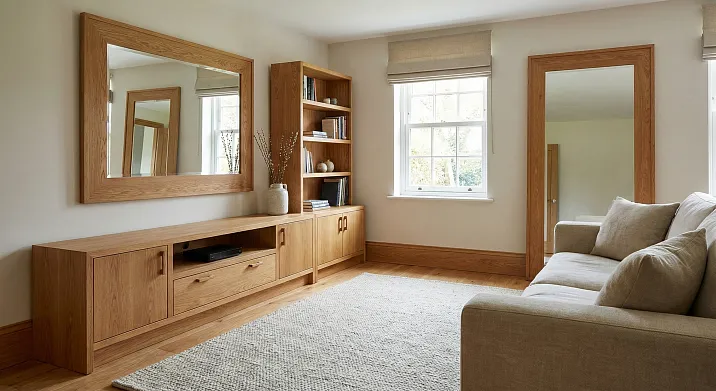
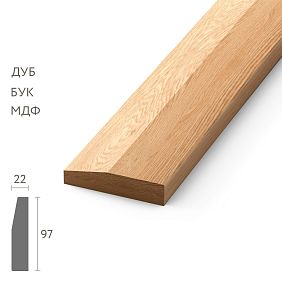
You enter the apartment — and immediately feel: everything here is thought out. You can't explain it in words, but you sense harmony, integrity, luxury. Look closer:Oak Baseboardswith a characteristic bevel,mirror framesmade from the same oak with the same profile,wooden chest of drawerswith panels repeating the pattern of the frames. Everything is connected, everything speaks the same language — the language of wood, the unity of material, profile, style.
This is not a coincidence, not happenstance. This is a systematic approach to interior design, where all wooden elements are coordinated — not just by color, but by wood species, profile, and treatment character. Such interiors look expensive not because huge sums were invested in them (though quality wood isn't cheap), but because thought, attention to detail, and respect for the material were invested in them.




Why interiors 'look expensive' when all wooden details are coordinated
Expensive-looking is not synonymous with high-priced. An interior can be assembled from budget elements, but if they are disjointed, not connected to each other — it will look cheap. Conversely: an interior made of quality, but coordinated elements creates an impression of integrity, thoughtfulness, investment.




Visual harmony as a sign of status
The human brain intuitively recognizes order and chaos. When all wooden elements in an interior are made from the same species, share common profile features, have a unified finish — the brain reads this as order, system, thoughtfulness. This signals: a professional (designer, architect) worked here, consistency wasn't skimped on here, the result matters here.
When elements are disjointed (pine baseboard, walnut mirror frame, birch chest of drawers, all different shades, with different profiles) — the brain reads chaos, randomness, lack of concept. This signals: elements were bought at different times, in different places, without a common idea. Even if each element is quality on its own — together they don't create harmony.
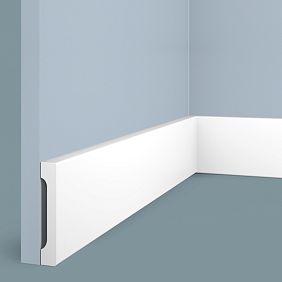
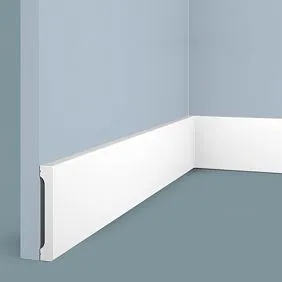
Our factory also produces:
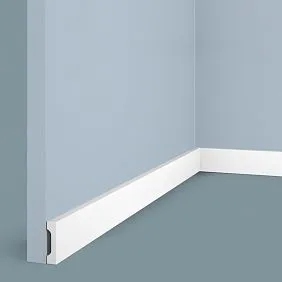
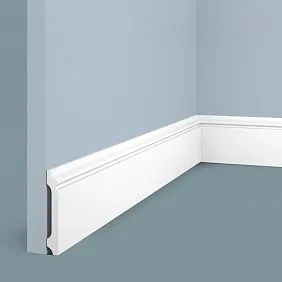


Repetition as an architectural technique
In architecture and design, repetition is a powerful tool for creating unity. One motif (shape, profile, pattern), repeated in different elements, visually connects them, creates rhythm, structure.
Classical palacesused this technique constantly: one cornice profile was repeated in door trims, window frames, furniture friezes. One carved motif (acanthus, grapevine, rosette) was repeated on walls, ceilings, furniture. This created a feeling that the entire space was created by one master, according to a single vision.
In modern interiors, the principle is the same, but the elements are simpler. Repeating the baseboard bevel in the mirror frame. Repeating the rounding radius on furniture handles and moldings. Repeating the panel type on cabinet fronts and doors. These repetitions create visual connections that the brain reads as harmony.
Get Consultation
Material honesty
Expensive interiors are honest in materials. If it's wood — then solid wood, not wood imitation. Ifoak— then oak everywhere: in baseboards, frames, furniture. Not oak in one element, pine in another, MDF imitating oak in a third.
Material honesty and unity create a sense of authenticity, quality, investment in durability. Oak lasts for decades, and if the entire interior is made of oak — this signals: they're building here for centuries, not for a season.
How to choose a base wood species: oak, beech, ash and build the entire set from it
Choosing the base wood species is the first and critical step in creating a coordinated interior. This choice determines everything: color palette, texture, character of the space, durability, price.
Oak: the classic of strength and nobility
Oak solid— the benchmark choice for interiors where strength, status, and durability matter. Oak density is 700–800 kg/m³, Brinell hardness 3.7–3.9 — this means oak is resistant to impacts, scratches, wear, and lasts for centuries.
Oak texture is expressive: large pores, distinct annual rings, characteristic medullary rays (light streaks on a radial cut) creating a 'mirror-like' effect. Color ranges from light golden (young oak, natural) to dark brown (bog oak, stained oak).
Oak is stylistically versatile: suitable for classic interiors (English, French, Italian style), neoclassical, country, loft, even Scandinavian (whitewashed oak). Baseboards, mirror frames,Oak furniturecreate a sense of solidity, respectability, and connection to tradition.
Oak's downside is price. Oak is more expensive than most species (more expensive than pine, birch, beech), but it's an investment that pays off with durability and status.
Beech: a warm alternative to oak
Beech is a species similar to oak in hardness (3.8 on the Brinell scale), but differing in appearance. Beech has a uniform texture, without the large pores of oak, with fine characteristic streaks. The color ranges from light pink to reddish-brown.
Beech creates a softer, warmer atmosphere than oak. If oak is masculine energy, strictness, strength, then beech is softness, coziness, homeliness. Beech is good for bedrooms, children's rooms, living rooms in Provence, country, Scandinavian interiors.
Baseboards, frames,beech furniturecreate visual unity, but without the heaviness of oak. Beech is lighter, airier, visually expands the space.
Beech's downside is sensitivity to humidity. Beech reacts more strongly to humidity changes than oak and can warp under improper conditions. Therefore, beech requires a stable microclimate (40–60% humidity) and quality drying (wood moisture content 8–10%).
Ash: expressive texture
Ash is close to oak in hardness (4.0 on the Brinell scale) but differs in texture. Ash annual rings are more contrasting, wavy, creating an expressive pattern. Color ranges from light cream to grayish-brown.
Ash is the choice for modern interiors where graphic quality, texture, and visual interest are valued. Ash baseboards and frames are less formal than oak, but more expressive than beech. Ash is good for lofts, Scandinavian interiors, eclecticism.
Ash furnitureis visually lighter than oak, thanks to its lighter tone. But the strength is comparable, making ash a practical choice.
Selection principle: from style to species
Determine the interior style — and the wood species will suggest itself:
-
Classic (English, French, Italian) → dark-toned oak
-
Neoclassical → light-toned oak or whitewashed oak
-
Country, Provence → beech, light oak
-
Scandinavian → ash, whitewashed oak, light beech
-
Loft, industrial → oak with coarse texture, ash
-
Minimalism → ash, whitewashed oak with simple profiles
Having chosen a species, stick to it in all wooden elements. Baseboards — oak, mirror frames — oak, furniture — oak. This creates material unity.
Baseboards, mirror frames, cabinet and dresser fronts: one profile — different scales
Profile unity is when the cross-sectional shape of the baseboard, mirror frame, and furniture panel share common features: the same rounding radius, the same bevel angle, the same type of cove (concave element of the profile).
What is a profile and why it's important
Profile is the cross-sectional shape of an element. A simple rectangular baseboard has a simple profile. A baseboard with a bevel (slanted edge) has a more complex profile. A baseboard with coves, flutes (vertical grooves), or carved elements has a complex decorative profile.
Profile defines the character of an element. Simple profile — minimalism, modernity. Complex profile — classic, decorative. Profile creates interplay of light and shadow, visual volume, tactility.
When profiles of different elements share common features, a visual connection is created. The brain reads: these are elements of the same system, the same design.
Profile scaling
Baseboard, mirror frame,dresser front— elements of different sizes. Baseboard height 100–120 mm, mirror frame width 80–100 mm, dresser front panel width 400–600 mm. But the profile can be scaled — proportionally enlarged or reduced.
Example: a baseboard has a 45° bevel 10 mm wide and a rounding radius of 5 mm. A mirror frame can have the same 45° bevel 15 mm wide (proportionally enlarged relative to the frame width) and a radius of 7 mm. A dresser front panel — a 45° bevel 25 mm wide and a radius of 10 mm.
The bevel angle is the same (45°), but the dimensions are proportionally enlarged according to the element's scale. This creates a visual kinship, but each element has correct proportions for its size.
Practical implementation
To achieve profile unity, you need to either order all elements from one manufacturer (who can ensure consistency) or work with a manufacturer who makes elements according to custom drawings.
Standard store-bought baseboards, frames, and furniture are rarely coordinated in terms of profiles — they are from different collections, different manufacturers, developed at different times by different designers. Creating a coordinated interior requires a custom approach.
Systematic approach: repeating bevels, radii, fluting in different elements
A systematic approach is not just using the same wood species in all elements. It is the repetition of specific formal features: bevels, rounding radii, types of fluting, character of carving.
Bevel as a profile element
A bevel is a chamfered edge, a transition from one plane to another at an angle. A bevel can be wide or narrow, shallow (30° angle) or steep (60° angle), straight or concave.
If a baseboard has a 45° bevel 12 mm wide — mirror frames, door casings, edges of furniture fronts can have the same bevel. This creates visual unity, a rhythm repeated throughout the interior.
A bevel is a simple but effective element. It does not require complex tools (unlike carving), is easily reproducible, but creates expressiveness and a play of light.
Rounding radius
A rounding radius is a smooth transition from one plane to another along an arc. The radius can be small (2–3 mm) — then the transition is almost imperceptible, or large (10–15 mm) — then it creates softness and visual volume.
Repeating the same radius in different elements creates harmony. A baseboard with an 8 mm rounding, mirror frames with an 8 mm rounding, corners ofcountertopswith an 8 mm rounding — everything is connected.
Fluting: vertical grooves
Fluting — vertical grooves on the surface of columns, pilasters, furniture legs, sometimes baseboards. Fluting creates a play of light and shadow, visual texture, and an association with classical architecture.
If fluteddecorative elementsare used in the interior — the fluting should be repeated. Fluted pilasters on walls, fluted furniture legs, fluted inserts on doors — all with the same pitch and depth of flutes.
Carving and ornament
If the interior includes carved elements — the carving should be in a unified style. One motif (floral ornament, geometric pattern, classical acanthus) is repeated on different elements: on mirror frames, on furniture fronts, on wall moldings.
Carving is the most complex element to coordinate, requiring highly skilled craftsmen. But when the carving is coordinated — the effect is maximum. The interior looks like a work of art, where every element is part of a single composition.
Technique: a mirror above a dresser with a frame that repeats the front panel profile
This is a specific, visually powerful technique that demonstrates the principle of profile unity.
Cabinet door panel
Solid wood chest of drawersoften features framed panel doors: a solid wood frame with a panel (flat or raised) inside. The frame has a profile: bevel, cove, or rounding. The panel can be flat, convex (fluted), or carved.
Example: a three-drawer chest of drawers. The drawer fronts are oak frames 60 mm wide with an inner 45° bevel and 6 mm rounding, containing a flat oak panel.
Mirror frame matching the profile
Above this chest of drawers hangs a mirror in anoak frame. The frame width is 80 mm (slightly wider than the door frame because the mirror is larger than a drawer). The frame profile is the same 45° bevel and 6 mm rounding as the door frame.
Visually, the mirror frame and door frames are connected. The brain perceives: this is one system, one design language. The mirror and chest of drawers are seen as a unified composition, not two randomly placed items.
Enhancing the effect: unity of color and texture
In addition to profile unity, the frame and doors should have uniform finishing: one color, one type of coating (oil, varnish, wax), the same level of gloss.
If the doors are coated with dark oil that highlights the oak grain—the mirror frame is coated with the same oil. If the doors have patina (artificial aging with dark pigment applied to profile recesses)—the frame is also patinated. Complete finishing alignment enhances the sense of unity.
Compositional center
A mirror above a chest of drawers is a classic compositional center in a bedroom, living room, or hallway. When this center is executed with maximum attention to detail, with coordinated profiles, materials, and finishes—it becomes a visual anchor around which the entire space is organized.
Mistakes: when frames and baseboards are 'from different worlds' and this visually cheapens the interior
Even high-quality elements that are not coordinated with each other create visual chaos that the brain perceives as cheapness, randomness, lack of concept.
Mistake 1: Different wood species without logic
Pine baseboard (light, yellowish tint), walnut mirror frame (dark, with contrasting grain), beech chest of drawers (pinkish). Three different species, three different colors, three different textures. No visual connection, no unity.
Even if each element is high-quality—together they create eclectic chaos. The interior looks like a storage of random furniture, not a thoughtfully designed space.
How to avoid: Choose one base wood species (oak, beech, or ash) and use it in all wooden elements. Minor tint variations are acceptable (light oak in one area, dark in another), but the species should be the same.
Mistake 2: Conflicting profiles
Baseboard with a simple rectangular profile (minimalist, modern), mirror frames with carved Baroque profiles (complex scrolls, ornamentation), furniture with Neoclassical panels (straight lines, symmetry). Three different stylistic languages in one space.
The brain cannot reconcile these conflicts. Each element pulls stylistically in its own direction. The result—visual tension, lack of harmony.
How to avoid: Determine the interior style before starting work. If minimalism—all profiles are simple. If classic—all profiles have decoration, but in a unified style (Baroque, Empire, English). No mixing without professional design intent.
Mistake 3: Mismatched scales
Baseboard height 200 mm (massive, dominant), mirror frame width 30 mm (thin, delicate), furniture with large fronts. Scales are not coordinated: baseboard too powerful, frames too fragile, balance is disrupted.
Visually, the interior looks clumsy, like a suit sewn from parts of different sizes.
How to avoid: Coordinate the scales of all elements. If the baseboard is tall (120+ mm)—mirror frames should not be thinner than 60 mm. If the furniture is massive—baseboards should not be thin (less than 80 mm). Proportionality is critical.
Mistake 4: Different levels of finishing
Baseboard roughly finished (visible tool marks, roughness), mirror frame polished to a gloss, furniture with matte oil. Different finishing levels create a sense that the elements are from different eras, different price categories.
How to avoid: Unified finishing treatment. If baseboards have oil — frames and furniture should have the same oil. If varnish — varnish with the same gloss level everywhere. Unity of treatment is no less important than unity of wood species.
Scenario example: living room and bedroom in one stylistic line without fragmentation
Let's examine a specific case: an apartment with an open living-dining room and a separate bedroom. The goal is to create a unified stylistic line where all wooden elements are coordinated.
Step 1: Choosing the base wood species — oak
Decision: base wood species — oak. Reasons: durability, status, style versatility, longevity. Color — natural oak with a light warm brown tint (not too dark, not too light).
All wooden elements in the living room and bedroom will be made of oak in this shade.
Step 2: Defining the profile
Neoclassical style chosen: not overloaded with decoration like Baroque, but not as ascetic as minimalism. Profile: 45° bevel with a slight 6 mm radius rounding. This profile will be repeated in all elements.
Step 3: Living room — set of elements
Baseboard: Height 120 mm, oak, profile with 45° bevel and 6 mm rounding. Finish — natural oil in a warm tone.
Mirror frame above the fireplace: Width 90 mm, oak, same profile (45° bevel, 6 mm rounding). Mirror size 120×80 cm. Finish — the same oil.
Dining table:Oak solid, tabletop with beveled edges (same 45°), legs with light fluting (vertical grooves). Finish — oil.
Sideboard: Paneled fronts, frame with profile (45° bevel, 6 mm rounding), flat panels. Finish — oil.
All elements are connected: one material (oak), one color (warm brown), one profile (45° bevel, 6 mm rounding), one finish (oil). The living room looks like a unified ensemble.
Step 4: Bedroom — continuation of the line
Baseboard: Same as in the living room (height 120 mm, oak, identical profile).
Mirror frame above thedresser: Width 80 mm (slightly narrower than in the living room, because the bedroom is smaller), oak, same profile. Mirror size 100×70 cm.
Dresser: Drawer fronts are paneled, frame with the same profile (45° bevel, 6 mm rounding). Panels are flat, oak, oil.
Bed: Headboard made of oak panels with the same beveled edges. Bed legs are turned from oak.
The bedroom stylistically continues the living room. You walk from the living room into the bedroom — and feel: this is one space, one language, one concept.
Step 5: Details that enhance unity
Doors: Interior doors are paneled, oak, with frames repeating the profile of the baseboards and furniture.
Door casings: Oak, profile coordinated with the baseboards.
MoldingsWall panels (if used): Oak, simple profile, coordinated with the overall line.
All these details, which may seem minor, contribute to the overall impression. The apartment looks like a unified whole, where every detail is in its place, every element speaks the unified language of wood.
Frequently asked questions
Do all wooden elements have to be from the same wood species?
For maximum unity effect — yes. But variations are acceptable: main species (oak) in large elements (baseboards, furniture, frames), accent species (walnut, wenge) in small details (handles, decorative overlays). The main thing is the dominance of one species.
Is it possible to mix different shades of the same wood species?
Yes, it is permissible and even desirable for zoning. Light oak in the bedroom (creates lightness, airiness), dark oak in the living room (creates solidity, coziness). But the species is the same, the texture is recognizable, unity is preserved.
What to do if some furniture has already been purchased from a different wood species?
If replacement is impossible — minimize the visual presence of the mismatched furniture. Paint it a neutral color (white, gray) that conceals the wood species. Or place it in an area that is not the compositional center.
How precisely should the profiles match?
Absolute matching is not necessary. Visual similarity is sufficient: one chamfer angle, one type of rounding. The brain perceives commonality without requiring millimeter precision.
Is it expensive to implement a unified line throughout an apartment?
More expensive than buying disparate elements from different places. A unified line requires working with one manufacturer or custom fabrication of elements. But the result is an interior that looks more expensive than it cost. It's an investment in visual harmony and durability.
Where to order coordinated elements?
Contact manufacturers working with solid wood and having the capability to produce elements based on custom projects, such as STAVROS. The ability to coordinate profiles, species, finishes — is critical for creating a unified line.
Is it possible to create unity in an already finished interior?
Yes, but it's more difficult. You need to determine which elements dominate (usually furniture), and select baseboards, frames, doors to match them. Partial replacement or repainting of elements may be required to achieve unity.
How to coordinate wooden elements with other materials (stone, metal)?
Wood is the dominant material, creating warmth and coziness. Stone and metal are accents, complements. It's important that they do not conflict with the wood in scale and character. Rough stone pairs well with rough wood, polished metal — with polished wood.
Won't unity of elements make the interior boring?
No, if there is variety in other aspects: wall color, textiles, lighting, accessories. Unity of wooden elements is the foundation, the base. On this foundation, variety of other materials, textures, colors is built.
Conclusion: when details create a symphony
An interior is not a collection of objects, but a system of connections.Oak skirting, a mirror frame made of the same oak, furniture with panels, repeating the profile of the baseboard — these are not random elements, but notes of the same symphony. Each note on its own can be beautiful, but only together, in harmony, do they create music.
A unified language of wood is the language of quality, attention to detail, respect for the material. When all wooden elements speak this language — the interior looks expensive, even if the investment was reasonable. Because expensiveness is not the sum on price tags, but the feeling of thoughtfulness, harmony, integrity.
Creating such an interior requires a systematic approach from the very beginning of the project. You cannot buy baseboards in one store, frames in another, furniture in a third — and hope they will match. You need a single source or coordination between different manufacturers, which is more difficult.
The company STAVROS has been producing products fromsolid wood for interiors where integrity, quality, material honesty are valued. The uniqueness of STAVROS lies in its comprehensive approach: the company produces not only baseboards or not only furniture, but the entire spectrum of wooden interior elements.
The STAVROS assortment includes baseboards of all heights and profiles, frames for mirrors of any sizes and styles, moldings, cornices, casings,Solid wood furniture (tables, dressers, wardrobes, chairs), furniture components (legs, handles, panels), carved decorative elements. All of this can be made from a single wood species (oak, beech, ash), with coordinated profiles, in a unified finish.
The STAVROS technology department works on coordinating elements at the design stage. If you need baseboards, mirror frames, and furniture fronts with a unified profile — STAVROS specialists will develop this profile, create technical drawings, calculate the necessary tools (cutters, knives), launch production of all elements with a guarantee of matching.
STAVROS production is equipped with equipment for processing solid wood: CNC milling machines for precise profiling, lathes for manufacturing round elements (furniture legs, balusters), sanding equipment for perfect surface smoothness, painting booths for uniform application of finishing compounds.
STAVROS wood — solid oak, beech, ash — undergoes kiln drying to a moisture content of 8–10%, which guarantees stability. For projects requiring unity, wood from the same batch (same supplier, same region of growth) is used, ensuring matching shade and texture.
The STAVROS finishing department offers all types of finishing coatings: natural oils (emphasize texture, create a matte warm surface), waxes (provide a slight sheen, tactile smoothness), varnishes (from matte to glossy), enamels (for painting in any RAL color). For projects with a unified line, the same compositions and application technology are used, guaranteeing a consistent appearance of all elements.
The STAVROS consulting service assists at all project stages: from selecting wood species and developing profiles to installing finished products. Specialists work with private clients, designers, architects, and construction companies. For designers, material samples, 3D visualizations of elements, and assistance in creating a unified line concept are provided.
STAVROS logistics ensures delivery of all elements in a single batch, eliminating visual discrepancies between elements manufactured at different times. Packaging is done with maximum protection: each item is wrapped in film, placed in corrugated cardboard, with spacers preventing contact and damage.
The STAVROS quality control service checks element consistency: profile matching (with millimeter precision), color matching (visual inspection of all elements under the same lighting), coating matching (identical gloss level, uniformity). Only flawlessly coordinated elements are shipped to the customer.
STAVROS operates not merely as a manufacturer of individual elements, but as a partner in creating holistic interiors. Interiors where every natural wood detail is connected to others through material, profile, and finish. Where baseboards, mirror frames, and furniture fronts speak a unified language—the language of wood, quality, and harmony.
Contact STAVROS—and we will help create an interior where the unity of wooden elements transforms the space into a work of art, where details work like a symphony, where oak, beech, or ash become not just material, but the foundation of visual harmony that makes your home a place where you want to live, where it's pleasant to be, where every detail is in its place, creating a sense of completeness, thoughtfulness, and refined taste without vulgarity or pretension.


