












































































Article Contents:
- Unified Architectural Language Concept: How to Connect Exterior and Interior
- Polyurethane Facade Molding: Exterior Decorative Elements
- Main Elements of Facade Molding
- Interior Finish: Wooden Floor Skirting as a Continuation of the Theme
- How Skirting Connects Facade and Interior
- Types of wooden skirting boards
- Stair Balusters: A Linking Element Between Exterior and Interior
- How Balusters Echo Facade Molding
- Types of Balusters and Their Application
- Wall Moldings: Creating Frames and Panels in the Living Room
- How Moldings Connect Facade and Interior
- Using Moldings in the Living Room
- Comprehensive Approach: Facade Plus Interior in One Order
- Advantages of a Comprehensive Approach
- How to Organize a Comprehensive Order
- Examples of Ready-Made Kits
- Materials and Their Compatibility: Polyurethane Outside, Wood Inside
- Polyurethane on the Facade
- Wood in the Interior
- How to Combine Polyurethane and Wood
- Color solutions: from monochrome to contrast
- Monochromatic solution
- Natural Solution
- Contrasting solution
- Tonal solution
- Stylistic Directions and Their Implementation
- Classicism
- Baroque
- Mediterranean Style
- Scandinavian Style
- Modern style
- Practical Aspects: Installation, Maintenance, Durability
- Installation of Polyurethane Facade Molding
- Installing wooden skirting boards
- Installation of Stair Balusters
- Installation of Wall Moldings
- Care for Exterior Molded Decor
- Caring for wooden skirting boards
- Baluster Maintenance
- Durability
- Frequently Asked Questions: Expert Answers
- Conclusion: Entrust Style Unity to STAVROS Professionals

Architecture is a dialogue between the interior space and the exterior appearance of a building. Is it possible to connect the facade and interior with a single thread of style so that the house gains completeness, harmony, and character? It is possible. And even necessary. This involves a thoughtful system of decorative elements, where polyurethanepolyurethane stucco for the house facadeon the outside echoes the elegantwooden skirting board finishinside, where stairbuy balustersfor the interior space, they can be designed to organically complement the facade columns, andMoldings made of polyurethanecreate a framed composition on the living room walls.
Why is this needed? To avoid a disconnect between the exterior and interior. So the house doesn't look like a random collection of beautiful but disparate elements. So that every detail works towards the overall idea—be it classicism with its strict lines, Mediterranean style with its lightness of form, or modern aesthetics with minimalist nobility.


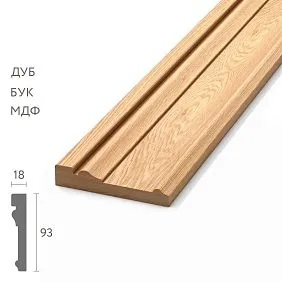

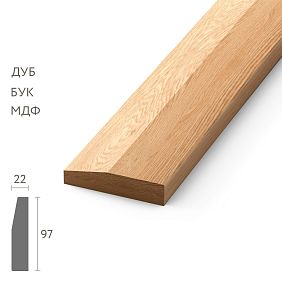


The concept of a unified architectural language: how to connect the exterior and interior
What unites the facade and interior? Rhythm, proportions, materials, color palette, character of decor. When the profileof a wide wooden floor skirting boardrepeats the line of the facade cornice, when the shape of the staircase balusters echoes the pilasters at the entrance door, when the moldings in the living room support the geometry of the window frames outside—a sense of wholeness emerges. The house begins to 'sound' in a unified tone.
How to achieve this? It's worth starting by defining the style. Classical? Then the facade will require symmetry, an order system, restrained decor—cornices, pilasters, portals. The interior will respond with highsolid wood skirting boards, turned balusters with fluting, molding panels on the walls. Mediterranean style will prefer soft arch lines, light cornices with plant motifs on the facade, warm tones in the finish, textured surfaces inside. Modern architecture will choose purity of form, minimalist decor, large geometric volumes outside and similar strictness in the interior—wide minimalist skirting boards, simple straight moldings, laconic stair railings.
The second step is the choice of materials. It's important to understand the specifics here: the facade operates in an aggressive environment (moisture, frost, ultraviolet, temperature fluctuations), while the interior is protected from these factors. Therefore, polyurethane is optimal for the exterior—light, moisture-resistant, frost-resistant, not prone to rotting. Inside, you can use noble solid wood—oak, beech, ash—which provides tactile warmth, natural texture, and the possibility of tinting and painting in any color. But the key point here is: the profiles, proportions, and rhythm of placement must be uniform or related. A wide facade cornice is supported by a wide floor skirting board, narrow moldings on the windows outside are reflected in narrow wall moldings inside.
The third step is the color solution. If the facade is executed in a light palette (white, cream, sand), then the interior elements should also be painted in similar tones. Contrasting facades (dark plaster with light decor) can find an echo in contrasting interiors (dark walls with white moldings and skirting boards). However, an exact match is not necessary—harmony is important, not copying.




Facade polyurethane stucco: elements of exterior decor
Polyurethane stucco for the facade is a modern solution that combines the aesthetics of classical architecture and the practicality of polymer materials. Why polyurethane specifically? The answer is simple: it possesses a unique set of properties critical for exterior application. The density of high-qualityfacade polyurethaneis 350-400 kg/m³, which is 5-7 times lighter than concrete. This means that a large cornice or portal does not create a critical load on the wall, does not require foundation reinforcement or complex anchoring systems. Installation is simplified, timelines are reduced, and logistics and installation costs are lowered.
Moisture resistance is polyurethane's second key advantage. The closed-cell structure does not allow water to penetrate the material. Water absorption does not exceed 1-2% by volume, which is tens of times less than that of gypsum or polystyrene foam. In practice, this means that facade decor withstands heavy rain, snowfall, spring thaws without the slightest deterioration in characteristics. It does not swell, delaminate, or crack.
Frost resistance is the third important parameter. Polyurethane retains elasticity and strength at temperatures from minus 60 to plus 80 degrees Celsius. The number of freeze-thaw cycles exceeds 300—this is enough for the decor to last 50-70 years even in harsh climates. Gypsum and concrete begin to crumble after several dozen cycles, polyurethane remains stable.
Resistance to ultraviolet light is ensured by special additives—UV absorbers and antioxidants, which are introduced into the composition during production. The surface of the elements is primed with white facade primer, protecting against fading. After final painting with facade paints (acrylic, silicone), the decor retains color saturation for decades.
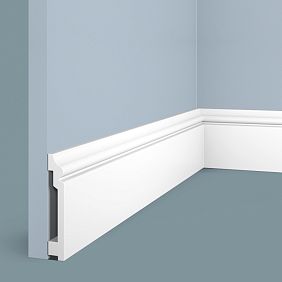
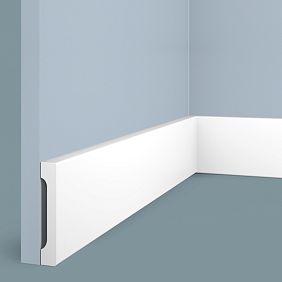
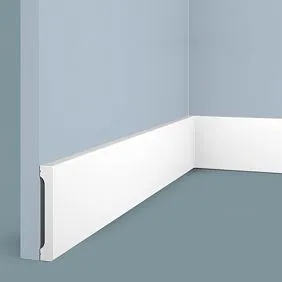
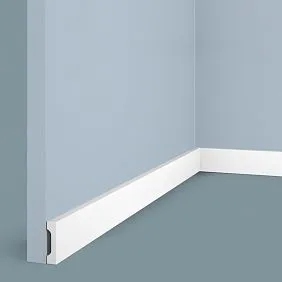
Our factory also produces:

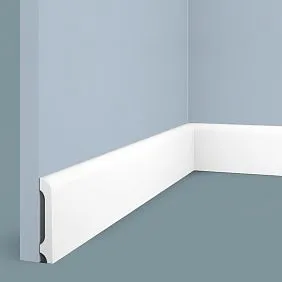
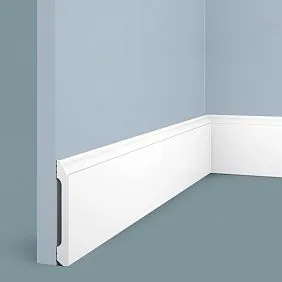
Main elements of facade stucco
Cornices—horizontal bands running along the building's perimeter at the plinth level, between floors, under the roof. They perform a decorative function (dividing the facade into tiers, creating rhythm) and a practical one (diverting water from the walls, protecting against moisture). The width of cornices varies from 10-15 cm (inter-floor) to 30-50 cm (under-roof). The profile can be simple (one or two steps) or complex (multi-stepped, with ornaments). A classical cornice combines straight horizontal lines with elegant curves—fluting, egg-and-dart ornaments, dentils.
Moldings and window surrounds—vertical and horizontal overlays around openings. They create an architectural frame, highlight windows on the wall plane, and give the facade volume and plasticity. The simplest version is a flat frame 8-12 cm wide. A more complex one is a profiled molding with keystones in the upper part, side pilasters, and a window sill band. Such surrounds are characteristic of classicism, Renaissance, and Baroque.
Entrance door portals—accent compositions framing the main entrance. A portal can include pilasters or half-columns on the sides, an arched or rectangular surround, and a decorative pediment on top. This is the house's calling card, an element that sets the tone for the entire facade. A polyurethane portal weighs many times less than a stone one, is installed in one or two days, and looks no less impressive.
Pilasters and half-columns—vertical elements that articulate the wall, creating an order system. A pilaster is a flat rectangular projection with a base, shaft, and capital. A half-column is a semicircular projection with the same elements. They can be smooth or fluted (with vertical grooves). The height usually corresponds to the floor height.
Rustication and corner elements—imitation of stone masonry on building corners or across the entire wall surface. Rustication gives the facade monumentality, creates an illusion of massiveness, and is characteristic of classicism and Empire style.
Decorative elements—rosettes, cartouches, mascaron, garlands, volutes. They are used to decorate cornices, pediments, and spaces between windows. The choice of decor depends on the style: strict classicism prefers symmetry and restraint, Baroque prefers opulence and dynamism.
Consider ceiling height, room size, interior style, and functionality.of polyurethane facade stuccothe density of the material, the quality of the primer, and the accuracy of the geometry are critically important. Cheap low-density polyurethane (150-200 kg/m³) is not suitable for facades—it quickly deteriorates under the influence of sun and moisture. High-quality facade polyurethane has a density of at least 350 kg/m³, and preferably 400-500 kg/m³. The surface must be primed with white weather-resistant primer with UV protection.
Get Consultation
Interior finishing: wooden floor skirting board as a continuation of the theme
If the facade sets the architectural language outside, then the solid wood floor skirting board continues this speech inside the house. A skirting board is not just a technical detail covering the gap between the floor and the wall. It is a full-fledged architectural element that influences the perception of space, its height, proportionality, and style.
Why wood? Because solid oak, beech, or ash possesses natural warmth, tactile pleasantness, and unique texture. It is a material with history, with character. Wood breathes, regulates humidity, and does not emit toxic substances.Wooden skirting boards for floorsmade from select solid wood, when properly processed, serve for decades, maintaining their shape and appearance.
How a baseboard connects the facade and the interior
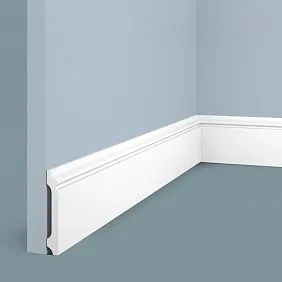
The profile is the key linking element. If a cornice with a multi-step section is used on the facade, then the interior baseboard should also be chosen with a similar configuration. A classic European profile with soft roundings, grooves, and protrusions creates the same plasticity as facade stucco. A modern rectangular profile with sharp edges corresponds to minimalist moldings on the exterior.
Baseboard height is the second important parameter. Standard baseboards have a height of 60-80 mm. But in rooms with high ceilings (3-4 meters), wide baseboards with a height of 100-150 mm or more are appropriate. They create a pronounced horizontal accent, emphasize the scale of the room, and visually stabilize the space. If the facade cornice has a width of 30-40 cm, then a floor baseboard with a height of 12-15 cm will be proportionally related to it.
Color and finish are the third aspect. A solid wood baseboard can be painted any color, tinted with oils, or coated with varnish. If the facade stucco is white, then the interiorWhite Wooden Baseboardwill create unity. A natural wood tone with clear varnish is suitable if the facade has wooden elements — cladding, cornices, shutters. A dark baseboard made of stained oak or ash will support a contrasting facade with a dark plinth or roof.
Types of wooden skirting boards
Classic profiled baseboard is the most common option. Height 70-120 mm, thickness 15-20 mm, section with roundings and grooves. Suitable for traditional interiors — classic, neoclassical, Provence, country. Made from solid oak or beech, coated with varnish or oil. Such a baseboard harmonizes with classic facade stucco — cornices with dentils, profiled moldings around windows.
Wide English-style baseboard — height 150-200 mm, rectangular or slightly profiled section. Characteristic of British and American interiors, gives a room solidity and monumentality. Installed in spacious rooms with high ceilings. A wide baseboard visually expands the walls, making the transition from floor to wall smooth. It pairs excellently with massive facade cornices, porticos, columns.
Triangular baseboard — a simplified option with a triangular cross-section. Height 40-60 mm, thickness 40-60 mm. Characteristic of Scandinavian and minimalist styles. A laconic form does not distract attention, emphasizes the purity of lines. Suitable for houses with modern facades — without stucco, with clear geometric volumes, large windows.
Baseboard with hidden mounting — a modern technical solution where the fasteners are not visible from the front. The baseboard is fixed to special clips or guides, allowing for easy removal to access wiring or during repairs. The profile is most often rectangular or with a slightly rounded top edge. Such a baseboard organically complements facades with minimalist moldings.
ChoosingTypes of wooden baseboards, it is important to consider not only the interior style but also the overall concept of the house. If the facade is designed in a classical spirit with rich stucco, then a triangular minimalist baseboard inside will create dissonance. Conversely, a wide profiled solid wood baseboard will be a foreign element in a house with a laconic modern exterior.
Balusters for stairs: the linking element of exterior and interior
A staircase is not only a functional structure but also a key element of a house's architectural composition. It may be visible from the street through large windows, may be located in the foyer right behind the entrance door, or may lead to the second floor, terrace, or garden. The staircase connects the building's levels, and its railing — the balusters — connects the visual languages of the facade and interior.
What are balusters? These are vertical posts that fill the space between the steps and the handrail. They perform three functions: supportive (support the handrail, bear the load from a leaning hand), protective (prevent falling through the railing), and decorative (create visual rhythm, ornamentation, stylistic belonging). Wooden balusters made of solid oak, beech, or ash are a classic choice, combining strength, durability, and aesthetics.
How balusters echo facade stucco
Form and profile are the first point of contact. If the facade is adorned with pilasters with fluting (vertical grooves), then the staircase balusters can also have a fluted shaft. If the facade stucco includes round rosettes, medallions, volutes, then turned balusters with spherical or disc-like elements will create harmony. Classic turned balusters with alternating cylinders, cones, and spheres correspond to classical facades with an order system.
Size and proportions are the second aspect. Massive facades with large cornices, thick pilasters require proportionate balusters — 80-100 cm in height, 8-10 cm in diameter. Light facades with thin moldings suggest elegant balusters 70-80 cm in height, 4-6 cm in diameter. Proportionality creates a sense of integrity.
Color and finish are the third link. Snow-white facade stucco can find an echo in white painted balusters. A natural wood color with clear varnish is suitable if the facade has wooden elements. A contrasting solution (dark balusters with light stucco or vice versa) is also possible but requires precise calculation.
Types of balusters and their application
Turned balusters are the most common option. Made on a lathe, they have axial symmetry, a complex profile with alternating thickenings and narrowings. Can be simple (2-3 elements: base, shaft, capital) or complex (5-7 elements: base, sphere, cylinder, disc, cone, another sphere, capital). Turned balusters are characteristic of classical, neoclassical, Baroque, Renaissance interiors. They perfectly complement facades with an order system, portals, symmetrical composition.
Carved balusters are an exclusive option with hand or CNC carving. Plant ornaments, geometric patterns, figures are carved on the shaft surface. Carved balusters are works of art, emphasizing the status of the house and the craftsmanship. They are suitable for luxurious interiors in Baroque, Rococo, Empire styles, for facades with rich stucco — cartouches, garlands, mascaron.
Flat balusters are a modern option made from flat boards, installed vertically at equal intervals. They can be straight, with shaped cutouts, with milled edges. Flat balusters are characteristic of Scandinavian, minimalist, contemporary styles. They harmonize with laconic facades without decoration, with large planes, geometric volumes.
Square balusters are balusters with a square cross-section (6×6 cm, 8×8 cm, 10×10 cm). Can be smooth or with milled edges. The simplicity of form makes them universal — they suit both classical and modern interiors. Square balusters are visually stricter than turned ones but softer than flat ones. They pair well with facades where rectangular geometry is present — rusticated corners, rectangular moldings around windows.
Consider ceiling height, room size, interior style, and functionality.balusters for wooden stairsit is critically important to maintain stylistic unity with the facade and interior. Turned balusters with a classic profile will be foreign in a house with an ultra-modern exterior. Conversely, minimalist flat balusters will disrupt the harmony of a house with rich classical stucco on the facade.
Wall moldings: creating frames and panels in the living room
Moldings in the interior are a universal tool of architectural expression. They divide the wall plane, create rhythm, accentuate zones, and set the scale. Moldings can be ceiling (cornices), floor (baseboards), door and window (casings), and wall (frames, panels). It is wall moldings that most clearly echo facade stucco, continuing its logic inside the house.
Polyurethane moldings for interiors are a practical solution. They are lighter than wooden ones, are not afraid of humidity (can be used in bathrooms, kitchens, hallways), are easily mounted with adhesive, cut with a regular saw, and painted with water-based paints. At the same time, high-quality interior polyurethane is not inferior to wood in profile clarity and aesthetics.
How moldings connect the facade and interior
Profile is the key point. If the facade is decorated with cornices featuring multi-step sections, then the ceiling cornice inside the house should be chosen with a similar profile. If flat moldings are used around windows on the facade, then the wall moldings in the living room can be flat or slightly profiled. Repeating the shape creates unity in the architectural language.
Width and scale are the second aspect. Large facade elements (cornices 30-40 cm wide, wide window surrounds) require large interior moldings — ceiling cornices 10-15 cm wide, wall moldings 8-12 cm wide. Small facade details suggest elegant interior moldings 4-6 cm wide. Proportionality is important.
Color is the third connection. White facade stucco is usually reflected in white interior moldings. However, contrasting solutions are also possible: dark walls with white moldings against a light facade with white decor create a dramatic effect but maintain stylistic unity through the profile shape.
Using moldings in the living room
Wall panels are a classic technique that divides the wall into horizontal zones. The lower third or half of the wall is framed with moldings, forming framed panels. Inside the panels, the wall can be painted the same color, a contrasting color, or wallpapered. Panels create a sense of order, structure, and visually lower the wall height (useful in rooms with ceilings above 3 meters). Panels are characteristic of classical, neoclassical, and English interiors and perfectly complement facades with plinth cornices, rustication, and horizontal belts.
Framed compositions — moldings form rectangular or square frames on the wall. Inside the frame, a painting, mirror, TV, wallpaper with a contrasting pattern, or simply a different shade of paint can be placed. Framed compositions draw the eye, create focal points, and give the wall depth. They are often used symmetrically (several identical frames in a row) or asymmetrically (one large central frame plus several smaller ones around). Frames on living room walls echo window surrounds on the facade — the same logic, the same principle of highlighting what's important.
Ceiling cornices and baseboards — moldings running along the perimeter of the room at the junction of walls and ceiling. They hide the technological gap, visually complete the wall, and create a transition to the ceiling. Wide profiled cornices (10-20 cm) are characteristic of classical interiors; narrow simple ones (4-6 cm) are for modern ones. The ceiling cornice inside the house is a direct continuation of the facade cornice outside, just on a smaller scale. If the facade cornice has a complex profile with dentils, flutes, egg-and-dart ornaments, then the ceiling cornice should be chosen with similar detailing.
Framing doors and arches — moldings around doorways and arches create architectural portals inside the house. They repeat the logic of facade portals but on an interior scale. A door portal can include vertical moldings on the sides (pilasters), a horizontal molding on top (frieze), and sometimes a decorative pediment. This is especially appropriate in formal rooms — halls, living rooms, dining rooms.
Consider ceiling height, room size, interior style, and functionality.moldings for painting in interiorIt is important to consider ceiling height, room area, and the overall style of the house. In small rooms with low ceilings (2.5-2.7 m), large moldings can visually 'weigh down'; it's better to choose elegant narrow profiles. In spacious living rooms with high ceilings (3-4 m), wide moldings are appropriate, creating monumentality.
Comprehensive approach: facade plus interior in one order
The most effective way to achieve stylistic unity is to plan the facade and interior finishing simultaneously, within a single project. This avoids a disconnect between the exterior and interior space, ensuring consistency in profiles, proportions, colors, and materials.
Advantages of the comprehensive approach
Design unity. An architect or designer develops a project where every element — from the facade cornice to the floor baseboard — is subordinated to a common concept. Facade moldings around windows are repeated in interior moldings on walls. The shape of staircase balusters echoes the shape of facade pilasters. A wide eaves cornice is supported by a wide floor baseboard. Everything works towards a unified image.
Cost optimization. By ordering decor for the facade and interior from one manufacturer, you get a volume discount, reduce logistics costs (one delivery instead of two or three), and simplify coordination (one project, one estimate, one deadline). The manufacturer can produce elements with unified profiles, which is technologically simpler and cheaper than selecting similar profiles from different suppliers.
Implementation speed. When everything is ordered at once, production proceeds in parallel. While facade stucco is being manufactured, balusters for the staircase are prepared. While the cornice is being installed on the facade, floor baseboards are delivered. The overall timeline from order to finishing completion is reduced by 20-30%.
Guarantee of consistency. The manufacturer working on a set of decor for the facade and interior is responsible for ensuring all elements match each other. Profiles coincide, proportions are maintained, shades of white primer are identical (important if elements will be painted the same color). Situations where the baseboard doesn't match the staircase, and the staircase doesn't match the facade, are avoided.
How to organize a comprehensive order
First stage — design. Start with the overall concept of the house: style (classical, modern, Mediterranean, Scandinavian), color palette, materials, budget. An architect or designer develops facade sketches, room plans, 3D visualizations. At this stage, the main elements are determined: cornices, moldings, portals outside; baseboards, balusters, moldings inside.
Second stage — element selection. The manufacturer offers a catalog of ready-made profiles and the possibility of custom manufacturing. Profiles for facade cornices, moldings around windows, portals are selected. Profiles for floor baseboards, balusters, ceiling cornices are selected. It's important that the profiles echo each other — they don't necessarily have to copy each other, but should share common features: type of curves, number of steps, nature of detailing.
Third stage — calculation and production. The manufacturer calculates the number of linear meters of cornices, moldings, baseboards; the number of pieces of balusters, posts, capitals. An estimate is drawn up, and the production deadline is agreed upon. Manufacturing proceeds in parallel: polyurethane facade stucco is cast in molds, wooden baseboards and balusters are processed on machines, sanded, and coated with protective compounds.
Fourth stage — delivery and installation. Elements for the facade and interior are delivered in one batch or sequentially as the site becomes ready. Facade stucco installation is done by facade specialists; baseboard and baluster installation is done by carpenters. Coordination is important: the staircase must be ready by the time balusters are installed, walls must be leveled and painted by the time baseboards are mounted.
Examples of ready-made kits
Classical house. Facade: white stucco — eaves cornice with dentils 40 cm wide, inter-floor belt 15 cm wide, window surrounds with keystones, entrance door portal with pilasters and pediment. Interior: solid oak floor baseboard 120 mm high, painted white enamel, profile with roundings echoes the cornice; balusters turned with flutes, height 900 mm, painted white enamel; polyurethane ceiling cornice 150 mm wide, profile with dentils; wall moldings form panels 120 cm high in the living and dining rooms. Everything is executed in white, profiles are coordinated, the house achieves classical integrity.
Modern house. Facade: minimalist stucco — eaves cornice with rectangular section 25 cm wide, flat moldings around windows 10 cm wide, rectangular entrance door portal without decor. Interior: solid ash floor baseboard 100 mm high, rectangular section, coated with white matte enamel; flat balusters from 80x40 mm boards, coated with white enamel; polyurethane ceiling cornice 80 mm wide, rectangular profile; wall moldings form large rectangular frames around the TV and sofa. Color white, profiles laconic, the house achieves modern severity.
Mediterranean house. Facade: warm stucco — eaves cornice with soft curves 35 cm wide, arched window surrounds, entrance door portal with half-columns. Interior: solid oak floor baseboard 100 mm high, natural shade under varnish or painted cream, profile with smooth roundings; turned balusters with spherical elements, coated with natural oil or cream enamel; polyurethane ceiling cornice 120 mm wide, profile with wavy lines; wall moldings form arched niches in the living room. Colors warm (cream, sand, terracotta), the house acquires Mediterranean charm.
Materials and their compatibility: polyurethane outside, wood inside
Why is polyurethane for the facade and wood for the interior the optimal combination? Because each material performs most effectively in its own environment.
Polyurethane on the facade
Polyurethane is resistant to moisture, frost, ultraviolet light, and biological factors (mold, fungus, insects). It does not rot, crack, delaminate, and does not require regular maintenance (repaint with facade paint every 7-10 years — that's all). Light weight simplifies installation and reduces load on walls. A wide range of profiles allows recreating any architectural style — from ancient orders to Art Nouveau. The price of polyurethane stucco is lower than stone or concrete, and its aesthetics are not inferior.
However, polyurethane in the interior is not always optimal. It is an artificial material, lacks the tactile warmth of wood, and does not have the unique texture of solid wood. Polyurethane moldings and baseboards inside the house are a good solution for wet rooms (bathrooms, kitchens, hallways), for budget projects, and for modern minimalist interiors. But in formal rooms — living rooms, studies, bedrooms — wood creates a different atmosphere.
Wood in the interior
Solid oak, beech, ash — this is nature, warmth, uniqueness. Each board has its own grain pattern, its own shade, its own story. Wood is pleasant to the touch, makes a characteristic sound when tapped, emits a light aroma. Wooden baseboard, solid wood balusters, wooden moldings (yes, they exist too) — these are elements of a premium interior, speaking of the owner's taste and status.
Wood requires care: it needs protection from moisture, temperature fluctuations, and mechanical damage. However, in a residential interior, these factors are not critical. A solid wood skirting board, coated with varnish or oil, lasts 30-50 years or more. Oak stair balusters withstand loads for decades, maintaining their shape and strength.
How to combine polyurethane and wood
The main rule is the coordination of profiles and proportions. A polyurethane facade cornice with a multi-step section should find a response in a wooden floor skirting board with a similar profile. Flat polyurethane moldings around windows on the outside should echo flat wooden door casings on the inside.
The second rule is color harmony. White facade stucco combines with white painted wooden skirting boards and balusters. The natural color of wood inside requires wooden elements on the facade (cornices, cladding, shutters) or at least a warm shade of plaster that supports the natural palette.
The third rule is rational distribution. The facade is polyurethane (practicality, durability, affordability). Formal interiors (hall, living room, study, bedroom) are wood (status, aesthetics, comfort). Wet and technical rooms (kitchen, bathrooms, corridors, utility rooms) are again polyurethane or coated MDF (moisture resistance, ease of care).
Color solutions: from monochrome to contrast
Color is a powerful tool for creating unity or, conversely, contrast between the facade and the interior. There are several strategies.
Monochromatic solution
All decor (facade and interior) is executed in one color — most often white. White stucco on the facade, white skirting boards and balusters inside, white moldings on the walls. The background — walls outside and inside — can be different (gray, beige, pastel), but the decor is unified. This creates purity, lightness, and visual expansion of space. Monochrome is characteristic of Scandinavian style, neoclassicism, and modern architecture.
Natural solution
The decor preserves the natural color of the materials. Polyurethane stucco is painted in cream, sand, terracotta — colors close to natural stone. Wooden skirting boards and balusters are coated with clear varnish or tinted with oils that preserve the texture. This creates warmth, coziness, and a connection with nature. The natural solution is characteristic of Mediterranean style, Provence, country, and eco-style.
Contrasting solution
The decor contrasts with the background. White stucco on a dark gray facade, white skirting boards on dark blue walls inside. Or vice versa: dark decor on a light background. Contrast creates drama, expressiveness, and clarity of lines. This requires boldness and precise calculation, but the result is impressive. Contrasting solution is characteristic of modern architecture, Art Deco, and Gothic style (if we are talking about a castle or mansion with historical references).
Tonal Solution
The decor and background are executed in similar tones but distinguishable by saturation or shade. For example, light gray stucco on a medium gray facade, light beige skirting boards on beige walls inside. This creates softness, nuance, and a subtle play of light and shadow. Tonal solution is characteristic of minimalism, Japanese style, and modern classicism.
When choosing a color solution, it is important to remember unity. If the facade is white with white decor, and the skirting boards inside are dark — a disconnect arises. If the facade is contrasting (dark with white), and the interior is monochrome (white with white) — the connection is lost. The color strategy should be unified for the exterior and interior.
Stylistic directions and their implementation
Different architectural styles require different approaches to decor. Let's consider several directions.
Classicism
Facade: symmetrical composition, order system (columns, pilasters with bases and capitals), profiled cornices, window surrounds with keystones, portico at the entrance. Stucco is white, strict, without excessive decor. Interior: highWooden Skirting Boards floor skirting boards (100-150 mm), painted with white enamel, profile with soft roundings; turned balusters with fluting; ceiling cornices with dentils; wall moldings form panels and frames. Color palette is light (white, cream, light gray). Materials are noble (solid oak, marble, silk).
Baroque
Facade: lush stucco — curved cornices, volutes, cartouches, mascaron, garlands. Abundance of decor, dynamic forms, play of light and shadow. Interior: wide profiled skirting boards with carving, carved balusters with plant ornaments, ceiling cornices with rich relief, wall moldings with gilding. Colors are saturated (gold, burgundy, emerald, sapphire). Materials are luxurious (solid oak with carving, marble, silk, gilding).
Mediterranean Style
Facade: warm colors (terracotta, ochre, sand), arched windows and doors, stucco with soft lines, medium-width cornices. Interior: solid oak skirting boards with natural tinting or painted cream, turned balusters with spherical elements, ceiling cornices with smooth curves, wall moldings form arched niches. Colors are warm (cream, blue, green, terracotta). Materials are natural (wood, stone, ceramics, linen).
Scandinavian style
Facade: minimum decor, straight lines, light colors (white, light gray), wooden cladding possible. Interior: simple rectangular skirting boards made of light wood (pine, ash), flat balusters or metal railings, minimal ceiling cornices, absence of wall moldings or their minimum. Colors are light (white, light gray, beige, pastel). Materials are simple (pine, birch, cotton, linen).
Modern style
Facade: large geometric volumes, large windows, minimum decor (flat cornices, rectangular moldings), often combination of materials (plaster, glass, metal, wood). Interior: wide minimalist skirting boards (100-150 mm) of rectangular cross-section, flat balusters or glass railings, flat ceiling cornices, wall moldings form large frames. Colors can be any — from monochrome to bright accents. Materials are diverse (solid ash, concrete, glass, metal, leather).
The choice of style determines the choice of decor. It is impossible to mix Baroque facade stucco with minimalist skirting boards inside — chaos will arise. The style should be unified for the exterior and interior, with possible nuances, but without radical contradictions.
Practical aspects: installation, maintenance, durability
The beauty of decor is important, but practical aspects are no less important: how complex the installation is, what the care is like, how long the elements will last.
Installation of facade stucco made of polyurethane
Polyurethane stucco is mounted with adhesive and additionally fixed with dowels (for large elements). The base must be level, dry, and cleaned. The adhesive is special — polyurethane or acrylic, frost-resistant. Elements are cut with a fine-toothed saw, joined at a 45-degree angle (for cornices and moldings). Joints are filled with sealant and sanded. After installation, all stucco is painted with facade paint (acrylic or silicone) in two coats. Installation time for facade decor on a house of 150-200 m² — 5-10 days.
Installation of wooden skirting boards
Wooden skirting board is mounted with adhesive (liquid nails) or with mechanical fasteners (screws, clips, brackets). Walls must be level, otherwise the skirting board will not lie flat. Elements are cut with a miter saw at a 45-degree angle in corners. Joints are glued, screw fastening points are covered with plugs or puttied. After installation, the skirting board is painted (if provided) or coated with varnish. Installation time for skirting boards in a house of 150 m² — 2-3 days.
Installation of stair balusters
Balusters are installed in prepared holes in the steps and handrail. Fastening — on dowels (wooden pins) with adhesive, sometimes additionally with screws from below. Distance between balusters — 10-15 cm (to ensure safety, so a child cannot crawl through). The handrail is attached on top of the balusters and support posts. Installation of balusters on a staircase with 12-15 steps — 1-2 days.
Installation of moldings on walls
Polyurethane moldings are mounted with adhesive (liquid nails, polyurethane adhesive). Walls must be level and painted (or wallpapered). Elements are cut, joined at angles, glued, joints are filled with sealant, after which the moldings are painted (if needed). Installation of molding panels in a living room of 30 m² — 1 day.
Care for exterior molding
Polyurethane stucco on the facade does not require special care. Once a year, it can be washed with water from a hose (if dust has accumulated). Every 7-10 years, it is worth repainting with facade paint to refresh the color and protect from ultraviolet radiation. In case of mechanical damage (chips, cracks), the area is cleaned, puttied, sanded, and painted.
Care for wooden skirting boards
Solid wood skirting boards coated with varnish or oil can be wiped with a damp cloth. Every 3-5 years, the coating can be renewed by sanding and applying a new layer of varnish or oil. For serious damage (deep scratches, dents), the area is sanded, filled if necessary, and recoated.
Baluster Care
Solid wood balusters require almost no maintenance. Wipe off dust and protect from impacts. If the coating has dulled, the varnish or oil can be renewed. If an individual baluster is damaged, it can be replaced — this is not difficult.
Durability
Polyurethane facade molding lasts 50-70 years with proper installation and periodic painting. Solid oak wood skirting boards — 30-50 years or more. Solid wood balusters — 50-100 years (there are staircases with balusters over a century old). Polyurethane interior moldings — 30-50 years.
Frequently asked questions: expert answers
Can the same profiles be used for facade molding and interior skirting boards?
Not exactly the same — the scale is different. A 40 cm wide facade cornice cannot be replicated in a skirting board (too large). However, the profile can be made similar — the same steps, curves, proportions, just on a smaller scale. If a facade cornice has three steps with a height ratio of 2:3:1, then the skirting board can also have three steps with the same ratio.
Do facade molding and wooden skirting boards need to be painted the same color?
Not necessarily, but it creates unity. White facade molding and white interior skirting boards are a classic solution. However, a natural wood tone inside with white molding outside is also possible if the overall concept allows it (e.g., a completely white facade with a warm, wooden interior).
How quickly can a decorative set for a 200 m² house be installed?
Facade molding — 7-10 days. Floor skirting boards — 2-3 days. Staircase with balusters — 3-5 days (including manufacturing and installation). Wall moldings — 2-3 days. Total about 15-20 working days if crews work sequentially. With parallel work (facade crew outside, carpenters inside) — 10-12 days.
Can a custom profile not in the catalog be ordered?
Yes, most manufacturers offer custom decorative elements based on individual sketches. For polyurethane, a mold is created; for wooden elements, a CNC machine is programmed. This is 30-50% more expensive than standard solutions, but the profile will be unique.
How much more expensive is a comprehensive order (facade + interior) compared to separate purchases?
A comprehensive order is typically 10-20% cheaper due to volume discounts, unified delivery, and production optimization. Additionally, time is saved on selection and coordination.
What to do if the facade is already finished, but the interior is only being planned?
No problem. Study the facade molding: the profiles of cornices, moldings, and portal shapes. Based on these, select interior elements — skirting boards with a similar profile, balusters with a complementary shape, moldings with a related cross-section. The manufacturer will help find matches from the catalog or produce custom ones.
How to care for wooden elements in damp rooms?
In bathrooms, kitchens, and hallways, it's better to use skirting boards and architraves made from moisture-resistant materials — polyurethane, MDF with a moisture-resistant coating. If solid wood is still used, it must be treated with moisture-protective oils or varnishes, and the room must be well-ventilated.
Can wooden and polyurethane moldings be combined in one room?
Yes, but carefully. For example, a ceiling cornice can be polyurethane (lighter, easier to install), and a floor skirting board can be wood (warmer, more aesthetic). The main thing is consistency in profiles and color. If both are painted white, the material difference is not noticeable.
How much does a decorative set for a 150 m² house cost?
Approximately: facade molding (cornices, moldings, portal) — 150-300 thousand rubles. Solid wood floor skirting boards — 50-100 thousand rubles. Staircase with balusters — 200-400 thousand rubles. Interior moldings — 30-60 thousand rubles. Total 430-860 thousand rubles. The range depends on profile complexity, wood species, and volume of decor.
How long does it take to manufacture a set?
Standard catalog elements — 2-3 weeks. Custom elements (creating molds, programming CNC) — 4-6 weeks. Large sets with carving and complex decor — up to 8-10 weeks.
Conclusion: Entrust the unity of style to the professionals at STAVROS
Creating a home where the facade and interior are in harmony, where polyurethane molding outside seamlessly transitions into elegant wooden skirting boards inside, where staircase balusters echo facade pilasters, and wall moldings continue the geometry of window frames — is not an easy task. It requires a vision of the whole, an understanding of proportions, a sense of style, knowledge of materials, and experience in production and installation.
STAVROS is a recognized leader in the Russian architectural decor market. Over decades of work, they have accumulated vast experience in creating comprehensive solutions for facades and interiors. STAVROS offers a full cycle: from concept development and 3D visualization to element production and technical support for installation. The STAVROS catalog contains thousands of items ofpolyurethane facade molding, solid oak and beech wood skirting boards, balusters for staircases, interior moldings and cornicesIn-house production in Russia ensures quality control, adherence to deadlines, and flexibility in handling custom orders.
STAVROS specialists will help select elements so that facade cornice profiles harmonize with the shape of floor skirting boards, so that staircase balusters support the style of facade columns, so that every detail contributes to the overall idea—the idea of a holistic, noble, perfect home. A home where stylistic unity is apparent at first glance, where exterior and interior are woven into a single architectural organism, where life is easy, beautiful, and harmonious.
By turning to STAVROS, you receive not just a set of decorative elements, but a comprehensive solution based on a deep understanding of architecture, materials, and technologies. You receive quality tested by time, aesthetics that match the best examples of world architecture, and confidence that your home will acquire that unique appearance you dreamed of. STAVROS is the foundation of your style, the support of your architectural dream, a partner in creating a space that will delight you and your loved ones for many decades.


