












































































Article Contents:
- Decorative panel above the door: what is it called and why is it needed
- Door cornice: architectural crown above the portal
- Functions and advantages of a door cornice
- Types of door cornices in the STAVROS collection
- Capital: crowning of a column in door framing
- The role of the capital in the architecture of the door portal
- Order system and types of capitals
- Application of capitals in door framing
- Door framing: a comprehensive approach to decor
- Vertical elements
- Horizontal elements
- Decorative accents
- Materials for door framing: what to choose
- Solid wood: classic and noble
- Polyurethane: modern technologies
- Gypsum: tradition of stucco decor
- Styles of door framing: from classic to modern
- Classicism: symmetry and harmony
- Baroque: opulence and drama
- Art Nouveau: fluidity of natural forms
- Minimalism: conciseness and purity
- Installation of door framing: technology and nuances
- Surface Preparation
- Precise measurements and marking
- Mounting methods
- Corner joints
- Finishing
- Decorative elements on the door: accents and details
- Moldings: universal design tool
- Rosettes: round accents
- Corbels: supports and decorations
- Color solutions: from natural wood to creativity
- Natural wood with transparent finish
- Staining and Weathering
- Enamel painting
- Patina and Artificial Aging
- Wooden cornice: warmth of natural material
- Advantages of Wooden Cornice
- Wooden Cornice Care
- Sundial: Architectural Crown of the Door Portal
- Historical Roots of the Sundial
- Installing a Sundial Above the Door
- Designing Door Framing: From Idea to Implementation
- Room and Style Analysis
- Choosing Proportions and Elements
- Creating a Sketch and Calculating Materials
- Selecting Compatible Elements
- Frequently Asked Questions: All About Door Framing
- What is the Decorative Panel Above the Door Called?
- Can Wooden Framing Be Used in Humid Areas?
- Which Material is Better: Solid Wood or MDF?
- How Much Does Door Framing Cost?
- Can I Install Framing Myself?
- How to Care for Decorative Framing?
- Can Wooden Framing Be Painted?
- Are Capitals Needed When Using Simple Casings?
- How to Choose the Size of a Cornice?
- Does Wooden Framing Go with Modern Interiors?
- Conclusion: STAVROS Company — Your Guide to the World of Decor

The space above the door is a mysterious territory that many underestimate. And in vain. It is here, in the upper part of the doorway, that a true architectural theater of forms, lines, and meanings unfolds. The door cornice, capital, sundial — all these elements turn an ordinary portal into a work of art, creating an atmosphere of nobility and completeness.
Why is it so important to pay attention to the decorative design of the upper part of the door? It's not just about aesthetics. It's about the harmony of space, creating visual accents, and that very feeling when you enter a room and realize: everything here is thought out to the smallest detail. Today, we will reveal all the secrets of decorating a door portal using elements from the STAVROS collection — a company that has turned working with wood and decorative materials into high art.


Decorative Panel Above the Door: What It's Called and Why It's Needed
Let's start with terminology because understanding the names is the key to making an informed choice. What is the decorative panel above the door called in architectural tradition? There are several terms, each with its own nuances.
A sundial is a horizontal cornice element that crowns the door opening from above, serving as an architectural completion of the composition. It gives the door solemnity and creates an impression of grandeur even with modest opening dimensions. The sundial above the door serves both a decorative and practical function: in the past, it protected the entrance from rainwater, while today it is primarily a design element.
Dessus de porte is a French term that literally means 'what is above the door.' This can be a decorative panel, carved composition, relief — in short, any artistic design of the space above the door opening. In classical palace interiors, dessus de portes were adorned with painted scenes, stucco ornaments, and gilding.
False transom is a modern term for a panel that is mounted directly above the door and visually increases the height of the opening. If you have a standard door 2 meters high and ceilings 3 meters high, a false transom allows you to create the effect of a door 'reaching the ceiling,' which visually elongates the space and gives it a modern chic.
All these elements share one task: to turn the door opening from a technical element into an aesthetic object that pleases the eye and emphasizes the style of the interior.




Door Cornice: Architectural Crown Above the Portal
A door cornice is a horizontal profiled element that is installed above the door and serves as an architectural crown. Unlike ordinary casings that frame the opening on the sides, the cornice draws attention to the upper part, creating a complete composition.
Our factory also produces:


Functions and Advantages of Door Cornices
A door cornice solves multiple tasks simultaneously. Firstly, it visually 'closes' the composition, making it holistic and complete. Without a cornice, the door looks as if it's cut off, unfinished—especially if the opening height is less than the ceiling height.
Secondly, a door cornice creates a transition between the vertical framing elements (casings, pilasters) and the horizontal plane of the wall or ceiling. This transition softens the geometry, making it more organic and pleasant to perceive.
Thirdly, the cornice allows you to hide technical imperfections: irregularities at the top edge of the opening, gaps between the wall and the frame, traces of construction work. All of this disappears under the noble profile of the cornice, leaving only an aesthetic impression.
And finally, a door cornice is a powerful stylistic tool. The choice of profile, size, and decorative elements of the cornice determines the overall mood of the interior: whether it will be classical solemnity, Baroque opulence, or minimalist austerity.
Get Consultation
Types of Door Cornices in the STAVROS Collection
STAVROS company offers a wide selection ofsolid wood cornicesand polyurethane. Wooden cornices made of oak and beech are distinguished by their noble texture, natural warmth, and durability. Polyurethane options are lighter, moisture-resistant, and easy to install, making them ideal for rooms with high humidity.
Cornice profiles vary in complexity:
-
Simple classic—concise forms with smooth curves, suitable for restrained interiors
-
Medium complexity—profiles with several steps, flutes, creating a more expressive composition
-
Richly decorated—cornices with carved ornaments, dentils, modillions for classical and palace styles
The size range is impressive: from compact 45 mm to representative 200 mm in height. For standard apartments, cornices with a height of 70-100 mm are recommended; for rooms with high ceilings—from 120 mm and above.
Capital: The Crowning of a Column in Door Framing
If a door opening is framed not just with casings, but with pilasters or half-columns, then a capital becomes an essential element of the composition. A capital is the crowning part of a vertical element, a kind of 'head' of the column, which creates a transition to horizontal structures.
The Role of the Capital in Door Portal Architecture
The capital performs not only a decorative but also a structural function. Visually, it widens towards the top, creating a reliable support for the cornice or entablature. This principle comes from ancient architecture, where capitals actually supported heavy stone beams. In modern interiors, the capital retains this visual logic, even if it does not bear physical loads.
Installationcapitals made of woodon the pilasters of a door frame instantly elevates the status of the interior. The room acquires nobility, historicity, and a connection with great architectural traditions. Even a simple door surrounded by pilasters with capitals looks like a portal in a mansion.
The Order System and Types of Capitals
Classical architecture developed a system of orders—stylistic canons that determine the proportions and decoration of columns. The main orders are:
Doric—the most strict, concise. The capital is a simple cushion-like echinus with a square abacus slab on top. The Doric style embodies masculinity, strength, and severity.
Ionic—more elegant, with characteristic scroll-like volutes on the sides of the capital. This order symbolizes femininity, refinement, and harmony.
Corinthian—the richest and most decorative. The capital is adorned with carved acanthus leaves, creating a lush, solemn composition. The Corinthian order is associated with luxury, abundance, and festivity.
In the STAVROS collection, there arecapitals of various styles: from classical Corinthian to original designer solutions. Each capital is carved from solid oak or beech, ensuring strength, durability, and a unique texture.
Application of Capitals in Door Framing
Capitals are installed on the upper part of the pilasters flanking the door opening. The height of the capital is usually 1/4 to 1/3 of the height of the pilaster itself, but these proportions can vary depending on the style and scale of the room.
It is important to select capitals in a unified style with other framing elements: cornice, moldings, rosettes. Stylistic unity creates a sense of thoughtfulness and professional design.
Capitals can be painted, patinated, gilded—it all depends on the desired effect. For classical interiors, gilding on a red or green bole is popular; for modern ones—matte white or gray paint; for country style—natural wood with a varnish finish.
Door Framing: A Comprehensive Approach to Decor
Door framing is not just a set of individual elements, but an integrated system that transforms an opening into an architectural object. Comprehensive framing includes:
Vertical elements
Door casings — the basic element covering the joint between the door frame and the wall. They come in simple (rectangular strips) and shaped (with carving, chamfers, profiling) varieties.
Pilasters — flat vertical projections that mimic columns. They can have a base, shaft, and capital, creating a full-fledged order composition.
Half-columns — three-dimensional elements projecting from the wall. They are more massive than pilasters and are used in spacious formal interiors.
Horizontal elements
Cornices — profiled strips crowning the upper part of the framing.
Pediments — decorative tops above the door, often in the shape of a triangular or semicircular pediment.
Friezes — smooth or decorated horizontal bands between the architrave and cornice.
Decorative accents
Rosettes — round or oval elements with a relief pattern, placed in the corners of the framing or in the center of the pediment.
Corbels — decorative consoles that visually support the cornice.carved brackets made of solidorpolyurethaneadd volume and drama to the composition.
Keystones — elements in the center of the upper part of the opening, symbolizing the keystone of an arch.
Materials for door framing: what to choose
The choice of material determines not only the appearance but also the durability, cost, and ease of installation of decorative elements. Let's consider the main options.
Solid wood: classic and noble
Wood is a traditional material for door framing, possessing a unique texture and warmth. STAVROS works with the finest species:
Oak — a hard, durable wood with a pronounced grain pattern. Oak elements are distinguished by their longevity, resistance to mechanical damage, and noble appearance. The service life of oak framing is 30-50 years.
Beech — a homogeneous, fine-pored wood with a neutral pinkish hue. Beech is ideal for staining, painting, and creating curved elements. After steaming, beech acquires exceptional formability, allowing for the creation of arched framings and radius details.
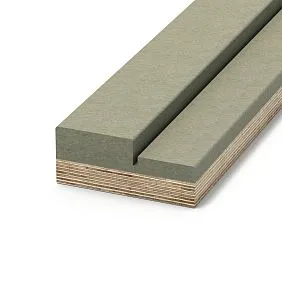
MDF — a composite material made of wood fibers bound with synthetic resins. MDF is absolutely dimensionally stable, does not warp with changes in humidity, and is easily milled into complex profiles. At the same time, the cost is significantly lower than solid wood.
Polyurethane: modern technology
Polyurethane — a synthetic material that has gained popularity due to its lightness, moisture resistance, and variety of forms.Polyurethane moldingsfrom STAVROS includes cornices, moldings, capitals, corbels, rosettes.
Advantages of polyurethane:
-
Light weight — simplifies transportation and installation
-
Moisture resistance — can be used in bathrooms, kitchens
-
Detailing — modern technology allows for the reproduction of the most complex historical ornaments
-
Cost-effectiveness — cost is lower than wood or plaster
-
Ease of installation — adheres with a special compound, does not require special skills
Polyurethane elements can be painted any color, offering limitless design possibilities.
Plaster: the tradition of stucco decoration
Plaster is a classic material for molding, used for centuries. Plaster elements have a noble matte surface, pleasant texture, and 'breathe,' creating a comfortable microclimate. However, plaster is heavy, fragile, and sensitive to moisture, which limits its application.
Door framing styles: from classic to modern
The framing style defines the character of the entire interior. It is important to choose a solution that harmonizes with the room's architecture, furniture, and overall design concept.
Classicism: symmetry and harmony
The classical style is based on ancient principles: symmetry, proportionality, and the use of the order system. Framing includes pilasters with capitals, multi-step cornices, and often a triangular pediment-sandrik.
Decorative elements of classicism: ovolos (egg-shaped forms), dentils (teeth), meanders, acanthus leaves. The color palette is restrained: white, ivory, beige, sometimes with noble gilding on individual elements.
Classical door framing suits spacious rooms with high ceilings, where there is space for an elaborate composition. It creates an atmosphere of solemnity, respectability, and timeless elegance.
Baroque: opulence and drama
Baroque is a style of luxury, dynamism, and emotional richness. Door framing in the Baroque style is distinguished by an abundance of decoration, curvilinear forms, and deep relief.
Characteristic elements: broken pediments, volutes, cartouches, mascaron, lush plant carving. Gilding, patination, and artificial aging effects are often used.
Baroque framing turns a door into a theatrical object, attracting attention and evoking admiration. This is a choice for those who are not afraid of bold solutions and value drama in the interior.
Modern: fluidity of natural forms
Modern (Art Nouveau) abandoned direct quotations of historical styles, creating its own artistic language inspired by nature. Door framing in the Modern style is characterized by smooth, flowing lines without sharp angles.
Popular motifs: stylized plants, flowers (irises, lilies), insects (dragonflies, butterflies), female figures with flowing hair. Asymmetry is welcomed, creating dynamic, lively compositions.
Modern suits creative, unconventional individuals who value originality and artistic expression.
Minimalism: conciseness and purity
Minimalist door framing features simple geometric shapes, clean lines, and a rejection of decorative excess. Casings and cornices have a concise profile, without carving or ornaments.
The color palette is neutral: white, gray, black, natural wood in light tones. Emphasis is placed on material quality, precision of execution, and purity of lines.
Minimalism is ideal for contemporary interiors where functionality, visual lightness, and space are valued.
Door framing installation: technology and nuances
Proper installation is the key to the durability and aesthetic appearance of the framing. Let's consider the main stages and recommendations.
Surface preparation
Walls around the door opening must be even, dry, and clean. Deviations of more than 5 mm per meter of length are unacceptable—they will lead to gaps between the framing and the wall.
Before installation, the surface is primed with a deep-penetration compound. This improves the adhesion of adhesive compounds and prevents mold formation.
Precise measurements and marking
Carefully measure the door opening, taking into account all features: height, width, wall thickness, and any irregularities. Based on the measurements, calculate the dimensions of the framing elements, considering gaps and joint angles.
Apply markings to the wall: lines for installing casings, pilasters, and cornices. Use a level and plumb line to ensure strict verticality and horizontality.
Methods of mounting
Adhesive installation is the main method for lightweight elements made of polyurethane and MDF. Polyurethane adhesives are used, which set in 15-20 minutes and reach full strength in 24 hours.
Mechanical fastening is for heavy elements made of solid oak. Finish nails and screws are used, which are countersunk into the wood and concealed with putty.
Combined method—a combination of adhesive and mechanical fastening for maximum reliability.
Corner Joints
Joining elements at a 45° angle requires high precision. Use a miter saw with a laser guide—accuracy of ±0.1° is critical for perfect fit.
For internal corners, small gaps are acceptable—they can be filled with sealant. External corners must be flawless, otherwise defects will be noticeable under any lighting.
Final finishing
After installation, seal the seams, joints, and fastening points with acrylic sealant or putty. Then perform the final painting or varnishing in the chosen color.
For solid wood elements, you can apply staining with wood stains, oil-wax coatings that emphasize the natural texture.
Decorative elements on the door: accents and details
In addition to the basic framing, you can use additional decorative elements that enrich the composition and make it unique.
A molding is a decorative strip with a profiled cross-section. It can be simple (one convexity or concavity) or complex (combination of several elements, carved ornament). Moldings are made from various materials — polyurethane, gypsum, wood, MDF.
Moldings— profiled strips of various widths and shapes. They are used to create frames around the door opening, divide the wall into panels, and emphasize architectural details.
Moldings can be simple (with a single bevel or rounding) or complex (multi-step profile with carving). The choice depends on the interior style and the desired level of decorativeness.
In door framing, moldings are used for:
-
Creating additional frames within the main framing
-
Decorating pilasters and half-columns
-
Designing the frieze zone between the architraves and cornice
-
Creating geometric compositions on the wall around the door
Rosettes: round accents
Rosettes are round or oval decorative elements with a relief pattern. They are placed at key points of the composition: corners of the framing, in the center of the pediment, at the intersection of moldings.
Rosettes serve as visual accents, attracting attention and emphasizing the symmetry of the composition. Rosette patterns can be floral (rosettes, acanthus), geometric (stars, suns), or abstract.
Corbels: supports and decorations
[Corbels](https://www.stavros.ru/products/izdeliya-iz-massiva/kronshteyny/vid_izdeli ya_kronshteyn/) — decorative consoles that are placed under the cornice, visually supporting it. Even if corbels do not bear a physical load, they create an impression of structural logic and reliability.
Corbel shapes are diverse: volutes, acanthus leaves, mascaron, geometric figures. For classic interiors, lush carved corbels are characteristic; for modern ones, laconic geometric forms.
Installing corbels gives the framing volume, depth, making it more expressive and memorable.
Color solutions: from natural wood to creativity
The color of the door framing influences the overall perception of the interior no less than the shape of the elements. Let's consider the main options.
Natural wood with transparent finish
This is the choice of those who value the beauty of natural material. Transparent varnishes, oils, waxes preserve the wood texture, emphasize the grain pattern, and the natural color.
Oak is characterized by warm golden-brown shades with a pronounced texture. Beech has a neutral pinkish tone with fine pores. Both options combine perfectly with natural materials: stone, brick, plaster.
Staining and bleaching
Wood stains allow you to change the color of the wood while preserving the visibility of the texture. You can imitate expensive exotic species (wenge, rosewood, mahogany) or create unusual shades (gray, blue, green).
Light stains (whitewashed oak, bleached ash) visually expand the space and suit the Scandinavian style. Dark ones (walnut, mahogany, wenge) create an atmosphere of respectability and solidity.
Painting with enamel
Enamel coating completely hides the wood texture, creating a uniform colored surface. This allows the use of any color from the RAL palette—from classic white to bright accent shades.
White framing is a universal solution for classic, Scandinavian, and Provence interiors. Gray—for minimalism, loft, high-tech. Black—for bold, contrasting compositions.
Colored enamels (blue, green, terracotta) are used to create accents in eclectic, custom interiors.
Patina and artificial aging
Patination techniques give the frame a noble patina of time. Gold or silver patina on relief elements emphasizes volume and creates a play of light and shadow.
Craquelure (fine cracks) imitates the cracking of old paint. Wear on corners and protruding parts creates an effect of long-term use.
Artificially aged framing is ideal for interiors in Provence, shabby chic, and vintage styles.
Wooden cornice: the warmth of natural material
A wooden cornice is the choice of those who value eco-friendliness, durability, and the nobility of natural material. The STAVROS collection offers a wide selection ofwooden cornices made of oak, beech, and MDF.
Advantages of a wooden cornice
Eco-friendliness — wood does not emit harmful substances, 'breathes,' and creates a comfortable microclimate.
Durability — with proper care, a wooden cornice lasts for decades. Oak elements retain their original appearance for 30-50 years.
Repairability — scratches and chips on a wooden cornice can be fixed by sanding and refinishing. Unlike polyurethane or plaster, wood allows for multiple restorations.
Aesthetics — the unique texture, pleasant tactile feel, and noble appearance of natural wood create a special atmosphere.
Processing capability — a wooden cornice can be tinted, painted, or varnished to achieve the desired color and effect.
Wooden curtain rod care
Wooden framing requires maintaining a stable microclimate: temperature 18-24°C, relative humidity 45-65%. Sudden humidity fluctuations can lead to deformation and cracking.
Regular care includes:
-
Weekly dry cleaning with a soft cloth or vacuum with a soft brush
-
Wet wiping with a well-wrung cloth once a month
-
Renewing the protective coating (oil, wax) every 12-18 months
-
Complete restoration every 5-7 years with active use
By following these simple rules, a wooden cornice will retain its beauty and functionality for many years.
Pediment: the architectural crown of a door portal
A pediment is a special element of door framing that transforms an ordinary opening into a ceremonial portal. It is a horizontal protruding element above the door, often shaped like a small cornice or gable.
Historical roots of the pediment
Pediments appeared in the architecture of Ancient Rome and initially served a practical function: protecting the entrance from rain by directing water flow away from the door. Over time, the pediment became an important decorative element, a symbol of status and prestige.
In classical architecture, several types of pediments are distinguished:
Triangular gable — reminiscent of a classical Greek temple, creates an impression of monumentality.
Semicircular — has the shape of a semicircle, softens geometry, and adds elegance.
Segmental — a shallower arc, characteristic of Baroque.
Broken — a gable with a break in the center, often featuring a decorative element (urn, cartouche, coat of arms).
Installing a pediment above the door
A pediment is installed on the upper part of the door frame, resting on architraves or pilasters. The projection of the pediment typically ranges from 50-150 mm from the wall plane.
Installation requires secure fastening, as the pediment is a relatively heavy element. Anchor bolts and concealed brackets are used to ensure the safety of the structure.
Decorative elements are often placed under the pediment: rosettes, cartouches, keystones, which enrich the composition.
Designing a door frame: from concept to implementation
Creating a harmonious door frame requires careful design. Let's consider the key stages.
Analysis of the room and style
The first step is to understand the context. What is the architecture of the room? Ceiling height? Doorway dimensions? What interior style do you want to create?
For apartments with 2.7 m ceilings, it is not advisable to choose massive Baroque frames—they will visually 'overwhelm' the space. It is better to limit yourself to simple architraves and a small cornice with a height of 70-90 mm.
For spacious rooms with ceilings from 3 m, you can develop a full-fledged order composition with pilasters, capitals, a wide cornice, and a pediment.
Selection of proportions and elements
Classical rules suggest the following ratios:
-
The width of the architrave is 1/25 of the opening height
-
The height of the cornice is 1/8-1/10 of the room height
-
The height of the capital is 1/4-1/3 of the pilaster height
However, these rules are not dogma—proportions can be varied depending on the specific situation and the desired effect.
Creating a sketch and calculating materials
Create a sketch of the future frame, preferably to scale. This will help visualize the result, assess the harmony of proportions, and identify potential problems.
Based on the sketch, calculate the amount of required materials. Don't forget to add a 10-15% reserve for cutting, possible defects, and fitting.
Selection of compatible elements
All frame elements must be stylistically compatible. You cannot combine a Doric cornice with Corinthian capitals or a Baroque pediment with minimalist architraves.
In the STAVROS catalog, elements are grouped by collections, which simplifies the selection of compatible parts. The 'Classic', 'Versailles', and 'Art Deco' collections contain elements developed in a unified style.
Frequently asked questions: all about door frames
What is the decorative panel above the door called?
The decorative panel above the door is called differently depending on the construction. A pediment is the cornice completion of a portal. A dessus-de-porte is a painted or relief panel above the opening. A false transom is a modern panel that visually increases the height of the door.
Can wooden frames be used in damp rooms?
Yes, provided there is high-quality moisture-resistant treatment. Oak is most resistant to moisture due to its high tannin content. It is necessary to apply several layers of waterproof varnish or oil. Good room ventilation is also important.
An alternative is polyurethane framing, which is absolutely not afraid of moisture.
Which material is better: solid wood or MDF?
Both materials have their advantages. Solid wood offers nobility, naturalness, durability of 30-50 years, and the possibility of multiple restorations. MDF offers dimensional stability, affordable price, and the ability to create complex profiles.
For prestigious interiors, choose solid oak. For budget projects or rooms with unstable climates—MDF.
How much does door framing cost?
The cost depends on the material, profile complexity, and dimensions. A simple set of MDF architraves will cost from 3000 rubles. A full framing with pilasters and capitals made of solid oak starts from 25000 rubles. Exclusive hand-carved elements can cost 100000 rubles and above.
Polyurethane framing is on average 30-40% cheaper than wooden framing.
Can the framing be installed by oneself?
Yes, especially for lightweight elements made of polyurethane or MDF. Basic tools will be required: a miter saw, level, adhesive, sealant. Polyurethane elements are mounted with adhesive without additional fasteners.
For massive elements made of oak, complex compositions with capitals and pediments, it is better to involve professionals. Installation errors can ruin expensive materials.
How to care for decorative framing?
Regularly wipe the surface with a soft, dry cloth to remove dust. Once a month, you can do a wet cleaning with a well-wrung cloth. Avoid abrasive agents and aggressive chemicals.
Wooden elements with oil-wax coating should be renewed every 12-18 months. Varnished surfaces require complete restoration every 5-7 years.
Polyurethane elements are low-maintenance; wet cleaning is sufficient.
Can wooden framing be painted?
Yes, wood takes paint very well. You can use stains for tinting while preserving the texture. Or use enamels to create a uniform colored coating.
Before painting, the surface is sanded and primed. Then, 2-3 coats of paint are applied with intermediate drying and sanding.
Polyurethane elements can also be painted with acrylic paints after priming.
Are capitals needed when using simple architraves?
Capitals are only necessary when using pilasters or half-columns. If the door is framed with simple rectangular architraves, capitals would be inappropriate.
A capital is the logical completion of a vertical element imitating a column. Without a pilaster, a capital would hang in the air, violating architectural logic.
How to choose the size of a cornice?
The height of the cornice is determined by the ceiling height. Recommendations:
-
Ceilings 2.4-2.7 m — cornice 45-60 mm
-
Ceilings 2.8-3.0 m — cornice 80-100 mm
-
Ceilings 3.1-3.5 m — cornice 120-150 mm
-
Ceilings from 3.6 m — cornice 160-200 mm
Also consider the width of the opening and the overall scale of the room.
Does wooden framing go with a modern interior?
Absolutely! Wood is universal and organic in all styles. For modern interiors, choose laconic profiles without excessive decoration. Painting in white, gray, or black makes wooden framing ideal for minimalism, Scandinavian style, and loft.
Natural wood in light tones (bleached oak, ash) fits perfectly into modern eco-interiors.
Conclusion: STAVROS company — your guide to the world of decor
Door framing is not just a technical element hiding gaps between the wall and the frame. It is a way to express style, create atmosphere, and demonstrate taste and attention to detail. A properly chosen door cornice, an elegant capital, a noble pediment can transform the most modest interior, giving it character, individuality, and completeness.
STAVROS company — this is over two decades of experience in manufacturing decorative elements from solid wood, MDF, and polyurethane. Here, true masters work who understand architecture, feel the material, and create products with soul.
In the STAVROS catalog, you will find everything you need to create the perfect door framing:
-
Wooden and polyurethane crown moldingsvarious profiles and sizes
-
Capitalsin classic and custom styles
-
Moldingsfor creating frames and compositions
-
Bracketscarved and minimalist
-
molded decoration made of polyurethanefor any task
Each product undergoes multi-stage quality control, from incoming wood inspection to final geometry testing. Modern equipment and traditional craftsmanship are combined here in perfect proportion.
By choosing STAVROS, you receive not just materials, but a comprehensive solution to your design challenge. Company specialists will help select compatible elements, calculate required material quantities, and provide consultation on installation and maintenance.
Create interiors that inspire. Transform doorways into architectural masterpieces. Choose quality, durability, beauty — choose STAVROS.


