












































































Article Contents:
- Anatomy of a Door Frame: What Makes Up a Portal
- Classical Three-Element System
- Multi-Level Framing: Baroque and Neoclassicism
- Framing Doorless Openings: Arches and Portals
- Types of Molding for Door Framing: Profile and Style Selection
- Smooth and Shaped: From Minimalism to Classic
- Size Matters: Proportions of Framing
- Material and Finish
- Framing Techniques: From Simple Casing to Complex Portal
- Basic Framing: Perimeter Casing
- Two-Level Framing: Volume and Depth
- Portal Framing: Column Imitation
- Framing Integrated with Wall Panels
- Framing Installation: From Preparation to Final Setup
- Base Preparation: Walls and Door Frame
- Marking and Cutting Moldings
- Attaching Moldings to the Wall
- Sealing Joints and Final Finishing
- Framing Styles: From Minimalism to Baroque
- Modern Minimalism: Restrained Form
- Scandinavian Style: Naturalness and Light
- Neoclassicism: Symmetry and Elegance
- Classicism: Strict Order
- Baroque and Rococo: Luxury of Carving
- Art Deco: Geometry and Gloss
- Ready-Made Solutions from STAVROS: Collections of Framings and Portals
- Collections of Carved Trim
- Ready-Made Portals: Installation in One Day
- Custom Design: Uniqueness Based on Your Sketches
- Frequently Asked Questions About Door Frame Molding
- Can trim be installed on an already mounted door?
- What gap should be between the molding and the door frame?
- Should a door be trimmed on both sides of the wall?
- What to do if the wall is very uneven?
- How much does it cost to buy solid wood door trim?
- How to care for wooden trim?
- Can the trim be repainted if you're tired of the color?
- What to do if the door is a non-standard size?
- Conclusion: The door as an architectural work

Doors are not just functional elements dividing spaces. They are architectural accents that form the first impression of a room, hallway, or entire house. But even the most expensive door gets lost in the interior if its trim is done carelessly, cheaply, or is completely absent.door frame trimis a frame that transforms a utilitarian opening into a work of art, a portal between worlds, an element that sets the tone for the entire interior.
Molding is the secret weapon of classic interior design. These profiled strips of solid wood, once hand-carved by cabinetmakers, remain an unsurpassed means of creating architectural expressiveness.Door Frame Installationwith molding is a technique that came from palace interiors of the 18th-19th centuries, when every door was framed by complex multi-level compositions, emphasizing the owner's status, the style of the room, and its functional purpose.
Why, in the era of minimalism and industrial styles, has door trimming with molding not only not disappeared but is experiencing a true renaissance? Because it solves several tasks at once: it visually increases the height of the opening, hides construction defects, creates rhythm in the interior, connects the door with wall panels and ceiling cornices, turning disparate elements into a unified architectural composition.Decorative door frame trimis not decoration for decoration's sake, but a functional architectural system tested for centuries.


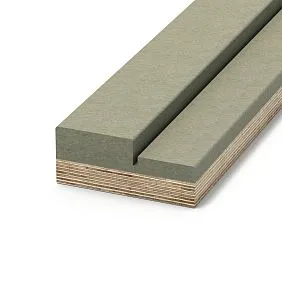
Anatomy of door trim: what makes up a portal
Before talking about styles and techniques, it's necessary to understand the structure. What exactly do we call door trim?




Classical three-element system
Traditionalframing the doorway with a casingconsists of three main parts. Two vertical elements (side casings or jambs) frame the door on the right and left. One horizontal element (top casing or frieze) crowns the opening from above. These three strips, connected at a 45° angle (diagonal joint) or at 90° (straight joint with a capital), create the basic frame.
The width of casings varies from modest 60 mm in minimalist interiors to impressive 150-200 mm in classical ones. Thickness — from 10 mm (flat casing) to 30-40 mm (volumetric profiled). Material — solid wood (oak, beech, ash, walnut), MDF with coating, polyurethane (a budget option, not considered in the context of quality trim).
The simplest casing is a smooth strip of rectangular cross-section. But even minimal profiling (rounding of edges, bevel) adds elegance.Moldings and door opening framingis a whole gallery of profiles: quarter-round, half-round, teardrop-shaped, complex multi-level compositions.
Our factory also produces:


Multi-level trim: Baroque and Neoclassicism
In interiors of high style — Baroque, Rococo, Empire, Neoclassicism — a single casing is not enough. The trim becomes a multi-layered architectural structure. The first level is the main casing 100-150 mm wide with a basic profile. The second level is an additional molding 40-80 mm wide, applied on top of the main one or next to it, creating a stepped structure. The third level is decorative elements: rosettes in the corners, carved overlays, capitals (if the trim imitates columns).
The upper part of such trim can be designed as an entablature — a horizontal beam divided into an architrave (lower strip), frieze (middle, often with carving), and cornice (upper protruding part). This is a direct borrowing from ancient architecture, where each door opening was interpreted as a miniature temple portico.
Side elements can be made as pilasters — flat vertical columns with a base (expansion at the bottom), a shaft (central part, sometimes with fluting — vertical grooves), and a capital (expansion at the top with ornament).Wooden portalsSTAVROS demonstrates the full complexity of such compositions: carving, gilding, patination turn a door opening into a work of art, a focal point of the interior.
Get Consultation
Framing openings without doors: arches and portals
Not every door opening is equipped with a door. Between the living room and dining room, hall and corridor, kitchen and living room, open openings are often left to visually expand the space, improve air and light circulation. But a bare rectangular cut in the wall looks unfinished, like a wound.Framing a Doorway Without a Doorsolves this problem by turning a technical opening into an architectural element.
An open opening can be framed with the same casings as doors with panels, creating uniformity. But more expressive solutions are often used: an arched finish instead of a rectangular one, an expanded frame with pilasters, a decorative vault with rosettes and carving. An arch is visually softer than a rectangle; it is associated with classical architecture, with passages in old buildings.
The shape of the arch varies: semicircular (Roman), pointed (Gothic), elliptical, parabolic, Moorish (horseshoe-shaped). For classical interiors, a semicircular arch with a radius equal to half the width of the opening is characteristic. The arch framing is done with flexible molding (specially curved in production) or assembled from short segments.
An open opening with framing becomes a portal — a symbolic boundary between zones that does not obstruct movement but marks a transition. Passing throughFraming Doorway Openings, a person subconsciously feels a change of space, tunes into a different atmosphere. This is a subtle psychological effect used by designers for zoning without physical barriers.
Types of moldings for door framing: choosing a profile and style
Molding is a general name for decorative strips, but their variety is enormous. Which profile to choose for framing a specific door in a specific interior?
Smooth and profiled: from minimalism to classic
Smooth molding is a strip of rectangular or square cross-section with minimal processing (rounding of edges with a radius of 2-3 mm). Width 60-80 mm, thickness 10-15 mm. Suitable for modern interiors: Scandinavian, minimalism, loft (if made of dark wood). The simplicity of the form emphasizes the purity of lines, does not distract attention, and creates graphic quality.
Profiled molding has a shaped cross-section: convexities (beads, semicircular protrusions), concavities (grooves, flutes), combinations of levels. The profile can be simple (one bead in the center) or complex (alternation of several elements). The more complex the profile, the more classic and decorative the framing looks.
Classic molding fordoorway frame decorated with moldinghas a width of 100-120 mm and a three-level profile: a base plane, a protruding bead, a crowning chamfer. Such molding is self-sufficient — it does not require additional overlays, it itself creates volume and play of light and shadow.
Carved molding is the pinnacle of decorativeness. A repeating ornament is applied to the surface of the strip: floral (acanthus leaves, grapevine, rosettes), geometric (meander, braid, egg-and-dart), mixed.Carved Trimis manufactured on high-precision CNC milling machines using digital models, which ensures clarity and repeatability of the pattern along the entire length of the strip.
Carved door framing is appropriate in Baroque, Rococo, Empire, and Russian classicism interiors. It turns the door into a work of art and requires appropriate surroundings: wall panels, ceiling moldings, classic furniture. In a minimalist apartment, a carved portal will look alien, overloading the space.
Dimensions matter: proportions of framing
The width of the molding should correspond to the scale of the opening and the height of the ceilings. For standard doors (height 2000-2100 mm, width 800-900 mm) in an apartment with ceilings of 2700 mm, a casing width of 80-100 mm is optimal. A narrower one (60 mm) will look skimpy, a wider one (120+ mm) — bulky.
In rooms with high ceilings (3000-3500 mm), characteristic of old buildings, classic mansions, the proportions change. Here, wide casings of 120-150 mm are appropriate, complemented by a second level of moldings. A door with a height of 2400-2600 mm with framing 150 mm wide looks harmonious and does not get lost in the volume of space.
The thickness of the molding (projection from the wall) creates depth. A flat casing with a thickness of 10 mm almost casts no shadow and looks graphic. A voluminous molding with a thickness of 25-35 mm creates pronounced shadows, especially with side lighting, adding architectural sculpturality. In classic interiors, a thickness of 20-30 mm is preferable — sufficient for volume but not excessive.
The ratio of the width of the vertical and horizontal casings is also important. In a strict symmetrical composition, all three elements are of the same width. In a more complex version, the top casing (frieze) is 20-30% wider than the side ones, creating the effect of an entablature crowning columns. Or vice versa: the side pilasters are wider than the top frieze, emphasizing verticality, an upward striving (characteristic of Gothic, Art Nouveau).
Material and finish
Moldings from solid woodof oak, beech, ash is the quality standard. Solid wood does not warp (with proper drying), does not delaminate, and has a noble texture. Oak is the hardest and most prestigious; its texture is expressive even under transparent varnish. Beech is slightly softer but takes staining well, allowing imitation of expensive species (walnut, mahogany). Ash is the golden mean in price and properties, with a beautiful contrasting grain pattern.
MDF with coating is a compromise option. The base of pressed fibers is stable, does not dry out, and is cheaper than solid wood. Coating — veneer of natural wood, lamination with film, enamel. Veneered MDF is visually almost indistinguishable from solid wood but is less prestigious and cannot be deeply restored (cannot be sanded like solid wood). Enameled MDF (white, gray, colored) is a choice for painted interiors where wood texture is not needed.
Polyurethane is a budget modern material imitating stucco. Light, moisture-resistant, cheap, but has nothing to do with quality framing. Polyurethane moldings look plastic-like, lack the nobility of natural wood, and yellow over time. In the context of elite interiors, they are not considered.
The finish of solid wood moldings is varied. Transparent varnish (matte or semi-matte) preserves the wood texture and emphasizes the grain pattern. Staining with stain or oil deepens the color: from light honey to dark wenge or ebony black. Enamel (opaque paint) creates a uniform color, hiding the texture. White enamel is a classic for Provence, neoclassical, and American classic interiors. Patination is artificial aging, when a darker or contrasting pigment (gold, silver, dark brown) is rubbed into the recesses of the carving, creating an antique effect. Gilding (gold leaf, imitation gold leaf, gold paint) is a luxurious finish for palace interiors.
Framing techniques: from simple casing to complex portal
How exactly is a door framed with molding? What techniques are used to create different effects?
Basic framing: casing around the perimeter
The simplest option is three strips (two vertical, one horizontal), installed flush with the wall around the door frame. The strips are joined at a 45° angle (diagonal cut of the ends). Such joining creates a neat corner without visible ends; the strips seem to flow into one another. Requires precision: even a deviation of 1-2° creates a gap in the corner.
An alternative is a straight joint at 90°, where the top strip rests on the ends of the side ones. Simpler to execute but less elegant. To hide the ends, decorative elements are added to the corners: rosettes (round or square overlays with carving), corner blocks (cubic or rectangular elements on which the top strip rests).
The base trim is attached to the wall using finish nails (headless), glue, or liquid nails. If the wall is uneven, putty or sealant is placed under the molding to level the plane. After installation, gaps in the corners and between the molding and the wall are filled with acrylic sealant matching the wood color, creating the appearance of a monolithic structure.
Two-level trim: volume and depth
To enhance decorativeness, two rows of moldings are used. The first row is the main casing, 100 mm wide, installed flush against the door frame. The second row is an additional molding, 50-70 mm wide, installed 20-30 mm away from the first (set back toward the wall) or overlaid on top of the first (creating a step).
A recess forms between the two rows (if the moldings are at different levels) or a protrusion (if the second is overlaid). The play of levels creates a shadow pattern and adds volume. The wall between the moldings is painted in a contrasting color (if the main background is beige, the area between the moldings can be dark gray or golden), enhancing the effect.
Two-level trim is characteristic of neoclassicism, where the strictness of lines is combined with richness of detail.Window and Door FramingIn such interiors, they echo baseboards and ceiling cornices, creating a unified architectural language.
Portal trim: imitation of columns
The most ceremonial option is a portal trim with pilasters. The side vertical elements are executed as flat columns with a base (a lower expansion 150-300 mm high, often with a profiled plinth), a shaft (the central part 120-180 mm wide, smooth or with fluting — vertical grooves), and a capital (an upper expansion 200-400 mm high with carved ornamentation, imitating classical orders: Doric, Ionic, Corinthian).
The upper part of the portal is an entablature, divided into three zones: the architrave (a plank 80-100 mm wide, resting on the capitals), the frieze (a plank 100-150 mm wide, often with carving or relief ornamentation), and the cornice (a protruding plank 80-120 mm wide with a profiled lower edge). The total height of the entablature is 300-500 mm, which visually enlarges the door opening, making it monumental.
Portal trim requires high ceilings (from 3000 mm) and a corresponding interior. In a standard apartment with 2700 mm ceilings, such a portal will look bulky, consuming space. But in a mansion, apartments with high ceilings, or public interiors (hotels, restaurants, galleries)Decorative door frame trimexecuted in portal technique creates an atmosphere of luxury and significance.
Trim integrated into wall panels
A door does not exist in isolation — it is part of the wall. If the walls are finished with molding panels (boiserie — a classic technique of wall finishing with wooden frames and panels), the door trim is integrated into this system. The moldings around the door are a continuation of the vertical and horizontal divisions of the panels, creating a unified grid.
For example, a wall is divided into rectangular sections 1200 mm high by moldings 60 mm wide. A door 2100 mm high intersects this grid. The door trim is executed with the same 60 mm wide molding, and at the intersections with the horizontal belts of the panels, the molding is thickened or a decorative element (a rosette) is added, marking the joint. Such integration creates the impression that the door is not cut into the wall but is organically inscribed into the architectural system.
Wall panels with integrated doors are a sign of high interior craftsmanship. This is complex work requiring precise calculations and professional installation, but the result is impressive: the interior looks cohesive, well-thought-out, with every element in its place.
Trim installation: from preparation to final assembly
The beauty of the trim depends not only on the choice of moldings but also on the quality of installation. How to properly install door trim so that it lasts for decades and looks flawless?
Base preparation: walls and door frame
Before attaching moldings, surfaces must be prepared. The wall around the door must be level. Variations greater than 3-5 mm per meter of length will create gaps between the molding and the wall. Check with a straightedge or long level. Irregularities are leveled with putty (if depressions) or sanded (if protrusions).
The door frame must be installed strictly vertically (checked with a level) and flush with the wall or with a slight protrusion (5-10 mm) on which the molding will rest. If the frame is recessed into the wall deeper than 10 mm, the molding will not cover the joint — additional planks (extensions) will be required to bring the frame out to the plane of the wall.
The wall is painted or wallpapered before installing the moldings. If contrasting painting of the area around the door is planned (e.g., the wall is white, but the rectangle around the door is dark gray), marking is done in advance, and painting is performed with an overlap under the future moldings to avoid white gaps.
Marking and cutting moldings
Precise marking is half the success. Measure the height of the door frame (from floor to top rail) and the width of the frame (between vertical rails). To these dimensions, add the width of the molding (if the molding is 100 mm wide, it will extend beyond the edge of the frame by 100 mm on each side).
Vertical moldings: length = frame height + molding width (to compensate for the diagonal cut at the top). If the frame height is 2050 mm and the molding is 100 mm, vertical planks are cut to a length of 2150 mm, accounting for the cuts.
Horizontal molding: length = frame width + 2 × molding width + 2 × the molding's own width (accounting for diagonal cuts on both sides). If the frame width is 860 mm and the molding is 100 mm, the top plank is cut to approximately 1160 mm.
Cutting is performed with a miter saw with a rotating platform, allowing cuts at any angle. For a diagonal joint at 45°, the saw is set to 45°, and the molding is cut so that the inner side (adjacent to the frame) is longer than the outer side. Cut accuracy is critical: a deviation of 1° will create a 2-3 mm gap in the corner, which is difficult to mask.
Attaching moldings to the wall
Moldings are attached in several ways depending on the wall material and the weight of the molding.
Finish nails (30-50 mm long, 1.5-2 mm in diameter, headless or with a microscopic head) — the classic method. Nails are driven through the molding into the wall at 300-400 mm intervals. Thin holes (1 mm diameter) are pre-drilled to prevent the molding from cracking. Nail heads are countersunk 1-2 mm below the surface, and the holes are filled with wood putty matching the molding color. After drying, they are sanded — the nails become invisible.
Liquid nails (construction adhesive based on rubber or polymers) — a modern method. The adhesive is applied to the back of the molding in a zigzag or dots at 100-150 mm intervals. The molding is pressed against the wall and held for 30-60 seconds. It sets in 10-15 minutes, with full polymerization in 24 hours. Advantage — no visible fasteners. Disadvantage — difficult to remove without damage.
The combined method (glue + nails) is optimal. Glue ensures continuous adhesion, nails secure the molding until the glue sets and provide redundant fastening. In 50-100 years, if the glue loses strength (unlikely with modern formulations, but still possible), the nails will continue to hold.
For heavy, multi-layer moldings and portals, self-tapping screws (50-70 mm long) are used, screwed into pre-installed wall anchors. The screw heads are deeply countersunk, covered with wooden plugs (made from the same wood as the molding), glued, and sanded flush. This fastening will last for decades without weakening.
Joint sealing and final finishing
After installation, micro-gaps in corners, between the molding and wall, and between the molding and door frame are inevitable. They are filled with acrylic sealant (not silicone—acrylic can be painted, silicone cannot) in wood color or white (if the molding is painted). The sealant is applied in a thin layer, smoothed with a wet finger or rubber spatula, and excess is removed with a sponge.
If the molding is supplied unfinished (sanded solid wood without coating), final finishing is done after installation. The molding is sanded with fine sandpaper (grit 220-320), dust is removed, and stain is applied (if tinting is desired) with a brush or sponge. After the stain dries (4-6 hours), varnish is applied in 2-3 coats with intercoat drying (6-8 hours) and sanding (sandpaper grit 400-600). The final varnish coat is not sanded.
If the molding is painted with enamel, the process is similar, but instead of stain, wood primer is applied (1-2 coats), followed by enamel (2-3 coats) after drying. Sanding is done between coats for perfect smoothness. High-quality molding painting is indistinguishable from factory finish—no drips, orange peel, or missed spots.
Framing styles: from minimalism to baroque
Door framing should match the overall interior style. Let's explore how moldings work in different design directions.
Modern minimalism: restraint of form
In minimalist interiors, door framing is maximally laconic or absent altogether. If the door is flush-mounted (level with the wall, with no visible frame or trim), there is no framing—the door blends with the wall, becoming an invisible panel.
If the door is traditional, narrow (60-70 mm) smooth trim with a rectangular cross-section and minimal edge rounding is used. Color—natural light-toned wood (whitewashed oak, ash), dark wood (wenge, stained oak), or white enamel. No carving, gilding, or complex profiles. Joining at 45° or straight with corner cube blocks.
Minimalist framing does not draw attention; it serves as a backdrop for other accents (furniture, art, lighting). Its purpose is to neatly finish the opening, nothing more.
Scandinavian style: naturalness and light
Scandinavian interiors are close to minimalism but warmer, with a greater presence of natural materials. Door framing—light wood (pine, birch, whitewashed oak) with preserved texture. Trim width 70-90 mm, profile simple (quarter-round or flat with a bevel).
Difference from minimalism—allowance for small decorative accents: rounded trim corners, rosettes in upper corners (not carved baroque, but simple geometric ones), contrasting paint on the inner part of the framing (if the trim is white, the inner contour can be light gray).
Scandinavian framing creates a sense of coziness without clutter, naturalness without rustic roughness.
Neoclassicism: symmetry and elegance
Neoclassicism—a modern interpretation of classical canons. Door framing is based on symmetry, clear proportions, and moderate decorativeness. Trim width 100-120 mm with a three-level profile (base plane, protruding bead, crowning bevel). Two-level framing is possible: main trim plus an additional molding with a 20-30 mm offset.
Color—white (enamel), light gray, beige, natural wood with light tinting. Carving is minimal or absent. If carving is present—it is geometric, restrained (egg-and-dart, pearl, meander), without baroque opulence.
The upper part of the framing can be designed as a simplified entablature: the top trim is 20-30% wider than the side ones, with a small protruding cornice. Corners—straight joining with capitals (rectangular blocks with slight relief) or diagonal joining with rosettes.
Neoclassical framing is versatile—it is elegant but not ornate, classical but not archaic. Suitable for most modern interiors where nobility is desired without resorting to palace style.
Classicism: strict order
Classicism of the 18th-19th centuries is based on ancient architectural orders (Doric, Ionic, Corinthian). Door framing is interpreted as a temple portico: side pilasters (flat columns), entablature on top.
Pilasters width 150-180 mm with clearly defined base (height 200-250 mm, profiled plinth), shaft (smooth or with fluting), and capital (height 250-350 mm, carved, imitating Ionic or Corinthian order). Entablature height 400-500 mm, divided into architrave, frieze (with carving—triglyphs, rosettes, meander), and cornice (protruding, with dentils or modillions).
Color—white, cream, light beige (tradition of ancient architecture). Light gilding of capitals and frieze carving is possible. But without baroque excess—classicism is strict, symmetrical, rational.
Classicist framing requires high ceilings (from 3200 mm), large spaces. In standard apartments, it is bulky, but in mansions, loft apartments with high ceilings, it creates a solemn atmosphere.
Baroque and Rococo: luxury of carving
Baroque—the style of palaces and cathedrals of the 17th-18th centuries, where decorativeness is taken to the extreme. Door framing—a complex multi-level composition with abundant carving. Side pilasters are adorned with plant motifs (acanthus, grapevine, roses), often asymmetrical (rocaille). Capitals are overloaded with decor: volutes (scrolls), masks, garlands.
Entablature is saturated with carving: frieze covered with continuous plant ornament, cornice abounds with modillions (carved brackets), in the center of the upper part—a cartouche (carved frame for a coat of arms, monogram, rosette).
Color—gold, lots of gold. Gilding of capitals, carving, protruding elements. Main color—white, cream, pastel (blue, pink, pistachio). Carving is often patinated—dark paint is rubbed into recesses to emphasize volume.
Baroque framing is theater, grandeur, a display of wealth. Appropriate in palace-style interiors, in public spaces (theaters, luxury hotels), in private residences of owners with corresponding taste and budget. In an ordinary apartment—excessive and absurd.
Rococo — an evolution of Baroque towards even greater decorativeness and asymmetry. Carving is lighter, more airy, with motifs of shells (rocaille), curved lines, and deliberate irregularity of forms. Colors are lighter, more pastel. There is even more gold.
Art Deco: Geometry and Glamour
Art Deco of the 1920s — a style combining classical proportions with geometric decorativeness and the sheen of expensive materials. Door framing in Art Deco is strictly symmetrical, with clear vertical and horizontal lines.
Moldings — stepped profiles (several levels of rectangular projections), creating a graphic pattern. Decoration is geometric: zigzags, meanders, chevrons, sunbursts (sunburst). The framing is often inlaid with contrasting materials: dark wood with brass inserts, black lacquer with mother-of-pearl.
Color — contrasting combinations: black and gold, dark brown and cream, emerald and bronze. Shiny surfaces: lacquer, polish, metal overlays.
Framing in the Art Deco style is elegant, expensive, but not overloaded. It is a choice for interiors where classicism meets modernism, where historical reference coexists with contemporary aesthetics.
Ready-made solutions from STAVROS: collections of framings and portals
Creating custom door framing is a task that requires design, profile selection, calculation, and custom manufacturing. But there are also ready-made solutions, developed by professionals and available for immediate purchase.
Collections of carved millwork
STAVROS company offers over 40 profilessolid wood moldingsof oak and beech. Among them are specialized profiles for door framing: casings from 60 to 150 mm wide, baguettes (wide moldings with carving), cornices (top crowning elements).
carved molding K-074— a classic molding with a floral ornament, 120 mm wide, suitable for creating rich framing in the Baroque or Classicism style. The carving is detailed, symmetrical, repeating with a 150 mm pitch.
Carved millwork K-046— a more restrained profile with geometric carving (egg-and-dart, pearl), 80 mm wide, ideal for neoclassical interiors. Can be used as an independent casing or as an additional level to the main framing.
Solid wood casingsof various widths (70, 90, 100, 120 mm) and profiles (smooth, shaped, carved) in stock. Can be ordered unfinished (for subsequent on-site tinting and varnishing) or with a ready-made finish (varnish, enamel, patination).
Ready-made portals: installation in one day
For those who want a ready-made comprehensive solution, STAVROS manufacturesWooden portals— ready-made door opening framings, consisting of side pilasters, a top entablature, sometimes with integrated door frames.
The portal is manufactured at the production facility according to the customer's exact opening dimensions. All elements are fitted, carving is executed, finish is applied. On-site, the portal is assembled from ready-made parts in 4-8 hours, attached to the wall, and joints are sealed. The result is professional framing, as if the door was originally designed with this portal.
Portals vary by style (classical, Baroque, neoclassical, Art Deco), size (for standard doors 2000×800 mm or custom), material (solid oak, beech), finish (natural wood under varnish, white enamel, patination, gilding).
The cost of a ready-made portal — from 80,000 to 500,000 rubles depending on the complexity of carving, size, material. This may seem expensive, but compare it with the alternative: designer work (framing project — 15,000-30,000₽), purchase of moldings (20,000-80,000₽ depending on footage and profile), installer work (25,000-60,000₽ including cutting, installation, finishing). Total 60,000-170,000₽ with the risk of errors, mismatches, need for rework. A ready-made portal — guarantee of result, time savings, professional quality.
Custom design: uniqueness according to your sketches
If ready-made solutions are not suitable (non-standard opening sizes, unique interior style, special wishes for carving), STAVROS performs custom design. You provide sketches, photos of the desired style, opening dimensions. STAVROS designers create a 3D model of the future framing, coordinate every detail with you.
After project approval, all elements are manufactured at the production facility: moldings are milled on CNC machines according to the digital model, carving (if unique, not from the standard catalog) is performed by craftsmen manually, finish is applied in climate-controlled chambers. Ready elements are delivered to the site, installed by the STAVROS team.
The production time for a custom portal — from 4 to 12 weeks depending on complexity. Cost — from 150,000 to 1,500,000 rubles (for exclusive projects with hand carving, gilding, inlay). This is an investment in uniqueness, in door framing that no one else has.
Frequently asked questions about door framing with molding
Can framing be installed on an already mounted door?
Yes, framing is installed after the door and door frame are mounted. Moreover, this is the correct sequence: first, the frame is aligned, foamed, plaster reveals are leveled, walls are painted or wallpapered, and only then are moldings mounted. Attempting to install moldings before wall finishing will lead to their soiling and damage.
What gap should be between the molding and the door frame?
Minimal, ideally — no gap. The molding should fit tightly against the frame, creating the impression of a single structure. If there is a small gap (1-2 mm due to frame unevenness), it is filled with white or colored acrylic sealant. A gap larger than 5 mm looks sloppy and requires adding additional filler strips.
Should a door be framed on both sides of the wall?
It is advisable, especially if both sides are living spaces. A door framed only on one side looks unfinished on the other. Framing on both sides creates symmetry and completeness. The moldings can be the same (if the style of both rooms matches) or different (if the styles differ—for example, a classic frame on the living room side and a minimalist one on the hallway side).
What to do if the wall is very uneven?
There are two solutions. The first is to level the wall with plaster or drywall before installing the moldings. This is the correct but labor-intensive approach. The second is to use flexible moldings (polyurethane or thin wood) that follow the wall's curves. However, for high-quality classic framing, the first option is preferable.
How much doesbuy door framingfrom solid wood?
For a standard door (2000×800 mm), approximately 6 linear meters of molding are required (two vertical pieces of 2.2 m each, one horizontal piece of 1.6 m). The price depends on the profile: a smooth oak casing 80 mm wide—from 1,200₽ per linear meter (total 7,200₽ for the set), a shaped profiled one 100 mm wide—from 1,800₽/m (total 10,800₽), a carved one 120 mm wide—from 3,500₽/m (total 21,000₽). Plus installation work—from 5,000 to 15,000₽ depending on complexity.
How to care for wooden framing?
Care is minimal. Wipe dust with a dry or slightly damp soft cloth once a week. Do not use aggressive cleaning agents or abrasives. Once a year, you can wipe with special wood oil or polish—this refreshes the finish and restores shine. Avoid direct water contact, especially on joints. With proper care, wooden framing lasts 50-100 years without losing its appearance.
Can the framing be repainted if the color becomes tiresome?
Yes, solid wood framing can be repainted multiple times. The old finish is removed by sanding or stripping, the surface is sanded, and new tinting or enamel is applied. This is one of the advantages of solid wood over MDF or polyurethane—virtually unlimited restorability.
What to do if the door is non-standard size?
Buy door opening framingcan be made to any size. Moldings are sold by linear meters, with plank lengths up to 3-4 meters. For a door 2400 mm high, planks of corresponding length are ordered and cut on-site. For very wide or very high openings (e.g., double doors 1800 mm wide), splicing of the horizontal molding may be required, but with professional execution, the joint is unnoticeable.
Conclusion: the door as an architectural work
A door ceases to be just a door when its framing turns the opening into an architectural event.door frame trimis not a secondary detail that can be ignored or done carelessly. It is one of the key interior elements, shaping the impression of the taste, status, and attention to detail of the homeowners.
Molding is an ancient invention that has survived millennia, dozens of styles, and technological revolutions. It remains relevant because it solves fundamental tasks: creates architectural expressiveness, organizes space, and connects elements into a unified whole.Door Frame Installationwith molding is a technique accessible in both minimalist interiors (where molding is restrained and simple) and palatial ones (where molding becomes carved, gilded, multi-level).
Choosing the profile, size, color, and installation technique requires an understanding of style, proportions, and functionality. A mistake in choice—and the framing either gets lost (too narrow, unexpressive) or overwhelms (too wide, ornate). The right decision—and the door turns into a portal, an element you want to look at, photograph, and take pride in.
For over two decades, STAVROS has been creating moldings and portals that combine the traditions of classic joinery with modern production technologies. Every meter ofsolid wood trimSTAVROS is made from selected kiln-dried wood, milled on CNC machines with precision up to 0.1 mm, coated with professional varnishes and enamels that withstand decades of use.
STAVROS offers not just moldings, but comprehensive solutions for door framing. Over 40 standard profiles in the catalog, ready-made portals for standard openings, custom design for your unique tasks. Designer consultations will help you choose the optimal profile for your interior, calculate the required meters, and decide on color and finish.
STAVROS's own production guarantees quality control at every stage: from wood selection to packaging of finished products. STAVROS installation teams (when ordering installation service) perform installation with jeweler-like precision, ensuring perfect joints, tight fit, and impeccable finishing.


