












































































Article Contents:
- Philosophy of the material: why wood rules over time
- Biomechanics of wood structure
- Wood species: characteristics of premium materials
- Technological revelations of modern production
- Revolution in wood drying methods
- Digital Technologies in Woodworking
- Ventilated facades: The breathing wall
- Traditional joinery
- Modern Compensation Systems
- Design Concepts: Styles and Directions
- Classic elegance
- Modern minimalism
- Provencal charm
- Technical specifications and operational properties
- Thermal and acoustic insulation properties
- Moisture resistance and dimensional stability
- Mechanical strength and durability
- Protective coatings: technologies for preserving beauty
- Oil systems: wood’s breath
- Lacquer systems: modern protection
- Wax coatings: traditions of luxury
- Ergonomic aspects of use
- Anthropometric parameters
- Premium-grade hardware
- Ecological advantages of natural wood
- Carbon balance and climate commitments
- Air quality in the room
- Economic justification of choice
- Investment attractiveness
- Impact on property value
- Modern Trends and Innovations
- Digital technologies for personalization
- Smart integration technologies
- Geographic Specificity: Workshops and Production in the Northern Capital
- Regional traditions of craftsmanship
- Russian school of carpentry art
- European traditions
- Care and Maintenance: Secrets of Longevity
- Creating optimal conditions
- Preventive care
- Restoration and repair
- Psychological Aspects of Perception
- Biophilia and emotional well-being
- Social semiotics of choice
- STAVROS: embodiment of craftsmanship in every detail
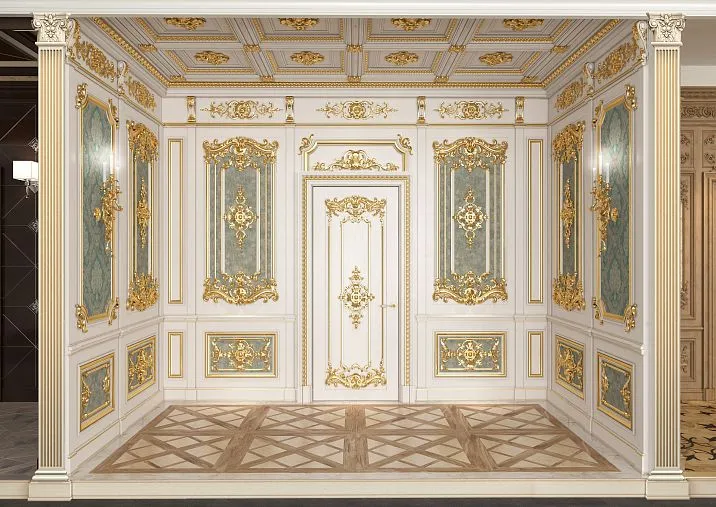
Is it worth mentioning that the choice of interior doors determines not only the functionality of space, but also its soul? Interior doors from natural wood Embodiment of centuries-old craftsmanship traditions, combining the practicality of modern technologies with the pristine beauty of living material. In an era of synthetic imitations and mass production, wooden doors remain a symbol of authenticity, status, and enduring elegance.
Each door made from solid wood is not just a functional interior element, but a living story told through the language of growth rings, natural fiber bends, and unique texture that cannot be artificially reproduced. When morning light touches the surface of an oak door, the wood seems to come alive, radiating warmth and energy accumulated over decades of growth in the forest.


Philosophy of the material: why wood rules over time




Biomechanics of wood structure
What transforms simple wood into a material capable of serving for centuries, preserving its original beauty and functionality? The answer lies in the unique architecture of wood fibers — a natural composite created according to the laws of perfect engineering. Cellulose microfibrils form a spiral structure around the central cell axis, creating a natural reinforcement of incredible strength.
Lignin — a natural polymer — acts as a binding agent between fibers. In hardwoods, its concentration reaches 25-30%, providing structural rigidity and resistance to deformation. Hemicellulose functions as a natural stabilizer, giving wood the ability to adapt to humidity changes without critical damage.
It is precisely this three-component system that makes wood an ideal material for making doors — strong enough for daily use and flexible enough to compensate for temperature fluctuations.
Our factory also produces:


Wood species: characteristics of premium materials
Oak is rightfully considered the king among furniture woods. The density of dried oak solid wood ranges from 720-780 kg/m³, ensuring exceptional durability. High tannin content (up to 12%) provides natural protection against moisture, rot, and insects.
Ash demonstrates a unique combination of strength and elasticity. Its modulus of elasticity exceeds 13000 MPa, making ash doors particularly resistant to impact loads. The contrasting texture with alternating light and dark stripes creates a striking decorative effect.
Walnut impresses with the nobility of its dark tones — from golden-brown to deep chocolate with purple hues. Density of 640-680 kg/m³ combines with excellent workability, allowing the creation of intricate carved elements and elegant profiles.
Oak differs by exceptional homogeneity of structure and fine-grained texture. After steam treatment, it becomes pliable, allowing the creation of curved elements with complex shapes.
Get Consultation
Technological breakthroughs of modern production
Revolution in wood drying methods
Modern Solid wood interior doors They are born in high-tech drying complexes, where each parameter is controlled with pharmaceutical precision. Convective drying in sealed chambers allows programming temperature regimes with accuracy to the degree, gradually reducing wood moisture from 30-50% to optimal 8-12%.
Vacuum technology operates at reduced pressure of 0.1-0.3 atmospheres, allowing moisture removal at a temperature of only 50-70°C. Such a gentle regime preserves the natural fiber structure and prevents the formation of internal stresses.
Microwave drying uses electromagnetic waves at a frequency of 2.45 GHz for volumetric heating of blanks. Moisture evaporates evenly from the inside out across the entire cross-section, eliminating surface cracks and warping.
Digital technologies in woodworking
Modern CNC machining centers achieve positioning accuracy of 0.001 mm at feed speeds up to 150 m/min. Diamond tools with polycrystalline coatings create surfaces with roughness Ra 0.05 microns — mirror smoothness unattainable by traditional methods.
High-resolution laser engraving allows applying intricate patterns and textures with processing depth from 0.1 to 5.0 mm. Computer control ensures absolute repeatability of results in mass production.
Three-dimensional scanning of each blank reveals hidden defects and optimizes material layout. The system automatically adjusts the processing program, taking into account the individual characteristics of each piece of wood.
Structural solutions: engineering of beauty
Traditional joinery
The foundation of wooden door longevity — time-tested methods of joining elements. The "dowel-and-slot" joint with gluing ensures tensile strength up to 15 MPa. The dowel length is 2/3 of the thickness of the mating part, guaranteeing maximum bonding area.
The "horseshoe" joint is used at door frame corners to ensure maximum structural rigidity. The trapezoidal shape of the dowel prevents extraction even under significant loads.
Dowel joints further reinforce glued joints. Wooden dowels from hardwoods (oak, oak) swell in the glue hole, creating a practically non-detachable connection.
Modern compensation systems
Wood is a living material, reacting to changes in temperature and humidity. Professional manufacturers take these properties into account when designing the structure.
A floating mounting system for panels allows them to move freely within the frame slots as dimensions change. The slot depth exceeds the panel thickness by 4-6 mm on each side.
Compensatory grooves on the backside of wide elements relieve internal stresses. The groove depth is 1/3 of the element thickness, with a width of 2-4 mm.
Different moisture levels of various structural elements account for their dimensions and operating conditions. Narrow elements (strips, rails) have moisture content of 6-8%, while wide elements — 8-10%.
Design Concepts: Styles and Directions
Classic elegance
Classic solid wood doors embody principles of harmony developed over centuries of architectural evolution. The panel construction is not only beautiful but also functionally justified — the frame system compensates for thermal deformation of the solid wood.
Proportions of classic doors are based on the golden ratio principle. The height-to-width ratio is 2.618:1, creating visually harmonious perception. Panels are arranged in proportions 3:5:3 by height, corresponding to architectural orders' canons.
Profiled elements — dados, rails, moldings — create play of light and shadow, bringing the door surface to life. Relief depth of 4-8 mm is optimal for perception under standard room lighting.
Modern minimalism
Minimalist Wooden interior doors Highlight the natural beauty of the material, rejecting decorative excesses. Smooth surfaces, clear geometric forms, concealed hardware create a sense of technological perfection.
The texture of untreated wood becomes the main decorative element. Brushed surface reveals the structure of annual rings, creating a tactile relief and emphasizing the natural origin of the material.
Contrast between matte and glossy surfaces adds depth to the composition. Combination of natural wood with metallic hardware elements creates a modern aesthetic of industrial design.
Provencal charm
Provence style requires a special approach to wood processing. Artificial aging is achieved through mechanical methods — brushing, sandblasting, hand tooling.
Patina emphasizes relief and creates an effect of long-term use. Dark patina in recesses contrasts with light raised areas, creating a three-dimensional pattern.
Milky-white enamel with visible wood texture — a characteristic feature of Provence style. Semi-transparent coating preserves the natural pattern, imparting softness and delicacy.
Technical characteristics and operational properties
Thermal and acoustic insulation properties
Natural wood is an excellent thermal insulator due to its porous structure. The thermal conductivity coefficient of oak is 0.16 W/(m·K), which is 10 times lower than aluminum structures.
The sound insulation properties of wooden doors depend on the mass and density of the material. Oak doors 40 mm thick provide noise reduction of 32-35 dB, meeting requirements for interior partitions.
The resonant frequencies of solid wood lie in the range of 80-120 Hz, which excludes overlap with human voice frequencies and reduces speech transmission through the door panel.
Moisture resistance and dimensional stability
Properly dried and treated wood demonstrates high dimensional stability. The linear expansion coefficient along the grain is only 3-5×10⁻⁶ 1/K, which is 5 times less than that of plastic constructions.
The moisture absorption of properly treated wood does not exceed 3-5% at 80% relative air humidity. Protective coatings create a barrier against moisture penetration, preserving geometric stability.
Wood's hygroscopicity is not a drawback but an advantage. The ability to absorb and release moisture allows wood to regulate the microclimate of a room, creating comfortable conditions for humans.
Mechanical strength and durability
The hardness of various wood species on the Brinell scale varies from 1.6 NB for pine to 4.2 NB for oak. These values determine resistance to dents and scratches during everyday use.
The bending strength of oak is 105-120 MPa, allowing the creation of large-sized doors without additional reinforcement. The modulus of elasticity 12000-14000 MPa ensures the ability to restore the original shape after load removal.
The service life of quality wooden doors reaches 50-100 years with proper use and maintenance. The possibility of multiple restorations extends the lifespan to 150-200 years.
Protective coatings: technologies for preserving beauty
Oil systems: the breath of wood
Natural oils — linseed, tung, and Danish — create breathable coatings that do not form a film on the surface but penetrate into the wood pores to a depth of 2-4 mm. Such protection works from within, not disturbing the natural structure of the material.
Oil polymerization occurs due to oxidation by atmospheric oxygen. The process lasts 3-4 weeks, during which an elastic protective matrix forms. The coating remains permeable to vapor, allowing the wood to regulate humidity.
Regenerative capability — a unique property of oil-based coatings. Local damage is repaired by simply applying oil without the need for full surface sanding.
Lacquer systems: modern protection
Two-component polyurethane varnishes provide maximum protection against mechanical impacts and moisture. The coating hardness reaches 3H on the pencil scale while maintaining elasticity.
The thixotropic properties of modern formulations prevent drips and ensure uniform coating thickness of 100-150 microns. The drying time between layers is 4-6 hours at 20°C.
UV stabilizers in the lacquer composition prevent wood discoloration due to sunlight. A stabilizer concentration of 3-5% blocks up to 99% of ultraviolet radiation in the 290-400 nm range.
Wax coatings: traditions of luxury
Natural waxes — carnauba, beeswax, and candellila — create coatings with unique tactile properties. The surface acquires a silk-like smoothness and noble matte sheen.
Carnauba wax from the leaves of the Brazilian palm is considered the hardest natural wax. Melting point of 82–86°C ensures coating stability under any climatic conditions.
The application technology requires special skill. Wax is applied in thin layers at a temperature of 40-50°C and polished by hand until the characteristic glow appears. Up to 15-20 layers create an unparalleled depth and richness of surface.
Ergonomic aspects of use
Anthropometric Parameters
The standard height of interior doors is 2000 mm, corresponding to anthropometric data for 95% of the population. The door opening width varies from 600 to 900 mm depending on the room's purpose and usage intensity.
The handle height of 900-1100 mm above the floor ensures comfortable use for people of different heights. The opening force should not exceed 50 N to ensure accessibility for people with mobility impairments.
The corner rounding radius of 2-3 mm eliminates the risk of injury from accidental contact. Bevels on the ends of the door panel prevent paint chipping during door closing.
Premium-grade hardware
The quality of hardware determines the longevity and comfort of wooden doors. Three-dimensional hinges with ball bearings support a door weight up to 120 kg and are designed for 200,000 opening-closing cycles.
Magnetic catches ensure tight door panel alignment to the frame without impact loads. Adjustable holding force of 8-15 N allows adaptation to the weight of a specific door panel.
Hidden-mounted locks eliminate visible fastening elements on the front surface. A stainless steel lock cylinder with brass pins guarantees 50,000 cycles of reliable operation.
Ecological advantages of natural wood
Carbon balance and climate commitments
Wood is the only building material with a negative carbon footprint throughout its entire life cycle. During growth, trees absorb CO₂ from the atmosphere, binding carbon into cellulose and lignin. One cubic meter of oak wood contains 400-450 kg of bound carbon.
The energy consumption for producing wooden doors is 2-3 GJ/m³ compared to 35-45 GJ/m³ for aluminum structures. This means 15-20 times less energy consumption during manufacturing.
The biodegradability of natural wood ensures complete disposal at the end of its service life. Old doors can be recycled into biofuel or compost, closing the natural carbon cycle.
Indoor air quality
Natural wood does not emit formaldehyde, phenols, and other volatile organic compounds characteristic of composite materials. The concentration of VOCs in rooms with wooden doors is 10-15 times lower than permissible limits.
The phytoncidal properties of certain species — oak, cedar, pine — provide natural air disinfection. Bioactive substances suppress the development of pathogenic microorganisms and fungi.
Air ionization by negative air ions generated by wooden surfaces improves people's well-being. The optimal concentration of 1500–3000 ions/cm³ is achieved in rooms with large areas of natural surfaces.
Economic justification of choice
Investment Appeal
Initial cost Interior doors made of natural wood May be 3–5 times higher than the price of composite analogs. However, an analysis of total ownership cost demonstrates the economic justification of such a choice.
The service life of wooden doors is 50–100 years compared to 15–25 years for MDF or PVC products. The possibility of multiple restorations extends service life up to 150–200 years, spreading initial investments across generations.
The residual value of quality wooden doors remains high throughout their service life. Antique samples from the 18th–19th centuries demonstrate an annual price increase of 8–12%, significantly outperforming most financial instruments.
Impact on property value
The presence of quality wooden doors increases the attractiveness of real estate to potential buyers. Expert appraisals show a 3–7% increase in apartment value when featuring elite solid wood doors.
The status of natural materials creates a positive perception of the entire property. Buyers are willing to pay extra for the ecological, durable, and prestigious qualities of wooden interior elements.
The liquidity of real estate with quality wooden doors is 10–15% higher than average. Sale time is reduced due to the emotional appeal of natural materials to a broad range of buyers.
Modern trends and innovations
Digital personalization technologies
3D modeling allows creating individual door projects taking into account architectural features of the room. Virtual reality enables evaluating the result even at the design stage.
Parametric design automatically adapts standard solutions to non-standard door openings. Changing one parameter corrects the entire structure while preserving proportion harmony.
The digital texture library contains thousands of high-resolution samples of various wood species. This allows accurately predicting the appearance of the finished product without producing physical samples.
Smart integration technologies
Biometric access systems are integrated into door panels almost invisibly. Fingerprint, iris, or facial geometry scanners ensure maximum security.
Wood moisture sensors monitor material condition and transmit data to the home management system. At critical deviations, humidifiers or dehumidifiers are automatically activated.
IoT integration allows remote monitoring of door condition via a mobile app. Usage statistics, maintenance alerts, and remote lock control — new smart home capabilities.
Nanotechnology in Protective Coatings
Nanostructured coatings create self-cleaning surfaces based on the lotus leaf principle. Microscopic protrusions 50–100 nm high prevent wetting, causing water to bead and roll off along with contaminants.
Photocatalytic additives based on titanium dioxide break down organic contaminants under light. Activation occurs at illumination levels above 500 lux, typical for residential spaces.
Antimicrobial silver nanoparticles at a concentration of 0.1–0.5% effectively suppress bacterial and fungal development without compromising the eco-friendliness of the coating. Prolonged action lasts throughout the product’s service life.
Regional craftsmanship traditions
Russian joinery school
Russian woodworking traditions evolved over centuries, creating a unique aesthetic and technical methods. Northern masters specialized in working with coniferous species, crafting massive, sturdy constructions.
Archangelic carving is distinguished by deep relief and floral motifs. The technique of through carving created incredibly complex lace-like patterns, transforming doors into decorative art pieces.
Tver school of straw inlaying gave products a golden glow. Delicate straw strips were laid into complex geometric patterns, creating a precious inlay effect.
European traditions
Italian masters of the Renaissance developed techniques that became classic examples of furniture art. Florentine mosaic using various wood species created painted panels with perspective and chiaroscuro.
French school of the 18th century reached its peak in marquetry — delicate mosaic work using veneers of precious species. Such doors adorned the palaces of Versailles and country residences of the aristocracy.
The German school gained fame for technical perfection and longevity of its products. Multi-layer lacquering in 20–30 layers created a mirror-like surface finish that does not dull for decades.
Care and Maintenance: Secrets of Longevity
Creating optimal conditions
Wooden doors require maintaining a stable microclimate. Optimal temperature 18–24°C with daily fluctuations no more than 3–5°C. Relative humidity of air should be within the range of 45–65%.
Direct sunlight causes photodegradation of lignin and color change in wood. It is recommended to use UV filters on windows or place doors away from intense lighting.
Ventilation of rooms prevents air stagnation and fungal growth. Air movement speed of 0.1–0.3 m/s ensures comfortable conditions for humans and optimal conditions for wood.
Preventive Care
Daily dry cleaning with a soft cloth removes dust and prevents its accumulation in the wood's pores. Movements should follow the grain direction, avoiding crosswise motions.
Weekly wet cleaning is performed with a slightly damp cloth without excess water. The pH of cleaning solutions should be neutral, 6.5–7.5, to prevent chemical damage to the finish.
Monthly treatment with specialized products maintains the protective properties of the finish. Wood conditioners nourish fibers and restore elasticity, preventing cracking.
Minor damage to oak balusters can be repaired yourself using special wax pencils or wood putty. It is important to select the material to match the wood tone precisely for an undetectable repair.
Local repair of minor damage is done with wax pencils or repair compounds matched precisely to color. Deep scratches require partial sanding and restoration of the finish.
Updating the finish every 7–10 years maintains protective properties and appearance of doors. Oil-based finishes are renewed by applying a new layer after light sanding.
Major restoration may be required after 25–30 years of use. It includes replacing damaged elements, full sanding, structural restoration, and application of a new finish.
Psychological Aspects of Perception
Biophilia and emotional well-being
The presence of natural wood in interiors activates ancient instincts of connection with nature. Biophilia — an innate tendency toward contact with living systems — manifests as an intuitive preference for wooden surfaces.
Tactile sensations from touching natural wood stimulate the production of serotonin and oxytocin — hormones of happiness and bonding. This explains the calming effect of wooden interiors.
Aromatherapeutic properties of various wood species affect mood and productivity. Coniferous woods invigorate and improve concentration, while deciduous woods soothe and promote relaxation.
Social semiotics of choice
Choosing natural wood conveys certain values: ecological awareness, commitment to quality traditions, high social status. In modern society, this forms a positive image of the owner.
Hospitality in a home with wooden doors is perceived as an expression of care and respect for guests. The warm atmosphere of natural materials promotes open communication and fosters trusting relationships.
Family traditions are formed around significant interior items. High-quality wooden doors become witnesses to important events, part of family history passed down from generation to generation.
STAVROS: embodiment of craftsmanship in every detail
Concluding our journey into the world of wooden interior doors, we cannot overlook the company STAVROS — a recognized leader in the Russian market of elite natural wood products. For more than two decades, the company has set new quality standards, combining centuries-old Russian carpentry traditions with modern technologies.
STAVROS creates interior doors exclusively from premium-grade Caucasian oak and beech. Each tree undergoes careful selection based on density, absence of defects, and correct grain direction. The company’s own kiln-drying system ensures material moisture at 8–9%, guaranteeing geometric stability of products for decades.
The company’s production facilities are equipped with European state-of-the-art equipment. CNC machining centers achieve positioning accuracy down to microns, enabling the creation of doors of any complexity — from strict minimalist forms to intricate carved compositions in historical styles.
STAVROS pays special attention to surface finishing. The patented multi-stage sanding system includes up to nine stages with gradually decreasing abrasive grit. Finishing with premium European-made natural oils and waxes not only reliably protects the wood but also reveals the full depth of its natural beauty.
STAVROS’s unique experience includes restoring interior doors in federal cultural heritage sites — the Alexander Palace in Tsarskoye Selo, the Trinity Cathedral in St. Petersburg, and many other historical landmarks. This invaluable experience working with antique samples allows the company’s craftsmen to recreate items of any historical period with museum-level precision.
Today, STAVROS offers a complete line of interior doors — from classic panel doors to modern minimalist solutions with integrated smart technologies. Each door is created individually, taking into account the architectural features of the space, stylistic preferences, and functional requirements of the client.
Choosing STAVROS products means acquiring not just interior doors, but works of art that will serve generations of your family, preserving their original beauty and acquiring a noble patina over time. This is an investment in quality of life, where each day begins with touching the authentic beauty of natural material, crafted by true masters of their craft.


