












































































Article Contents:
- The phenomenon of oak wood: when nature creates perfection
- The mystery of tannins: nature's highest-level protection
- Where to find quality oak timber: professional selection criteria
- Origin of the material and its impact on quality
- Production technology: from forest to finished product
- Dimensional scale and technical specifications of modern oak timber
- Classification by grades and areas of application
- Areas of application: from foundation to artistic finishing
- Structural use in luxury construction
- Architectural solutions and design concepts
- Economic philosophy of premium materials
- Investment approach to construction
- Impact on prestige and property value
- Choosing a supplier and assessing quality
- Signs of a reliable company
- Visual quality diagnostics
- Modern processing technologies and property enhancement
- Innovative modification methods
- Glued constructions: new possibilities
- Regional market specifics and logistical nuances
- Geography of quality
- Logistical specifics
- Pricing policy and cost optimization strategies
- Pricing factors
- Savings Strategies
- Installation and working with oak timber
- Preparation operations
- Fasteners and connections
- Long-term operation and maintenance
- Features of the operational period
- Repair and Restoration
- Ecological aspects and principles of sustainable development
- Carbon footprint and ecological responsibility
- Health safety
- Comparative Analysis with Alternative Materials
- Competition among natural materials
- Advantages over composite materials
- Market development trends and prospects
- Growing demand for premium materials
- Technological Innovations
- International experience and best practices
- European quality standards
- American innovations
- Practical recommendations for buyers
- Decision-Making Algorithm
- Quality control upon acceptance
- Financial Tools and Payment Methods
- Flexible financing schemes
- Currency risks and their minimization
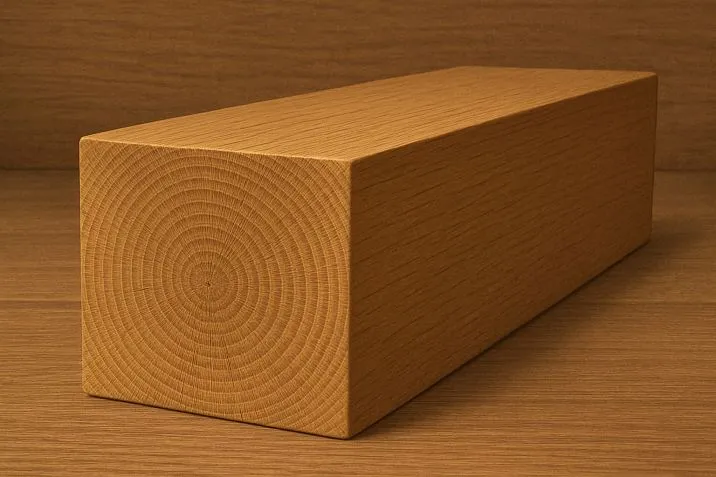
Can one material change the fate of a construction project? Can wood turn an ordinary building into an architectural masterpiece? When it comes to oak, the answer is unequivocally — yes. Buy oak timber Today means investing in eternity, choosing a material that will serve not just decades — but centuries. In a world where speed often defeats quality, oak remains a symbol of unshakable constancy and aristocratic nobility.

The phenomenon of oak wood: when nature creates perfection
Why has humanity chosen oak for the most important constructions for millennia? The secret lies in a unique combination of physical and chemical properties that transform ordinary wood into a premium construction material. The density of oak wood reaches phenomenal 750 kilograms per cubic meter — this is not just a figure, it is concentrated natural strength in every fiber.
The elasticity coefficient of oak is impressive at 12.3 GPa, making it the absolute champion among all commercially available wood species. The static bending strength reaches 95 MPa — a parameter comparable to some metal structures, yet oak remains a living, breathing material.




The mystery of tannins: nature's highest-level protection
Each cell of oak wood contains unique tannins — substances that serve as an impassable barrier against all biological threats. These natural preservatives protect the material from fungi, mold, and wood-boring insects without a single drop of chemical treatment.
A remarkable feature of oak is its ability to become stronger over time. Archaeologists find oak structures over a thousand years old that still retain their load-bearing capacity. A classic example — the oak piles of Venice, upon which the great city still rests.
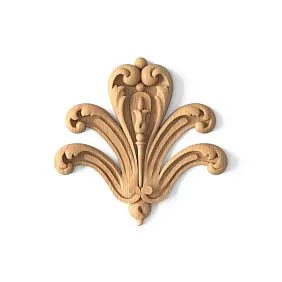
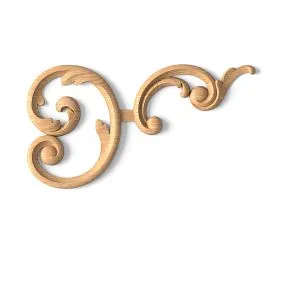
Our factory also produces:





Where to find quality oak timber: professional selection criteria
Get Consultation
Origin of the material and its impact on quality
Not every oak is suitable for creating premium timber. Trees grown in harsh northern climates on nutrient-poor soils possess the best characteristics. It is precisely the struggle for survival that forms wood of exceptional density and uniform structure.
The ideal age of the tree for harvesting is 80–150 years. Young trees have not yet accumulated the necessary density, while overly old trees may contain defects such as rot and cracks. Harvesting time is also critical — winter felling ensures minimal moisture and nutrient content, improving material preservation.
Production technology: from forest to finished product
Modern production of quality oak timber is a high-tech process, where each stage is controlled with jewel-like precision. After harvesting, the wood undergoes natural air-drying for 2–3 years, followed by kiln-drying in specialized installations with programmable temperature and humidity control.
The moisture content of the finished material is strictly controlled at 12±2% — this is the optimal indicator ensuring dimensional stability and eliminating deformation during use. Each batch undergoes mandatory quality control with issuance of a conformity certificate.
Dimensional range and technical specifications of modern oak timber
Today's market offers oak timber in an impressive range of sizes and configurations. Standard cross-sections vary from compact 40×40 millimeters to massive 400×400 millimeters. The length of products can reach eight meters for solid material and up to twenty meters for glued constructions.
Most in-demand sizes: 100×100, 150×150, 200×200 millimeters — they optimally combine strength with economic efficiency. Geometric tolerance does not exceed ±1.5 millimeters, allowing the timber to be used in the most precise constructions without additional processing.
Classification by grades and areas of application
Oak timber is classified into several quality categories, each intended for specific tasks. The 'Extra' class is practically free of visible defects — it is chosen for elite interiors, representative structures, exclusive furniture.
First grade allows small healthy knots up to 25 millimeters in diameter, natural color transitions that do not reduce strength but give the material an individual character. Second grade is optimal for structural work, where aesthetics are secondary to functionality.
Areas of application: from foundation to artistic finishing
Structural use in premium construction
Solution Buy oak timber For structural purposes, those who understand the true value of longevity choose it. The material is used to create load-bearing elements in premium country homes, where each beam becomes a work of engineering art.
In industrial construction, oak timber is indispensable for particularly critical structures — sub-shoe pads under heavy equipment, crane brake supports, special insulators. Hydraulic construction is another field where oak demonstrates unique properties.
Architectural solutions and design concepts
In modern architecture, oak beams are used to create impressive interior solutions. Open beam structures made of oak transform ordinary rooms into spaces imbued with the aristocratic spirit of ancient castles.
Fireplace rooms with oak beams, staircases made of solid oak, decorative facade elements — each application highlights the owner's status and refined taste. Landscape designers create gazebos, bridges, and fences from oak beams that become features of the property for decades.
Economic philosophy of premium materials
Investment-oriented construction approach
Why experienced developers are willing to pay 3-5 times more for oak materials than for coniferous analogs? The answer lies in long-term planning and understanding the concept of total cost of ownership.
The service life of quality oak structures is 100-150 years with minimal maintenance. During this time, the owner of coniferous buildings will need to replace load-bearing elements several times, spend money on repairs, treatment with antiseptics, and combat wood pests.
Impact on prestige and property value
Using oak materials automatically classifies the property as luxury real estate. Buyers of premium homes are willing to pay significantly more for natural, high-quality materials, understanding their true value and longevity.
Statistics show: homes with oak structures sell 20-35% higher than similar properties made from traditional materials. At the same time, they find buyers much faster — the prestige of natural oak speaks for itself.
Subtleties of supplier selection and quality assessment
Signs of a reliable company
Choosing an oak beam supplier is a decision that determines the success of the entire project. What should you pay attention to when looking for a reliable partner? A professional company is always ready to provide material samples for detailed inspection, complete technical documentation, quality and origin certificates.
An important indicator is the presence of its own production or direct contracts with verified manufacturers. Brokers often cannot guarantee consistent quality and timely delivery. Portfolios of completed projects and reviews from satisfied clients are additional guarantees of professionalism.
Visual quality diagnosis
How to determine the quality of oak beams during inspection? Professionals pay attention to numerous parameters. The color should be uniform, without dark spots indicating the beginning of decay processes. The surface should be flawless, without deep cracks or mechanical damage.
Special attention should be paid to the orientation of growth rings. They should be strictly parallel to the beam's faces. An angled fiber arrangement indicates violations of sawing technology or the use of substandard raw material.
Modern processing technologies and property enhancement
Innovative modification methods
Modern technologies allow improving the already outstanding properties of oak wood. Thermomodification at 190-220°C in a steam environment increases biostability and dimensional stability without using chemical substances.
Vacuum impregnation procedure ensures deep penetration of protective compositions into the wood structure. Special impregnants can impart additional properties — increased fire resistance, water repellency, and protection against ultraviolet radiation.
Glued constructions: new possibilities
The technology of producing glued oak beams opens up fundamentally new architectural possibilities. The material combines all the advantages of solid wood with enhanced dimensional stability and the ability to create elements of any length.
The multi-layer structure eliminates internal stresses characteristic of large-section solid wood. This is especially important when creating load-bearing structures — beams spanning more than 6 meters, complex roof truss systems.
Regional market specifics and logistical nuances
Geography of quality
The Russian oak beam market has its own geography of quality. Central regions, where the main oak forests grow, offer material at the most competitive prices. Here are located the largest woodworking enterprises with modern equipment.
Northwestern manufacturers, despite their distance from raw material bases, often offer higher quality products due to the use of imported equipment and strict control at all production stages.
Logistical Features
Oak beams are a heavy material, which creates special requirements for transportation. A cubic meter of dry oak beams weighs 650-700 kilograms, which must be considered when planning delivery and unloading.
For large-sized elements, specialized transport — long-transport vehicles, trailers with appropriate permits — is required. Quality packaging protects the material from damage and contamination during transportation.
Pricing policy and cost optimization strategies
Pricing Factors
The cost of quality oak beams is formed by multiple components. The base price is the cost of raw material, which depends on the harvesting region, wood quality, and cutting season. Technological processes — drying, processing, quality control — add a significant portion to the cost.
Logistical costs can amount to up to 20% of material cost, especially when delivering to remote regions. The trade markup varies depending on the level of service and additional services provided by the supplier.
Savings strategies
How to optimize costs when purchasing oak timber? Planning is key to saving money. Ordering material 3-6 months before the start of the construction season allows you to take advantage of pre-order promotions with discounts up to 15%.
Group purchases with other builders ensure achieving bulk volumes and obtaining significant discounts. Choosing standard sizes eliminates additional charges for non-standard items, which can amount to 20-30% of the base price.
Installation and specifics of working with oak timber
Preparation operations
Quality installation of oak structures begins with proper preparation. The material must undergo acclimatization under the conditions of the site — at least one week indoors or under cover to equalize moisture with the surrounding environment.
Pre-layout of elements allows identifying potential issues and optimizing cutting. Each element must be marked according to the project to avoid errors during installation.
Fasteners and connections
For oak structures, only fasteners made of stainless steel or high-quality galvanized material are used. Ordinary black self-tapping screws react with tannins, forming irreversible dark stains.
Pre-drilling holes prevents material cracking. The drill bit diameter should be 80-85% of the screw diameter to ensure secure fastening without damaging the wood structure.
Long-term operation and maintenance
Operational period specifics
Properly installed oak structures require almost no maintenance. The natural durability of the material ensures decades of flawless service without human intervention. The only recommended procedure is periodic visual inspection of the structures' condition.
In conditions of high humidity or aggressive environments, the protective coating may need to be renewed every 7-10 years. Modern formulations based on natural oils and waxes provide long-term protection without altering the natural color and texture.
Repair and restoration
Local damage to oak elements is easily remedied with spot treatment. Minor chips and scratches are removed by sanding and followed by application of protective coating. Serious damage to oak structures is exceptionally rare due to the material's phenomenal strength.
Ecological aspects and principles of sustainable development
Carbon footprint and ecological responsibility
Oak timber is a material with a negative carbon footprint. During its growth, the tree absorbs more CO2 than is emitted during the production and transportation of the finished product. This makes oak an ideal choice for ecologically responsible construction.
Modern manufacturers operate under principles of sustainable forestry. FSC certification guarantees that wood is harvested in accordance with ecological and social standards. Each felled tree is replaced by several saplings.
Safety for health
Oak timber does not contain toxic substances and does not emit harmful compounds. On the contrary, tannins possess antiseptic properties, creating a healthy microclimate in rooms. Scientific studies confirm the beneficial effect of natural wood on a person's psycho-emotional state.
Comparative analysis with alternative materials
Competition among natural materials
In the category of premium construction materials, oak competes with other hardwoods. Ash surpasses oak in hardness but lags behind in biostability and moisture resistance. Beech has an attractive texture but significantly lags behind in durability.
Exotic species — teak, merbau, ipe — may surpass oak in certain characteristics, but they are significantly more expensive and less accessible. Moreover, they lack centuries-old traditions of use in Russian climatic conditions.
Advantages over composite materials
Modern composite materials attempt to imitate the properties of natural wood, but remain mere imitations. Oak possesses a unique ability to 'breathe,' regulating humidity in rooms. Repairability of oak structures allows for local damage repair without replacing the entire element.
Market development trends and prospects
Growing demand for premium materials
Current construction trends demonstrate steady growth in demand for natural premium materials. Buy oak timber Both private builders and developers of luxury projects are striving for this.
Consumer ecological awareness, desire to create a healthy living environment, understanding of the value of durable solutions — factors supporting high demand for oak materials.
Technological Innovations
Advancements in wood processing technologies open up new possibilities for using oak. Digital modeling allows optimizing structures even during the design stage. Robotic processing ensures the highest precision in manufacturing elements with complex geometry.
Nanotechnologies in protective coatings create new opportunities for extending the service life and improving the performance characteristics of oak structures.
International experience and best practices
European quality standards
The European oak timber market is characterized by strict quality and environmental standards. CE certification confirms compliance with safety requirements. E1 emission class guarantees minimal formaldehyde release.
German and Austrian manufacturers set quality benchmarks in glued oak structures. Their experience is actively adopted by Russian producers striving for European quality levels.
American innovations
North American manufacturers focus on technologies for mass production of high-quality oak timber. Their experience in automation and quality control can be adapted to Russian conditions.
Practical recommendations for buyers
Decision-making algorithm
How to choose the optimal oak timber supplier? Start by analyzing project requirements — determine required dimensions, material grade, purchase volumes. Compile a list of potential suppliers, study their reputation and customer reviews.
Request material samples and technical documentation from all candidates. Compare offers not only by price, but also by material quality, delivery terms, and warranty obligations.
Quality control upon acceptance
Incoming inspection must include checking moisture content with a portable moisture meter, measuring geometric parameters, visual inspection for defects. Each batch must be accompanied by a quality certificate specifying all material characteristics.
Documentation is a crucial component of a quality deal. The acceptance-transfer act must include a detailed description of the delivered material, quality remarks, and signatures of responsible parties.
Financial tools and payment methods
Flexible financing schemes
Major suppliers offer various financing schemes for purchasing oak timber. Installment payment allows distributing financial burden, especially relevant for large orders. Inventory credit secured by real estate — an option for serious developers.
Leasing schemes are optimal for commercial projects where tax optimization is important. Advance payment often grants significant discounts — up to 10-15% of the order value.
Currency risks and their minimization
When working with imported materials, it is important to consider currency risks. Fixing the exchange rate at the time of contract signing or currency clauses help protect against adverse changes. Hedging through financial instruments — an option for large projects.
STAVROS has been a recognized leader in supplying premium-grade elite construction and finishing materials for many years. Long-standing experience working with leading oak timber manufacturers, deep understanding of the needs of the most discerning clients, and impeccable reputation enable the company to guarantee top-quality products and professional support for every project.
Choosing oak timber from STAVROS means you are not just acquiring construction material, but a comprehensive solution including professional consultation on optimal characteristics, reliable logistical support, and long-term warranty service. Our philosophy is built on the understanding that true value lies not in saving on materials, but in creating structures that will serve generations, becoming family heirlooms and sources of pride.


