Article Contents:
- Anatomy of differences: structure, color, density
- Wood structure and texture
- Color palette and its evolution
- Wood behavior over time
- Oak in interior design: spheres of triumph
- Skirting boards and architraves: foundation of framing
- Planks and panels: structural elements
- Furniture facades: face of the setting
- Beech in interior design: spheres of elegance
- Light panels and planks: airiness of space
- Carved appliqués: jewel-like detailing
- Furniture blanks: foundation for transformations
- Combination of oak and polyurethane: practicality meets naturalness
- Oak skirting boards with polyurethane moldings
- Wooden panels with polyurethane framing
- Oak furniture with polyurethane decor
- Care and protection: extending the life of wood
- Oil: breathable protection
- Lacquer: impermeable barrier
- Thermo-treatment: change at the molecular level
- Designer examples: harmony of oak and beech
- Classic office: oak strength and beech details
- Scandinavian living room: light beech and oak accents
- Modern kitchen: practicality and aesthetics
- Conclusion

Choosing the wood species for interior elements determines not only the aesthetics of the space, but also its longevity, practicality, and atmosphere for decades to come. Oak and beech are two noble deciduous species dominating the production of quality furniture, finishing materials, and decorative elements. At first glance, they appear interchangeable — both strong, beautiful, and durable. However, a deep understanding of their differences, advantages, and optimal application areas allows for informed decisions, creating interiors where each element perfectly fulfills its purpose.Oak wooden skirting boardAnd beech carved appliqués can coexist in the same space, complementing each other, if one understands the logic of their use.








Anatomy of differences: structure, color, density
Oak and beech belong to hardwood species, but their internal structure, chemical composition, and physical properties have fundamental differences that affect the behavior of wood during processing and use.
Our factory also produces:



Oak has a ring-porous structure with clearly visible annual rings. Large vessels in the early wood create a characteristic pattern—distinct dark stripes on a lighter background. This texture remains visible even under a thick layer of lacquer, becoming the hallmark of oak products. Oak's medullary rays are wide, creating an attractive ripple effect on radial cuts—medullary rays, especially prized in classic furniture.
Beech has a diffuse-porous structure with small, evenly distributed vessels. Annual rings are discernible but less contrasting. The texture is more uniform and calm, lacking the dramatic contrasts of oak. Beech's medullary rays are narrow but numerous, creating a characteristic fine checkered pattern on radial cuts. On tangential cuts, beech shows fine light streaks, adding liveliness to its uniform surface.
Oak density is 690–750 kg/m³ at standard moisture content of 12%. Beech is denser—710–730 kg/m³. Beech's higher density provides greater hardness and durability, but also greater weight of finished products.
Oak furniture blanksOak furniture blanksand beech blanks of the same size will differ in weight by 3–5% in favor of beech.
Get Consultation
Color palette and its evolution
Freshly cut oak has a light yellow-brown color with a greenish tint in the sapwood. After drying, it acquires a warm golden-brown tone. Heartwood is darker than sapwood by several shades, creating natural color variation. Over time, oak darkens—the oxidation of tannins imparts a noble brown color with honey notes. After 10–20 years of use, oak products acquire a rich chestnut hue.
Reaction to light differs—oak darkens more intensely under ultraviolet exposure, while beech retains its original tone longer. This is important when placing furniture—after a year, an oak cabinet near a sunny window will noticeably darken compared to its back side, while beech will retain a more uniform tone.
Reaction to light varies - oak darkens more intensely under ultraviolet light, beech retains its original tone longer. This is important to consider when placing furniture - an oak cabinet near a sunny window will noticeably darken its back side after a year, while beech will maintain a more uniform tone.
Behavior of wood over time
Shrinkage—a critical parameter determining product stability. Oak belongs to highly shrinkable species—tangential shrinkage is 8–9%, radial—4–5%. Beech shrinks even more—tangential shrinkage 11–12%, radial—5–6%. Beech's stronger shrinkage requires particularly careful drying and acclimatization before processing.
Hygroscopicity—the ability to absorb moisture from air—is higher in beech than in oak. Beech actively responds to changes in air humidity, swelling when humidity increases and shrinking when it decreases. Oak is more stable due to its high tannin content, partially blocking pores. This makesOak skirting boardpreferable for rooms with variable humidity.
Oak in interior: spheres of triumph
Oak in interior design: spheres of triumph
Oak reigns where maximum strength, prestige, and resistance to adverse conditions are required. Its distinctive texture, ability to age gracefully, and natural protection against moisture and decay make oak the preferred material for key interior elements.
Baseboards and door/window casings: foundation of framing
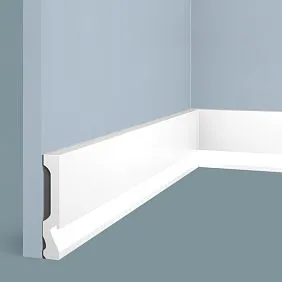
Oak wooden skirting boardBaseboards are subjected to mechanical impacts—vacuum cleaner, mop, foot traffic—more than any other interior element. Oak's hardness of 3.7 on the Brinell scale ensures resistance to such impacts. An oak baseboard retains its profile sharpness and edge definition for decades.
Lower wall section—high-risk zone for moisture during wet cleaning, leaks, condensation. Oak's tannins create natural protection against rot, mold, and fungi. An oak baseboard in a bathroom, kitchen, or entryway lasts longer than beech and requires fewer protective treatments.
Oak's expressive texture transforms a utilitarian baseboard into a decorative element. A wide oak baseboard 12–15 cm high with a classic profile becomes an architectural framing element, especially contrasting with smooth walls. Oak's natural darkening over time adds nobility and the patina of antiquity.
Door and window casings made of oak harmonize with oak baseboards, creating a unified framing system. Heavy oak casings suit classic interiors where monumentality is valued. Thin modern oak casings retain strength while minimizing visual mass.
Racks and panels: structural elements
Oak wooden panelscreate accent walls, zone spaces, add texture. Oak rails with their expressive annual ring patterns form rhythmic compositions, where each rail is unique due to the uniqueness of natural patterns. Vertical oak rails spaced 8–10 cm apart on a wall behind a bed headboard—a modern solution combining the ecological nature of the material with the graphic geometry.
Classic oak wall panels—boiserie, cabinet and library paneling—embodiment of traditional luxury. Paneling made from solid oak with carved elements, moldings, and patinas creates the atmosphere of an English manor or French chateau. Modern oak panels with minimalist design introduce warmth of wood into minimalist spaces without historical references.
Oak's durability is critical for wall panels in public areas of the home—hallways, corridors, where walls are subject to frequent contact and abrasion. Oak panels installed 80–120 cm high protect walls from dirt and scratches, preserving their original appearance for years without restoration.
Furniture facades: face of the interior
Oak furniture blanks—foundation for creating furniture passed down through generations. Oak facades of kitchen cabinets, cabinets, and chests withstand intensive use—daily opening and closing, hand contact, temperature fluctuations in the kitchen. Oak does not warp from steam, does not dull from frequent washing, does not lose color saturation.
Oak's characteristic texture makes each facade a unique piece. Radial cuts with medullary rays create an attractive ripple effect, especially beautiful under oil or lacquer with a slight gloss. Tangential cuts show a wavy annual ring pattern—parabolas, ovals, forming a living composition.
Restoration capability is an important advantage of oak furniture. Scratches, dents, and wear on oak facades are removed by sanding and re-finishing. Birch, being softer and lighter, handles localized restoration less well — sanded areas may stand out in tone. Oak forgives mistakes, allowing correction and renewal.
Birch in interior design: spheres of elegance
Birch shines where uniform color, smooth texture, flexibility, and detailed carving are needed. Its neutral light tone, fine grain structure, and excellent workability make birch a material for refined, sophisticated solutions.
Light panels and rails: spatial lightness
Birch wood panelscreate a light, airy backdrop that visually expands space. The pinkish-yellow hue of birch is warmer than white paint but lighter than oak — an optimal balance for Scandinavian and modern interiors. Birch rails on walls appear lighter than oak ones due to their lighter tone and uniform texture without contrasting stripes.
Birch panels are ideal for bedrooms and children’s rooms, where a bright, calming atmosphere without the heaviness of dark wood is important.Birch skirting boardin such rooms, it maintains an overall light color palette without creating a dark perimeter outline. Staining birch white or light gray preserves visible texture, adding elegance to a simple solution.
Birch’s flexibility allows creating curved panels, cladding columns, bay windows, and arched openings without joints or trimming. Bent birch elements, after steaming and shaping, retain their form, strength, and do not crack. Oak bends less well and often cracks when attempting sharp curves.
Carved appliqués: jewel-like detailing
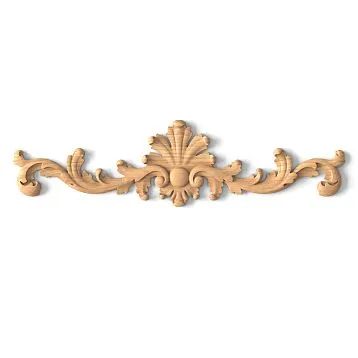
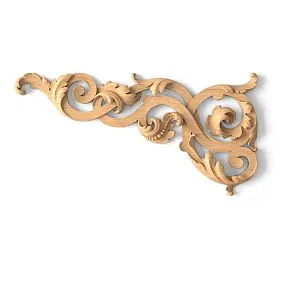
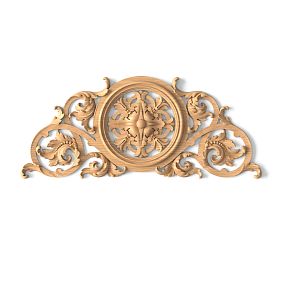
Birch carved appliquésdemonstrate fine-grained wood structure, enabling carving of minute details without chipping or cracking. Floral ornaments with delicate stems, small leaves, and intricate interweavings — birch appliqués convey such details with surgical precision. Oak, with its large vessels, may crack in thin carving areas.
Color uniformity of birch is critical for carved elements — the entire appliqué has a single tone, relief is read through play of light and shadow, not color patches. Oak carved appliqués sometimes have sapwood or heartwood areas with differing colors, which may disrupt the perception of the ornament’s integrity.
Oak carved appliquésare suitable for large relief elements — cartouches, consoles, capitals — where scale and textural expressiveness matter. Birch appliqués are for delicate, finely detailed elements. Combining them in one interior creates hierarchy — oak accents as main features, birch details as refined surroundings.
Staining carved appliqués — a common technique for integrating into interior color schemes. Birch accepts paint more evenly than oak due to its uniform structure. White birch appliqués against a wall look like plaster molding, preserving the lightness and strength of wood. Gilded birch appliqués in classical interiors create luxury without excessive bulk.
Furniture blanks: foundation for transformations
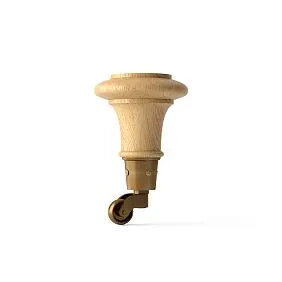
Birch furniture blanksare preferred material for Vienna-style bent furniture, where smooth curves without joints are required. Chair backs, armrests, table legs with curves — birch blanks, after steaming, take any shape and retain it after drying. Classic Vienna chairs by Thonet — icons of furniture design — are made precisely from birch.
Uniformity of birch structure allows creating furniture with alternating grain directions without visible transitions. Chessboard-style tabletops, where squares are oriented perpendicularly, appear as a geometric play of directions on birch. On oak, such assembly may create excessive visual clutter due to contrasting texture.
Birch’s ease of staining is used to imitate more expensive species — redwood, walnut, rosewood. Birch blanks stained with dye acquire rich tones while preserving visible texture. Oak accepts dark tones less well due to tannins, often resulting in blotching. Birch stains evenly and predictably.
Oak and polyurethane combination: practicality meets naturalness
Combining natural wood and modern synthetic materials opens new possibilities — wood is used where its unique properties are critical, polyurethane where technological efficiency, moisture resistance, and ease of processing matter.
Oak skirting boards with polyurethane moldings
Oak skirting boardat the lower part of the wall provide mechanical strength, naturalness, and nobility of material in active contact zones. Polyurethane moldings on walls above create architectural complexity with minimal weight, are easy to install, and are moisture-resistant. Color coordination is achieved by staining — oak skirting boards are coated with natural-tone oil, polyurethane moldings are stained to match closely.
Such a combination is optimal for classic interiors with limited budgets. Fully oak molding systems cost 3–5 times more than polyurethane ones and require professional installation. Oak skirting board with polyurethane moldings delivers 70% visual effect at 30% cost.
Operational
advantage — polyurethane moldings do not react to humidity changes, do not crack at joints, and require no seasonal adjustments. Oak skirting board, even reacting to humidity, is hidden behind furniture, and its possible micro-deformations are imperceptible. The combination compensates for the shortcomings of each material.
Wood panels with polyurethane framing
Oak or beech panels as fillers, polyurethane moldings as framing - a popular solution for creating wall compositions. Wooden panels provide warmth, texture, and the tactile feel of natural material. Polyurethane frames create clear geometry and architectural structure, easily cut to any angle without risk of chipping.
Installation is simplified - wooden panels are cut to the size of the internal space of the frames, requiring no perfect corner alignment. Polyurethane frames conceal panel edges, creating visual completeness. The ability to paint polyurethane in any color allows for contrast play - dark oak panels in white frames, light beech panels in gray frames.
Economic efficiency is significant - solid wood veneer costs 15-25 thousand rubles per square meter, combined panels with polyurethane - 5-8 thousand. With visually similar results, the budget difference is threefold. For residential interiors, such a combination is optimal.
Oak furniture with polyurethane decor
Solid oak furniture fronts, decorative polyurethane inlays - a compromise between prestige and practicality. Oak framed fronts with panels provide structural strength and natural material authenticity. Polyurethane inlays - carved corners, central sockets, ornamental strips - add decoration without complex wood carving.
Polyurethane decor on furniture is moisture-resistant, does not crack, and is easy to paint. It adheres to any surface - solid wood, MDF, plywood. The possibility of quick style changes - replacing inlays transforms a minimalist front into carved baroque and vice versa. The oak base remains unchanged for decades.
Maintenance is simplified - polyurethane can be washed with any cleaning agents, does not absorb dirt, does not darken from touch. Oak frames require careful maintenance, but their surface area is smaller than with fully carved fronts. The combination reduces maintenance requirements while preserving aesthetics.
Care and protection: extending the life of wood
Natural wood requires protection from moisture, dirt, mechanical damage, and ultraviolet radiation. Choosing between oil and varnish, maintenance frequency, and special treatments determine longevity and preservation of appearance.
Oil: breathable protection
Wood oils are natural compositions based on linseed, tung, and sunflower oils with added wax and drying agents. They penetrate into wood pores, impregnating to a depth of 2-4 millimeters, creating a hydrophobic layer from within. The surface remains porous - wood breathes, moisture freely enters and exits with air humidity changes. This prevents internal stresses and cracking.
Oil preserves the natural appearance of wood - matte surface without gloss, warm to the touch, pleasant to the touch. The texture of oak under oil becomes more contrasting - dark stripes darken, light ones remain light. Beech under oil acquires a honey tone, uniformity of structure is emphasized. Oil does not form a film, so it does not peel or flake even after years.
Applying oil is simple - generously applied with a brush or cloth, excess is removed after 15-30 minutes. Wood absorbs as much as it can, the rest is wiped away. The first layer is absorbed maximally, the second layer after 12-24 hours adds protection, the third is usually unnecessary. Refreshing every 1-3 years depending on usage intensity.
The drawback of oil is lower resistance to stains compared to varnish. Porous surface may absorb stains from wine, coffee, grease. For kitchen countertops and dining tables, oil requires caution. For skirting boards, panels, and furniture fronts, oil is optimal - combination of natural appearance and sufficient protection.
Varnish: impermeable barrier
Varnishes create a strong polymer film on the wood surface, 80-150 microns thick, completely isolating wood from the external environment. Moisture, dirt, grease do not penetrate inside, easily removed from smooth varnished surfaces. Varnish provides gloss - from light satin to mirror gloss depending on type. Wood color under varnish becomes richer, brighter, deeper.
Oak under varnish acquires a golden warm tone, texture is emphasized. Beech under varnish becomes amber, uniformity of structure creates a calm elegance. Varnish levels the surface, fills pores, makes wood smooth as glass. Tactile varnished surface is colder, more slippery, less intimate compared to oil.
Applying varnish requires preparation - thorough sanding, dust removal, priming. The first layer of varnish raises the fuzz, requiring intermediate sanding. The second and third layers create the final finish. Drying time between layers is 4 to 24 hours. Professional varnishing in a controlled temperature and humidity chamber yields an ideal result, unattainable with manual application.
Varnish lasts longer than oil - a good varnish coating lasts 5-10 years without renewal under intensive use. But damage to varnish - chips, scratches - requires full re-varnishing, local touch-up is impossible. Oil is easily refreshed - simply apply a new layer to the affected area. For furniture subjected to impacts, oil is more practical.
Thermo-treatment: molecular-level change
Thermo-treated wood - material processed at 180-230 degrees Celsius in an oxygen-free environment. High temperature alters the structure of cellulose, lignin, and hemicellulose, reducing hygroscopicity and increasing dimensional stability. Thermowood absorbs moisture 3-5 times less than regular wood, practically does not swell or shrink with humidity changes.
Color of thermo-treated wood is dark - from chocolate to nearly black depending on processing mode. Thermooak acquires a noble dark brown tone uniformly throughout the thickness, including sapwood. Thermobeech becomes darker than oak, loses its pink hue, acquires a cool brown tone. Darkening is irreversible, even after sanding, inner layers remain dark.
Thermowood is optimal for humid rooms, outdoor structures, flooring.Oak skirting boardThermally treated wood in the bathroom does not deform, does not rot, and does not require frequent renewal of protective coating. Thermally treated beech strips on the building's facade serve as larch but with less weight.
The drawback of thermo-treatment is a 10-20% reduction in strength due to cellulose degradation. Thermowood is more brittle, holds fasteners less well, prone to chipping under impact. For decorative elements without significant loads, this is acceptable. For load-bearing structures and heavily used furniture, regular wood with quality protection is better.
Design examples: harmony of oak and beech
Combining oak and beech in one interior creates a play of warm tones, different textures, a balance between expressiveness and restraint. The right combination enhances the strengths of each species, neutralizes their weaknesses.
Classic office: oak strength and beech details
Wall oak panels 150 centimeters high create a classic cabinet cladding. Dark stained oak with pronounced texture forms a solid, dignified background. Beech carved appliqués — panel corners, central sockets, door frames — are painted gold, creating elegant accents. The contrast between dark oak and gilded beech is a classic combination, proven over centuries.
Solid oak desk with carved legs occupies the composition center. Beech chair with curved armrests, upholstered in leather, ensures comfort with less visual mass. Oak bookcase with glass doors, beech shelves inside - combination of strong fronts and light interior space.
The 20 cm high oak skirting board with a classic profile frames the room around its perimeter. Lighter and more elegant beech door and window casings create a contrast. The beech ceiling cornice, painted to match the oak panels, unifies the composition vertically. Result — an interior where every element is in its place, material hierarchy supports functional logic.
Scandinavian Living Room: Light Beech and Oak Accents
The wall behind the sofa is clad with vertical light beech planks spaced 10 cm apart. The rose-yellow hue of beech creates a warm background against the overall light color scheme. The planks are coated with matte oil, preserving the natural texture. The remaining walls are painted white, contrasting with the wooden wall.
The oak coffee table with simple geometry, coated with natural-tone oil, creates a warm dark wood accent against the light floor and walls. The characteristic oak texture draws the eye, becoming the composition's focal point. The beech chairs around the dining table, painted white while retaining visible texture, support the overall light color scheme.
The 8 cm high beech skirting board, painted white, blends into the white walls, not creating a dark outline. The oak shelves on the white wall — an open, simple structure — add horizontal lines that echo the coffee table. Result — a light, airy interior with precise accents of natural wood.
Modern Kitchen: Practicality and Aesthetics
Kitchen unit with solid oak facades coated with matte lacquer. Oak was chosen for its strength, moisture resistance, and ability to withstand frequent washing. The countertop is made of artificial stone for practical reasons, but the wooden backsplash behind the work zone — vertical oak planks treated with water-resistant oil-wax — adds warmth and functionality.
Dining area — oval beech table on curved legs and beech chairs. Beech is ideal here for its flexibility, creating smooth lines. The light tone of beech contrasts with darker oak facades, zoning the space by color. Beech furniture is coated with lacquer for easy maintenance during frequent use.
Oak skirting board around the entire kitchen perimeter ensures unity with the cabinet facades. Decorative, non-load-bearing oak ceiling beams add architectural character, connecting floor and ceiling with vertical oak supports. Result — a functional kitchen where material selection for each element is justified by its properties.
Conclusion
Choosing between oak and beech — not a matter of better or worse, but suitability for the task. Oak triumphs where maximum strength, moisture resistance, expressive texture, and noble aging are required.Oak skirting boardOak panels, furniture facades — elements of long-term investment, serving for generations.
Beech is ideal where light tone, uniform structure, detailed carving, and bending capabilities are important.Birch skirting boardCarved inlays, bent furniture — elements of refinement, elegance, and lightness. Combining oak and beech in one interior creates richness, multi-layered depth, and balance.
Modern technologies — heat treatment, combination with polyurethane, specialized protective coatings — expand the application possibilities of both species.Oak furniture blanksAnd beech blanks from STAVROS ensure material quality, proper drying, and readiness for processing.Oak wooden panelsAnd beech panels are available in options ranging from classic to minimalist.
Proper care — choosing between oil and lacquer, regular renewal, protection from adverse factors — extends the life of wooden elements for decades.Birch carved appliquésAnd oak inlays, with proper finishing, retain detail, relief clarity, and material beauty for years.
Create interiors where each element is made from the optimal material — oak where strength is needed, beech where elegance matters. Nature created these species differently for a reason — the diversity of wood properties allows solving any task while remaining faithful to natural materials, ecological principles, and centuries-old woodworking traditions.